Isando jobs that need a press line working properly
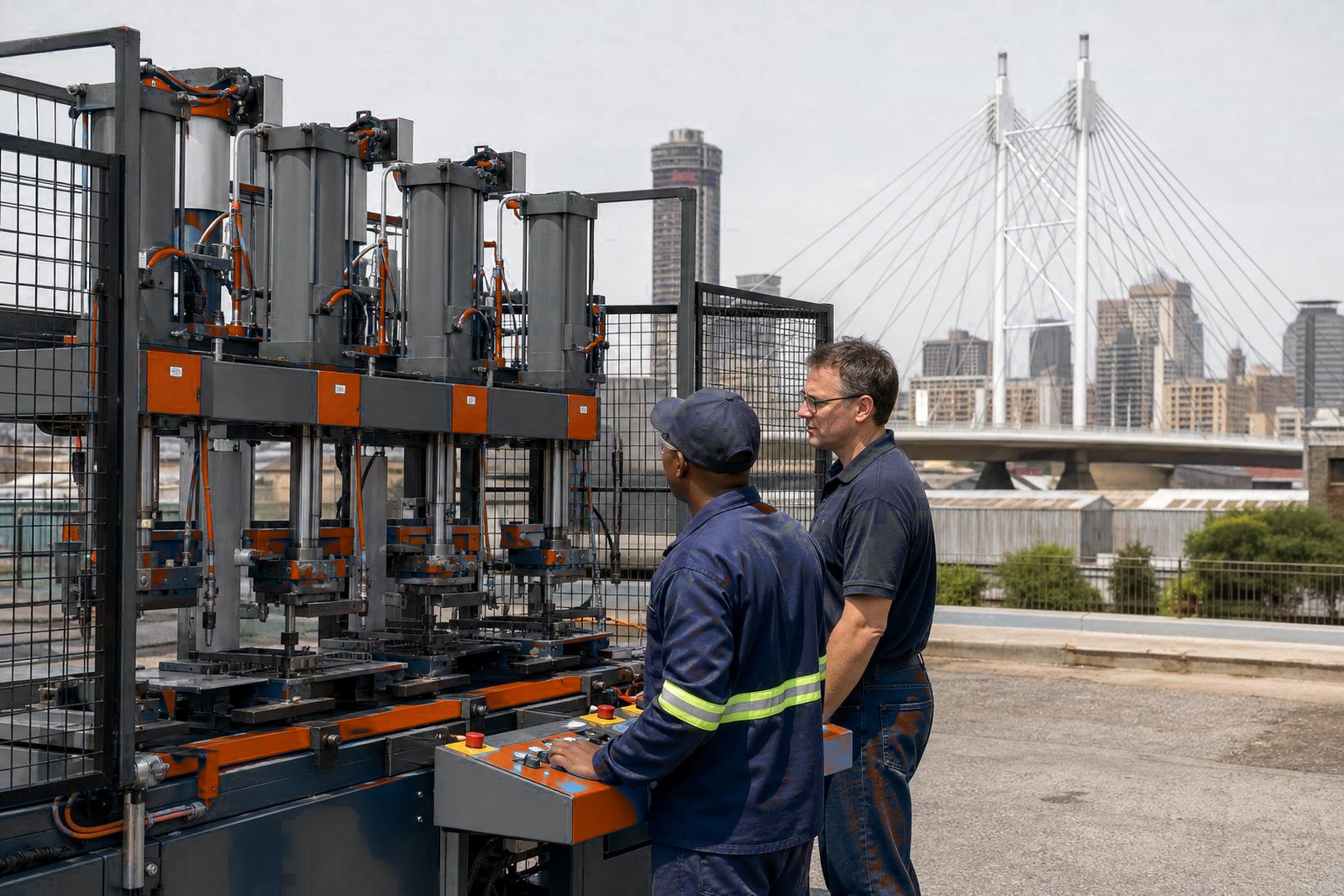
Isando has a steady mix of metal, plastics and light assembly plants, so commissioning work here usually means getting a press line ready for day-to-day use. That can involve checking air pressure, setting stroke length, confirming clamp points, and making sure the press cycle suits the part rather than forcing the part to suit the machine.
Our workshop base in Isando keeps the travel practical for nearby sites in Kempton Park, Boksburg and the wider Ekurhuleni belt. For a line that needs a clean start, we look at the full station arrangement, the tooling face, guarding, two-hand controls and the feed path before production starts to bite into the schedule.
What commissioning covers on a multi-station press
A multi-station pneumatic press has more going on than a single ram and a button. The station layout, cylinder sizing, stroke setting and dwell all have to suit the job, whether the process is assembly, crimping, riveting, staking or pack sealing. If the stroke is too long or the pressure is too high, the part can mark, slip or deform, and that creates waste very quickly.
- Stroke setting for the part height and tool travel
- Air pressure checks for consistent press force
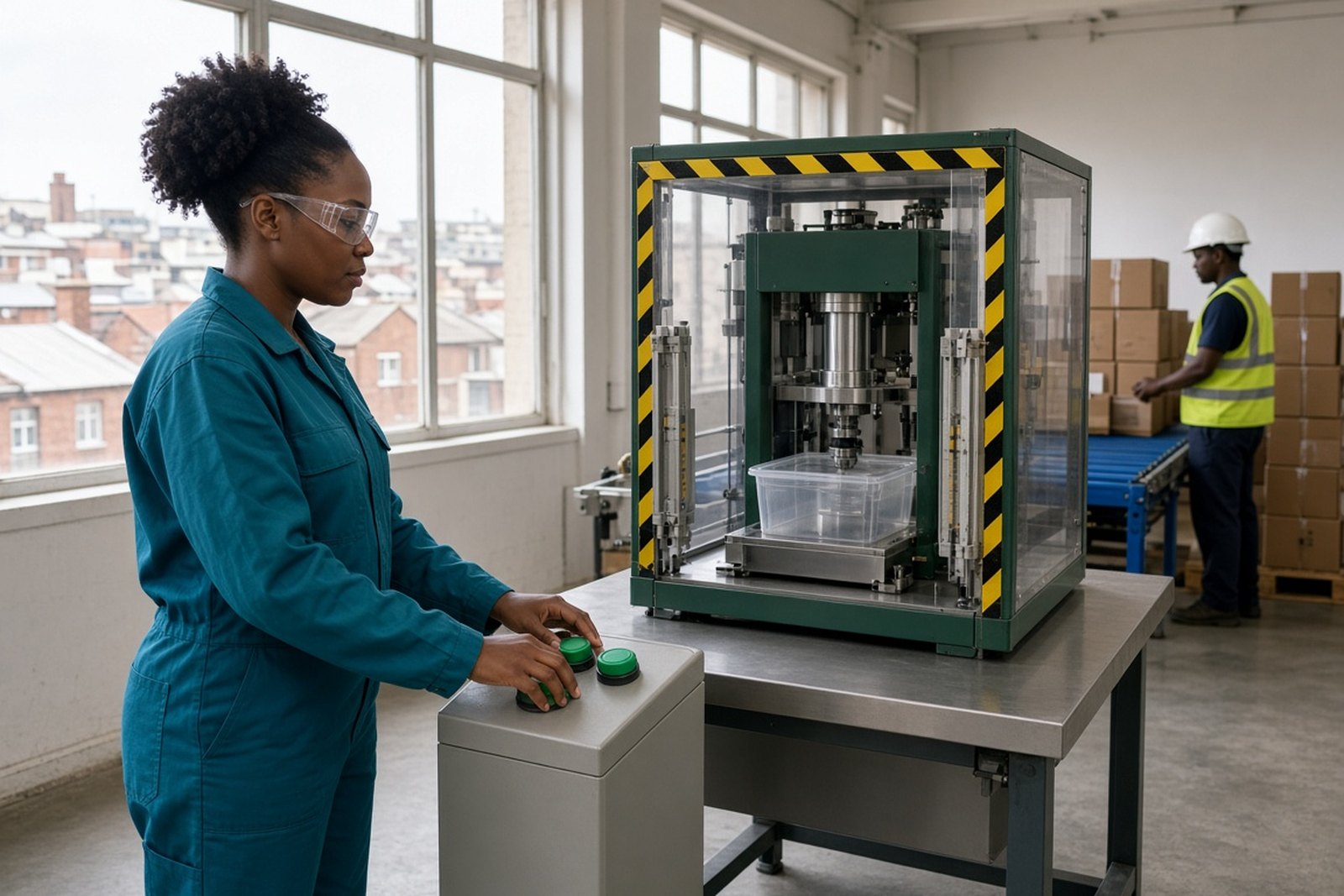
- Two-hand control testing for safe cycle start
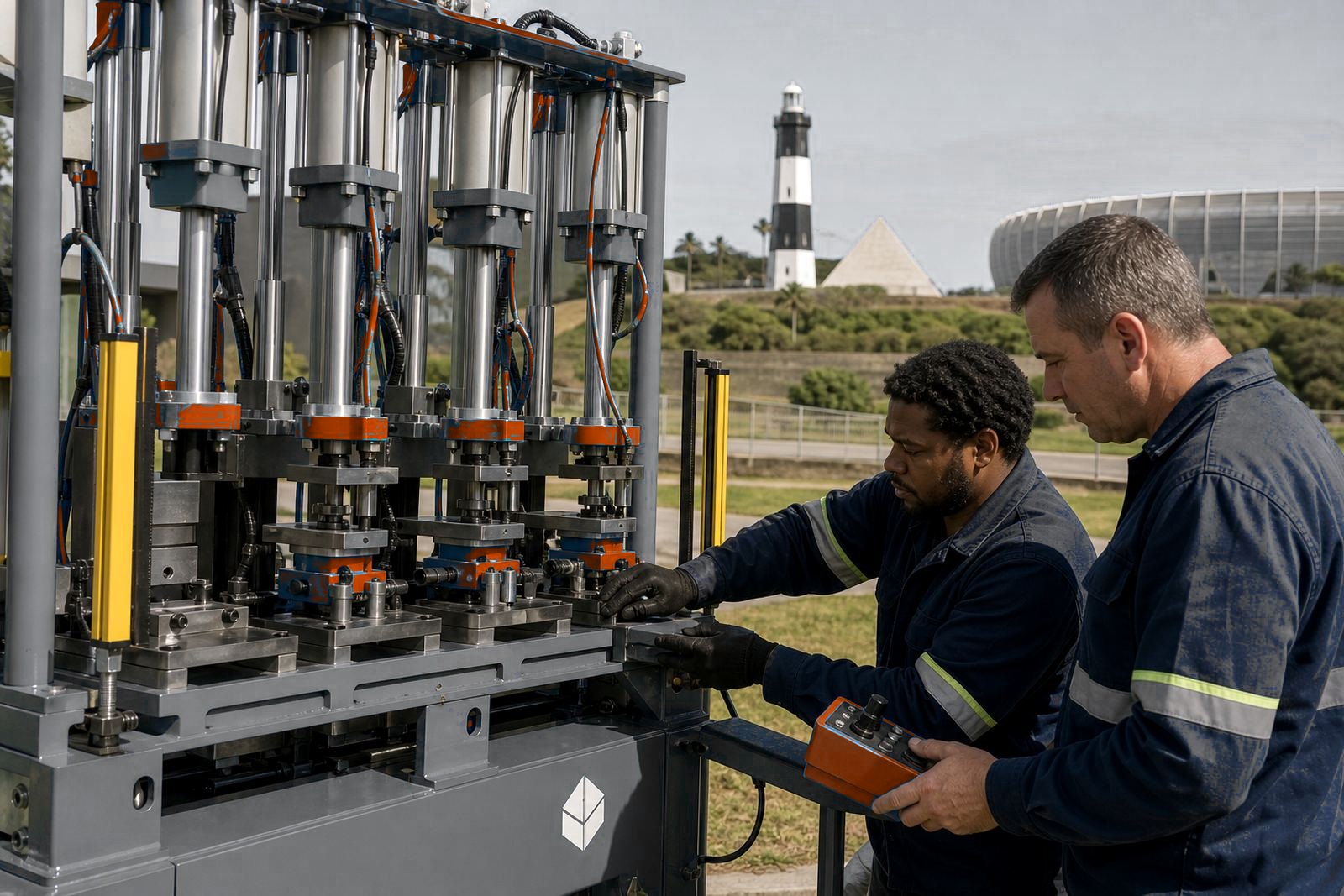
- Light curtain alignment and safety interlock checks
- Tooling changes where the first setup needs fine adjustment
- Production handover once the line is cycling as intended
We also look at changeover points, because a line that runs one part in the morning and a different one after lunch needs a clear method for setting and resetting the tooling. In a busy Isando workshop that detail matters more than sales talk ever will.
Local site conditions that shape the setup
Factories around Isando often share the same practical pressures: tight floor space, mixed traffic near loading bays, compressed air routed across old runs, and installation work that has to fit into an already busy production area. Some buildings have low ceiling sections or awkward access points, so guarding and station placement need to be planned with the actual floor in mind.
We also see sites where humidity, dust and cleaning routines affect tooling and cylinder movement, especially where parts move from one process to the next without much storage space between them. If the air line carries moisture or the pressure drops at peak use, the press feel changes and operators notice it straight away.
Our workshop support before the machine reaches the floor
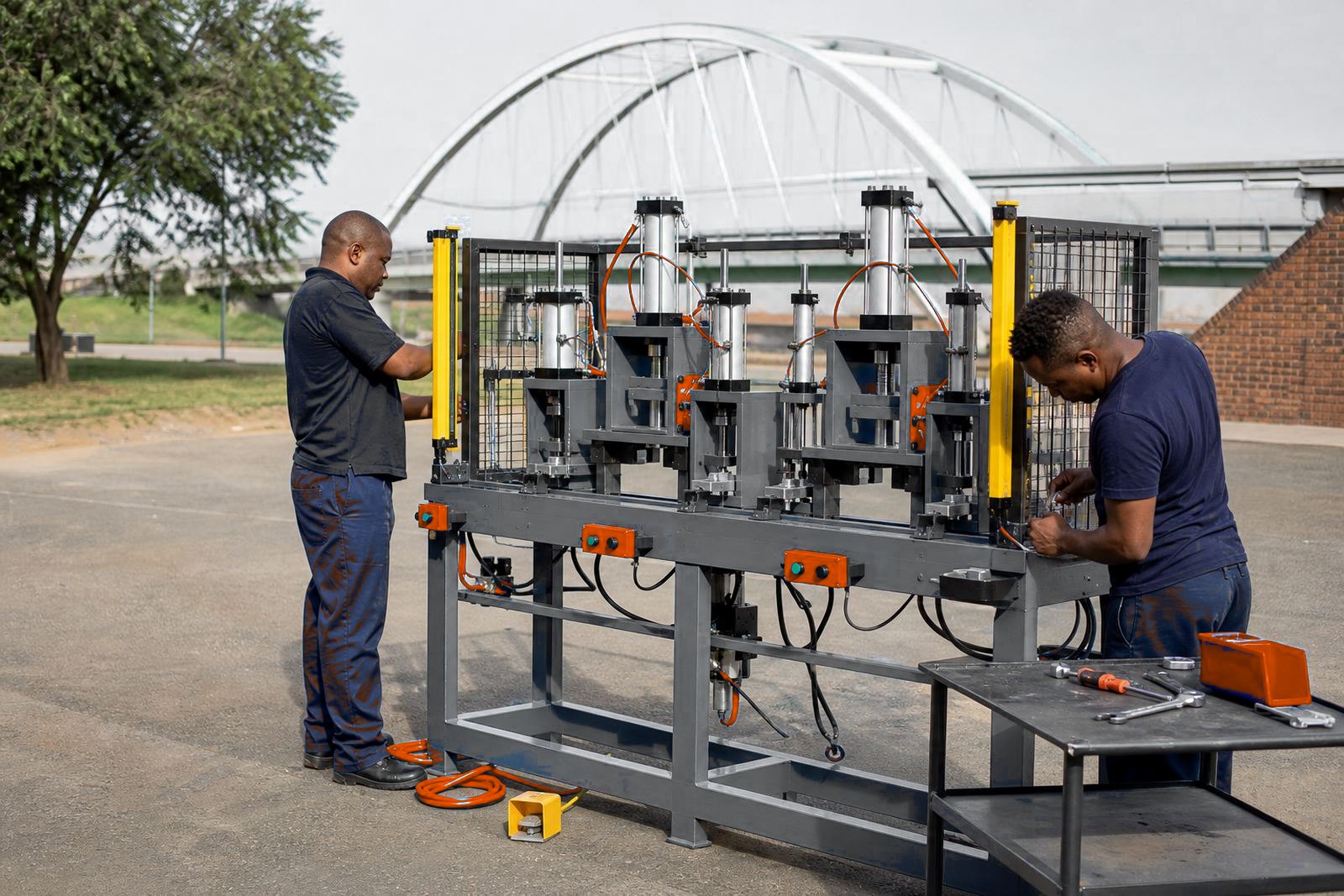
Commissioning starts well before the press is standing in the plant. In Isando, the workshop side often includes fixture design, tooling build, guard fabrication and checks on how the operator will load and unload the part. That saves time once the machine lands on site, because the press arrives with the main working pieces already thought through.
- Custom tooling for crimping, riveting, staking and sealing work
- Fixture design to hold the part square under pressure
- Guarding builds that suit access and visibility around the station
- Light curtain integration where the line needs protected access
- Two hand controls for safe cycle initiation on manual stations
- Air line setup for stable supply to the cylinders and controls
Musa Hartnick handles tooling design with the production job in mind, while Johan Ramokgopa keeps the workshop build practical. That combination matters when the next shift is expecting a machine that behaves the same way each time it runs.
On-site work in Johannesburg, Pretoria and the coastal cities
From Isando we handle commissioning at plants in Johannesburg and Pretoria without turning the work into a logistics exercise. The same support extends to Durban, Gqeberha and East London where pack sealing and light assembly lines often need careful setup around existing plant layouts and local handling routines.
Pieter Sauls oversees the technical direction, while Lerato Moagi handles commissioning on site and Anele Engelbrecht leads operator training. Thandiwe Matlala coordinates the project flow, which helps keep the handover orderly when a line has to move from installation into live production without confusion about settings or responsibilities.
Operator training and handover that fit the plant floor
A press line only stays useful when the team on the floor understands it. Training usually covers how the station works, where the stroke stops, what the controls do, and how to spot a tooling issue before it turns into a damaged part. On a pneumatic press, small setting changes can alter the result, so the operator needs more than a quick walkaround.
We cover the handover in plain terms and show the team how to work with the press, the guarding and the part flow. For sites with repeated product changeovers, that training also includes practical notes on tooling changes, cleaning around the die area and checking the air supply before a shift begins.
- Daily operation and safe loading guidance for operators
- Tooling change guidance for repeat jobs
- Fault spotting around air pressure and stroke travel
- Production handover with the operating sequence set out clearly
A line that is understood by the crew tends to stay calmer in production, and the adjustments become smaller when something shifts.
Enquiries from Isando and nearby plants
Enquiries for Isando Commissioning go through our contact page form, especially when the job involves a new press build, a line move, or a setup that needs guarding and controls checked together. We work with factories that need a practical commissioning visit, not a long theory session, and the details matter from the first review of the station layout.
If the job is in the Isando area, nearby Ekurhuleni, or further out in South Africa, send the line details, the part type and the process steps you need covered. That gives us enough to look at the press, the tooling and the handover in the right order.