Commissioning visits for Gqeberha press lines
Gqeberha factories often juggle short runs, scheduled changeovers and mixed light industrial and automotive work. That is where commissioning counts most, because a press can look right in the workshop and still miss the mark if stroke, air pressure, tooling reach or guard position is out. Our commissioning work in the metro is aimed at the actual line, not the machine in isolation.
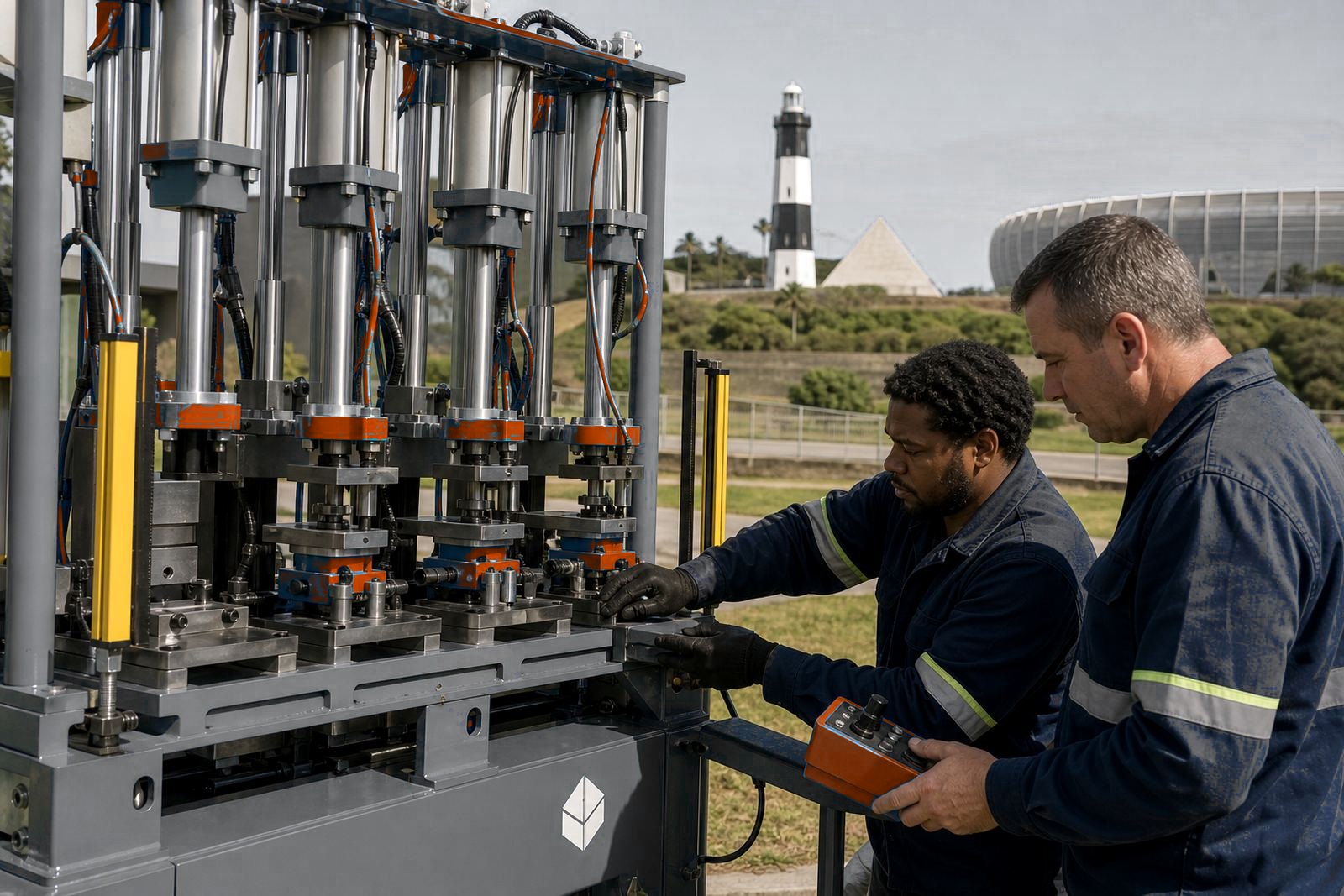
We visit sites in the city and surrounding industrial areas to check station movement, cylinder action, tooling alignment and the way the operator loads the part. For multi-station presses, each station must pull its weight without putting strain on the rest of the build. We look at where the part enters, where it is held, how it transfers and where the finished piece leaves the press.
Plants near the harbour and along exposed industrial corridors also deal with salt in the air, so cabinets, rails, fasteners and guard edges need a practical inspection before the line is handed over. Small changes in humidity and dust can affect lubrication, air quality and general wear, especially where presses run through long shifts and tooling changes are frequent.
What our commissioning team checks on site
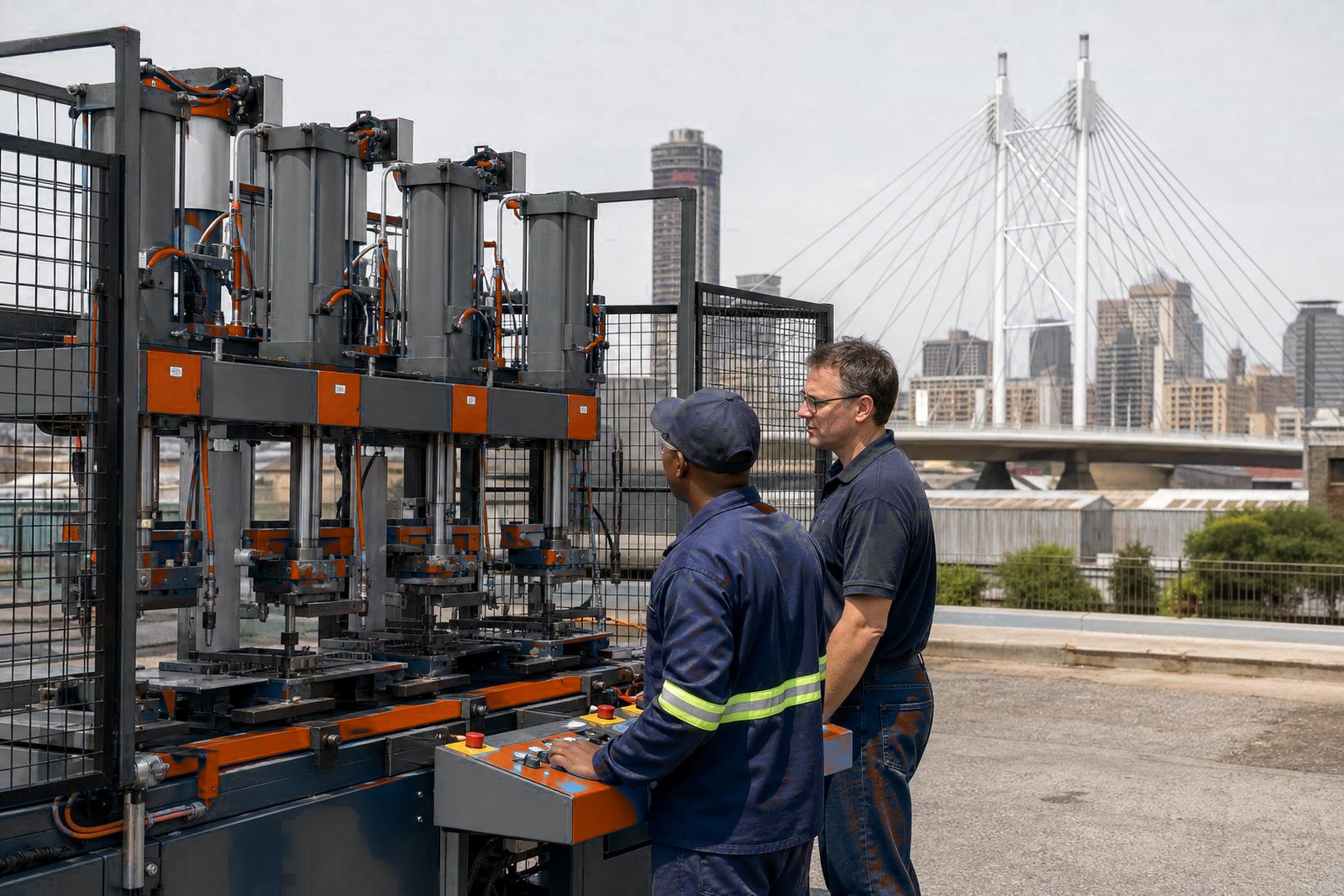
A commissioning visit is where the press, tooling and people all meet in one place. We test the working stroke, set cylinder travel, check two-hand control timing, and make sure the light curtain or guarding layout suits the way the operator stands and feeds the machine. If the part needs a crimp, rivet, stake or seal, we check that the force reaches the work cleanly without marking or distortion.
- Air pressure setting and line stability
- Stroke length and end-stop position
- Tool closure, release and repeatability
- Two-hand controls and guard interlocks
- Light curtain placement and clear approach space
- Tooling contact, wear points and part retention
- Part ejection, stacking or pack sealing flow
Where a press has several stations, we check the sequence station by station so one cycle does not fight the next. That includes timing between the tool head and the fixture, any hold-down points, and the way the part sits during a repeat press. A clean set-up usually saves more time later than trying to force a weak line into daily production.
Tooling confirmation for assembly, crimping and riveting
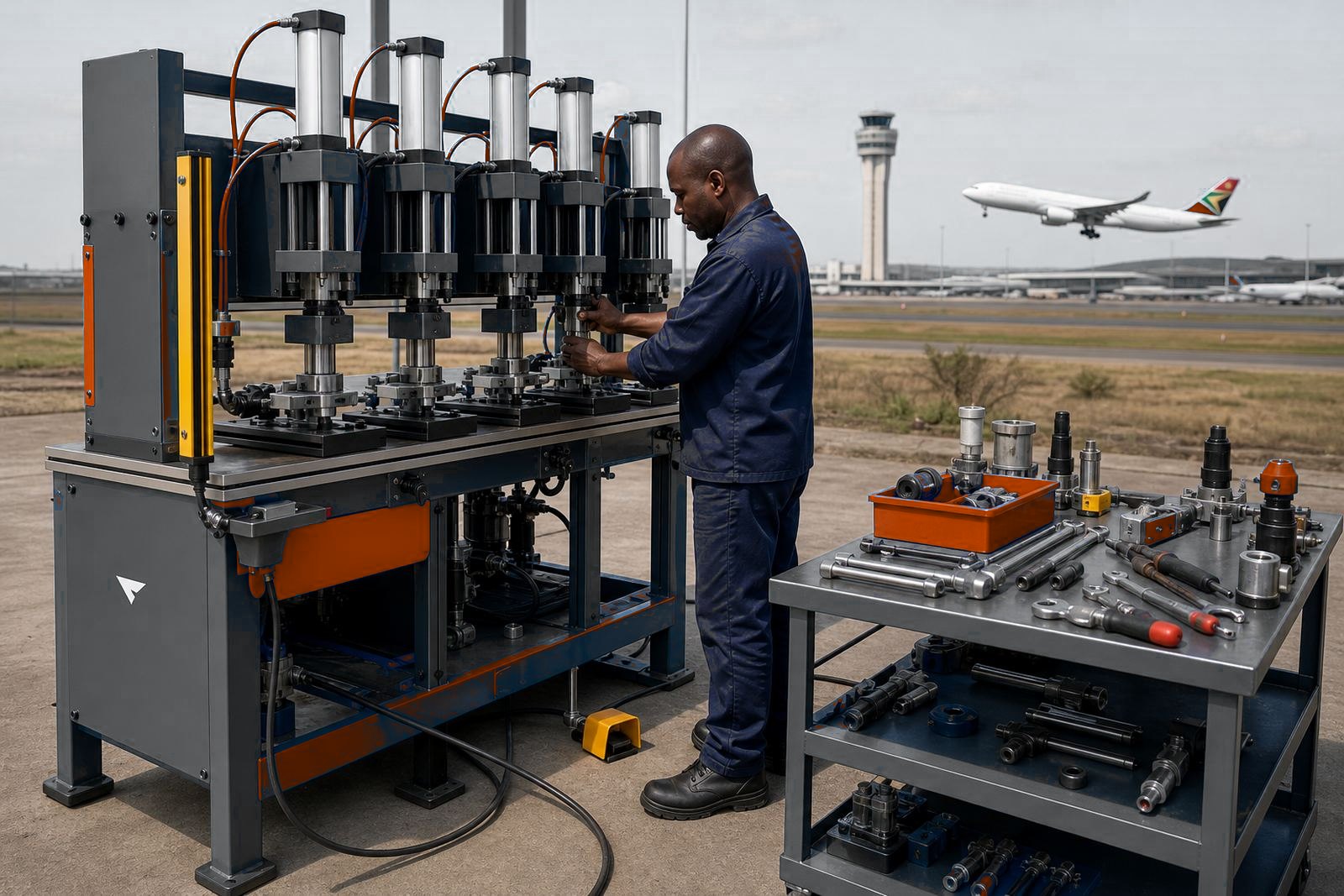
Gqeberha factories often need tooling that can handle a mix of small component work and heavier fixture tasks. Some lines use the same base press for assembly, crimping and riveting, then swap inserts or nests for a different part. Our tooling confirmation checks that the press tooling matches the part geometry and the production rhythm the plant actually uses.
We look at fixture design, contact surfaces, guide points and the changeover method. If a tool is meant for staking or sealing, the contact face must land square and release cleanly. If the job calls for a crimp, the tool must close without twisting the component. Those details matter when the plant runs a steady queue of parts and the operator cannot waste time adjusting every few cycles.
When needed, we also review tooling changes for line teams that run more than one product through the same station set. In practice that means labels, locating pins, stop points and storage for alternate inserts need to be clear and usable, not buried in a drawer and forgotten after the first shift.
Travel into the metro and the plant floor reality
Our commissioning work covers Gqeberha itself and nearby industrial areas where factories need site support for presses and tooling. Travel planning matters because a press visit often needs enough time for checks, adjustments and operator walk-throughs rather than a hurried look at the machine. We treat the site as a working floor with noise, forklifts, temperature changes and production pressure, not a quiet bench test.
Common conditions in the area include coastal humidity, airborne grit, and equipment housed in buildings that see heavy daily use. That can affect air lines, filters, seals and the feel of the press stroke over time. We check the line with those conditions in mind, then note what should be watched during the first production run after handover.
- Gqeberha plant commissioning for new lines and rebuilds
- Air line setup and pressure checks on existing equipment
- Operator training for shift teams and relief staff
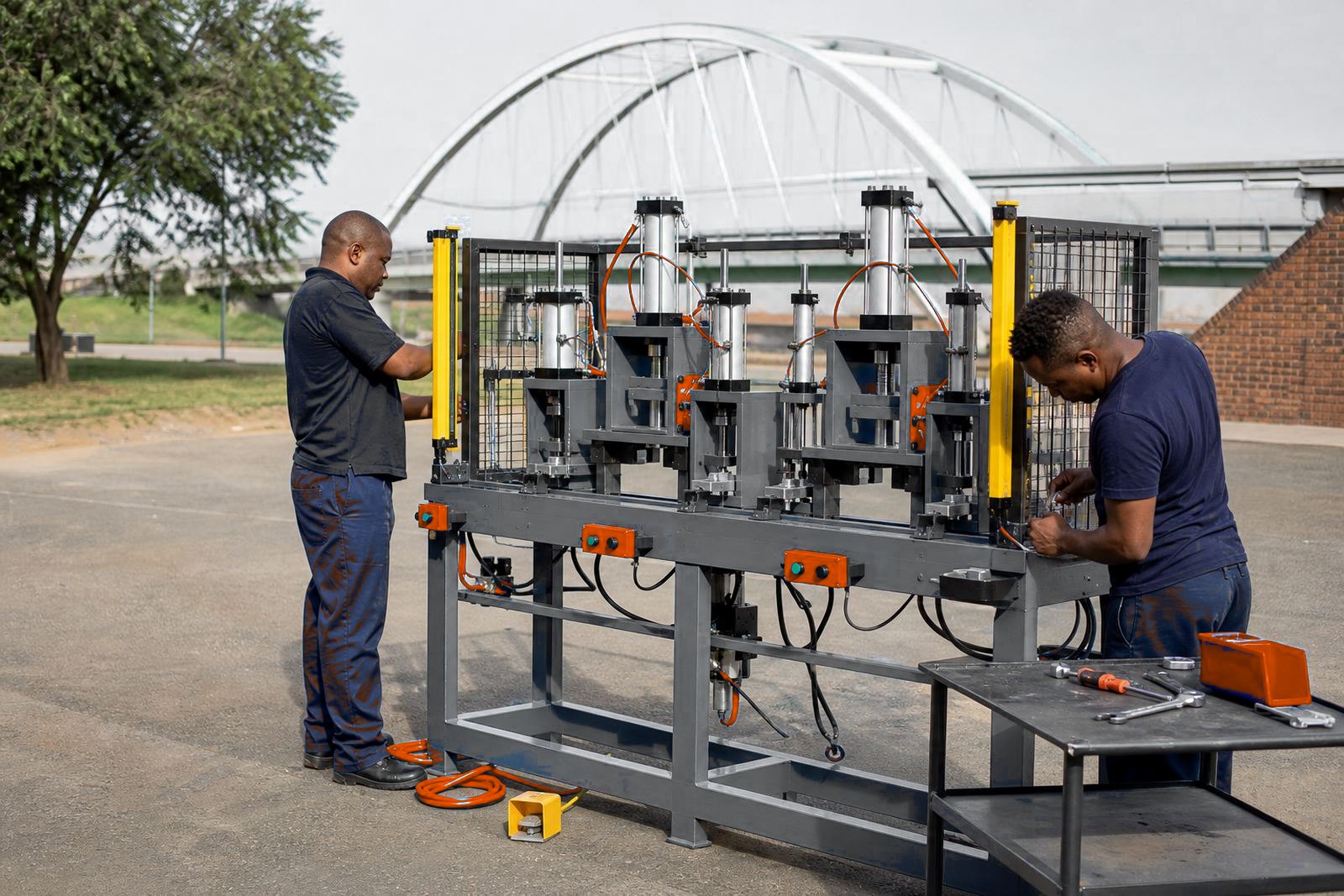
- Guarding builds and light curtain integration on press bays
- Stroke setting and production handover for repeat jobs
The aim is a sign-off that matches the line, the parts and the output expected on that floor. It is a line that can be used by the people on that floor, with the parts they handle and the pace they are expected to keep.
Operator training that fits the shift pattern
Training is included in the handover and fitted to the available time. In Gqeberha, plants often rely on mixed teams, and a press can be used by different operators across shifts. We train staff on safe loading, cycle control, guard use, fault awareness and the basic checks that keep the press steady through the day.
That includes how to stand at the machine, how to work the two-hand controls correctly, what to listen for in the air system and when to stop the run if a part sits out of position. We also cover the simple field habits that matter in a real workshop, like watching the tooling face, checking for loose fittings, and keeping the press area clear of offcuts and packaging scrap.
Where the line uses a light curtain, we explain the protected area and the behaviour that keeps the operator out of trouble. If a team moves between assembly, riveting and pack sealing jobs, we adjust the training around those station differences for each changeover.
How to brief us for a Gqeberha visit
A useful commissioning brief usually starts with the press type, the number of stations, the part being processed and the current fault or set-up issue. Photos of the tooling, guard layout and air connections help, but the key detail is how the line is meant to work on your floor. If the problem is transfer, stroke, sealing, rivet depth or operator handling, say that plainly.
For Gqeberha projects we also need to know whether the work is a new installation, a recommission after tooling changes, or a production line that needs rechecking after wear. That helps us bring the right attention to the fixture side, the guard side and the operator side, instead of treating every site as the same job.
Send Gqeberha commissioning enquiries through the enquiry form on our contact page. That is the cleanest way to send the plant details, the line location and the work you need covered.