

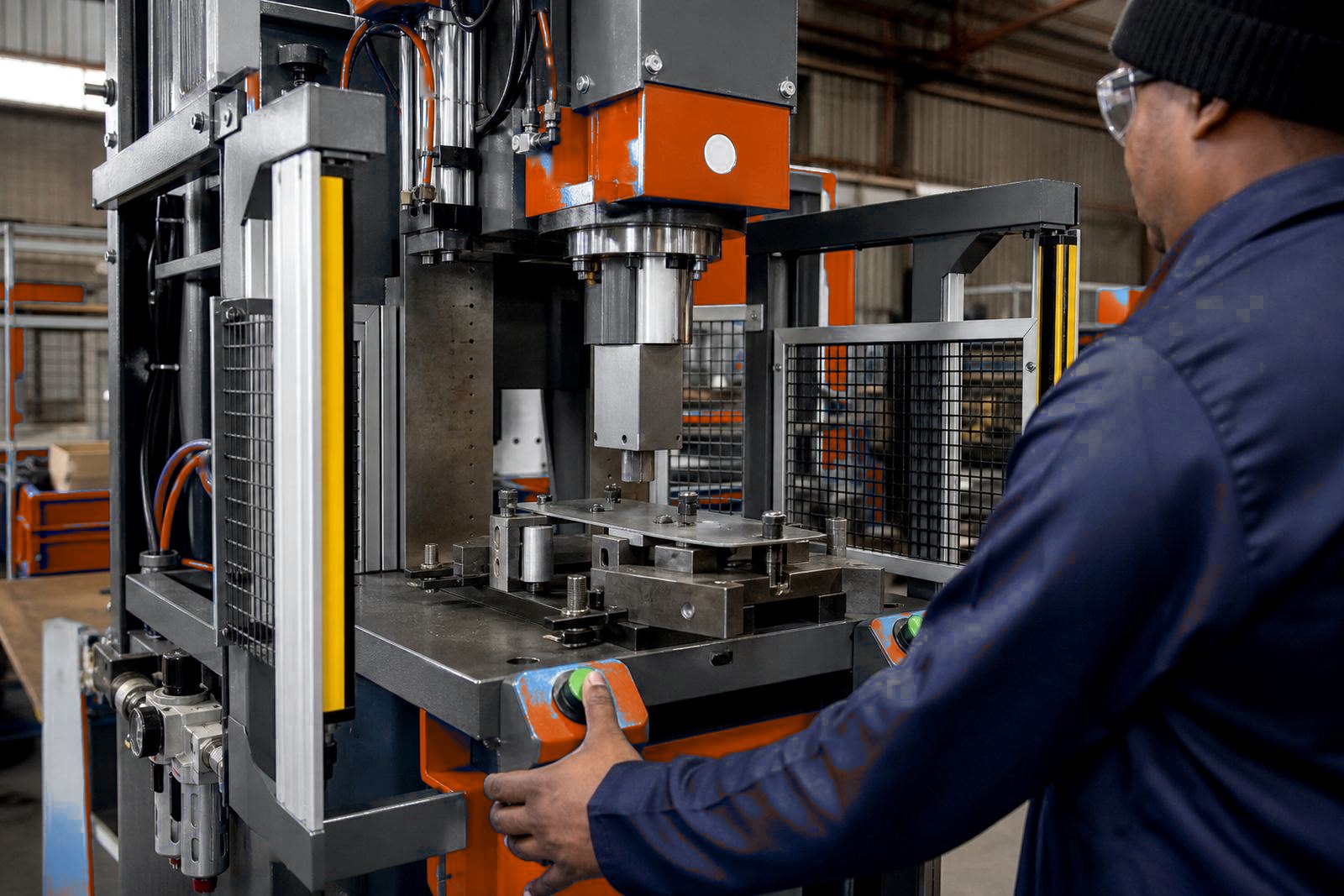
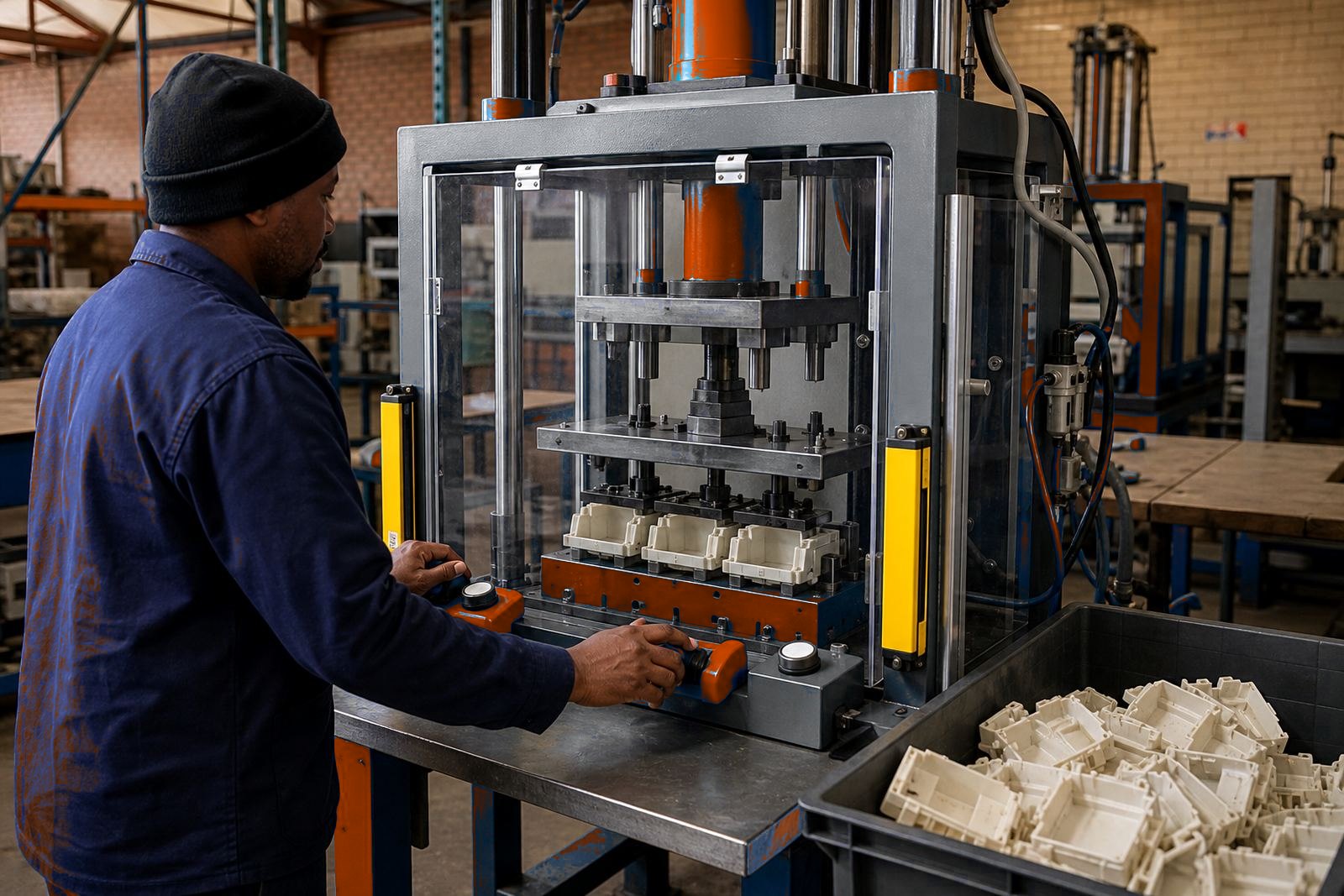
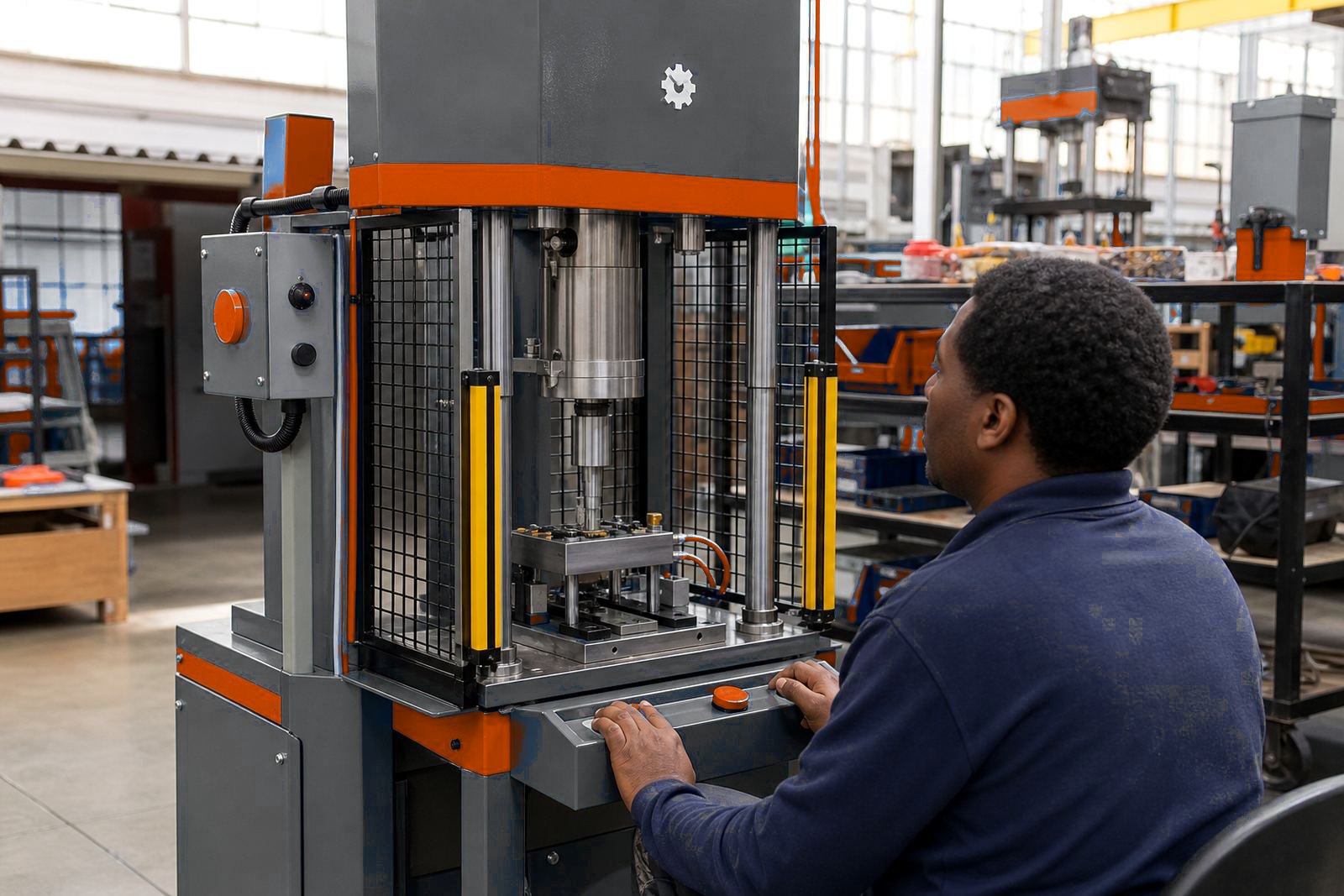
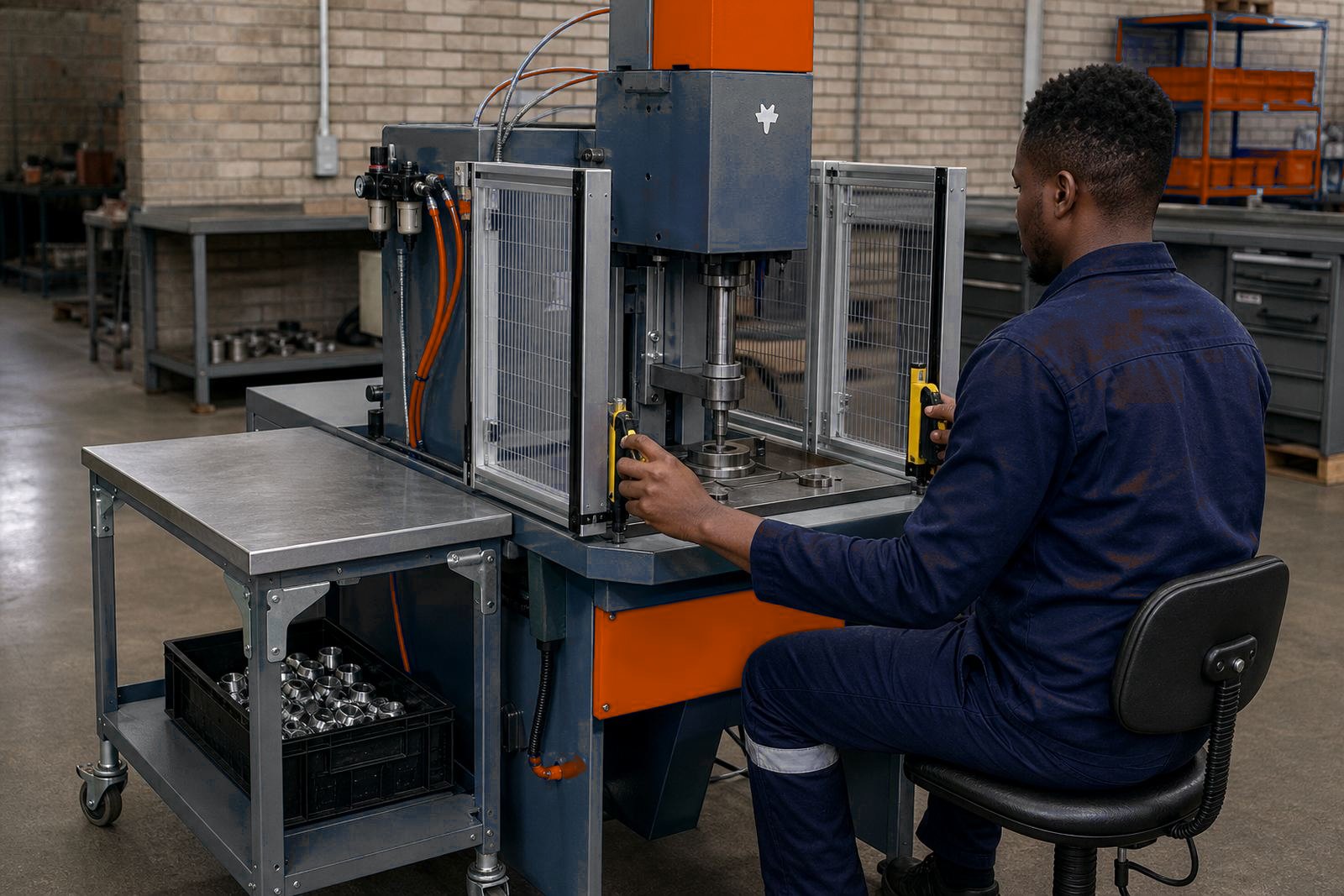
We set up each station around the task, instead of forcing the task to fit the station.
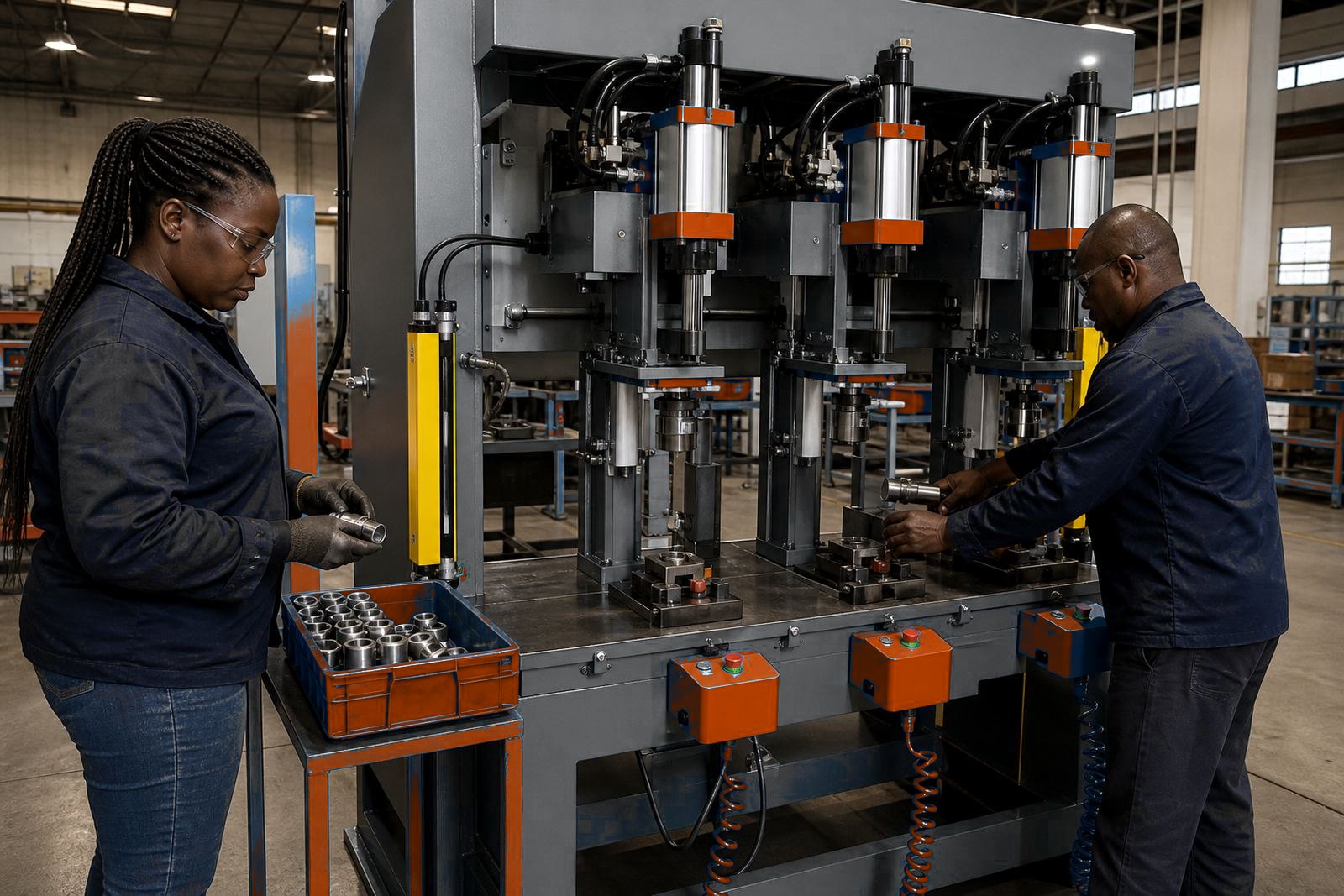
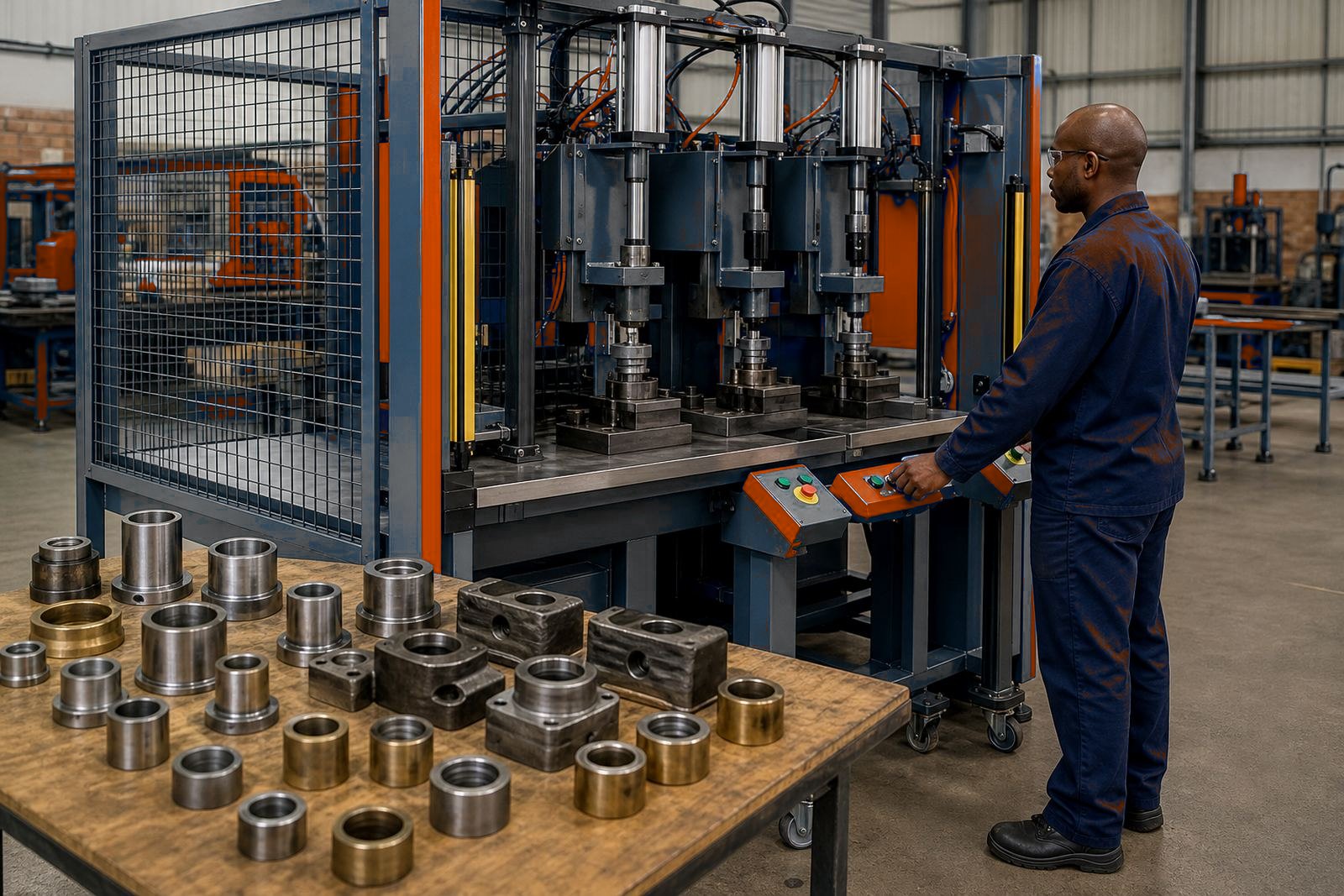
Assembly lines often need more than one action in a single cycle. A station can hold a part, bring in a tool, apply force and release the finished item without the operator fighting the setup. That is where multi-station pneumatic presses earn their place.
For factories in Johannesburg, Pretoria, Durban, Gqeberha and East London, the useful question is not whether a press can push harder. It is whether the stroke length, air pressure and tooling match the part, the cycle and the handling pattern on the floor. One job may need a short controlled stroke for a terminal crimp, another may need a deeper approach for riveting or staking.
Assembly, crimping, riveting, staking and pack sealing
Different assembly tasks ask for different tooling and different force paths. A crimp wants even pressure across the joint. Riveting needs a stable downstroke and proper support under the work. Staking benefits from tight control over depth so the formed head stays consistent. Pack sealing often needs a neat closing action with repeatable compression across the seal area.
- Assembly stations for parts that must be aligned before force is applied
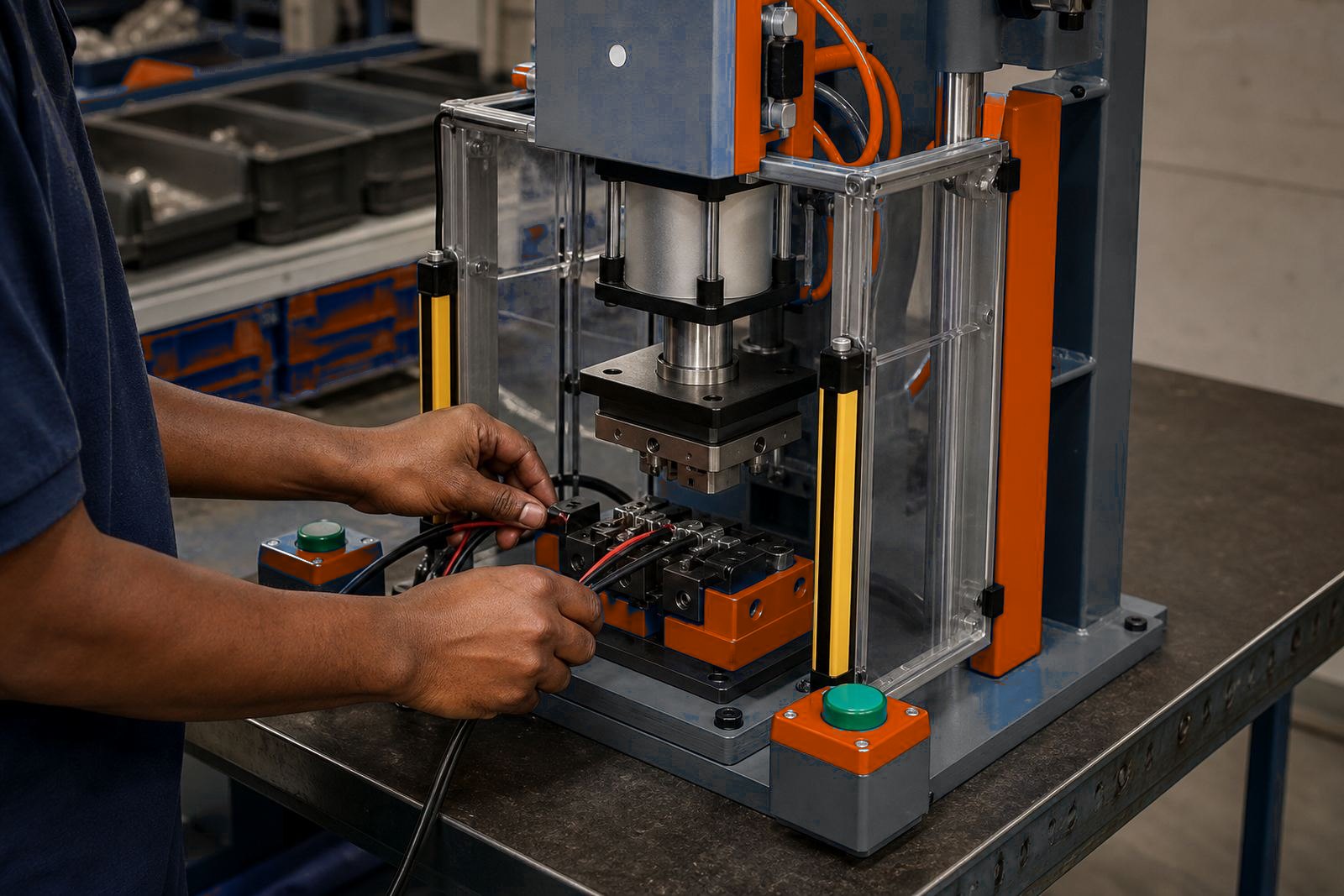
- Crimping stations for terminals, lugs and formed connections
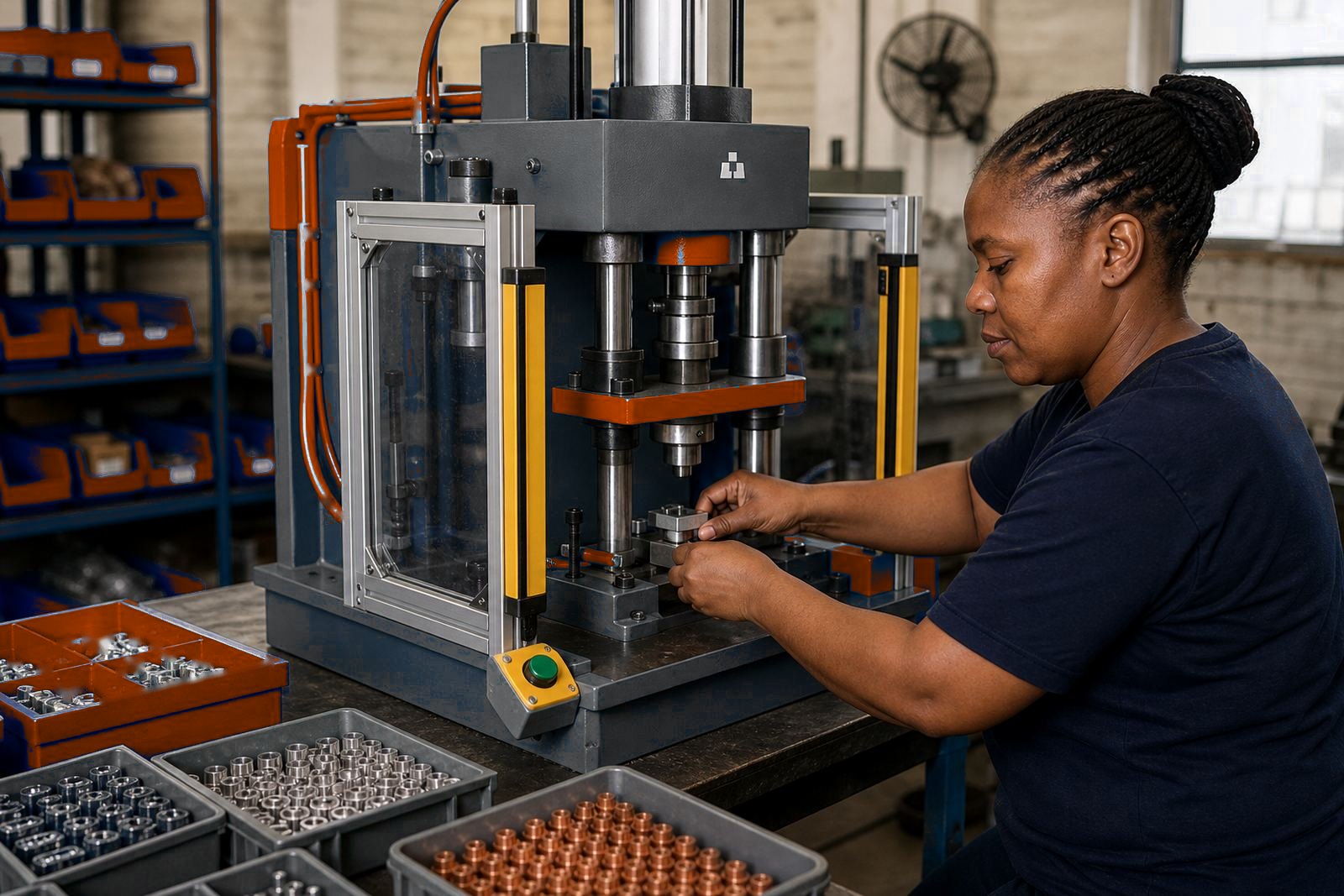
- Riveting stations for metal or plastic components that need secure fastening
- Staking stations where a formed feature must be set cleanly
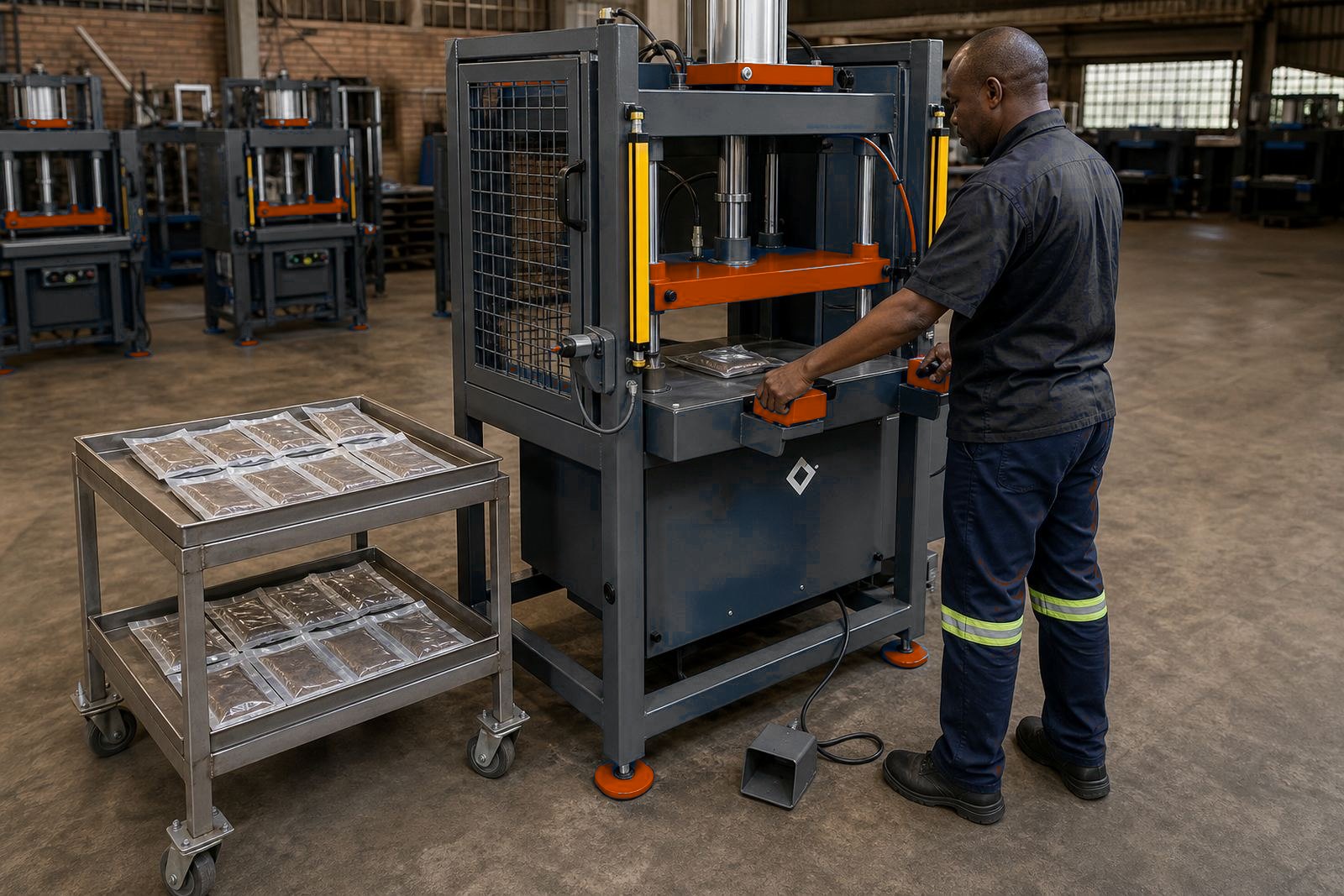
- Pack sealing stations where pressure and dwell must stay even
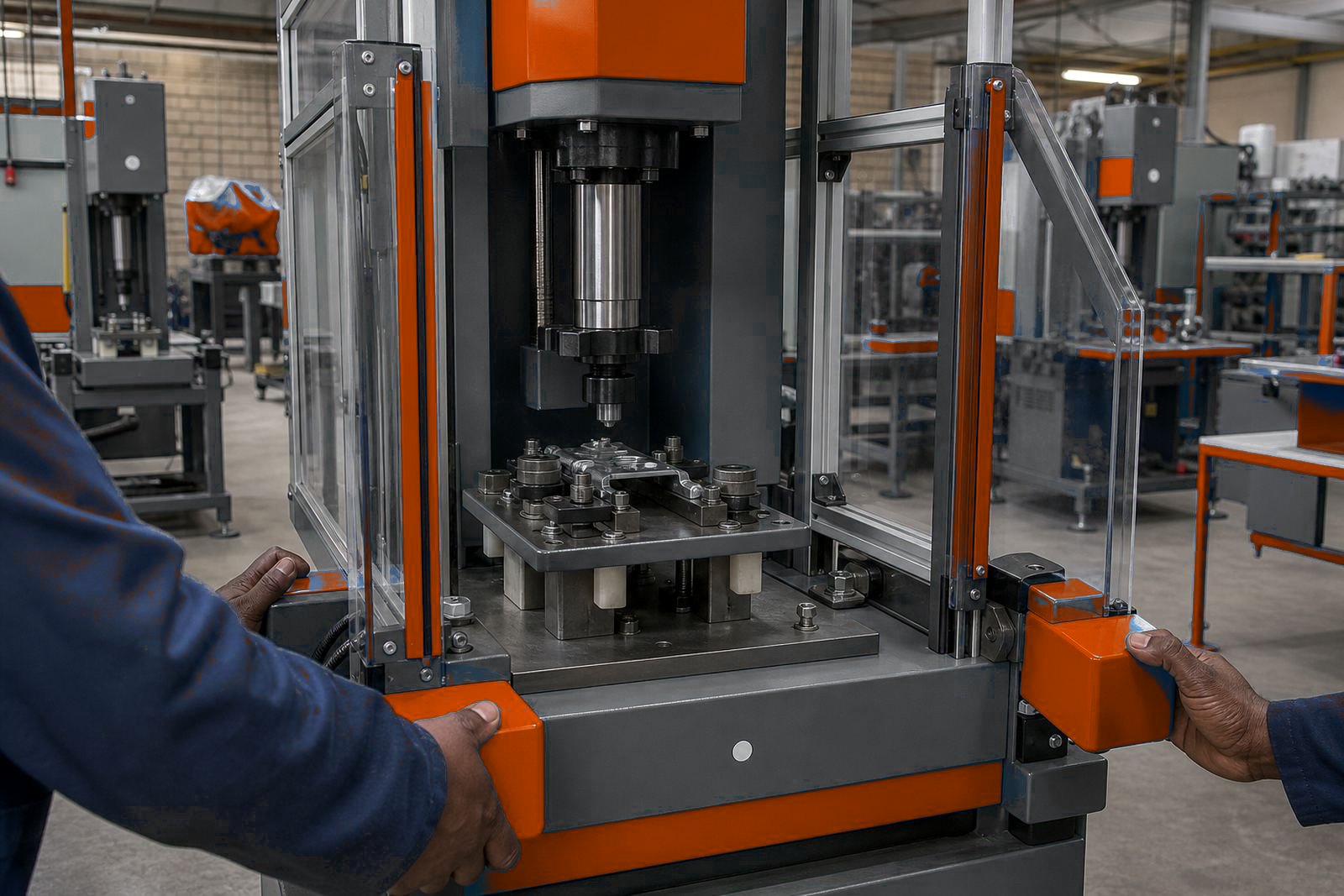
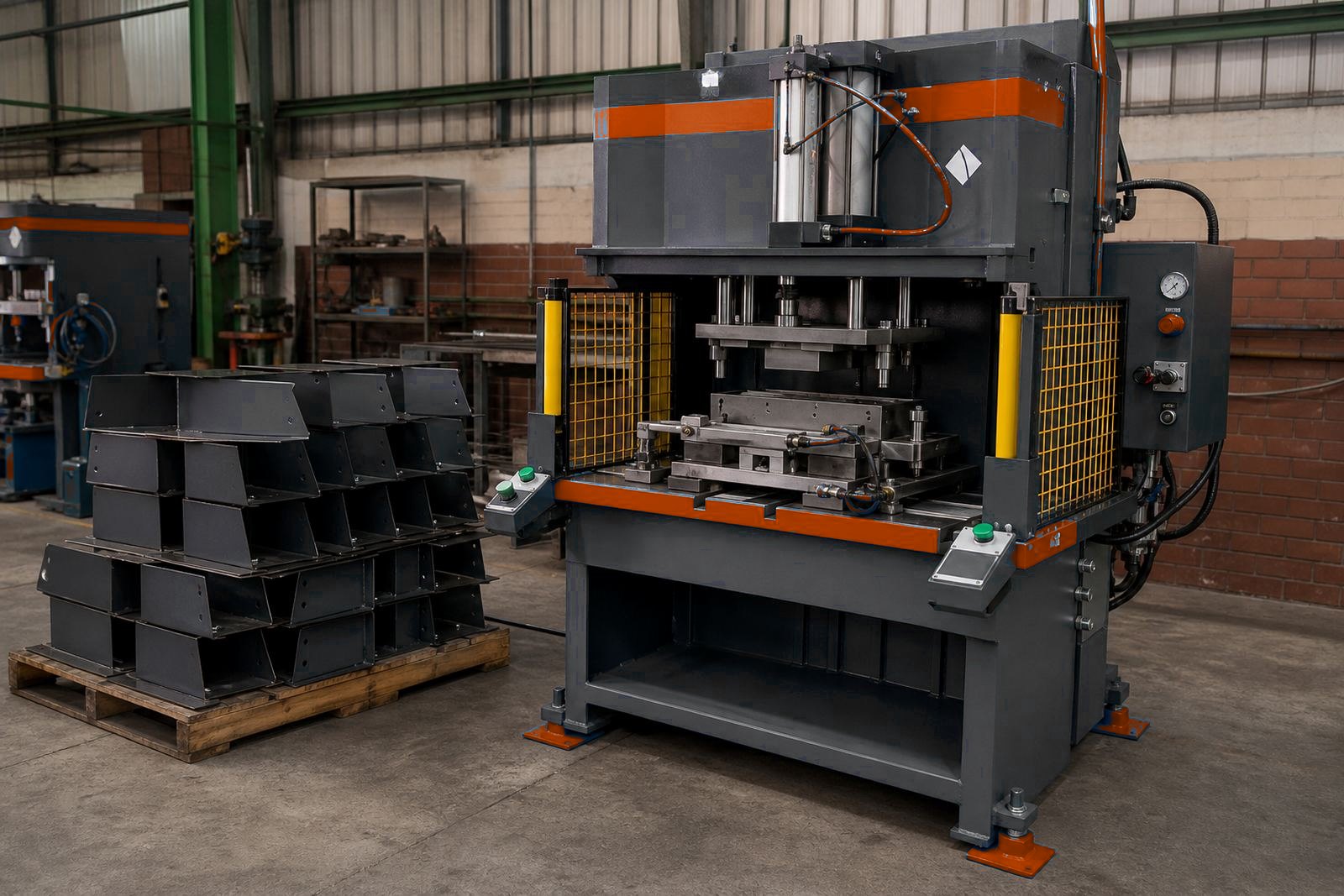
The tooling changes with the job. Flat tools, contoured nests, guided punches and part locators all serve different materials and tolerances. A good setup keeps the component steady while the press does the work.
What the operator feels at the point of use
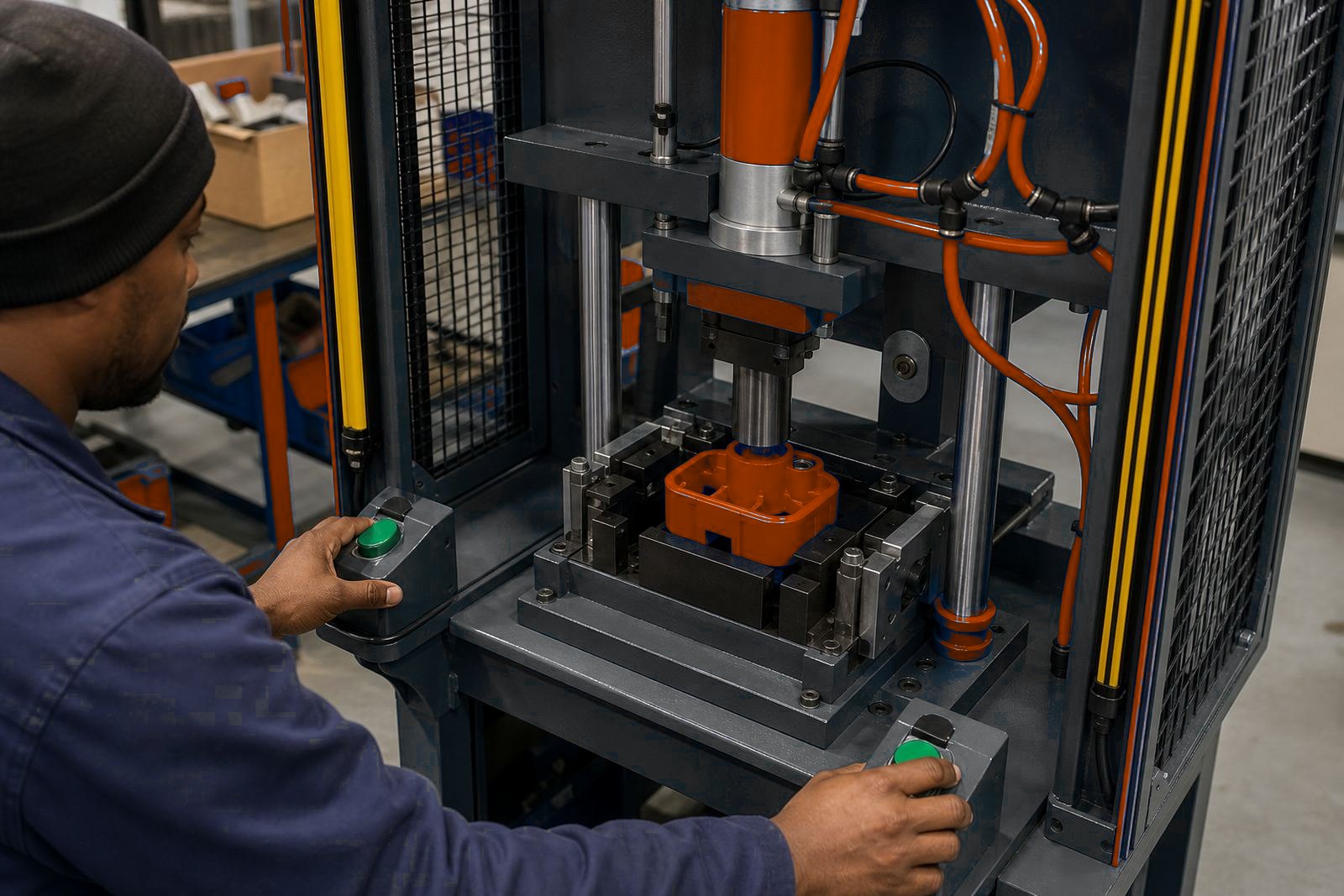
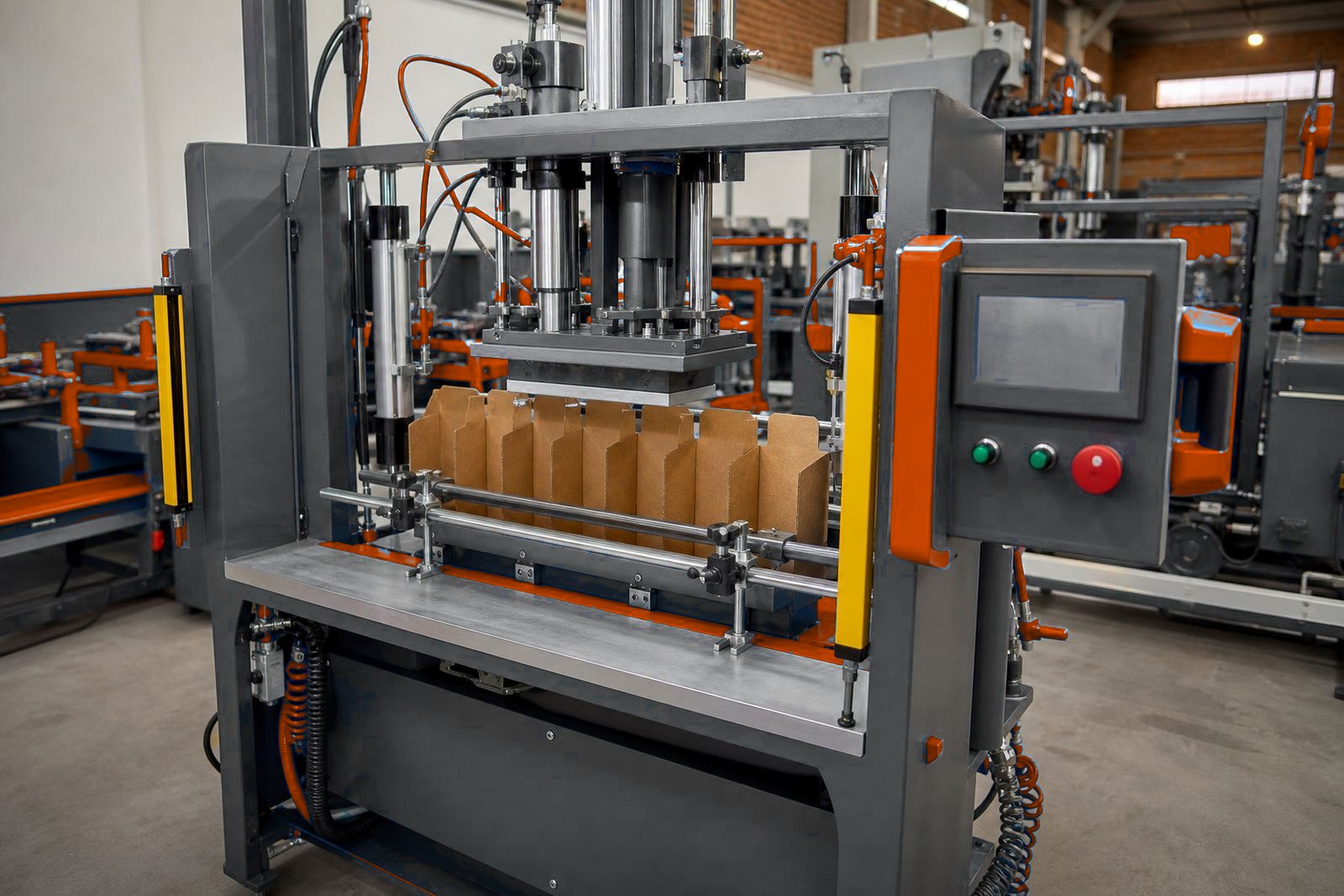
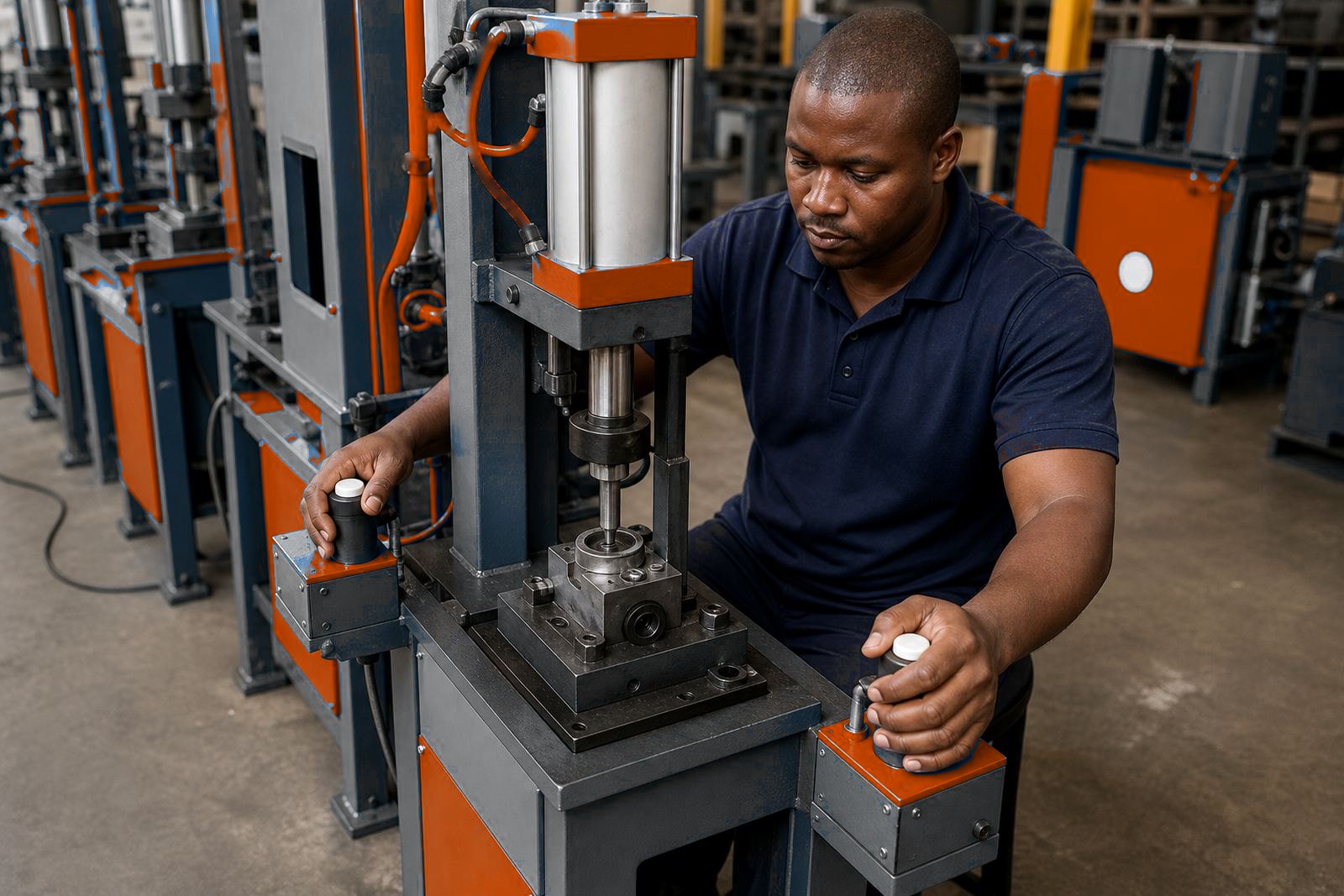
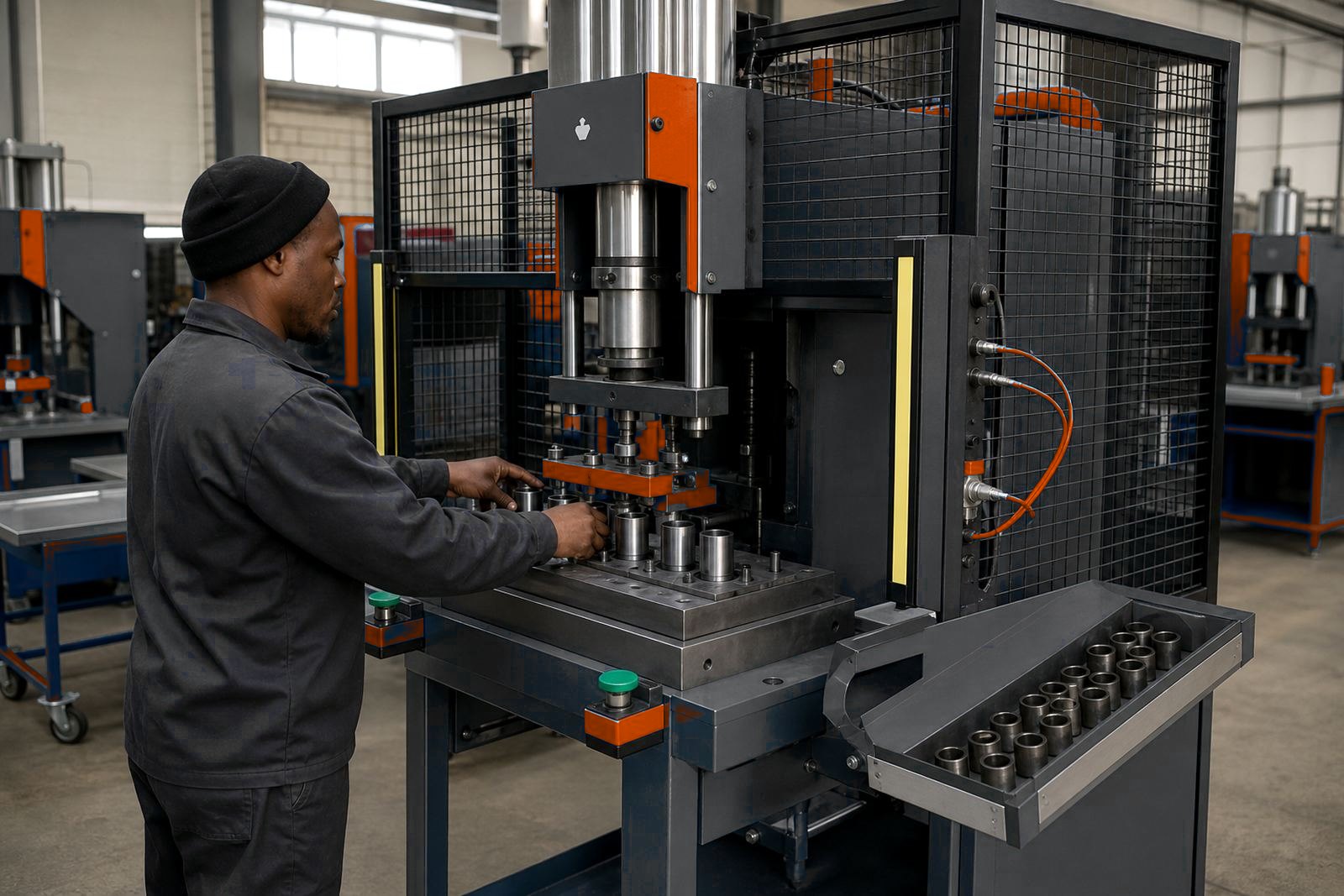
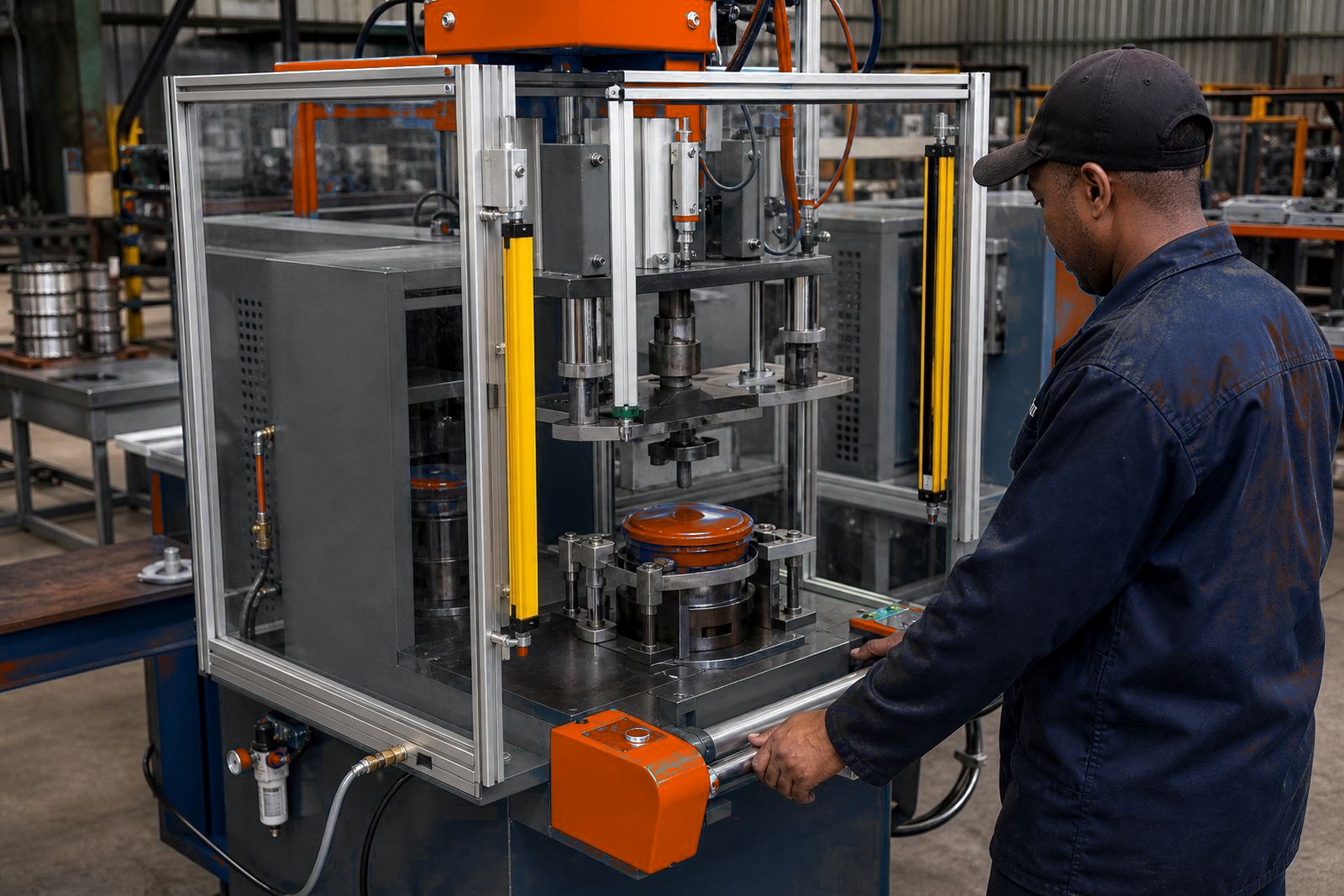
On the floor, the press must be easy to load and hard to misuse. Two-hand controls help keep the cycle deliberate. Light curtains add another layer where hands need to stay clear of the work zone. Guarding keeps the moving parts contained without making the station awkward to load.
Air pressure, stroke setting and tool alignment shape the feel of the machine more than people sometimes expect. Too much stroke can bruise a part. Too little can leave an incomplete form. A well set station gives the operator a clear loading position and a predictable cycle, which matters in busy production areas around Isando and Kempton Park.
- Two-hand controls for deliberate start-up
- Light curtain integration where access control is needed
- Guarding builds suited to the station layout
- Stroke setting for the correct forming depth
- Air line setup for stable press performance
Tooling and fixture work that keep parts still
Most assembly faults start with movement. If the part shifts, the crimp drifts. If the rivet sits off centre, the head forms badly. If the seal face is not held square, the result looks uneven and can fail in service. Custom tooling and fixture design solve that by giving each component a fixed home before the cylinder comes down.
Musa Hartnick designs tooling for real parts, not ideal drawings. That means checking access, load position, clearances and wear points. Johan Ramokgopa then works the workshop side so the fitted parts, guides and mounts suit the actual machine build. In coastal places like Durban and East London, tooling also needs sensible material choices where humidity can affect exposed metal surfaces.
Commissioning on a live factory floor
Press commissioning is not only about switching on air and checking movement. The cycle needs to be proved, the guarding must function, and the tooling must land where it should every time. Lerato Moagi handles commissioning work so the station can be tested under real operating conditions, with production movement and operator access both taken into account.
Thandiwe Matlala manages the project side while Pieter Sauls oversees the build and direction of the work. That coordination matters when a line must move from workshop build to site installation, then into production handover with the correct settings recorded. Where a factory has multiple stations in one line, the order of setup can be just as important as the machine itself.
Choosing a press for the task list in front of you
Begin with the component, then trace back to the press. What material is being formed, how deep is the stroke, how many stations are needed, and does the operator load one part at a time or several parts in sequence? Those answers guide the cylinder size, the press frame, the tooling layout and the guarding arrangement.
- Part size and material thickness
- Required force and stroke depth
- Single station or multi-station flow
- Operator access and safety controls
- Tooling change frequency on the line
MultiPress supports assembly tasks across South African factories with custom tooling, site installation, stroke setting, operator training and production handover. The right press is the one that suits the task, the part and the people working the line each shift.