

Where the commissioning team works from
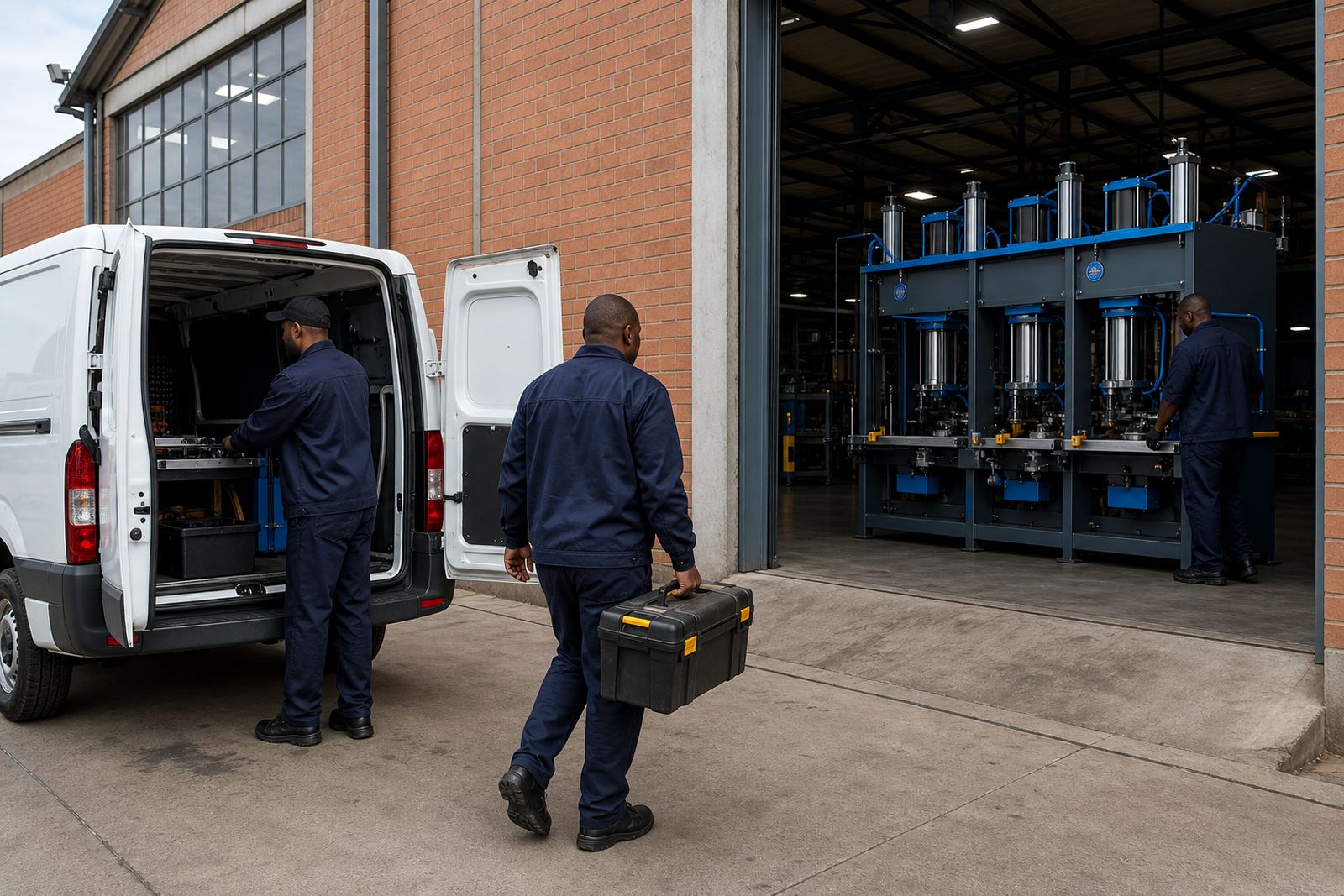
Our base in Isando supports factories across Ekurhuleni and the wider country, with site work arranged around the line, the tooling and the sequence of stations. Some jobs need a full press check after installation, others need stroke adjustments, airflow checks or a safer way to run a changing set of parts. The same machine can behave differently in a Durban plant with humid air, or in a Pretoria workshop where the line layout changes between shifts.
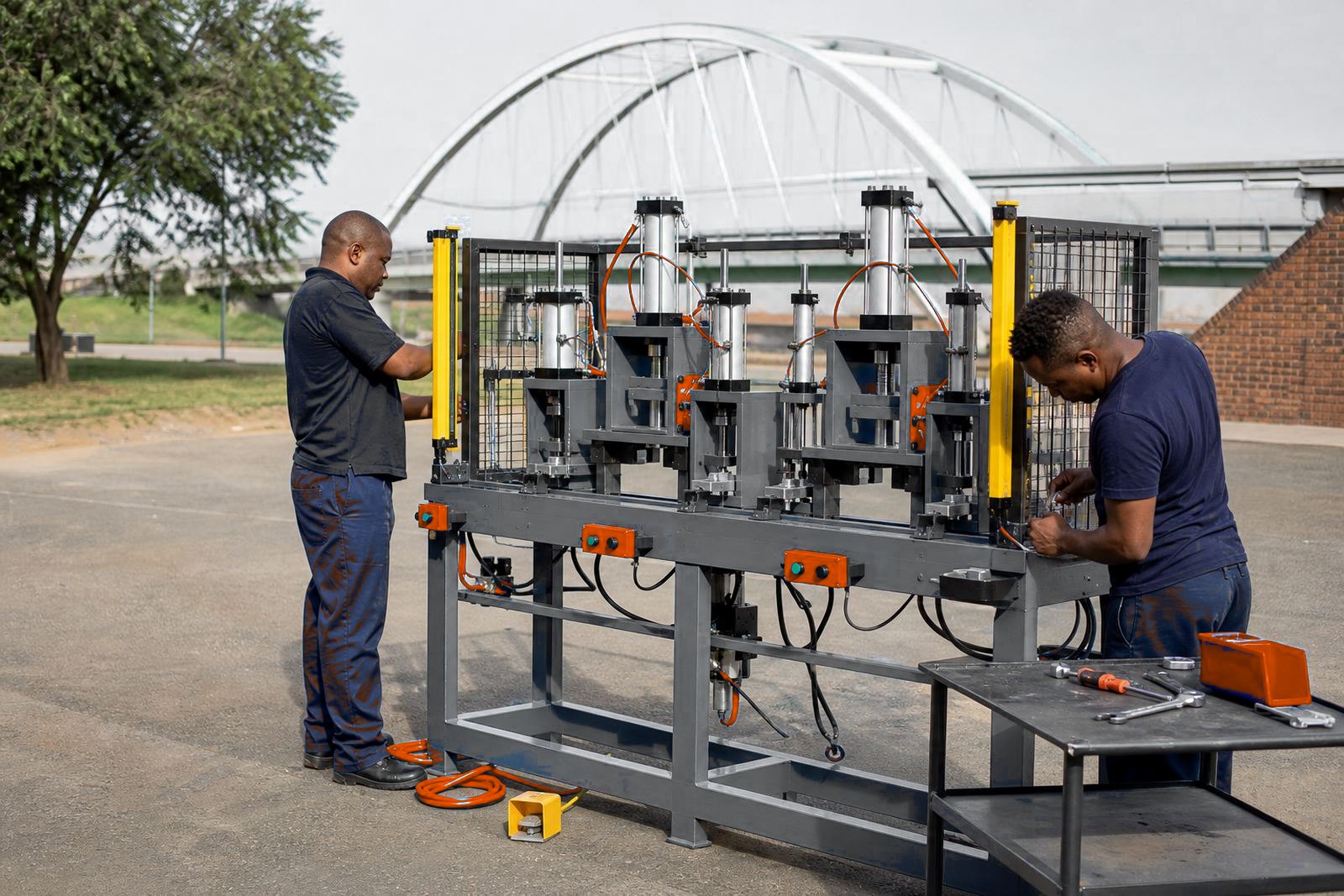
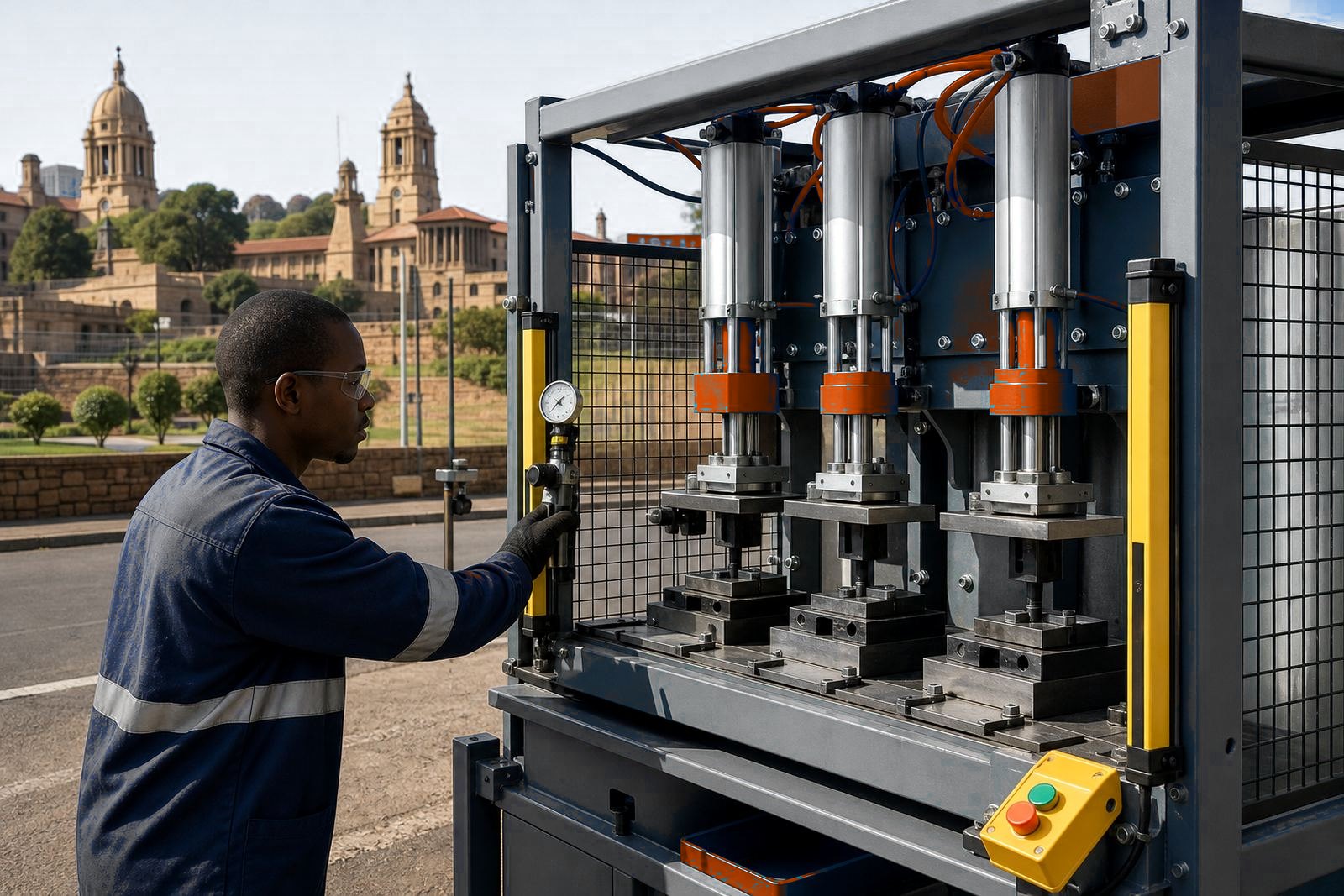
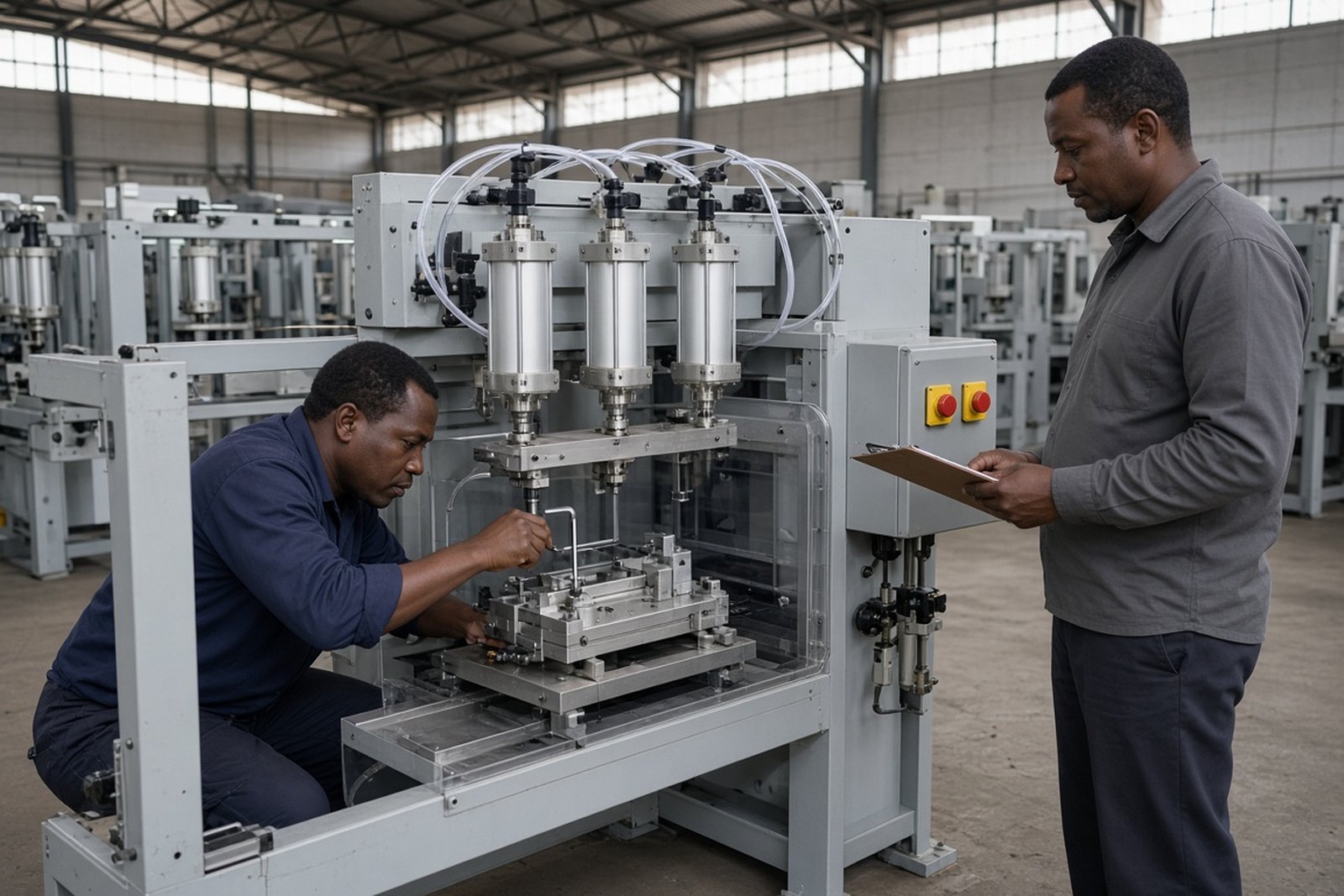
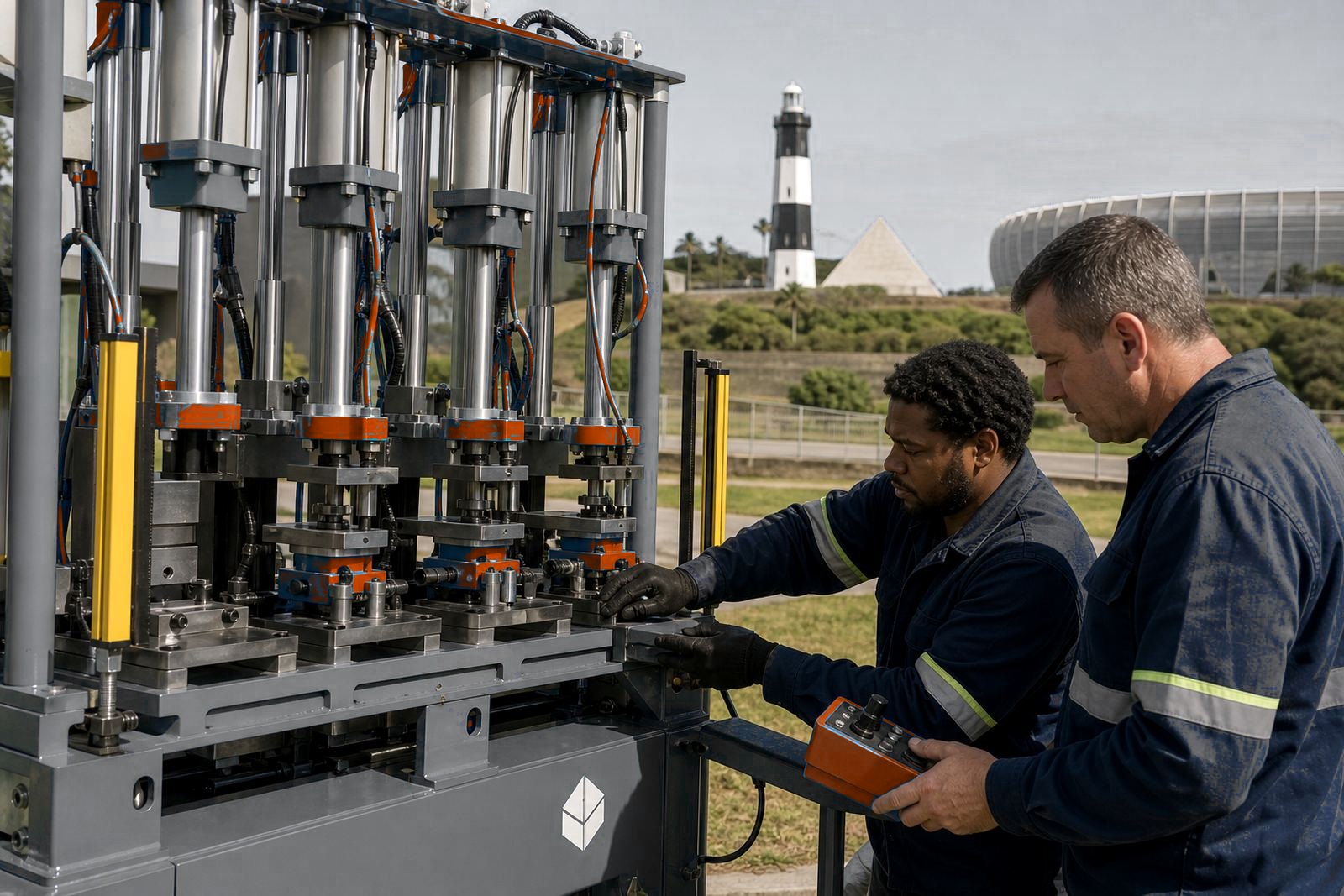
Commissioning usually starts with the press frame, cylinders, pressure settings and controls. After that we check whether the tooling lands squarely, whether the guard doors and light curtains suit the cycle, and whether the operator can work the station without reaching into a danger zone.
How to match a site to the right support
Different plants need different levels of work. A new line may need full set-up from the first station to the last. An existing line may only need a tooling change, stroke reset or better guarding around a crimping or riveting station. For pack sealing, the focus can shift to repeatable pressure, consistent travel and a clean transfer between stations.
- Assembly lines often need stroke setting and two-hand control checks.
- Crimping stations need pressure, dwell and tooling face alignment.
- Riveting jobs depend on straight travel and repeatable force.
- Staking work needs a stable setup so the part does not twist.
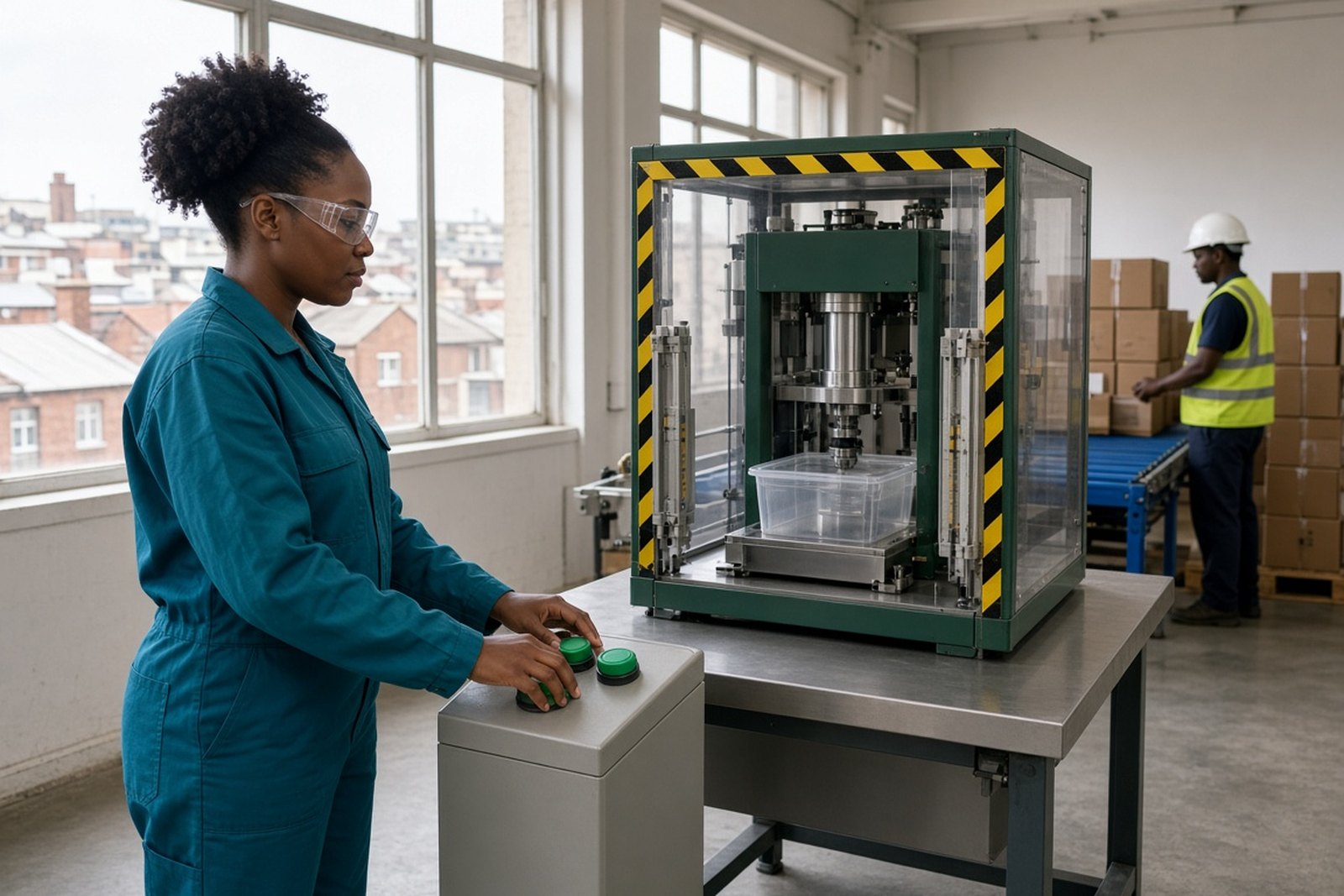
- Pack sealing stations need even clamp pressure and clean release.
Commissioning checks that matter on the floor
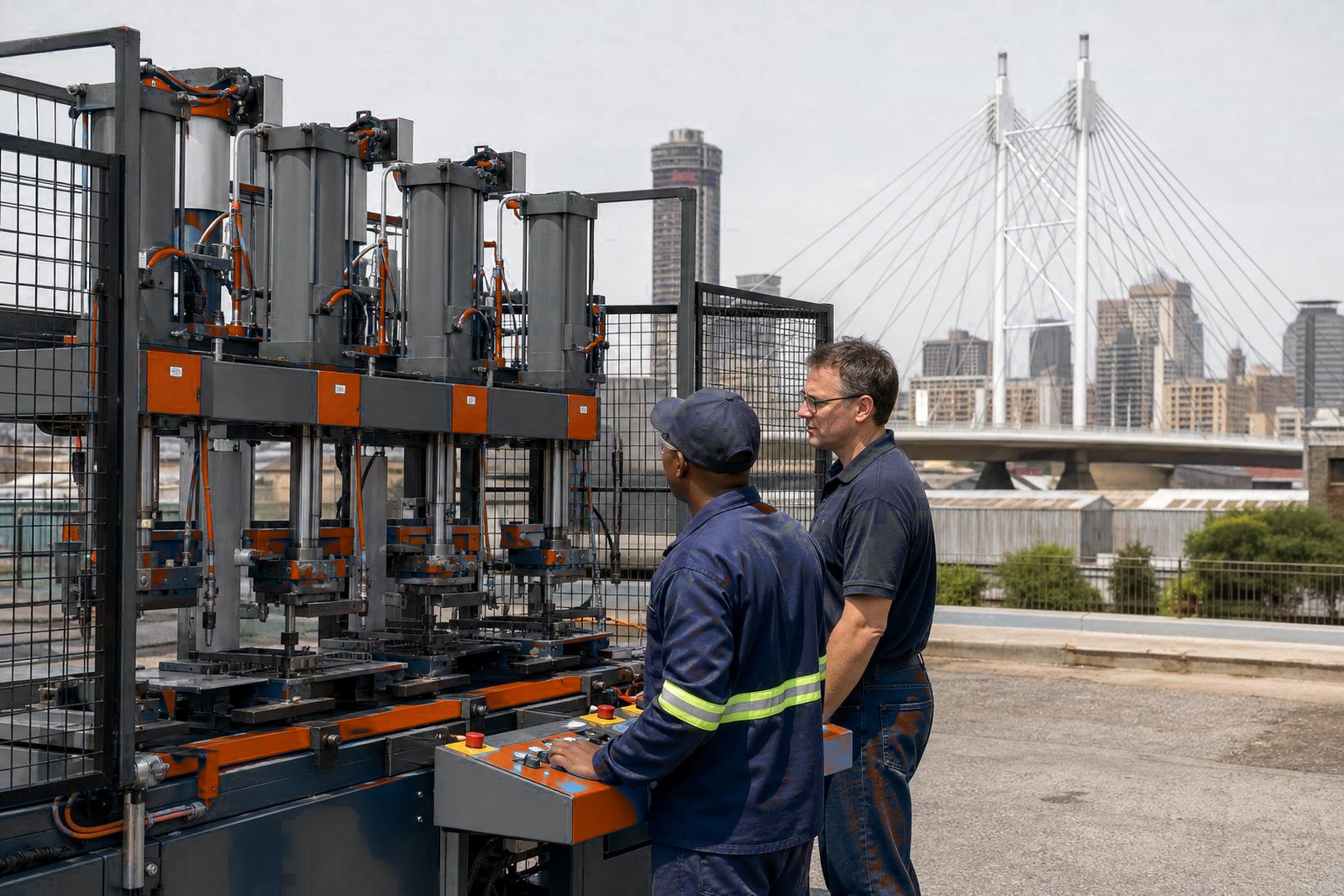
Our site work is practical. We look at the air line setup, the regulator position, the cylinder movement and the stop points on each stroke. If a station is running too hard or too soft, the part may mark, crush or sit out of line. On multi-station presses, one poor setting can throw off the whole cycle. That is why guarding and control checks happen alongside the mechanical checks, not after them.
Two-hand controls, light curtains and guarded access are part of the same job. The operator should be able to load, cycle and unload in a steady rhythm without confusion. Where a press needs a new fixture or a tooling change, the tooling designer and workshop team work from the actual part and the actual line space, not a general assumption.
Training that fits the people running the line
Operator training is included in production handover. The aim is to show the team how the press behaves, how to set the station correctly and how to notice when the part is drifting out of spec. That includes safe loading, control use, routine checks and what to watch during a shift change.
- Start-up checks for air, guards and controls.
- Safe use of two-hand operation and light curtains.
- Setting the stroke for the part and the tooling.
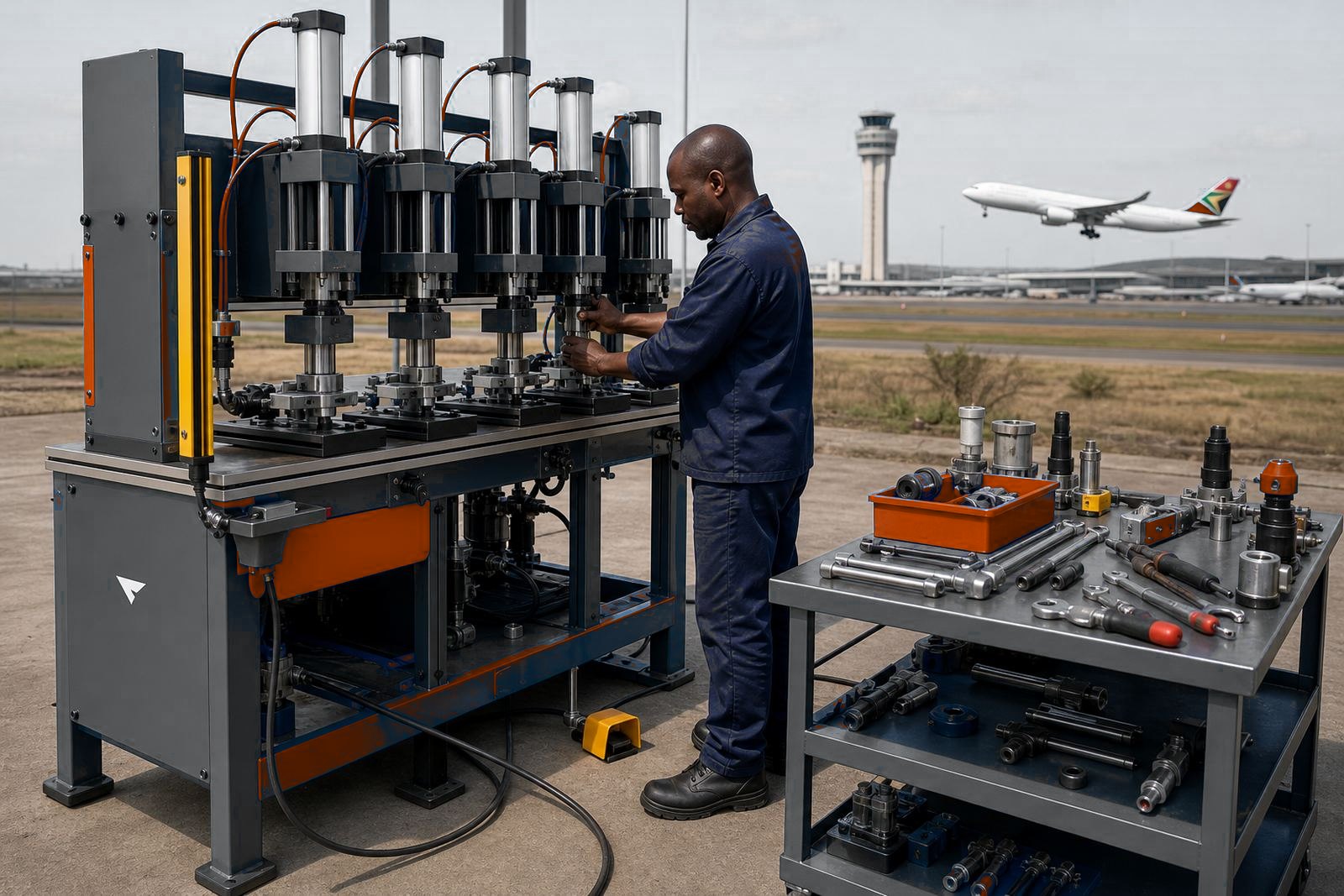
- Basic handling of tooling changes between runs.
- Production handover notes for supervisors and operators.
Regional commissioning points across South Africa
Work often starts in Isando and then moves to nearby industrial areas like Kempton Park and Boksburg, where many plants need the same careful setup on different lines. The same service also reaches Johannesburg, Pretoria, Durban, Gqeberha and East London, where press lines can vary from compact workshops to larger factory floors. Local conditions matter, especially where moisture, dust or floor space affect guarding and setup.
We keep the commissioning sequence tied to the site. That means the site installation checks, air supply review and stroke setting are done against the actual machine and site conditions. The result is a line that can be handed over with clear operating steps and practical notes for the team on shift.
Commissioning for your plant, line and tooling
Plant managers, production leads and maintenance teams usually want to know who handles commissioning near their plant, and what the site visit will involve. Local machine types, site access and line conditions all shape how a commissioning day is planned. The common thread is the same: a multi-station pneumatic press needs careful setup, safe controls and a trained operator at the end of the job.
For plants planning a new assembly line or changing an existing one, the useful starting point is the station count, the force needed at each stage and the type of tooling in use. From there, the commissioning scope becomes clearer and the handover is easier to manage.
- Custom tooling for the part and the press cycle.
- Fixture design for repeatable loading and location.
- Guarding builds matched to the station layout.
- Light curtain integration where access control is needed.
- Stroke setting and press commissioning for stable output.