

Stations That Match the Job
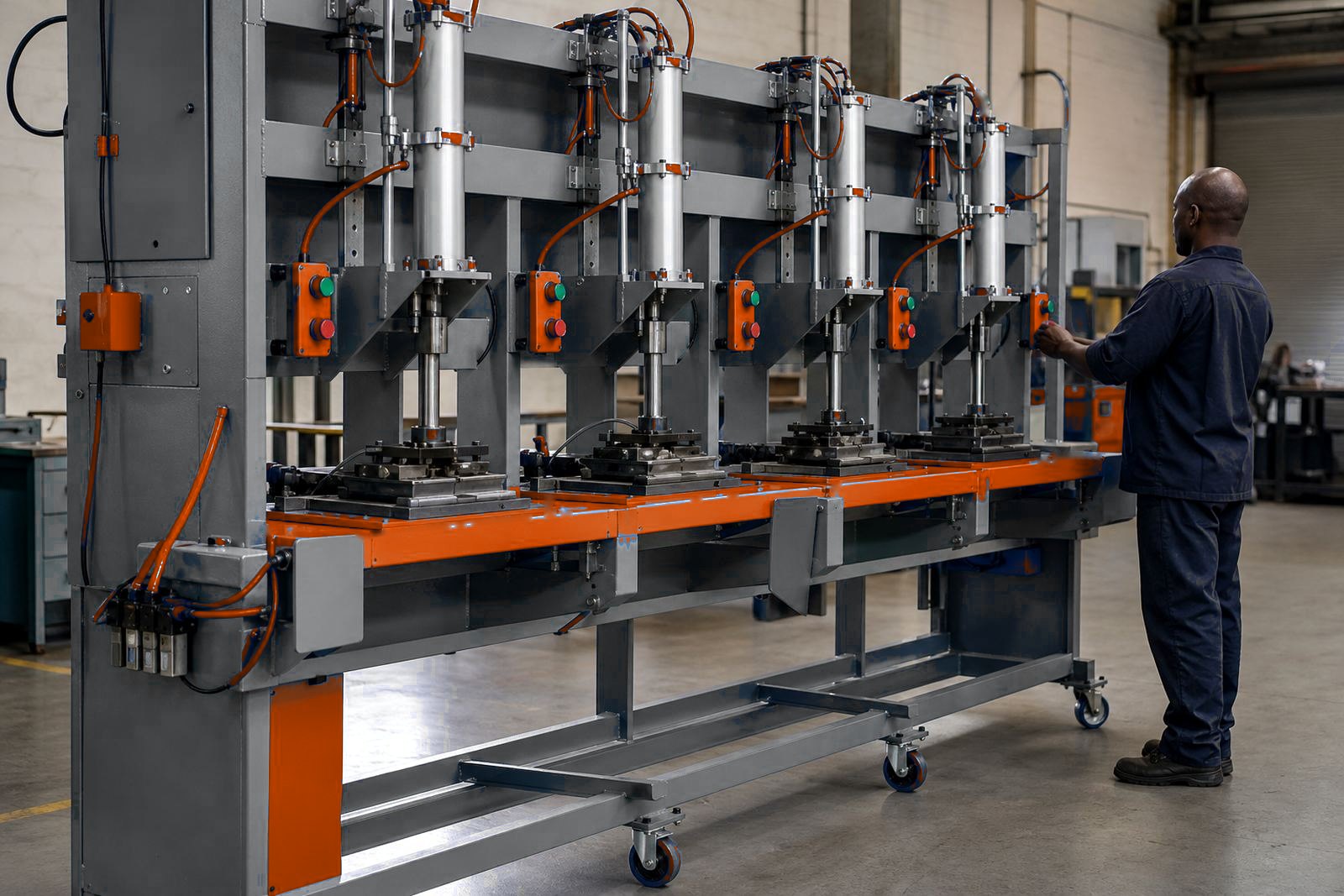
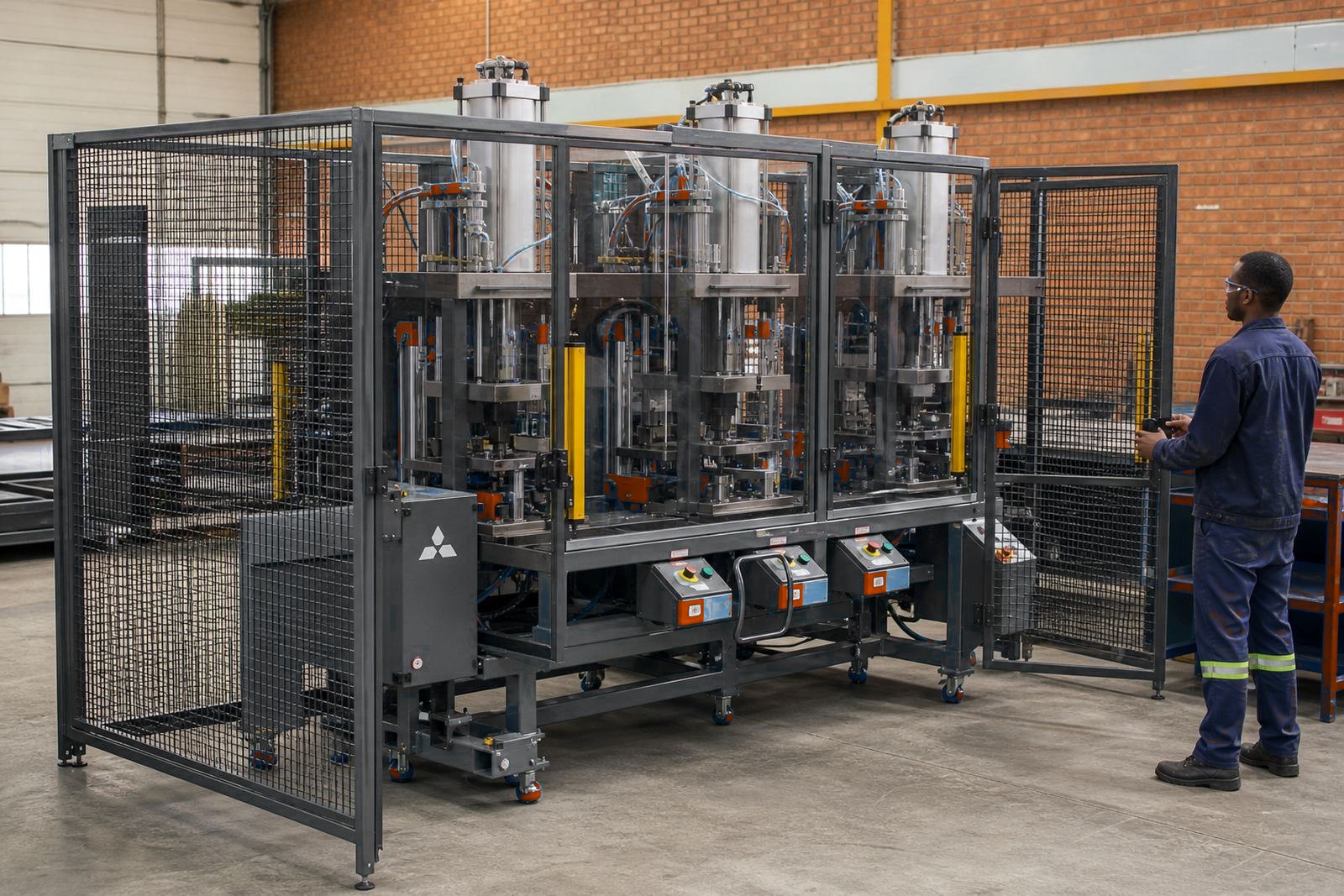
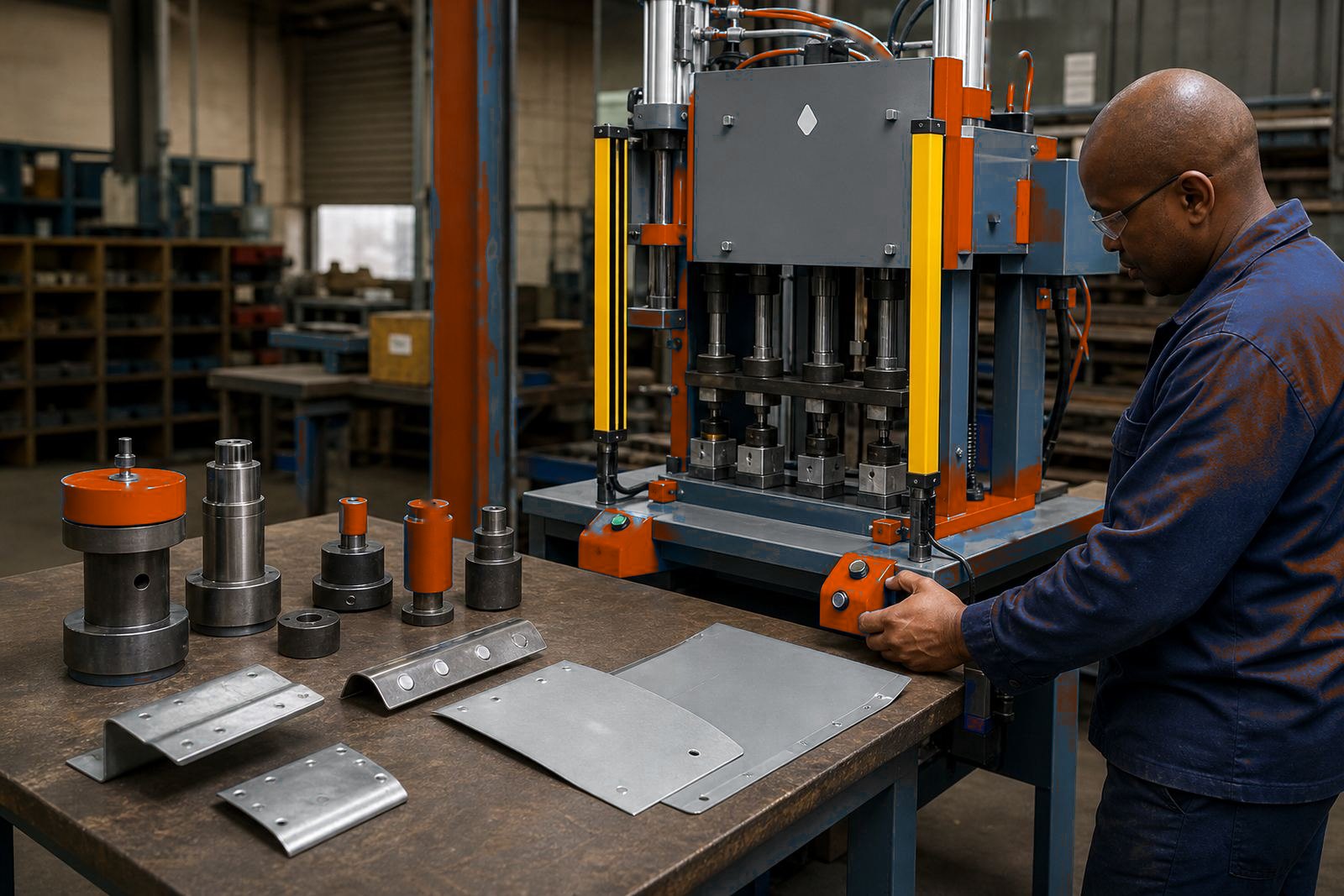
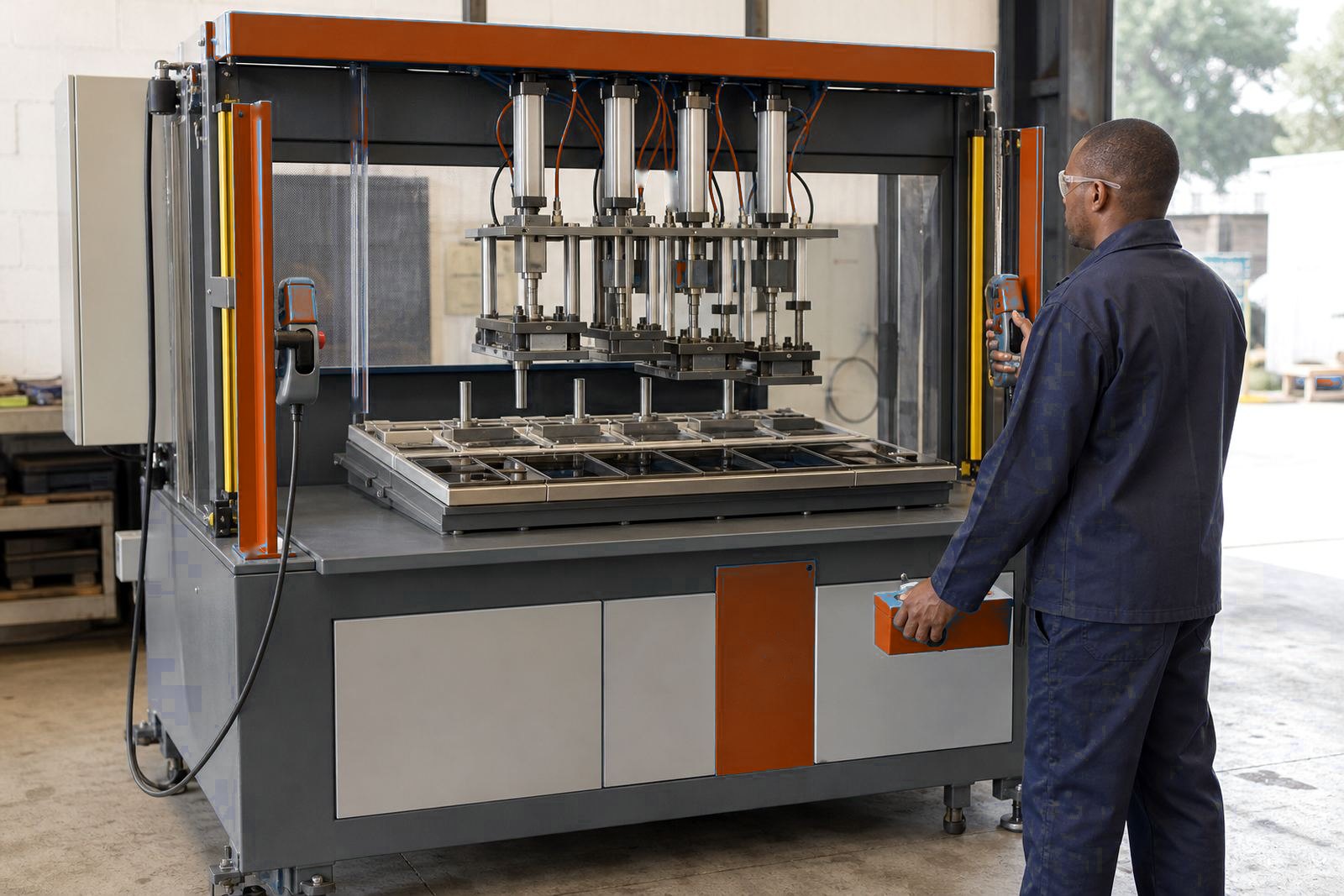
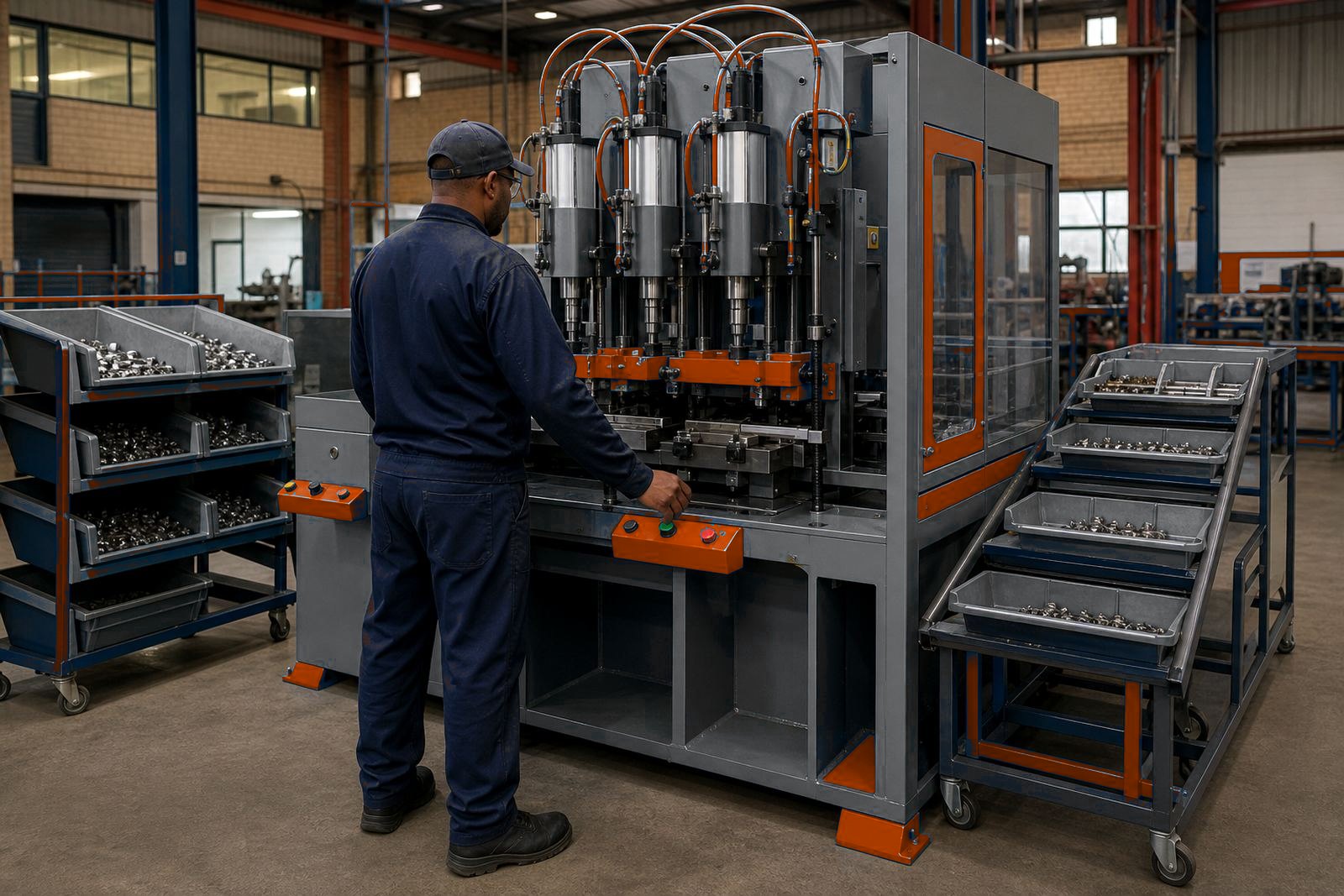
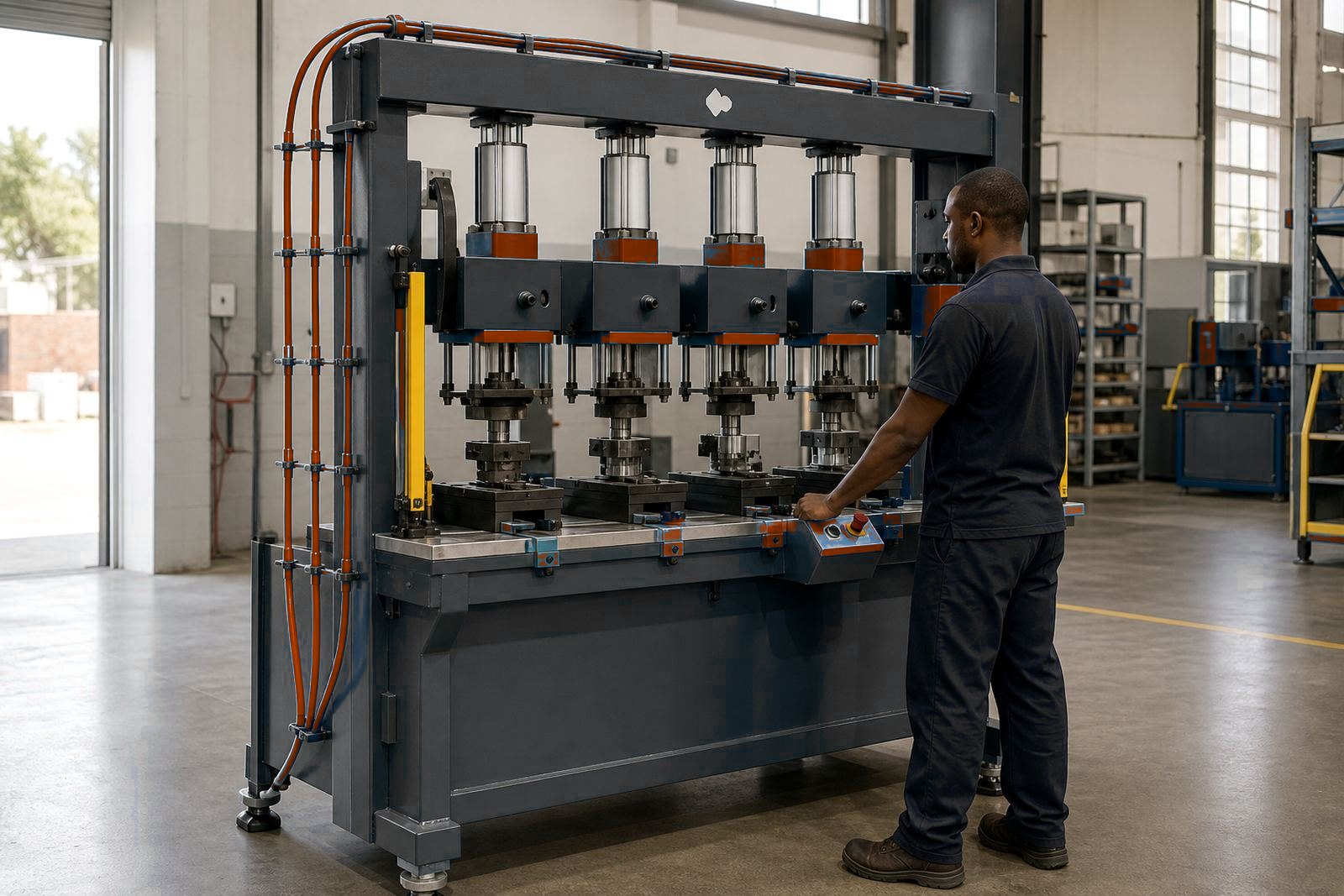
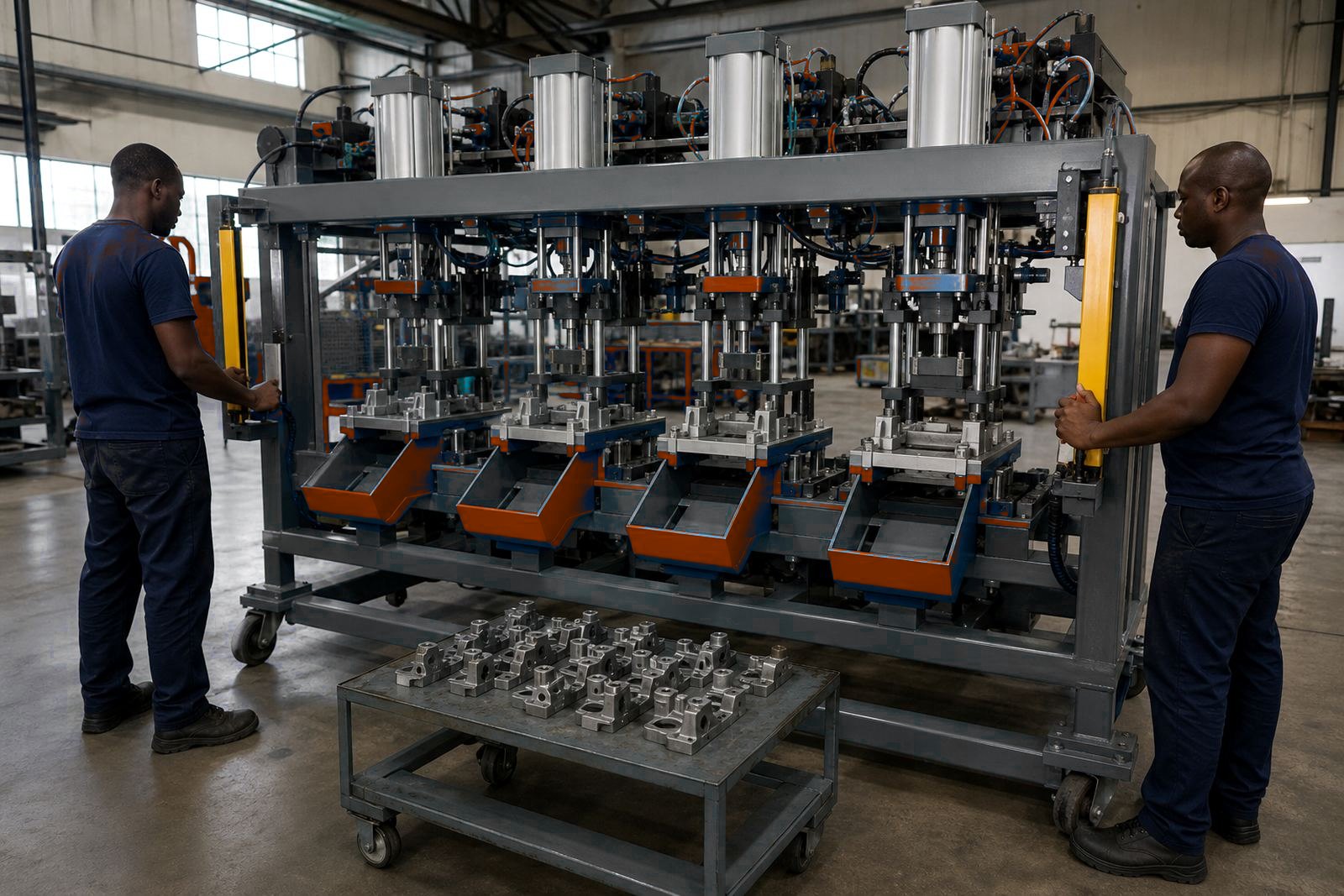
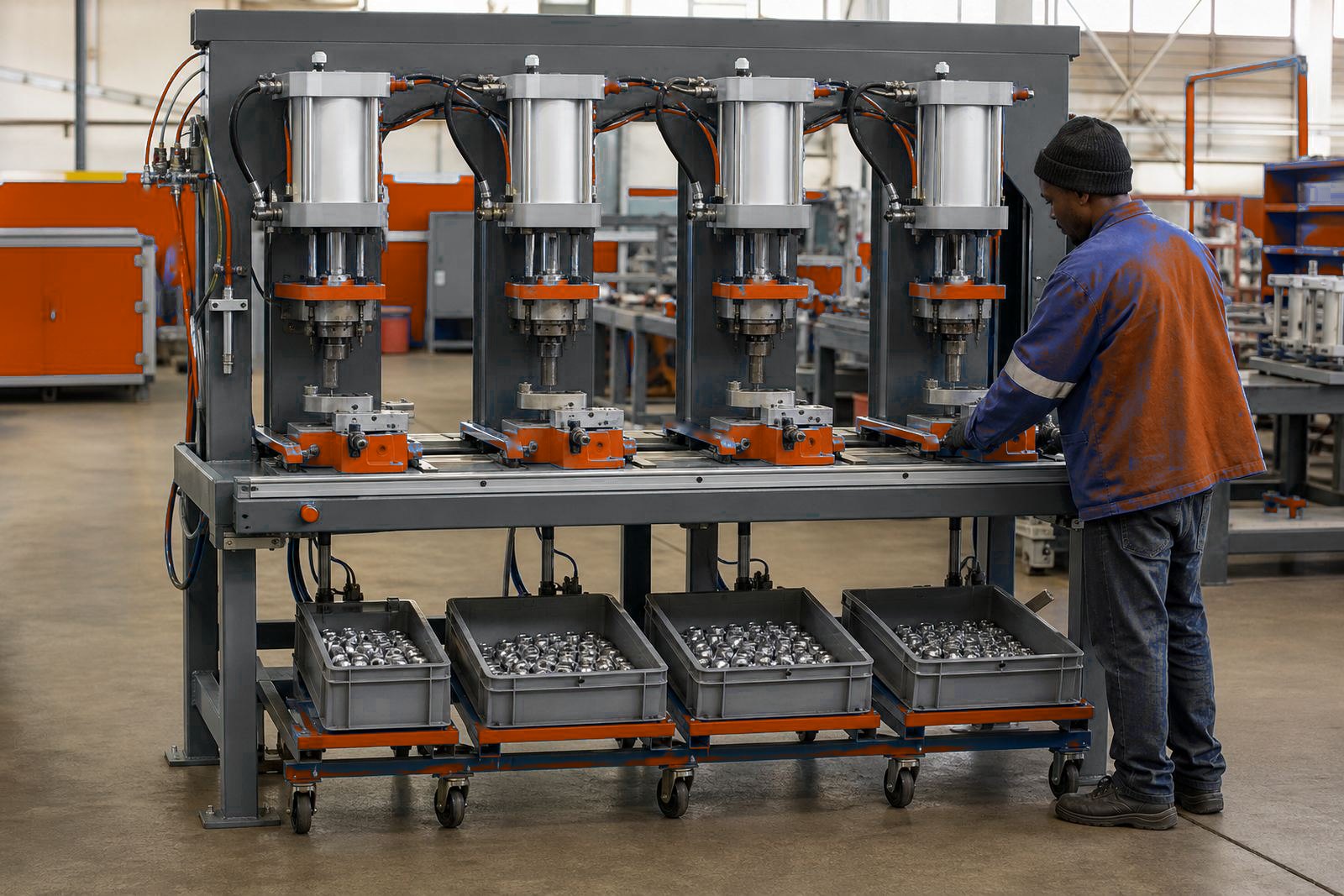
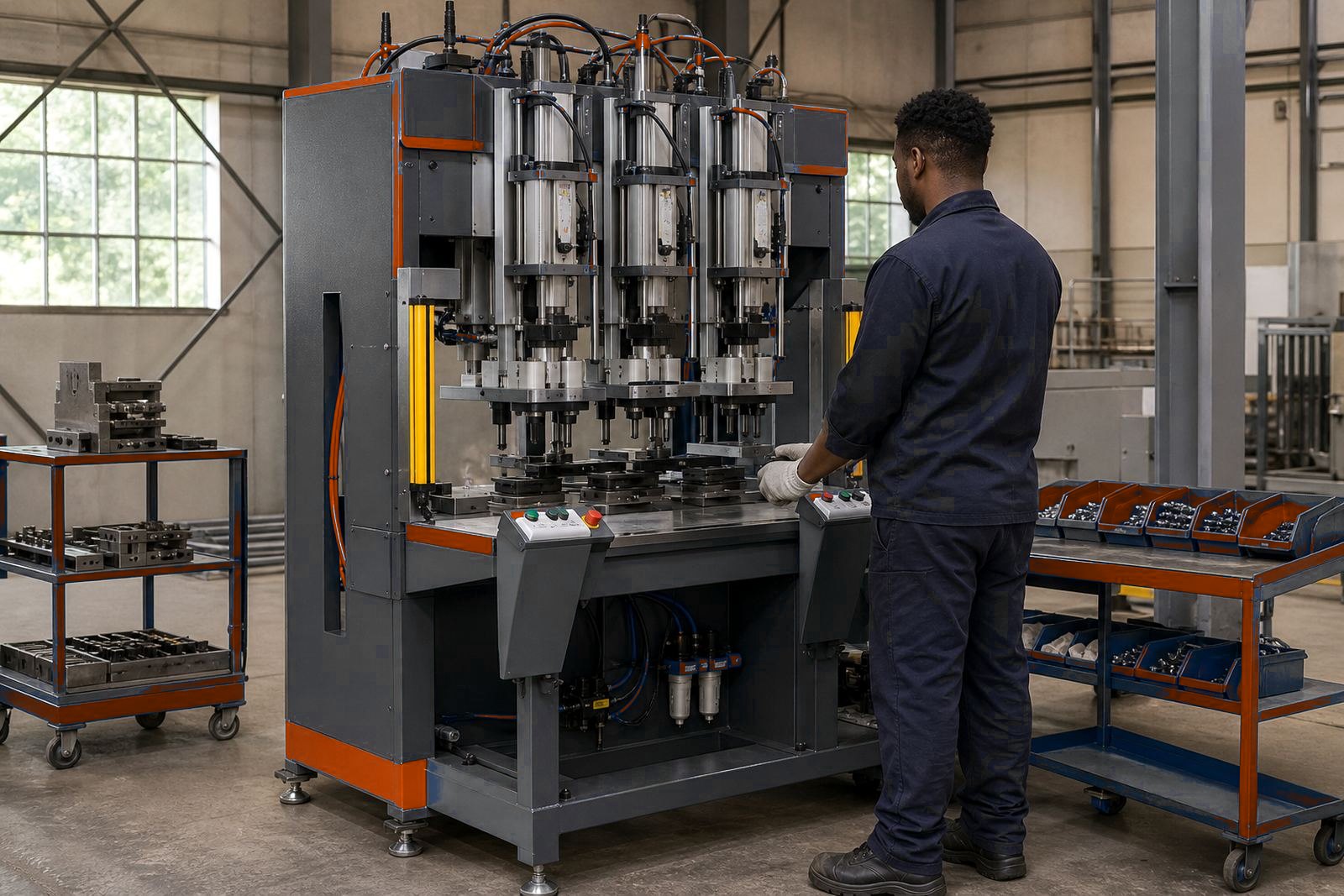
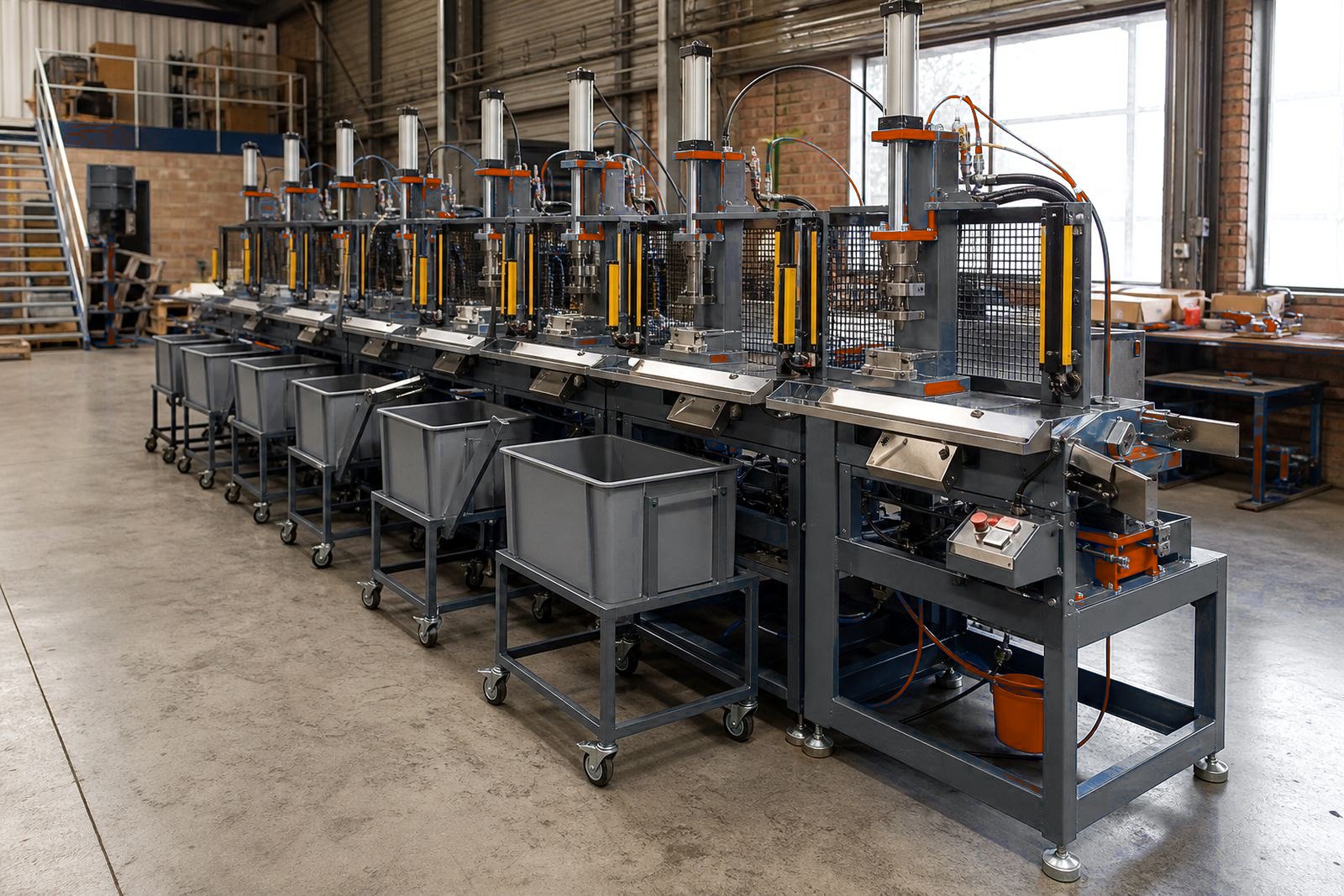
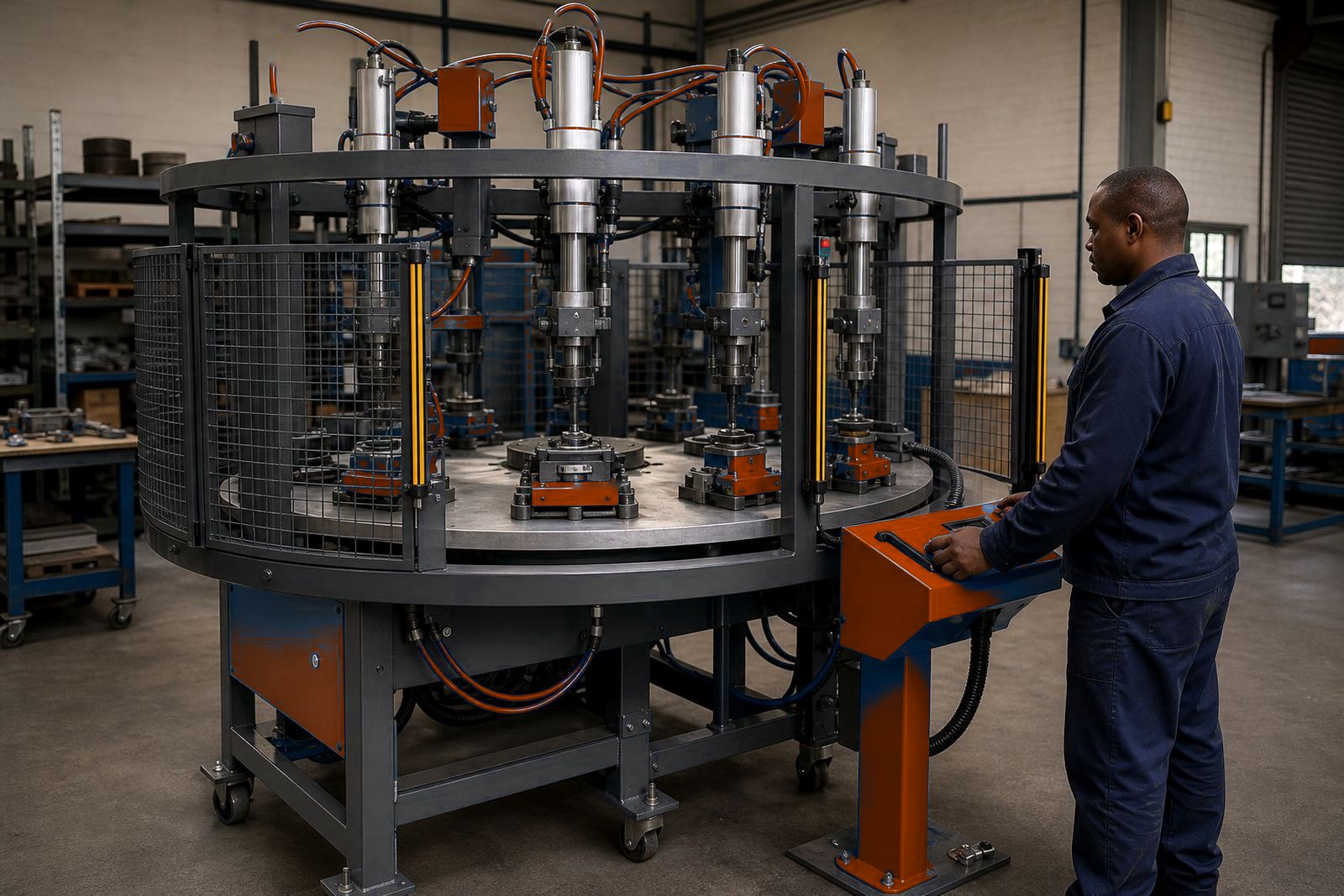
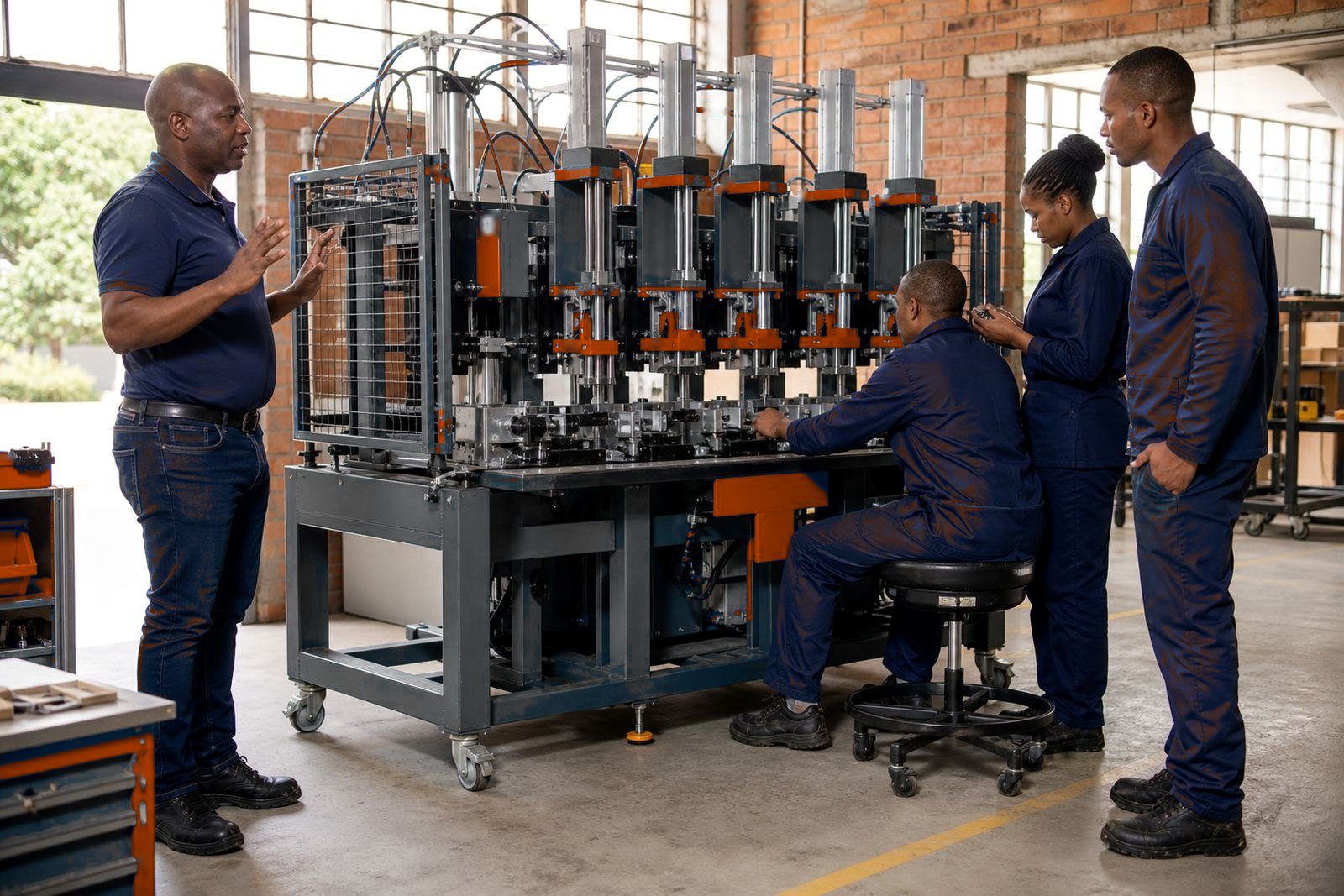
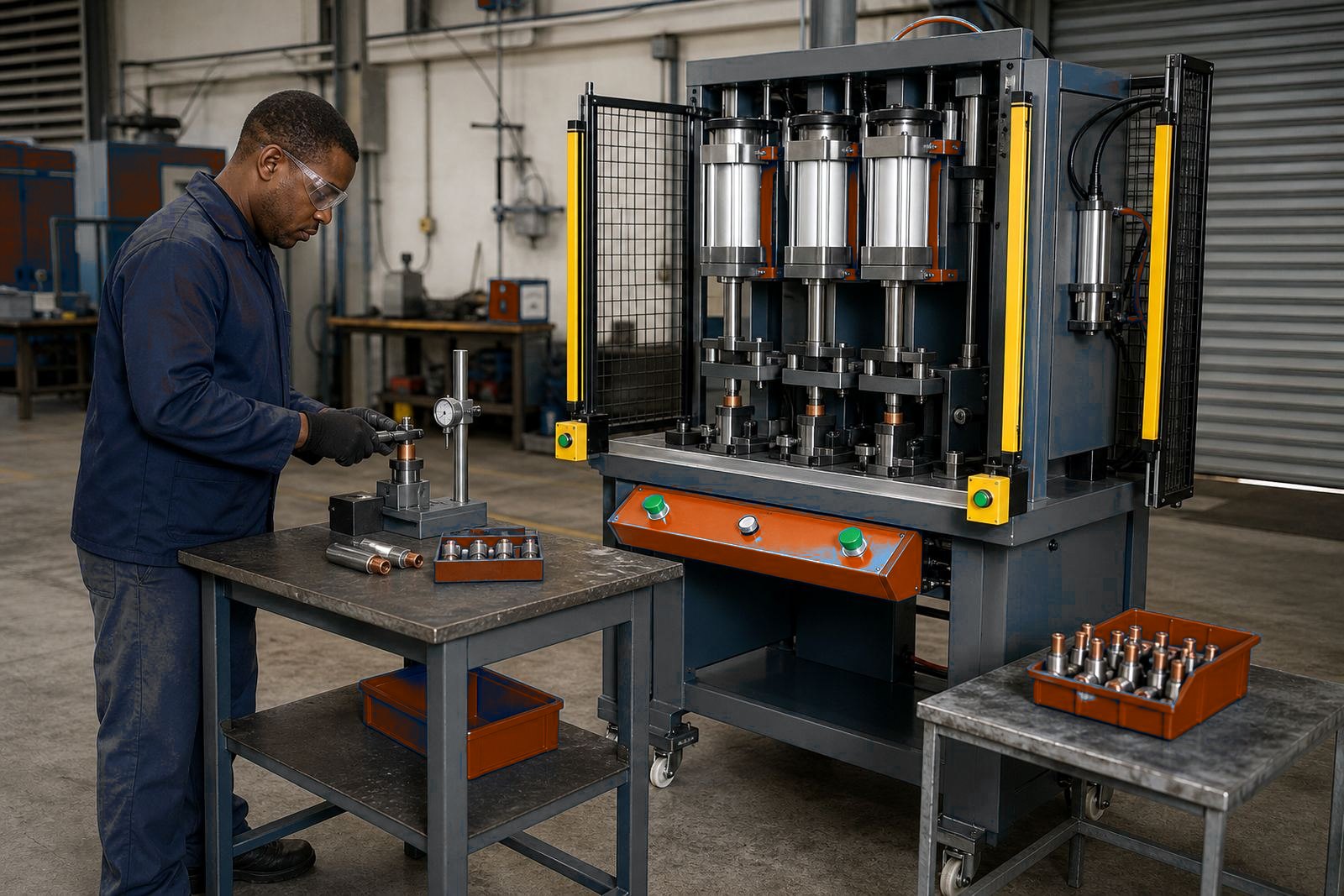
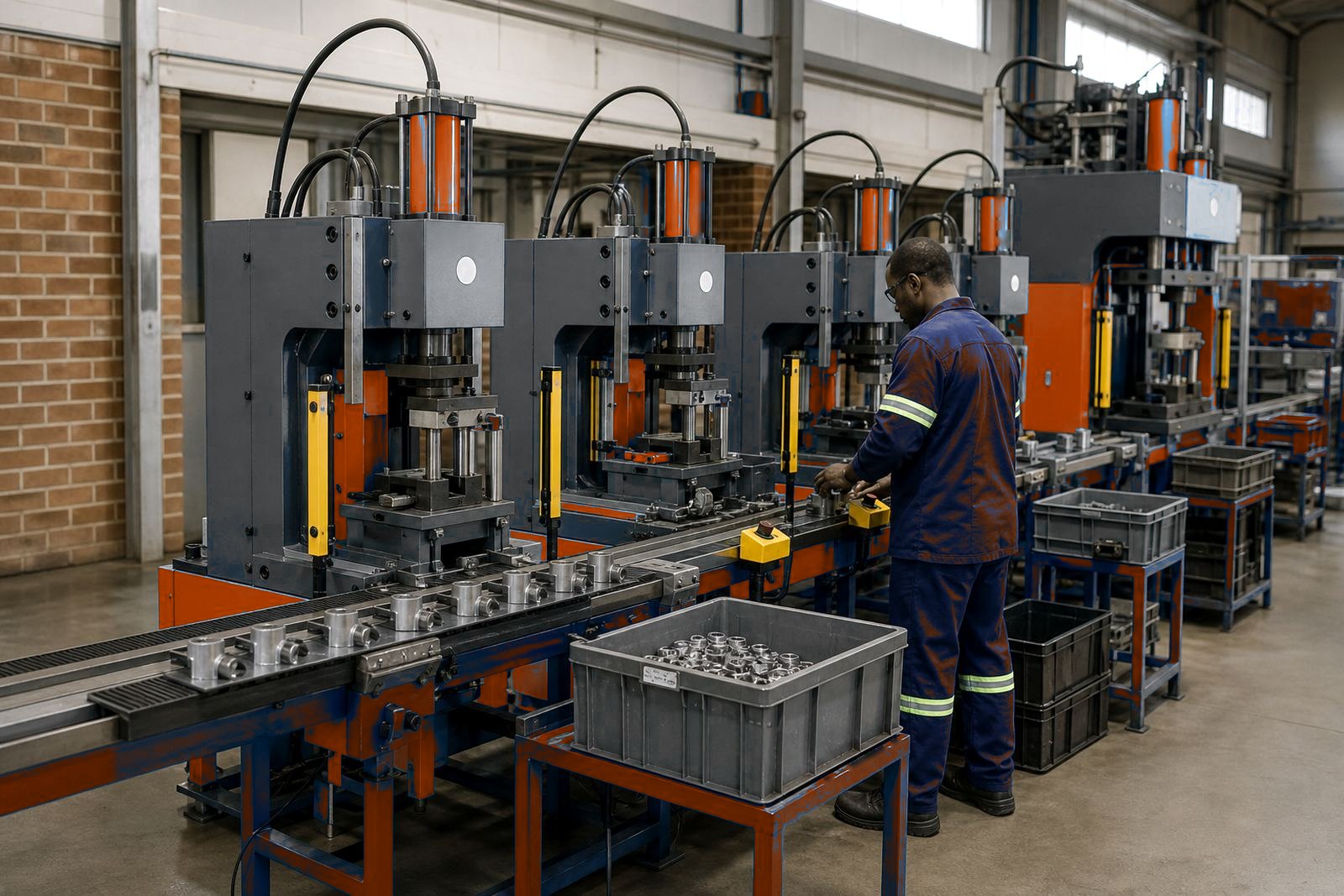
A single-station press suits small parts, test work or a narrow sequence where one operator loads, presses and clears the part at one point. Multi-station layouts spread that work across two, three or more stations, so one press frame can handle different operations in order, or let separate tools run under the same machine footprint. In Isando and the wider Ekurhuleni area, that matters where floor space is tight and the line has to keep moving without long handovers.
Choosing the station count is less about looking busy and more about the parts. If a component needs a first locate, then a crimp, then a final check, separate stations can keep each step steady. If the job is a simple insert or seal, fewer stations may be the better fit and the press footprint stays smaller.
- One station for small batch work and simple cycles
- Two stations when loading and pressing need separation
- Three or more stations for staged assembly or mixed tooling
- Shared frames where different parts move through one line
Cylinders, Air Pressure and Stroke Setting
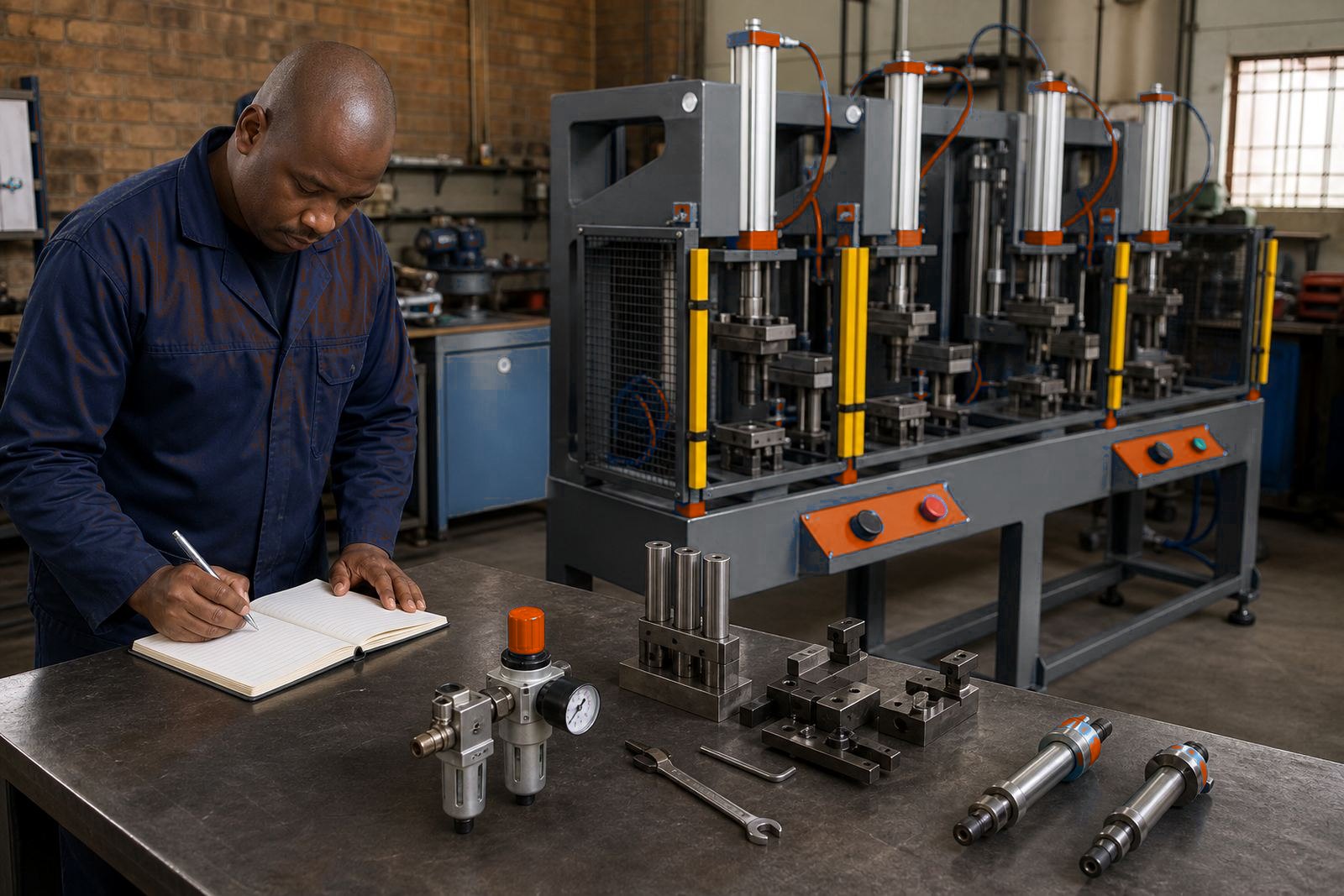
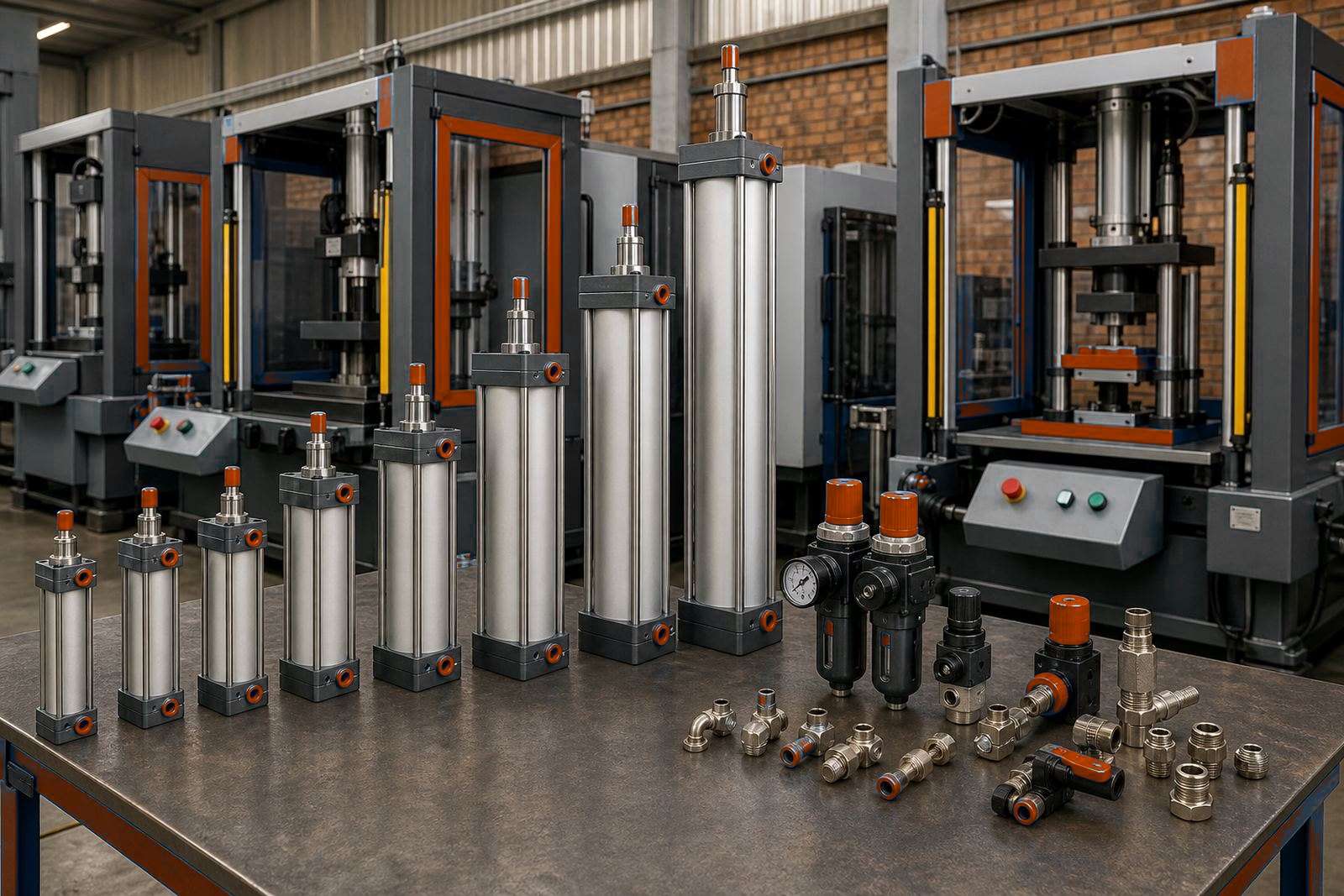
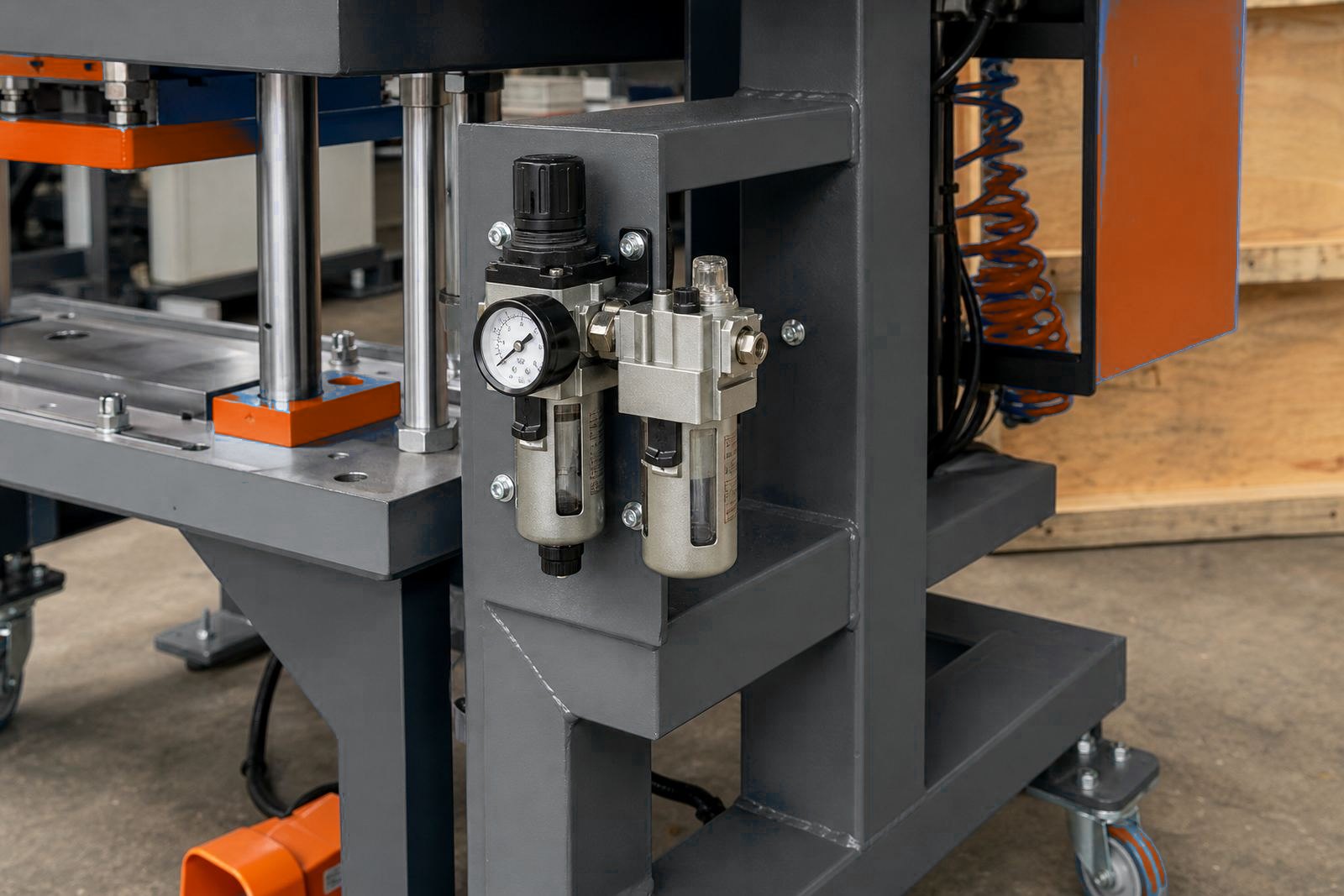
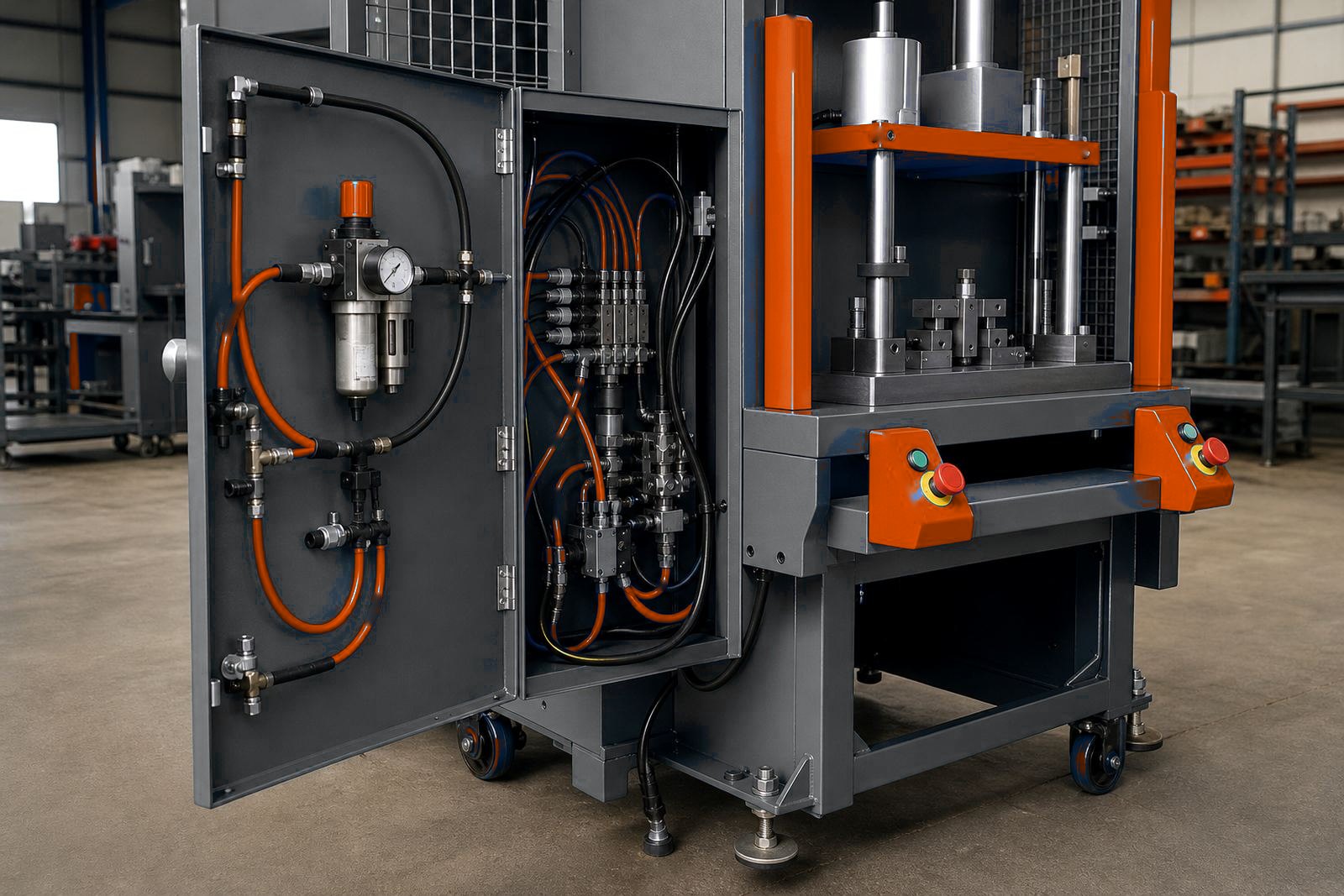
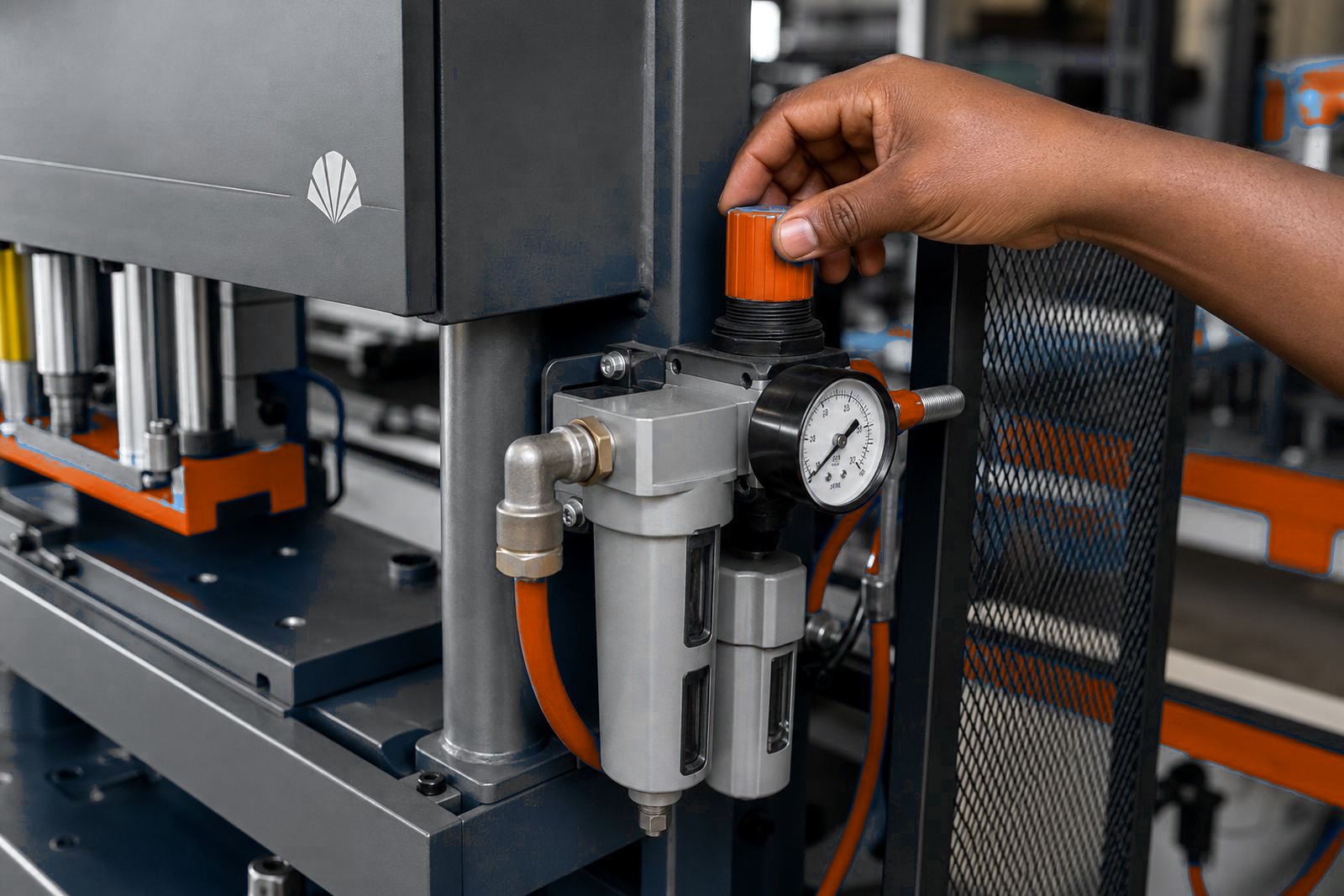
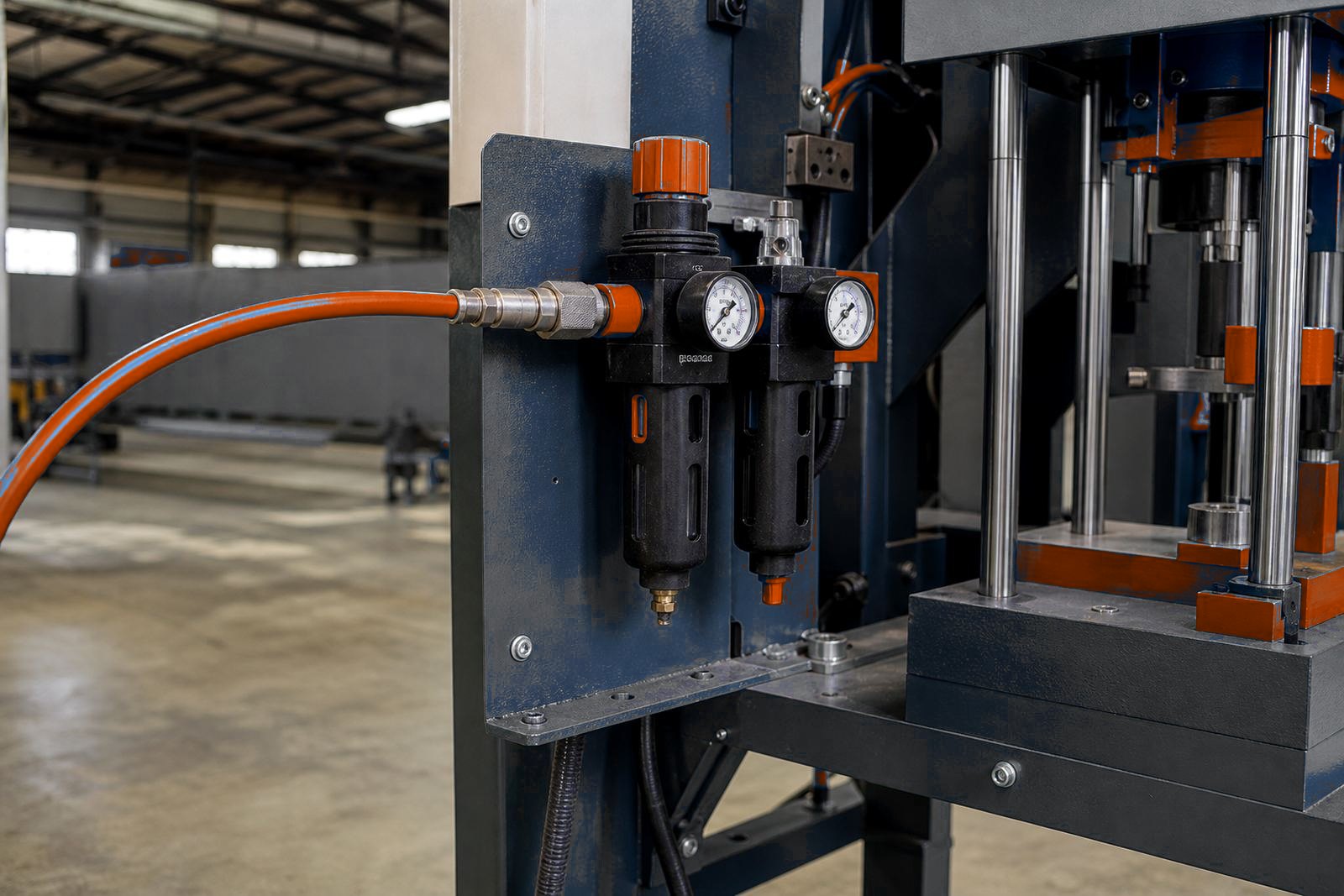
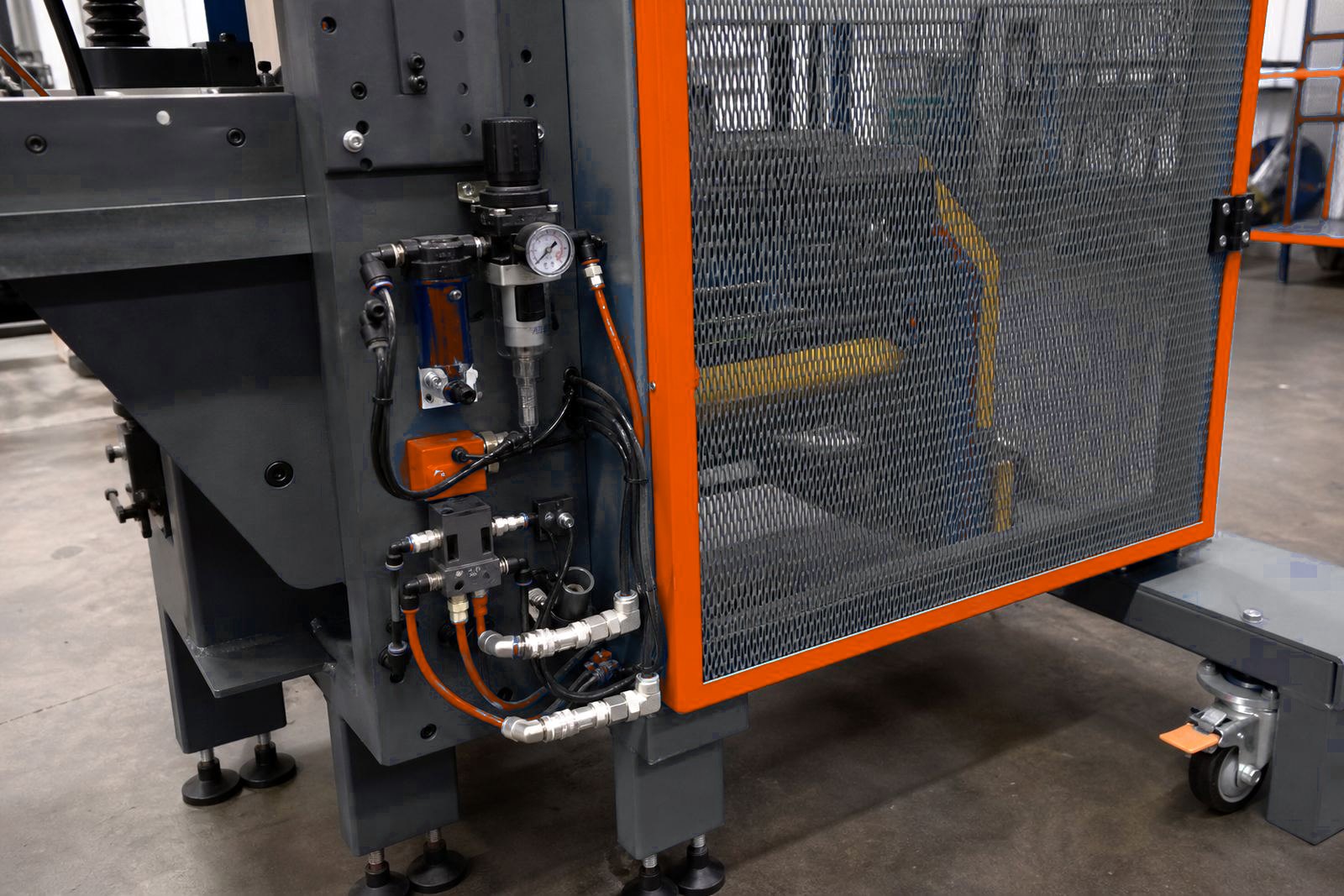
Pneumatic presses rely on cylinders to create the pressing force. Cylinder bore, air pressure and stroke length work together, so the machine has to be set for the part and the tool, not the other way around. Too much stroke can waste time and invite poor tool contact, while too little stroke leaves the operation incomplete. Pressure needs to be matched to the job and checked against the tooling design and clamp points.
Stroke setting also affects safety and part quality. A staking job may need a shorter, controlled movement, while a deep assembly tool can need more travel and a firmer bottoming point. For pack sealing or light forming work, a steady repeatable stroke is often more useful than raw force.
- Cylinder size influences available force and frame loading
- Air pressure must suit the material and the die face
- Stroke control helps protect tools and finished parts
- Repeatability matters on the line
Controls That Suit Production Hands
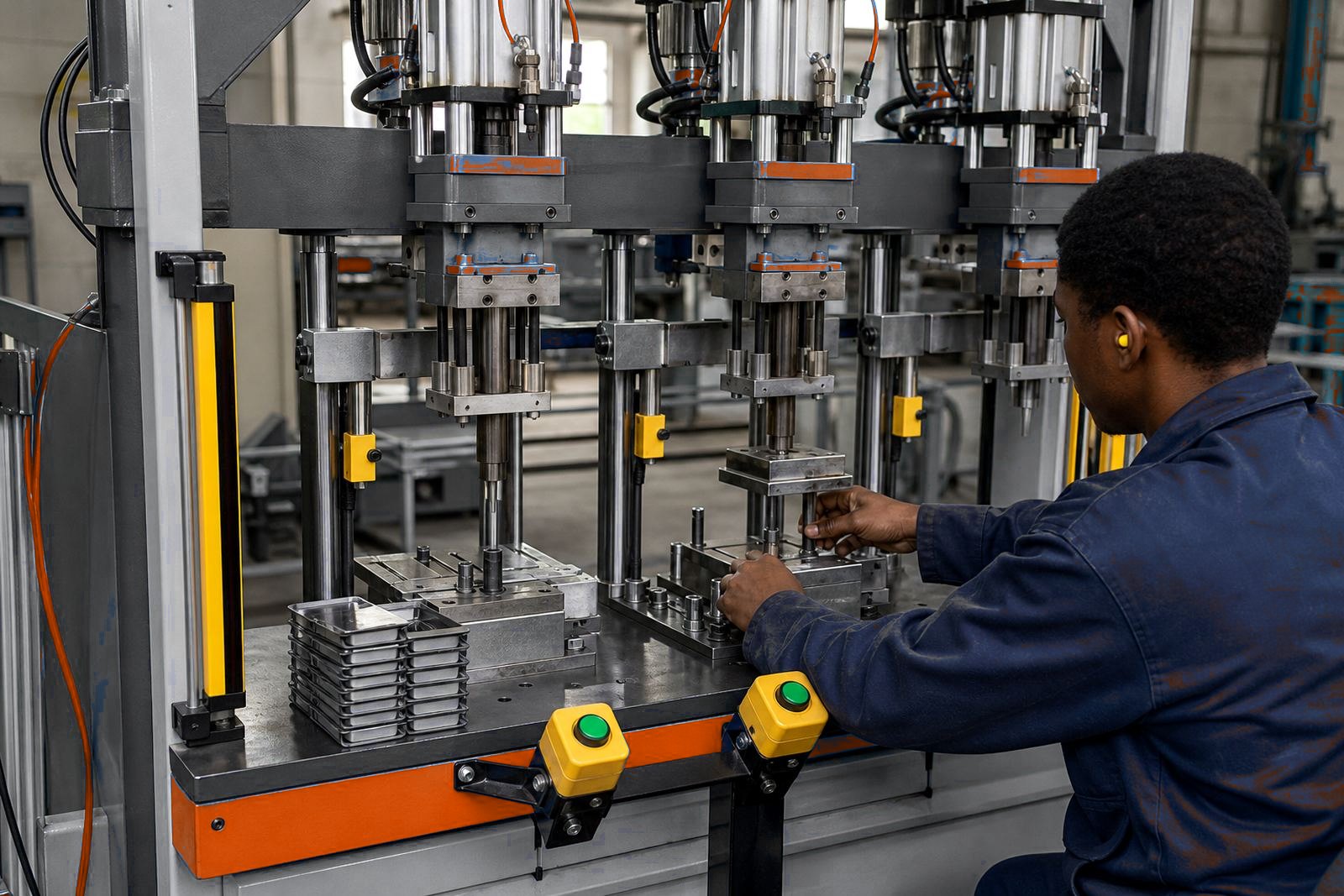
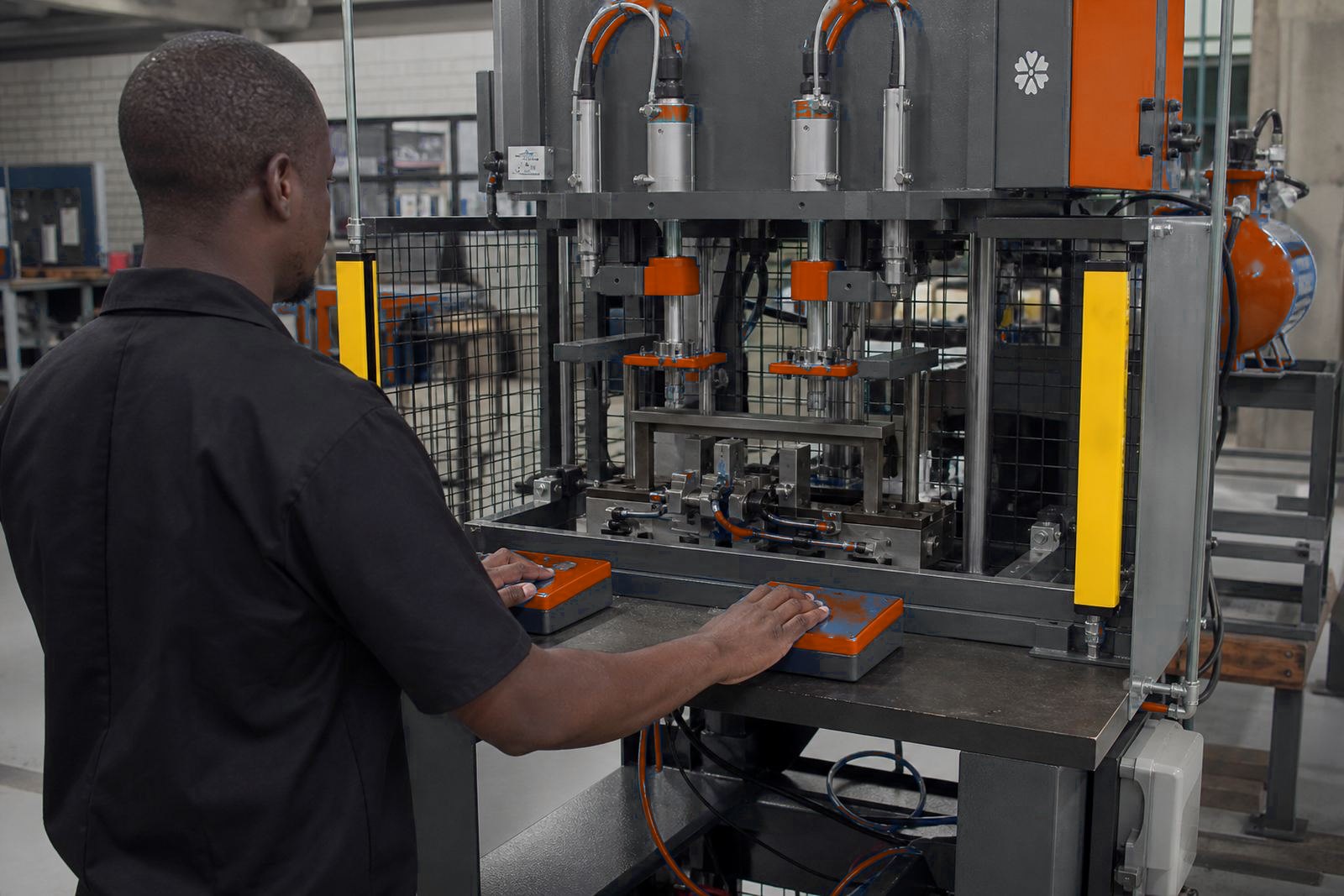
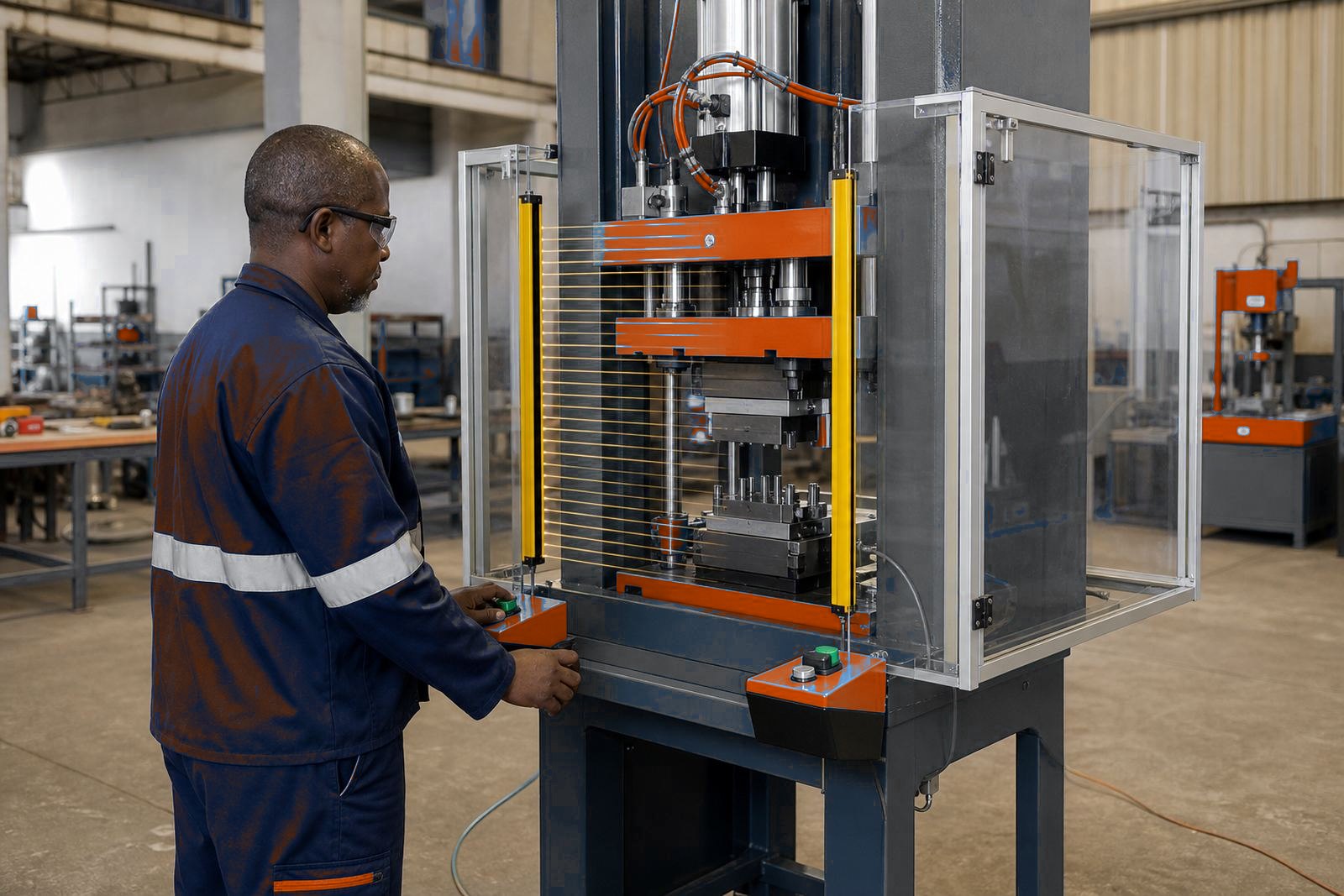
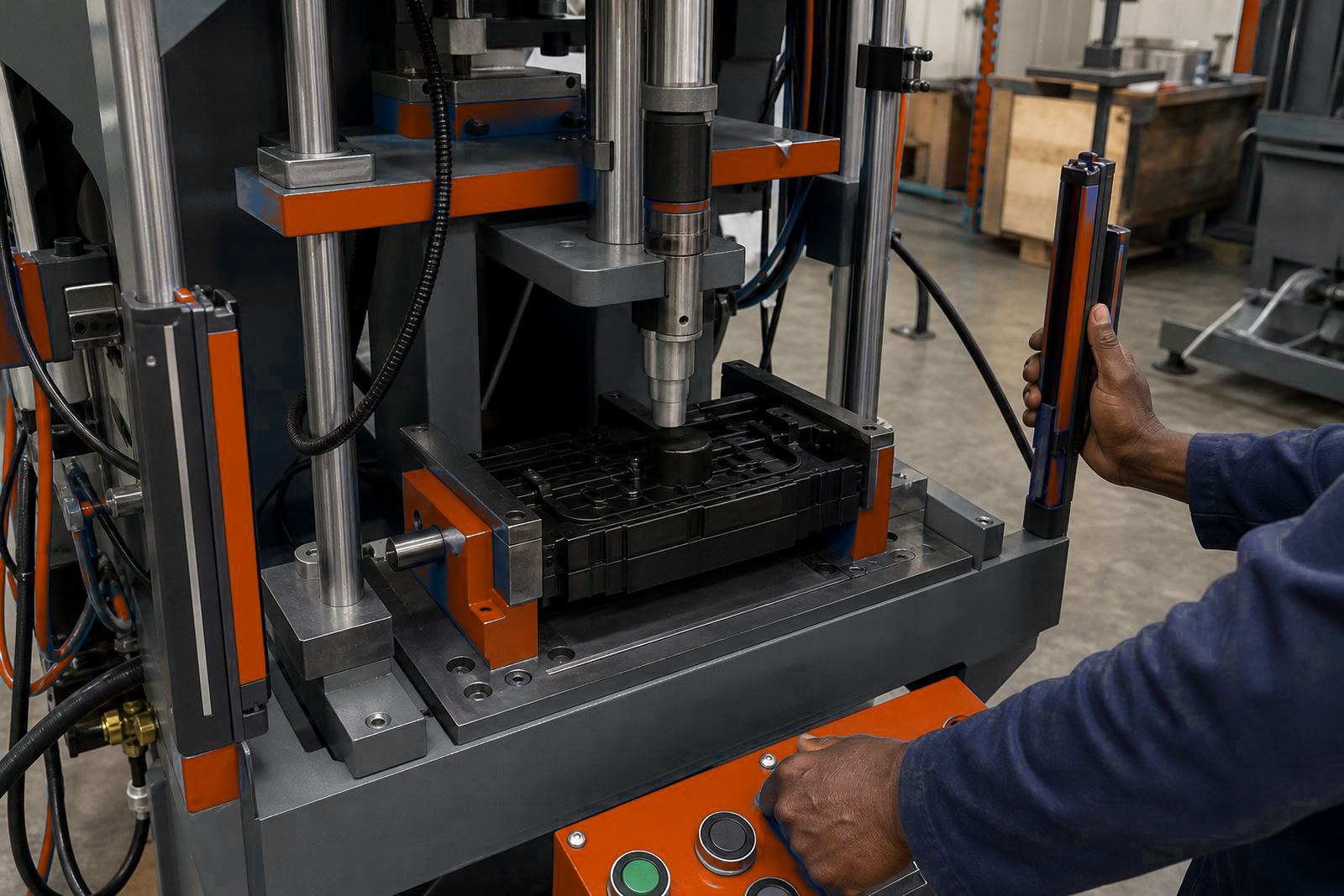
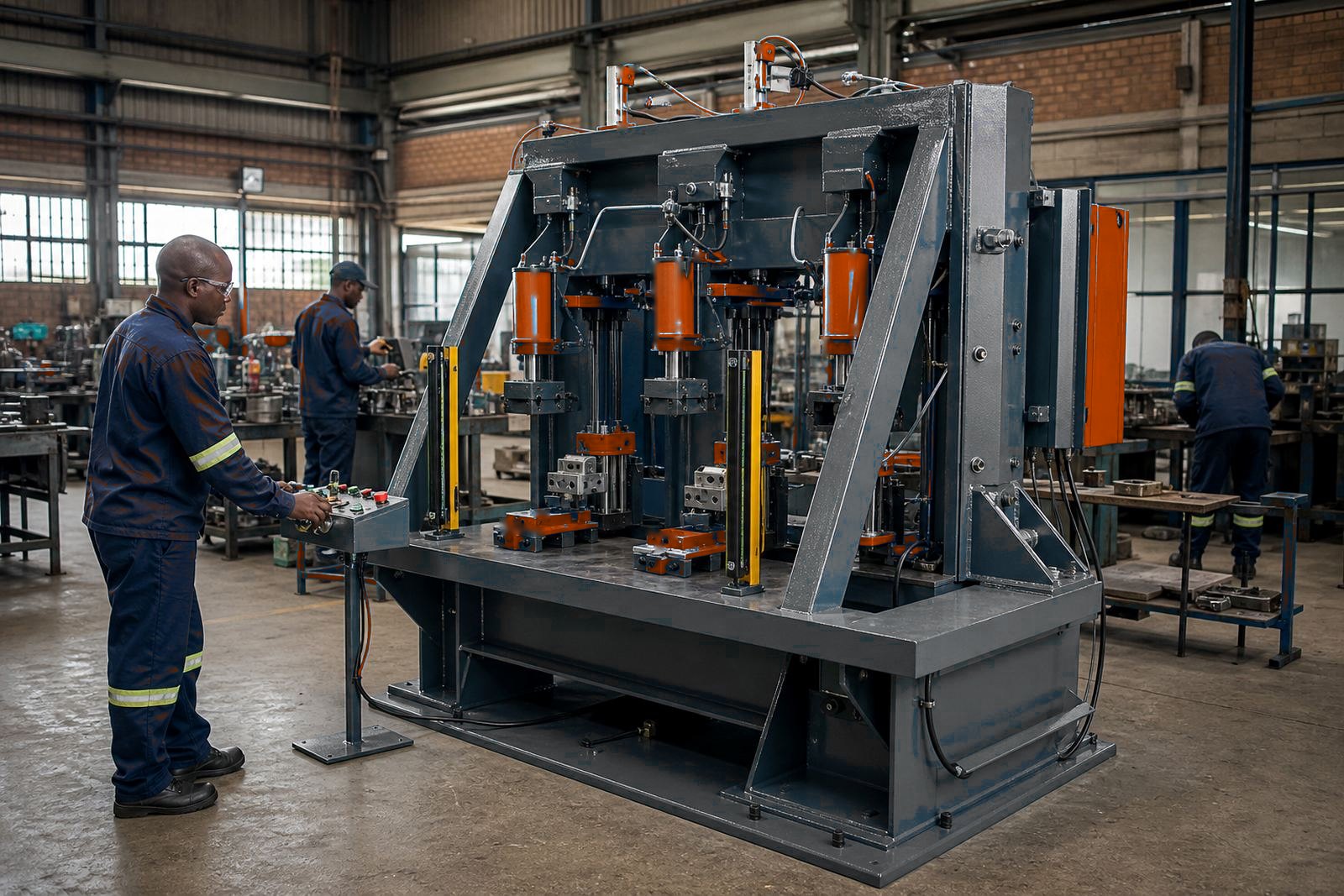
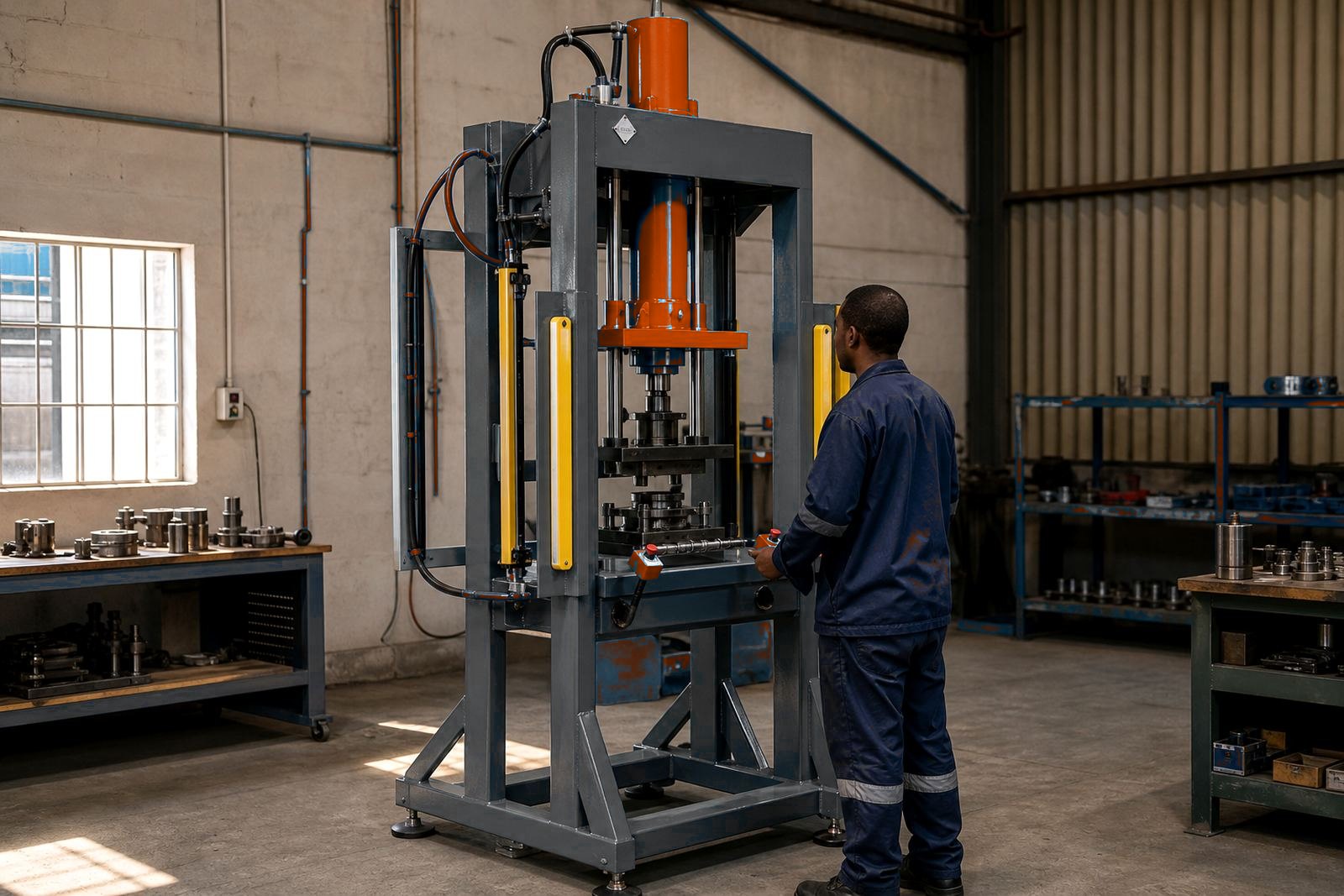
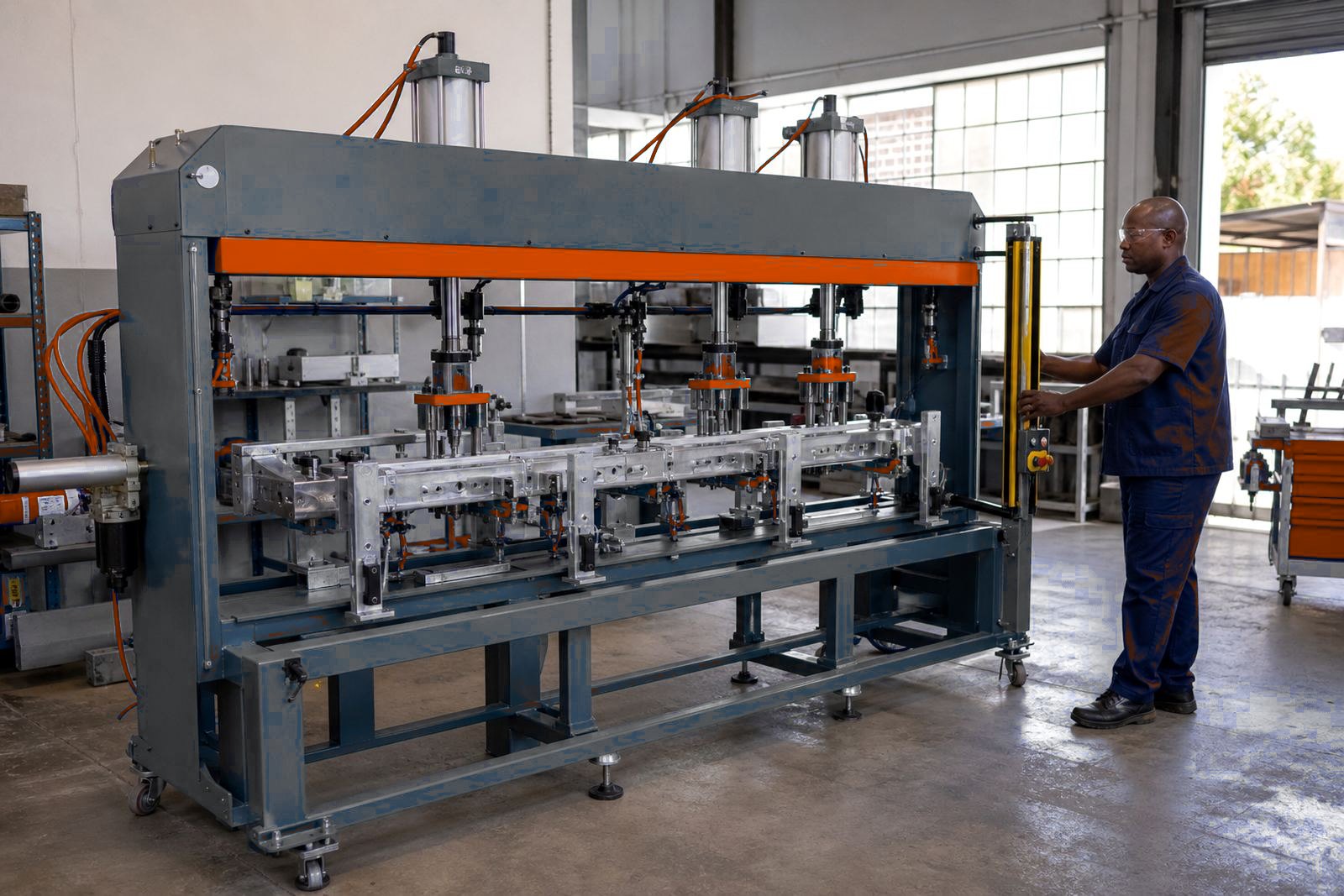
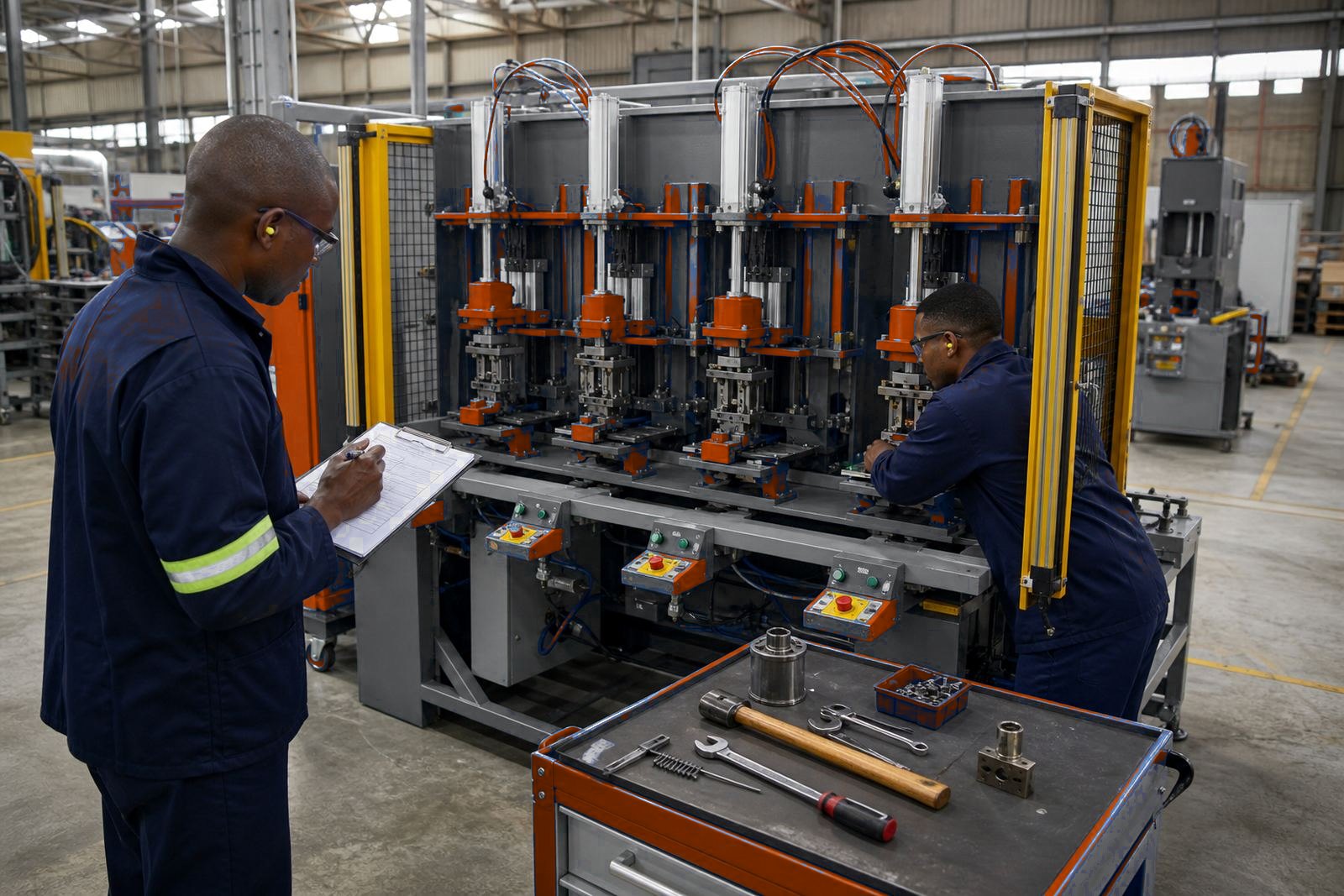
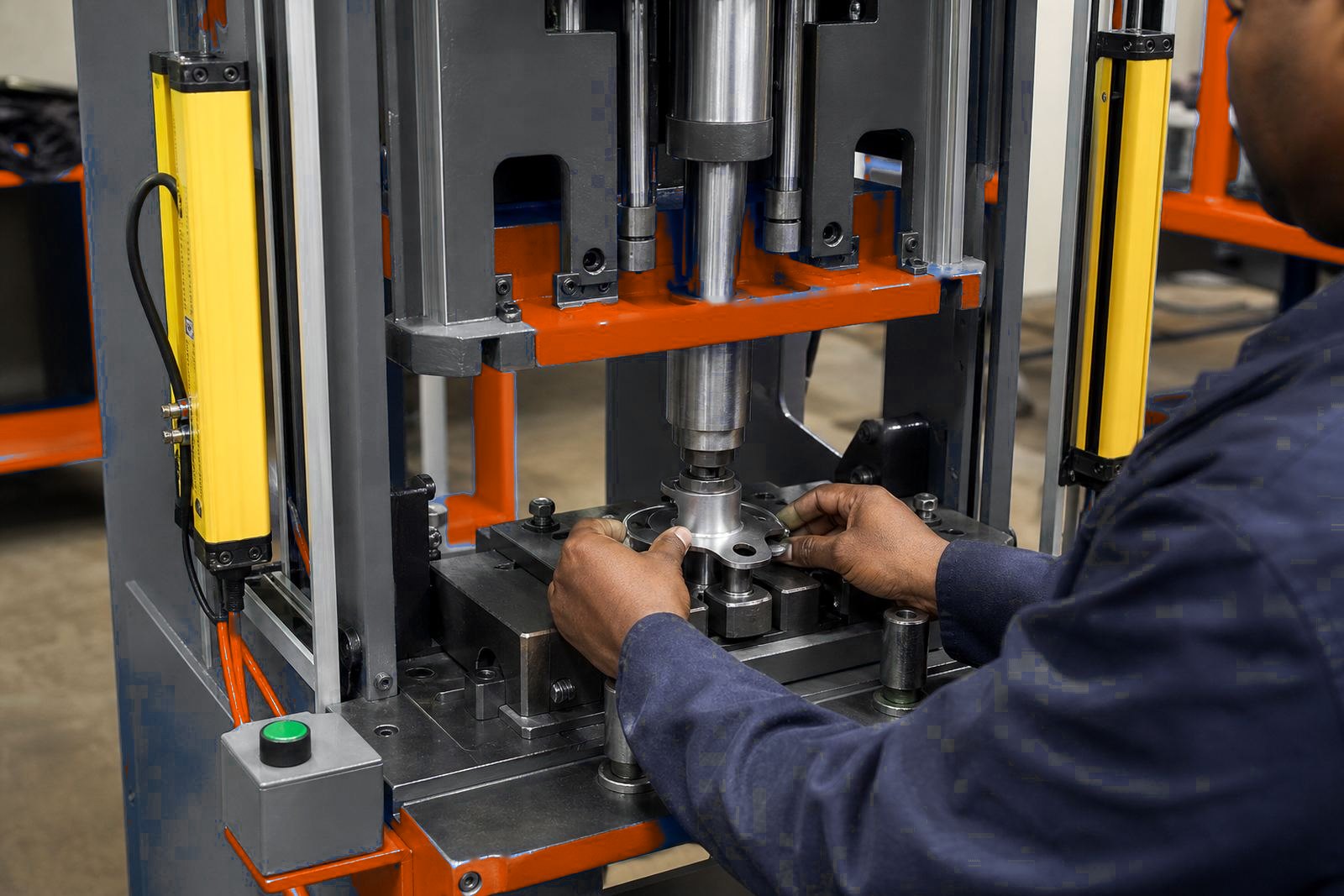
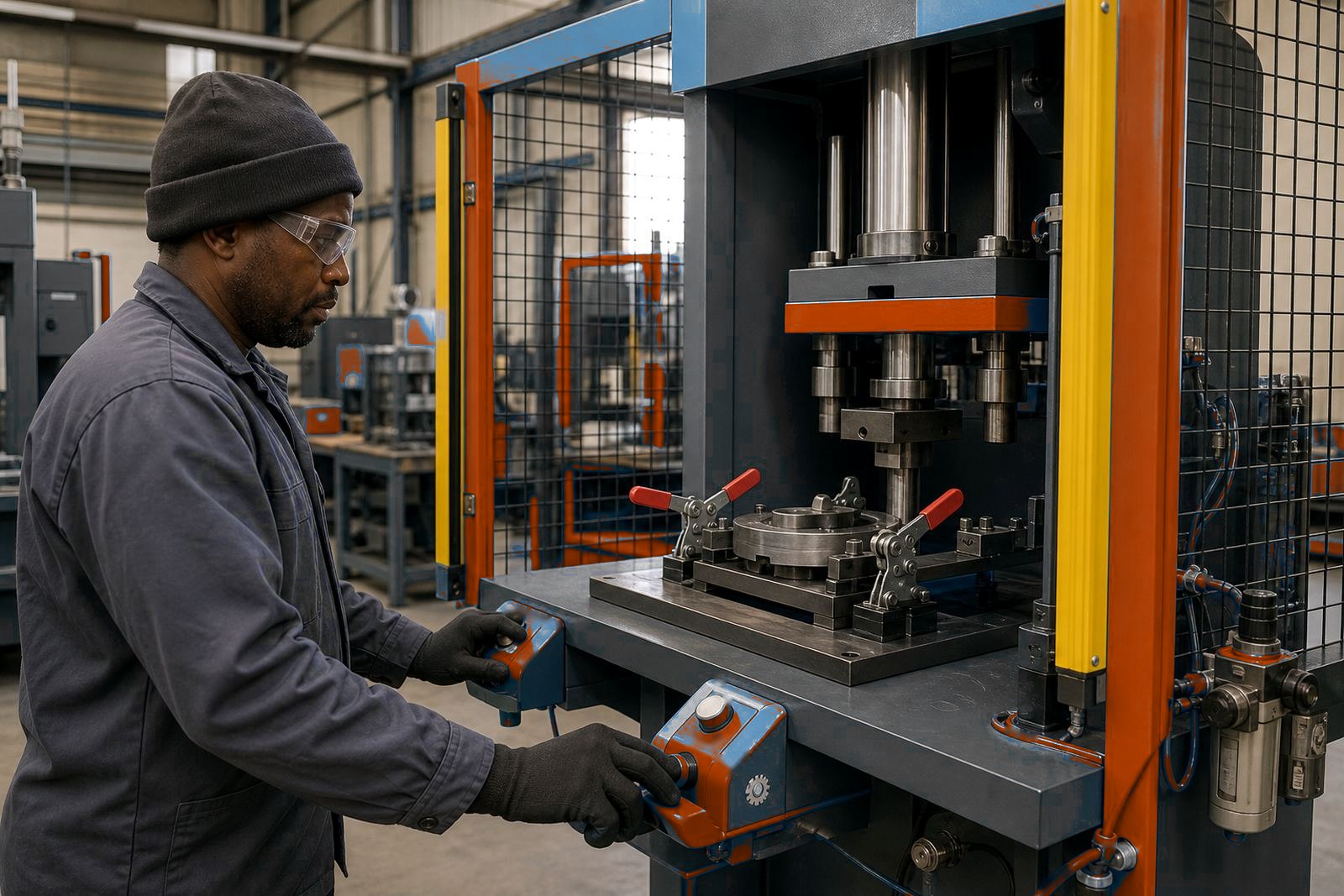
Two-hand controls are common where the operator must keep both hands clear of the tool area before the cycle starts. They help control the press cycle, especially on jobs with loose parts, inserts or open tooling. Light curtains add another layer where access is frequent, but they have to be placed and set properly so they protect the opening without slowing normal work more than needed.
On busy factory floors, the control method should fit the pace of the job and the level of risk around the press. Some lines need a guarded two-hand cycle, others need a light curtain with reset logic and clear operator steps. The real test is whether the person running the job can keep the part moving without unsafe shortcuts.
- Two-hand controls keep hands out of the die zone
- Light curtains suit access points that need frequent loading
- Reset logic should be clear to the operator
- Controls must match the guarding layout, not fight it
Guarding That Stays Useful on the Floor
Guarding has to protect the operator and still allow normal production. Fixed guards suit simple repetitive work. Interlocked doors, screens and light curtains suit more varied stations where tooling changes or inspections happen during the shift. In a compact Johannesburg workshop or a Durban production bay, the guarding layout must suit the local floor plan, not an ideal drawing on paper.
Good guarding keeps the operator close enough to load parts properly without reaching into the danger area. It also needs room for maintenance, cleaning and tooling changes. If a guard blocks access to the point of changeover, the team will work around it and that is when trouble starts.
Tooling for Crimping, Riveting and Staking
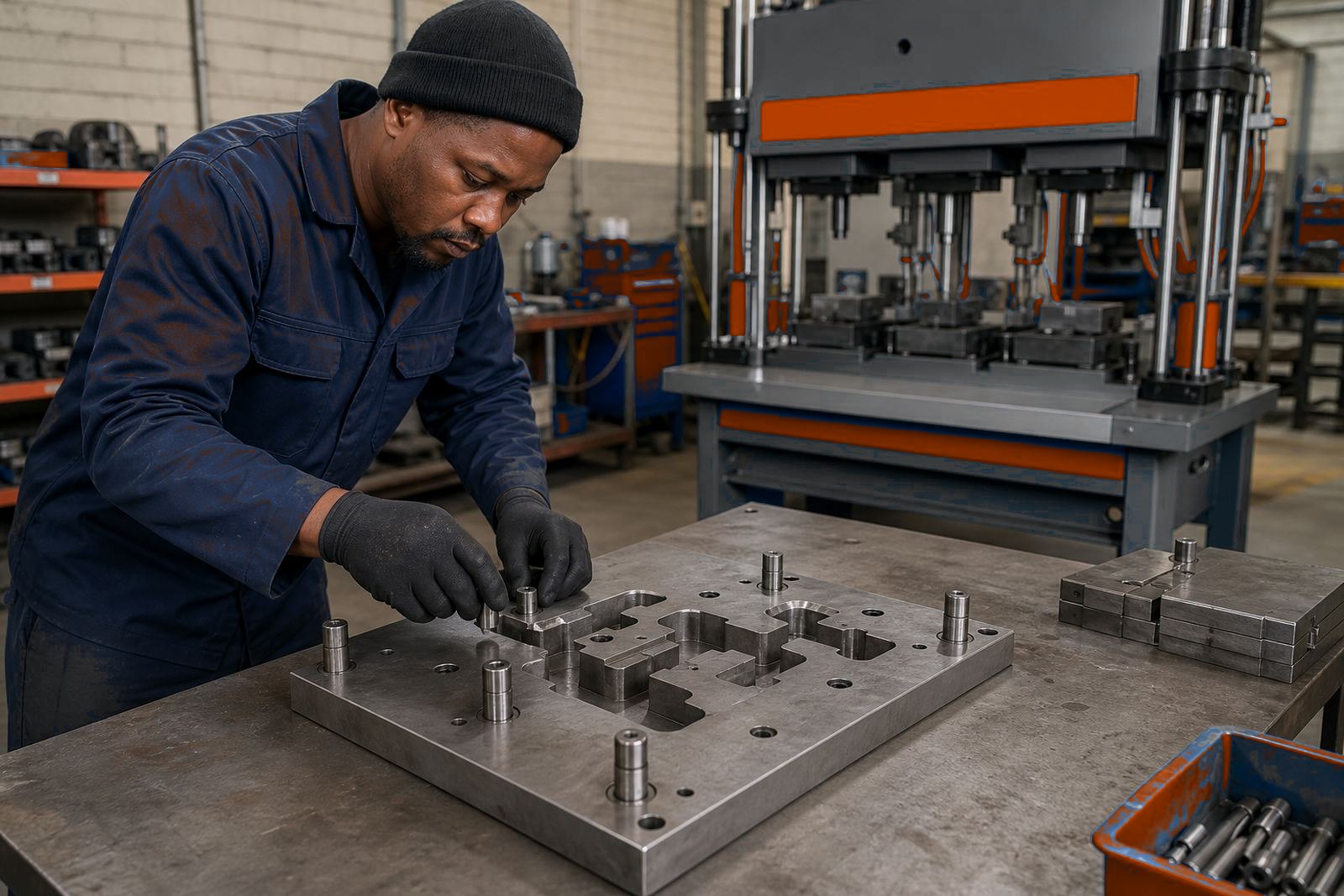
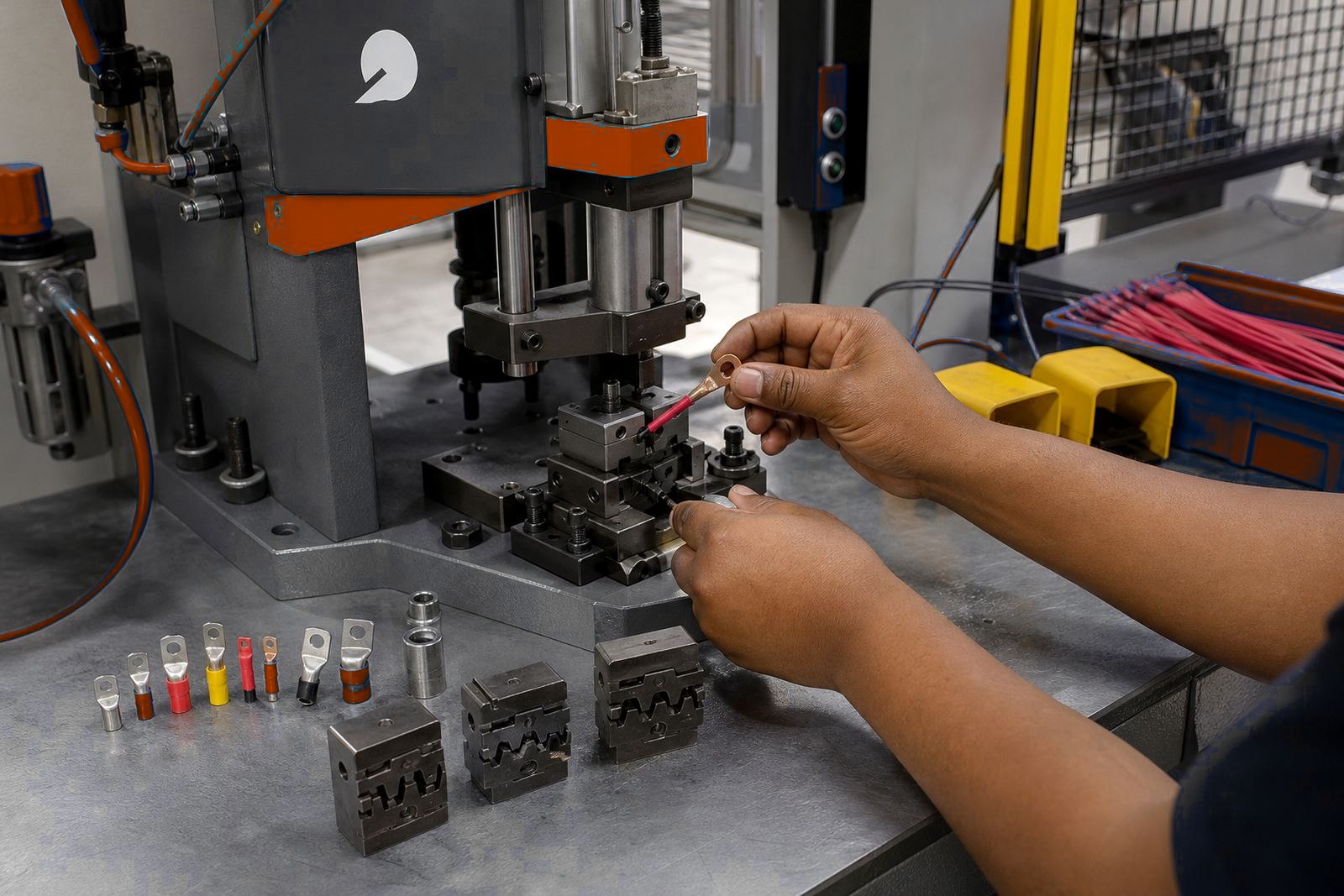
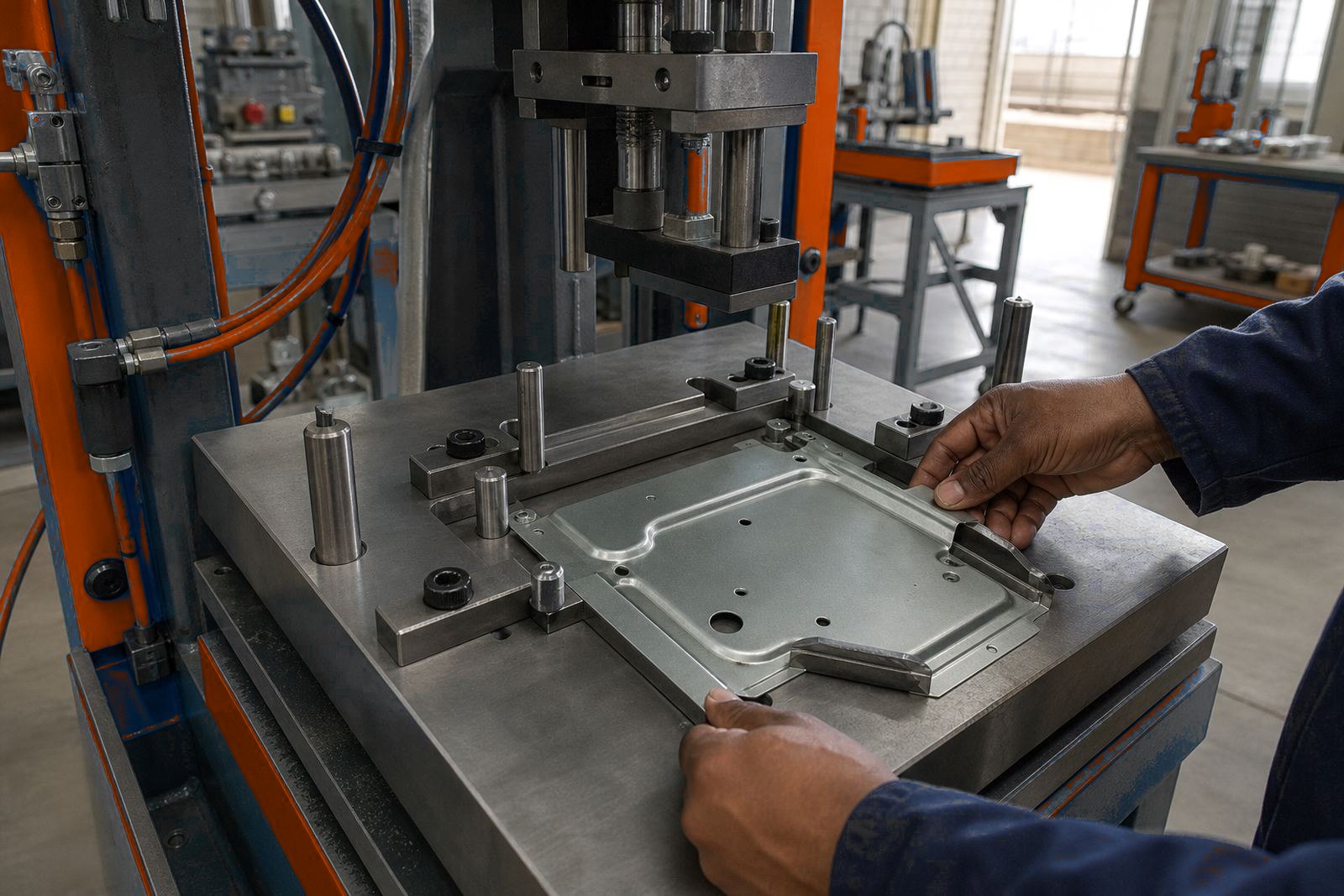
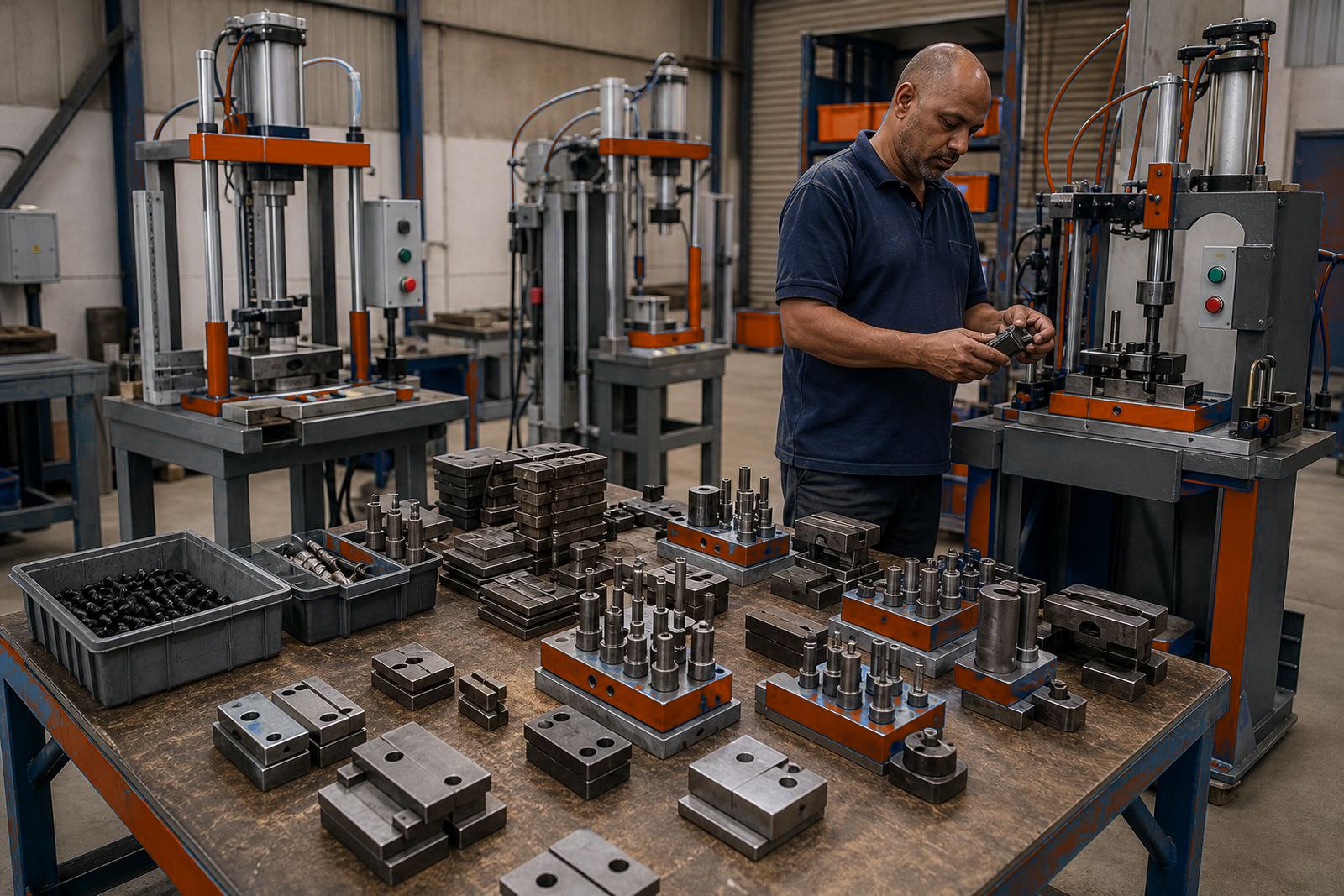
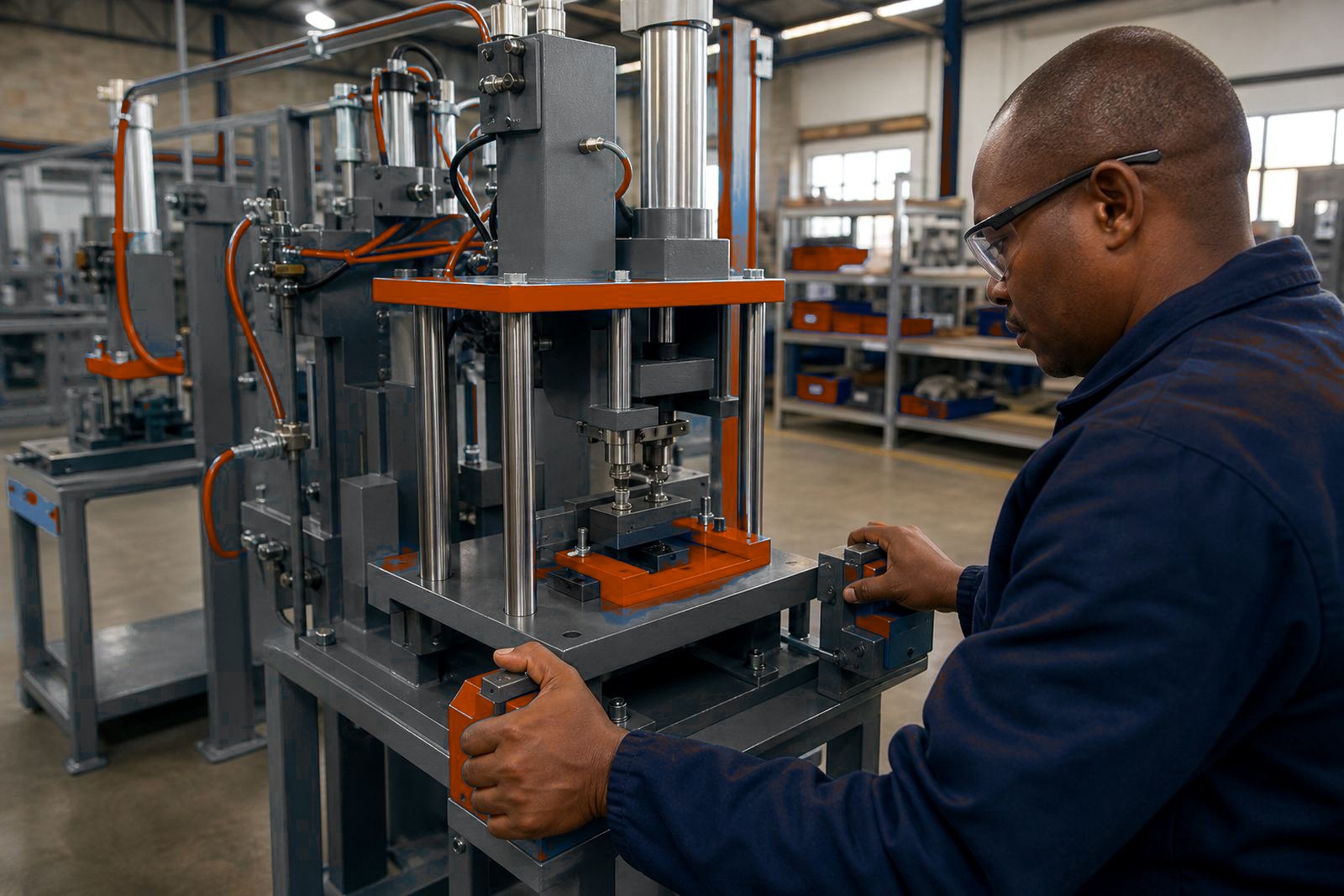
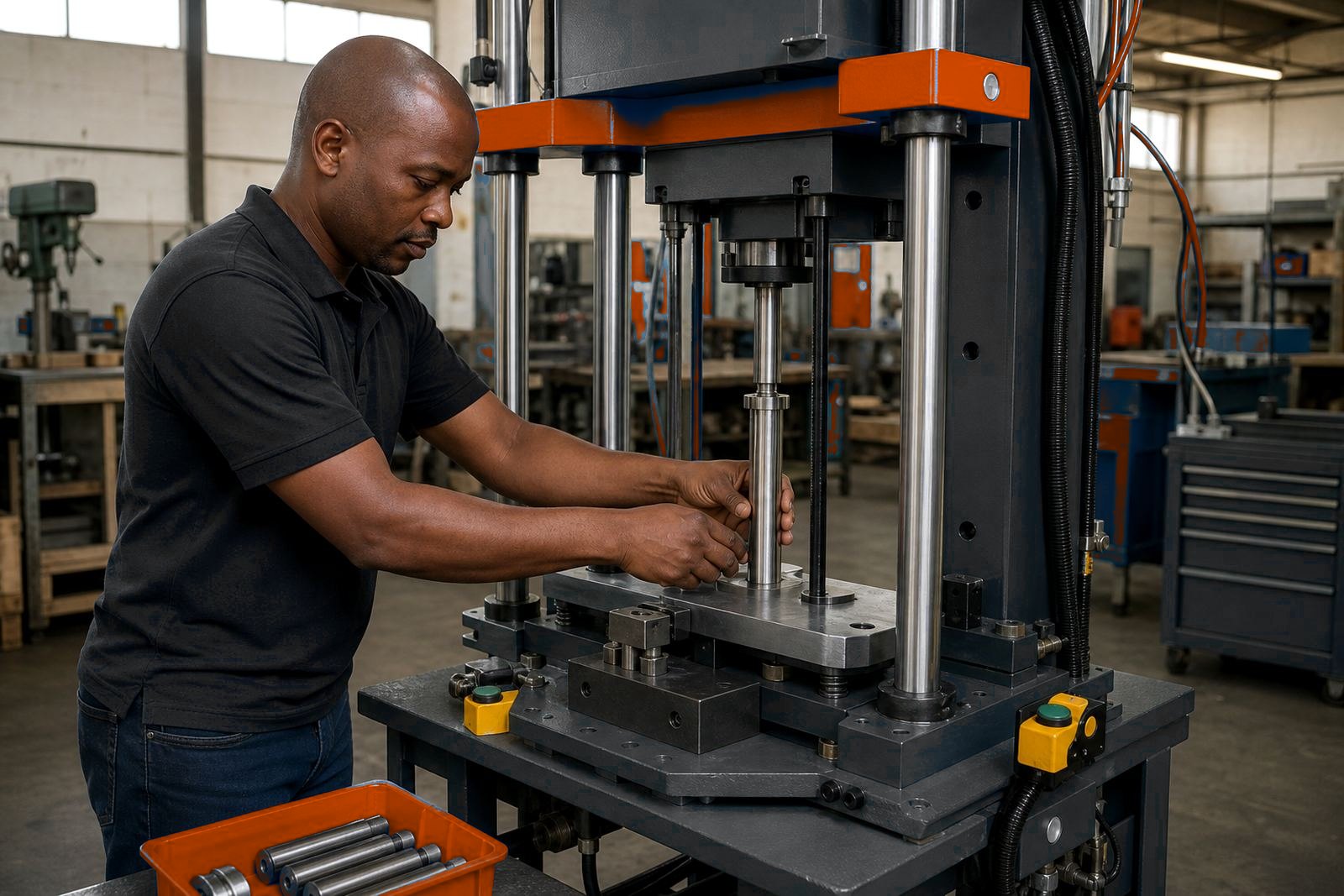
Tooling turns the press from a force source into a proper production machine. Crimping tools need clean alignment and a face that closes the joint evenly. Riveting tools need controlled force and stable part support so the shank forms correctly. Staking tools need the right tip shape, depth and dwell so the material settles without cracking or wandering.
Custom tooling also helps when the part shape is awkward or the product has to sit in a fixed location for each cycle. A good fixture holds the component where the press expects it, which reduces scrap and keeps the operator from fighting the job. Tool changes should be straightforward, with clear locating points and practical access for the workshop team.
- Crimping needs even closure across the joint
- Riveting depends on force control and part support
- Staking needs correct depth and a stable tool face
- Fixtures help repeatability on mixed production runs
Pack Sealing and Line Flow
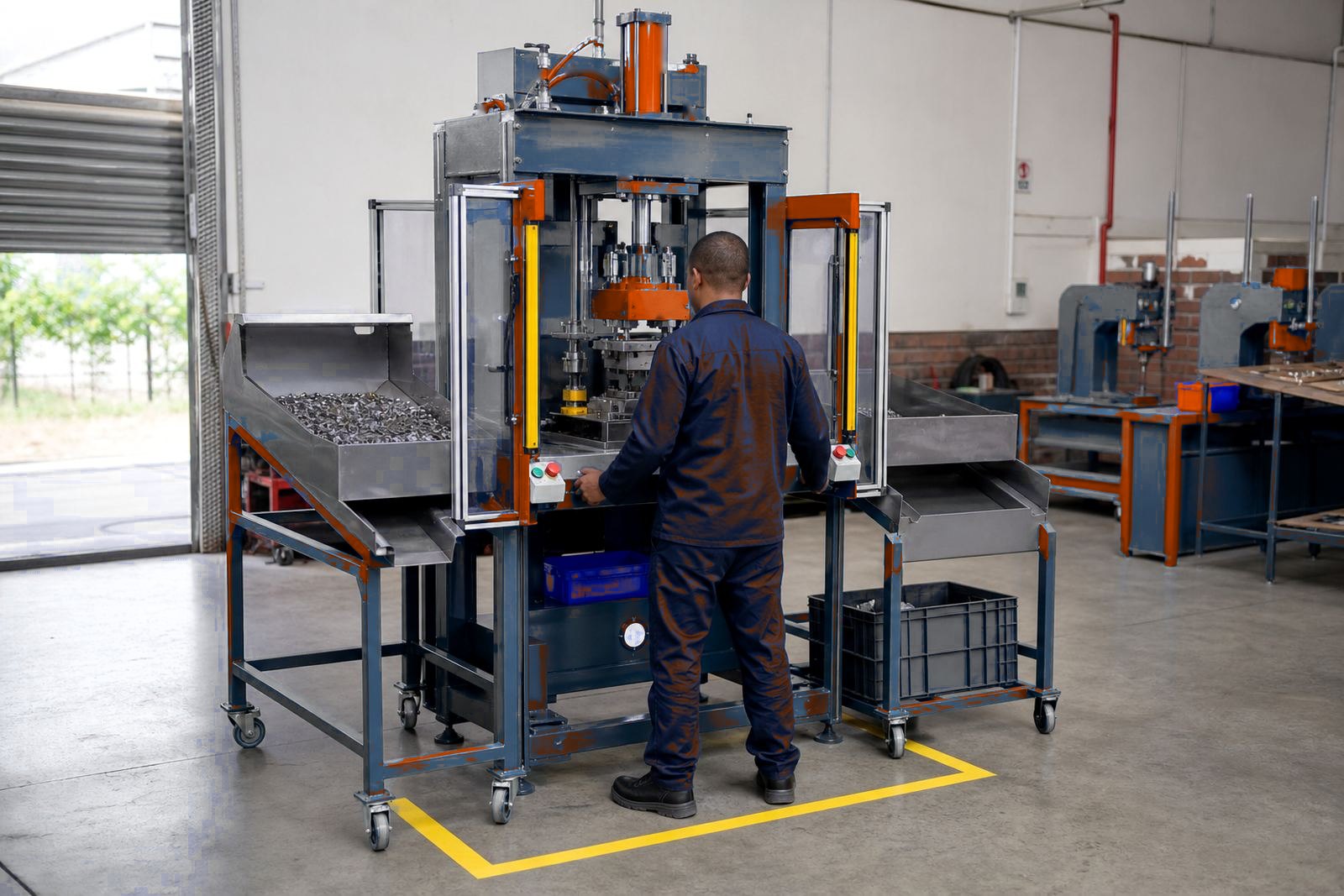
Pack sealing uses the same basic press principles but the job can be gentler than metal forming. The tool face, pressure and stroke have to suit the pack material, seal area and cycle rhythm. A press that seals packs too hard can damage the finish, while one that is too soft leaves inconsistent closure. For factory lines, the practical issue is keeping the seal step in step with the rest of the process.
Where several stations feed a pack sealing line, the handover between stations matters. The operator needs a clear point to load, a clear point to press and a clear point to remove the finished unit. When those points are set properly, the line feels orderly and the press stops becoming the bottleneck.
From Commissioning to Production Handover
Once the press is installed, commissioning brings the machine into real production conditions. That means checking air line setup, stroke setting, control behaviour, guard movement and the way the tooling meets the part. Operator training then ties the work together so the team understands loading, cycle start, part removal, basic checks and what to watch during a shift.
A proper handover covers the actual job on the floor with the right checks, loading, cycle start, part removal and basic watchpoints. If the press is moving between Johannesburg, Pretoria, Gqeberha or East London sites, the same core checks still apply, but the line layout and part flow will change from one factory to the next. MultiPress works with that practical side of the job every day.
- Air line setup and stroke checks before production starts
- Guarding, control and tooling verified together
- Operator training focused on the real cycle
- Production handover matched to the line conditions