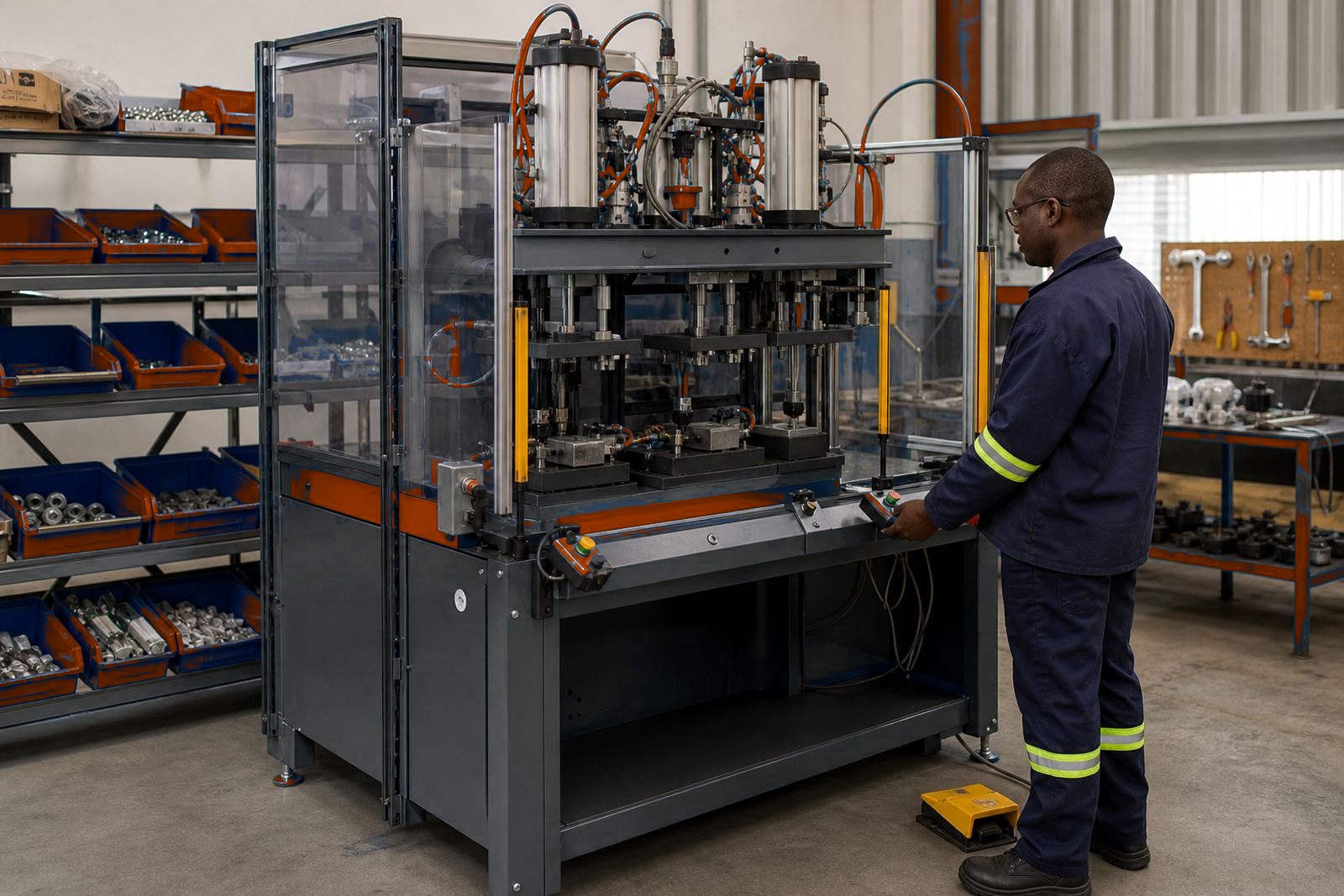
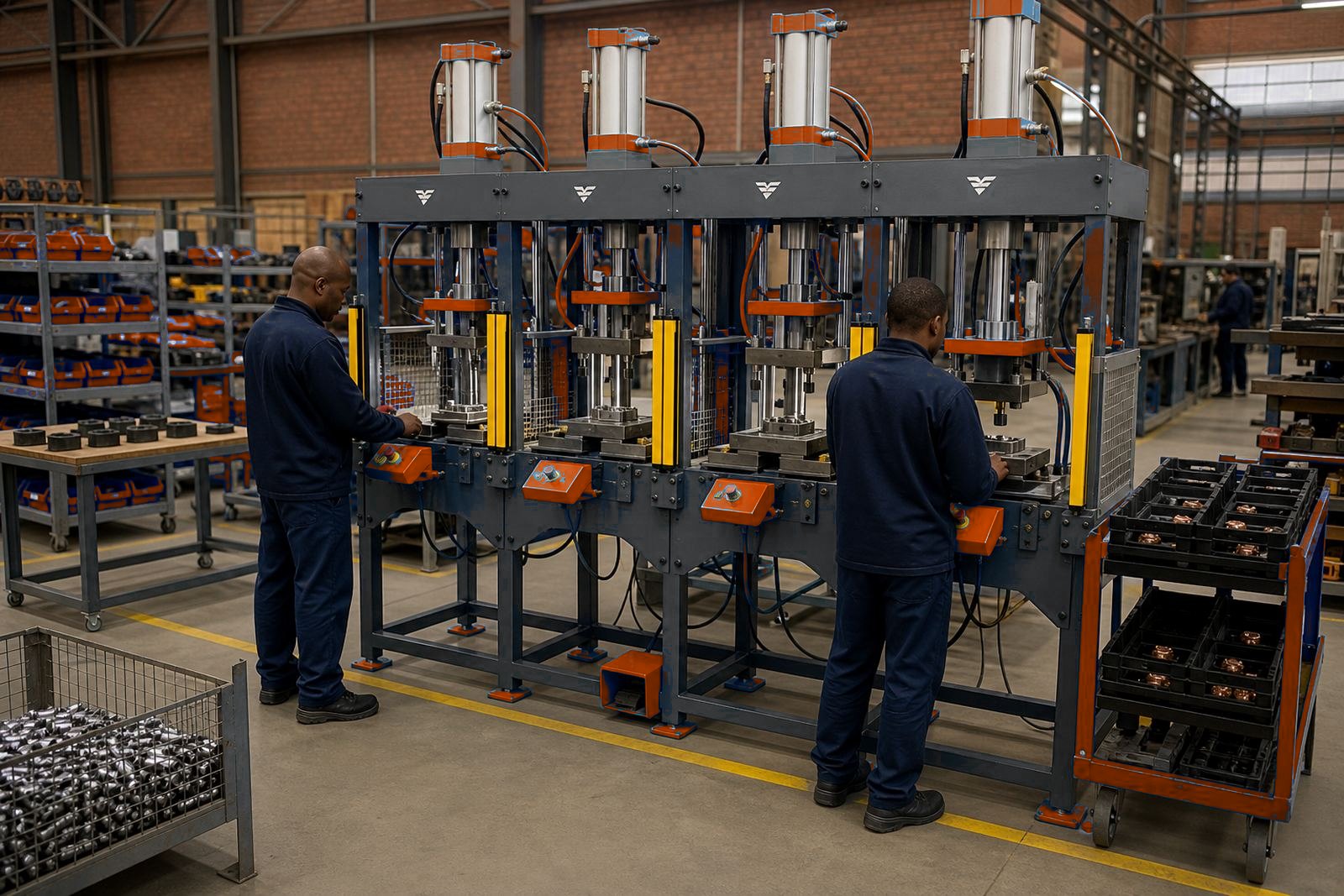
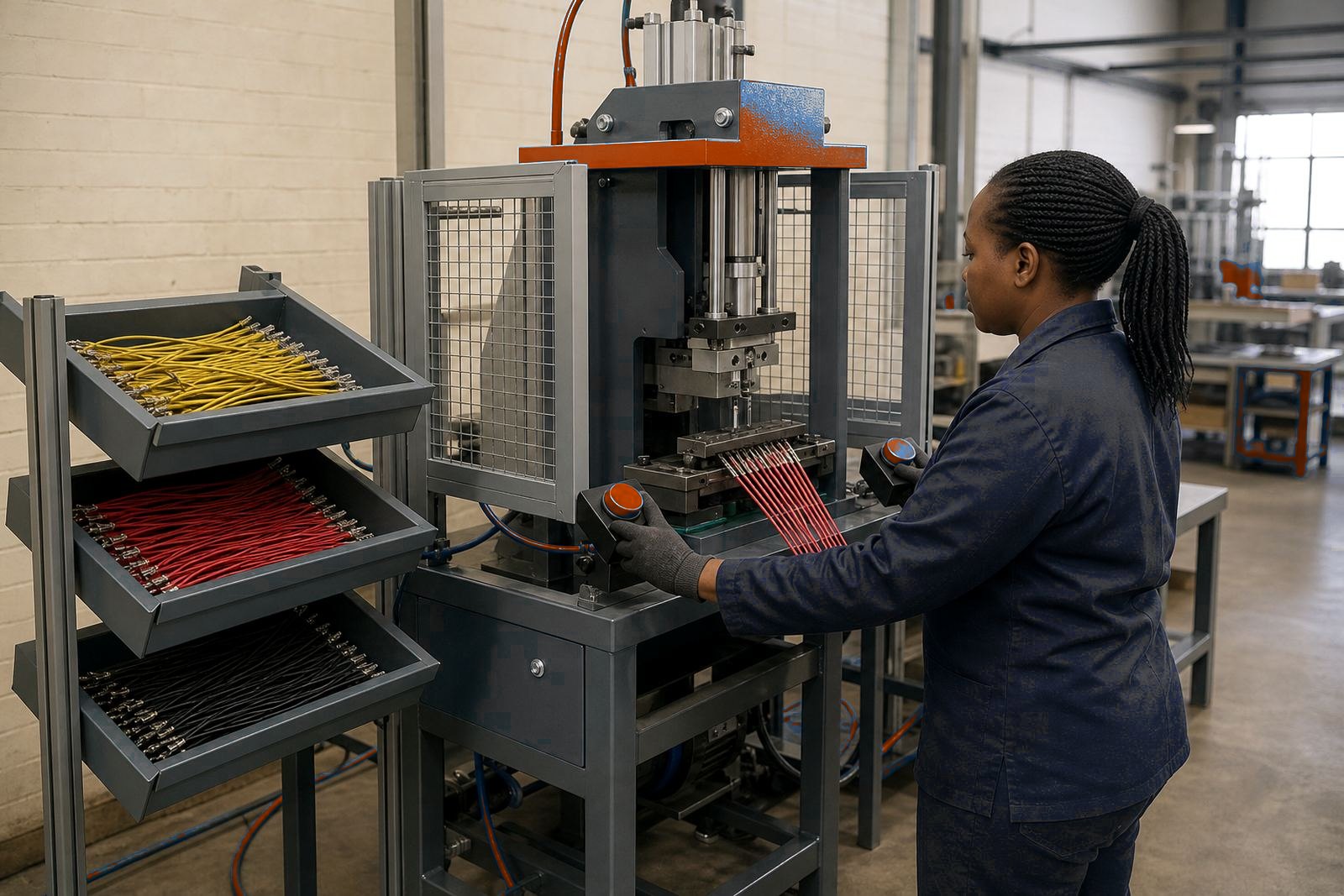
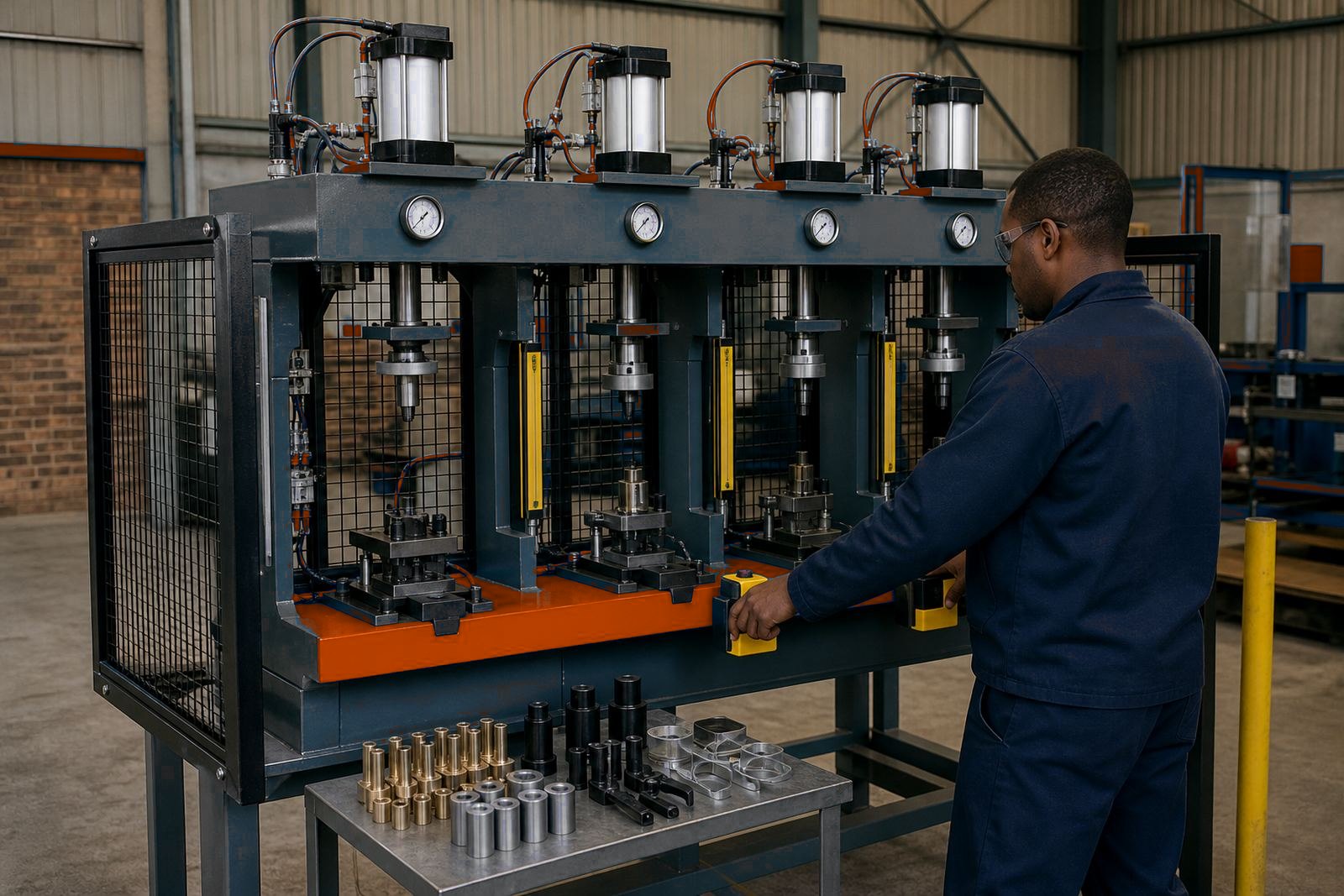
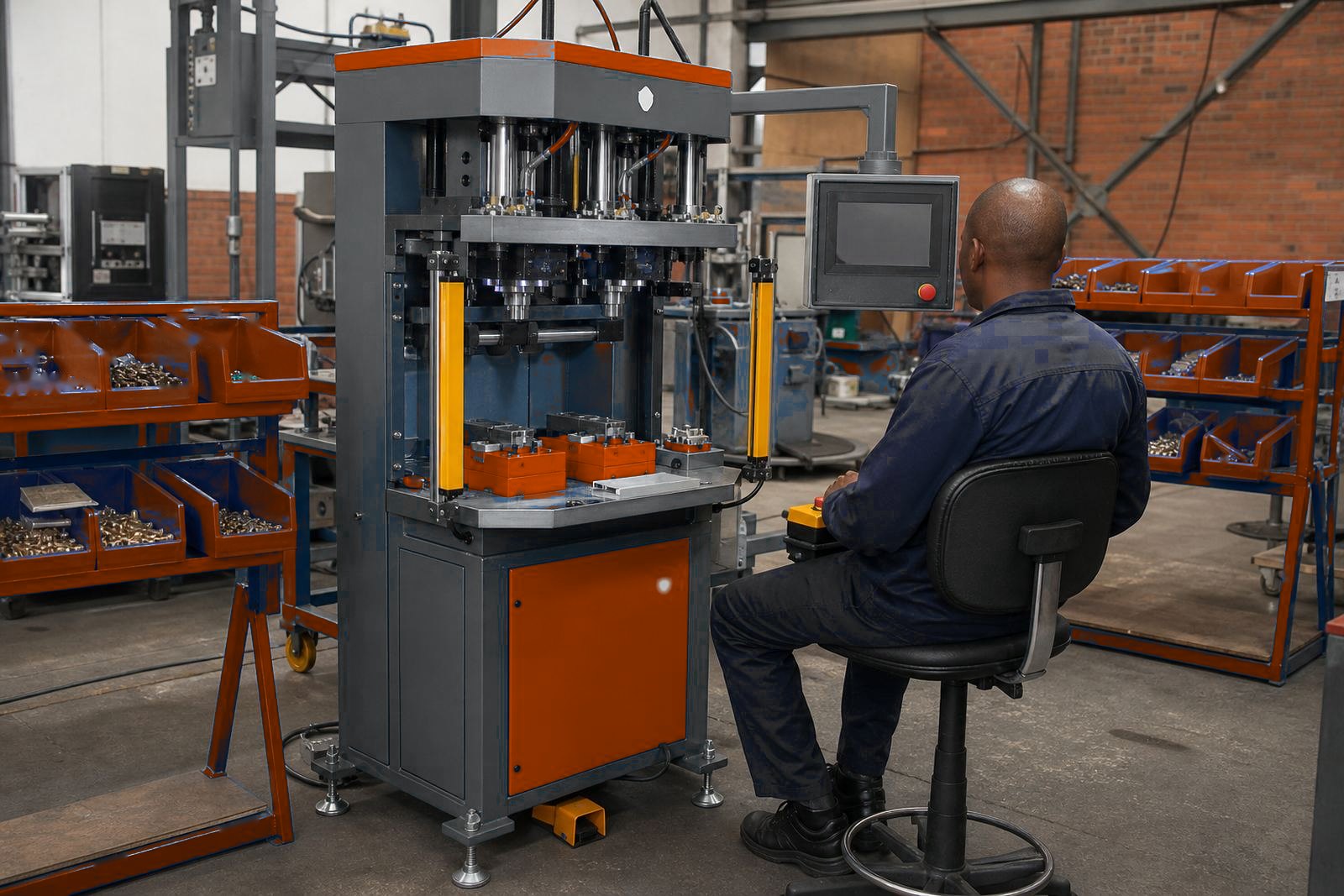
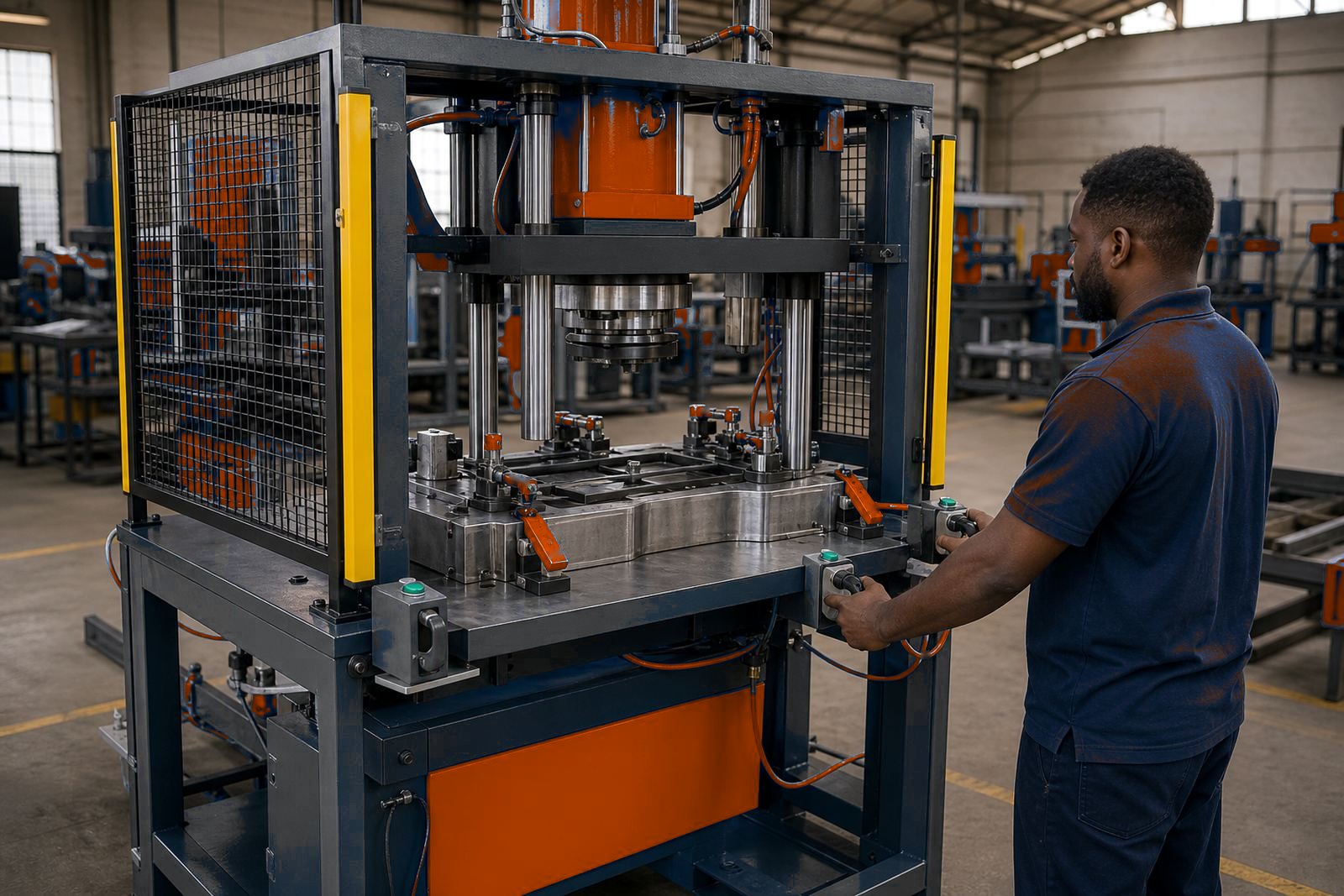
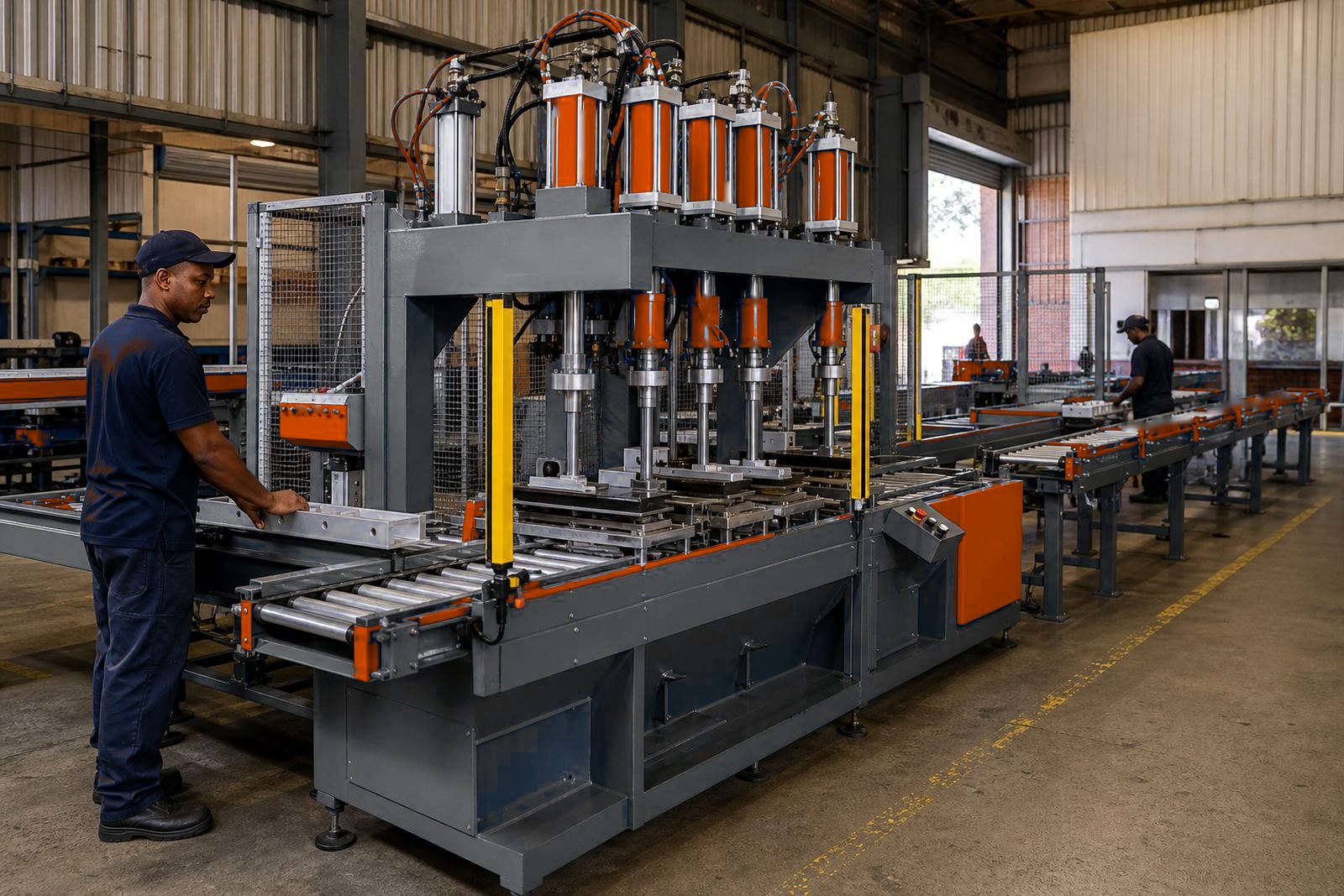
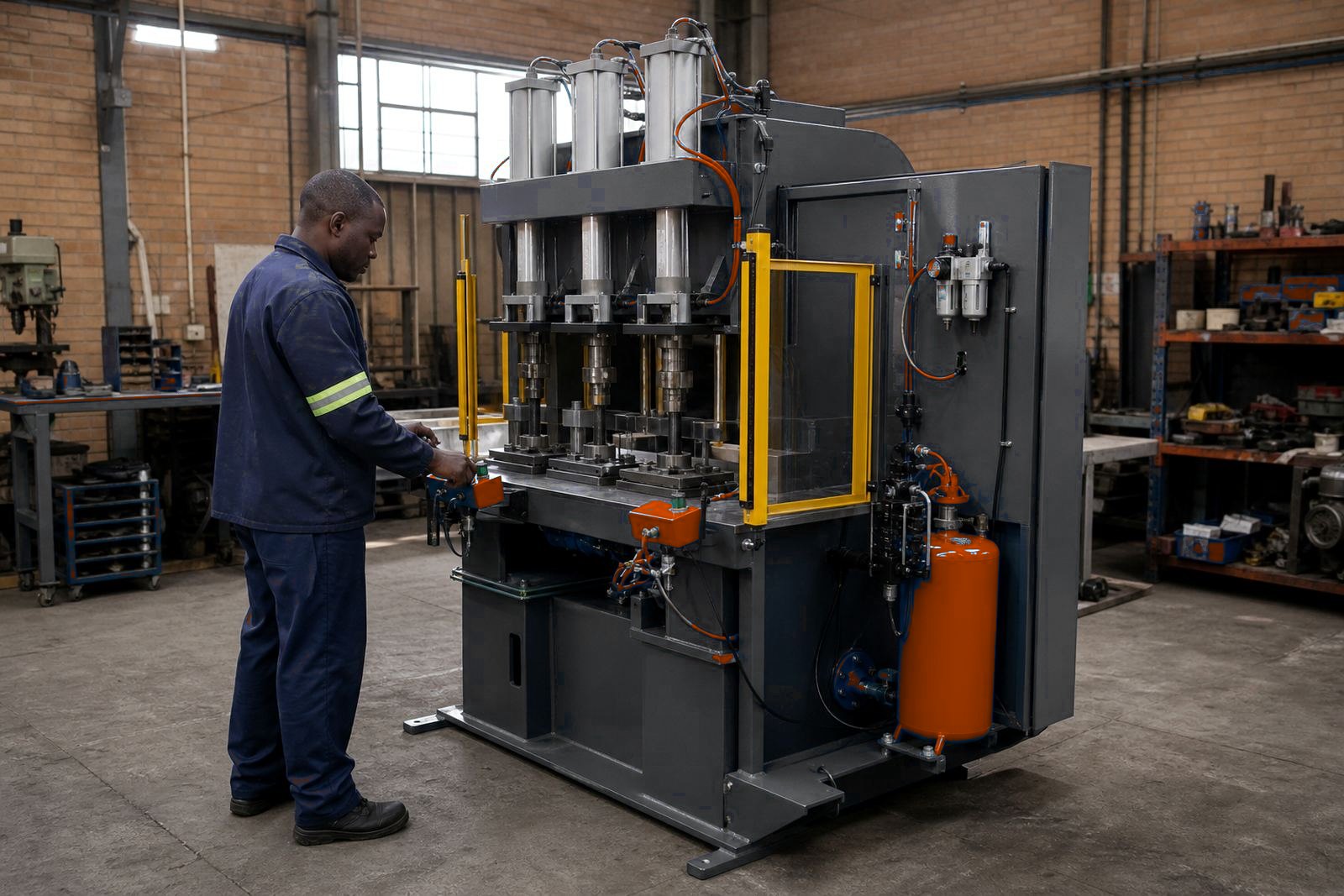
A line built around the job in front of it
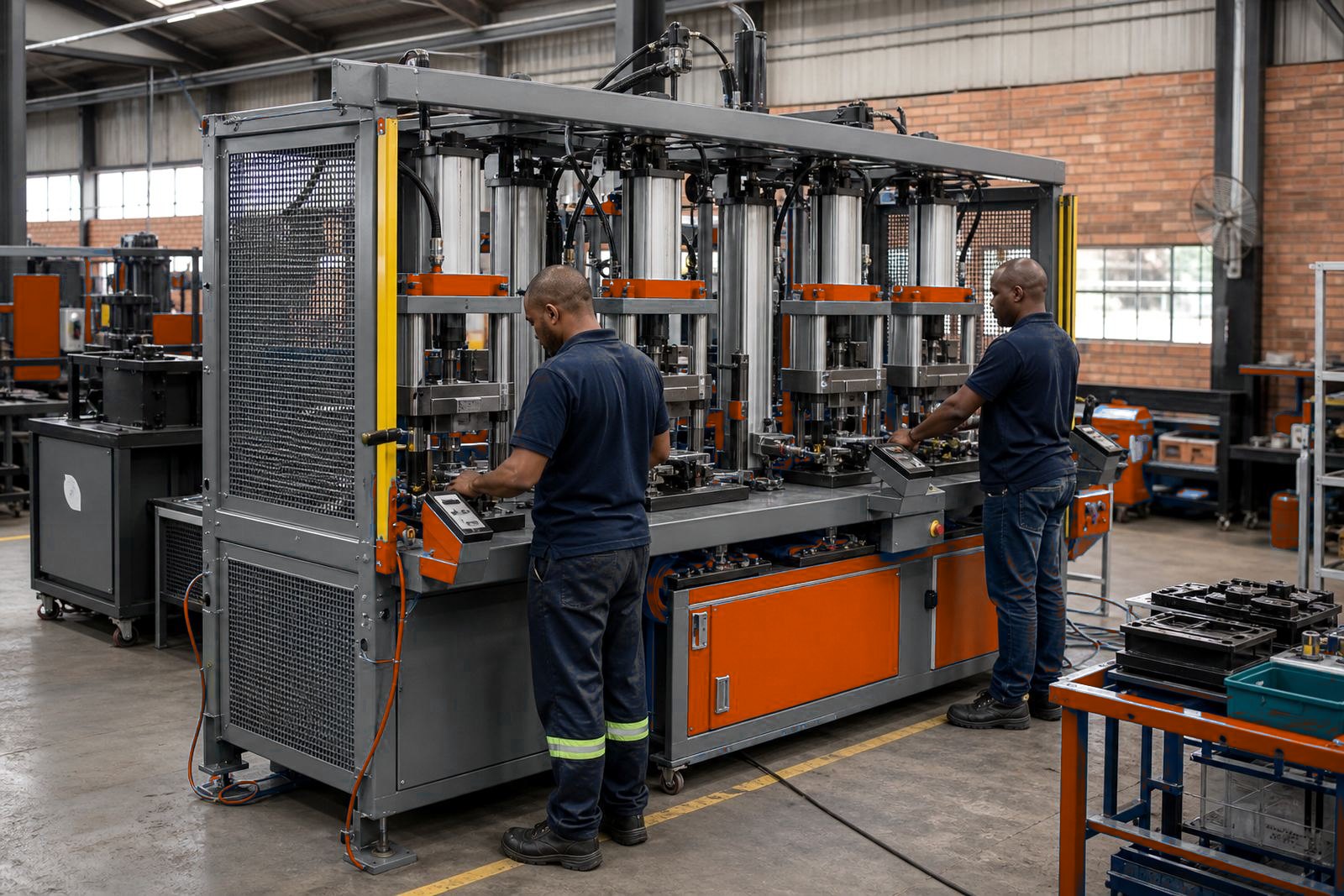
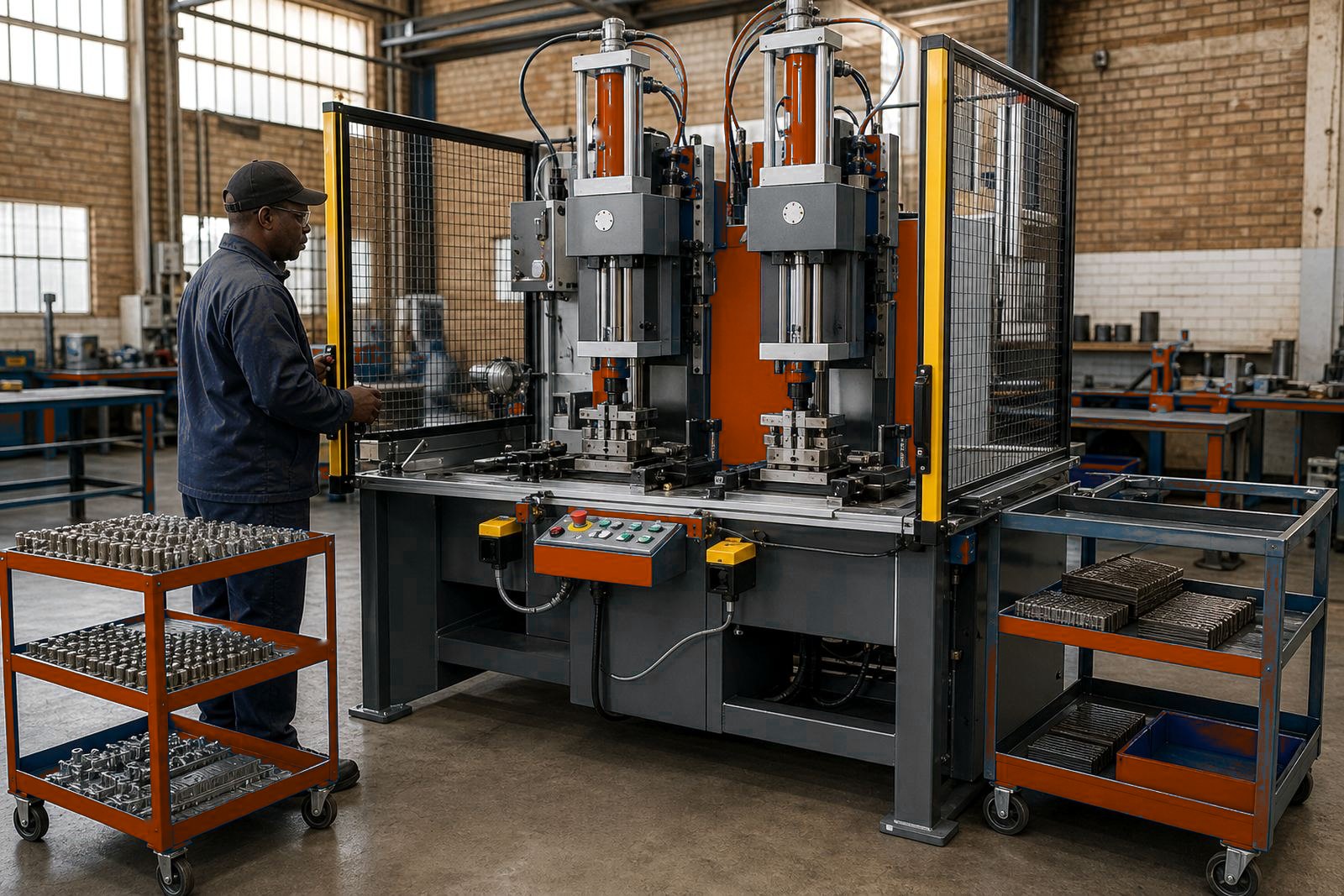
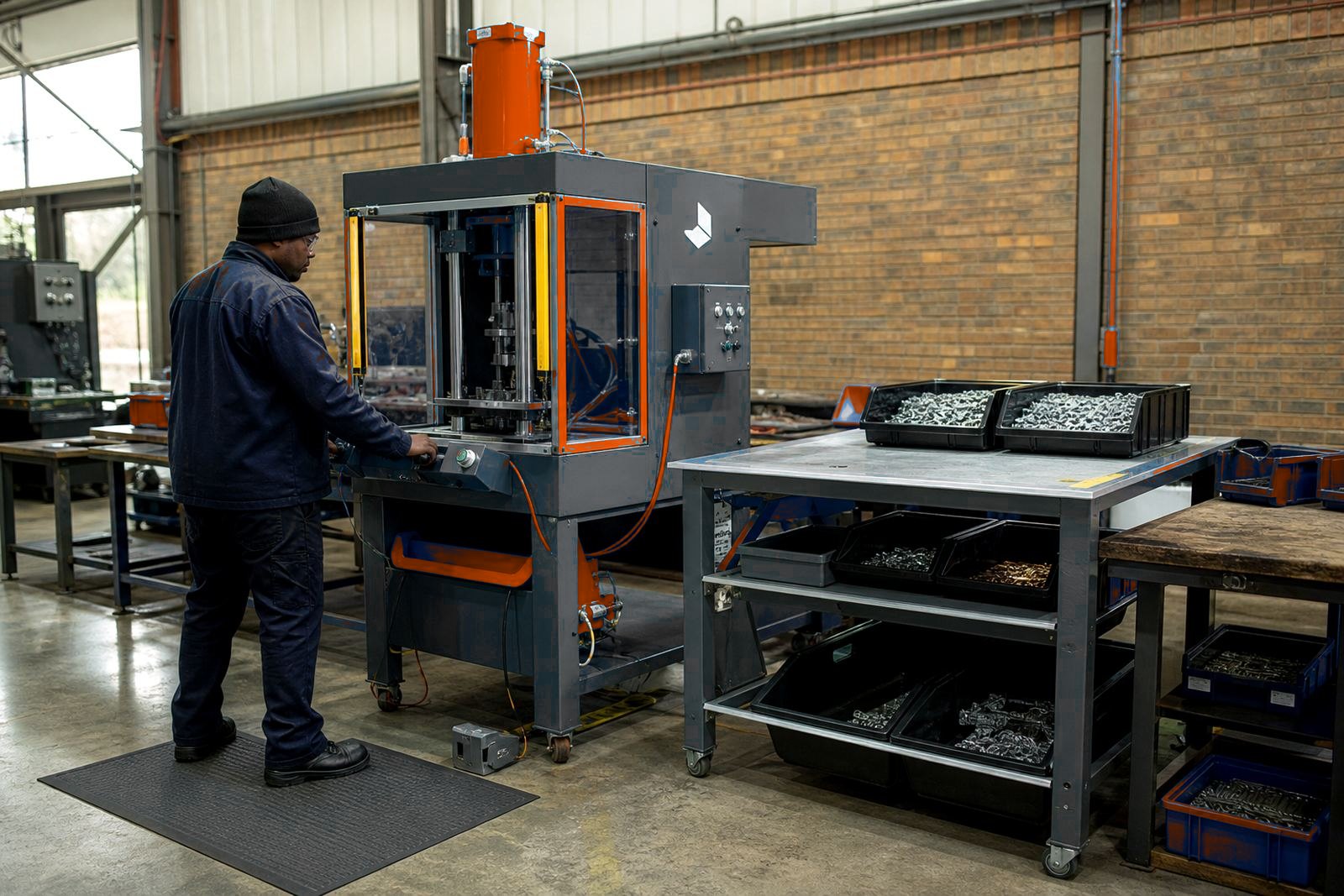
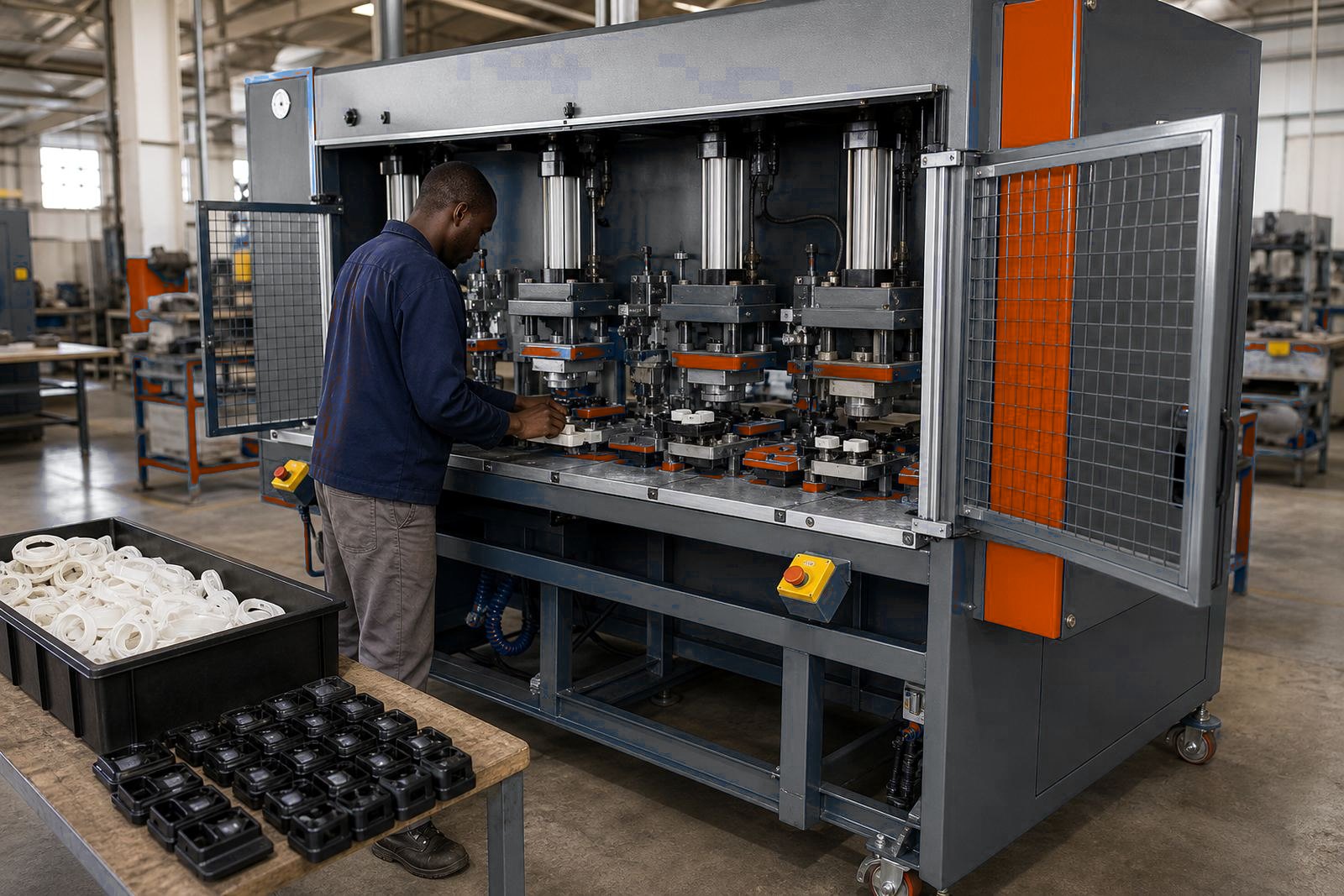
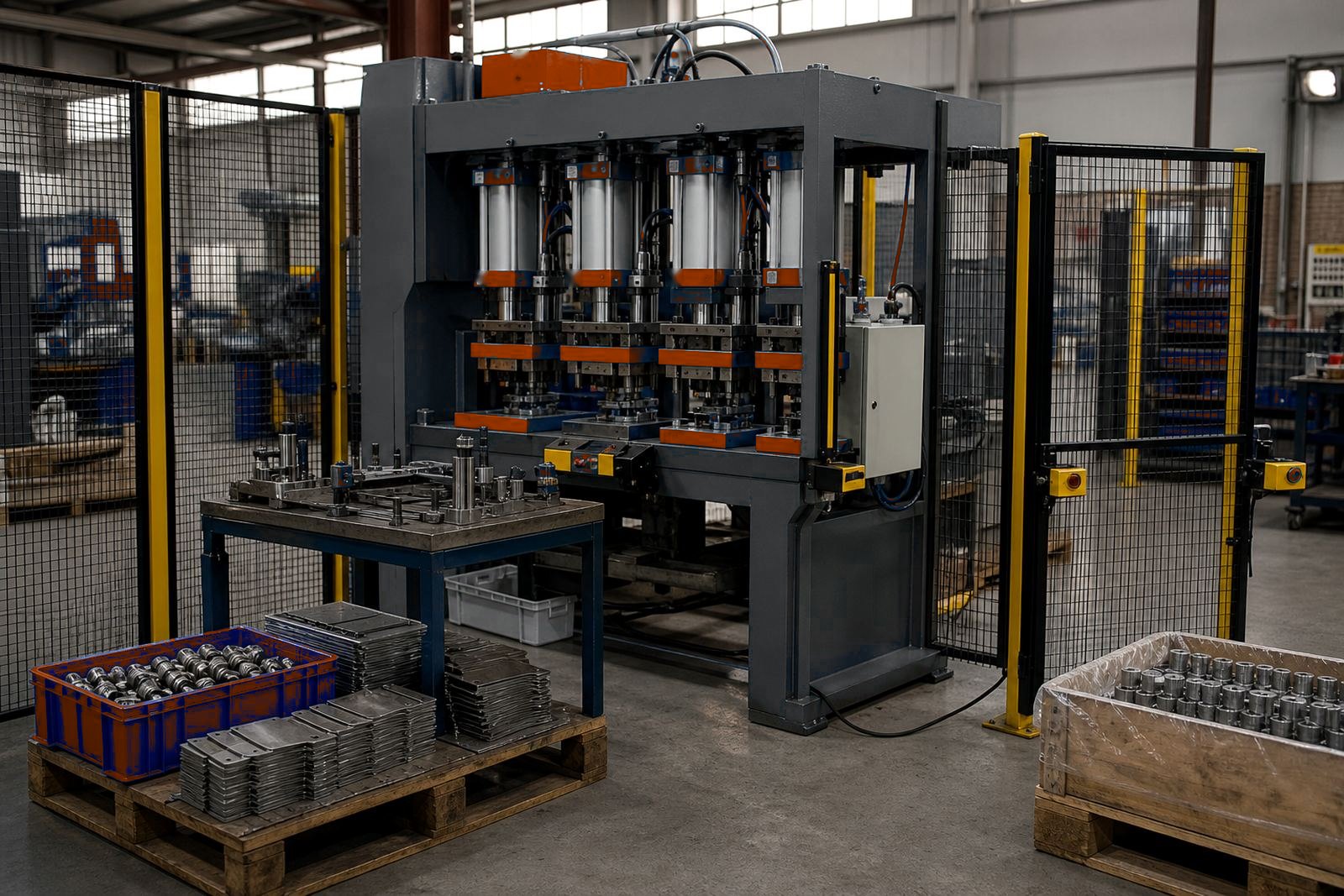
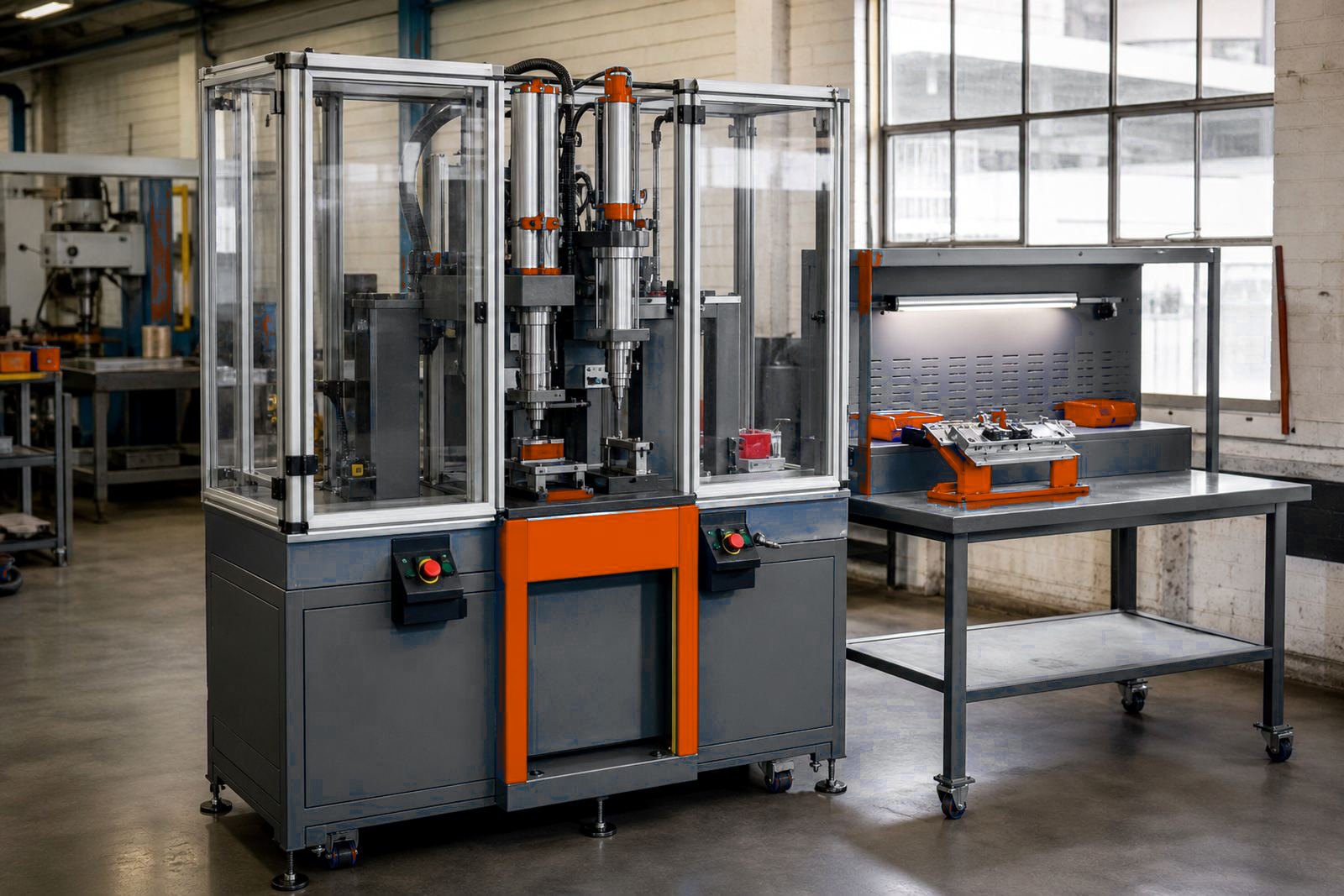
Press installations are not one shape for every plant. One line may need a compact two station frame for assembly work, while another calls for a longer multi-station build with separate cylinders, guided tooling and a controlled stroke for crimping or riveting. Pack sealing jobs bring their own needs too, especially where seal pressure, repeatability and clean handling matter.
We plan each installation around the part, the cycle and the room available on the floor. That means looking at air pressure, tooling reach, two-hand controls and the way the operator loads and removes parts. In a plant near Isando, that practical layout matters just as much as the press itself.
What usually sits inside a MultiPress installation
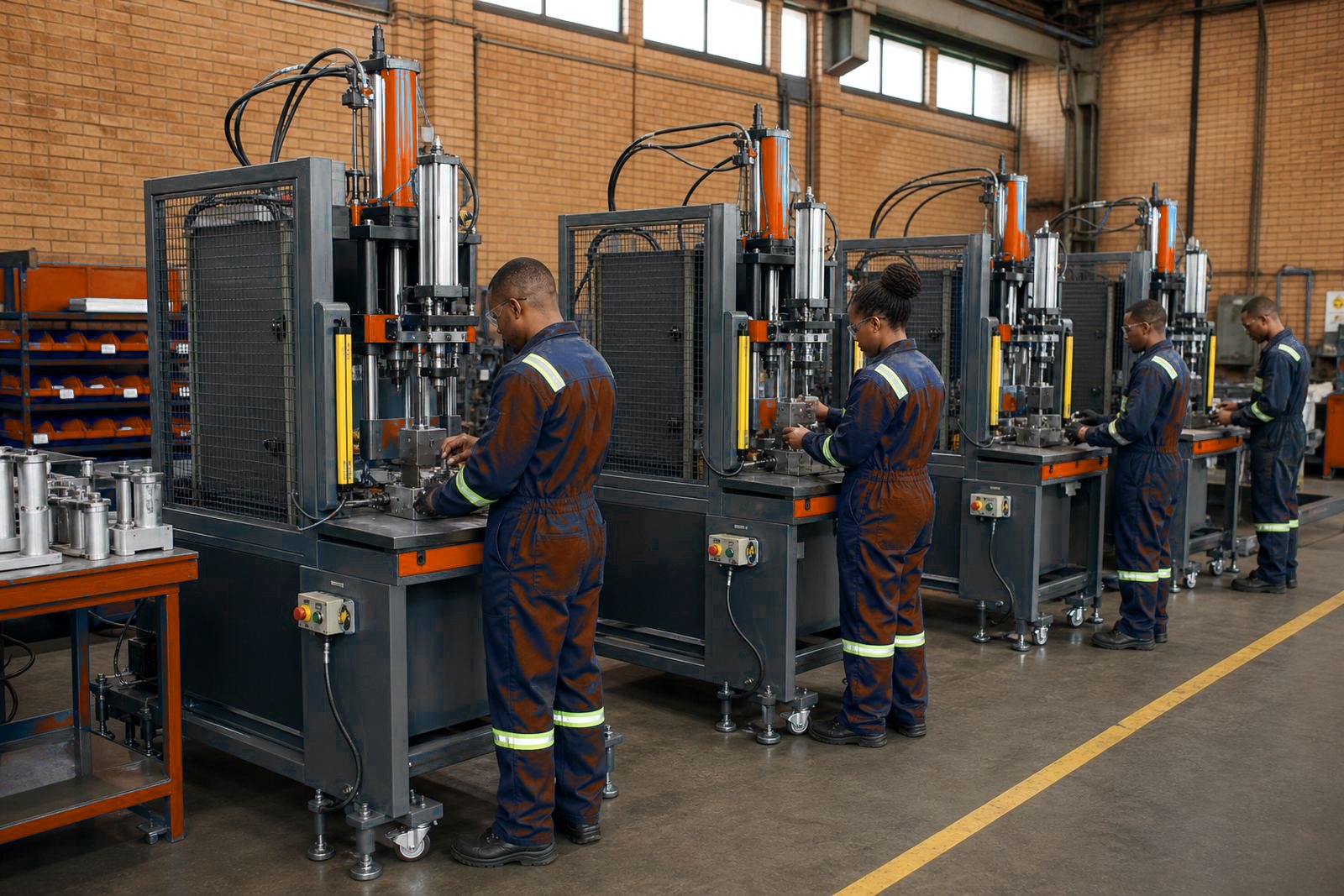
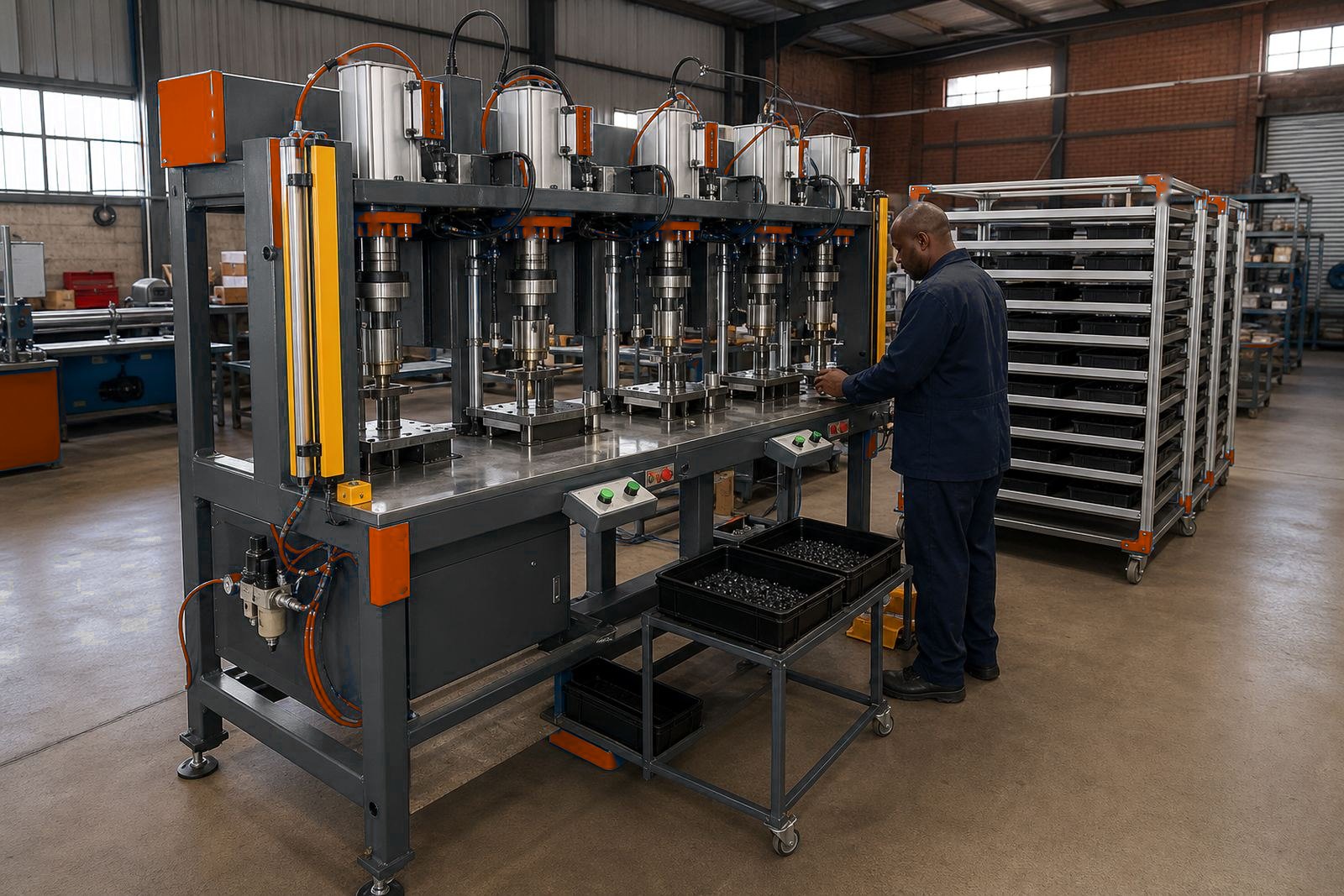
A press line can include a single workstation or a grouped set of stations feeding one production task. The details change with the job, but the core elements stay familiar on South African factory floors.
- Press frame and cylinder sizing for the required force
- Stroke setting matched to the part and tooling depth
- Two-hand control for safer manual cycling
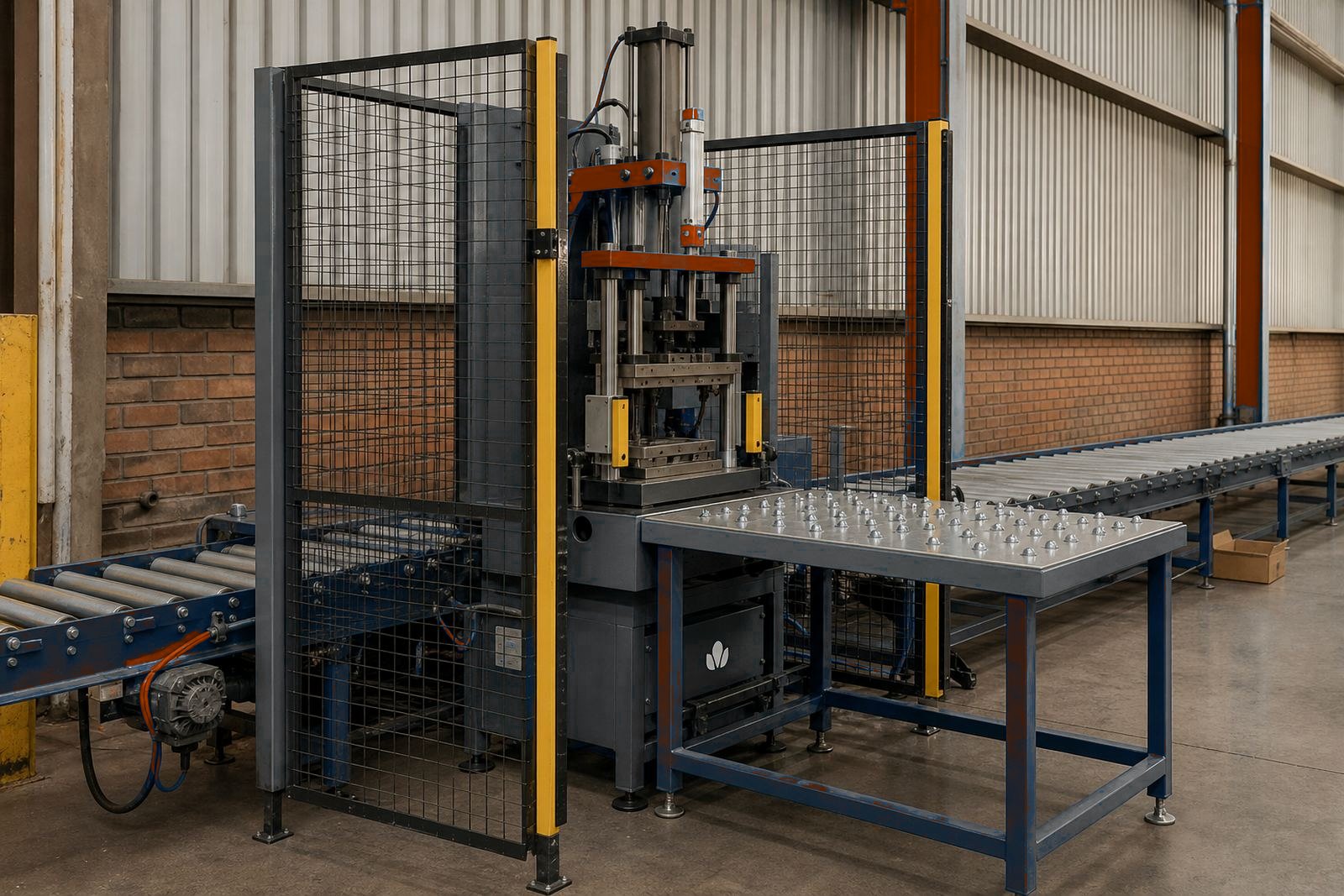
- Light curtain integration where access needs active guarding
- Custom tooling and fixture design for part location
- Guarding builds around the work envelope and feed area
Some jobs need more than one action in sequence, such as pressing, staking and then checking the finished fit. Others are built for one repeat task, like riveting a component or sealing a pack before it moves to the next step.
Fitting the press to your floor, air supply and production flow
Site work starts with the available floor space, the air supply and the way production has to move around the press. A workshop in Kempton Park may need a different layout from a sealing line in Durban, and coastal humidity can matter when tooling, guarding and pneumatics sit in the same area every day.
The installation stage usually covers fixing the press in position, setting the air line, checking the stroke, aligning the tooling and testing the safety controls. If the line needs hand loading, the two-hand controls and guarding are checked together so the motion stays clear to the operator.
- Site installation and positioning
- Air line setup and pressure checks
- Stroke setting and travel control
- Press commissioning with the actual tooling
- Production handover with the working team
Tooling, fixtures and the point of contact between parts
Press installations live or die on the tooling. A good frame with the wrong tooling wastes time, while a well matched fixture keeps the part square and stable through the cycle. For crimping and riveting, the tool face has to meet the part cleanly. For staking, the formed point must be repeatable. For pack sealing, the contact surface needs to suit the material and the seal path.
Tooling changes are part of real production. Some factories need quick swaps for different product runs, others run one part for long shifts and want fewer interruptions. The installation has to reflect that rhythm, not fight it.
Safety parts that belong in the same conversation
Press safety is built into the installation. Two-hand controls keep the operator clear during the cycle, while light curtains help protect access points where hands might enter the danger zone. Guarding builds shape the work area, guide movement and make the line easier to manage during daily use.
On heavier assembly lines, the safety layout also helps supervisors train new operators. People learn faster when the press movement, the loading point and the protected zone all make sense at a glance. That matters in busy shops where changeovers happen and the work cannot stop for confusion.
From Isando across South Africa
Our base in Isando, Ekurhuleni puts press work close to Johannesburg industry, but installations travel much further. Projects reach Pretoria, Durban, Gqeberha and East London, with work also handled in Kempton Park and Boksburg where factories need machine installation support without fuss.
The area names matter because the production needs differ. A job in an inland workshop may be affected by compressed air supply and space constraints, while a coastal plant may need more attention to guarding condition and tool protection. The installation notes change with the site, but the aim stays the same: a press line that fits the task and the team using it.
Who handles the moving parts behind the installation
Press installations need more than one pair of hands. Pieter Sauls oversees the direction of the work, Thandiwe Matlala keeps the project moving, Musa Hartnick handles tooling design, Johan Ramokgopa works on the workshop build, Lerato Moagi carries out commissioning and Anele Engelbrecht leads operator training. That mix matters when a line must move from build stage to production handover.
When a press project needs planning, guarding or a new production setup, send us the part, the process and your floor space through our contact form. Every installation is planned around the line it joins and the people who will run it.