Press commissioning for Johannesburg lines that cannot drift
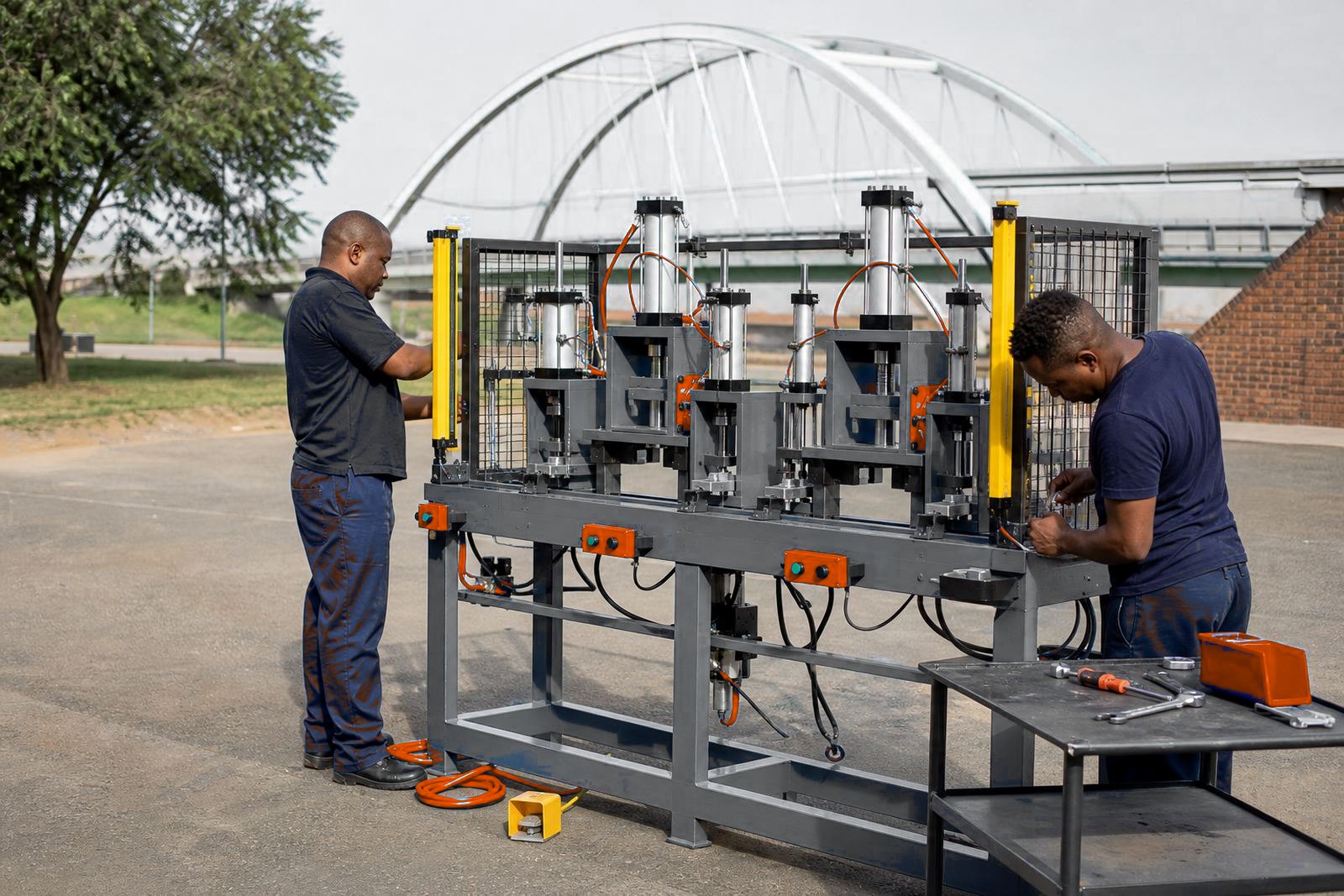
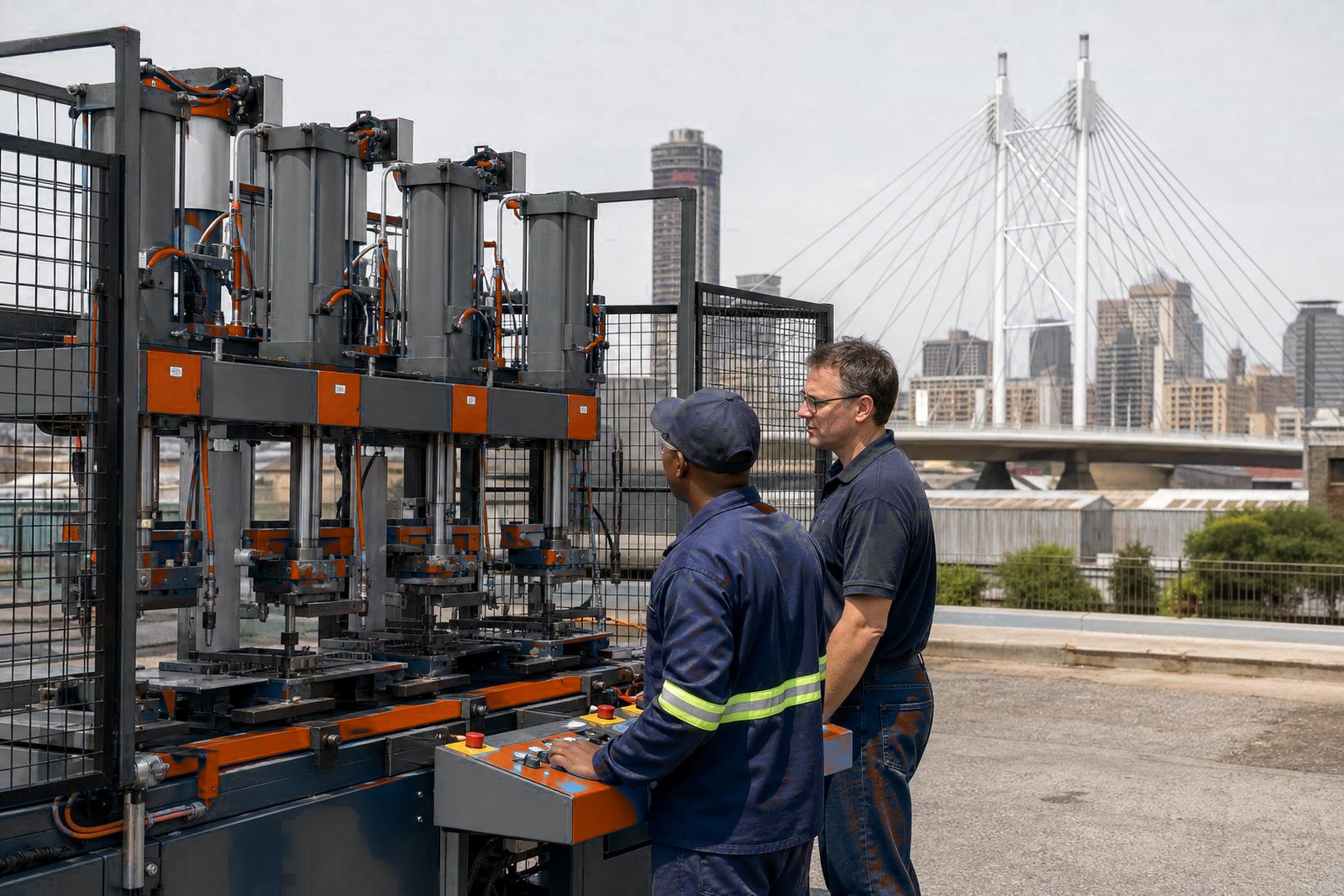
Our Johannesburg commissioning work covers the points that matter when a press has to move from workshop build to daily production. That means checking station height, cylinder movement, stroke setting, air pressure, part location, guards and the way the operator stands at the machine. A multi-station pneumatic press must do more than cycle, it has to hit the same result on each station without forcing the operator to fight the tooling.
We set up presses for assembly lines, crimping operations, riveting jobs, staking tasks and pack sealing stations where repeatability matters. In workshops around Isando, Spartan, Jet Park, Meadowdale and the wider Ekurhuleni belt, the usual pressure is on output, floor safety and clean part flow. Short runs and larger batches both need the same basic discipline: correct tooling, correct alignment, solid guarding and controls that make sense on a busy floor.
Johannesburg sites often work in mixed conditions, with dust from nearby fabrication, long production bays and enough foot traffic that guarding cannot be an afterthought. We keep the commissioning practical and direct, because a press that is awkward to load or hard to supervise soon becomes a problem for supervisors and maintenance teams.
What gets set during a site visit
The setup work is specific to the press and the product. Some jobs need a single press head on one station, others need several stations working through the same part in sequence. Air pressure must match the tooling and the material, while stroke length needs enough travel for the task without over-driving the part. Too much stroke can bruise a component, too little leaves an incomplete form or crimp.
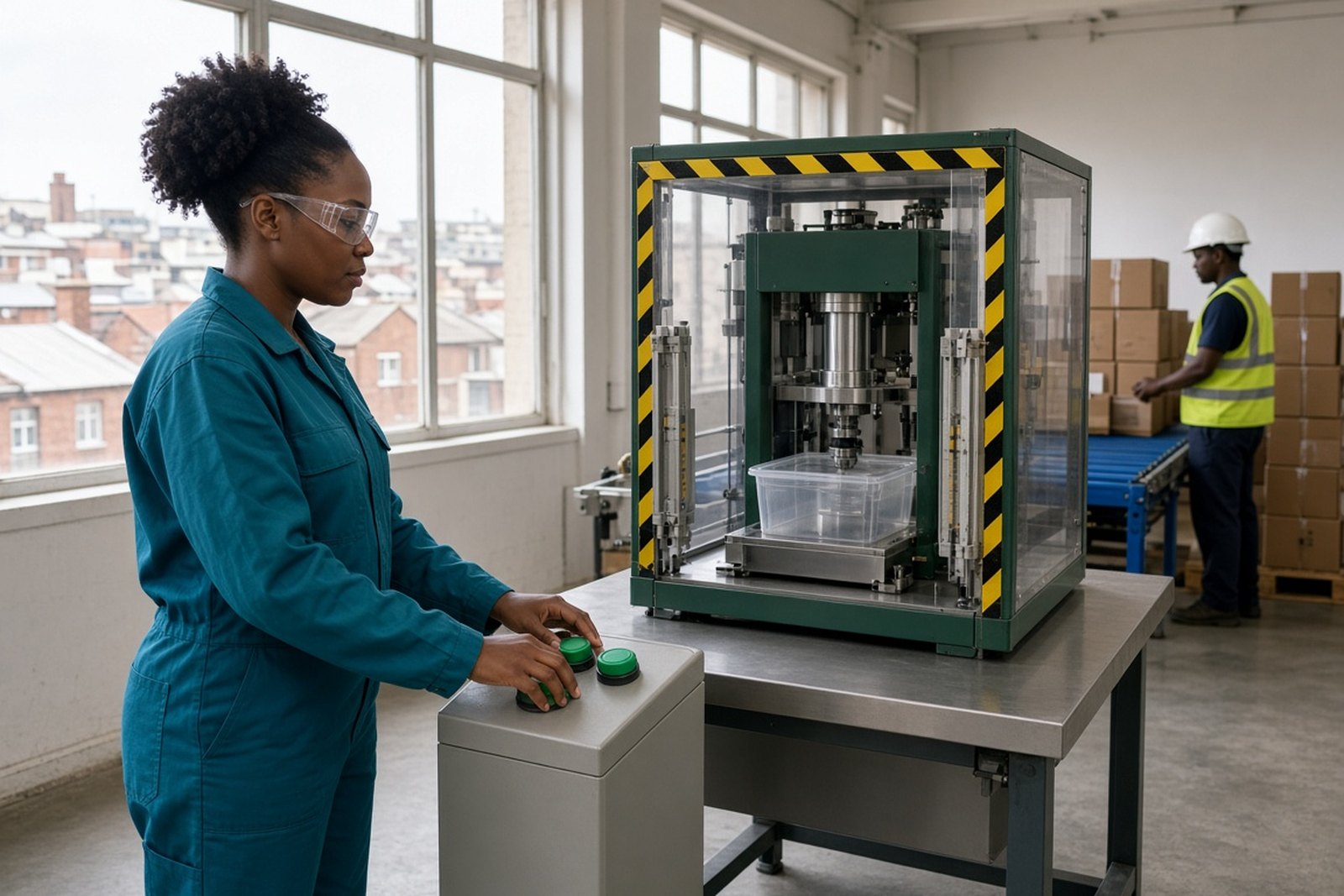
We also work through the small details that keep the line running straight. That includes two-hand controls where the process needs both hands away from the tool, light curtains where guarding needs an open feed area, and fixture design that keeps the part square under load. If a line needs tool changes during a shift, the changeover method must be simple enough for the team to follow without guesswork.
- Station alignment and level checks
- Stroke setting for each press position
- Air line setup and pressure checks
- Two-hand control testing
- Light curtain integration and guard checks
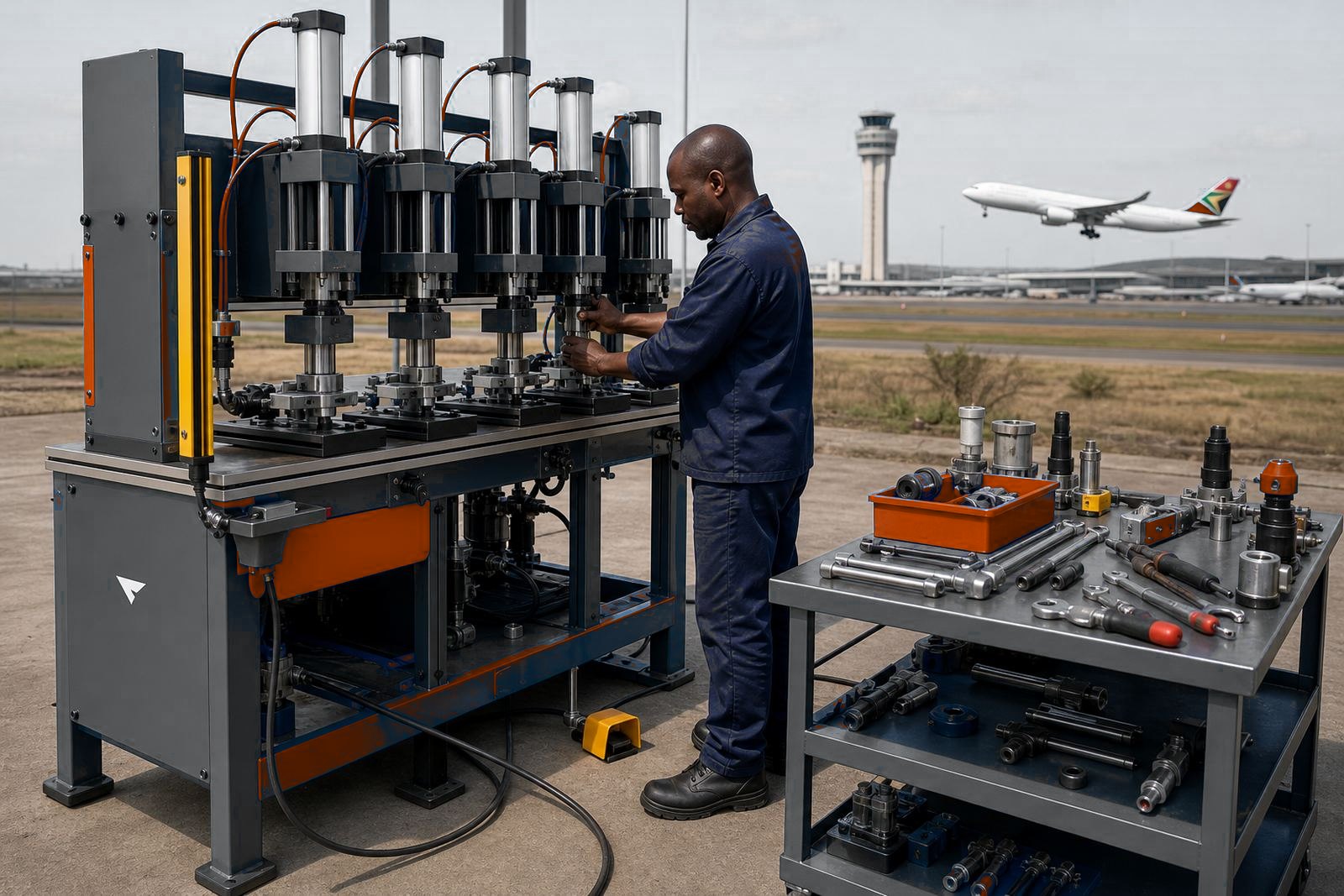
- Tooling fitment and production trial runs
On pack sealing lines, the seal quality can change if pressure, dwell and tooling contact are not balanced. On riveting and staking work, the press needs a clean downward action and a stable part nest. These are the details that decide whether the line feels controlled or messy.
Johannesburg sites, floors and factory conditions
Local factories in Johannesburg and the surrounding industrial nodes often work in steelwork, components, assembly, packaging and repair production. Some sites are compact and crowded, with limited access around the press. Others have long lines where material moves in stages and each station has to match the next one. Either way, commissioning has to respect the floor layout and the way people actually move around it.
We handle commissioning where the air supply is already in place and also where the air line needs to be sorted before the press can run properly. In older buildings, pipe runs, moisture and pressure drop can all affect the final result. In newer facilities, the focus is usually on line handover, guarding layout and keeping the first production trial neat enough for the team to carry on without confusion.
Johannesburg can also mean different product mixes in the same plant. One week the press is forming small metal components, the next it is crimping or staking a different part, and the tooling change has to be practical for that rhythm. We keep the setup work focused on the actual product and the actual floor, not on theory.
Travel across the metro without making the job heavy
From Isando we move into Johannesburg industrial areas through the day, with work often centred on factories that need commissioning after installation, relocation or tooling changes. The travel pattern is straightforward across the east side of the metro, though the access route and loading bay conditions vary from site to site. Narrow entrances, shared yards and busy receiving areas can slow the handover if the plan is not clear.
For larger jobs, the commissioning scope may include a full production handover. That means checking the machine under load, confirming the operator sequence, showing the maintenance team the key setting points and making sure the guarding and controls match the way the line will run. We also cover nearby service areas such as Kempton Park, Boksburg and other Ekurhuleni sites when the work links to the Johannesburg production belt.
Where the job needs custom tooling, our workshop team can work through the fixture, the nest and the tool geometry before site installation. That keeps the site visit focused on fit, function and safe use rather than on last minute improvisation.
People on the Johannesburg side of the work
Each commissioning job touches several parts of the team. Pieter Sauls oversees the work at management level, while Thandiwe Matlala keeps the project details moving between workshop, site and handover. Musa Hartnick handles tooling design, Johan Ramokgopa leads workshop build and fitment, Lerato Moagi manages commissioning on site and Anele Engelbrecht handles operator training.
That mix matters because a press line is rarely only a machine issue. It may need a guard moved slightly, a station reworked, a tool adjusted for better part release or a better loading sequence for the operators. When the people who design, build and commission the system stay close to the job, the final setup is usually easier to live with on the floor.
- Custom tooling for assembly and forming jobs
- Fixture design for repeat location
- Guarding builds and light curtain integration
- Two-hand controls where the process requires them
- Site installation support and production handover
- Operator training for day-to-day use
Johannesburg factories often want the line to feel predictable from the first shift onwards. That is where training, setting and practical handover matter just as much as the hardware.
How enquiries are handled for Johannesburg commissioning
Clients who need Johannesburg commissioning use our contact page form to send the job details, the machine type and the line layout. It helps to include the product being pressed, the number of stations, whether the line needs crimping, riveting, staking or pack sealing work, and whether the site already has compressed air in place. Clear notes make it easier to plan the right tooling and the right site visit.
Some Johannesburg jobs are straightforward, with a single press and a tidy floor plan. Others involve several stations, added guarding, air line setup and a wider production handover. We cover both, and the approach stays practical: check the press, set the stroke, verify the controls, test the guarding, then let the line prove itself under normal production conditions.
That is the point of commissioning in this part of Gauteng. The machine must suit the job, the team and the floor it works on, not just the drawing that started it.