

Station layouts that match the job
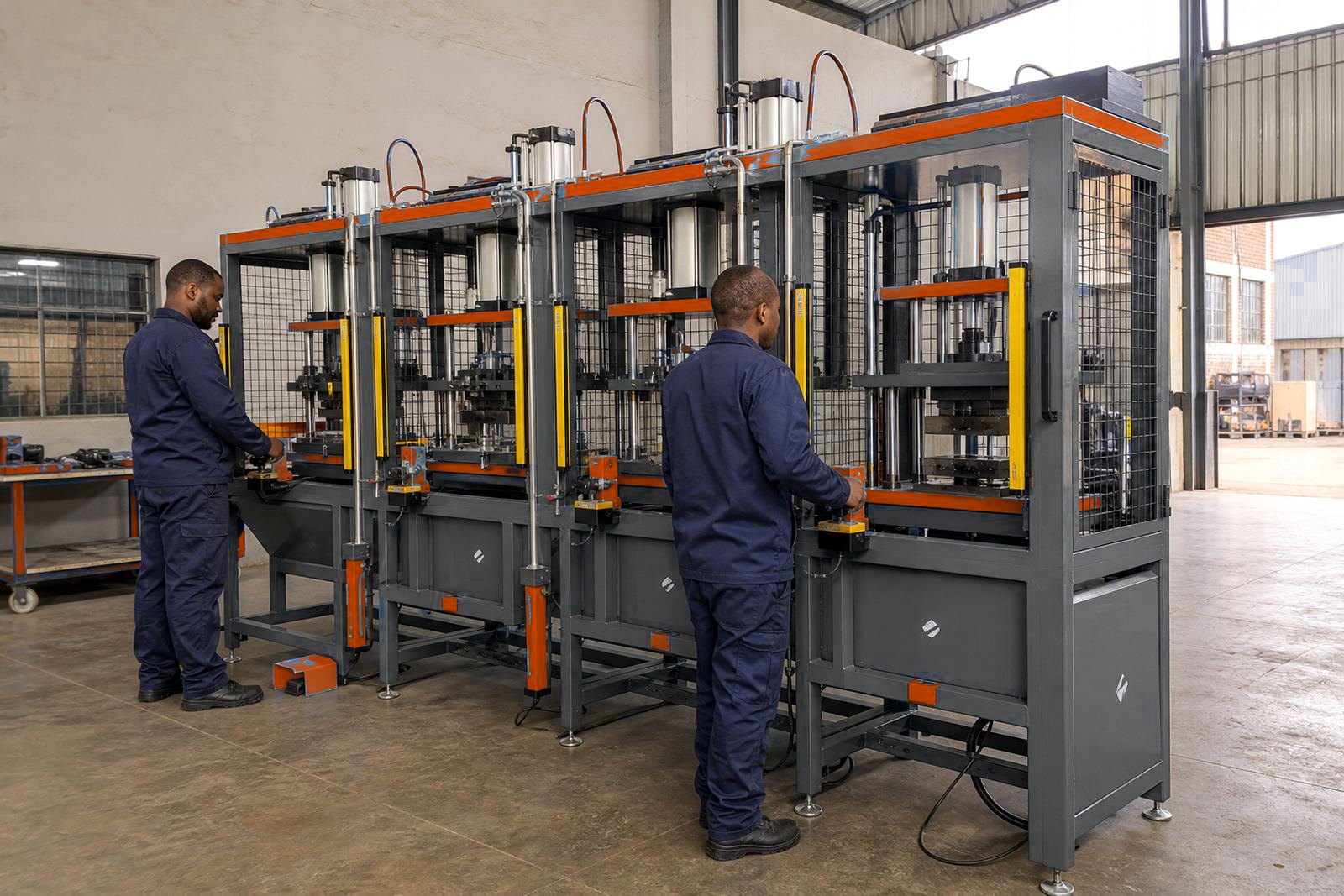
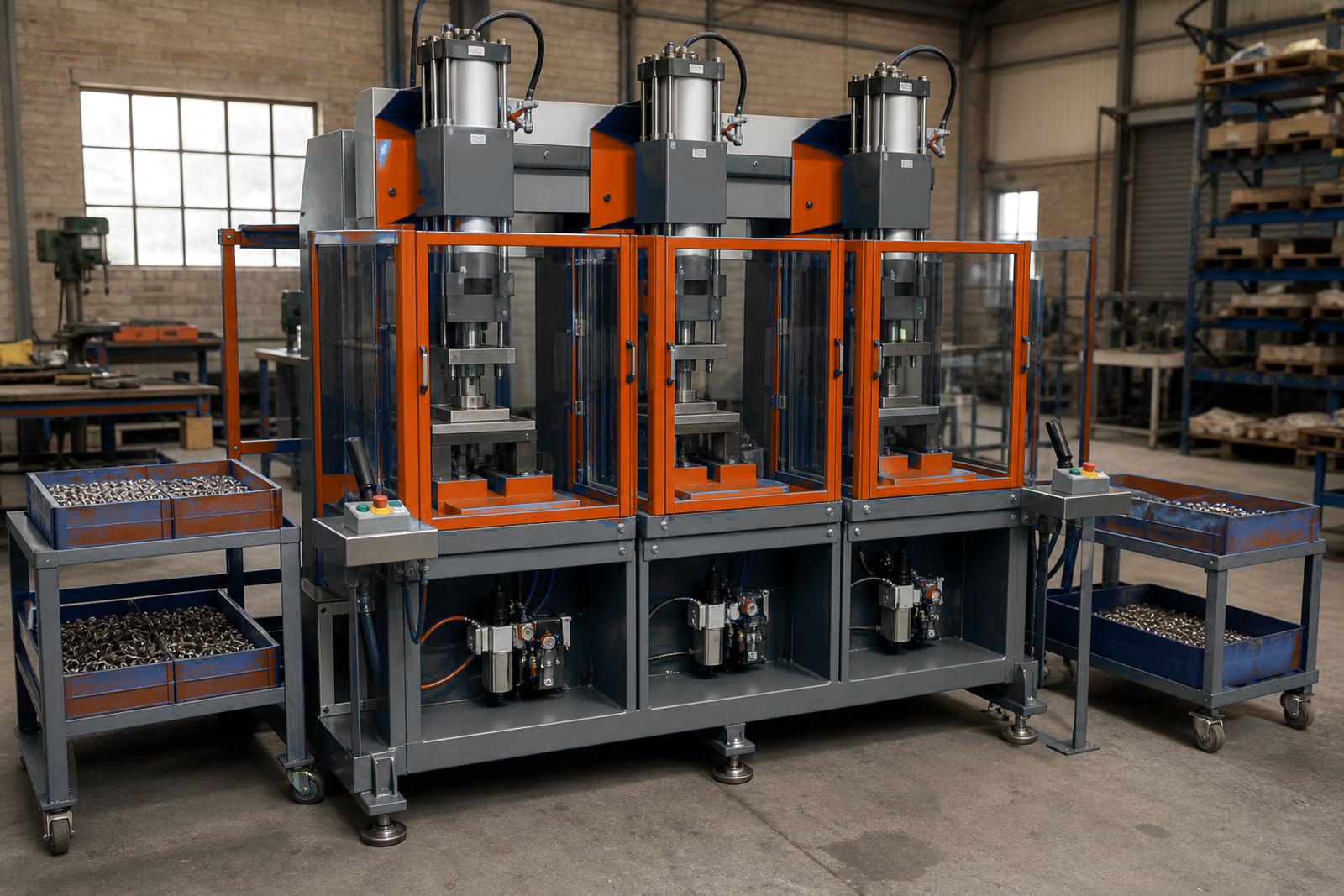
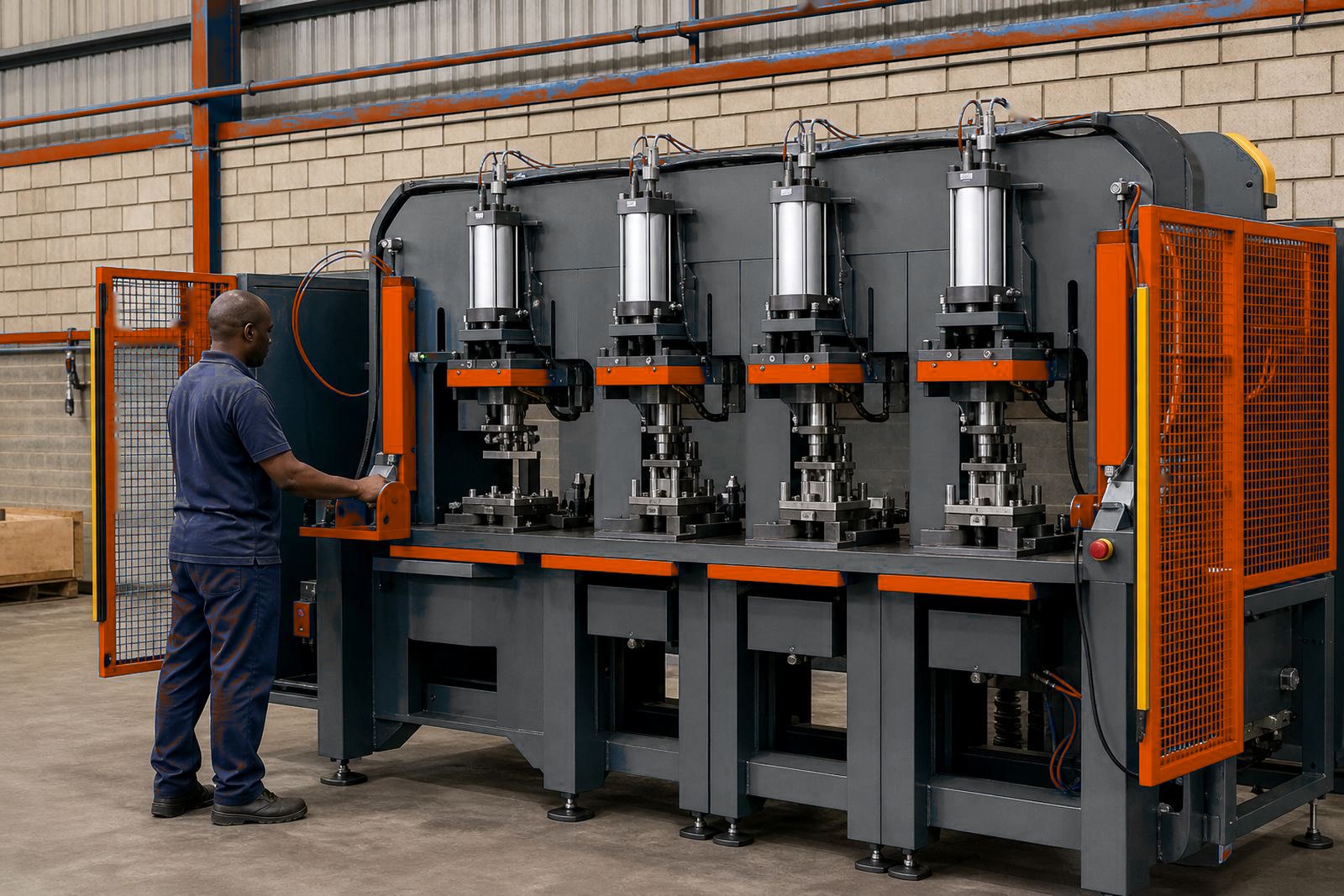
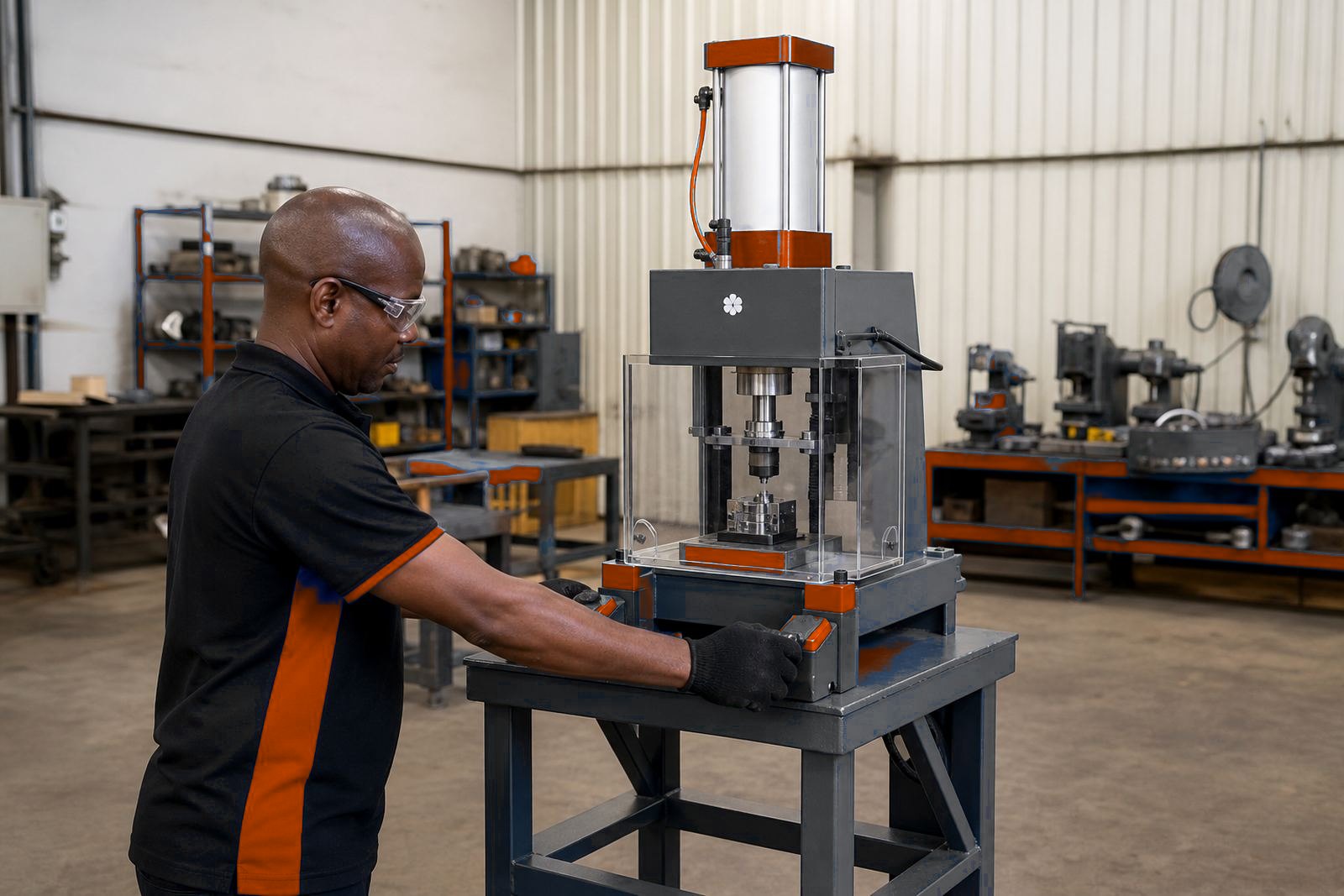
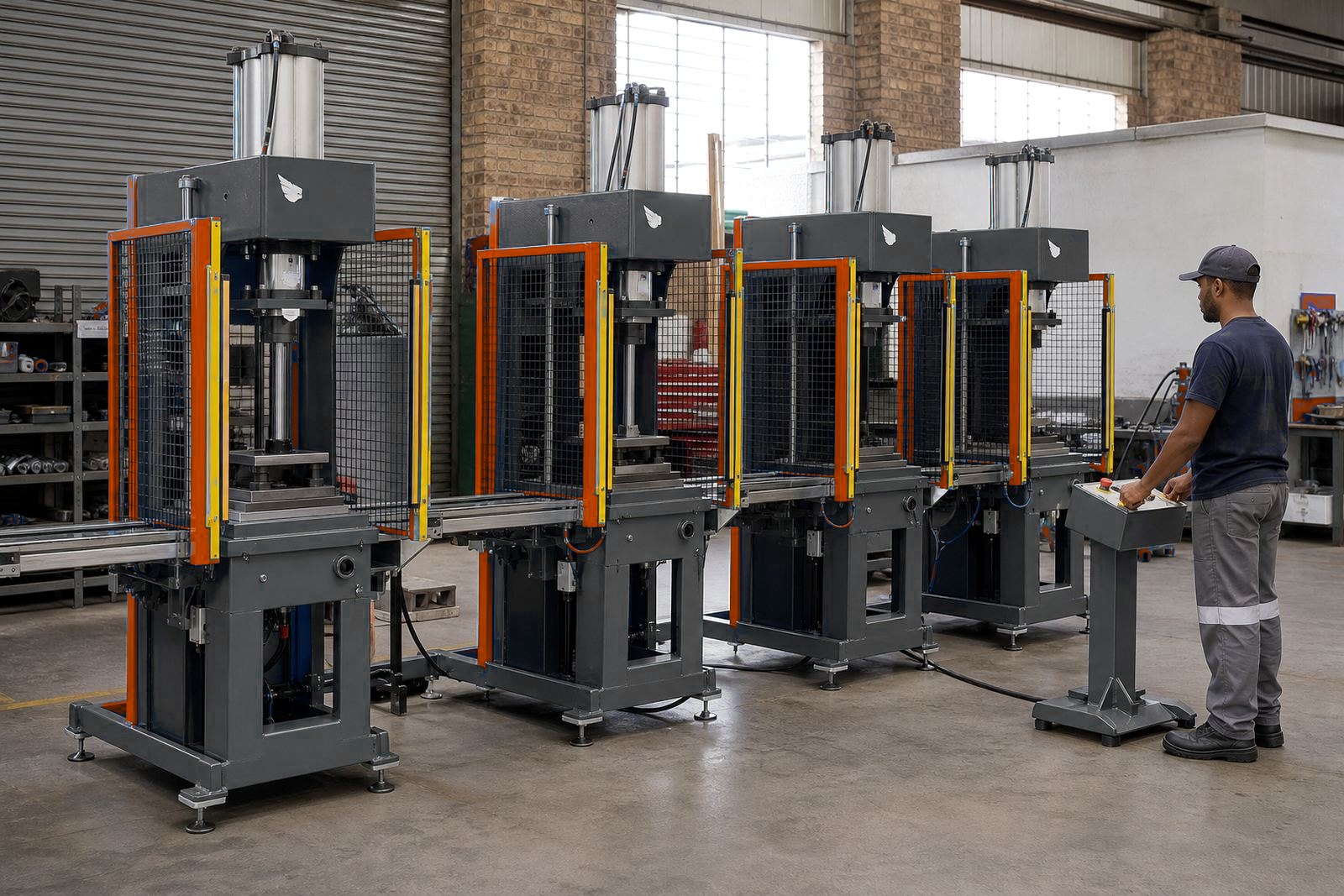
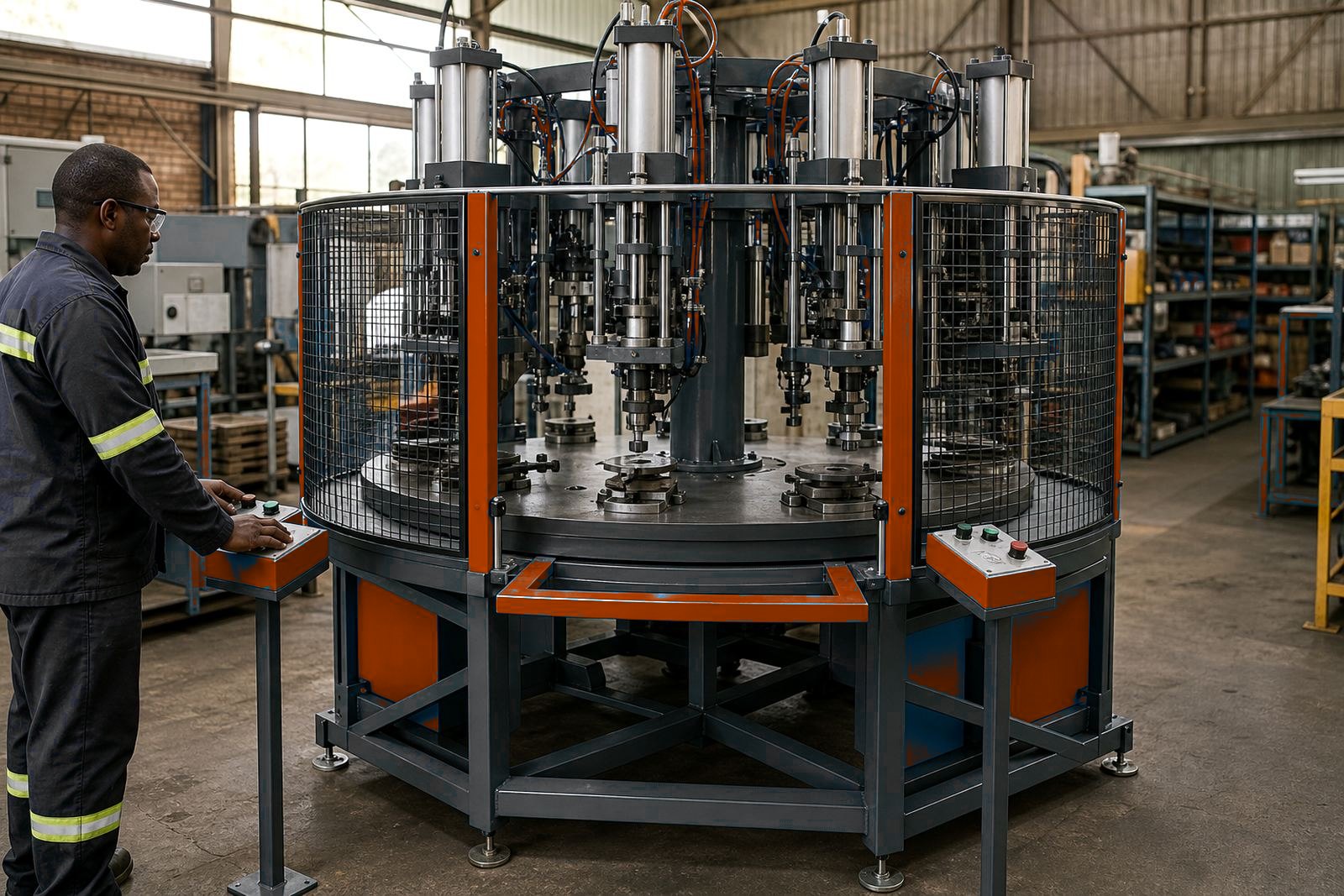
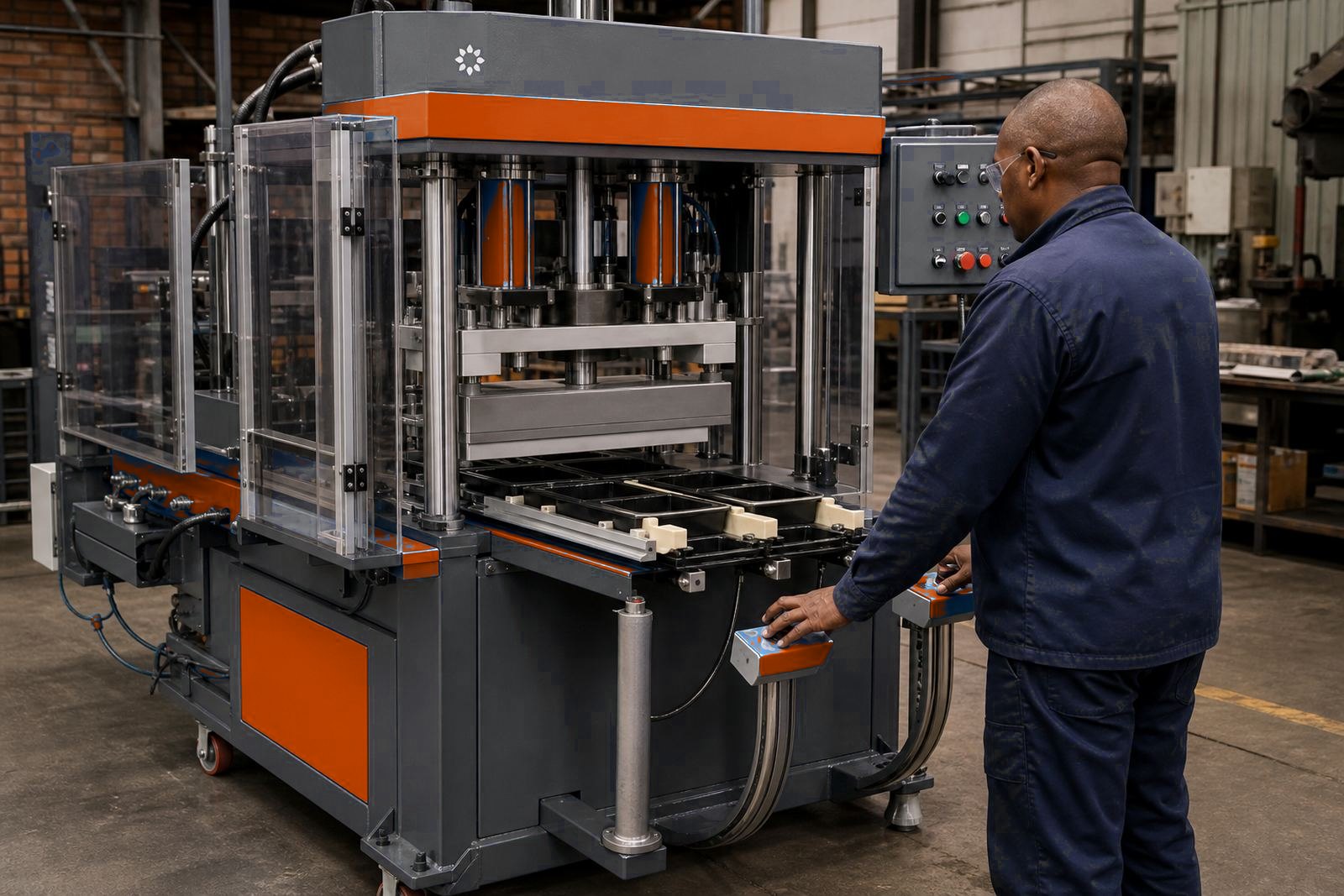
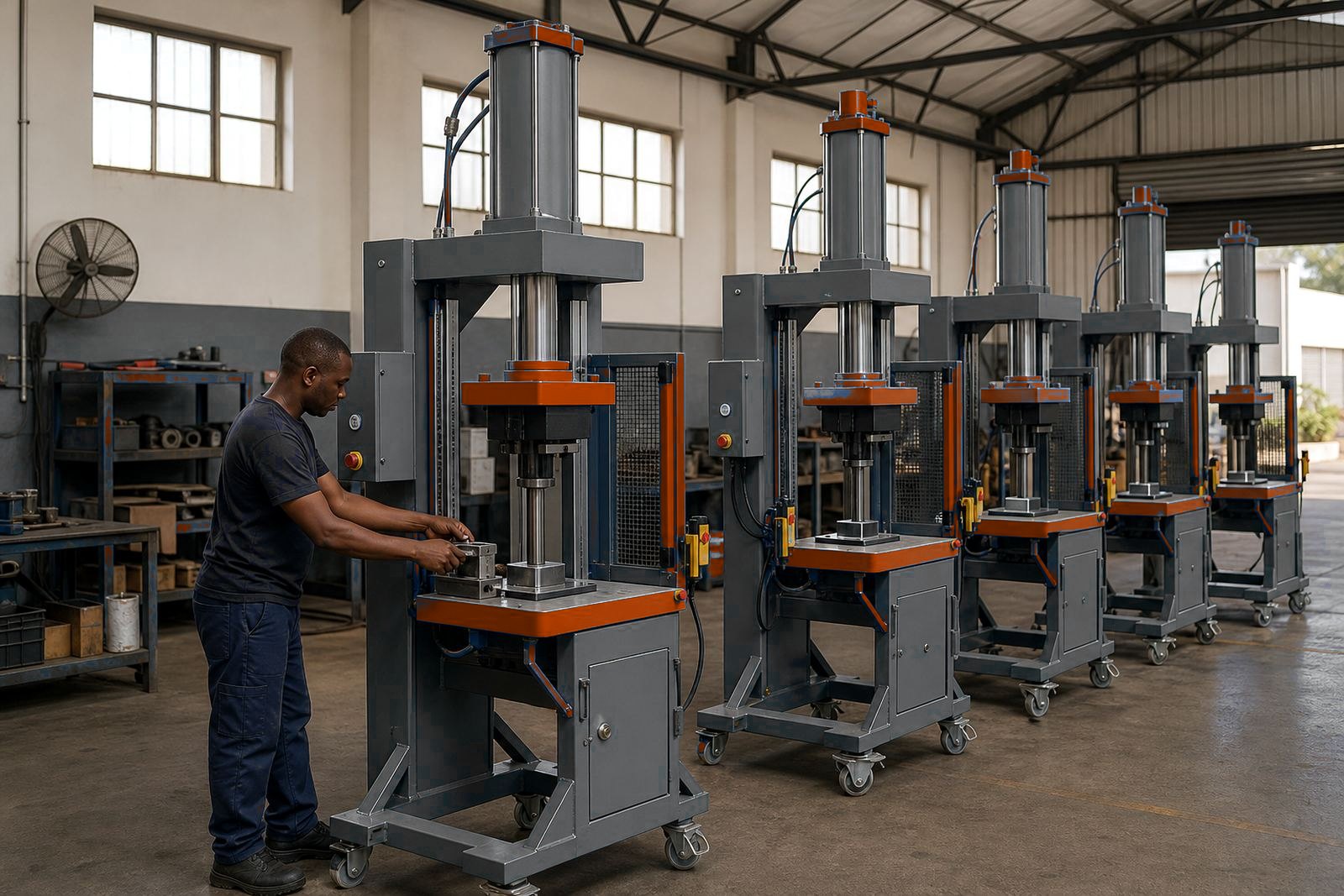
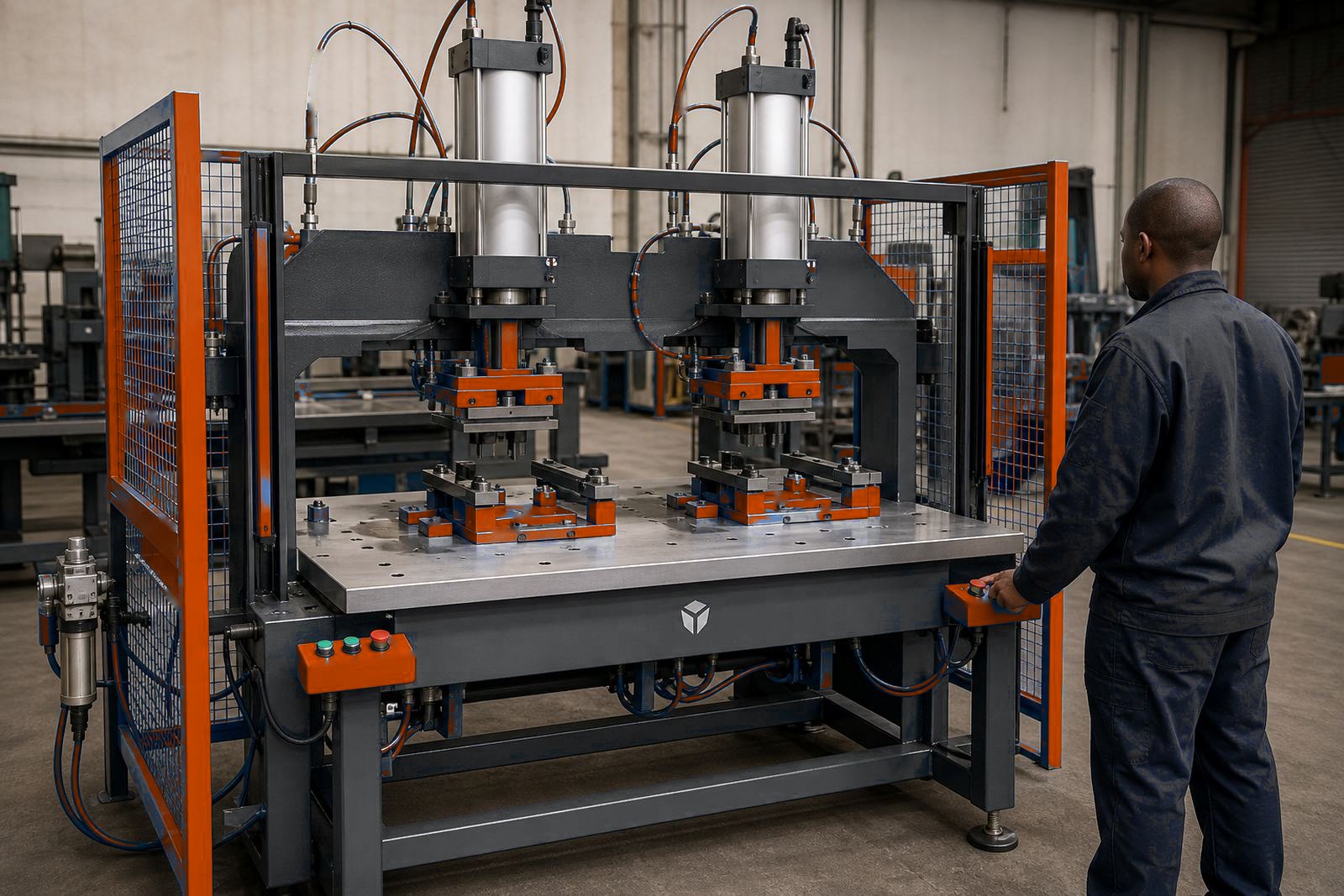
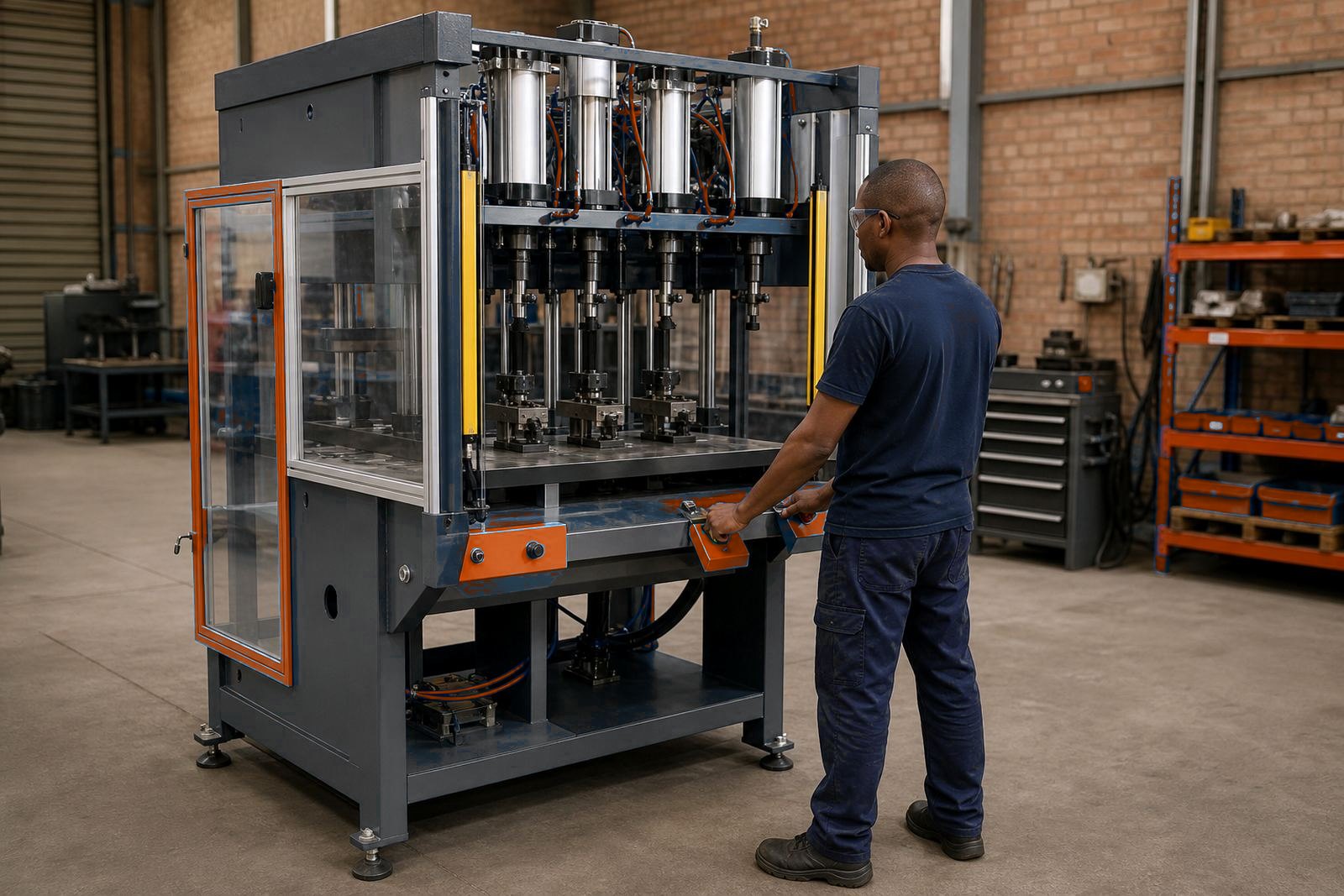
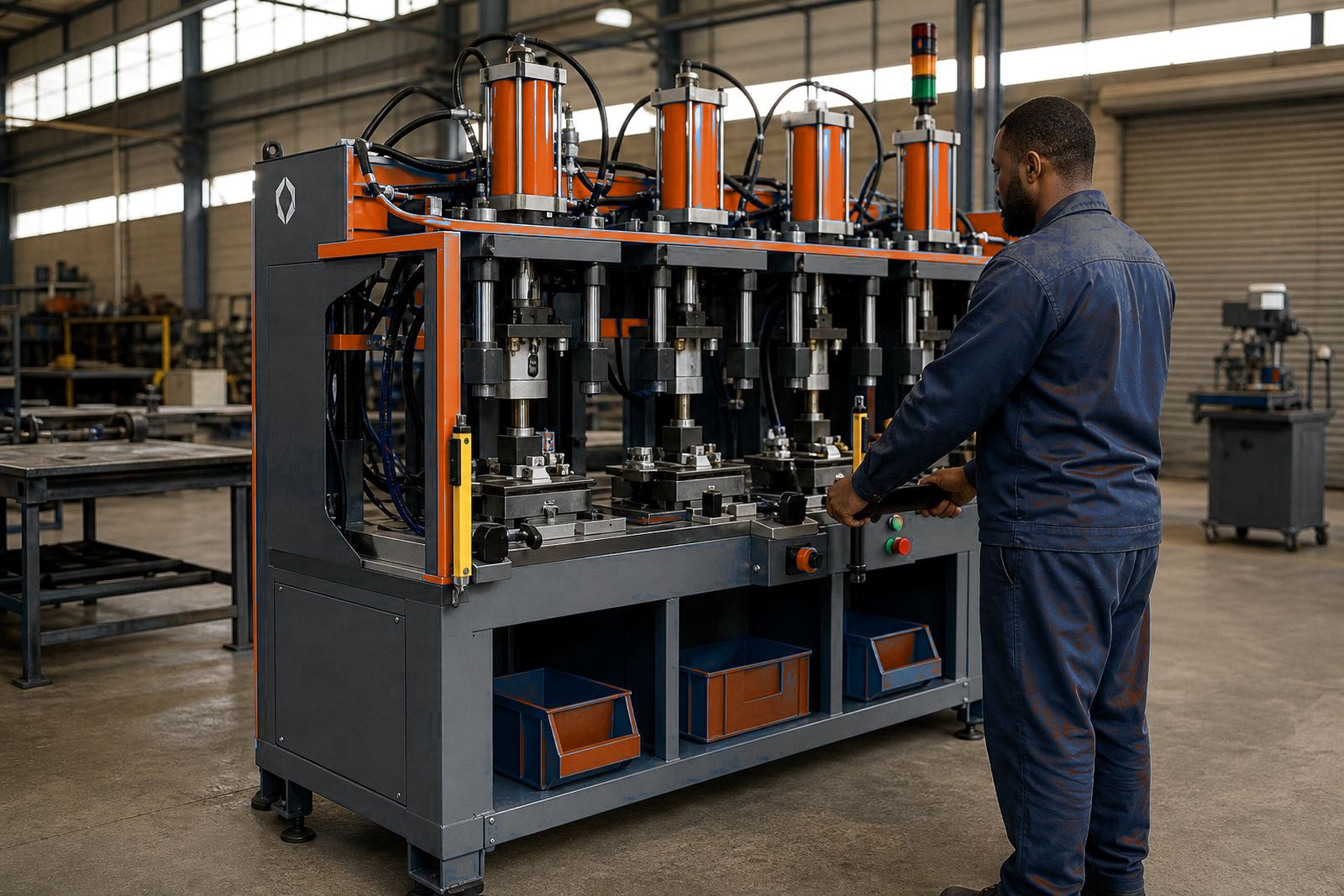
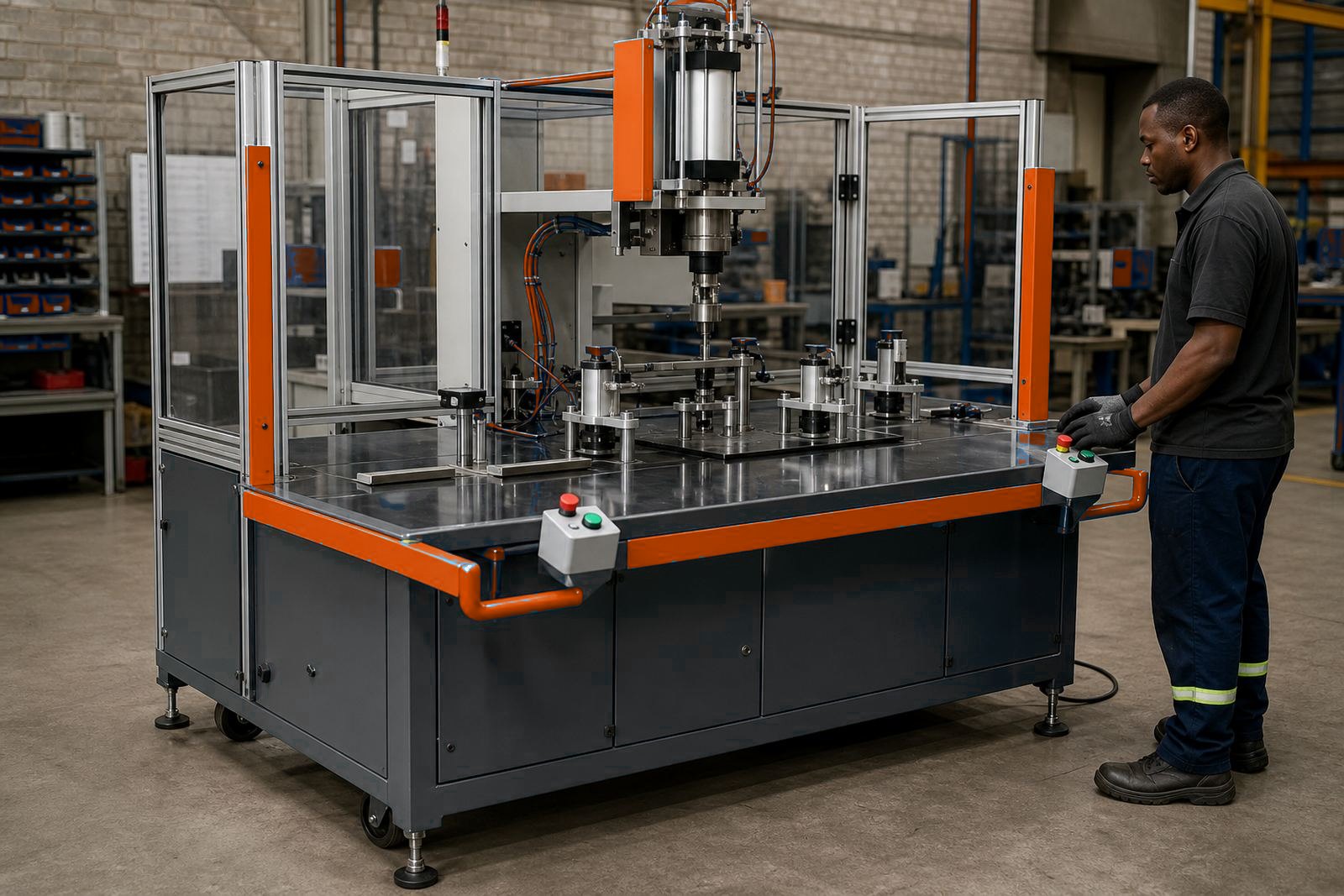
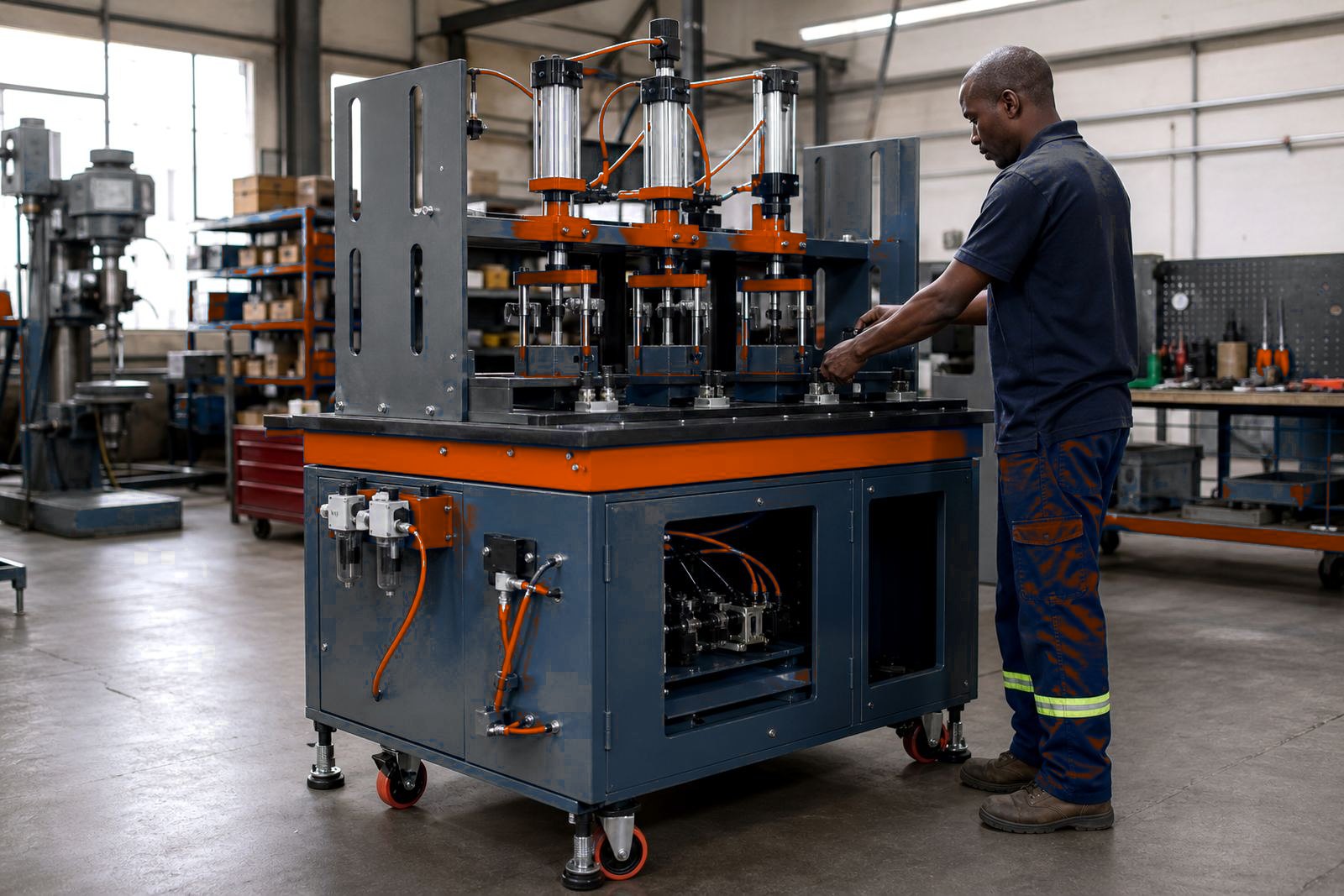
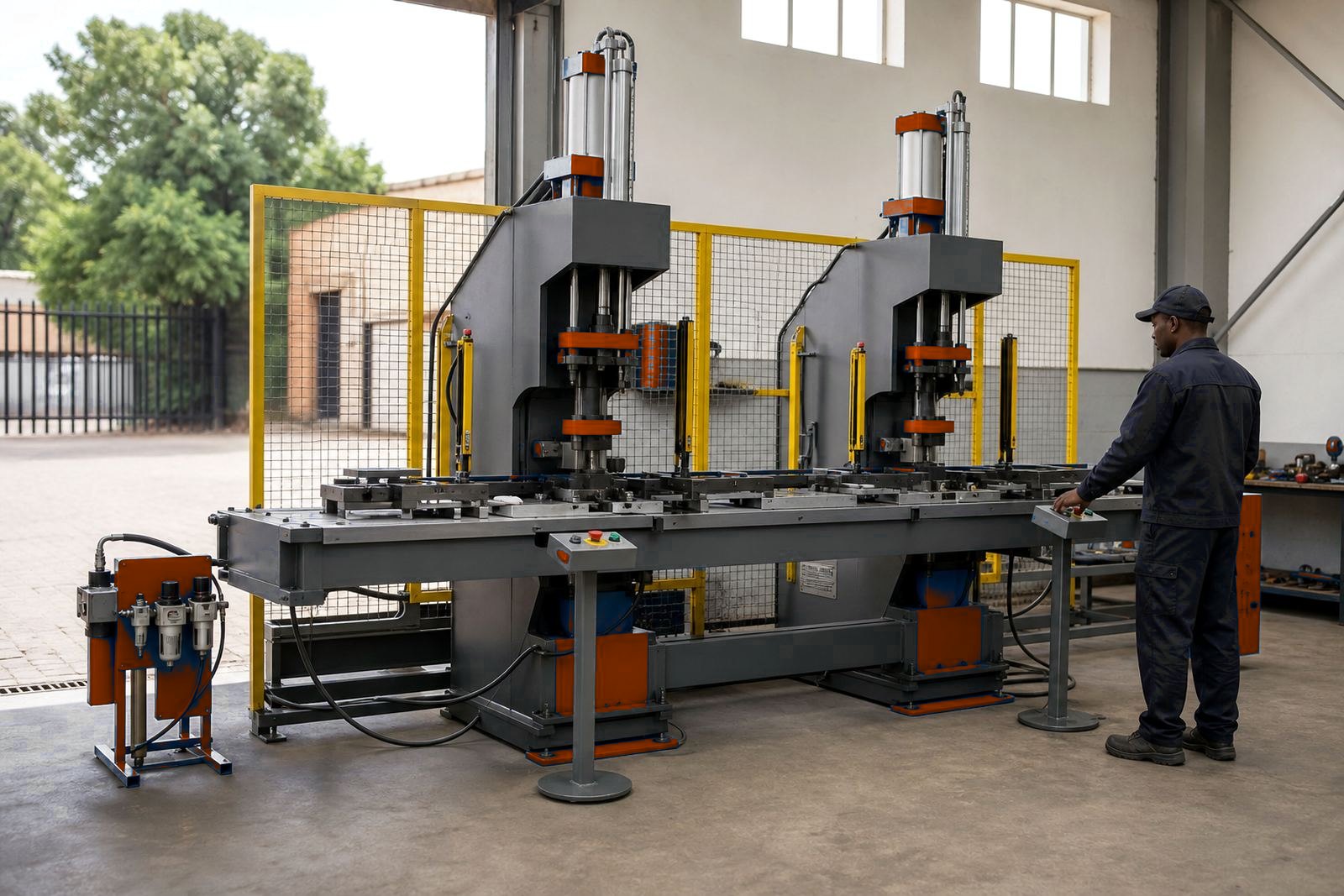
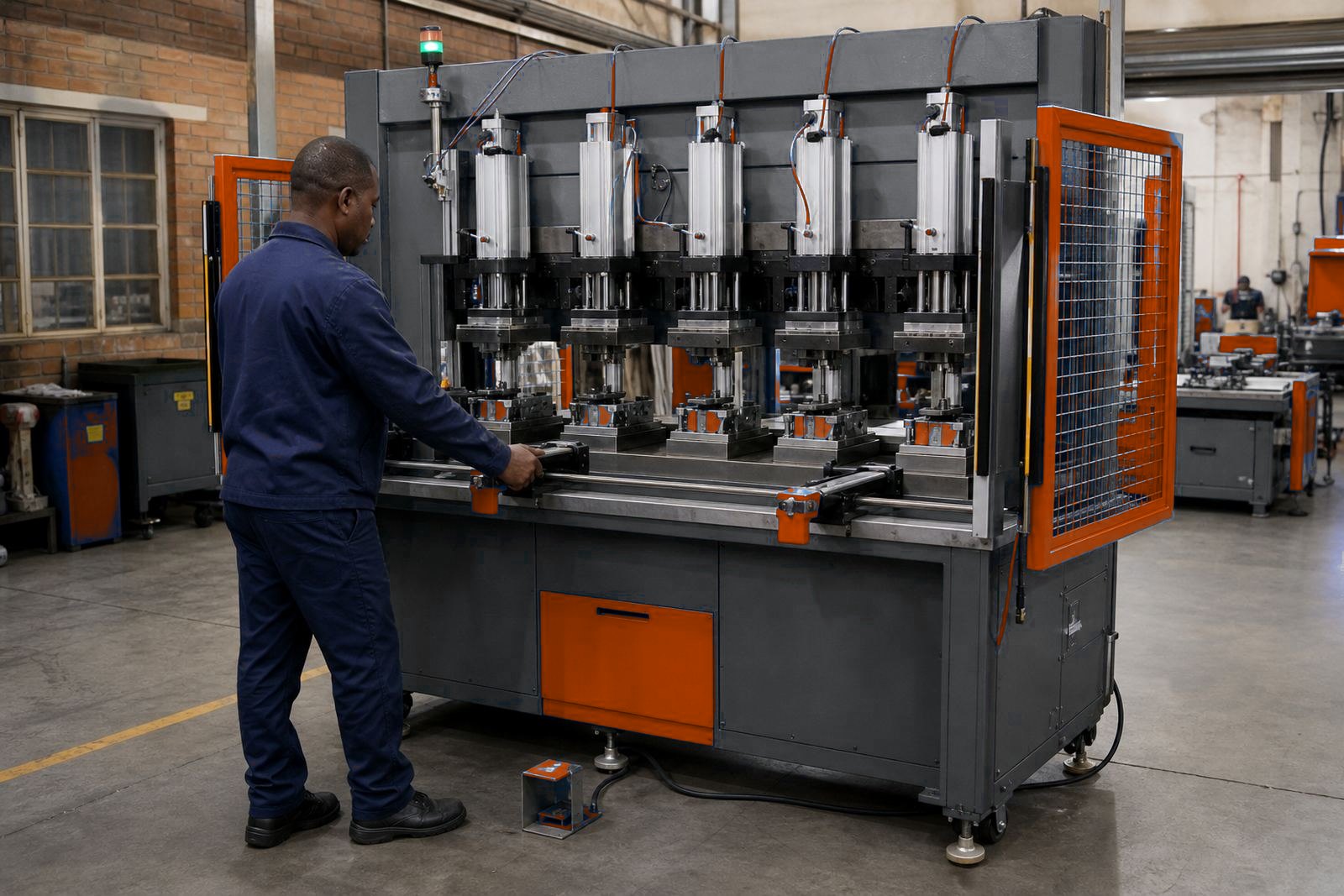
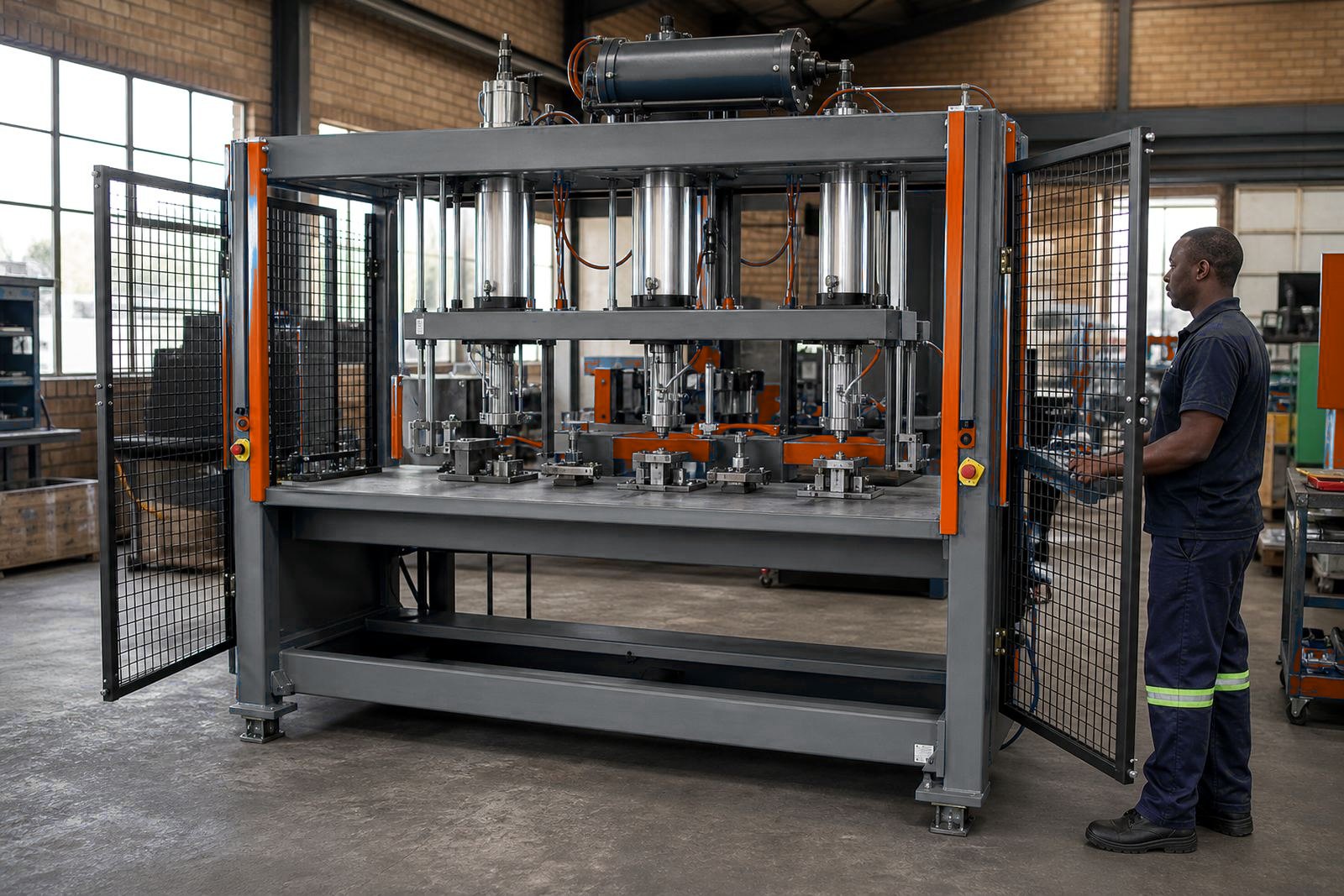
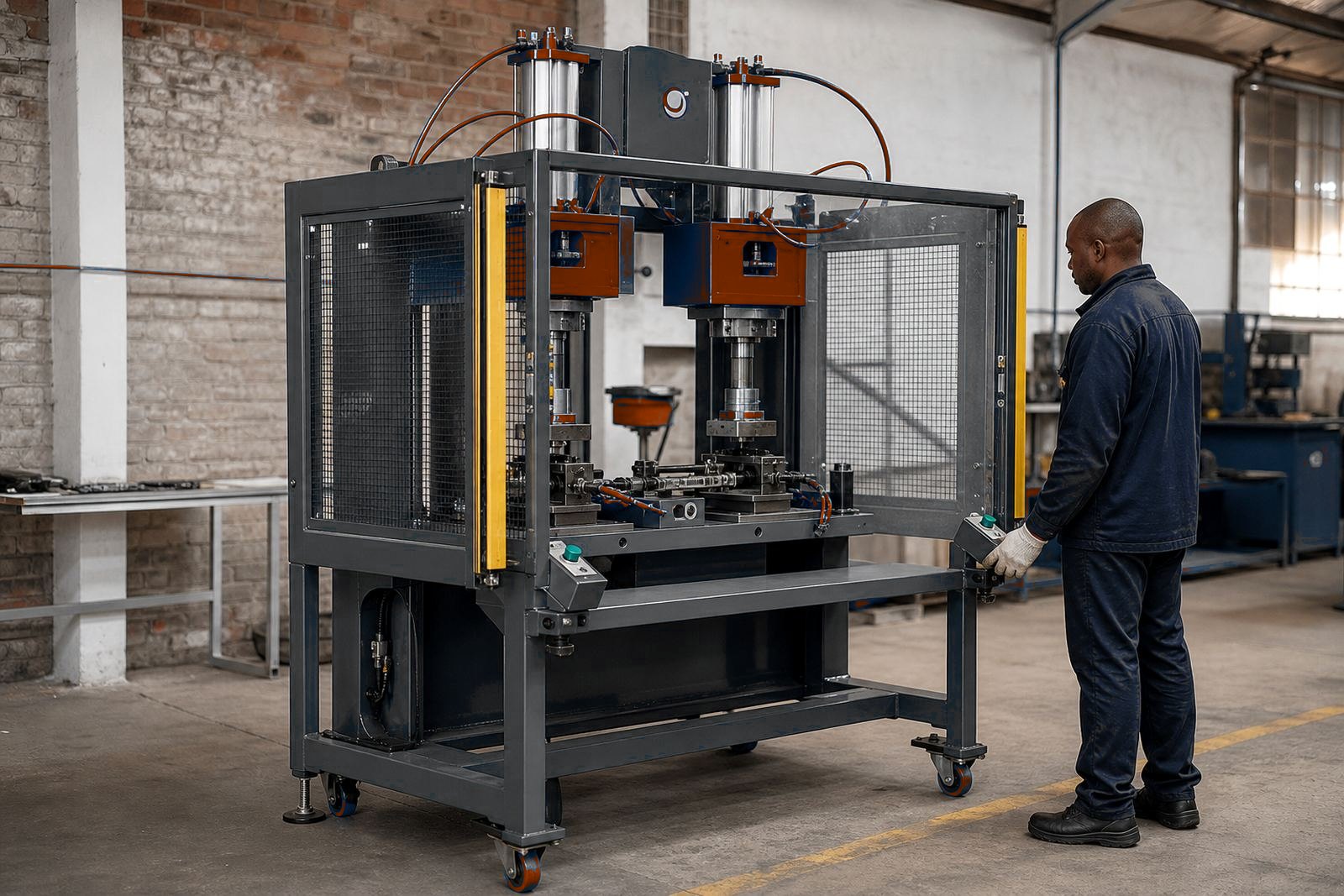
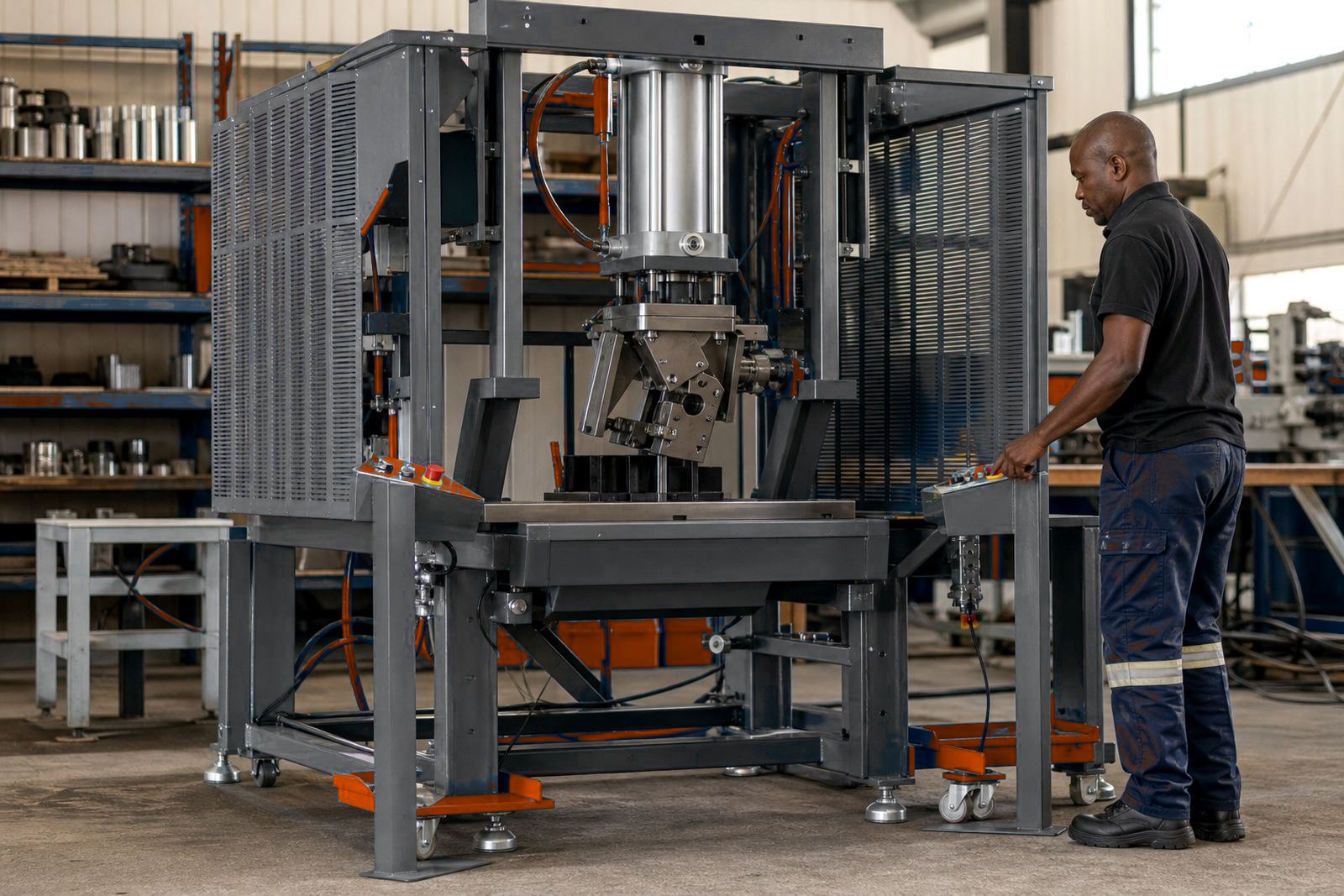
Our pneumatic presses are built around the number of stations your line needs. A single station suits a focused forming or crimping task, while a multi-station frame helps when one part moves through several steps with the same operator flow. The layout affects reach, cycle rhythm and how the tooling sits over the workpiece.
On pack sealing lines, a compact press can close with steady pressure and repeatable stroke control. For assembly and riveting work, the same frame may need room for fixtures, part location and a clearer path for loading. We look at part size, handedness and how often the tooling changes during a shift.
- Single, dual or multi-station frames
- Manual load, fixture load or guided part placement
- Space for tool changes and maintenance access
Cylinder force, air pressure and stroke setting
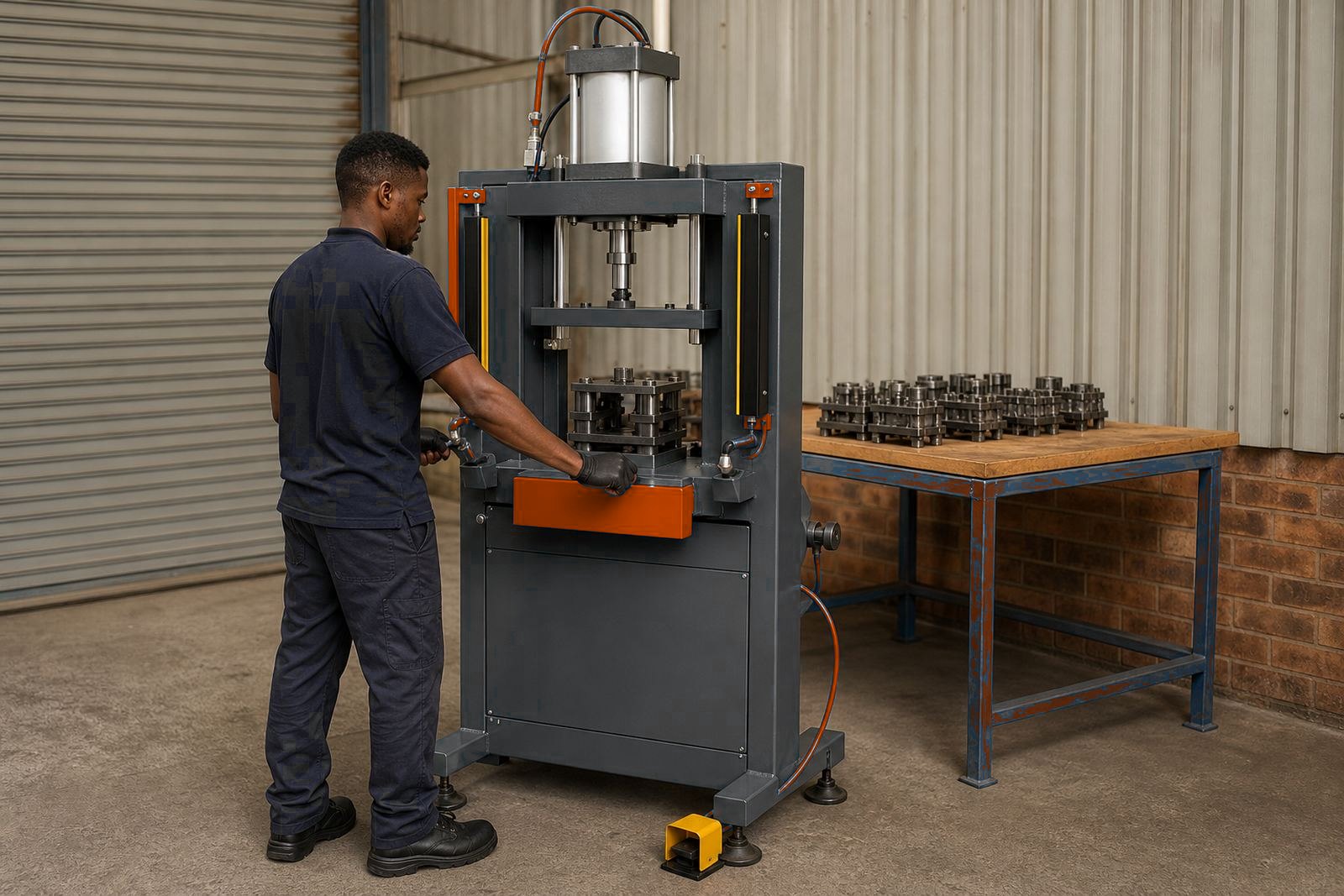
The working heart of a pneumatic press is the cylinder set. Air pressure, bore size and stroke length decide how the press moves and how much force it can deliver. The right balance matters, because too much force can mark a part and too little can leave an incomplete crimp or loose rivet.
Stroke setting is planned into the build, not left to the end. Some jobs need a short, controlled movement with a fixed stop, while others need a longer travel to reach the tooling depth. In Gauteng workshops and coastal factories alike, the press must hold its setting while the line keeps moving.
- Force matched to the joint or seal
- Stroke set for the part and fixture height
- Air line setup arranged for stable operation
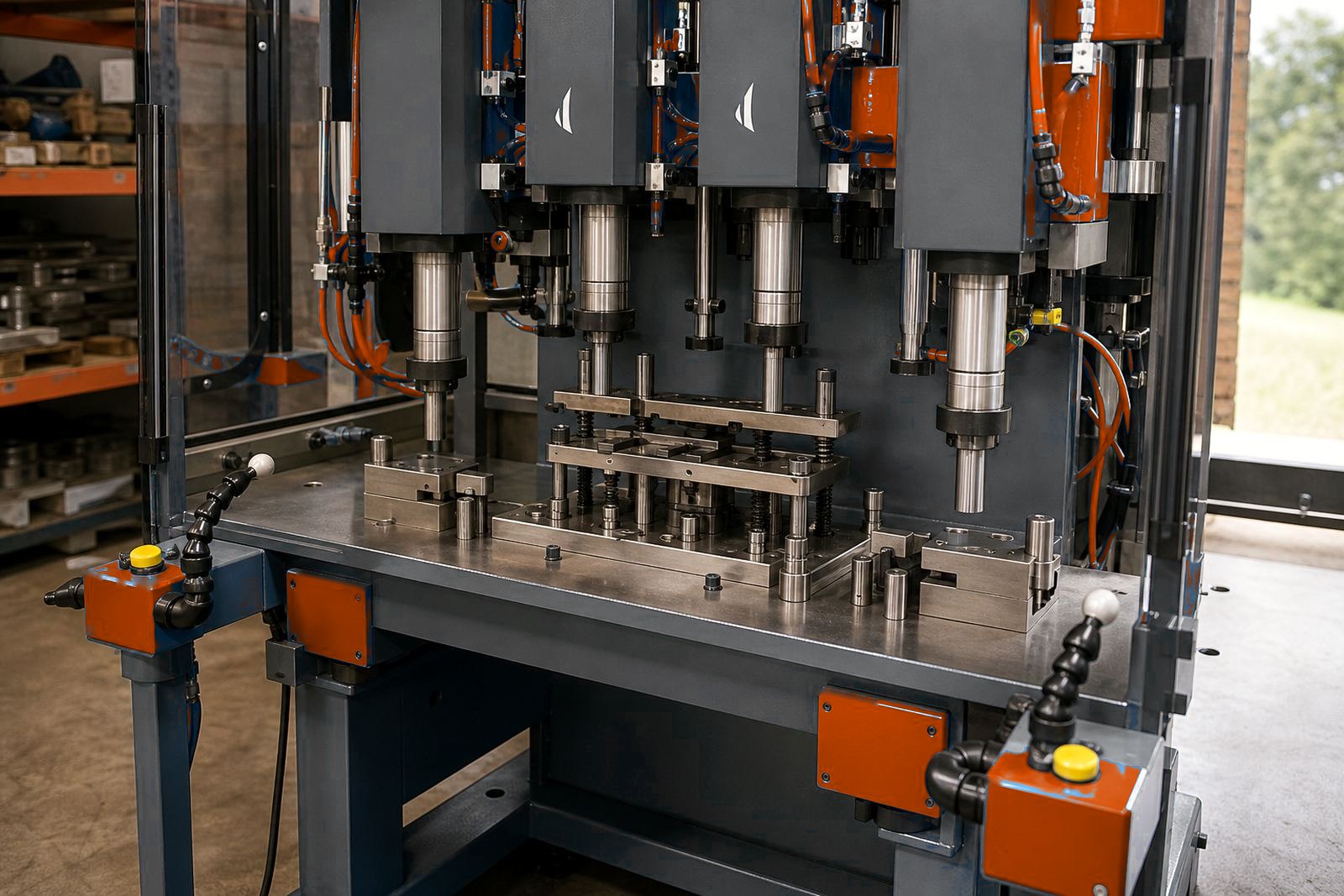
Tooling that does the actual forming
The press frame only does part of the work. The tooling decides how the force lands on the job, whether that means a crimp, a rivet set, a stake, or a sealing edge that must close evenly. Tooling design starts with the part itself, then moves through location, dwell and release.
Musa Hartnick designs tooling around repeatable contact and easy changeover. Where needed, we build fixtures that keep the component steady and reduce the chance of misalignment. This is useful on production lines where operators handle small parts, soft materials or mixed batches.
- Crimping tools for terminals, sleeves and formed joints
- Riveting tools for mechanical fastening
- Staking tools for locating or retaining parts
Guarding and two-hand control on the line
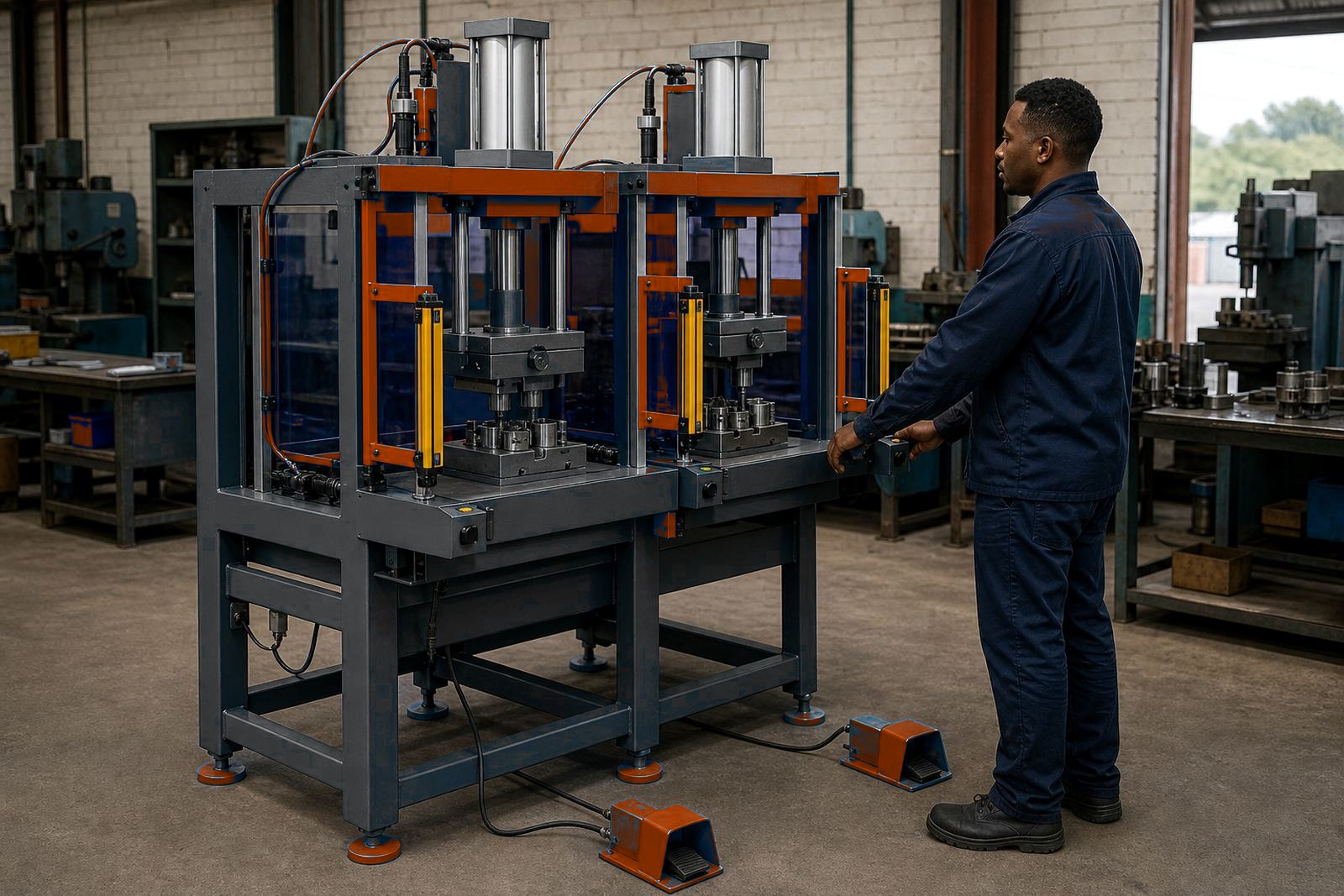
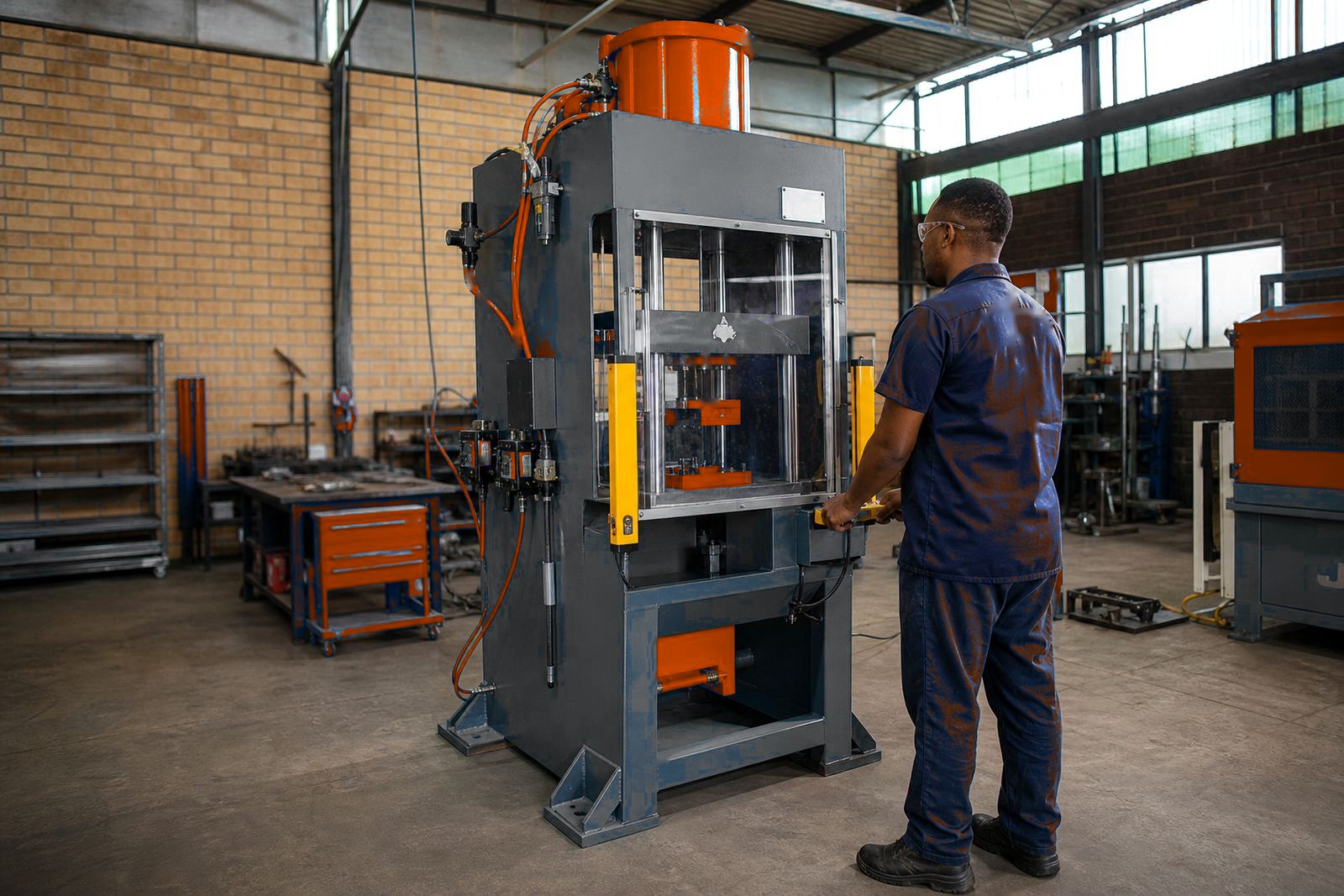
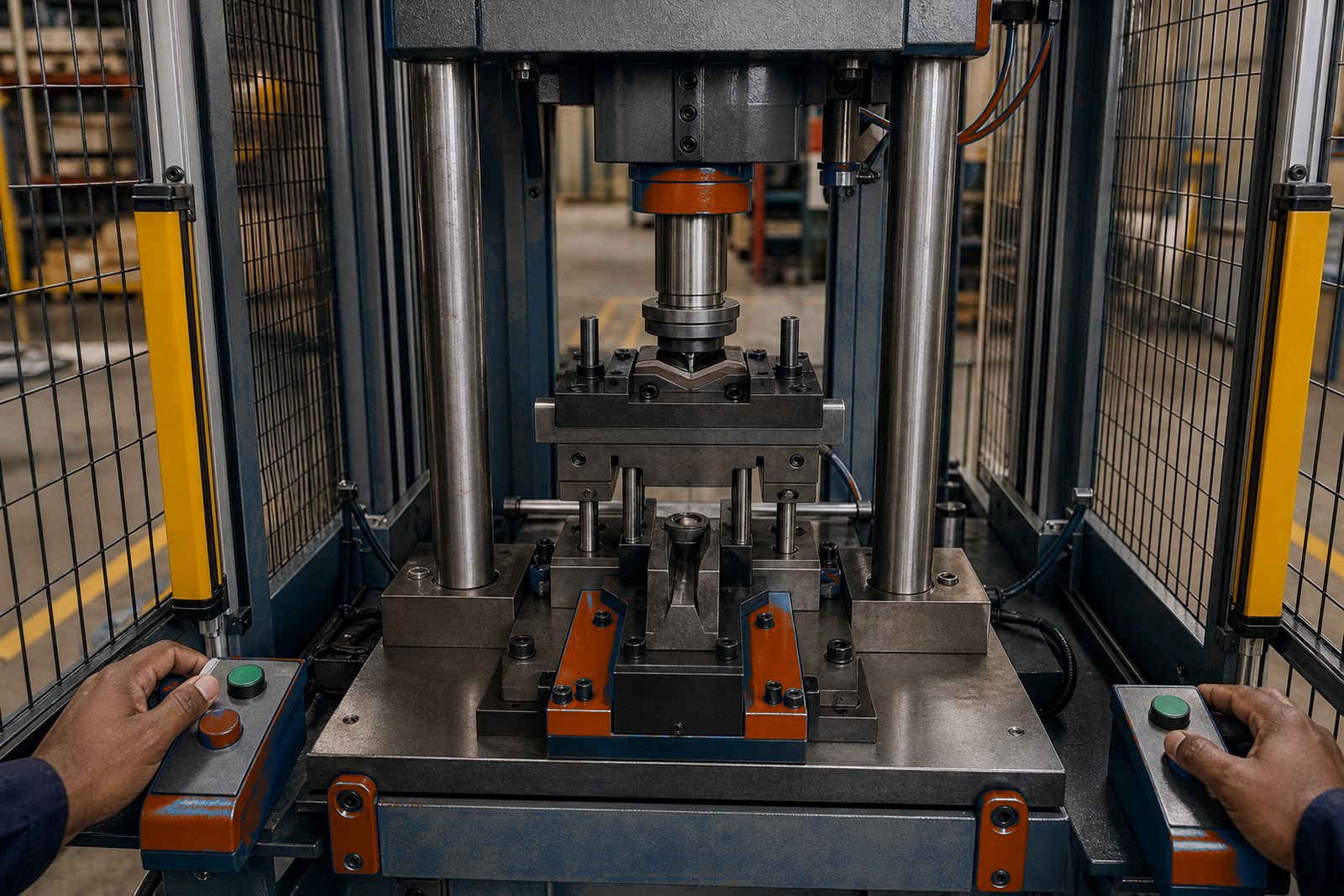
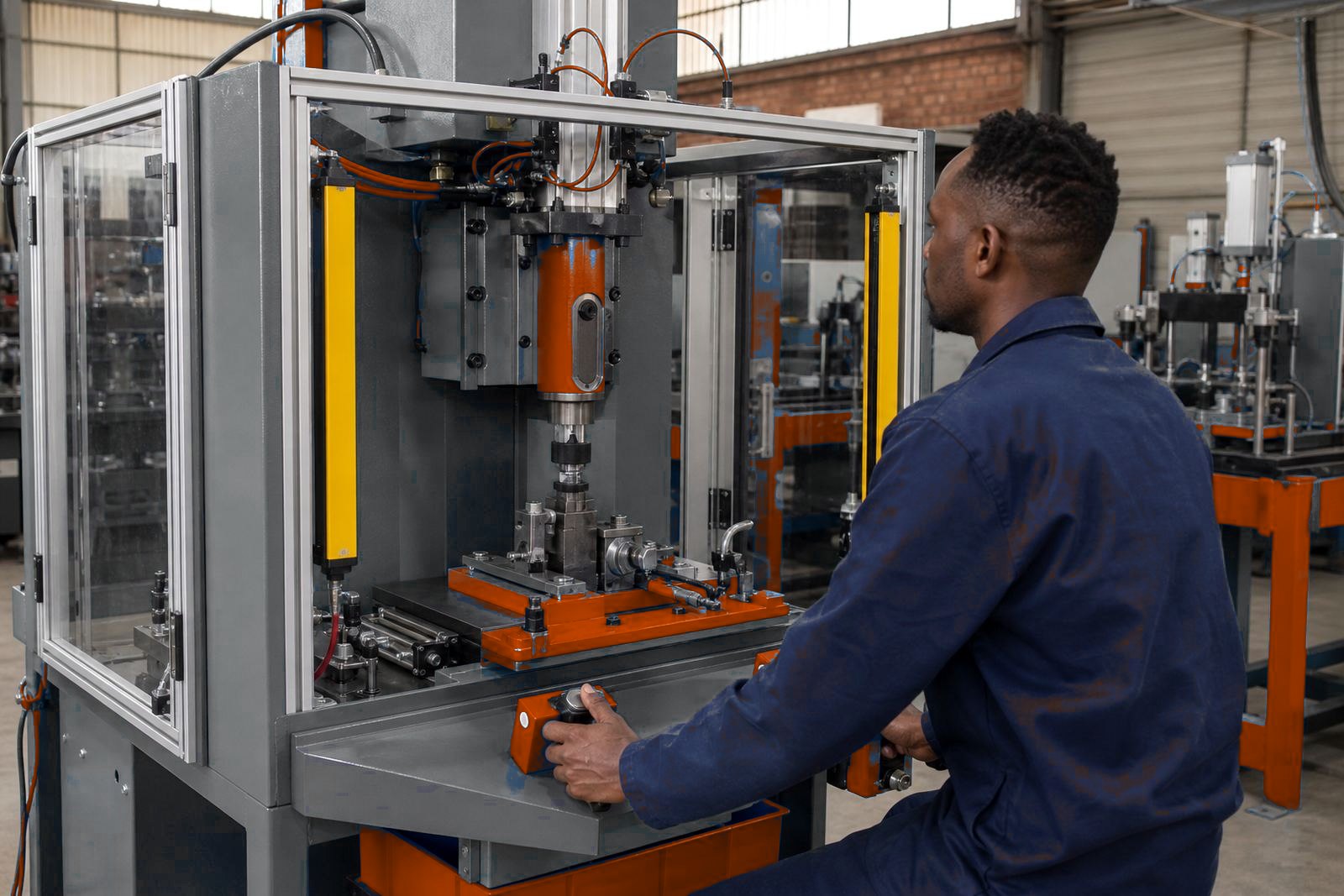
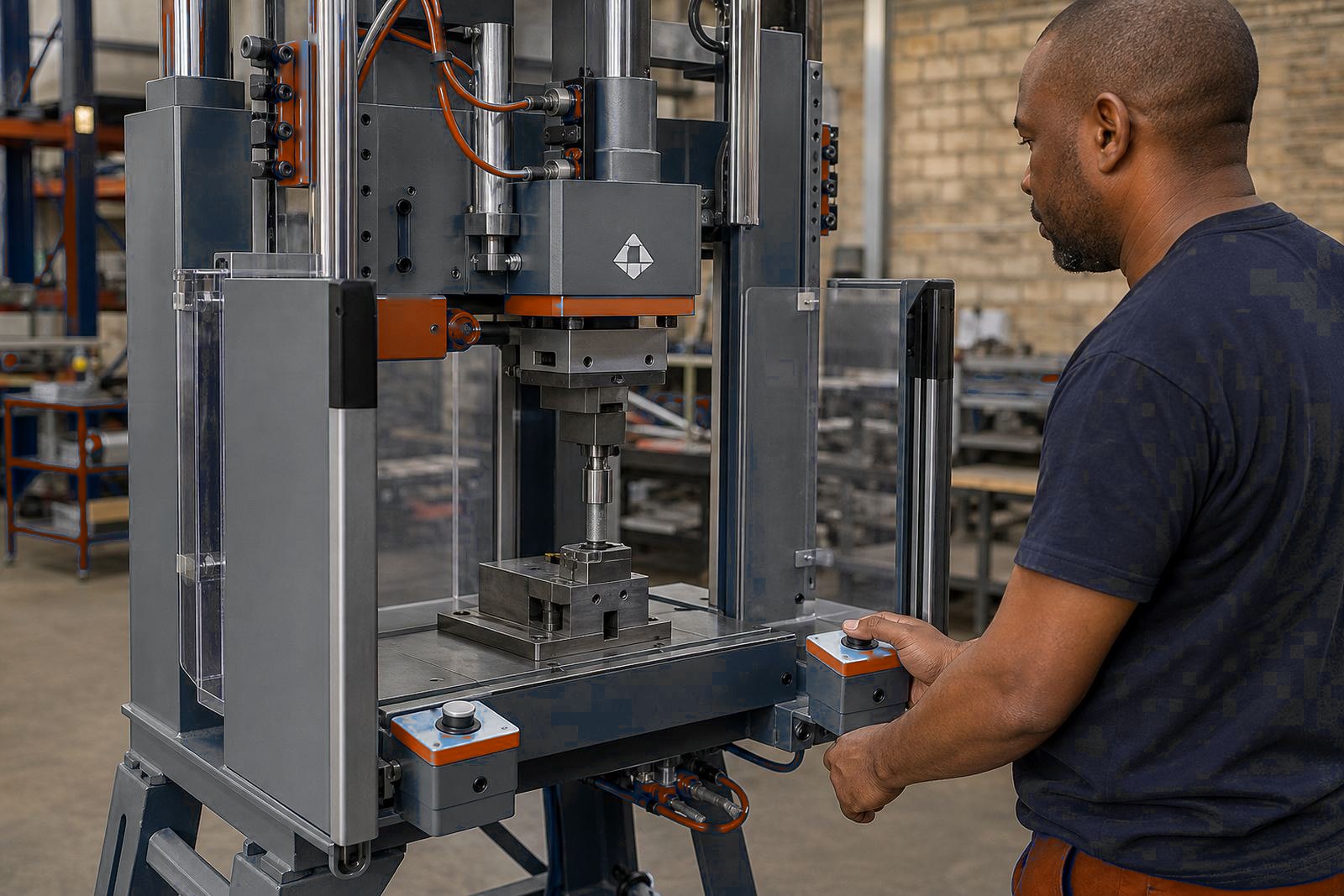
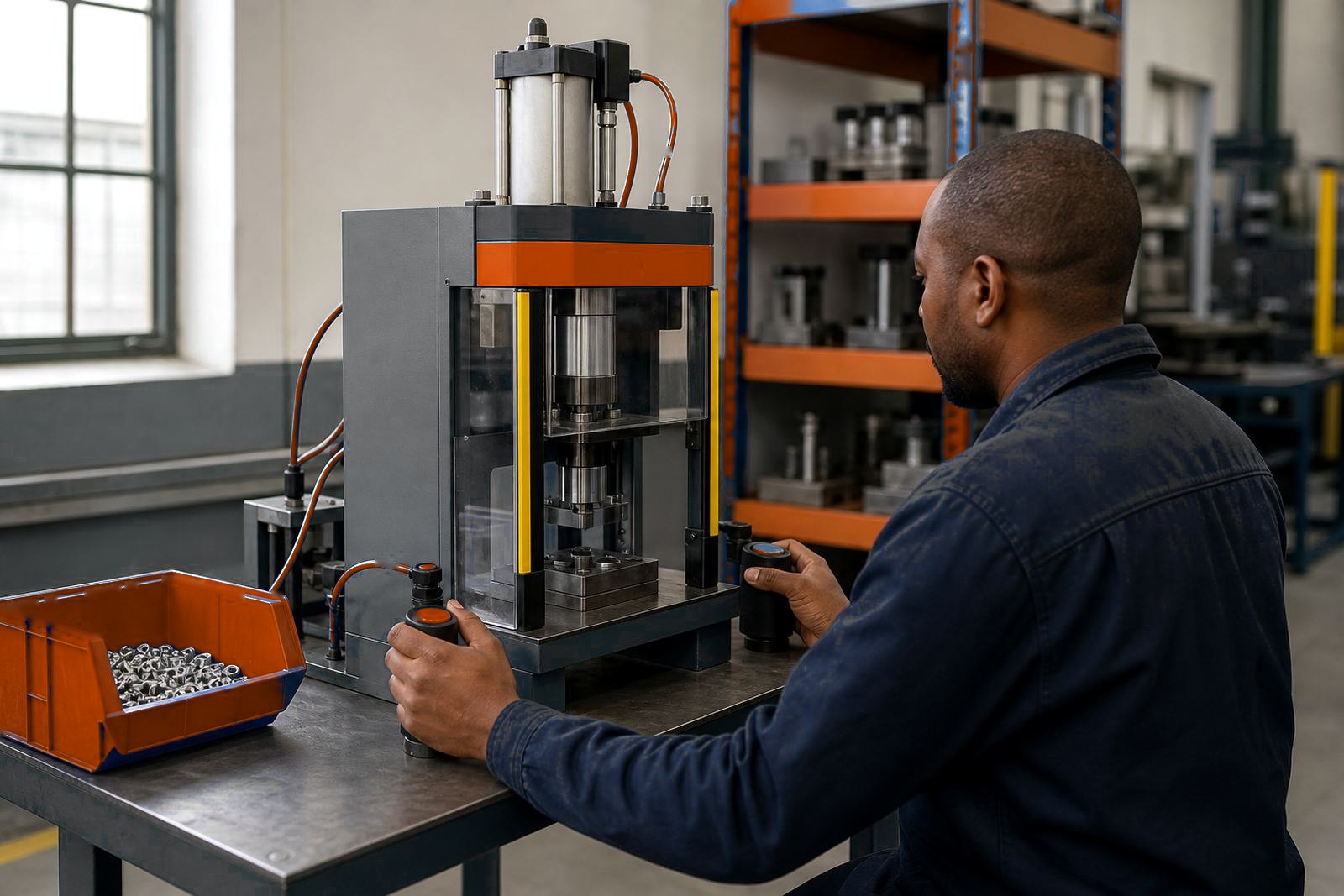
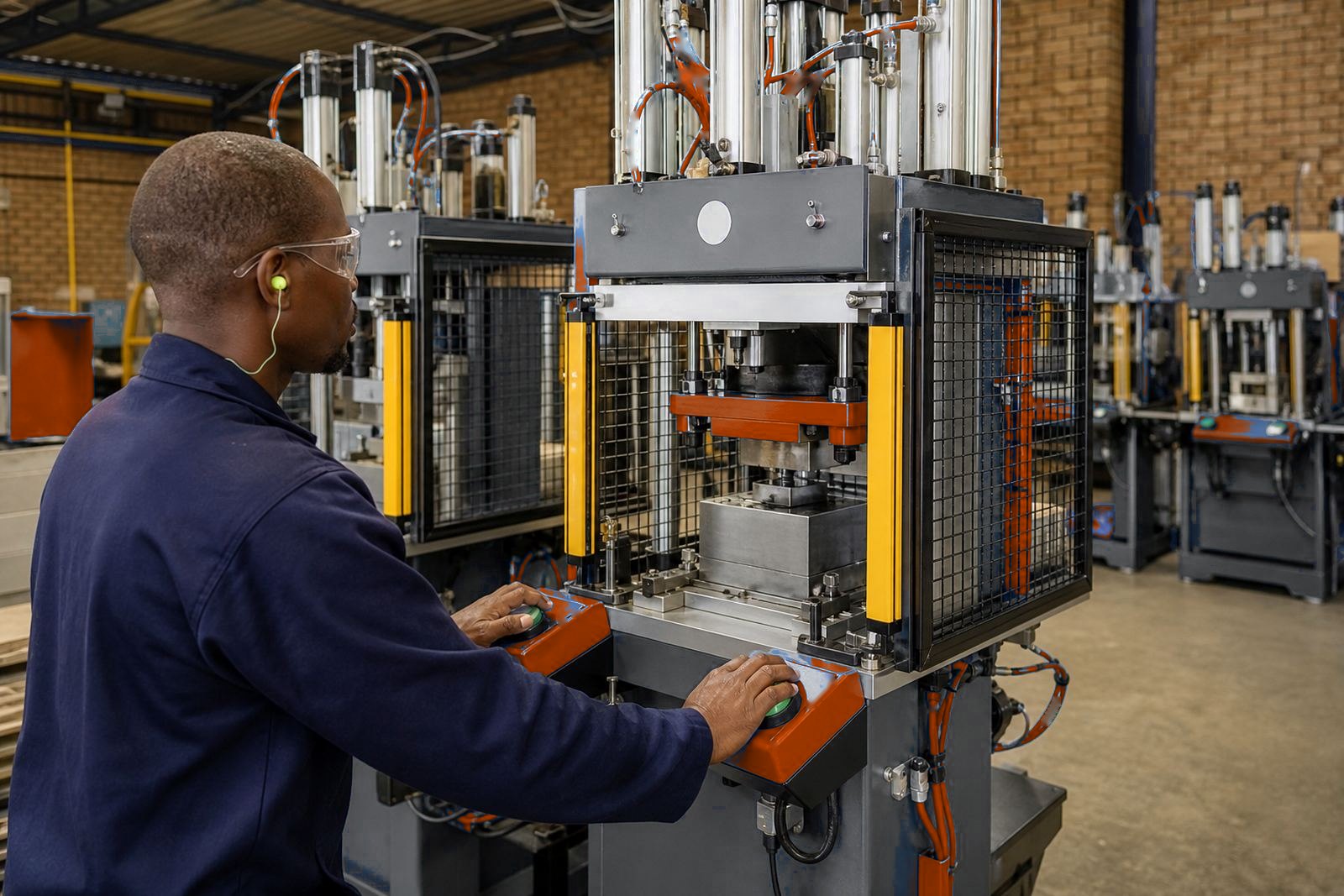
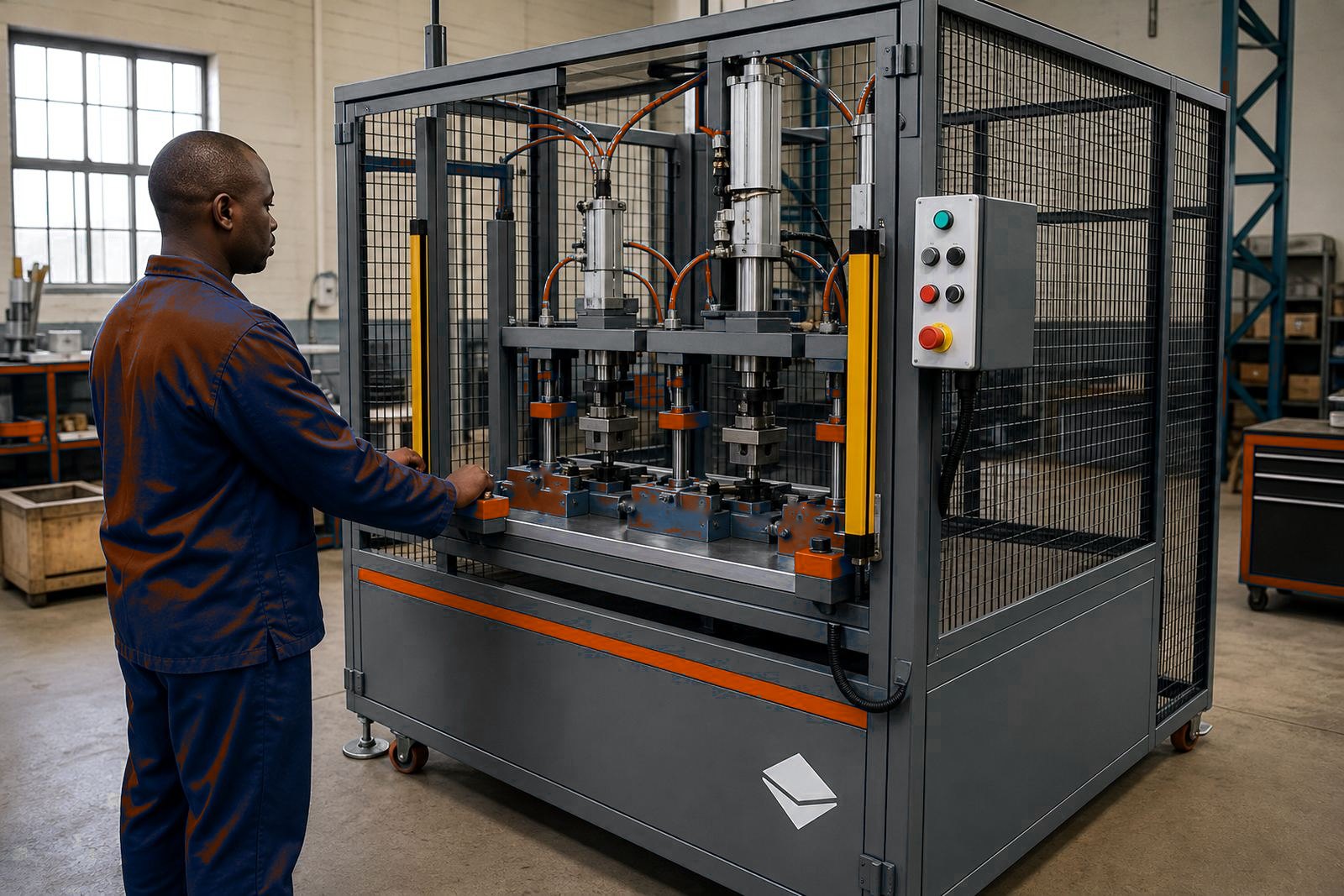
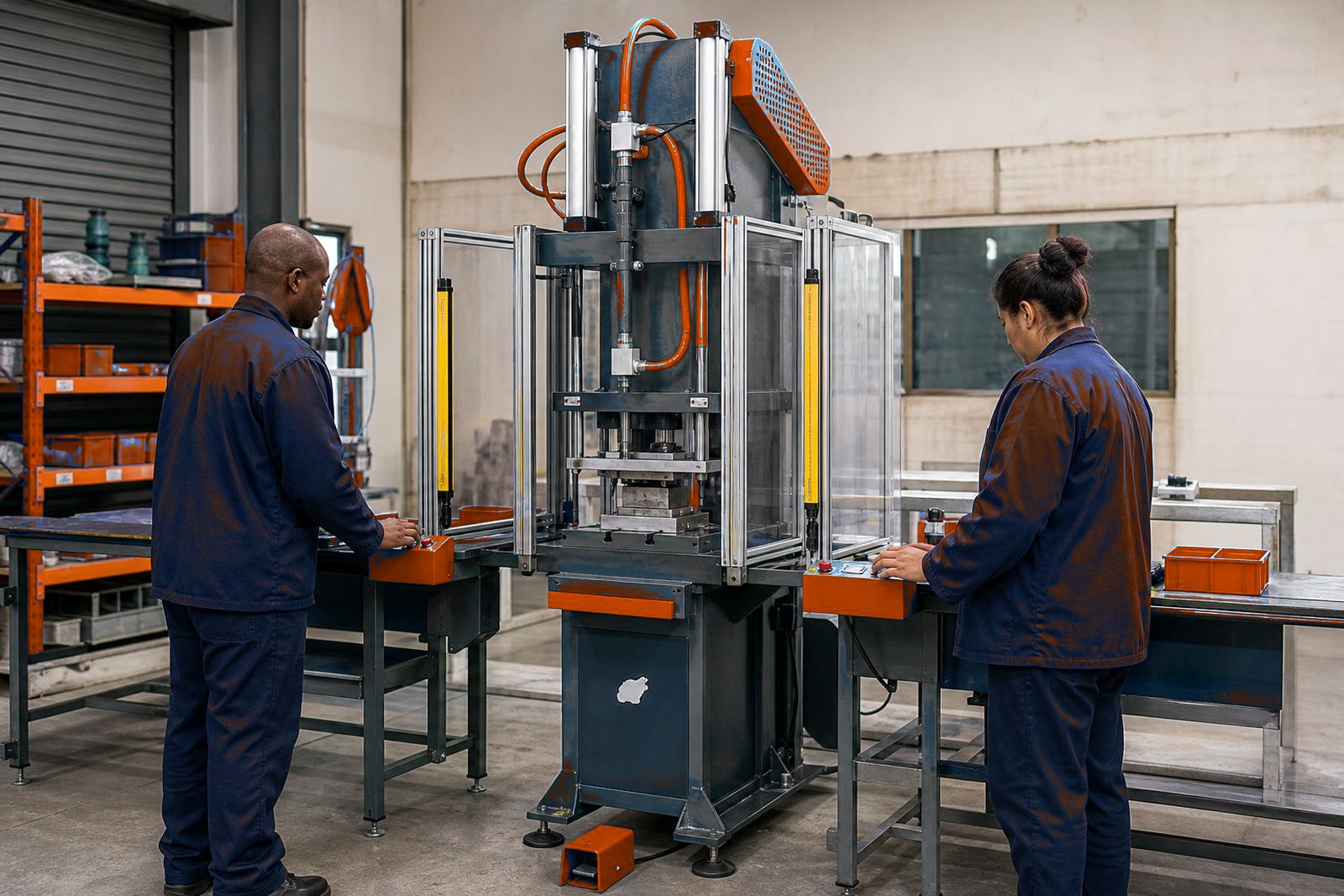
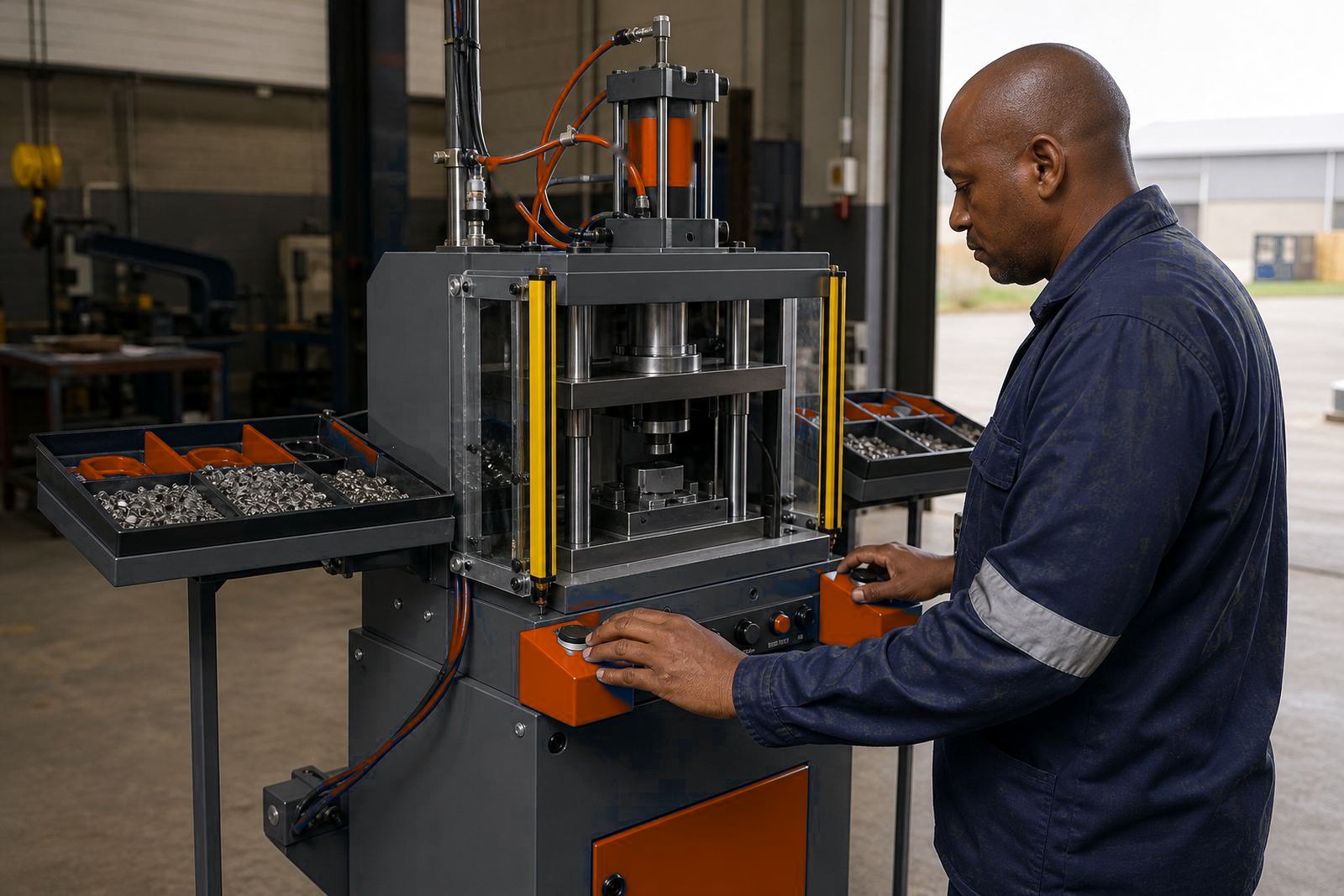
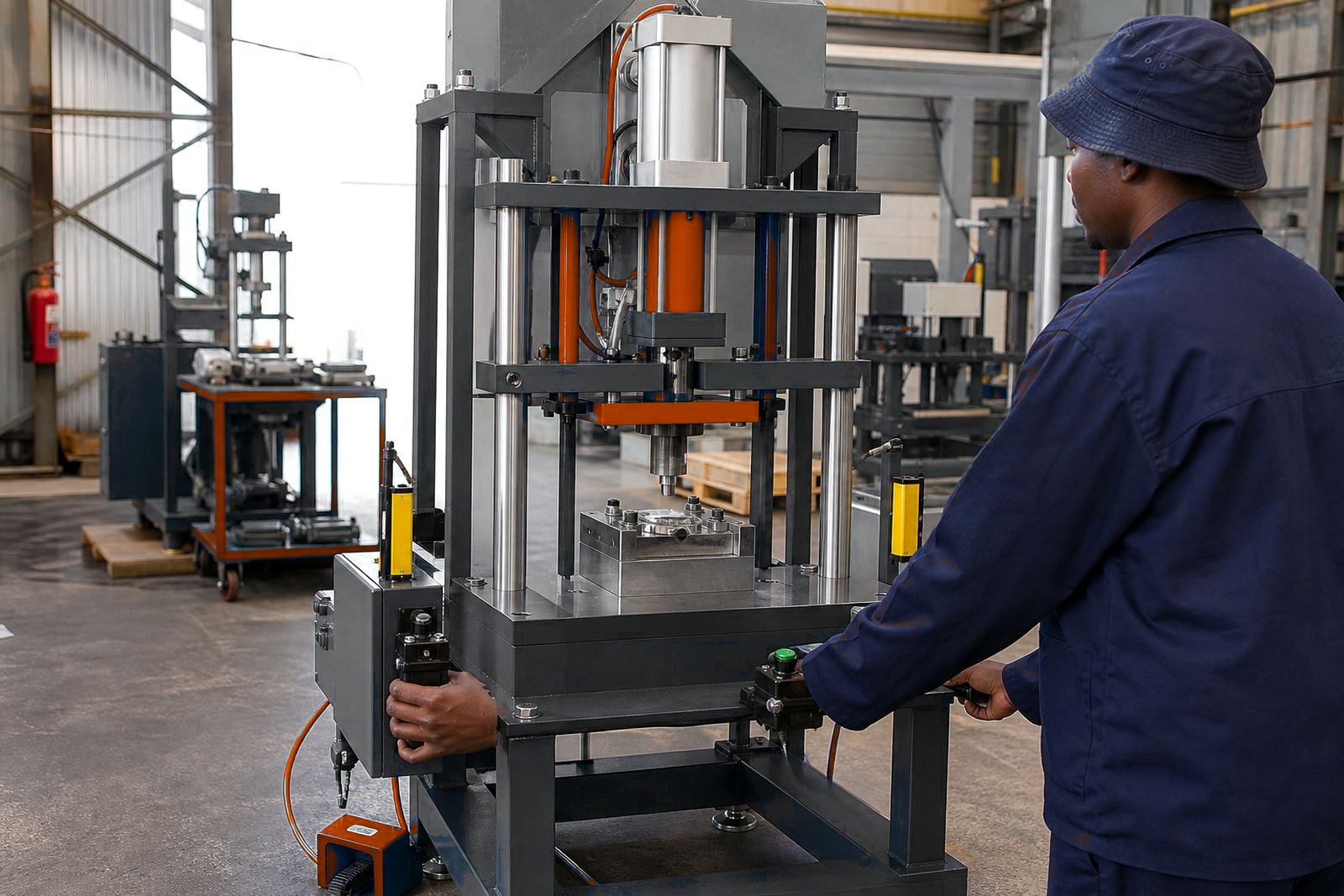
Presses need clear operator protection, especially where hands move close to the die area. Guarding, light curtains and two-hand controls are chosen to suit the station and the operator routine. The aim is to keep access practical while reducing risk at the point of operation.
Some lines suit a fully enclosed guarded front, while others need open access for loading and removal. In those cases, two-hand controls and light curtain integration help shape the working rhythm without making the station awkward to use. The final arrangement depends on part size, reach and the amount of manual handling in the cycle.
- Two-hand control for controlled cycle start
- Light curtains where the layout allows it
- Guarding builds matched to the tooling envelope
Commissioning, training and handover in real factory conditions
Once the machine is in place, the work shifts to commissioning. That means checking the stroke, setting the air line, confirming tool movement and watching how the station behaves with actual parts. Lerato Moagi handles commissioning with the line conditions in mind, not just the bench test.
Anele Engelbrecht leads operator training so the people using the press know how to load parts, read the controls and keep the work area in order. Production handover follows only when the station fits the job and the team can run it with confidence. We work from Isando and support factories across Johannesburg, Pretoria, Durban, Gqeberha and East London.
- Press commissioning at the factory or line site
- Operator training tied to the actual cycle
- Production handover with the installed tooling
How to narrow the right press configuration
Choosing a pneumatic press starts with the part, the force needed and the way the operator loads the job. From there, the frame size, station count, tooling and guarding can be matched to the line. A short list of facts from the factory is usually enough to shape the first layout.
Thandiwe Matlala and Johan Ramokgopa keep the project details moving through the workshop and site stages. If your line is in Kempton Park, Boksburg or further afield, the same build logic applies, only the site conditions shift. Our contact form is the best way to start that discussion.
- Part size and material
- Desired operation: crimping, riveting, staking or sealing
- Station count, stroke and guarding needs