Tooling and commissioning across the press line
We handle the work around a multi-station pneumatic press after the frame, cylinders and controls are built, including tooling, fixtures, guarding, controls, installation, commissioning, tooling changes and handover.
For a factory team, the order of each step carries real value. A press that needs 6 bar air, a defined stroke and a fixed working height must land with the right tooling and the right guarding, otherwise the line spends too much time being adjusted at the wrong point. MultiPress plans for assembly, crimping, riveting, staking and pack sealing jobs, where repeatability matters and the operator needs clear movement from load to press to release.
Our tooling is built around the part, not the part around the tooling.
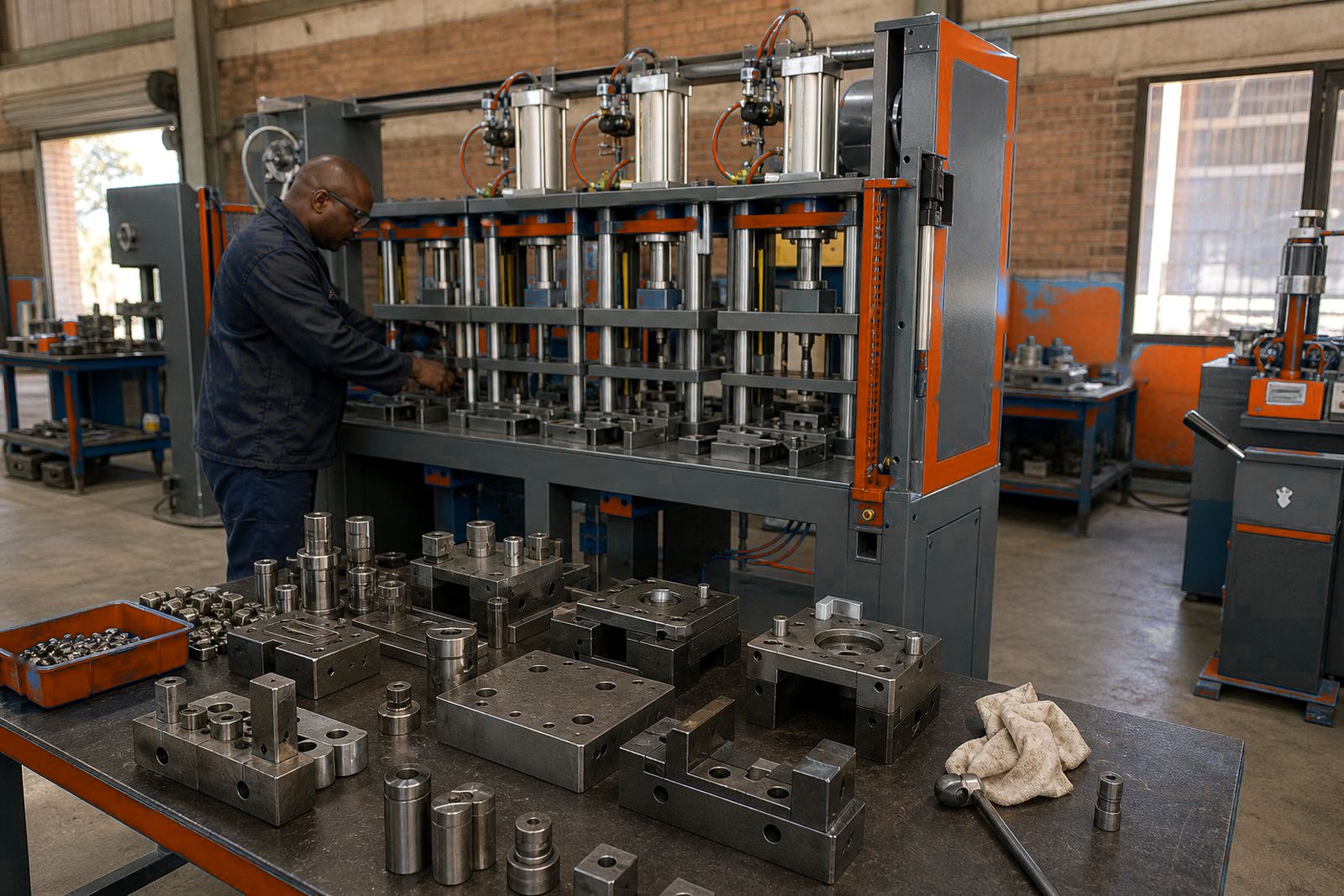
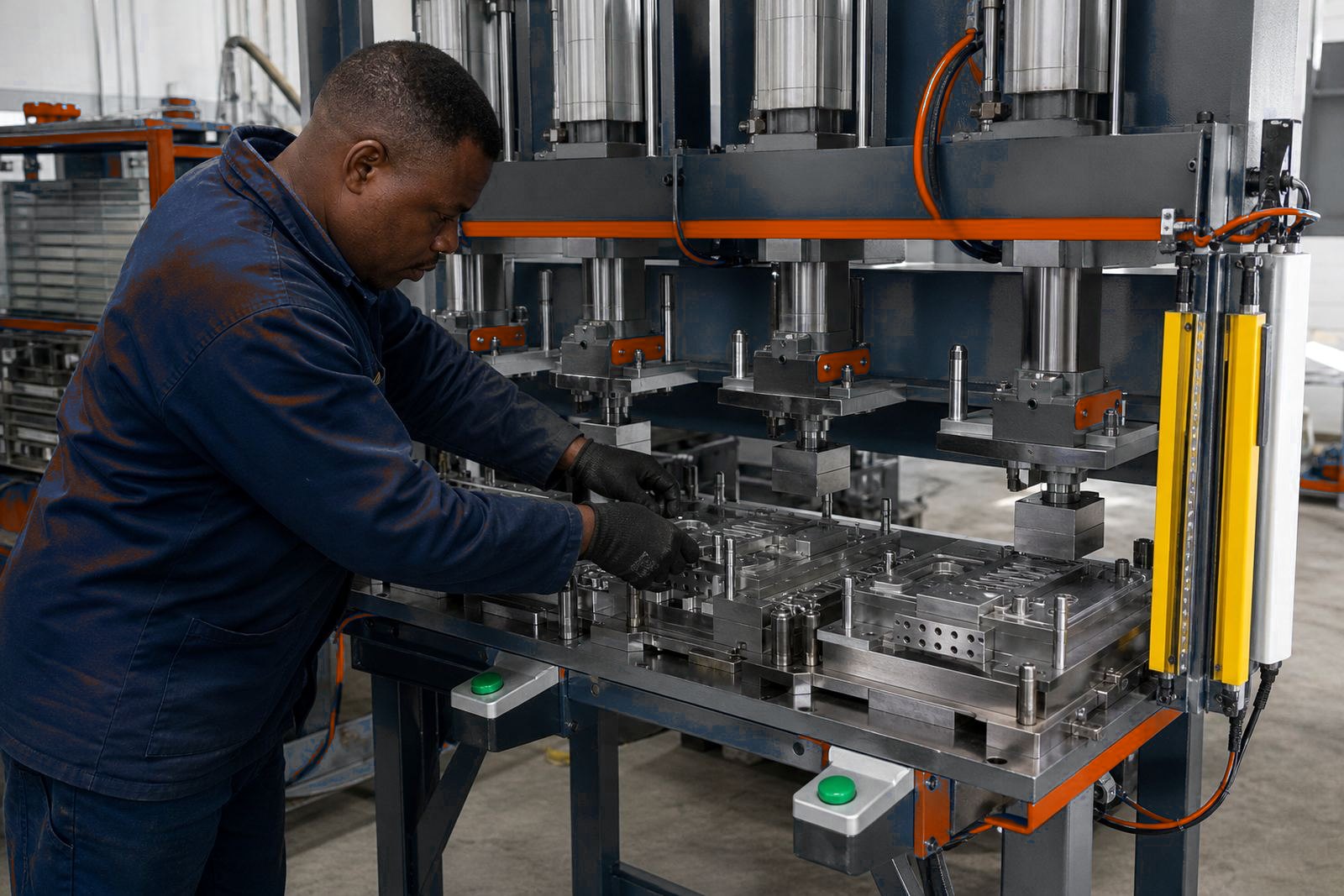
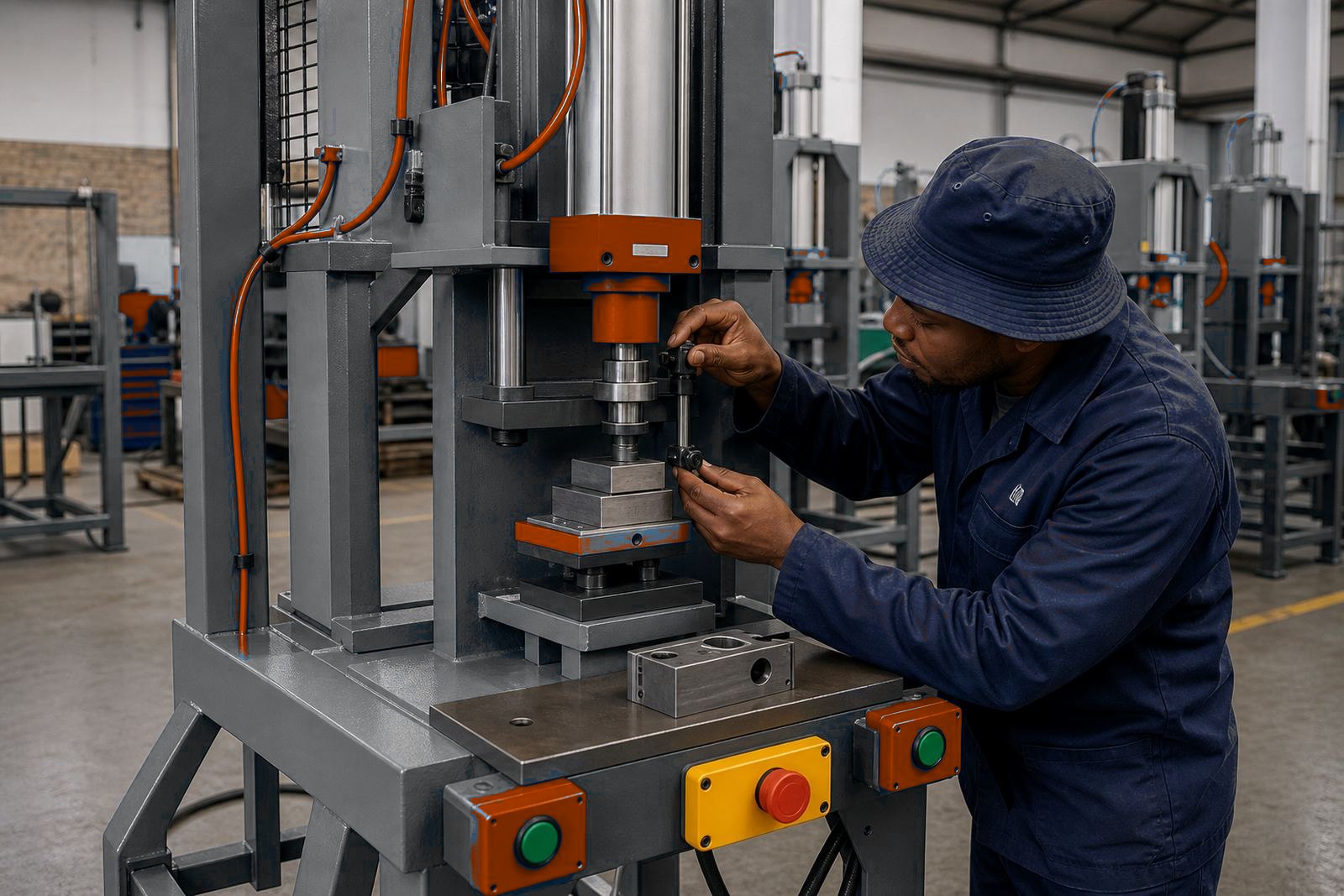
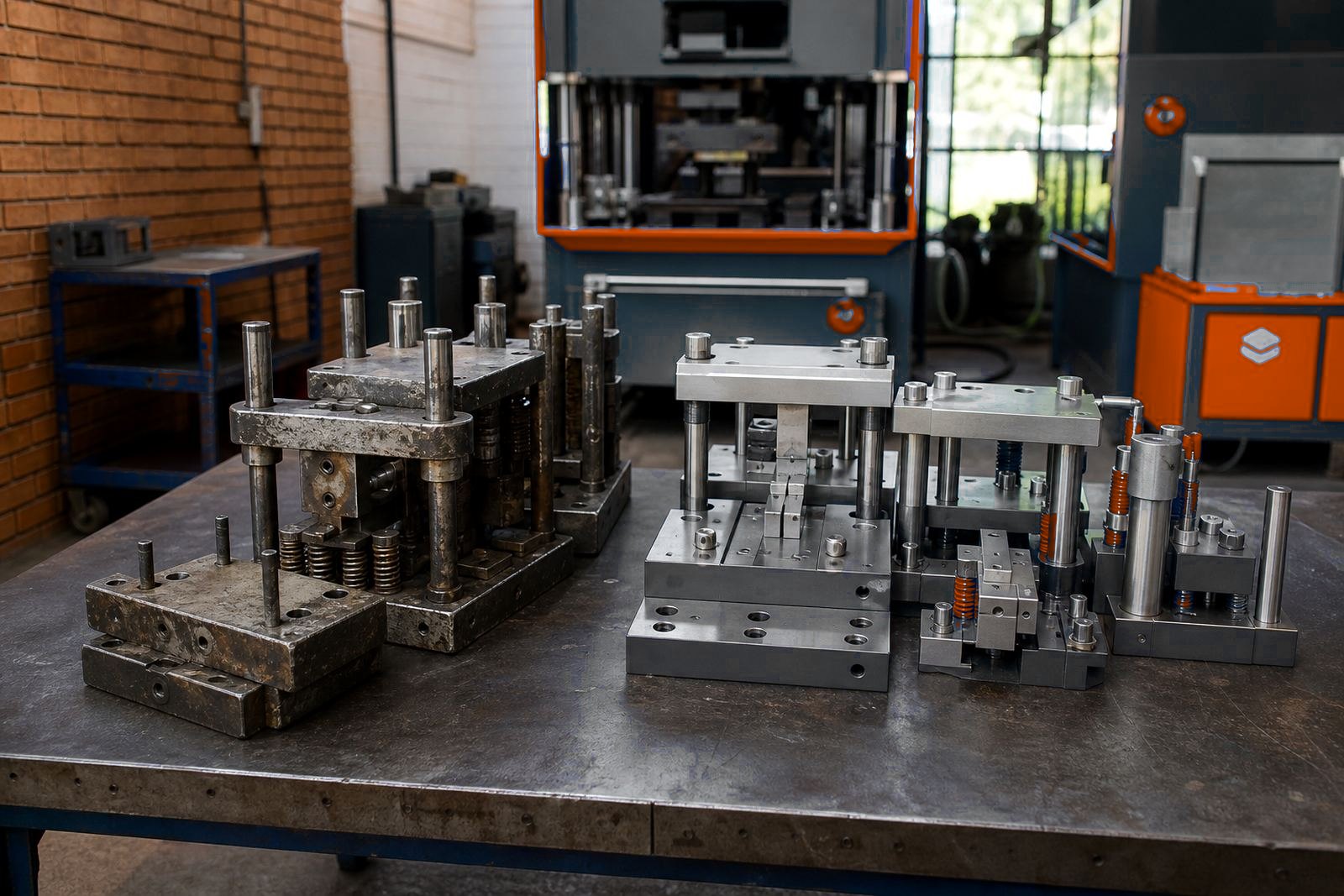
Tooling starts with the part geometry, the material and the force required at each station. A crimping tool asks for a different nose profile to a riveting set, while staking needs even pressure and clean support underneath. In multi-station work, one station may guide, another may form and a later station may seal or lock the pack, so the tooling must match that order.
Musa Hartnick and the workshop team build tooling for practical production use, not just for a test fit on the bench. That means checking access for loading, wear points on the contact faces and how the part will sit when air pressure is applied. In coastal plants and inland factories alike, tool steel, fixtures and fasteners need to stand up to daily handling and the dust that finds its way into production areas.
- Form tools for crimping, riveting and staking
- Location fixtures that hold the part square
- We change tooling to suit different pack sizes or container formats
- Guide features that keep loading consistent
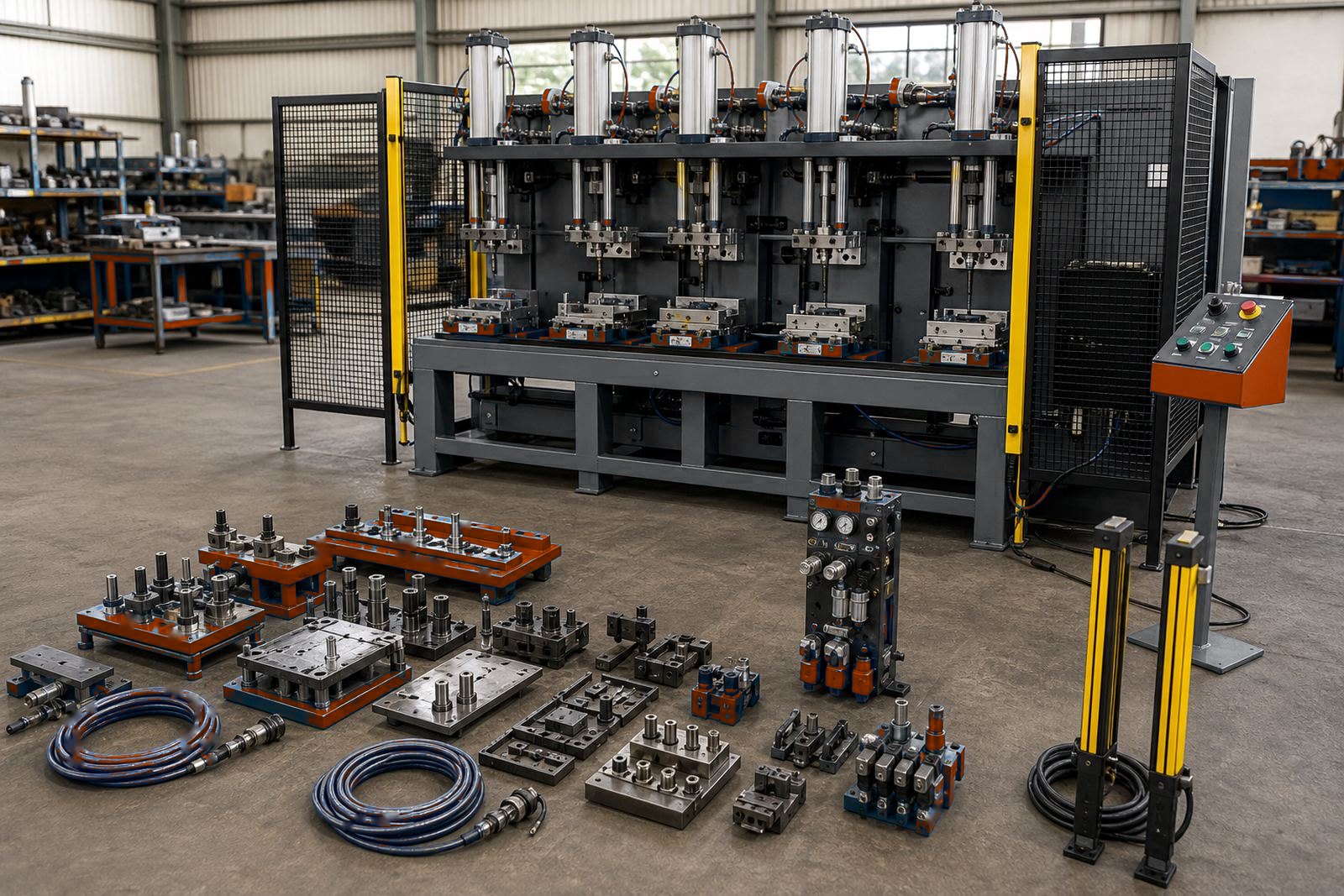
Guarding and light curtains that suit the real work area
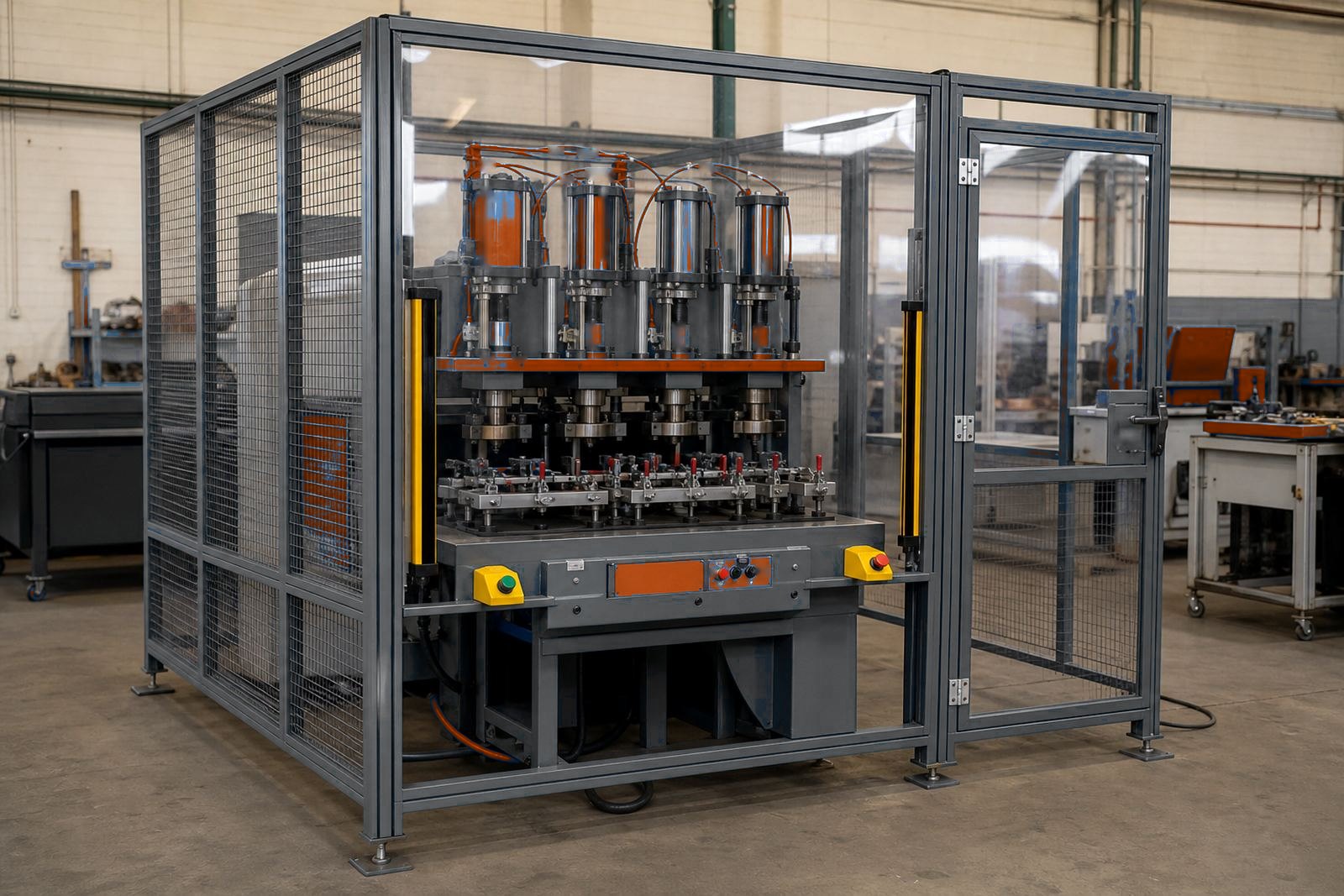
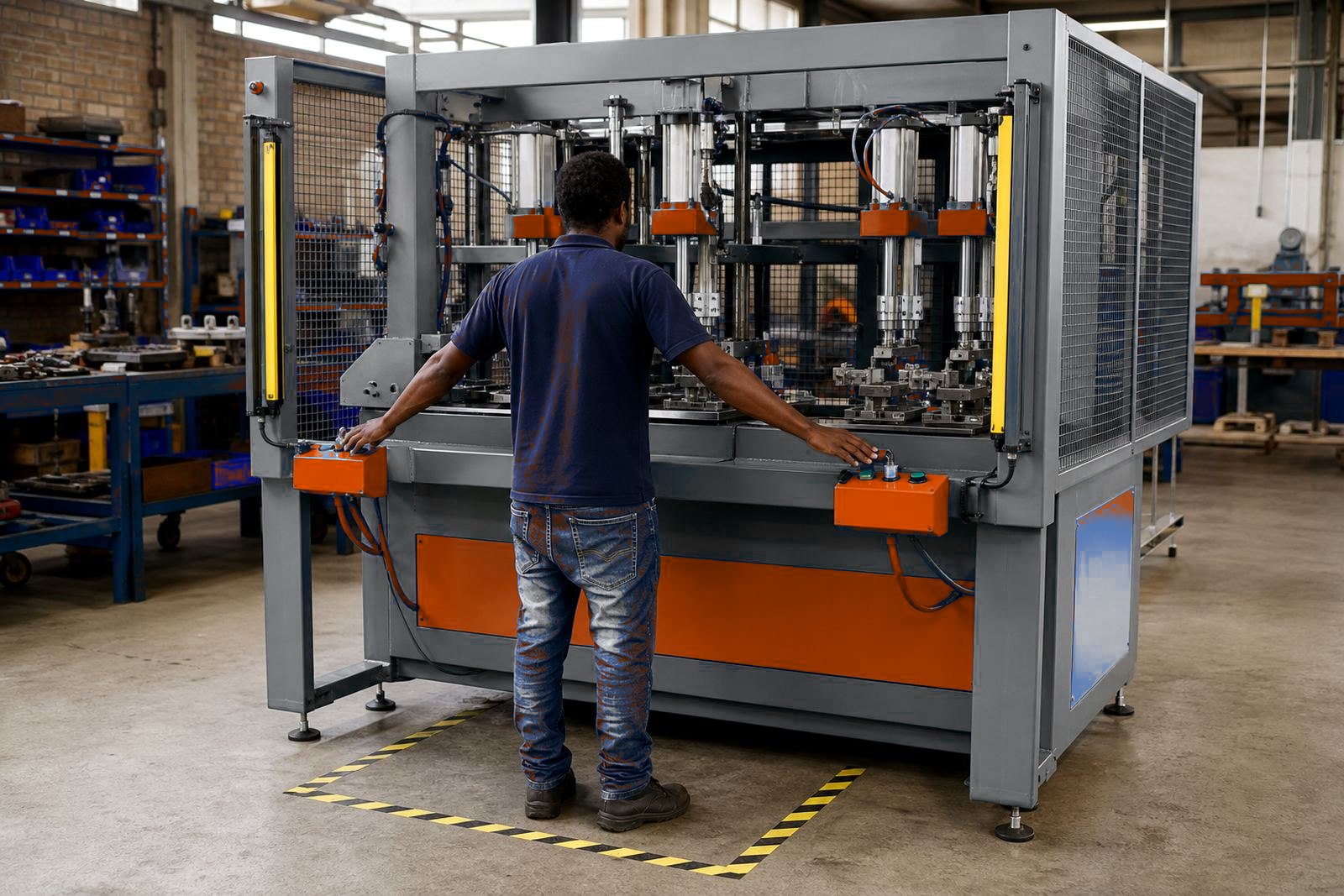
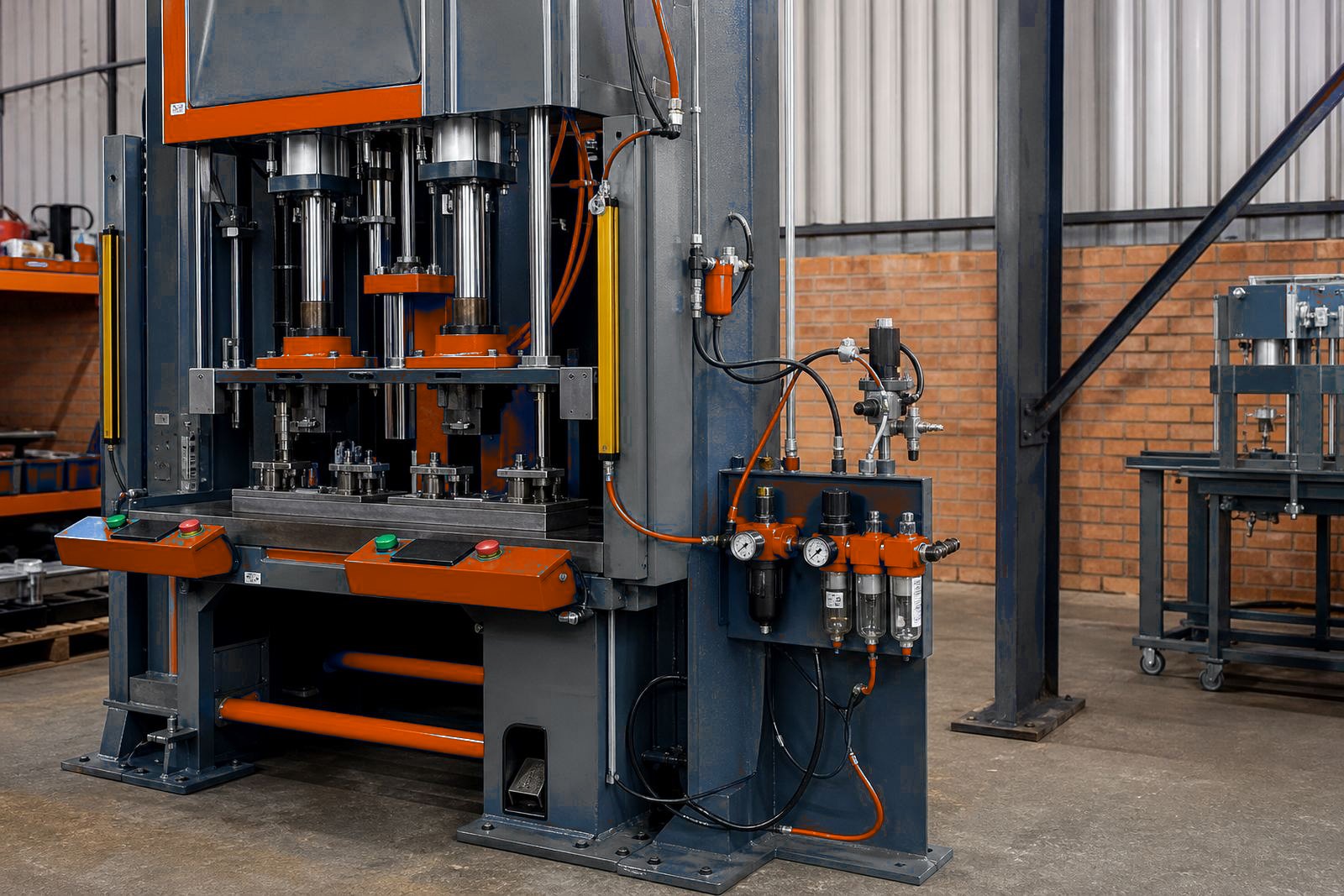
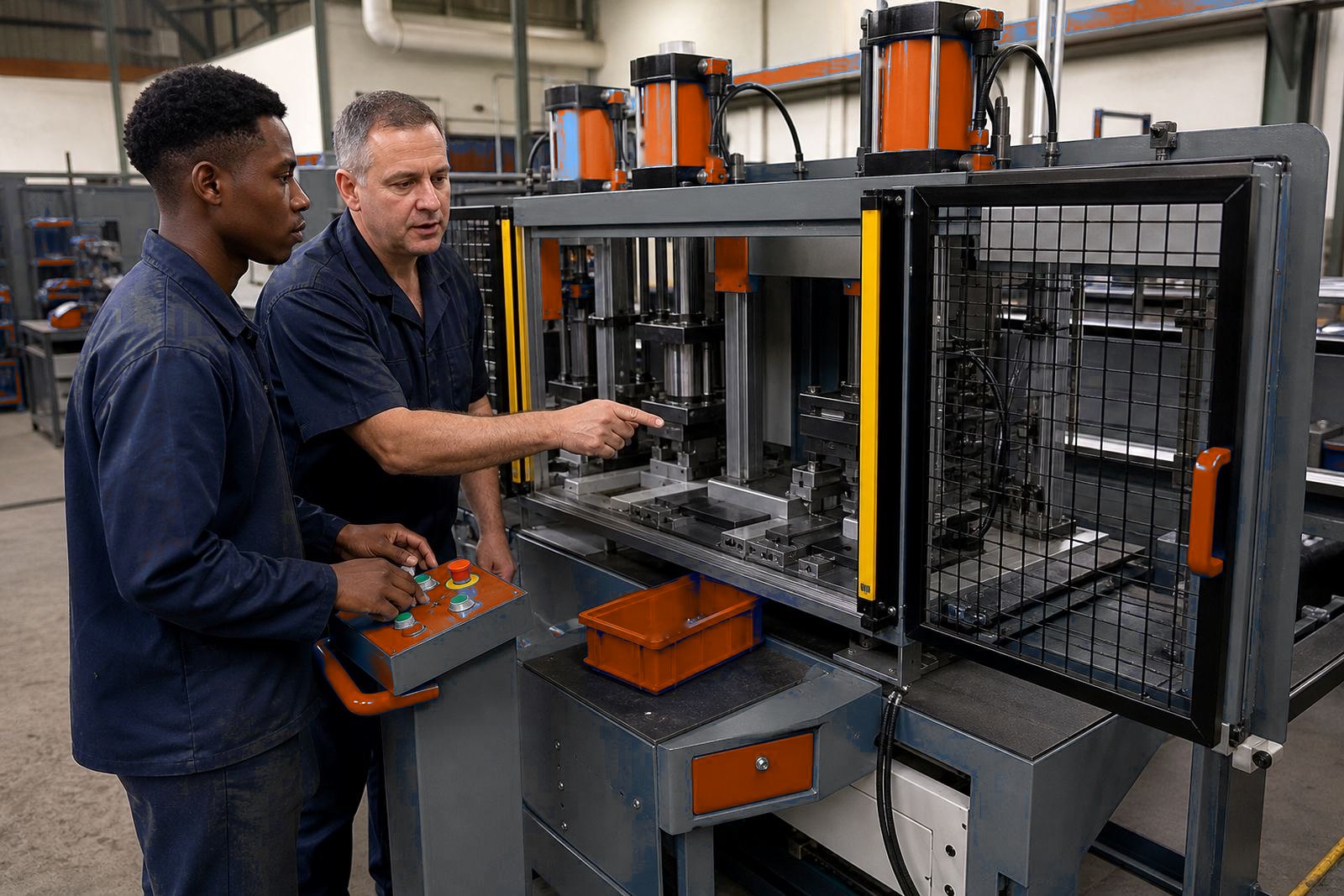
Guarding belongs on the machine from the start. A press with two-hand controls still needs the working zone marked clearly, and a line that handles small metal parts or sealed packs may need fixed guarding, interlocked access and light curtain protection in the right places. The operator must be able to load and clear the station without reaching into a moving area.
Light curtains, where used, must be set to the correct height and distance from the tool face. That spacing changes with stroke length, part size and the shape of the feed path. If the guarding is too tight, production slows. If it is too open, the risk moves the wrong way. Lerato Moagi handles commissioning with those details in mind, so the stop points, reset steps and access panels fit the line layout.
Site installation from workshop floor to factory floor
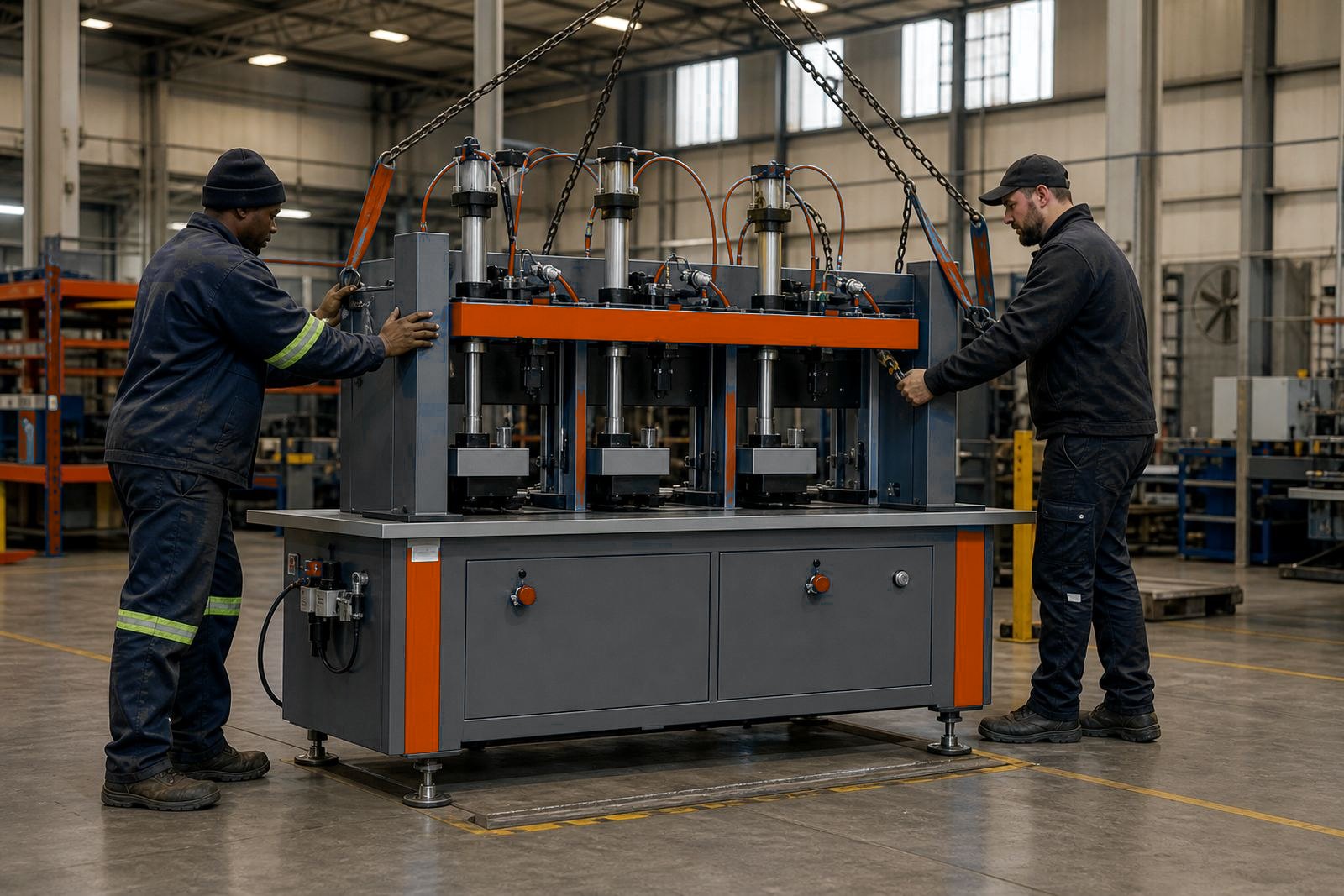
Once the machine leaves the workshop, the next job is getting it into the factory and into the production flow. Site installation covers position, levelling, air line setup, power connection where the control panel needs it, and the final check that the press sits correctly with the rest of the line. A press in Kempton Park does not always face the same floor condition as one in Durban, so the installation notes have to match the site.
Thandiwe Matlala coordinates the project flow, while Johan Ramokgopa checks the workshop build before dispatch. On site, the machine must land with enough access for tooling changes, cleaning and routine inspection. Air supply quality matters too. Moisture in the line, poor fittings or thin hose sizes can affect cylinder movement and shift the press feel from station to station.
- Machine position and floor layout checks
- Air line routing and connection points
- Stroke setting for the required job height
- Access for maintenance and tool swaps
Commissioning that proves the sequence before production starts
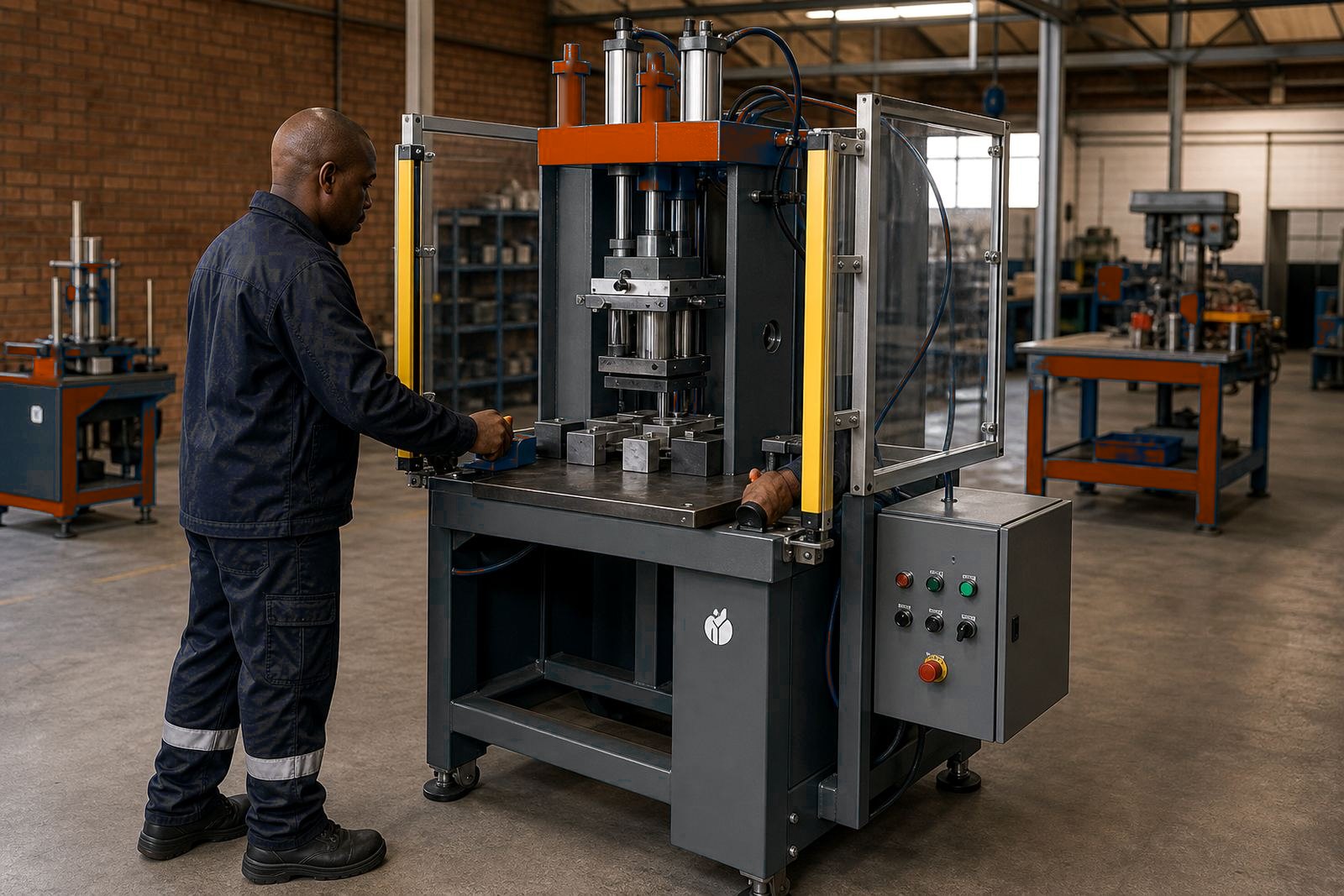
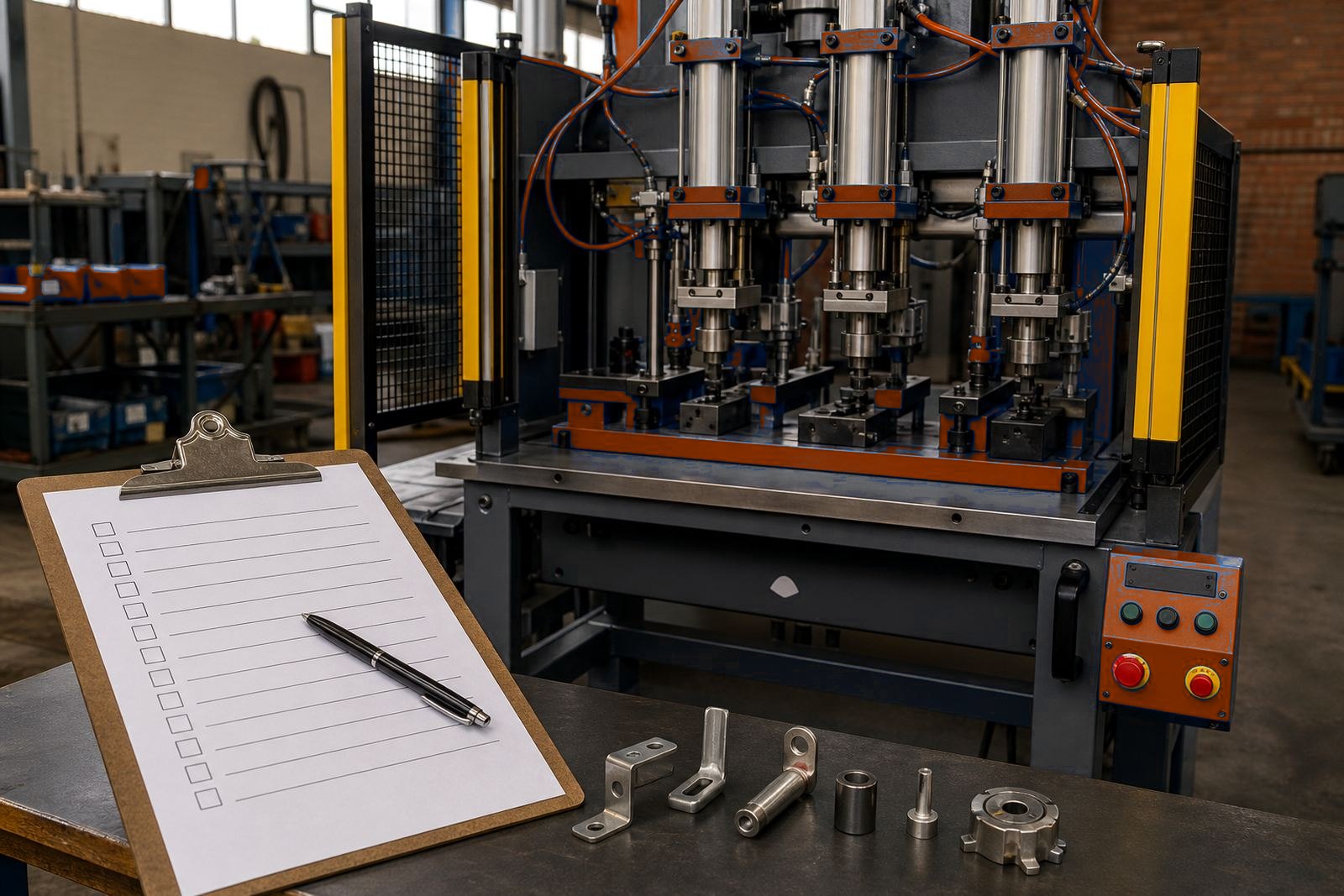
Commissioning is where the machine is tested as a working unit. The press, the tooling, the guarding and the control sequence have to agree with each other. Stroke setting is confirmed, cylinder movement is checked, safety devices are tested and the load path is watched through several cycles. If the job is a pack sealing line, the seal pressure and dwell need checking. If it is riveting or staking, the forming depth and repeat position matter more.
MultiPress supports commissioning across Johannesburg, Pretoria, Durban, Gqeberha, East London and the surrounding industrial areas. The point is not a fancy handover, it is a machine that can be run with clear settings and a sensible routine for the operators who will use it every shift. When the sequence is stable, the team can work with less stop-start adjustment and fewer surprises at the tool face.
Operator training that matches the machine settings
Operator training covers loading, cycle start, two-hand control use, safe clearing, tool change steps and the daily checks that keep the press in line. The training also has to fit the job type. A crimping station needs different attention to a riveting press, and a multi-station setup may need the operator to understand where one process ends and the next begins.
Anele Engelbrecht leads the training side so the people on the floor know what the press is meant to do, where the safe zones sit and which settings should not be altered without proper sign-off. That practical routine matters in factories where shifts change, parts vary and the line has to keep moving with less confusion around the controls.
- Two-hand control use and reset steps
- Safe loading, unloading and part clearing
- Daily inspection points for tooling and guards
- Production handover notes for the line team
Who handles the work and how the projects are arranged
Pieter Sauls leads the business from Isando, Ekurhuleni, with the projects spread across workshop build, tool design, commissioning and training. The team works as a single chain so the tooling drawing, the guard set, the site install and the production handover all match the same machine.
That matters when a factory needs one press for assembly and another for pack sealing, or when a line in Boksburg needs a tooling change while a site in Pretoria is preparing for a new run. Our contact form is the route for project details, and the branch areas include Isando Commissioning, Johannesburg Commissioning, Pretoria Commissioning, Durban Commissioning, Gqeberha Commissioning, East London Commissioning, Kempton Park Commissioning and Boksburg Commissioning.
If the job calls for custom tooling, guarding, air line setup and a clean start to production, start the conversation here about the moving parts of the job.