Kempton Park lines that need a clean first run
Kempton Park has a heavy mix of light manufacturing, packaging rooms and assembly floors that rely on presses working to a repeatable stroke and air pressure. When a new station is added or a line is retooled, the first hours on site matter, because the press has to match the tooling, guarding and operator routine before production starts building volume.
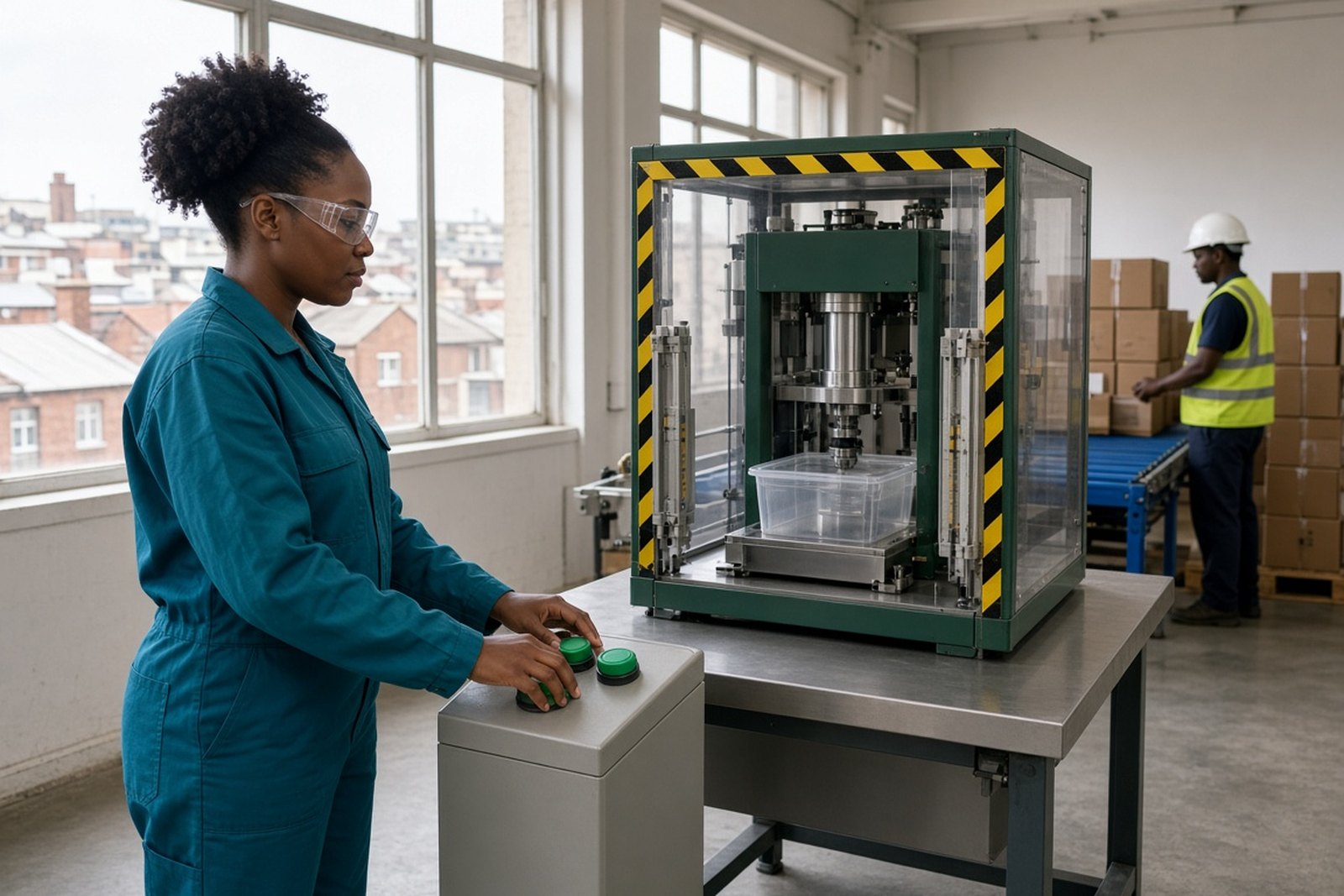
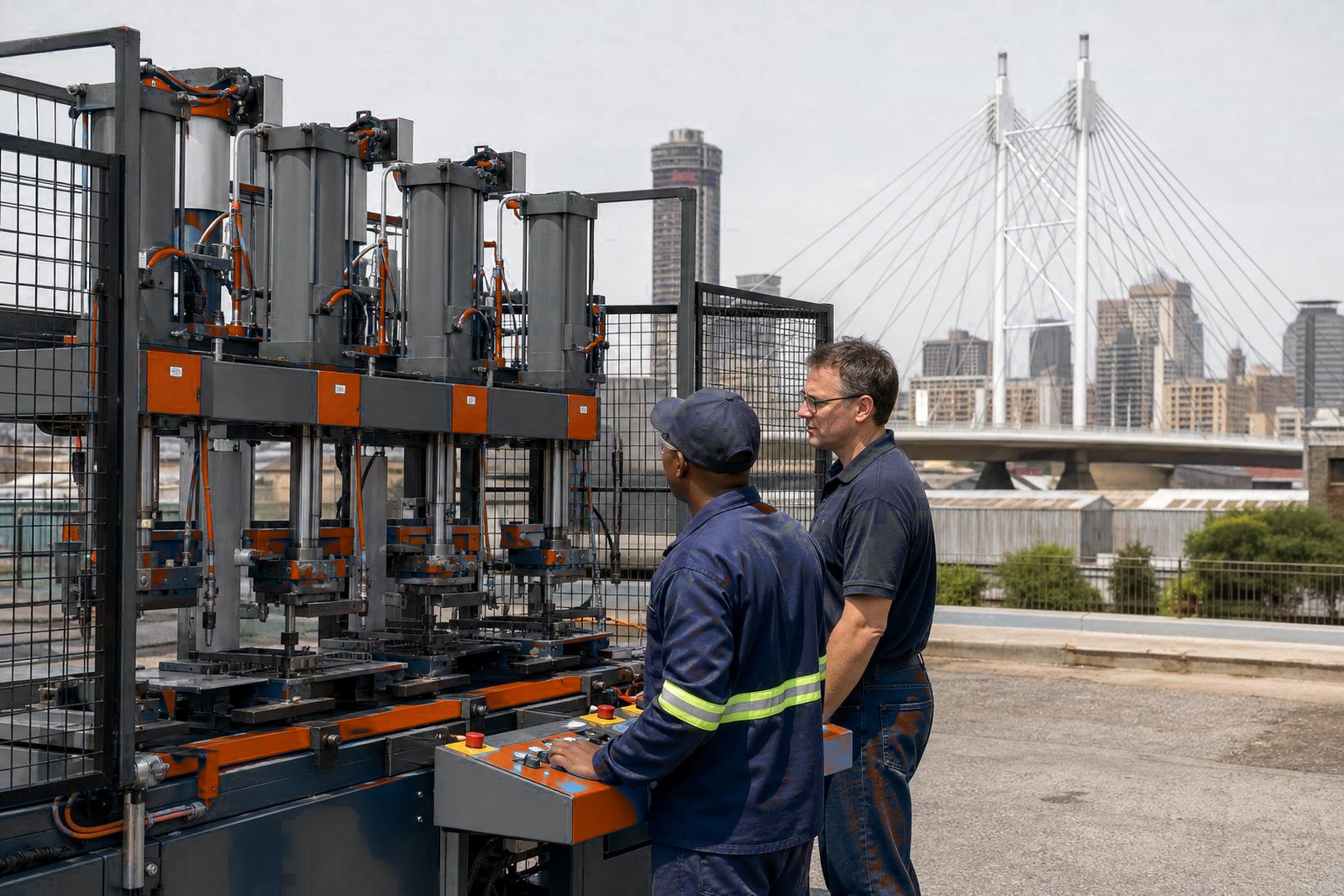
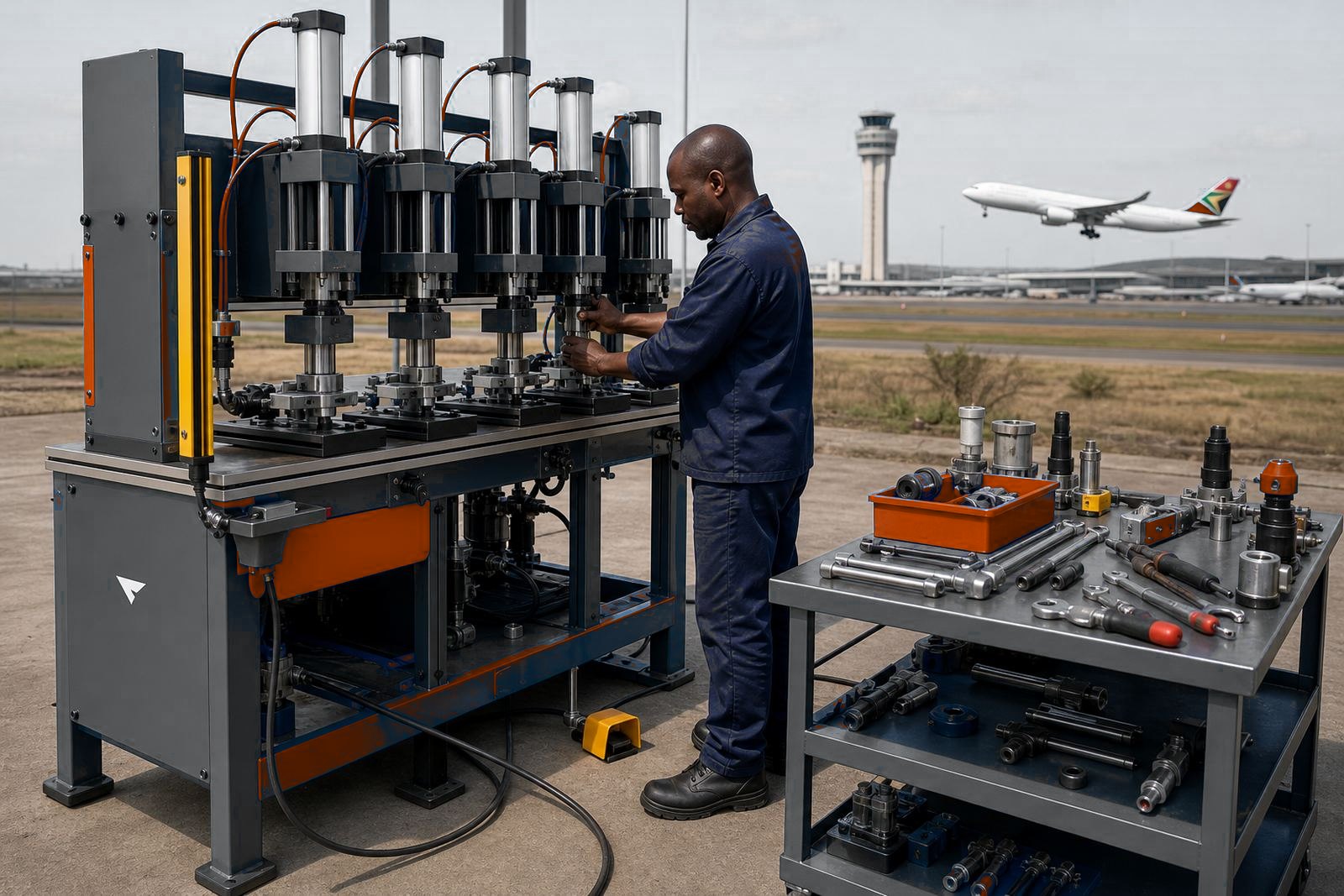
Our commissioning work covers multi-station pneumatic presses used for crimping, riveting, staking, assembly and pack sealing. We set up the press sequence, check cylinder movement, confirm stroke setting and make sure the guarding matches how the team feeds parts. Where a line uses two-hand controls or light curtains, those devices are checked against the motion of the tooling, not just fitted and left alone.
Kempton Park facilities often run mixed batches and short product changes, so the first run has to prove the press can repeat from station to station without drag, mismatch or unnecessary strain on the operator. Careful tooling changes, air line setup and production handover sit within the same job.
- Multi-station press set-up for assembly and closing work
- Cylinder, stroke and air pressure checks on site
- Guarding checks for hands, parts and feed paths
- Two-hand controls and light curtain alignment
What we handle on the day at your plant
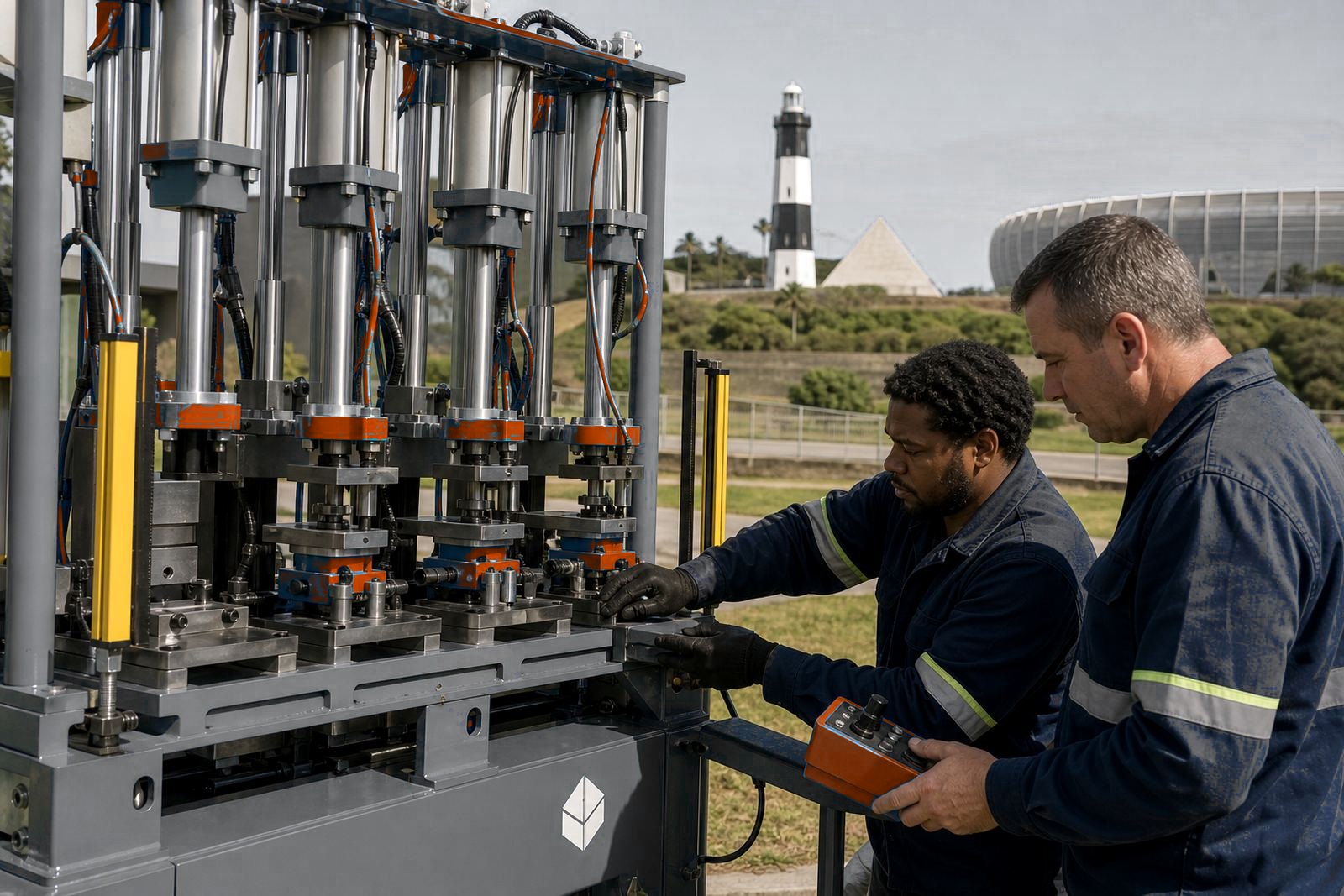
Field support in Kempton Park usually starts with the press in place and the line ready for its first proper cycle. We look at the tooling, the clamp points, the feed path and the station spacing so the operator is not fighting the machine. If the tooling needs adjustment, that is done with the actual parts on hand, because a paper spec sheet cannot show how a rivet sits or how a cap settles into a seal.
The work can include site installation, stroke setting, press commissioning and production handover. Where a fixture needs to hold a small component steady for crimping or staking, we check the alignment and the return action. If a pack sealing station needs a tighter close or a different dwell, the air settings and tool motion are reviewed together. We also handle tooling changes when the product mix shifts, which is common on Kempton Park floors that supply local distribution and export packing streams.
Because the area has a lot of active industrial yards, narrow loading points and mixed access routes, we plan the practical part of the visit carefully. The shop floor may be busy with forklifts, incoming trays and wrapped stock, so the commissioning work has to fit around the plant without making a mess of the line flow.
- Tooling fit-up and fixture checks
- Stroke setting for repeatable station travel
- Air line setup and pressure confirmation
- Operator handover after the final run
Local production conditions around Kempton Park
Kempton Park sits in a working industrial belt with a lot of movement between workshops, logistics yards and production floors. That means a press line may need to run cleanly in a room where dust from pallets, packaging offcuts and day-to-day handling can affect sensors, guards and moving parts. We account for that when we commission equipment, especially where a light curtain or two-hand control must stay reliable through repeated use.
Some local floors are tight on space, so the layout around the press matters as much as the machine itself. Operators need room for trays, part bins and removal paths, and the guarding has to leave enough access for safe loading without creating a bottleneck. On pack sealing jobs, a station can be small but the handling around it is not, because cartons, film, liners or formed packs still need a clean route in and out.
Coastal humidity is not the main issue in Kempton Park, but variable workshop conditions still affect air lines, fittings and the feel of a press over time. We watch for leaks, inconsistent travel and tool wear that can start as a minor issue then turn into poor output. A good commissioning visit finds those faults before they become part of the daily shift.
- Compact layouts with limited loading space
- Guarding that must suit busy walking routes
- Sensor and light curtain checks in working floors
- Air fitting leaks and uneven travel under repeated use
Stations, tooling and controls we bring into alignment
A multi-station pneumatic press only behaves properly when each part of the system supports the next. The cylinder must move cleanly, the stroke must stop where the tooling expects it, and the control method must suit the way the operator loads the part. That is true whether the job is simple assembly or a tighter crimp where overtravel can distort the component.
Musa Hartnick handles tooling design, while Johan Ramokgopa and Lerato Moagi work through the workshop and field steps that keep the machine on spec. Pieter Sauls oversees the wider job, and Thandiwe Matlala keeps the project movement organised when the work spans more than one station or more than one area in Ekurhuleni. Anele Engelbrecht covers operator training so the team on the floor knows the feed order, hand position and fault checks.
We cover the hardware and the working habits that sit around it:
- Custom tooling for pressing, crimping, riveting and staking
- Fixture design for repeatable part location
- Guarding builds suited to open and enclosed stations
- Light curtain integration where access control is needed
- Two-hand controls for presses that require a guarded cycle
- Tooling changes for product switches and line rework
A line can look sound from a distance and still be wrong at the station face. A small offset in the tool, or a mismatched release point, can leave a part half seated or bruise a finished edge. That is why the commissioning step matters on its own, not as a rushed add-on to installation.
- Press cycles checked station by station
- Operator loading position matched to the tooling face
- Release, return and part ejection reviewed on site
- Guard access checked against the real work pattern
Getting the visit set up without the noise
For Kempton Park commissioning jobs, our contact form is the right place to send the line basics and site details. A short note on the press type, the station count, the tooling in use and the kind of product being handled gives the team enough to plan the right visit and bring the right support into the workshop or plant.
If the line is already installed, it helps to know whether the task is first-run commissioning, a tooling change, a guarding adjustment or operator training. That way the work can be matched to the actual condition of the press, using the details provided. Where a factory is working with tight aisles or shared loading areas, that detail is useful too, because access in Kempton Park can shape the sequence on site.
Once the job is scoped, the focus is practical: set the press, test the cycle, check the guards, confirm the stroke and hand the line over in a state the operators can use with confidence.
- Press type and station count
- Tooling, guarding and control details
- Site location in Kempton Park or nearby Ekurhuleni
- Production needs for the line and the shift