
When bag neck sealing needs a press station
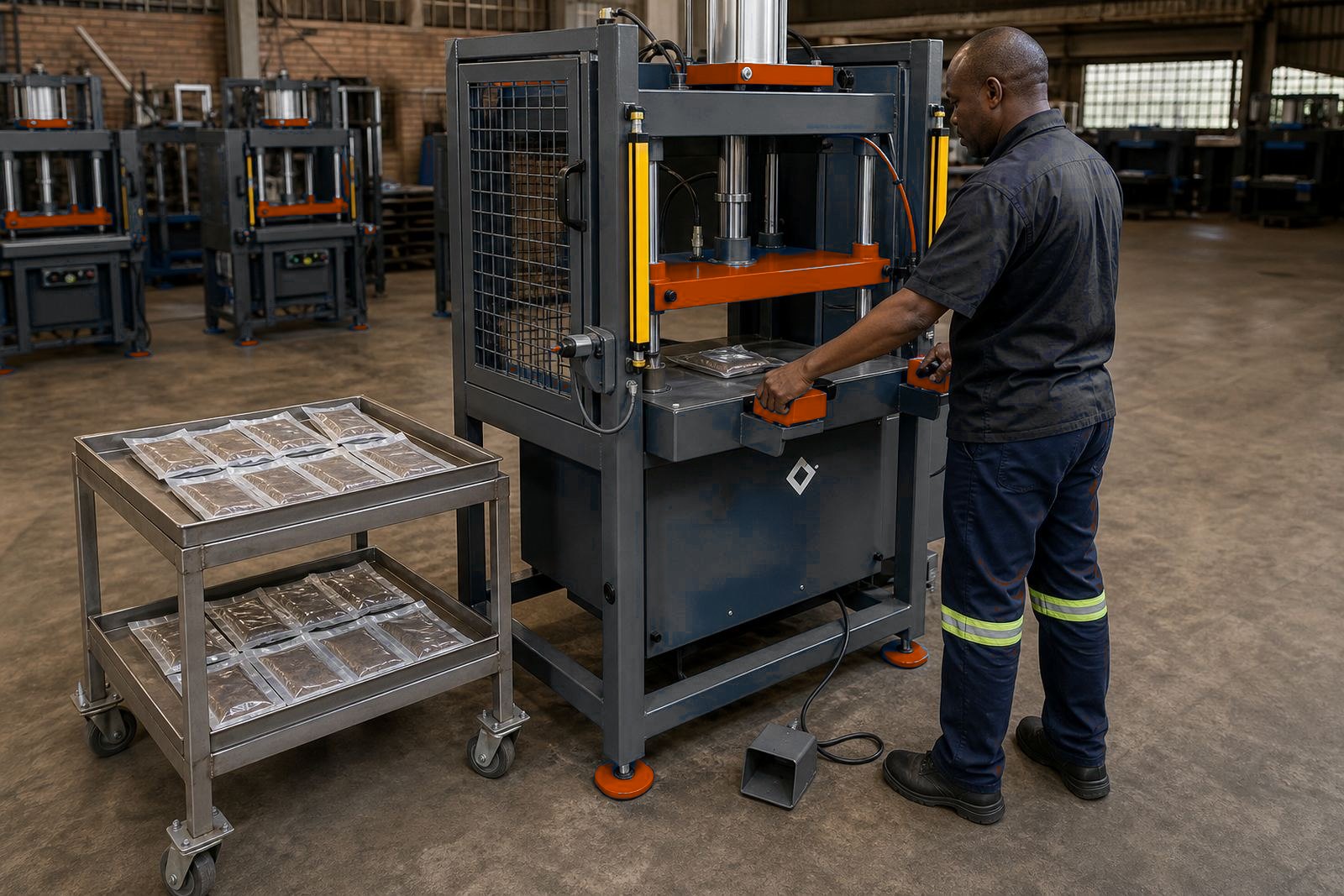
Bag neck sealing is often treated as a small task, but on a busy line it can become a repeat job that demands the same closing force every time. A pneumatic press suits that kind of work when the neck material, closure strip or sealing pad has to be compressed in one position with a controlled stroke and clean release. In Isando and other factory areas around Ekurhuleni, that usually means a station built for one operator position, one part orientation and a steady cycle.
The setup can be used where a pack neck needs compression before tying, clipping, heat sealing or a secondary closing step. It also helps where the product shape shifts slightly from one batch to the next, because the tooling can be made to guide the bag neck into the same spot each time. A well-made station reduces hand strain and keeps the seal point from wandering across the jaw area.
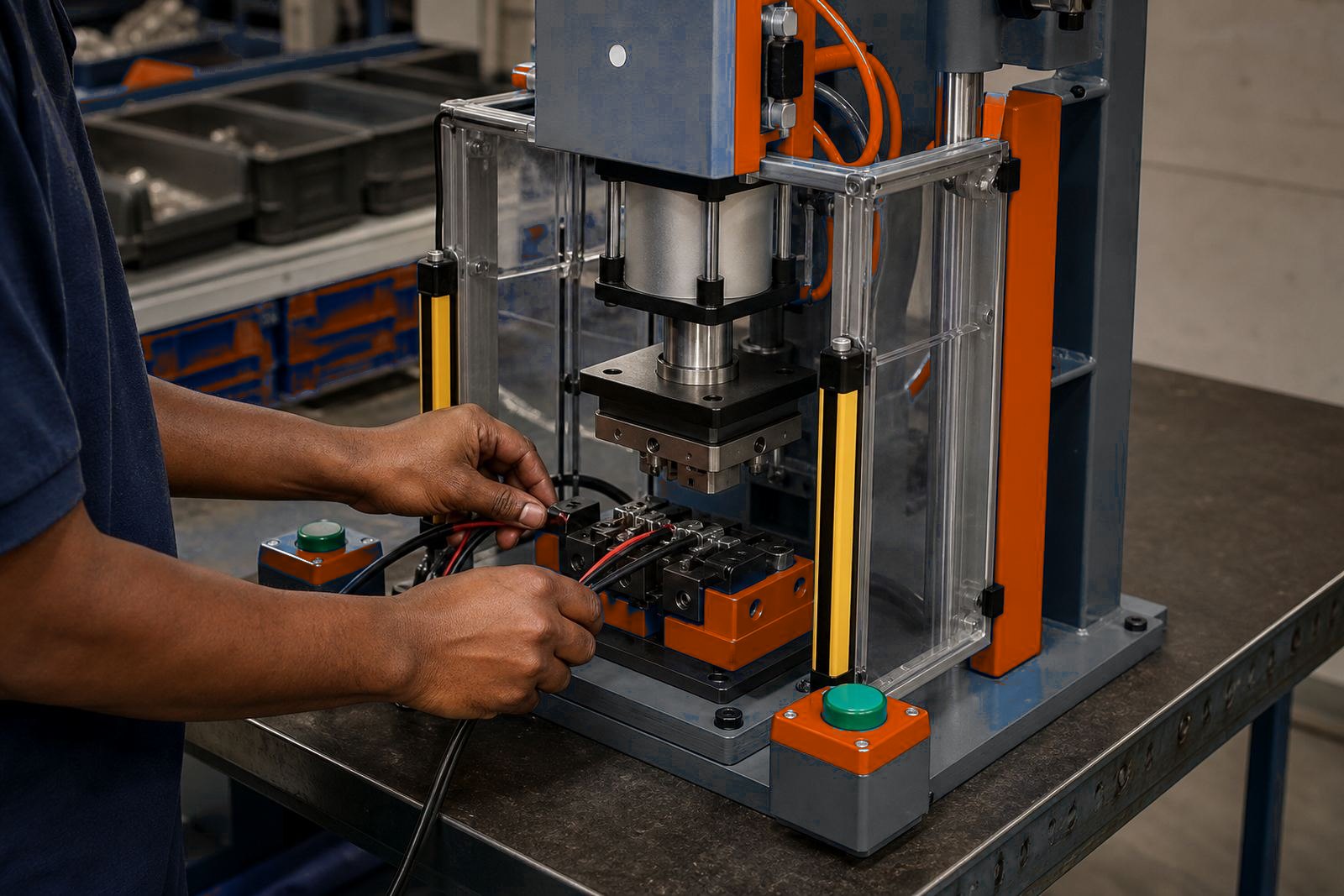
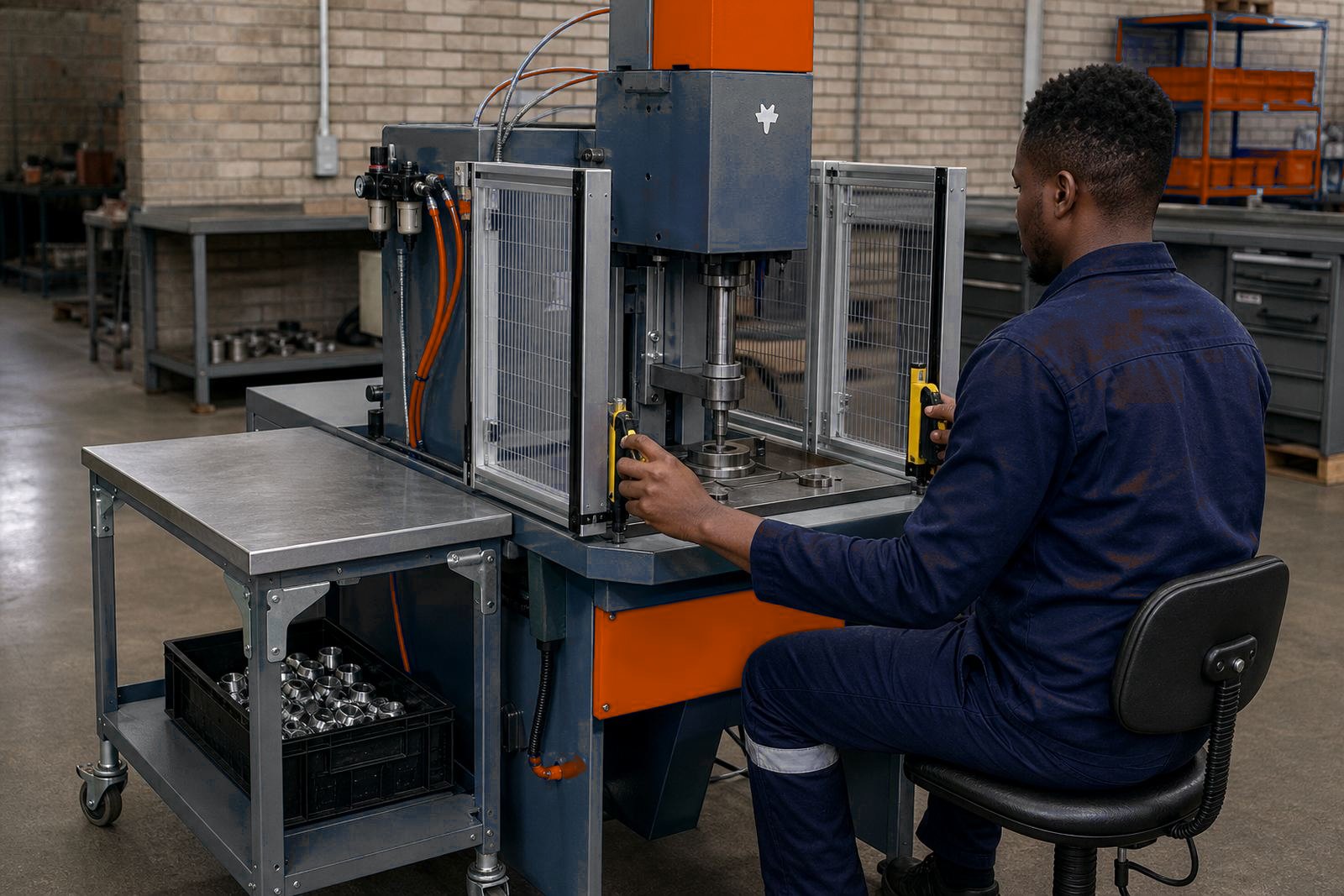
For this kind of use, the press does not need to be complicated. It needs the right cylinder size, enough air pressure for the target force, a stroke that matches the packed height and a table or fixture that keeps the bag from moving. Two-hand controls and light curtains matter where hands work close to the tooling face.
Station layout that suits a bag neck line
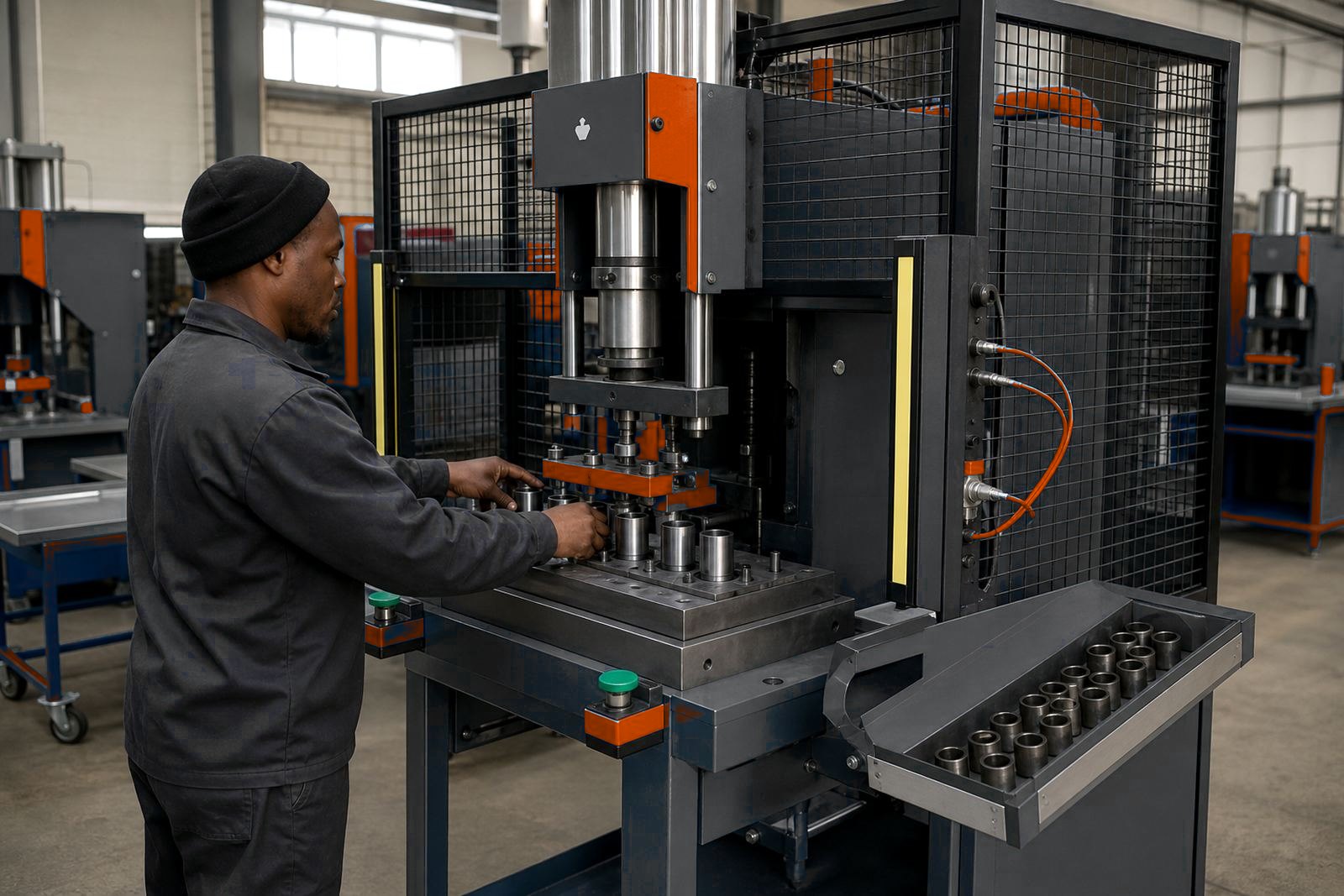
Bag neck sealing stations work best when the operator path is short and the bag can be placed, closed and removed without extra turning. On a multi-station machine, one station may hold the bag in position, another may apply the closing pressure and a third may support inspection or stacking. That split helps when the same pack also passes through crimping, staking or pack sealing steps elsewhere in the line.
The tooling should match the bag material and the closure method. A soft neck film needs different contact surfaces from a thicker woven sack or laminated pack. We look at the opening width, the neck thickness, where the load sits after fill and whether the seal point must sit close to a seam or gusset. Those small details shape the fixture more than people expect.
- Stations can be arranged for single bag loading or for paired handling where the cycle is repeated on two positions.
- The press frame can be built to suit bench height, waist height or a guarded freestanding layout.
- Stroke setting should leave just enough travel for the closure without crushing the bag body.
- Air line routing needs to stay tidy so the station remains easy to service and inspect.
Tooling, guards and controls that keep the job steady
Bag neck sealing often fails when the tooling is too plain. The bag twists, the neck slips out of place or the closing pad presses unevenly and leaves one side stronger than the other. Custom tooling keeps the neck registered and spreads the load in a way that suits the product. On a production floor, that is usually more useful than trying to force a general press into a line it was never shaped for.
Guarding builds and light curtain integration matter where an operator feeds the bag close to the tooling zone. Two-hand controls are common when the operator must clear both hands before the press can cycle. That setup protects fingers and also keeps the cycle honest, because the press should not move until the part is correctly placed and the hands are out of the danger area.
We also set stroke, pressure and dwell to match the job. A short stroke with moderate pressure may suit a thin neck seal, while a firmer clamp action may be needed for a larger pack or a more resistant closure strip. The aim is not maximum force, but the right force in the right place.
Planning the line around air, floor space and access
Because this is a pneumatic machine, the air supply has to be considered from the start. The compressor, line size, moisture control and pressure stability all affect how the station behaves during a shift. Coastal humidity in Durban or East London can add more moisture to the line, so air preparation and drainage are worth sorting properly. A press that sees changing air quality will not hold the same feel through the day.
Floor space also matters. Bag neck sealing does not need a huge footprint, but the operator still needs room to place the pack, check the seal and move it away without crossing into the press path. If the station forms part of a wider assembly or pack sealing line, the infeed and outfeed should be planned with the rest of the process in mind. A tight corner layout often leads to awkward handling and more rejects.
On site installation should include air line setup, guarding checks, stroke setting and a clear handover on the operating sequence. If the machine sits in Johannesburg, Pretoria, Gqeberha or Kempton Park, the same planning discipline still applies. Transport changes, site floor levels and local handling routes can affect the final position more than people think.
Common mistakes on bag neck sealing jobs
One common mistake is selecting a press by overall size instead of by the actual sealing load. A big frame does not guarantee the right closing behaviour. If the cylinder force is too high, the bag neck can deform, split or fold away from the sealing face. If it is too low, the closure will look neat but fail under handling.
Another mistake is leaving the tooling too broad for the bag neck and closure area. A bag neck with a narrow closure zone may need a shaped pad, a guiding pocket or a stop that sets the bag at the same depth every cycle. Without that, the operator ends up adjusting by feel and the line becomes harder to keep stable.
- Skipping stroke setting can cause crushing or weak closure pressure.
- Using a loose fixture often creates drift in bag position.
- Ignoring air preparation can lead to uneven cycle feel.
- Leaving out operator training usually shows up in small handling errors first.
Training matters because the cycle may look simple, yet the handling steps around it are not. The operator needs to know where the bag should sit, when the two-hand cycle starts, what to check on the seal and how to change over tooling without upsetting the setup.
Budget bands for South African factories
Budget for a bag neck sealing station depends on frame size, station count, guarding level and how much tooling work the job needs. A simple one-station press for light sealing work may fall into a lower price band, while a multi-station setup with custom fixtures, safety systems and commissioning will cost more. For South African buyers, it is better to think in working ranges than in a single number, because the details move the cost quickly.
For simple bag neck closing work, a smaller station with standard controls and a straightforward fixture can start around R85 000 to R160 000. A more developed system with custom tooling, two-hand controls, light curtains, guarded access and site commissioning often lands around R180 000 to R450 000. Larger multi-station lines with several repeated operations, tooling changeovers and operator training can move beyond R500 000, depending on the layout and the number of stations.
Those figures are shaped by cylinder specification, frame fabrication, control gear, air preparation and the amount of workshop fitting needed before the machine leaves Isando. If a line also needs production handover, fixture changes or added guarding after installation, the budget needs to carry that work as well.