Filter caps need a press that stays square
In filter cap assembly, the parts are usually small enough to look forgiving at first glance, then one slight offset shows up in the finished fit. A multi-station pneumatic press helps keep each cap, end piece or insert seated to the same depth, with the same force and the same stroke on every cycle.
That matters when a line is making caps for fluid, air or dust filter components, because the finished joint must hold shape and stay consistent through a shift. A hand press or loose jig can work for a while, but the operator ends up doing too much by eye. A proper station layout gives the job a fixed place for the part, the tool and the downstroke.
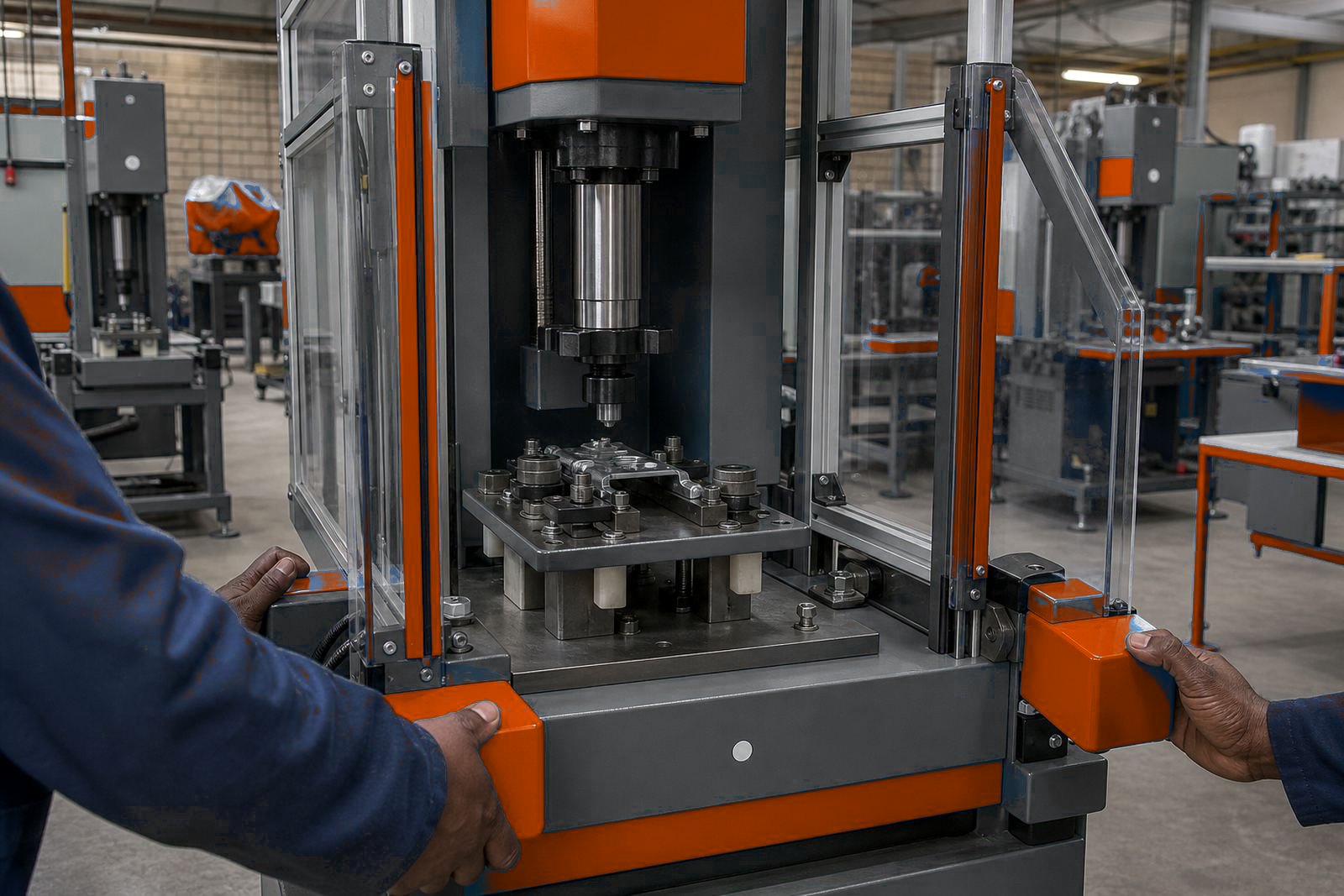
For this use case, the press is usually arranged around one or more cylinders above a rigid frame, with stroke stops set for the part stack. Air pressure is matched to the job, and the tooling is cut to the cap profile, crimp line or staking point. If the component is soft or thin, the set-up must spread the load so the edge does not flare or mark.
Typical equipment set for a cap assembly cell
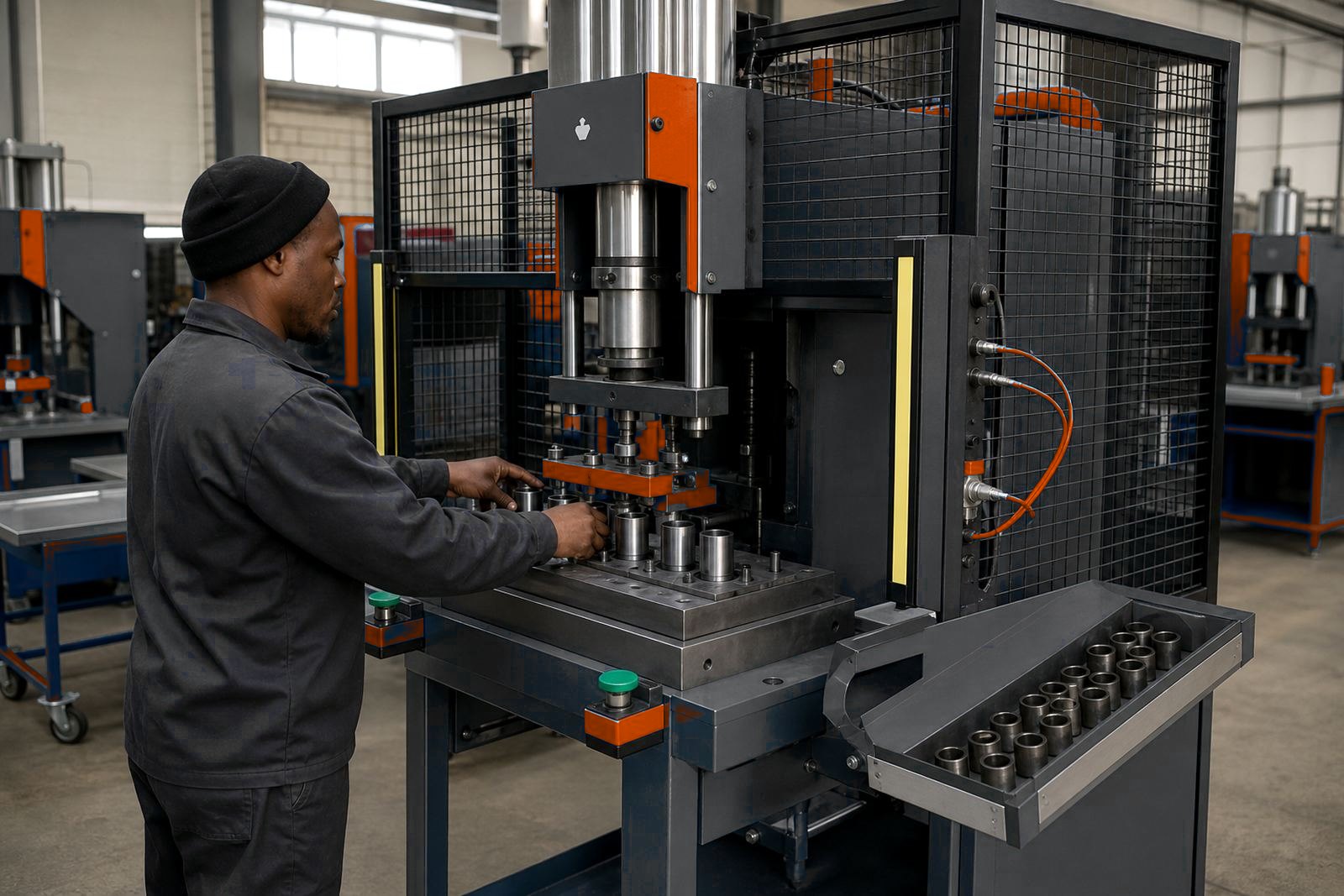
A filter cap line may need one station for locating, another for pressing, and a third for inspection or trim. Some shops use a single head with a rotary or slide table, while others prefer several fixed stations in one guarded frame. The right answer depends on part size, cycle pace and how many variants must pass through the same cell.
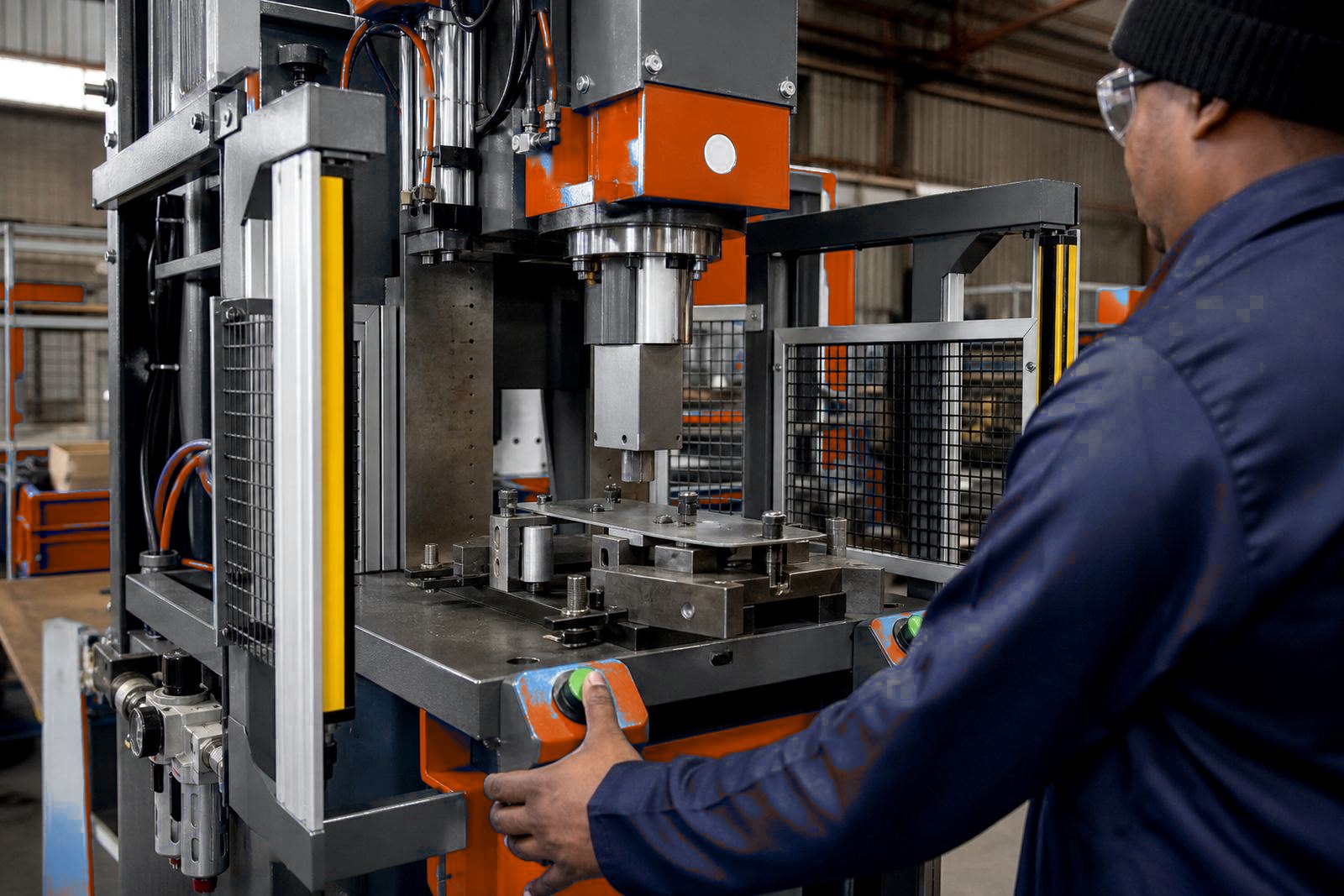
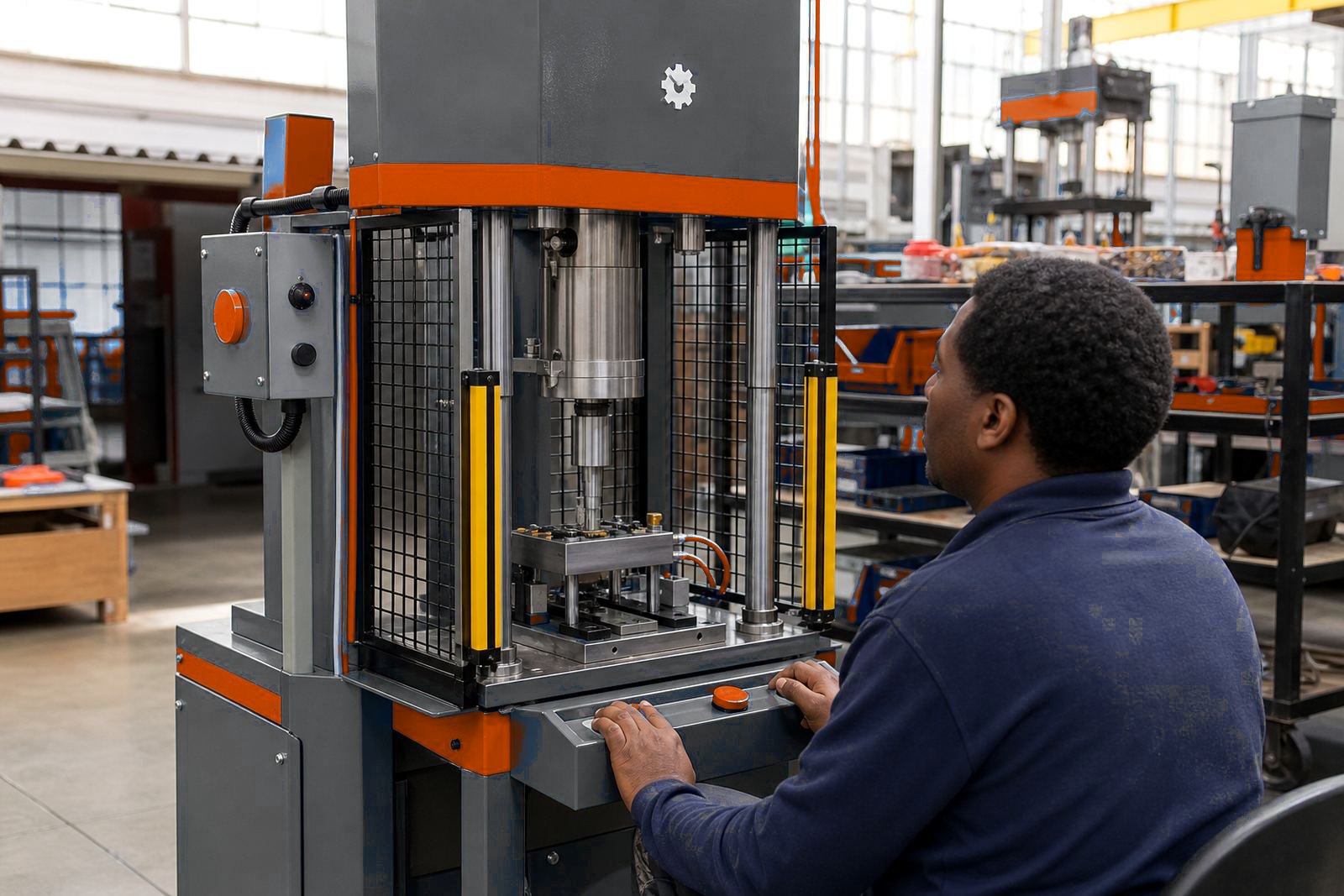
Common equipment elements include two-hand controls, a guarded work area and light curtains where access is needed. Tooling can include shaped nests, press punches, staking formers and crimp shoes, all made for the exact cap geometry. Where the job includes pack sealing or a final closing action, the tooling must keep the seal line even and avoid over-compression.
- Multi-station frame with one or more pneumatic cylinders
- Custom nest tooling for caps, inserts and end pieces
- Two-hand controls for safe downstroke operation
- Light curtains where the operator needs open access
- Guarding around moving parts and pinch points
- Stroke setting to suit part height and compression depth
- Air line setup with clean, stable supply to the press
In some cells, a simple change in tool height can solve a recurring fault. In other cases, the cylinder size, guide layout and clamp position all need to be checked together, because the press must suit the part as it is, not as the drawing hoped it would be.
Layout notes that save trouble on the floor
Filter cap assembly lines usually run better when parts move in a short, direct path. Keep incoming trays close to the operator side, and keep finished bins far enough away that they do not crowd the station. If the cell needs frequent loading of small caps, the table height should let the operator work without lifting shoulders or twisting wrists all day.
For factories in Ekurhuleni, Johannesburg or Pretoria, the practical layout often depends on floor space, compressor position and the route for finished goods. The air line should be short, neat and protected from knocks. If the press is being installed in a larger assembly area, it helps to plan the service access before the machine is bolted down, because tools and guards still need room to be reached.
Commissioning is where the line earns its keep. The stroke must land on the part at the right point, the tool must sit flat, and the controls must suit the operator sequence. If the job includes a hand-load step, the guard opening and the control position should work together instead of forcing the team into awkward movements.
- Place incoming parts on the same side every shift
- Leave space for tool change and cleaning access
- Keep the air preparation unit within sensible reach
- Plan a clear bin path for rejects and finished parts
- Allow enough room for maintenance checks on cylinders and guides
Common mistakes that show up after first trial runs
The usual faults are not dramatic, just irritating and costly. A press may be set with too much air pressure, which can crush the cap edge or leave marks from the tooling. Another common issue is a stroke that is too long, so the tool keeps moving after the part has seated. That extra travel wears parts faster and can push the assembly out of square.
Some teams also under-specify guarding. If the operator can reach too far into the working zone, the station may become awkward to use and harder to keep safe. Two-hand controls help, but only if the layout supports them and the cycle does not tempt anyone to bypass the proper sequence.
A few other mistakes keep repeating on filter work:
- Using one nest for several cap sizes without the correct inserts
- Ignoring humidity and dirt, which can affect seals and air lines
- Letting the tooling wear until the fit starts drifting
- Skipping operator training on part orientation and cycle checks
- Placing the press too far from the feed bench or inspection point
On a packing or sealing line, another weak point is inconsistent part preparation. If end pieces arrive with burrs or contamination, the best press set-up still struggles. A clean incoming part saves a lot of small adjustments later.
Budget bands in Rand for this kind of cell
Filter cap assembly presses are usually quoted to suit the cap, the tooling and the production requirement. A basic single-station pneumatic press with simple tooling and guarding sits in a different band from a multi-station cell with custom nests, light curtain integration and production handover support. The budget should also reflect the kind of cap, the expected cycle and whether the station must handle more than one variant.
As a practical guide, small assembly presses for simple filter cap fitting can begin at about R180 000 to R350 000. A more complete multi-station build with custom tooling, guarding, stroke control and commissioning often lands between R350 000 and R850 000. Larger or more specialised cells, especially where several stations share one frame or where changeover tooling is required, can move above R850 000 depending on the brief.
That range is shaped by steelwork, cylinders, controls, guarding and the complexity of the tooling. Site installation, air line setup and operator training also belong in the total, because a press that is only partly set up is not a working asset. For plants in Durban, Gqeberha or East London, freight and site access can shift the figure as well.
How the Isando team handles the build and handover
MultiPress works from Isando, Ekurhuleni and supports filter cap assembly projects across Johannesburg, Pretoria, Durban, Gqeberha and East London. Pieter Sauls leads the business, with Thandiwe Matlala coordinating projects, Musa Hartnick on tooling design, Johan Ramokgopa in the workshop, Lerato Moagi on commissioning and Anele Engelbrecht handling operator training.
The process usually starts with the part sample, the target stroke and the way the cap must seat. From there, the team plans the frame, tooling, guarding and controls around the actual component movement. If a line needs tool changes for several cap styles, the changeover method is built in from the start so the station stays practical on the floor.
Once the press is installed, the finishing work is not just about making it run. Stroke setting, pressure tuning, light curtain checks and operator training all need to line up with the production routine. That is what turns a machine into a repeatable assembly cell instead of a one-off build in the corner of the workshop.