When wire ends must land the same way each cycle
Wire terminal crimping is rarely about one terminal and one wire size. Most factories need a steady pattern, with the conductor fed to a fixed stop, the terminal seated square, and the crimp completed without the operator leaning into the stroke. That is where a multi-station pneumatic press earns its place on the floor.
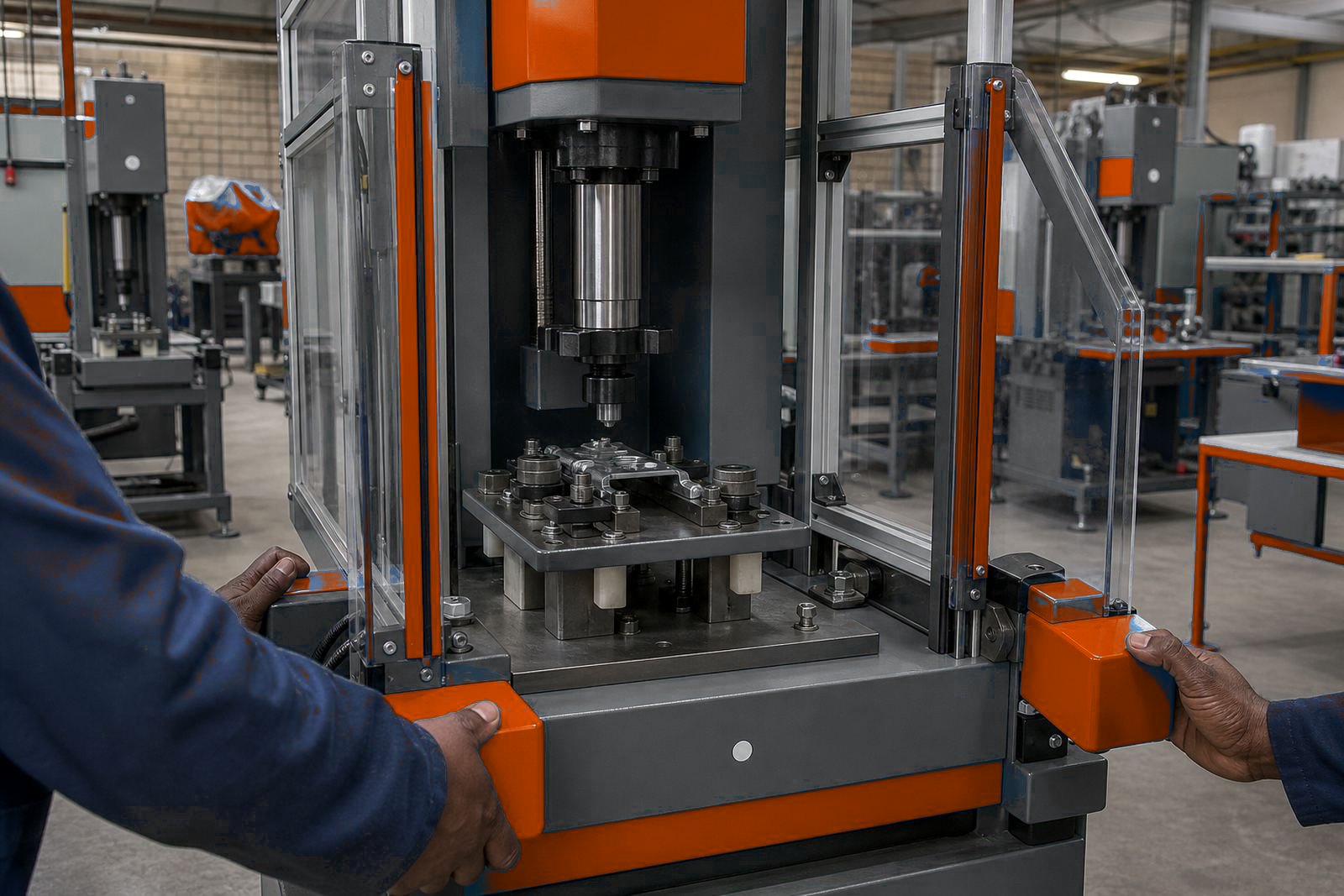
On this kind of work, the press is usually built around a guided ram, a set stroke and a tooling pocket that holds the terminal in position. Air pressure must be matched to the crimp load, the wire size and the terminal shape, otherwise the crimp looks fine but pulls apart under use. For cable harness, appliance, automotive and electrical assembly lines, the machine has to support consistent repetition.
In Isando and on sites across Gauteng, KwaZulu-Natal and the Eastern Cape, we see the same pattern. The job starts with a terminal that needs stable location, then a conductor that must enter cleanly, then a crimp height that stays in range from station to station.
Press stations built around the terminal, not the habit
A proper wire terminal line can use one station for loading and another for the crimp, or a linked setup where the part moves through several positions with clearer control. Stations can be dedicated to ferrules, open barrel terminals, insulated terminals or other repeat crimp parts. The right layout depends on wire length, operator reach and whether the part comes in loose, on a reel or in pre-cut lengths.
Typical equipment in a press set for this work includes:
- Multi-station pneumatic press frame with controlled stroke
- Die set or crimp tool matched to the terminal profile
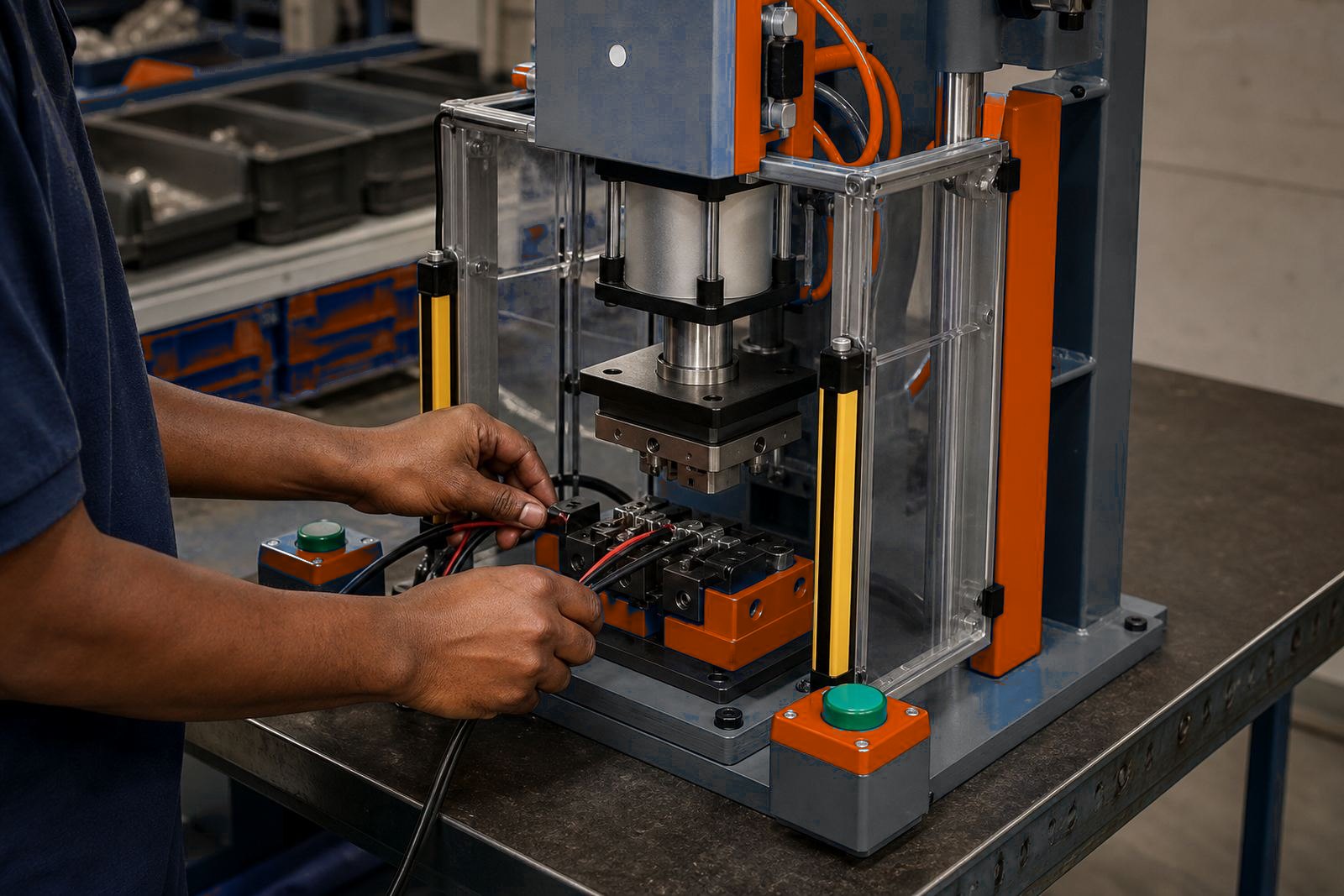
- Part locator or nest for repeat placement
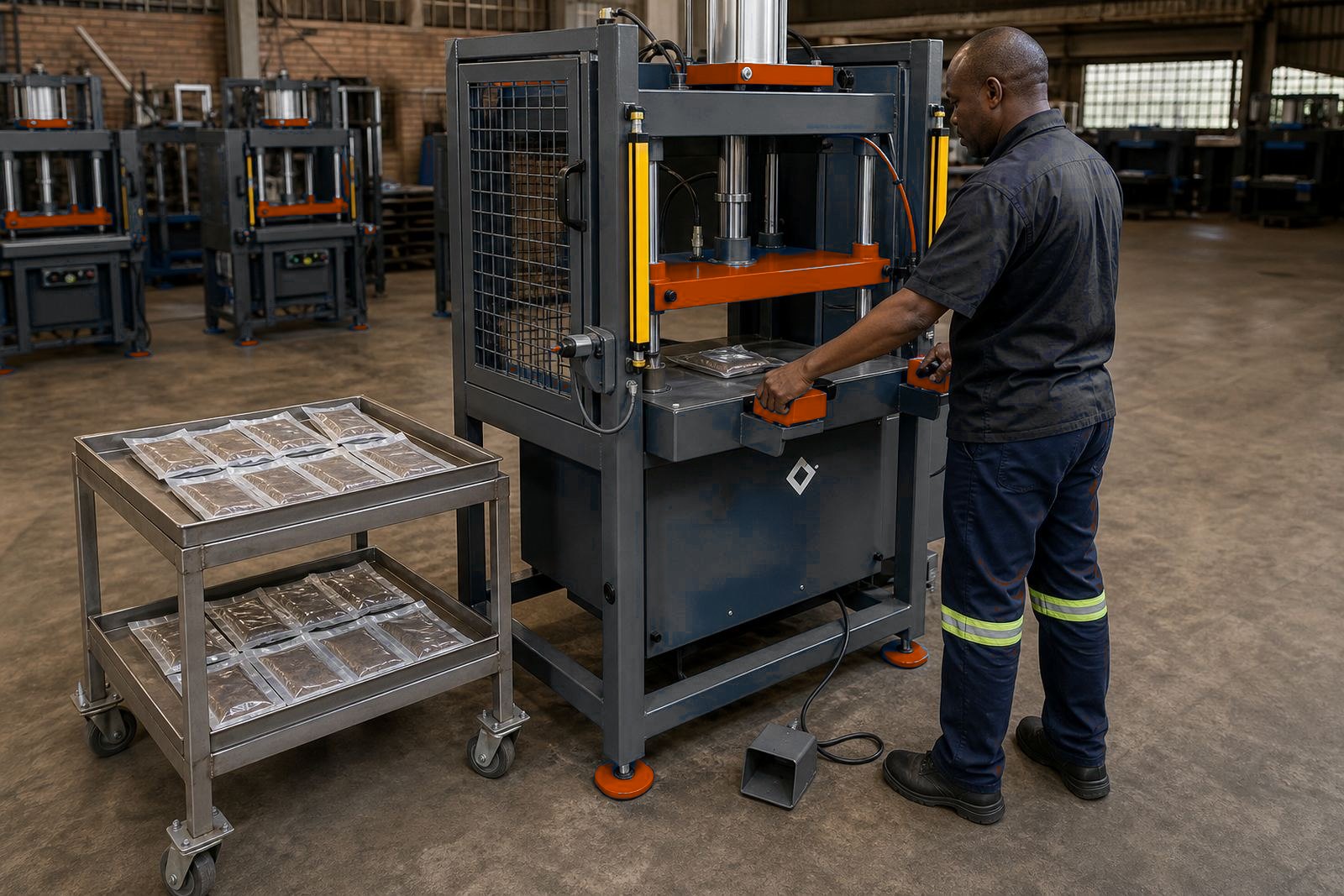
- Two-hand controls where the operator must stay clear of the closing area
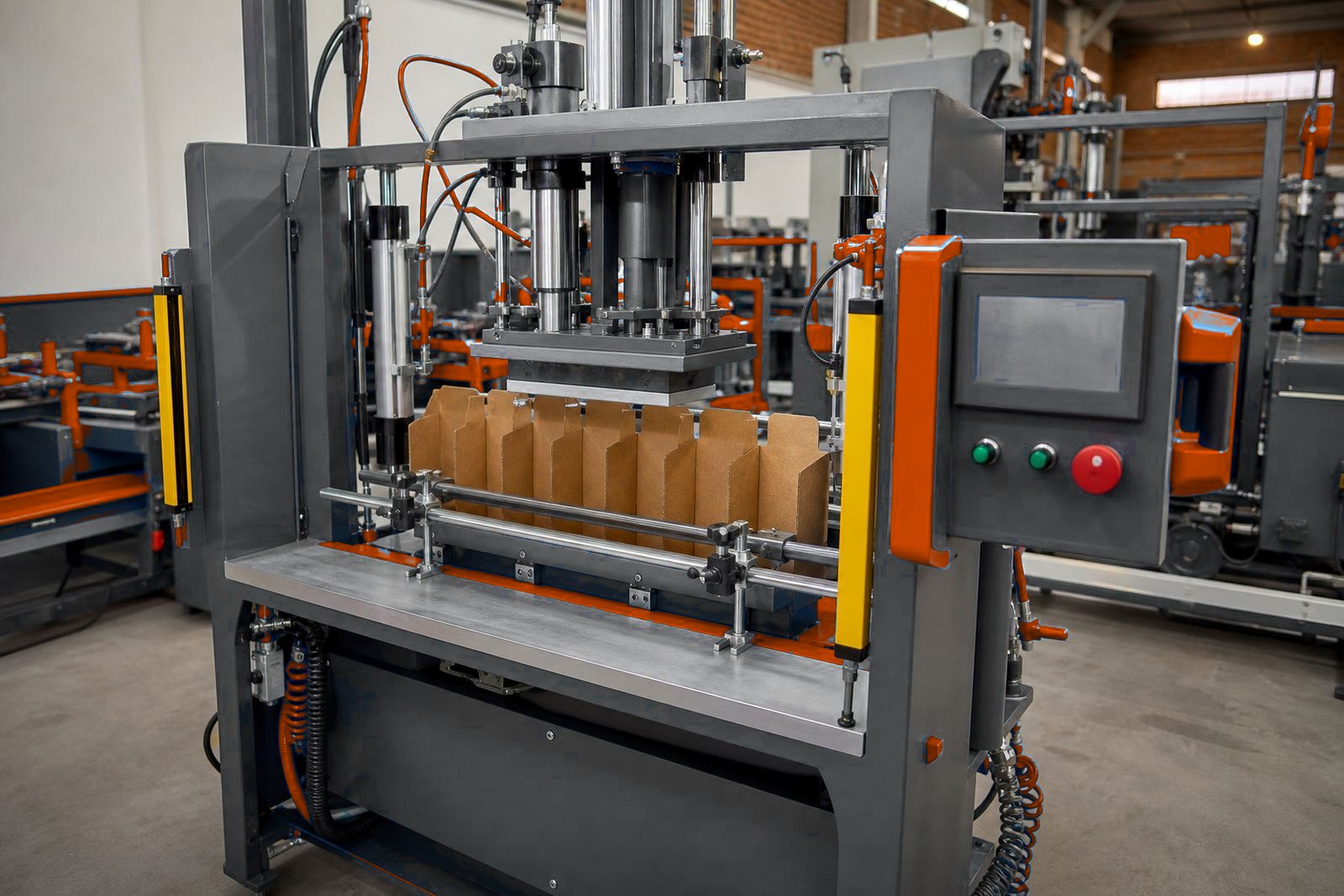
- Light curtain where access needs to be open but monitored
- Guarding around pinch points and moving parts
- Air line setup with correct filtration and pressure control
When the tool is designed properly, the operator should not have to fight the station. The terminal sits where it should, the wire feeds square, and the press closes with the same travel each cycle.
Stroke, pressure and the small details that change the crimp
Wire terminal crimping is sensitive work. A few millimetres of stroke change can leave the crimp too shallow or over-compressed. Air pressure also matters because the press must deliver enough force for the largest terminal in the job set, while still allowing a clean cycle on lighter parts. That balance belongs in the setup and needs careful setting.
We usually look at these points during planning:
- Wire size range and insulation thickness
- Terminal material and barrel depth
- Required crimp height and pull strength target
- Stroke length and return speed
- Tool access for changeover and cleaning
- Noise, guarding and operator position
If the stroke is too long, the terminal can deform or the insulation can be damaged. If it is too short, the conductor may not seat fully. On humid coastal sites, stored terminals and wire ends also need clean handling, because moisture and contamination show up quickly in a crimp line.
Layout notes for a line that has to keep its shape
Crimp stations work best when the material flow is direct. The wire should enter from a direction that does not twist the terminal, and the operator should not have to cross hands over the tooling. If the job moves from preparation to crimping to inspection, the table or base frame needs to support that sequence without clutter.
For higher output lines, we often plan the press so the operator faces the part from one side only, with scrap and finished pieces separated clearly. Guarding should protect the hands but still allow routine tool checks. Where access is open, a light curtain can help keep the stroke safe while maintaining visibility of the part.
Layout mistakes we see most often include:
- Terminal feeding from the wrong side of the station
- Tooling placed too high for the natural hand line
- No space for a clean changeover between wire sizes
- Air lines routed where they get kicked or pinched
- Inspection points hidden behind the press frame
Commissioning, tool setup and operator handling
A wire terminal press only becomes useful after commissioning. That means setting the stroke, checking the air supply, proving the guarding, testing two-hand controls where fitted, and running the first parts through the tooling until the location is stable. Once the machine is on the floor, the operator training has to match the actual job, not a theory version of it.
Our team handles press commissioning, tooling changes and production handover for factories in Johannesburg, Pretoria, Durban, Gqeberha and East London, plus nearby areas such as Kempton Park and Boksburg. The aim is to leave the station clear enough for shift work, maintenance and routine adjustment.
Budget bands for wire terminal crimping stations
Pricing depends on the number of stations, the guarding package, the level of tooling, and whether the job needs fixture design or site installation. A small single-station pneumatic crimp press with basic guarding sits in a different price band from a multi-station line with light curtains, custom nests and on-site commissioning.
As a working guide, the budget can fall into these broad bands:
- Entry-level crimp station with standard tooling: around R85,000 to R160,000
- Multi-station press with custom tooling and guarding: around R180,000 to R420,000
- Higher-spec line with light curtains, integration and training: around R450,000 and upwards
The final figure depends on the wire range, the terminal family, the number of operators and the type of output control needed. A line that looks modest on paper can grow once the part location, guarding and tooling changes are drawn in properly.