When a bracket has to sit square first time
Bracket fastening jobs are rarely just about pushing two parts together. The bracket has to sit in the right place, the work has to stay supported, and the press cycle must put force where the joint wants it, not where the operator happens to hold it.
That is where a multi-station pneumatic press helps. One station can locate the bracket, another can close the fastener, and a third can check form or fit before the part moves on. For pressed brackets used in assemblies, frames, mounts and small fabricated parts, consistent location matters as much as the pressing force itself.
- Use fixed datums on the tooling so the bracket seats the same way each cycle.
- Keep the press throat and table height matched to the bracket depth and flange shape.
- Allow room for hands, part feed and finished part removal without reaching across the tool.
Typical press set-up for bracket fastening lines
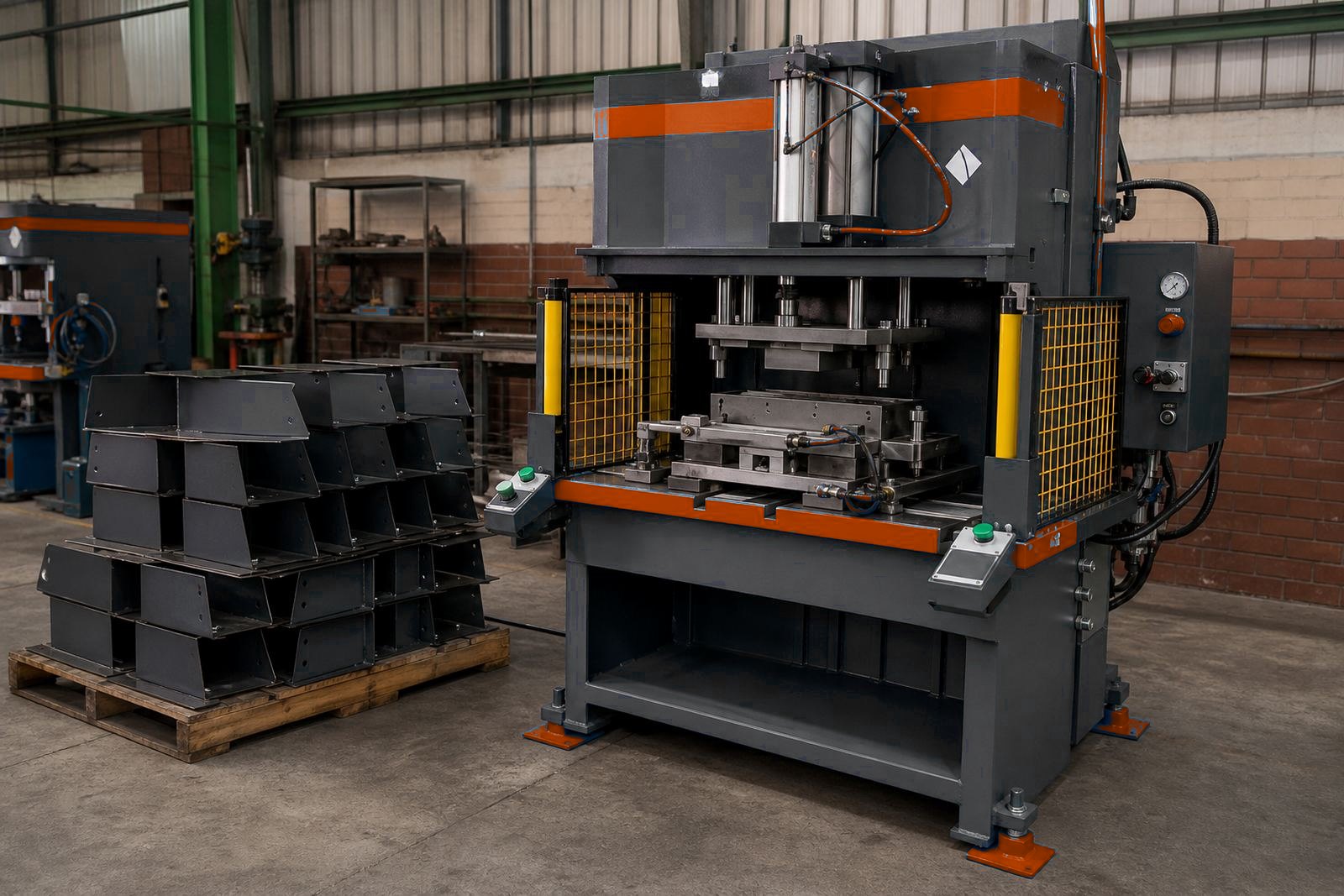
Most bracket fastening stations use a pneumatic cylinder, a guided ram and a purpose-made nest or fixture. Depending on the job, the stroke may be short for shallow clinching or longer where a bracket must be formed before fastening. Air pressure, cylinder bore and stroke length all need to work together, otherwise the joint can lean, crush or leave an uneven mark.
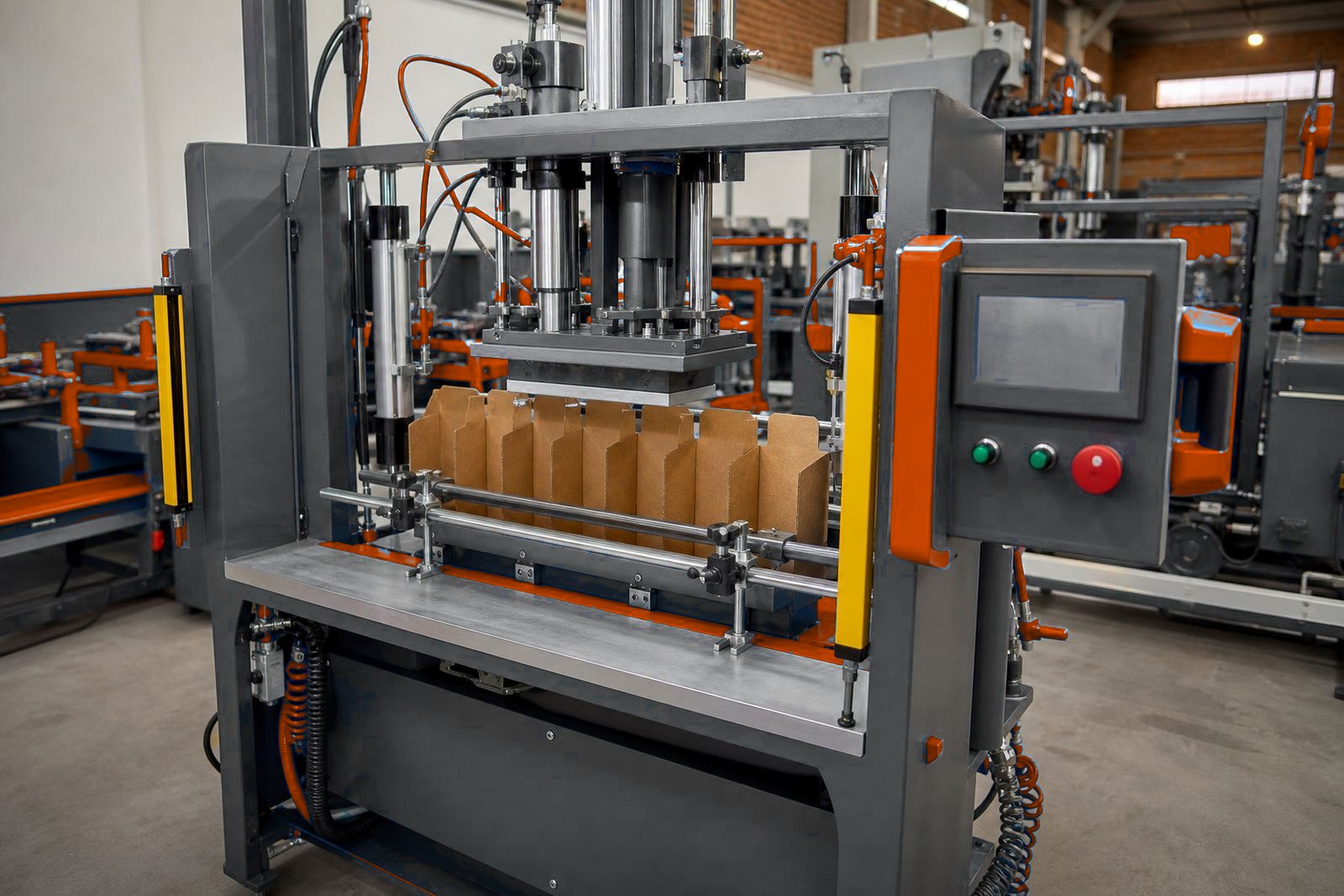
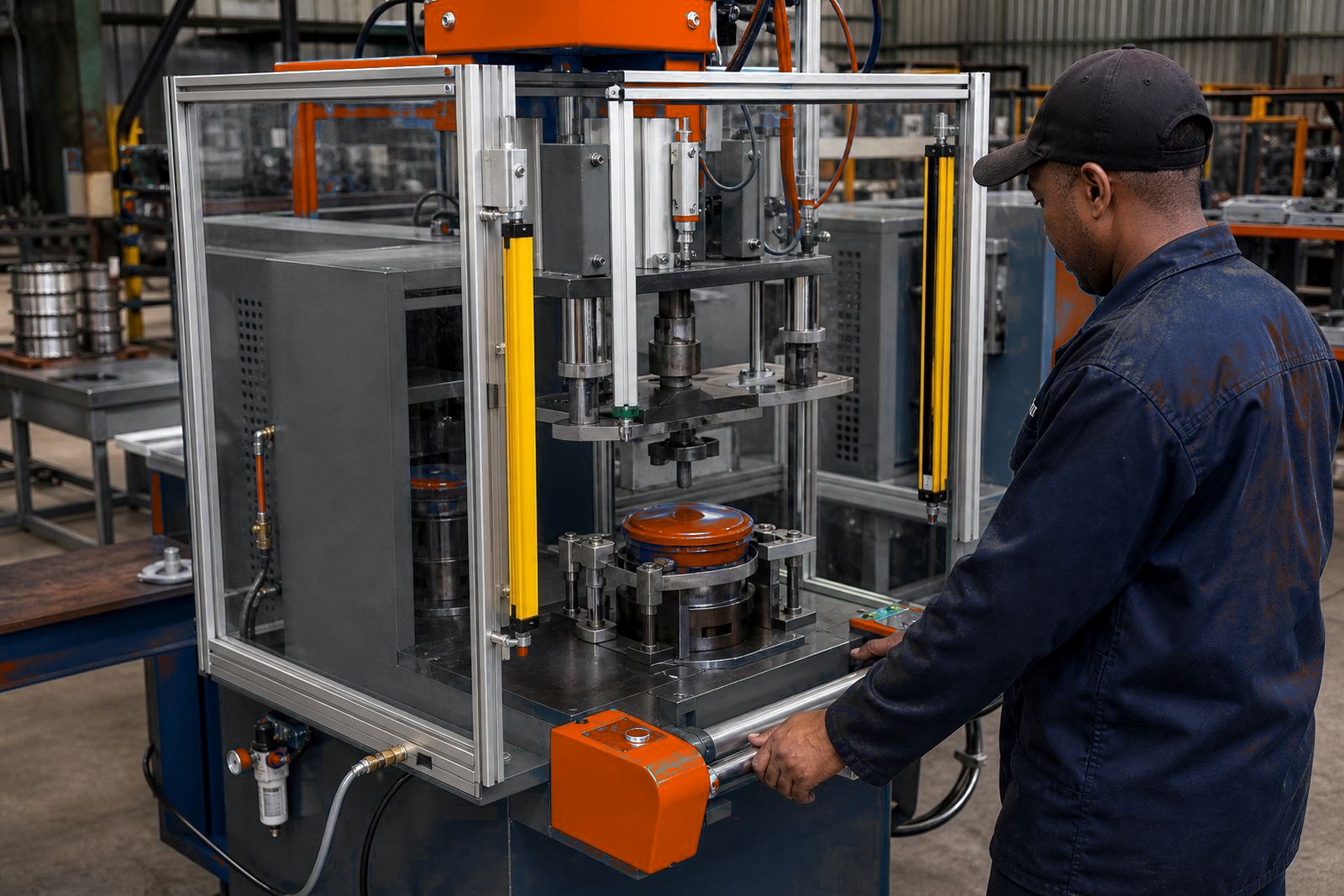
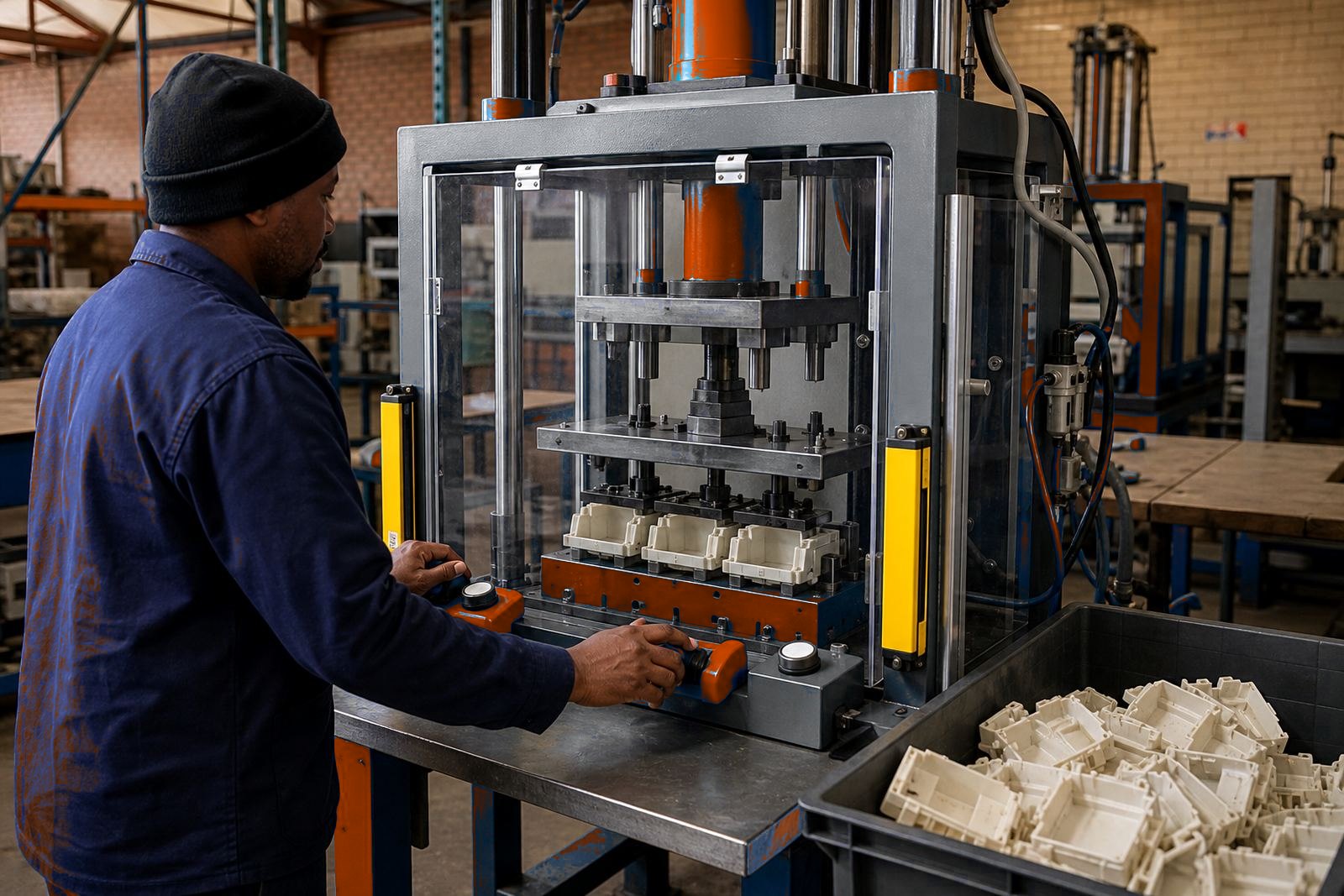
Common equipment around the station includes two-hand controls, light curtains, stroke setting, guarding panels and changeable tooling inserts. If the line carries several bracket types, the tooling should let the operator swap inserts without disturbing the base location. That keeps set-up cleaner when the plant runs mixed work in Johannesburg, Pretoria or further afield on the same day.
- Two-hand controls suit manual loading where fingers must stay clear of the closing zone.
- Light curtains help on open-front stations where visibility is important.
- Custom tooling can support rivets, stakes, small fold forms or simple compression fasteners.
- Air line setup should be sized for stable pressure and clean, dry air at the press.
Layout choices that cut hassle on the production floor
Bracket work often fails at the planning stage, not the press stage. If the bracket enters the tool at an angle, or if the operator has to shuffle the part around before the cycle starts, the station will feel awkward even when the machine itself is sound. Good layout makes the motion obvious: load, locate, clamp, press, remove.
We look at part size, handedness, batch size, the number of operations and how the part moves between stations. In some lines the press sits beside a feeder or conveyor return. In others the station works as a bench unit with a simple tray in and tray out. The right answer depends on bracket weight, hole position and whether the job is fastening only or fastening plus forming.
- Leave enough space for safe loading on the front edge and clear removal at the side or rear.
- Plan tool access for maintenance, not only for production.
- Keep the air supply and control panel easy to reach without placing them in the operator path.
Where bracket jobs usually go wrong
The most common problem is poor location. If the bracket can float in the nest, the fastener may pull off-centre and the finished part will drift from the drawing. A second issue is overstroke. Too much travel can distort thin sections, mark plated surfaces or drive the tool harder than the part needs.
Another mistake is choosing a press station that fits the part but not the hands that work it. If the opening is cramped, the operator slows down and the risk rises. Guarding also gets forgotten until late. Once the line is standing, adding proper guarding or a light curtain can force a redesign that costs more than it should have.
- Do not rely on the operator to correct location by feel alone.
- Do not treat stroke setting as a once-off setting for every bracket.
- Do not leave tooling changes to loose packing pieces and guesswork.
Commissioning, training and the first production run
On a bracket fastening line, commissioning is where the detail matters. The press has to run through a full cycle at the correct pressure, the stop positions must land cleanly, and the tooling has to hold the bracket without scuffing it. We set the stroke, check the air line behaviour, confirm guarding and test the hand controls before the station is handed into production.
Operator training is part of that handover. The team needs to know how to load the bracket, how to spot a misfeed, what to watch on the first piece and when to stop the line. Where a bracket changes shape across different jobs, the changeover routine must be clear or the station will drift from one shift to the next.
Budget bands for bracket fastening stations in Rand
Budget depends on station count, guarding, tooling complexity and whether the line needs installation on site. A single bracket fastening station with basic fixtures and controls will sit in a different range from a multi-station press with light curtains, changeable tooling and production handover support. The bracket shape itself can push the price up fast if the nest needs fine location or special support points.
For planning purposes, South African factories often look at three broad bands. A basic single-station unit may start in the low hundreds of thousands of Rand. A more involved multi-station set-up with custom tooling and guarding usually moves into a middle band. Larger lines with commissioning, training, site installation and multiple bracket variants can run higher still. Exact pricing depends on stroke, force, station count and the level of automation around the press.
- Basic single-station bracket tooling and controls: lower budget band.
- Multi-station press with guarding and two-hand controls: mid budget band.
- Custom line with commissioning, operator training and production handover: higher budget band.