Where carton closure pressure starts to matter
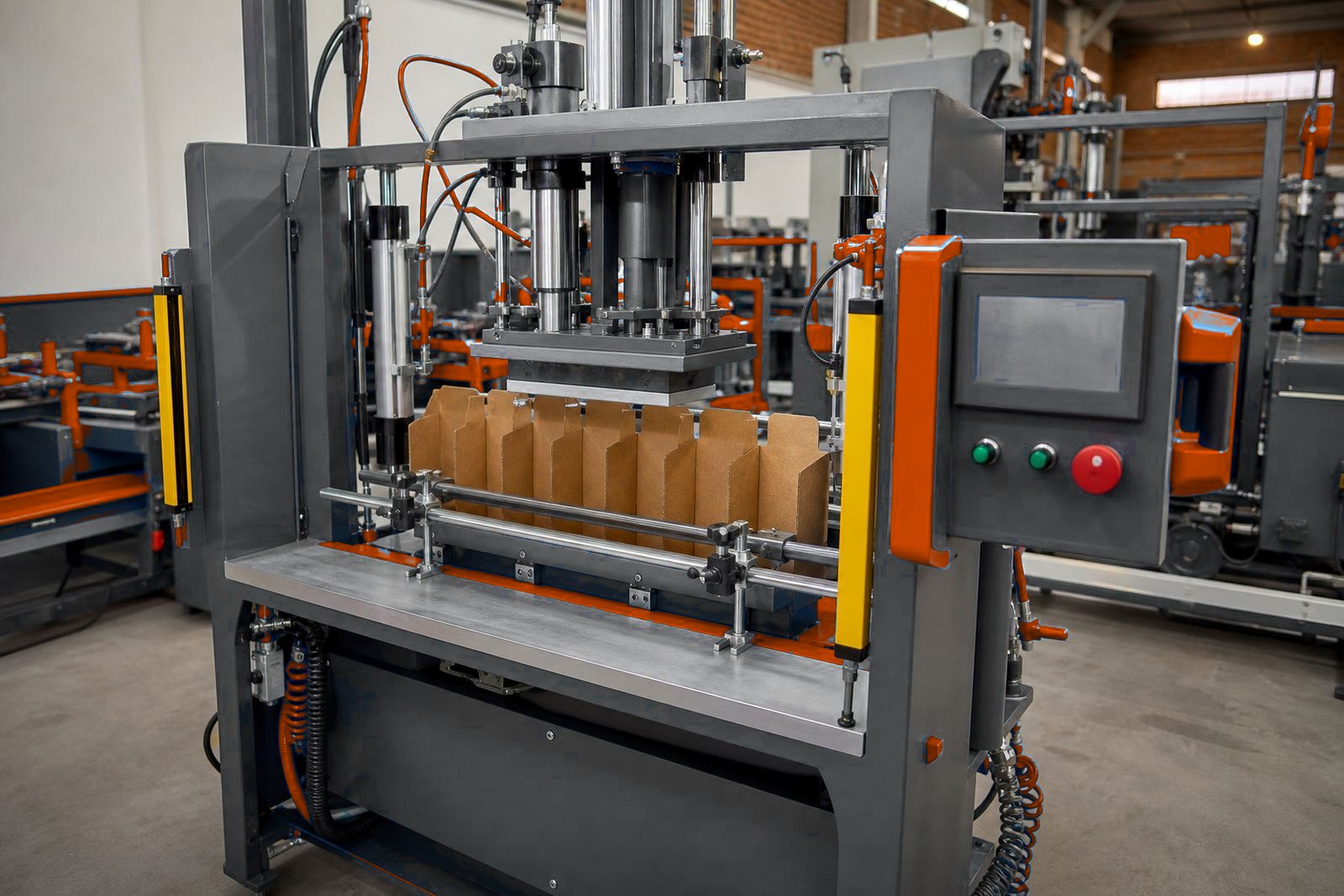
Carton closure pressing is not only about squeezing flaps shut. In many plants the carton arrives partly formed, with tabs that need a firm repeat press so the lock sits flat and the panel edges stay aligned. That work shows up on folding lines, pack-out tables and end-of-line stations where operators need a controlled push rather than a loose hand press. When the closure is too light, the tab springs back or rides high. When it is too heavy, the board marks, crushes or twists at the seam.
A pneumatic press suits this kind of task because the press station can be set for a defined stroke and air pressure, then repeated across the shift with less variation. The station can be built as a single position or as a multi-station unit where one carton is loaded, pressed and moved on in sequence. In many Isando and Ekurhuleni workshops the need is not high force, it is steady force at the right point on the carton.
For carton closure lines, the useful detail is how the press meets the product. Flat face tooling works for simple closure panels, while shaped tooling helps on tabs, corner locks and cartons with a raised centre line. If the carton stock is sensitive to humidity, especially in coastal or damp storage conditions, the tooling face and pressure setting need even more care so the board does not buckle after pressing.
What a workable press set usually includes
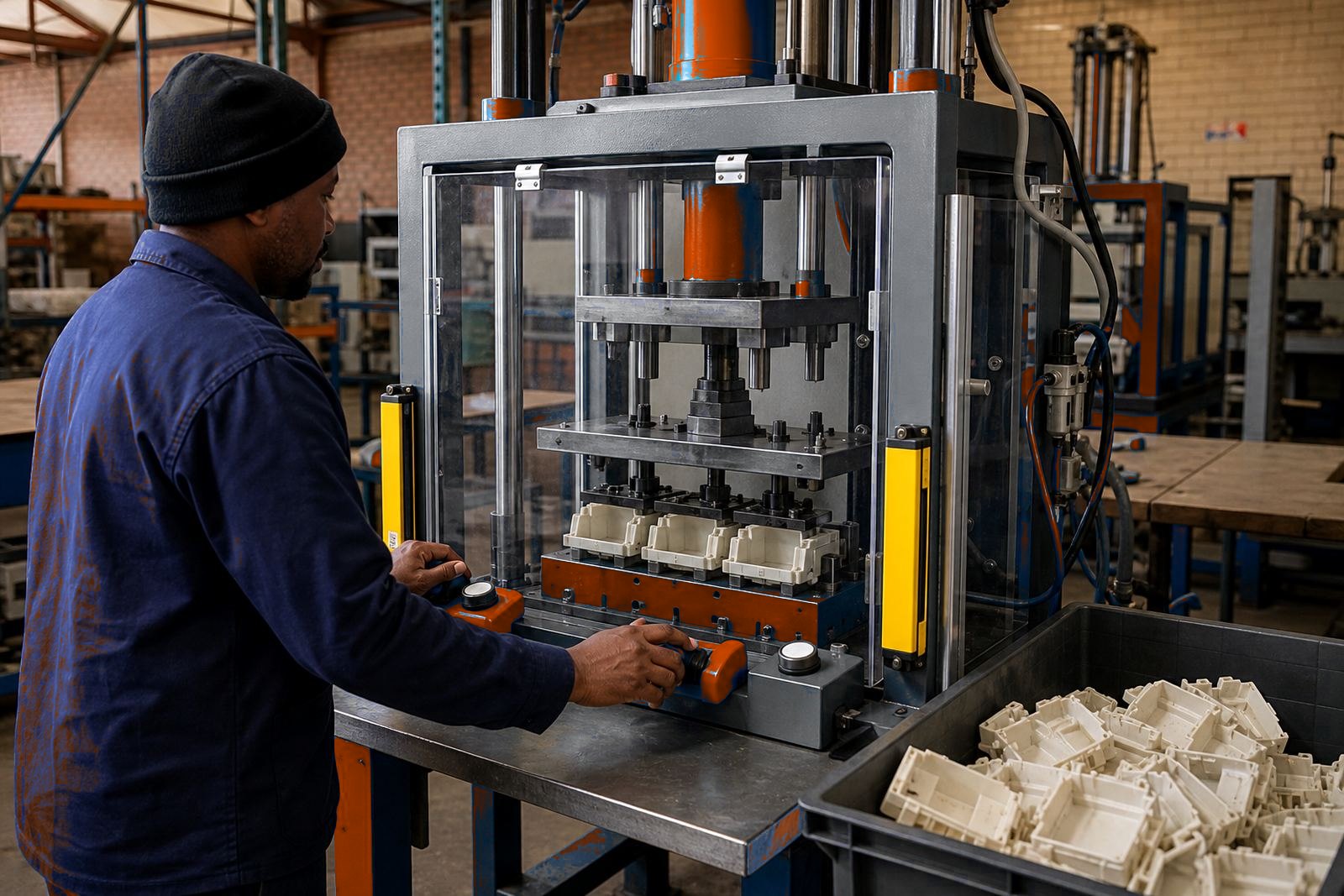
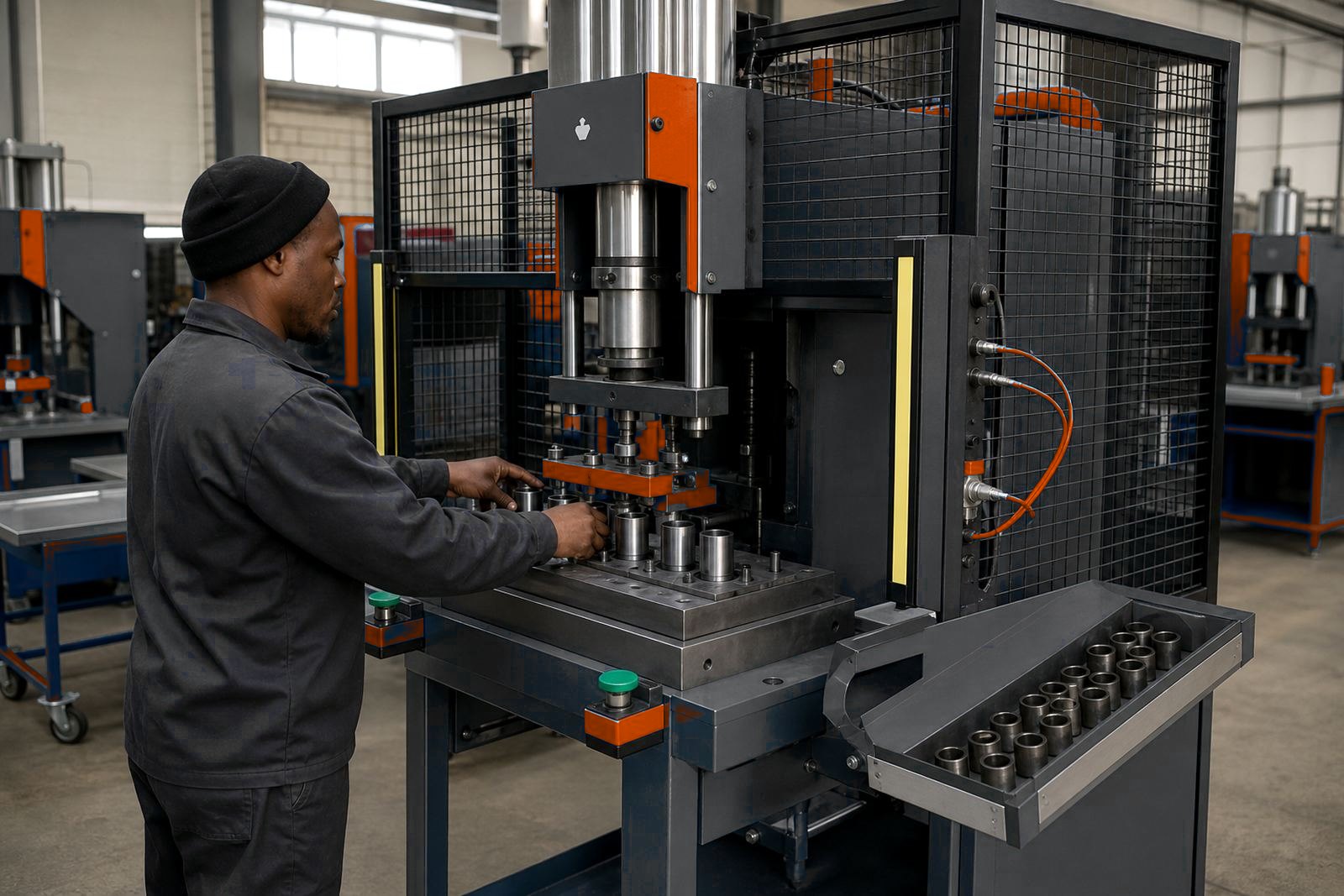
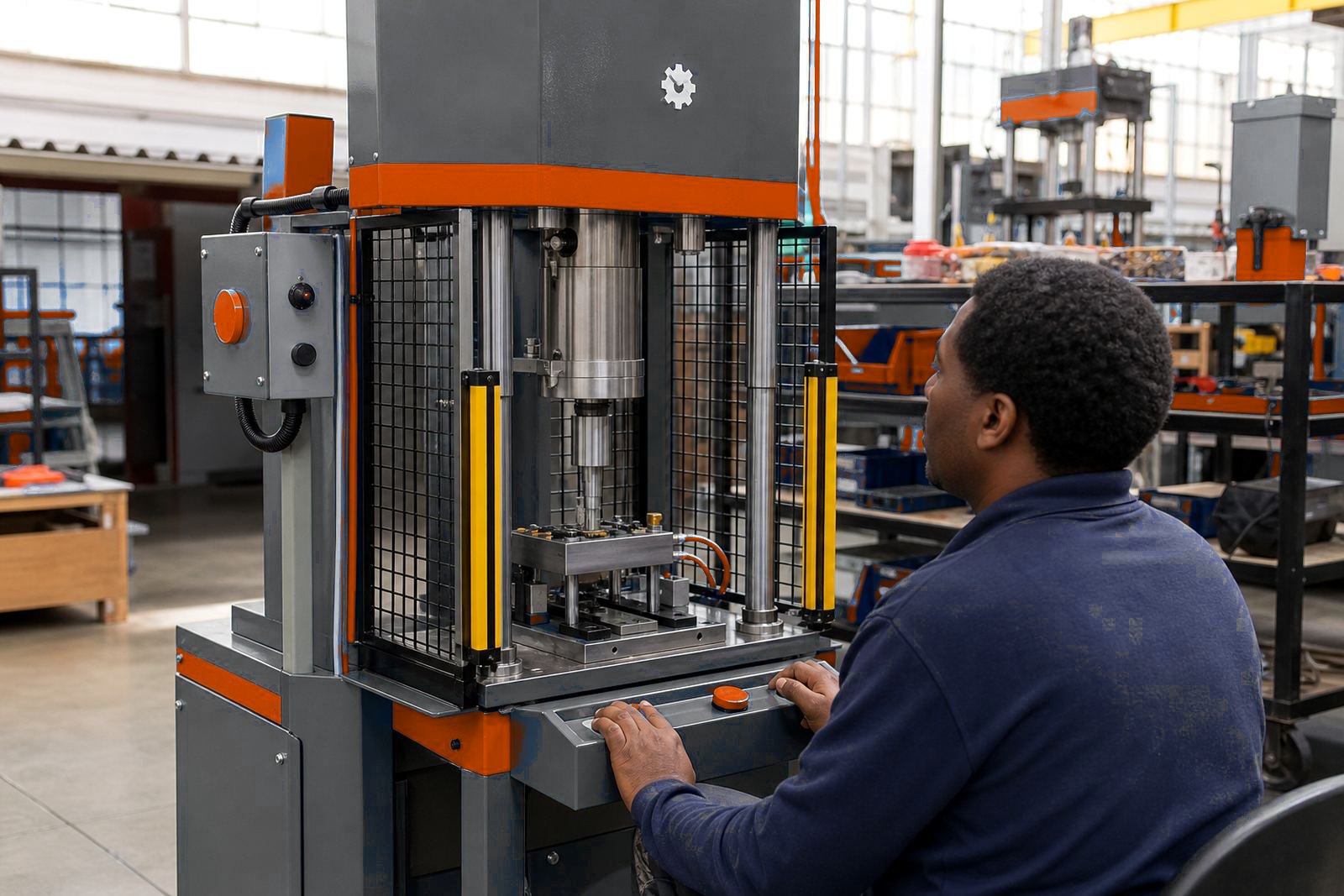
A practical carton closure set is usually made up of a frame, one or more pneumatic cylinders, a controlled press head and guides that keep the carton in the right place. The station may include two-hand controls where the operator loads with both hands clear, then starts the cycle only when the carton is seated. Light curtains are useful where the opening is wide or where the station sits close to a conveyor and hands need clear protection around the press zone.
- Press station with fixed or adjustable tooling
- Pneumatic cylinder sized for the carton load
- Stroke setting for a shallow or deeper closure press
- Air pressure regulation to match board grade and closure type
- Two-hand controls for safer manual loading
- Light curtain integration where access control is needed
- Simple guides or fixtures to hold carton position true
Where cartons vary in height or flap shape, a changeable tooling face helps. Some lines need a broad pad for a wide closure, while others need a narrow profile to reach into the tab area. Presses used for carton closure can also be combined with adjacent tasks like light crimping or pack sealing, if the station layout allows the operator to move the product in one smooth sequence.
Layout choices that keep the line moving
The layout should follow the carton path, not force the carton to bend around the machine. If the closure happens after filling, the press usually sits near the pack-out point or at the end of a conveyor. If the carton is hand-loaded, the station needs a comfortable working height and enough table area for the operator to orient the box without leaning across the tool. In tighter Johannesburg and Pretoria floors, that often means keeping the press compact and placing controls where the working hand naturally reaches.
Multi-station units help when the same closure is repeated in steps or when one operator must handle more than one motion. A first station may pre-seat the tabs, while the next station applies final pressure. On longer runs, a simple feed-and-exit arrangement reduces handling marks and keeps the carton edges square. The airflow supply also matters. If the line runs several pneumatic devices, the air line setup should be planned so pressure at the press remains stable when other tools cycle.
Before final placement, the workshop team should look at carton size range, board thickness, closure style and how often the product changes. A good layout leaves enough room for tooling changes and maintenance access, because a press that cannot be reached safely becomes awkward very fast.
The mistakes that show up on carton lines
Most carton closure faults are ordinary and costly at the same time. The press is too strong, the stroke is too long, or the carton is not supported under the closure point. Sometimes the tooling is flat when the closure needs a formed profile, so the tab slides instead of locking. Another common issue is a station that works on one carton size but tears the edge on a slightly smaller one.
- Setting the air pressure by feel instead of testing the board
- Using one tooling face for several carton shapes
- Placing the press too far from the loading point
- Leaving the operator to guide fingers near the press opening
- Ignoring flap memory after storage in humid conditions
- Skipping stroke checks when carton height changes
Guarding and control choice matter here. A carton closure press is often worked at speed, so the operator may try to reach in early if the cycle is awkward. Two-hand controls and light curtains help, but only if the fixture and stroke are set correctly. A neat pressing action with poor access still causes trouble. The best result comes when the mechanism, tooling and carton dimensions are matched before production starts.
Rand budget bands for this type of station
Carton closure pressing jobs can sit at very different budget levels depending on size, tooling complexity and whether the station is part of a single bench or a longer production line. A simple manual-load pneumatic press with plain closure tooling may fall into a lower bracket, while a multi-station build with guarding, light curtains, fixture work and commissioning will be priced higher. If the line needs production handover, operator training and site installation across more than one area, that also needs to be allowed for in the project figure.
As a broad working guide, smaller carton closure stations can begin in the tens of thousands of Rand. More involved line stations with custom tooling, two-hand controls, air line setup and guard integration often move into the low to mid hundreds of thousands of Rand. Full line work, especially where several stations are linked for assembly, crimping or pack sealing, can extend beyond that depending on the tool geometry and the number of positions involved.
For budgeting, it helps to separate the press frame, the tooling, the guarding and the commissioning work. That way the plant team can see where the cost sits and where later changes may be needed if carton sizes shift or a new closure format is added.
How the project is usually planned on the shop floor
Carton closure projects work best when the carton sample, board thickness and closure style are on the table early. The tooling designer can then shape the press face, set the stroke and plan the support points around the product. On live factory floors in Kempton Park, Boksburg and Isando, the practical question is often whether the press can sit beside existing pack lines without forcing extra lifts or awkward turns.
A sound plan usually includes the following:
- Carton sample review and closure measurement
- Tooling design for the actual tab or flap shape
- Guarding or light curtain choice for the access point
- Air pressure and stroke setting for the board grade
- Installation, commissioning and operator training
- Tool change method where carton sizes vary
Once the station is in place, the production team needs a clear handover on settings, safe loading and what to watch for when the board changes. If the closure starts marking, springing open or leaning to one side, the problem is usually at the setup stage, not in the carton itself.