When a snap fit stops being a hand job
In light assembly, snap fits often look forgiving until the line starts moving. One operator may seat a clip neatly, another may tip a housing, and a third may overpush a part until the retaining features deform. A pneumatic press takes that variation out of the operator’s hands and puts the effort into a controlled stroke.
For South African factories, the real value is not only force. It is repeatability across shifts, steadier part depth, and a cleaner fit on plastic housings, covers, bezels and small sub-assemblies. Where the joint needs a firm but measured push, the press gives a set stroke and a consistent end position.
- Common uses include panel snaps, clip seating and trim assembly.
- Press force is matched to the part.
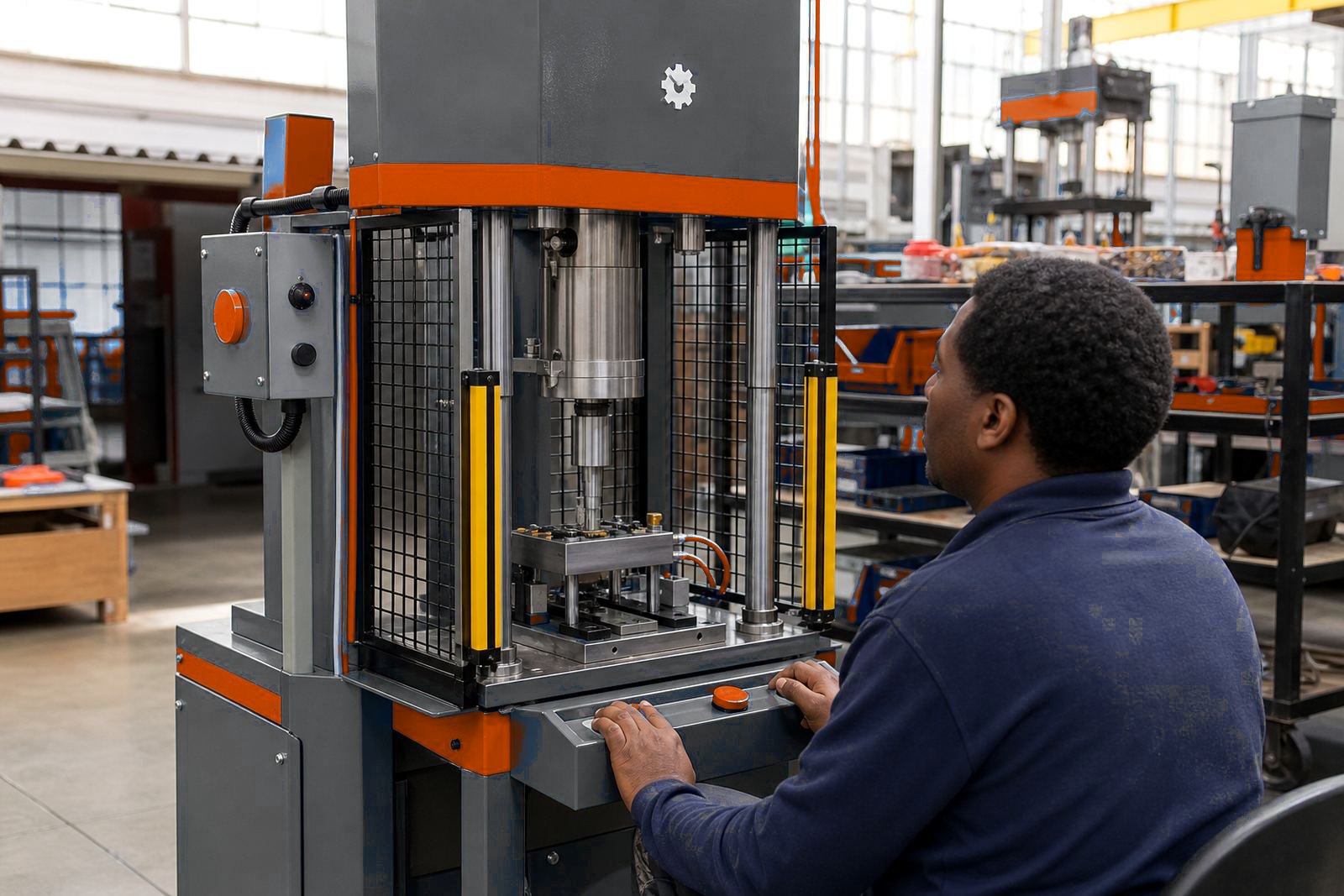
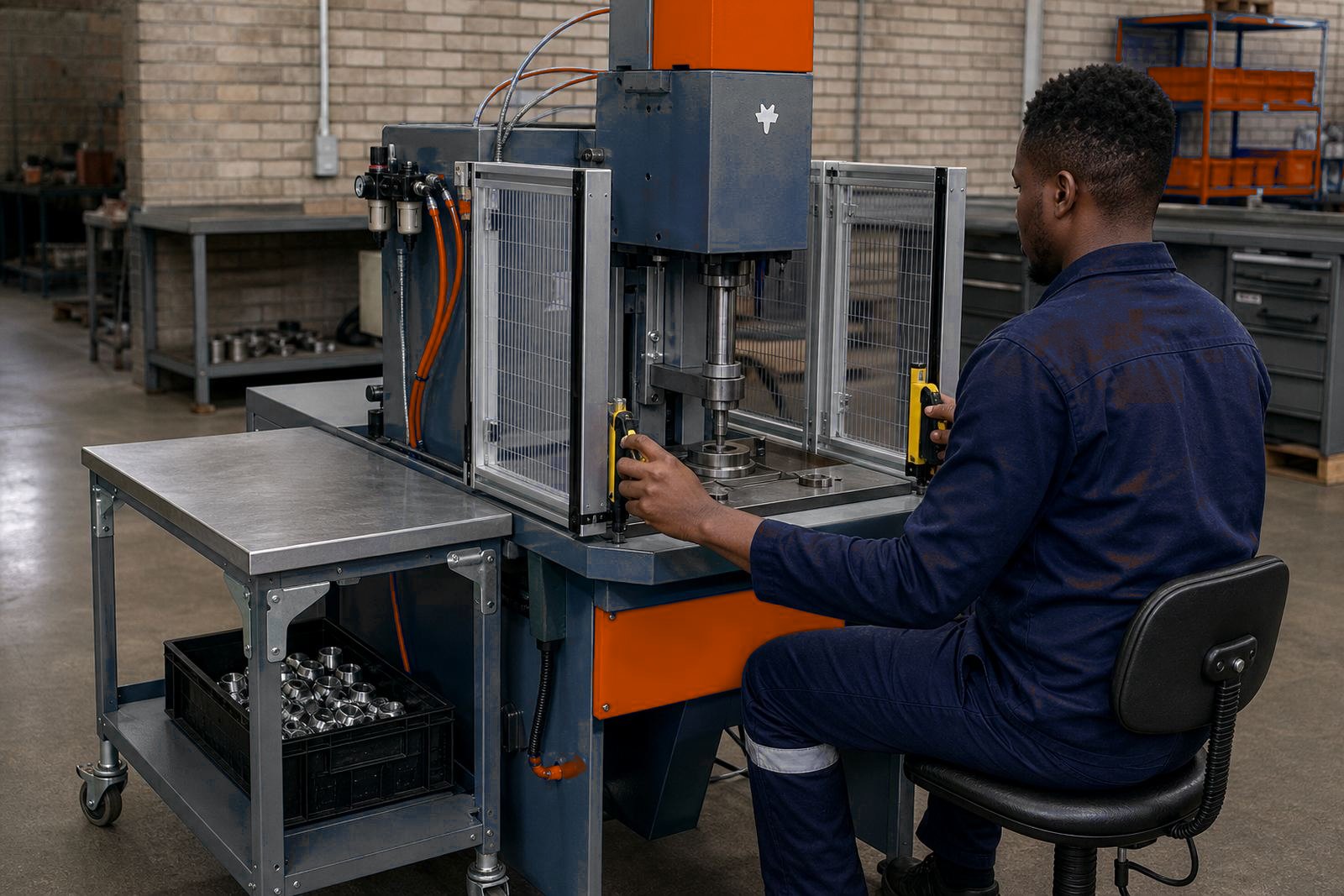
- Two-hand controls help keep the operator clear of the tooling zone.
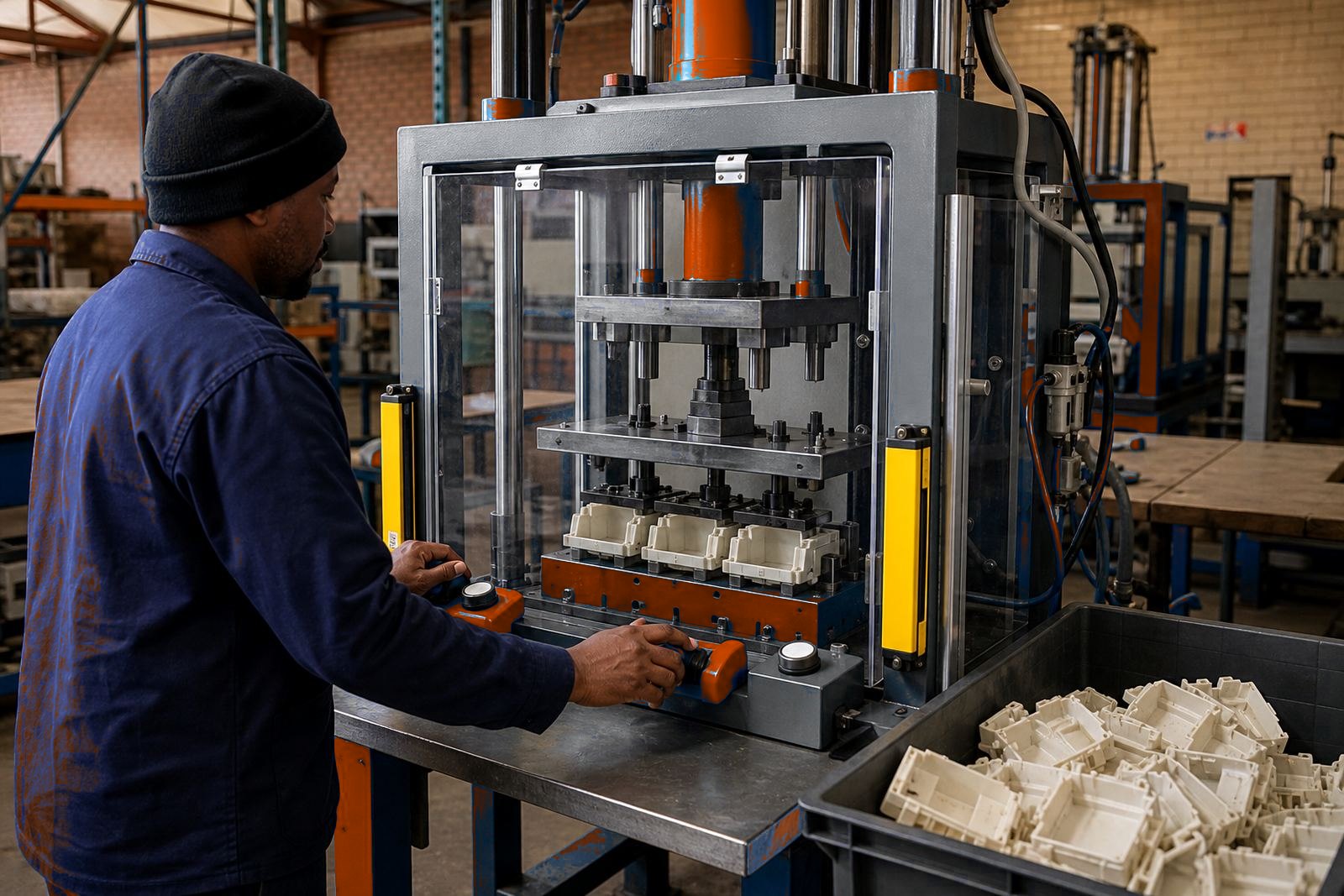
- Light curtains can add protection where the layout suits them.
The usual equipment set around a snap fit station
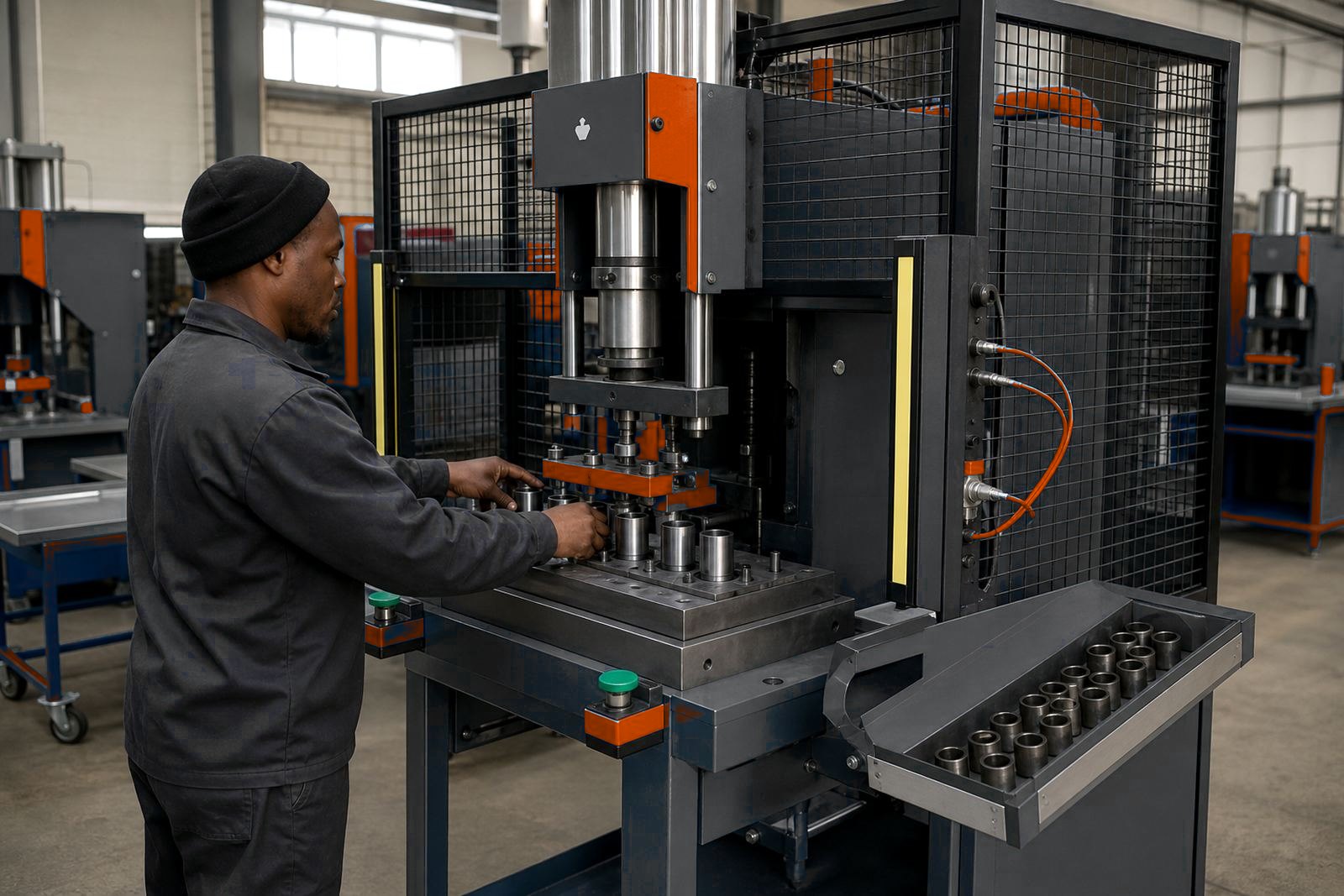
A basic station normally starts with a press frame, a pneumatic cylinder, a tooling nest and a control system that matches the duty. For snap fit work, the tooling matters as much as the cylinder. A good nest supports the part evenly, keeps the join square and prevents the clip from sliding off line during the downstroke.
Stroke length, air pressure and pad design all need to work together. Some parts only need a short stroke with modest air pressure, while larger housings need more travel to bring all latches home at once. In many cases the operator loads the part, checks location against the fixture and starts the cycle with two-hand control, while the tooling carries the alignment.
- Single-station and multi-station presses can both suit snap fit assembly.
- Custom nests help with fragile plastics and mixed part shapes.
- Stroke setting keeps the press from over-travelling into the part.
- Guarding and light curtains depend on the access needed at the station.
Layout and planning that save trouble later
Snap fit work usually looks compact, but the station still needs space for safe loading, part flow and maintenance access. If the tooling loads from the front, there must be room for the operator’s hands, the guard opening and the part tray. If the line uses multiple stations, the transfer path between stations should be planned early so parts do not twist or catch while moving through the sequence.
Air supply also deserves attention. Stable pressure and clean lines help the press keep its cycle repeatable, especially on shifts where the station runs for long periods. In a humid coastal plant, it is worth keeping the air line setup tidy and dry, because moisture in the line can upset the feel of the cylinder and shorten the life of small components.
Commissioning should cover stroke setting, tooling alignment, cycle timing and the operator’s loading method. If the part is delicate, the first test pieces should be checked for scuffing, clip damage and incomplete seating before the line is signed off for production.
Where snap fit projects go wrong
Most snap fit problems come from trying to force a part that should be guided. If the nest is loose, the clip meets the joint at an angle. If the stroke is too long, the press keeps moving after the joint has seated. If the air pressure is set high to solve a bad fit, the part may still look closed while hidden damage builds inside the assembly.
Another common issue is poor handoff between the tooling designer and the production team. A nest that looks correct on paper can still be awkward to load, and a station that works for one operator may slow the rest of the shift if the reach is clumsy. Training matters here, because a well-set press still depends on the person loading the part and checking the finished fit.
- Misaligned nests lead to bent clips and uneven closure.
- Overstroke can crush ribs, tabs or thin wall sections.
- Poor guarding often slows the station more than the press itself.
- Unclear operator steps lead to mixed results across shifts.
Budget ranges that fit real production choices
For snap fit assistance, the budget usually follows the station count, the tooling detail and the safety package. A straightforward single-station press with basic guarding and one nest sits at the lower end. A multi-station line with transfer handling, custom tooling, two-hand controls and light curtain integration needs a larger allowance because each station has its own setup and testing needs.
As a practical range, basic snap fit stations can start at around R85,000 to R180,000, depending on the tooling and guarding. Multi-station systems for fuller assembly lines often sit between R220,000 and R650,000, while more specialised layouts with several nests, site installation and detailed commissioning can move beyond that. Tooling changes, production handover and later alterations should also be carried in the project plan, not treated as afterthoughts.
Those figures shift with part size, air requirements and how much control the line needs over seating depth. A shop floor in Isando does not ask the same things of a station as a coastal packing line in Durban, and the budget should reflect that difference.
What our team usually covers on a snap fit job
At MultiPress, snap fit work often brings together custom tooling, fixture design, guarding builds and press commissioning in one package. Pieter Sauls oversees the direction of the job, Thandiwe Matlala keeps the project flow organised, and Musa Hartnick shapes the tooling around the part instead of forcing the part around the machine. Johan Ramokgopa handles workshop detail, while Lerato Moagi manages commissioning on site and Anele Engelbrecht leads operator training once the station is ready.
That mix matters when a plant needs one machine to do a small, exact job every cycle. The press must close cleanly, the operator must be able to load it safely and the finished assembly must hold its shape when it leaves the station. Where the work stretches across Johannesburg, Pretoria, Durban, Gqeberha, East London, Kempton Park or Boksburg, the same practical approach applies: plan the tooling, set the stroke, prove the fit and train the people who will run it.