When bushings start drifting in by hand
Loose alignment shows up fast on a line that fits bushings into brackets, housings, clevises or small assemblies. A hand push may work on the odd sample, but on volume work the bushing can tilt, shave material, sit proud or pick up a burr that ruins the next stage. In coastal areas and humid stores around Durban or Gqeberha, light corrosion on tooling and parts can make that problem worse if the process is not controlled properly.
A pneumatic press gives the operator a fixed action and a repeatable stop. The job is usually set up with a guided ram, a bush or locating nest, and a punch or seating tool cut to the bushing profile. Where the part is thin or the bore is delicate, the tooling does the holding, not the operator's hands, and that is the difference between a neat press fit and scrap.
- Common parts include flanged bushings, plain sleeves, small inserts and nylon or metal bearings.
- Typical jobs need enough stroke to clear the part and enough daylight for loading.
- Controlled air pressure matters when the bushing wall is thin or the parent material is soft.
The press layout that keeps the fit square
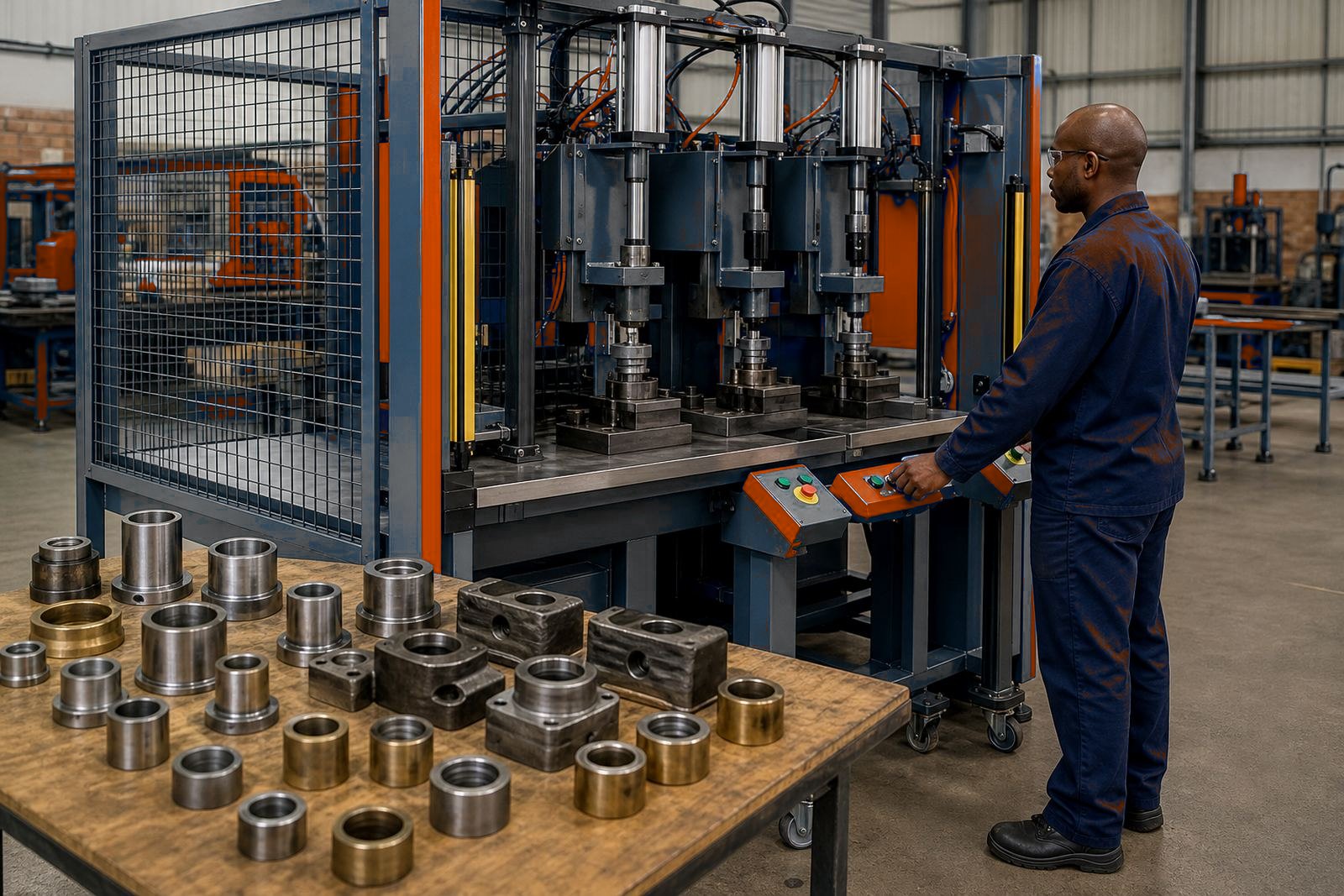
For bushing insertion, the station count depends on how the line runs. Some factories use one station for insertion and another for checking projection, while others combine loading, pressing and ejection across two to four stations. On a larger assembly line, a multi-station frame allows one side to seat bushings, another to handle rivets or staking, and a third to move the part along without crowding the operator.
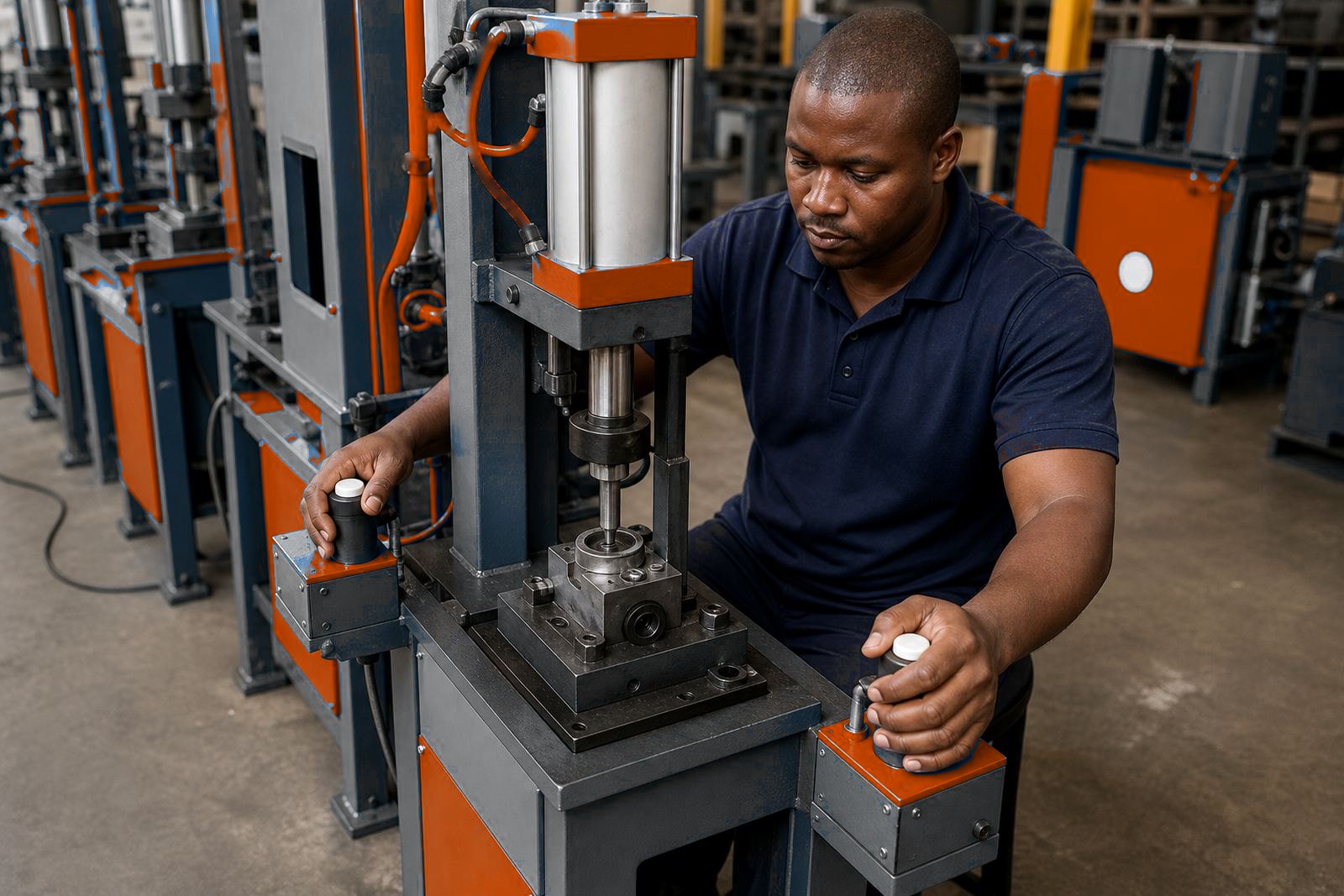
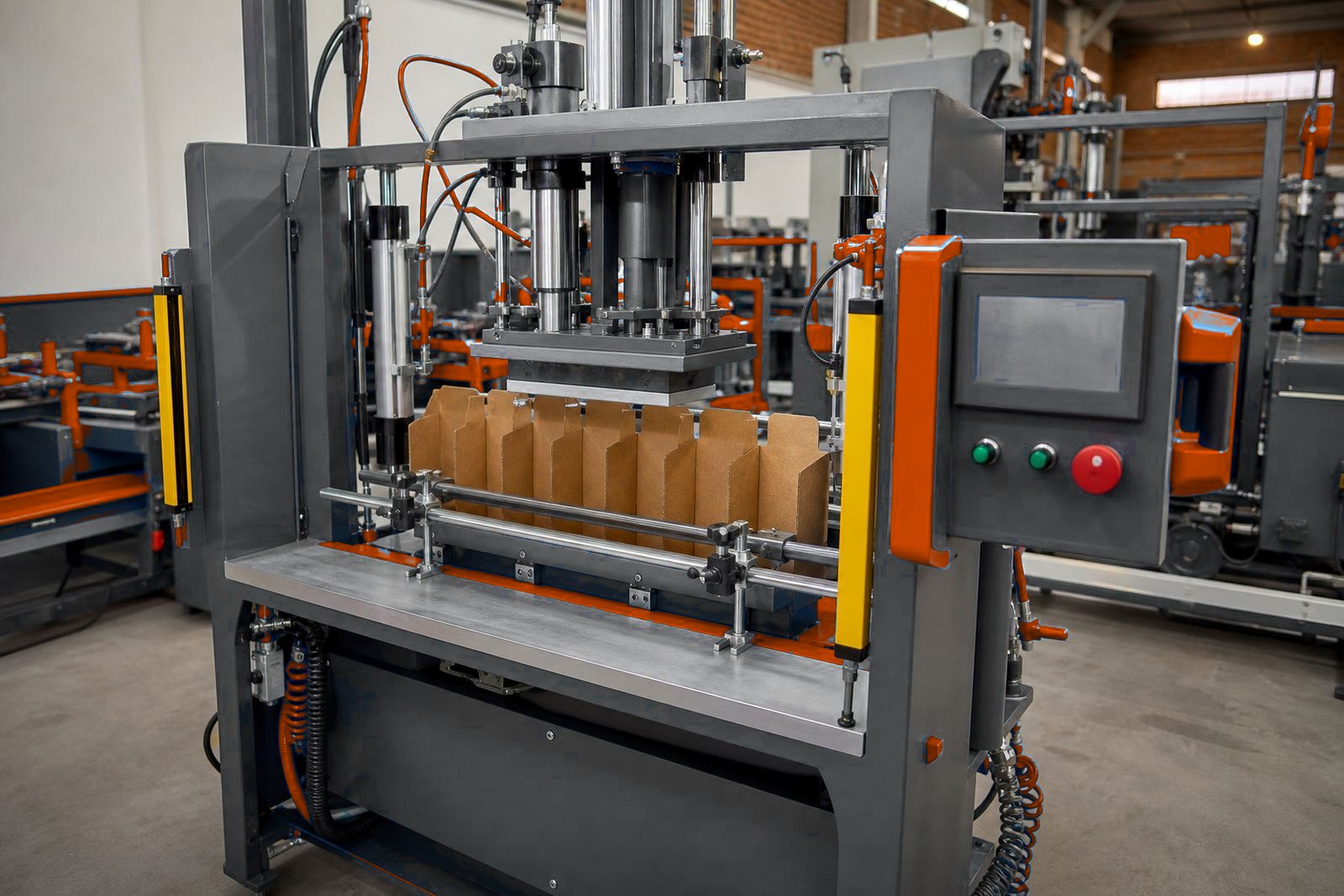
Stroke setting is not something to leave until later. If the stroke runs too far, the ram can overdrive the insert or bruise the face of the component. If it is too short, the bushing may look seated but still sit high. Two-hand controls are often fitted where the operator must keep both hands clear of the point of operation, and a light curtain is used when the loading position opens up the front of the machine. Guarding should suit the actual reach and the actual part path, not only the frame size.
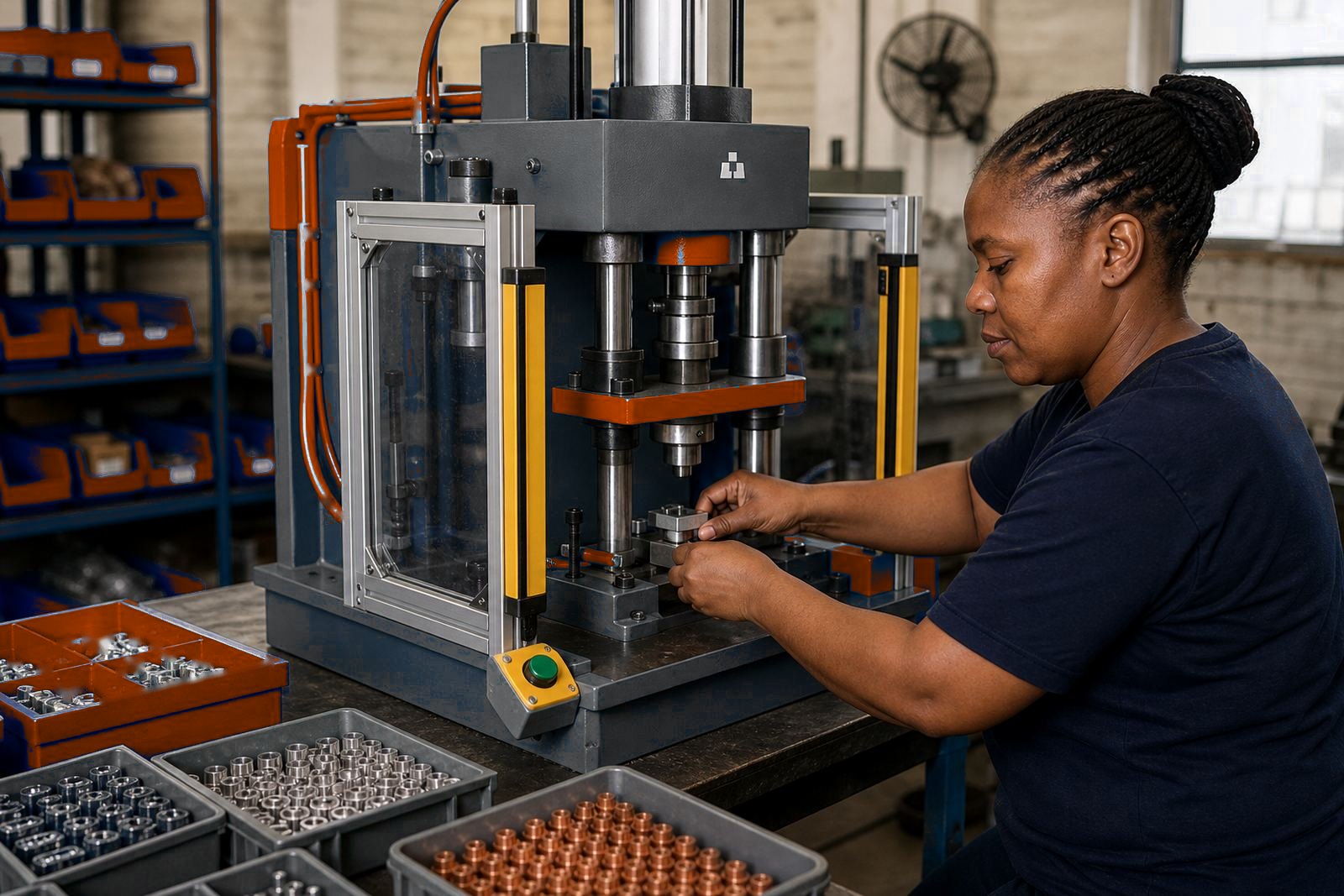
Tooling design follows the hole, the lead-in and the finish requirement. A good bushing tool carries the part straight, holds it centred during the first touch, then releases cleanly at the bottom of stroke. That is where custom tooling matters, because a standard punch does not suit every bore, chamfer or shoulder depth.
- Guided cylinders help keep side load down on the ram.
- Footprint planning must leave room for loading trays, rejects and finished parts.
- Air supply should be clean and dry, with pressure stable enough for repeated seating.
Planning a station for your actual part flow
Most bushing jobs fail on the floor before they fail in the drawings. The part may arrive oily, the bore may vary, or the operator may have to twist the assembly too far before loading. That is why layout work needs a real sample, not only a sketch. We look at how the part enters, where the bushing sits, how it is supported underneath and whether the press has to work vertically or at a slight offset.
On some jobs, a single-station press is enough for small batches or simple assemblies. On higher volumes, a two or three station arrangement gives better flow and can separate insertion from inspection. If the bushing is part of a larger sub-assembly, the same frame can often take a second tool set later for crimping, staking or pack sealing, as long as the stroke and guarding are planned with that future work in mind.
Site installation also needs attention to the air line setup. Long runs, poor filtration or undersized pipework will show up as sluggish movement and uneven seating. At a plant in Isando or Kempton Park, a neat air supply and a clear operator position usually save more trouble than any fancy control panel.
Mistakes that show up after the first few hundred parts
Some errors are small in the workshop and expensive on the line. A bushing can be seated with the right force but the wrong support, which leaves witness marks or distorts the parent part. Another common mistake is overbuilding the tooling so the operator has to fight the load-in angle every cycle. If the job needs a part flip between stations, that hand motion must be counted in the cycle.
Guarding is often treated as a last step, but the guard must match the tooling height, the hand access and the eject path. Light curtains are useful where access is open, yet they must be set up around the real motion envelope. Two-hand controls suit some insertion tasks better than others, especially where the operator should not be reaching into the bed area. For a bushing press, the better question is not only whether the machine is guarded, but whether the guard still allows the load and unload method to work cleanly.
- A loose nest lets the part walk during insertion.
- Wrong stroke setting can seat the bushing too deep or too shallow.
- Poor air preparation can cause inconsistent press force.
- Missing operator training leads to quick workarounds and worn tooling.
Budget bands for a bushing insertion line
The cost depends on stations, tool complexity, guarding, controls and how much site work is needed. A straightforward single-station pneumatic press for bushing insertion, with basic tooling and local setup, can sit in the lower budget band, often from about Rand 85,000 to Rand 180,000. Once you add custom nests, two-hand controls, light curtains and proper commissioning, the project commonly moves into the Rand 180,000 to Rand 420,000 range.
Multi-station frames with several tools, production handover support and more involved fixture design can move higher, especially where the line needs special loading angles or changeover parts. For bigger assembly work, a project can range from about Rand 420,000 to Rand 900,000 or more, depending on station count and the amount of guarding and tooling detail. Those figures are broad, but they help frame a real discussion before drawings are frozen.
Maintenance should also be budgeted. Bushings, guides, seals and wear pads do not last forever, and a line that runs daily in humid or dusty conditions will need periodic checks. A solid setup keeps those costs predictable rather than letting them arrive as a shutdown problem.
Commissioning, training and the handover on the floor
Once the press is installed, the real work is making it behave the same way on every shift. Commissioning covers stroke setting, pressure adjustment, cycle checks, guard verification and a trial run with live parts. If the bushing is sensitive to force or depth, we check the seating mark, the projection and the feel of the loading sequence before the line is released.
Operator training matters because a good tool can still be mistreated in a hurry. The team needs to know how to load the part square, what to watch on the first press, when to stop the cycle and how to recognise tool wear. We also cover tooling changes, because a station that can take a bushing today may need a different insert or guide tomorrow if the production mix changes.
Our work across Johannesburg, Pretoria, Durban, East London and Gqeberha includes plant visits, commissioning support and production handover for factories that need insertion work tied into a wider assembly line. For bushing insertion, the aim is a stable cycle, a square fit and tooling that does not need constant correction.