When a gasket has to sit flat first time
Gasket seating jobs usually look easy until the line runs at pace. A housing may be aluminium, steel, plastic or a mixed assembly, and the gasket can shift if the part is not held square. On a pneumatic press, the part sits in a support nest while the ram comes down under controlled air pressure. That gives a steadier seat than hand pressure and helps keep the gasket line even around corners, recesses and shallow grooves.
For factories in Isando, Kempton Park and the wider Ekurhuleni area, the real issue is repeatability. The press must suit the gasket profile, the housing depth and the way operators load parts during a shift. If the stroke is too long, the gasket can crush. If the stop is too high, the seal line stays proud and the assembly may leak or feel loose.
What a gasket seating station usually carries
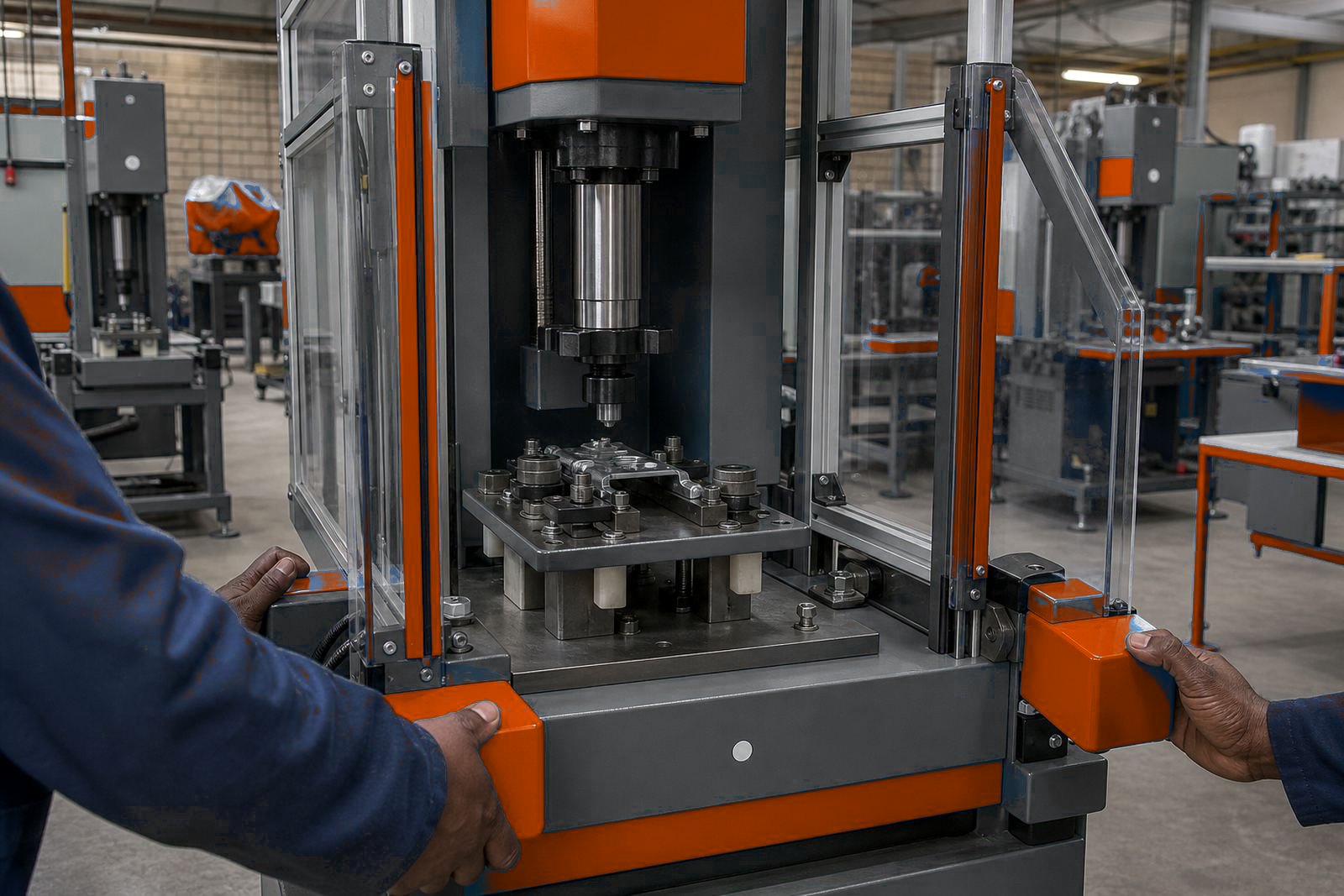
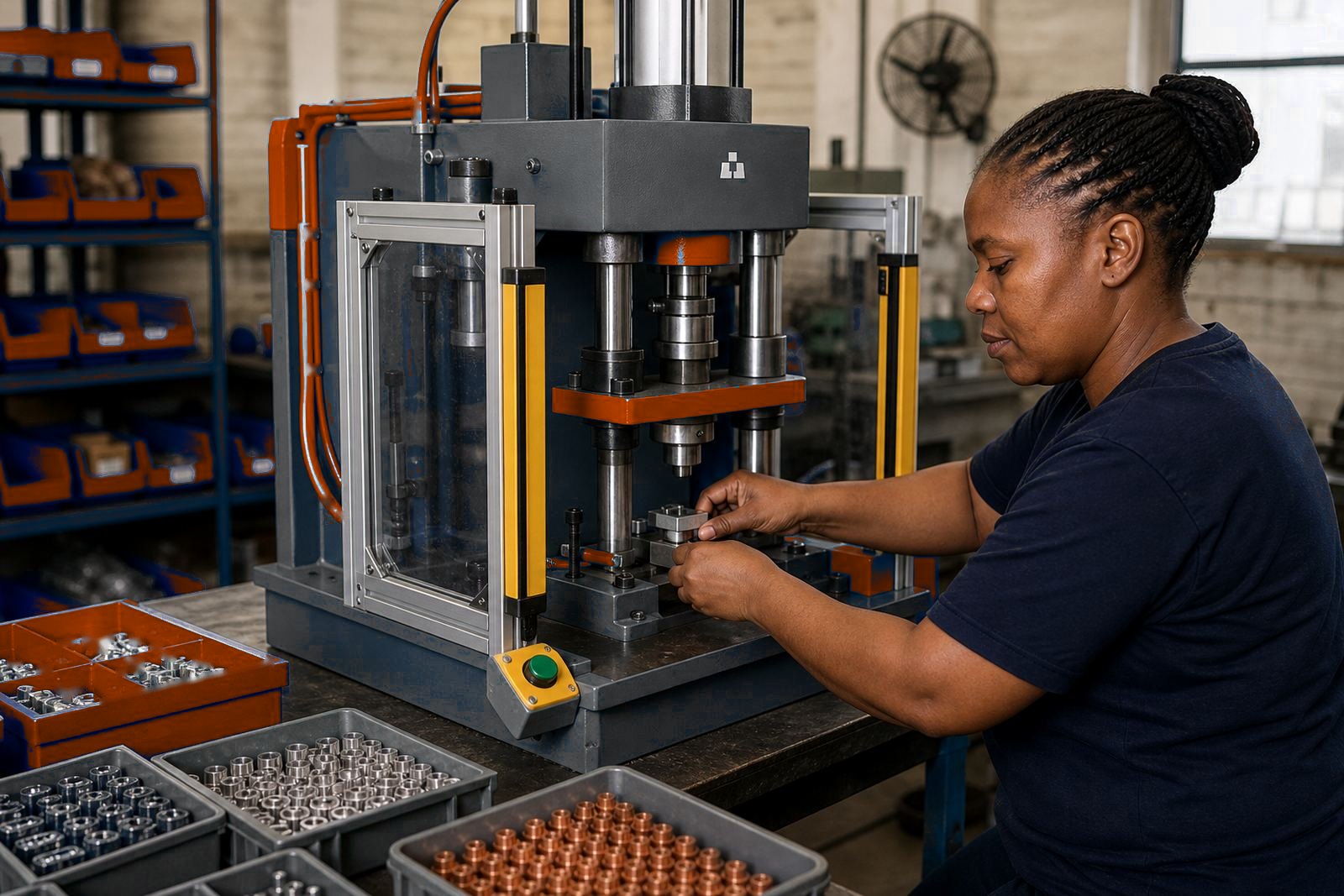
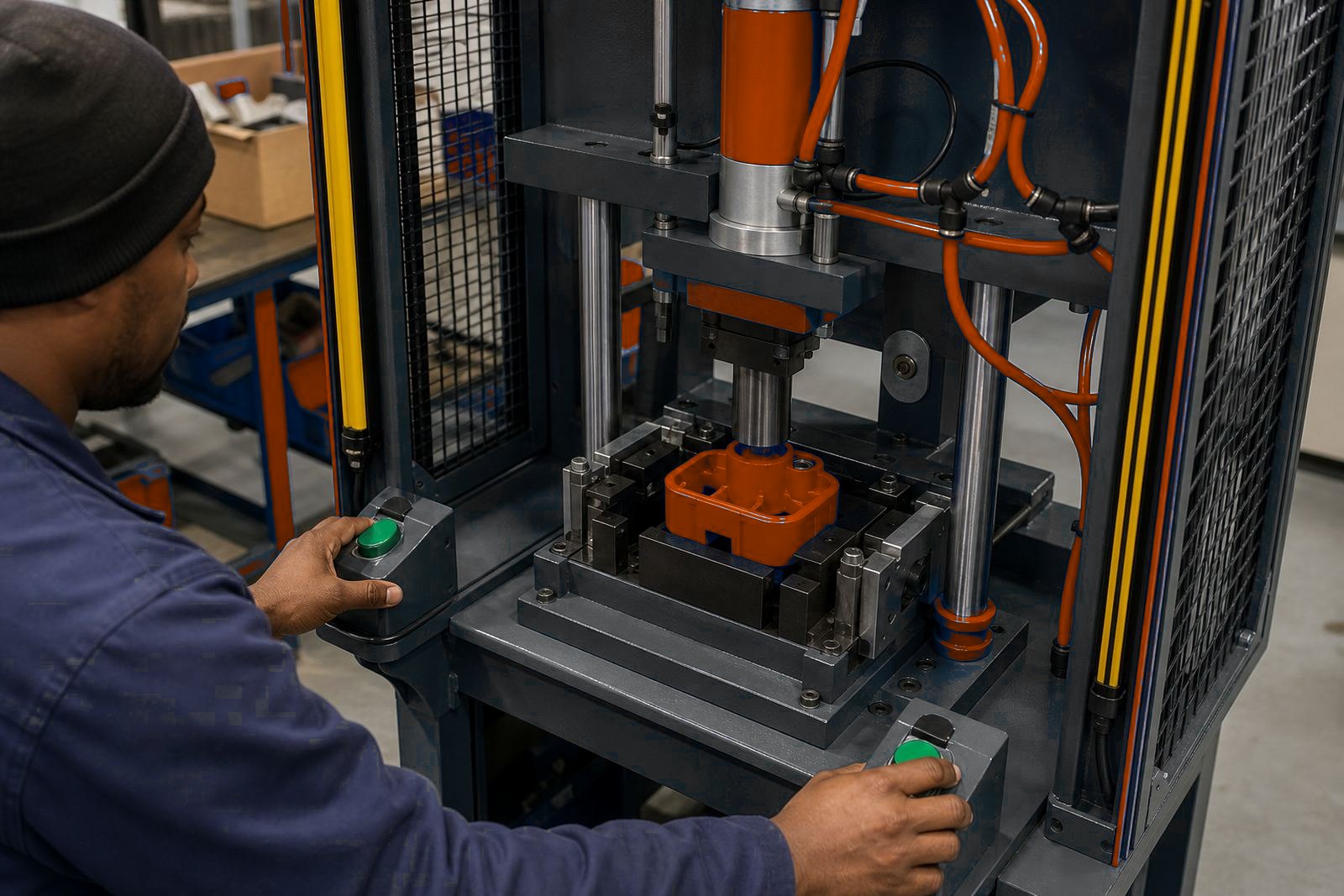
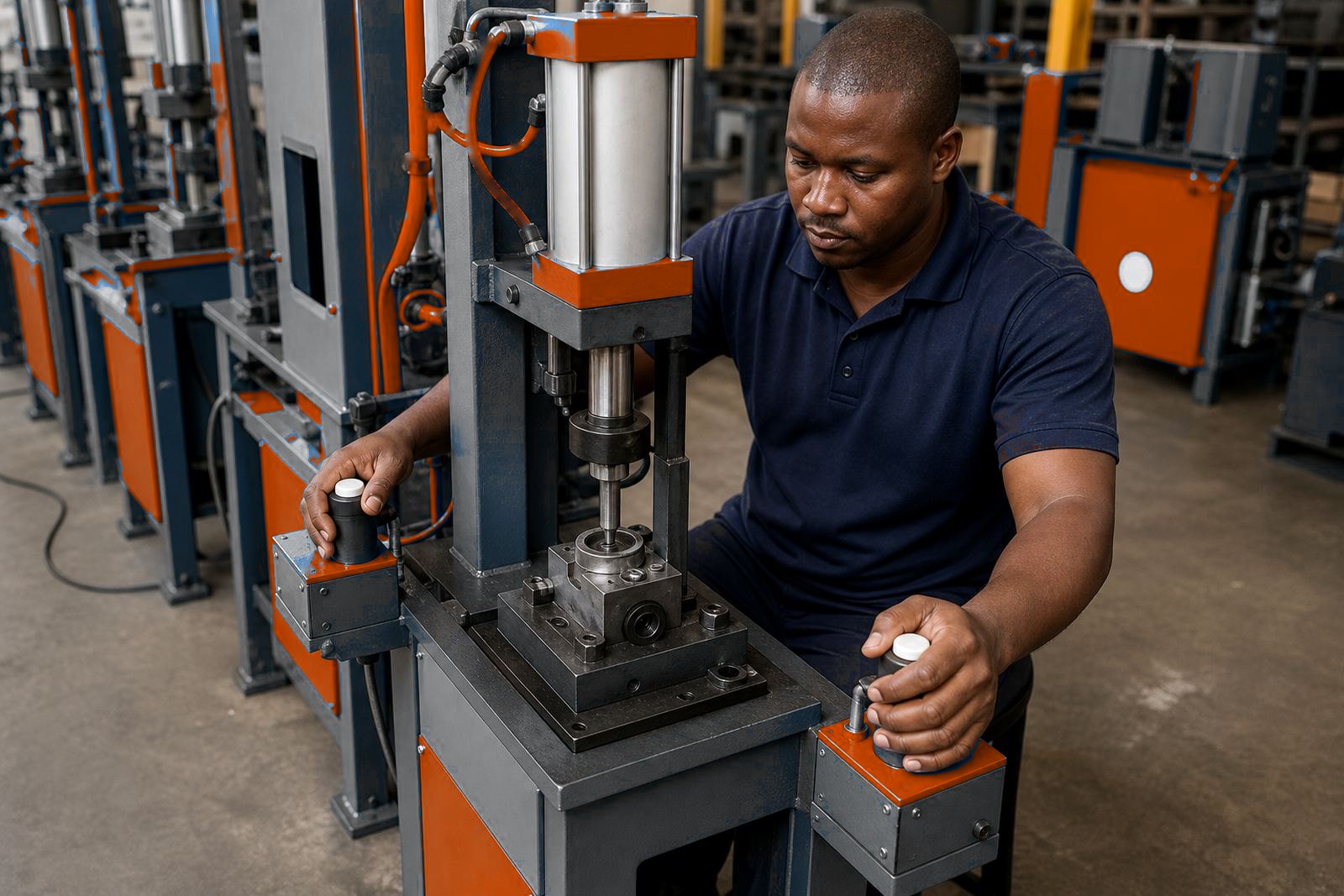
A basic station for this work is more than a frame and a cylinder. The tooling needs a nest that matches the component, a platen or pressure face that spreads load evenly, and a stroke stop that prevents overtravel. On many lines the press is paired with two-hand controls so the operator keeps both hands clear of the closing area. Light curtains are used where access and cycle speed make them the better guard choice.
- Pneumatic cylinder sized for the force needed, with the stroke matched to gasket depth
- Custom nest or fixture to locate the housing without rocking
- Controlled air pressure, with a regulator and gauge visible to the operator
- Two-hand controls or light curtains, depending on the risk area
- Tooling face shaped for the gasket profile, not a flat slab that marks the part
- Air line setup that keeps moisture and pressure loss under control
On pack sealing lines, the same thinking applies when a gasket or seal has to be seated before closure. The tooling changes, but the discipline stays the same: hold the part, guide the stroke and stop at the right depth.
Placing the nest so loading and unloading flow
Gasket seating stations work best when loading, pressing and unloading flow in one clean line. If the operator has to twist the body or reach across the press, the fixture is wrong. A good layout places the nest at a natural hand height and leaves enough room for the finished part to exit without bumping the next cycle. In Durban and Gqeberha, where humidity can creep into air lines and tooling, we also look at drain points and corrosion-prone parts of the setup.
The air supply must stay steady. A press that loses pressure mid-cycle will give an uneven seat, especially on larger gaskets or on parts with a deeper bead. Stroke setting matters just as much. The ram should stop where the gasket is seated, not where the cylinder happens to end its travel. That is where commissioning matters, because the air pressure, stroke and fixture all have to work as one piece of equipment.
Common mistakes on gasket seating jobs
Many seating problems come from the fixture rather than the press itself. A housing that sits on three points instead of a full support ring can tilt under load. A gasket groove that is slightly oversized may need a different tooling face, not more pressure. Operators sometimes compensate by forcing the part or adding pressure until the seal looks tight, but that can deform the component and create a leak path elsewhere.
- Using a flat tool on a profiled gasket seat
- Setting the stroke to measured depth
- Leaving too much side play in the nest
- Running with unstable air pressure from a poor line layout
- Skipping guarding checks after a tooling change
- Training one person only, then having the station handled differently on each shift
Another common fault is poor part presentation. If the gasket is not seated into the fixture the same way each time, no amount of pressing will fix the variation. That is why production handover and operator training belong with the machine, not after it.
Rand budget bands for this type of station
Gasket seating equipment can be built at different levels depending on force, station count and tooling detail. A simple single-station pneumatic press with a custom nest, two-hand controls and basic guarding often sits in the lower budget range. Once the job needs light curtain integration, more exact stroke setting, air preparation, tooling changes and commissioning support, the figure moves upward. Multi-station layouts for parallel gasket work or for mixed assembly and sealing lines need a larger spend because each station needs its own tooling logic and safety review.
As a working guide, many South African factories plan around R180 000 to R350 000 for a focused single-station build. A more involved multi-station line with custom tooling, guarding builds and site setup can move from about R400 000 to R900 000 or more, depending on part size and cycle demands. Final cost is shaped by the number of stations, the cylinder size, fixture complexity and whether the press is going into an existing line or a fresh layout.
Commissioning, training and the first production shift
Once the machine arrives in a Johannesburg, Pretoria, East London or local Isando plant, commissioning is where small errors get found. We check stroke setting, air line condition, control function and how the part sits in the nest. If the ram meets the gasket too early, or the operator has to force the load, the station needs adjustment before production settles in.
Operator training should cover loading position, control use, basic checks and the signs of a bad seat. Small differences in gasket hardness or housing finish can change the result, so the team needs to know what a proper seated part looks and feels like. We also review tooling changes and handover notes so the station stays practical on a normal shift, not only during setup.
For gasket seating work, the machine is only half the answer. The fixture, the stroke and the operator routine have to match the part every time.