When a terminal needs to stay put under production pressure
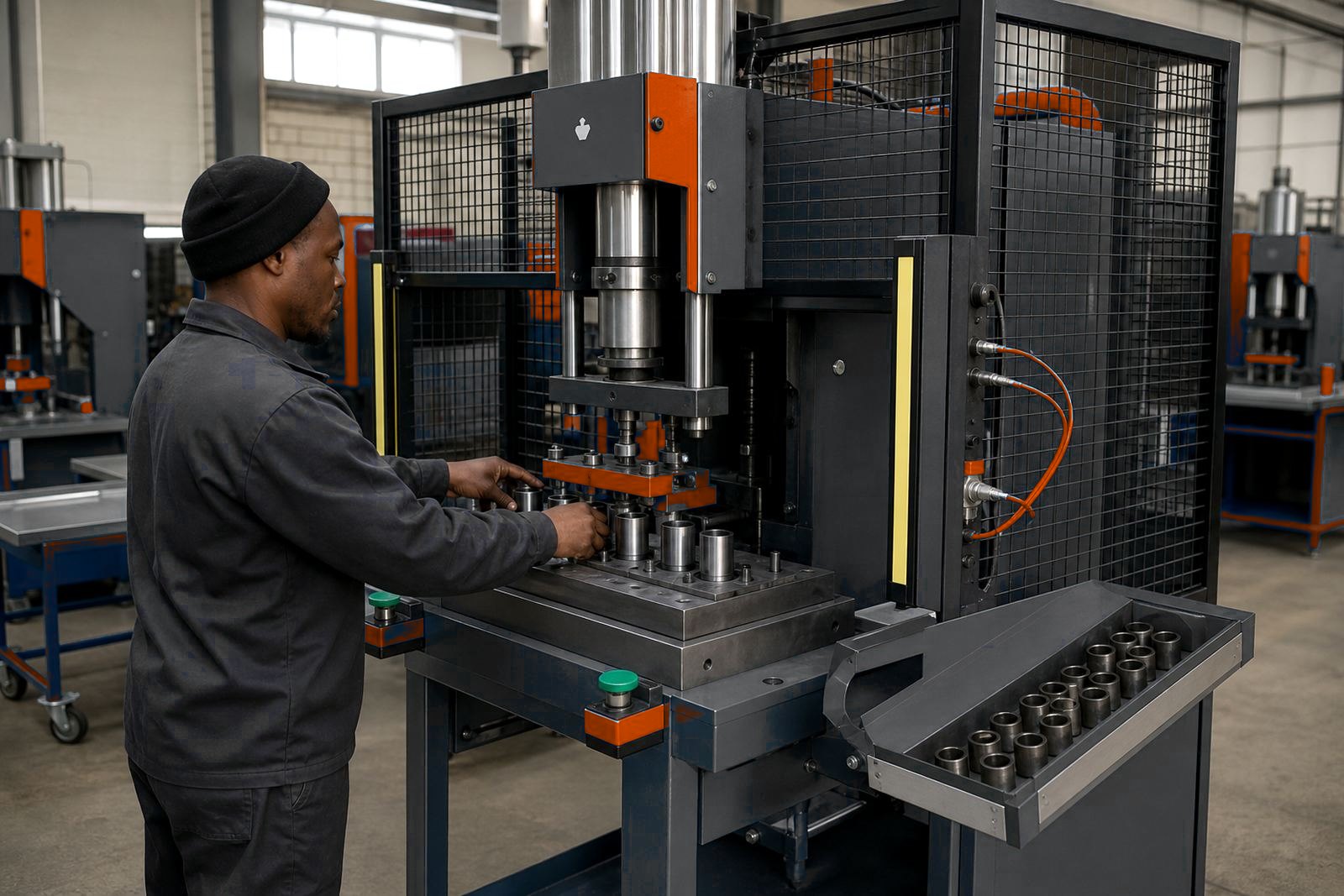
Terminal staking jobs usually start where a loose connection would cost time later. The terminal sits in the part, the tool forms the stake, and the press must hold position cleanly while the material flows in the right place. That matters on electrical assemblies, battery packs, small metal housings and plastic parts with inserts that must not shift during use.
In Isando and other Gauteng factories, the usual brief is not just pressing force. It is control over stroke, alignment, cycle repeatability and safe operator access. A station that works on one terminal size may struggle with a taller insert or a softer base material, so the machine and tooling need to match the part, not the other way round.
- Stable clamping and support under the part
- Controlled stroke for repeatable staking depth
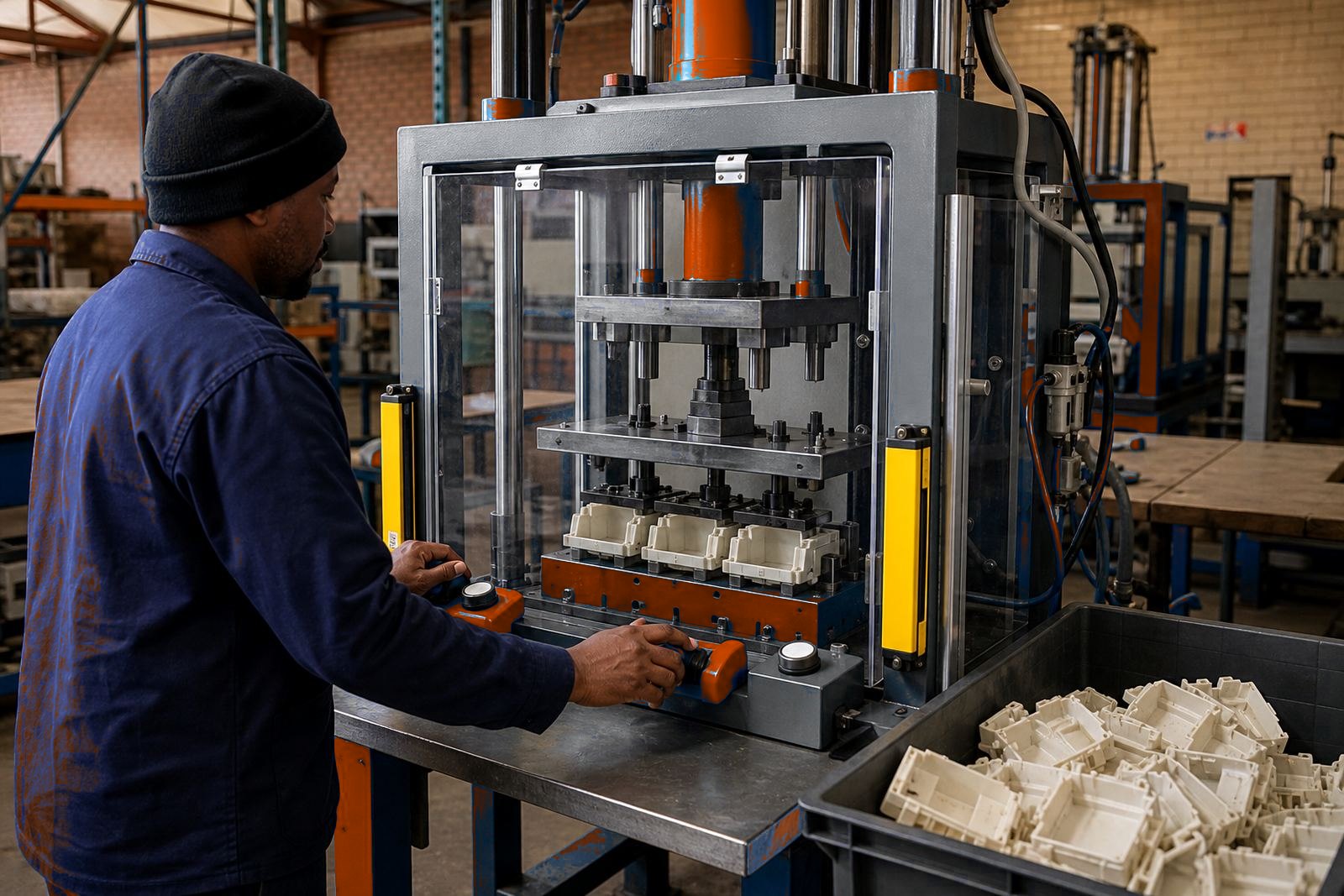
- Two-hand control where the job calls for it
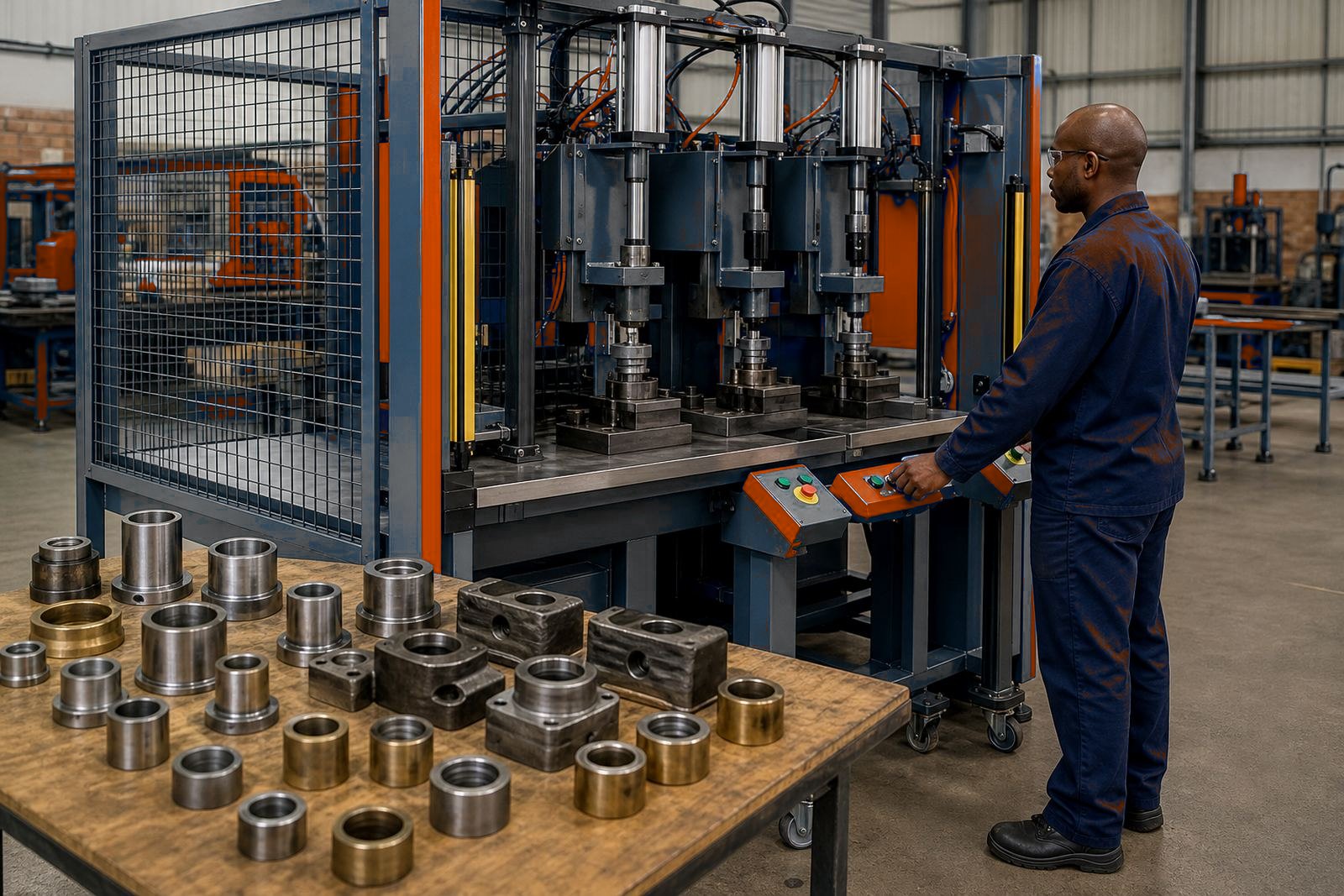
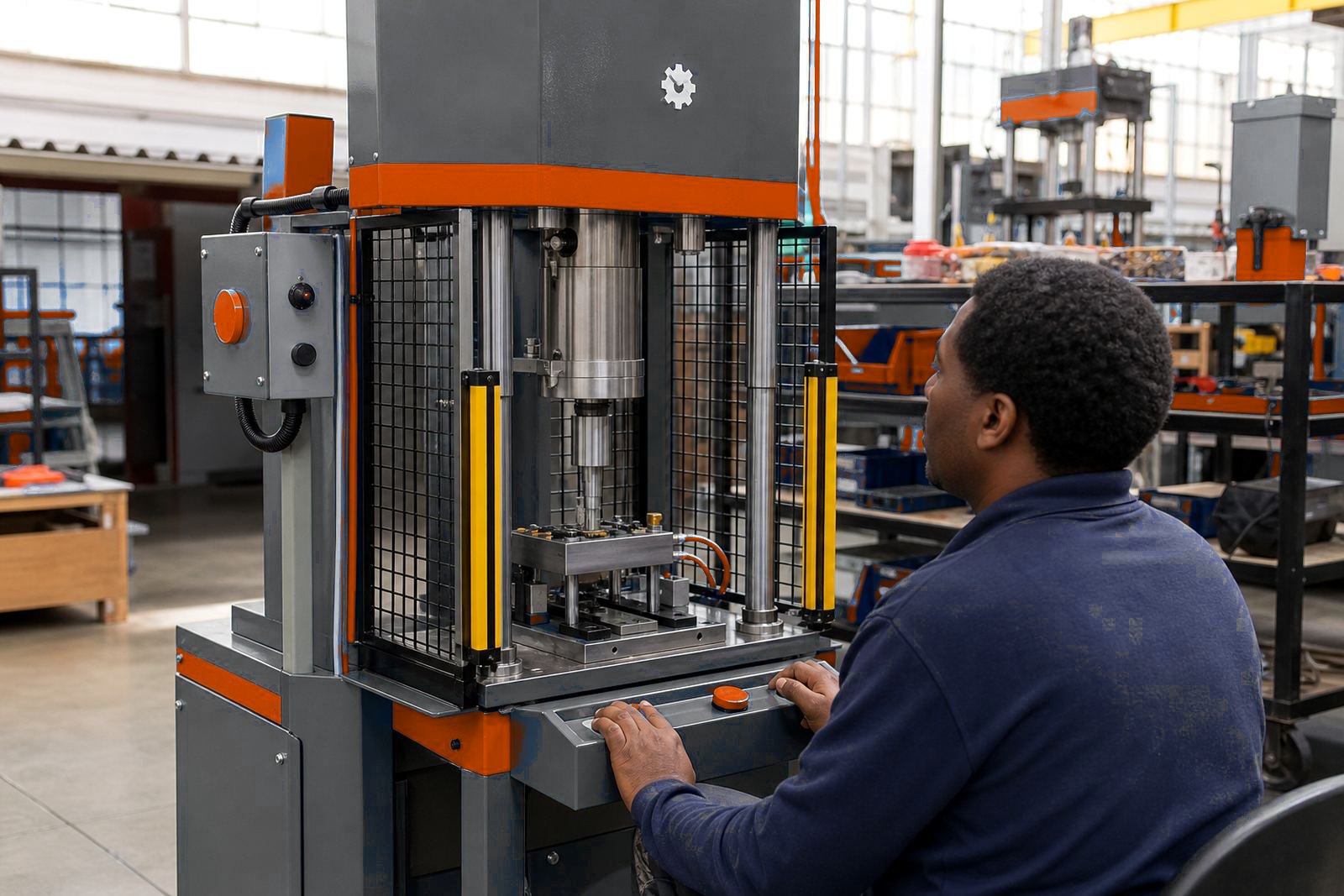
- Light curtain protection where access and cycle speed need separation
Typical station set-up for staking work
A terminal staking line usually uses a pneumatic press with one or more stations, depending on whether the job is manual loading or part of a small flow line. Cylinders are sized to suit the forming load, and air pressure must be set with enough margin for the stroke without crushing the component. The tooling may include a nest, anvil, guide pins and a forming punch shaped for the terminal head.
For many South African factories, the practical choice is a single-station press with a well-made fixture. Where throughput is higher, a multi-station frame can separate loading, staking and inspection. That layout helps when one operator is feeding parts while another station is completing the form. It also gives room for pack sealing, crimping or riveting jobs on the same floor when the tooling family is planned properly.
- Press frame matched to part size and access
- Custom tooling to locate the terminal accurately
- Air line setup with clean, stable supply pressure
- Stroke setting that avoids over-travel and tool wear
- Guarding builds around pinch points and hand access
How layout and tooling decisions change the result
Terminal staking looks straightforward until the fixture starts fighting the part. If the nest sits too high, the terminal can tilt. If the support is too soft, the stake spreads unevenly. If the tool face is wrong, the formed tab may mark the component or leave a weak hold. Small errors show up later as loose parts, scrap or rework, and those costs grow fast on a busy line.
Tooling design should follow the part drawing and the way operators load it. A clear lead-in helps location. Stops should make the loading point obvious. Where the hand enters near the station, light curtains or two-hand controls need proper thought, not a quick bolt-on. In humid coastal areas such as Durban and Port Elizabeth, enclosed fixtures and treated steel parts also help the tooling stay accurate for a longer period.
- Keep the part self-locating where possible
- Use guides and stops that suit the operator motion
- Allow space for terminal variation and inspection access
- Separate forming force from manual handling space
Common mistakes on staking jobs
A common mistake is setting the force before checking the part. A larger cylinder does not fix a poor nest. Another is setting the stroke too deep, which can flare the terminal and stress the base material. Some lines also use guarding that blocks loading, so operators defeat the protection and the station loses its value.
Another issue is changing tools without planning for the new length or loading height. A station that worked for one terminal style may need different guides, a revised stroke stop or a wider throat opening. On sites in Johannesburg, Pretoria and Kempton Park, we often see that the machine is fine but the handling path is cramped. When the reach is awkward, cycle time suffers and the operator works around the station instead of with it.
- Oversized cylinders that mask poor tooling
- Stroke settings that over-form the terminal
- Guarding that slows loading and gets ignored
- Fixtures with no allowance for part variation
- Poor access for tool changes and cleaning
Budget ranges that make sense in Rand
Budget depends on station count, fixture complexity, guarding and whether the line needs commissioning across more than one site. A basic terminal staking station with custom tooling and standard guarding can begin at the lower tens of thousands of Rand. A more complete build with two-hand controls, light curtain integration, site installation and production handover can move into the mid to upper hundreds of thousands of Rand.
Multi-station systems for assembly, crimping, riveting and pack sealing sit higher because the frame, control set and tooling package are more involved. If the job needs changeovers, special nests or multiple work positions, the tooling cost rises too. The real budget should include the press, fixture, guarding, air setup and commissioning, not only the cylinder and frame.
- Simple staking station: often from about R45,000 to R120,000
- More complete guarded station: often from about R120,000 to R280,000
- Multi-station custom system: often from about R280,000 upward
Commissioning on a live factory floor
Commissioning should check more than whether the press moves. Stroke setting, air pressure, tool alignment, guard function and operator reach all need to be tested against the real part. A good handover also covers tool changes, daily checks and how to spot wear before the stake starts drifting. That is where a machine becomes useful on shift, not just in the workshop.
MultiPress supports staking projects from Isando across Johannesburg, Pretoria, Durban, Gqeberha, East London, Boksburg and Kempton Park. The team covers custom tooling, fixture design, guarding builds, light curtain integration, two hand controls, site installation, air line setup, press commissioning, operator training and production handover. For a new terminal staking line or changes to an existing one, our contact form is the right place to send the job details.