When a nameplate line needs better repeat placement
Nameplate work often starts as a small operation and then grows into a fixed part of assembly. The trouble begins when the plate shifts, the rivet head marks the face, or the operator has to judge position by eye on every cycle. A pneumatic press with a proper nest and guide system removes much of that variation, especially where the same housing is built through more than one station.
For this application, we start with the part itself. Plate size, hole pattern, substrate thickness and the rivet style all affect the press stroke, the tooling face and the way the component is supported underneath. On thin housings, poor support can leave a dent around the fixing point. On painted or coated parts, the nest has to spread the load and keep the finish clean.
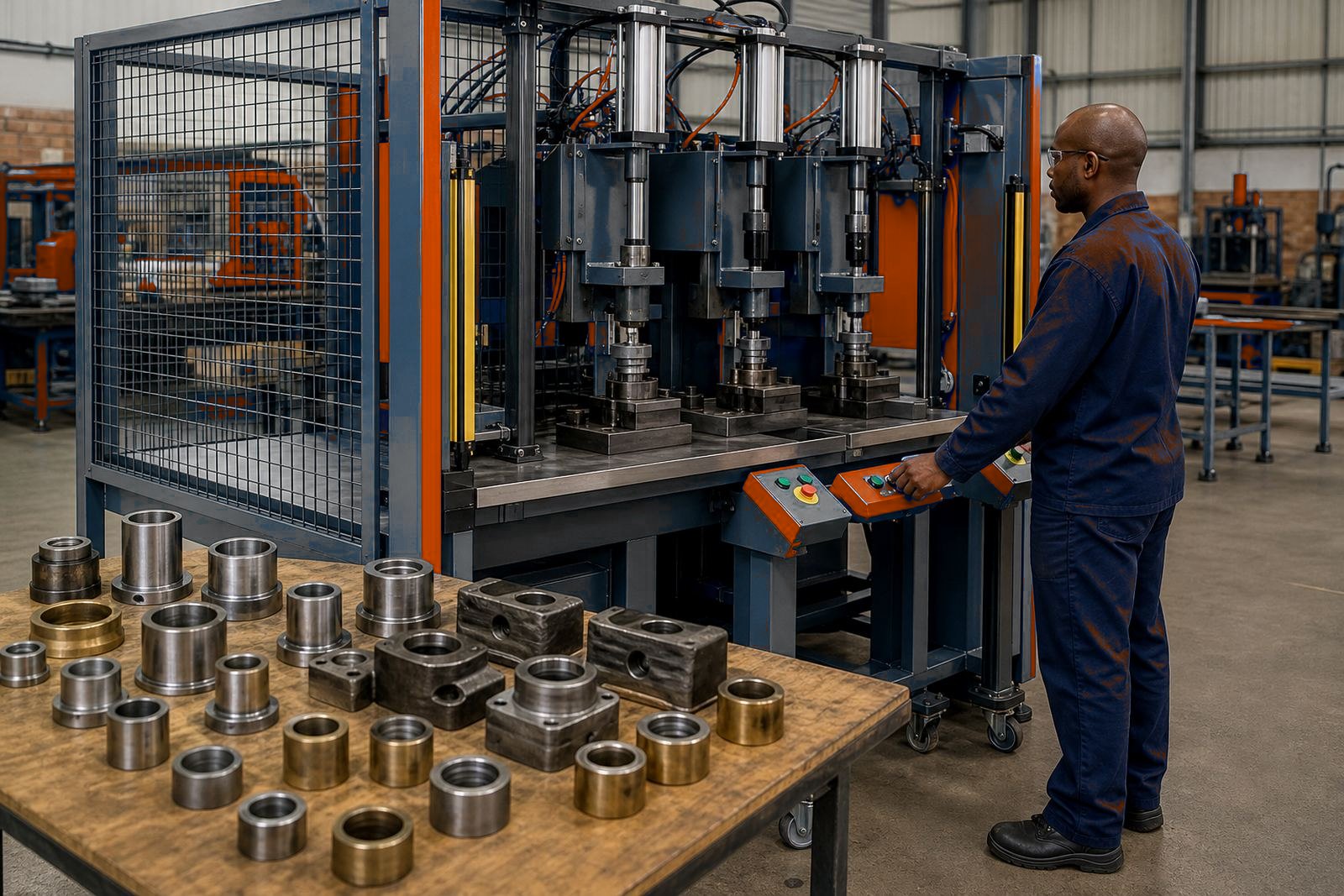
We also factor in the production rhythm. Some lines need a compact single station for short runs, while others need a multi-station machine that lets the operator load one part, close the cycle, and move straight to the next operation. If the plate is fitted after printing, embossing or surface finishing, the tooling has to hold the part in the same place every time so the rivet lands where it should.
Typical pneumatic press set-up for plate riveting
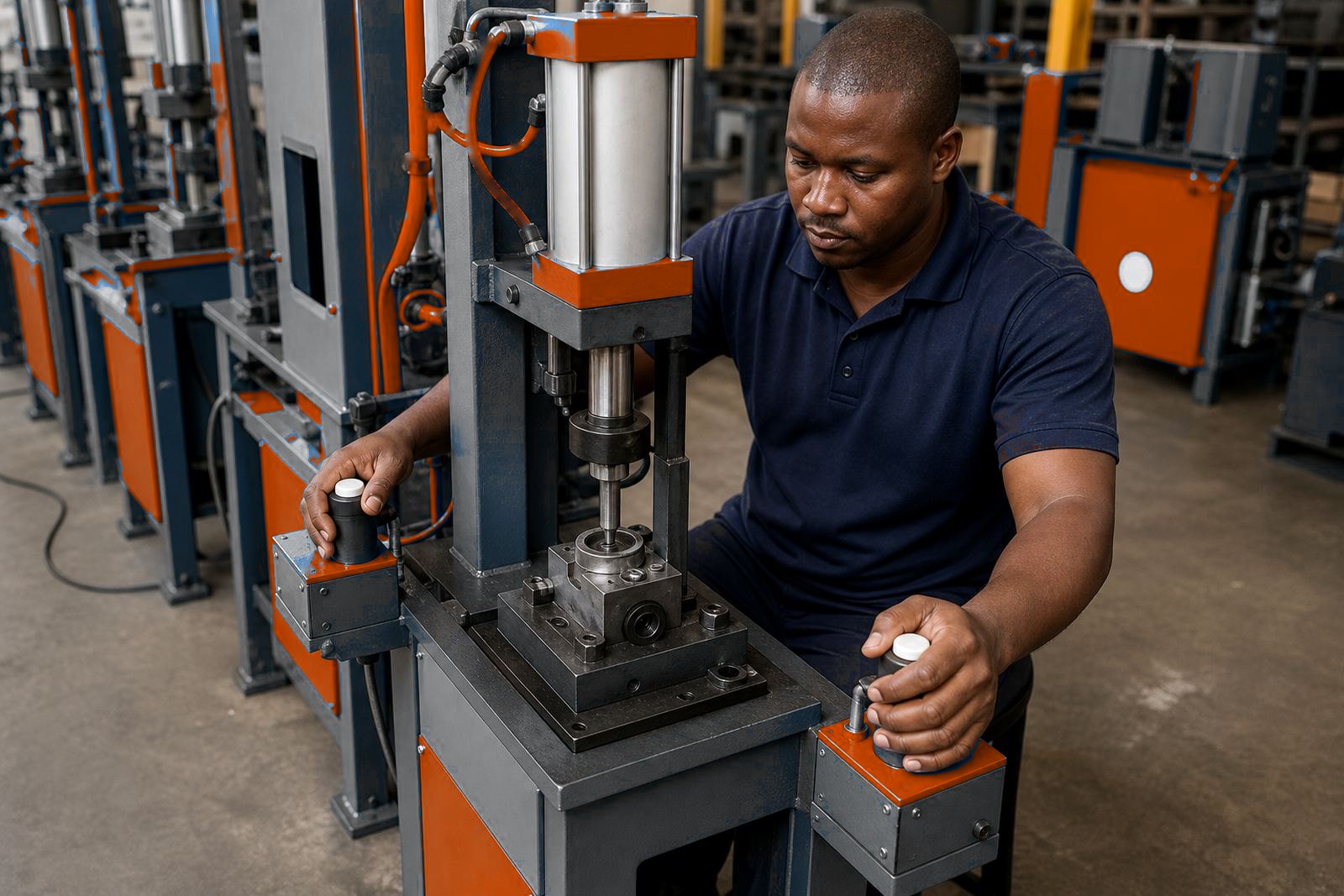
A nameplate riveting press normally uses one or more air cylinders, a rigid frame, a controlled downstroke and purpose-built tooling. Air pressure needs to be stable enough for the job, but the real result comes from the balance between pressure, stroke length, dwell and the shape of the tooling face. Too much force can crush a small plate. Too little force leaves a loose fixing or an uneven seat.
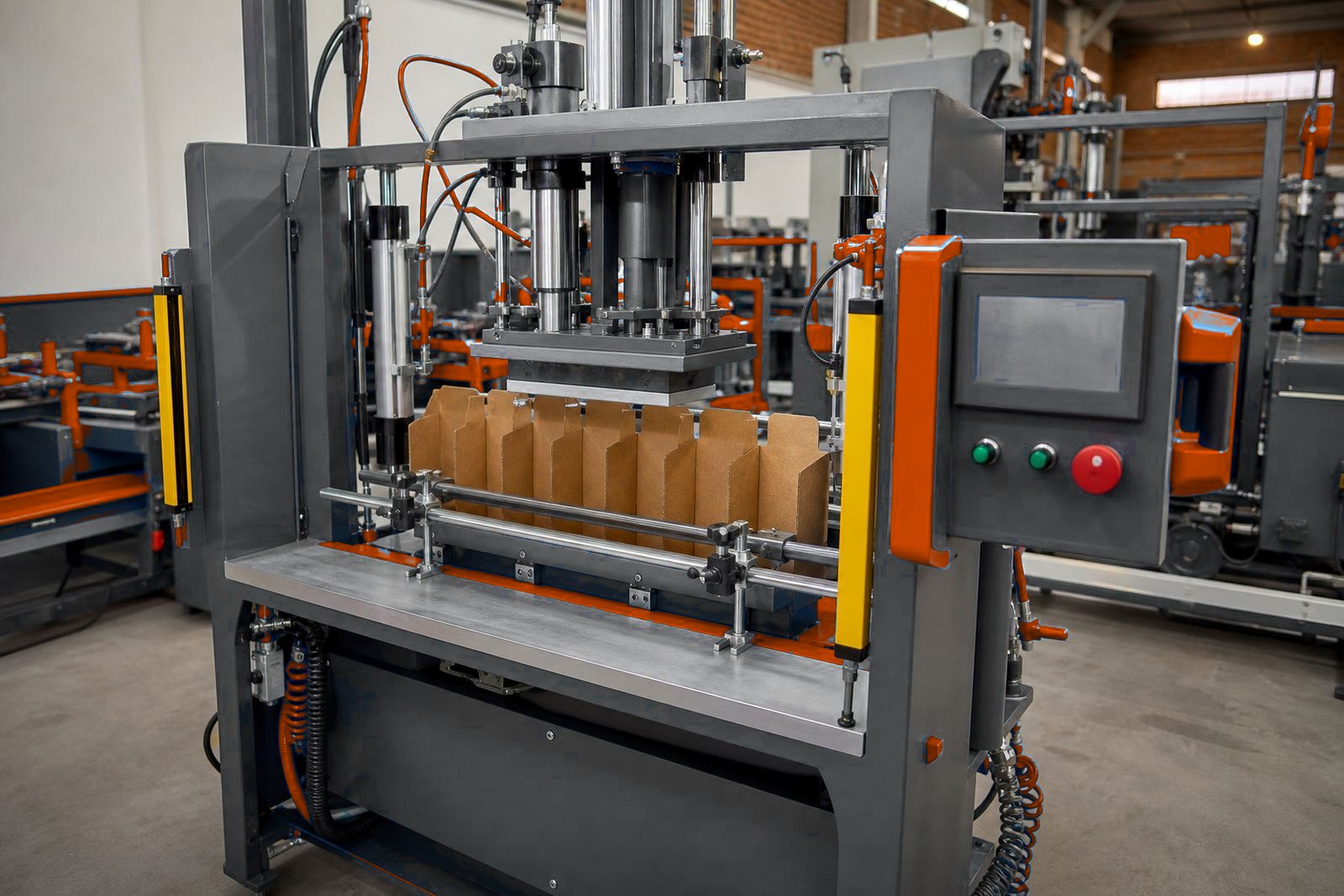
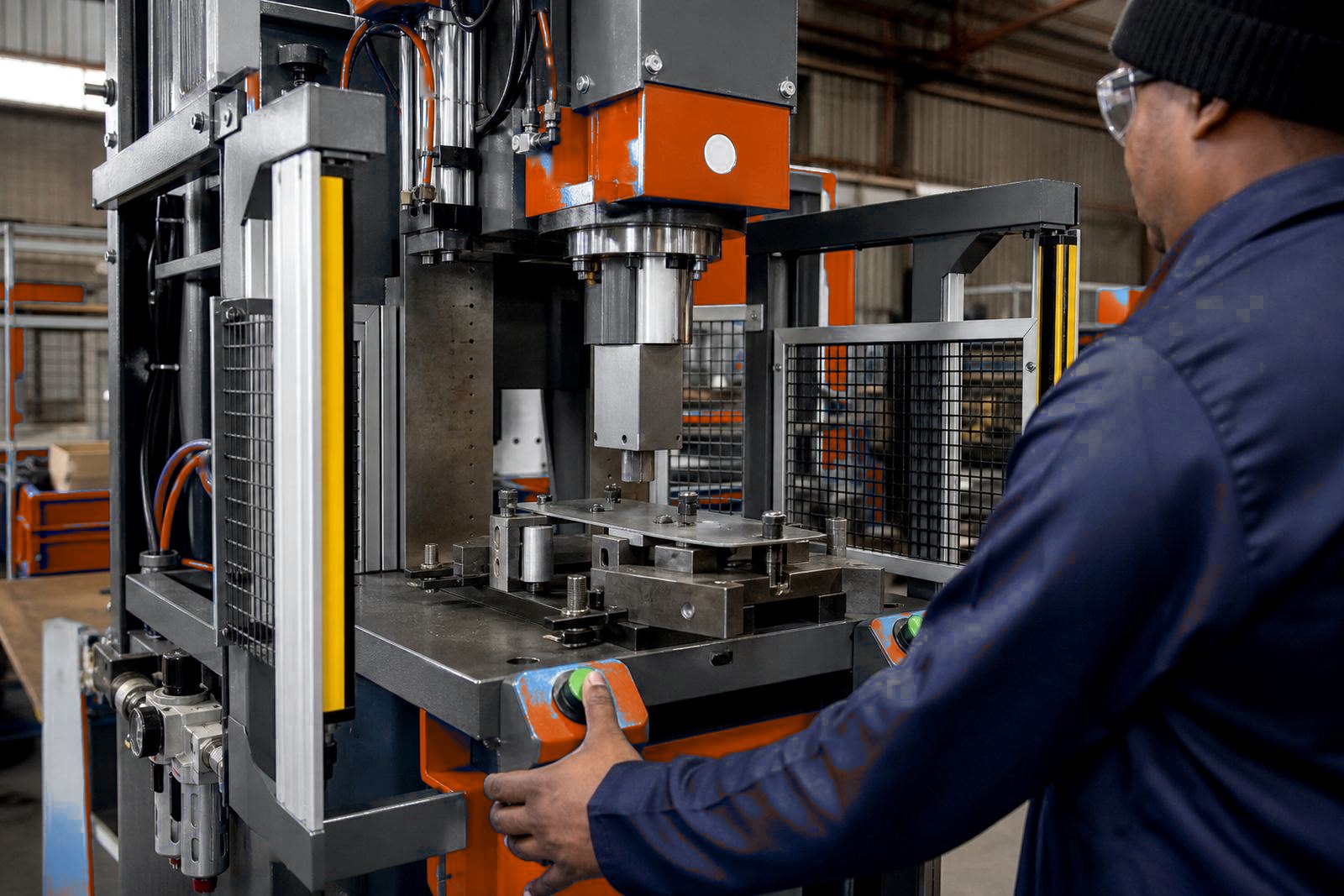
We often build these presses with a guarded working area, two-hand controls and light curtains where the line needs operator protection without slowing the cycle more than necessary. The tooling may include locating pins, back-up anvils, alignment stops and a changeable head for different plate sizes. On some jobs the rivet feed is manual, on others the operator loads the plate and the fixings are placed in a simple repeat pattern by hand before the cycle starts.
- Multi-station frames for sequential riveting or combined fitting steps
- Adjustable stroke setting for thin or thicker housings
- Tooling that supports the plate edge and prevents surface marking
- Guarding, two-hand controls and light curtain integration where needed
- Air line setup and pressure checks for steady cycling
Layout and planning for a line that stays on position
Careful layout planning carries the same weight as the press itself. A nameplate station works best when the operator has a clear load point, short reach to the part tray and enough space to place finished pieces without knocking the next one off line. If the press is part of a wider assembly sequence, the station height should match the adjacent benches or conveyors so the hands do not travel up and down all shift.
We plan for the small things that create drift. If the part is awkward to hold, a fixture should locate on a hard datum rather than on a painted edge. If the plate is tiny, the nest needs enough support so it does not twist when the ram comes down. In coastal towns, humidity can affect air line water build-up and light metal tooling if maintenance is neglected, so drainage, filtration and regular checks belong in the plan from the start.
For South African factories, commissioning often includes confirming the air supply, setting the stroke, checking the two-hand timing and testing the guard interlocks against the actual part. Operator training is part of the handover, because a press can be mechanically sound and still underperform if the crew is not clear on loading order, plate orientation or when a tool needs a change.
Where riveting jobs usually go wrong
The common mistakes are practical ones. The first is treating the rivet as the only part that matters. In truth the nest, back-up support and alignment are just as important. The second is running a stroke that is too long for the part. That can over-travel the ram, bruise the surface and wear the tooling early. The third is leaving changeovers too loose, so a slightly different plate gets forced through the same setup without a proper reset.
- Inconsistent plate position because the fixture has no hard stop
- Poor rivet seating from unsuitable pressure or stroke
- Marks on polished or coated housings from hard tooling edges
- Loose fixing when the press is used outside its set range
- Slow output caused by awkward loading and poor part flow
Another issue is mixing manual judgement with a machine that needs repeat settings. If the part position shifts, the result will move around from cycle to cycle. A simple locator or a better feeder tray can make a bigger difference than a heavier frame. On multi-station machines, each station should do one job clearly so the process does not become cluttered.
What the budget usually covers in rand
The cost of a riveting press for nameplates depends on station count, tooling complexity, guarding, control gear and whether the machine needs site installation. A small single-station unit for straightforward plate fixing sits at the lower end, while a multi-station machine with custom nests, light curtains and a tailored frame sits higher. If the job includes special change tooling or several plate formats, the tooling budget needs its own line item.
For planning purposes, many South African buyers work with a broad range from about R180,000 to R750,000 for a custom pneumatic riveting solution, with larger or more specialised stations moving above that when extra guarding, fixtures or commissioning work is included. The final figure depends on part geometry, cycle demands and how much of the line is being built around the press.
A sensible budget should also allow for the less visible work: air line setup, stroke setting, guarding builds, operator training and production handover. These items matter because a press is not only a machine on the floor, it is part of a working sequence. If the tool is fitted but the line layout is awkward, the real cost shows up in handling time and rework rather than on the quote itself.
MultiPress support across South Africa
MultiPress builds multi-station pneumatic presses from our Isando, Ekurhuleni base and supports commissioning work across Johannesburg, Pretoria, Durban, Gqeberha, East London, Kempton Park and Boksburg. For nameplate riveting, that means we can build the press, design the tooling, fit the guarding and put the station into service with the rest of the assembly line in mind.
The team behind the work includes Pieter Sauls, Thandiwe Matlala, Musa Hartnick, Johan Ramokgopa, Lerato Moagi and Anele Engelbrecht. Each job moves through tooling design, workshop build, site checks and handover, so the press suits the part rather than forcing the part to suit the press.
Clients get in touch through our enquiry form on the contact page when they need a riveting station made for plates, badges or identification tags. The useful starting point is a clear note on the part size, fixing method, station count and any guarding or training needs. From there the layout can be matched to the production flow and the air supply already on site.