Durban lines that need a steady first run
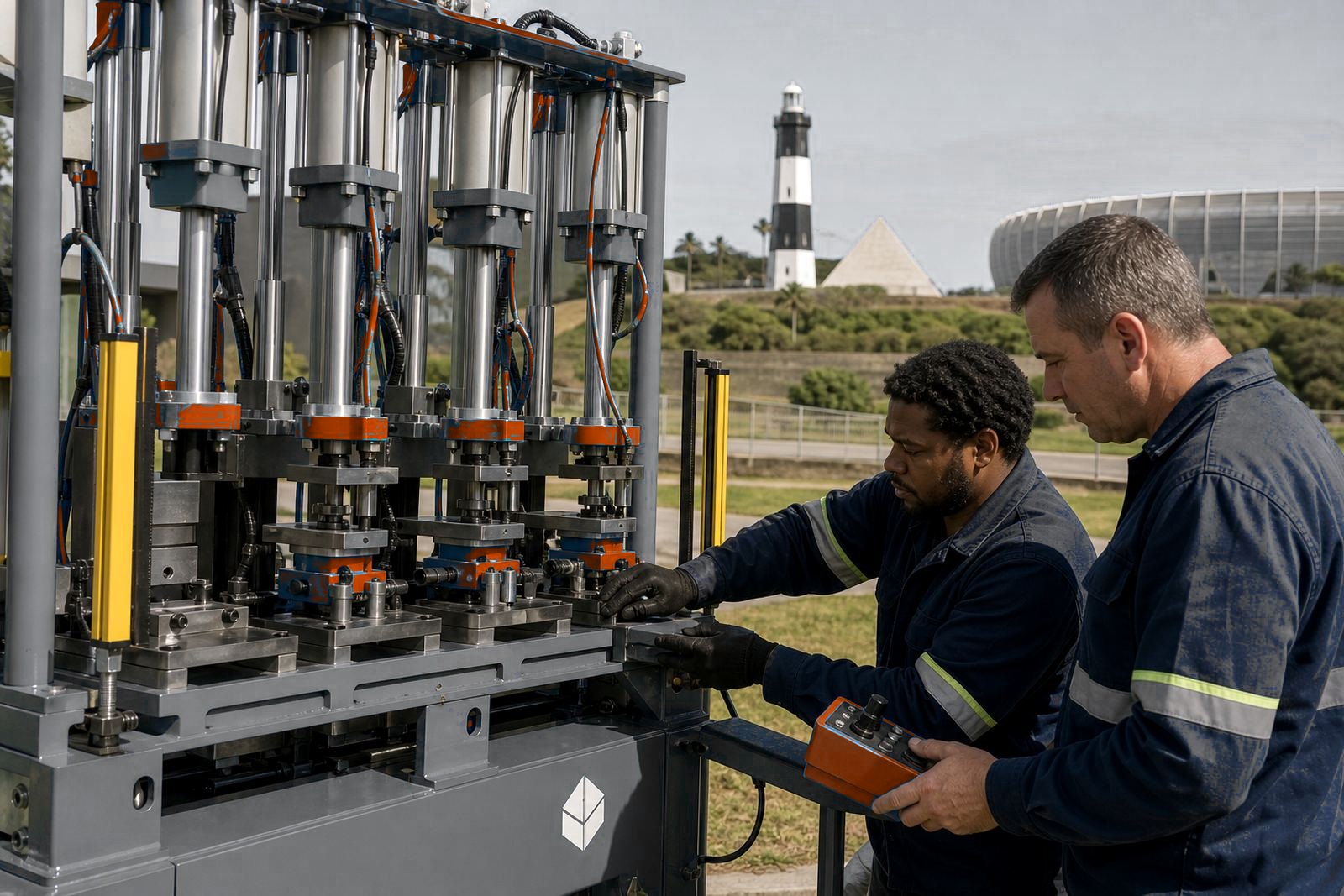
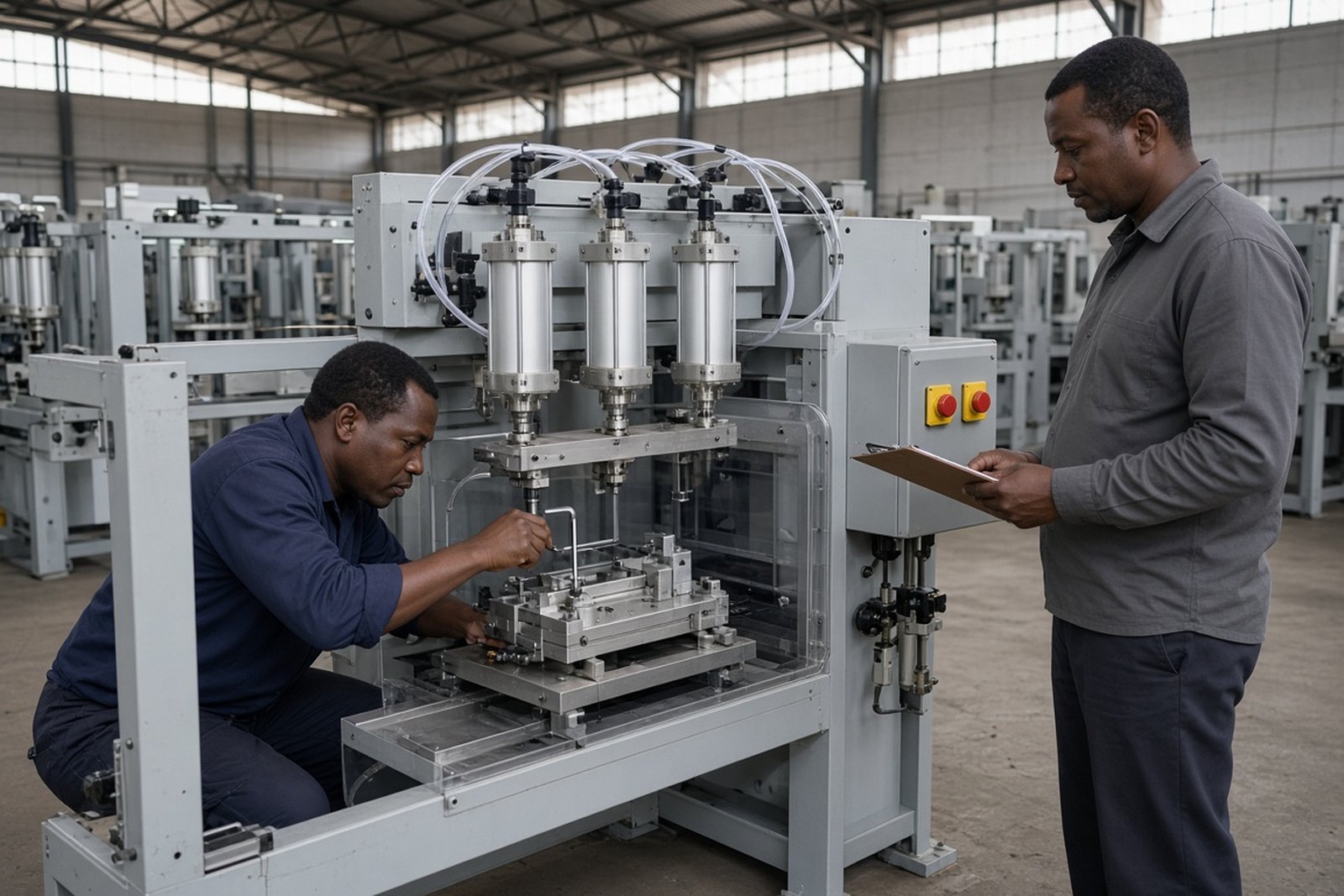
Our Durban commissioning work is aimed at factories that need a press line to start cleanly and stay consistent under real production pressure. That includes assembly benches, crimping stations, rivet sets, staking operations and pack sealing lines where one poorly set cylinder or a loose tool mount can spoil a batch. We work with multi-station pneumatic presses that may carry different tools at each position, so the sequence, stroke, guarding and air supply all need to sit together properly.
In Durban, the mix is often high humidity, salt in the air near the coast and workshop floors that never stay still for long. Those conditions affect tooling, guide movement, hoses and control components, so commissioning has to account for more than the machine in isolation. A press that looks ready in the shop can behave differently once it is bolted into a plant with existing air lines, local guarding requirements and a team trying to meet production targets.
- Assembly presses with fitted tooling and controlled stroke depth
- Crimping stations for repeatable joint formation
- Riveting and staking setups with correct force transfer
- Pack sealing lines that need a stable cycle and consistent pressure
What we cover on site in Durban
Commissioning is where the machine stops being a drawing and starts behaving like part of the line. We check the press frame, station layout, cylinder movement, air pressure supply, stroke setting and the way the tool set meets the workpiece. If a station needs a different hold, a cleaner approach or a slower sequence, that gets set out before production is handed over.
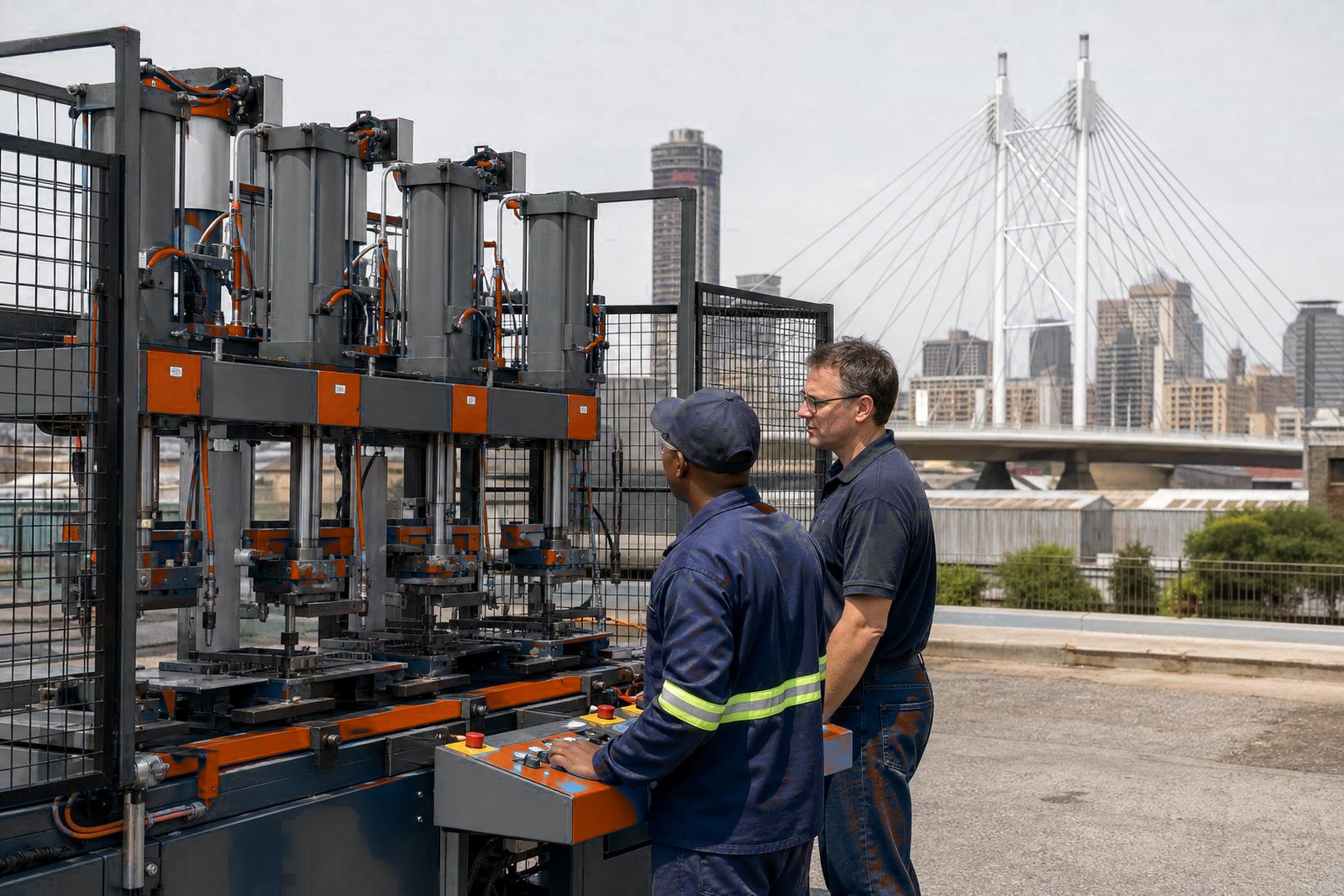
We also deal with guarding builds, light curtain integration and two hand controls, because a press must be usable without making the operator fight the machine. Where the job needs it, we tune the tool change process, check pneumatic timing and confirm that each station repeats the same action without drift. For Durban factories working across shifts, that consistency matters as much as raw pressing force.
- Site installation and machine positioning
- Air line setup and pressure verification
- Stroke setting for each working station
- Guarding builds and light curtain integration
- Two hand controls for operator safety
- Production handover with practical operator checks
Coastal conditions and workshop realities
Durban production spaces can be damp, warm and busy, with doors opening often and air lines running through long shopfloor routes. In that setting, pneumatic presses need clean supply air, sound fittings and sensible maintenance access. A commissioning visit has to take in the whole path from compressor feed to final cylinder action, not just the control buttons on the front panel.
We see local clients using multi-station presses for fabricated parts, hardware assembly, packaging work and light metal forming where a small change in stroke or tool height can shift the whole result. Coastal humidity can affect exposed metal parts and tooling surfaces, so it helps to leave the machine with better protection, clearer settings and a team that knows what to look for during the first runs. If the press is working near other machines, the guarding and operator positions need to suit the traffic around it as well.
That is why our Durban commissioning covers the practical details that usually get missed in a rush. Tool clearance, clamp alignment, hose routing, pinch points and the actual access space around the press all get checked against the job in hand.
Tooling and changeover work for mixed products
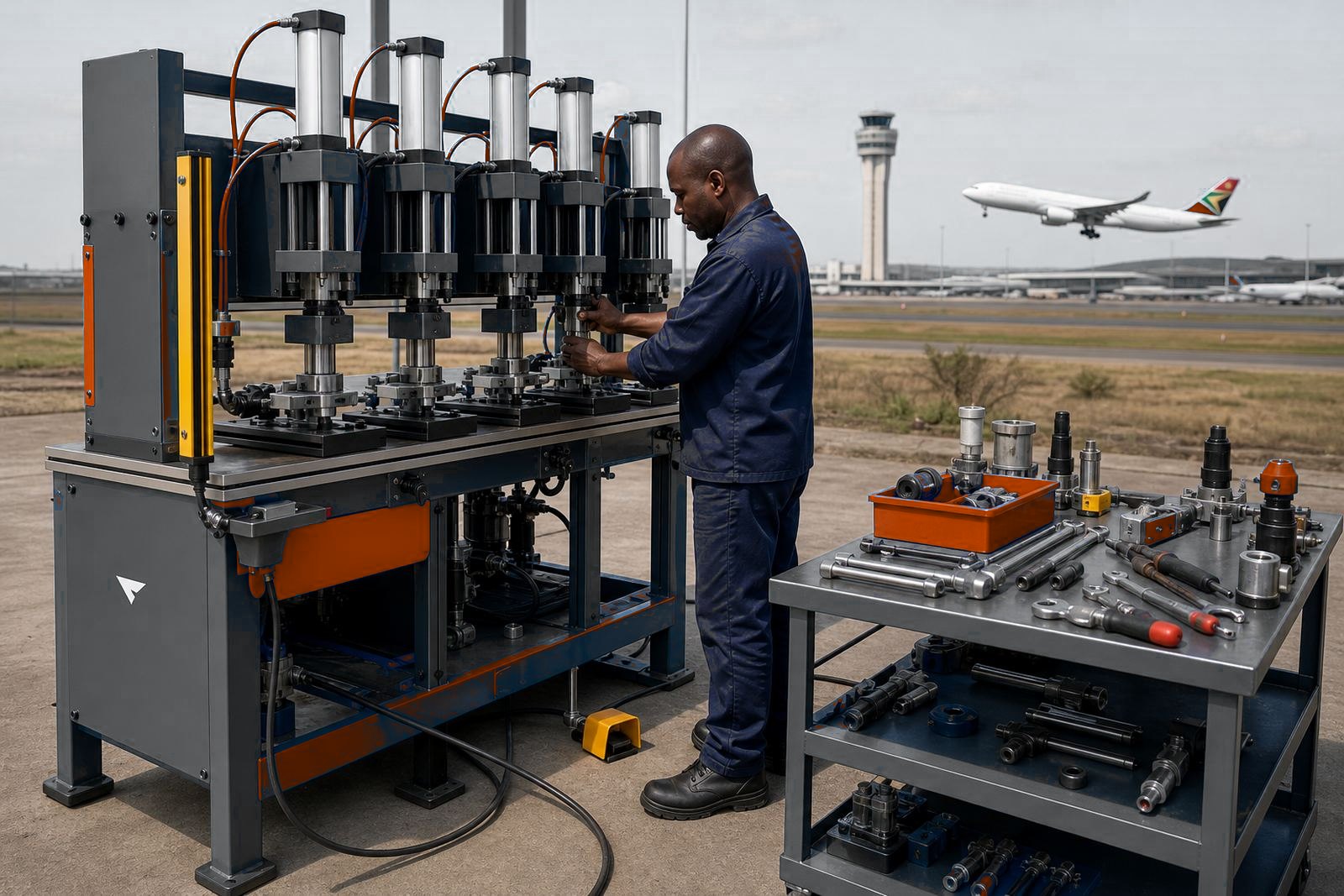
Many Durban factories do not run a single product all day. They move between parts, pack sizes or assembly tasks, and that means the press tooling has to be set for repeat use without unnecessary loss of time. MultiPress covers custom tooling, fixture design and tooling changes so the same machine can handle different tasks with fewer adjustments on the floor.
For a station press, each tool needs to meet the part squarely and release cleanly. A crimping tool behaves differently from a riveting punch, while a staking set needs the right finish and controlled travel. We build the setup around the task, then check the stroke, pressure and support points so the tool does what it was made to do.
- Custom tooling for specific part geometry
- Fixture design for repeatable location and support
- Tooling changes for mixed production runs
- Stroke setting matched to the job and station layout
Training that fits the Durban floor
No press is handed over until the operators have run it themselves. We work through the controls, two hand operation, guard checks, station sequence and basic fault spotting so the people using the press can see what normal behaviour looks like. Where the line uses multiple stations, the team also needs to understand the order of operation and how one station can affect the next.
Durban plants often have teams with different levels of experience, so training has to be direct and practical. We cover start-up checks, air pressure awareness, tooling position, safe part loading and the signs that a stroke setting has drifted. The aim is not theory for its own sake, but a line that is used properly from the first production run onward.
When needed, we also supply handover notes for supervisors and maintenance staff. That helps the plant track tooling changes, guard condition and the settings that matter when the machine is put back into production after shutdown or repair.
Travel from Isando to Durban and what we carry
Our base is in Isando, Ekurhuleni, and Durban commissioning is planned as a proper site assignment rather than an added errand. We work with factories in and around Durban, including production areas that feed the port, industrial suburbs and plants spread across the metro. The work usually includes assessment, site setup, installation support and the practical checks needed to put the press into use.
For Durban calls, we cover the press elements most likely to be needed on site: guarding parts, light curtain components where specified, two hand control interfaces, tooling change tools, air line fittings, stroke setting checks and the equipment needed to verify the machine during handover. If the job needs a tighter setup, we can also work through the station layout and tool access so the line is easier to live with on a daily shift.
Durban commissioning enquiries go through our contact form on the contact page. That is the route for new installation support, line changes, tooling questions and press handover work across the city and surrounding industrial areas.