Press lines that settle into Pretoria production floors
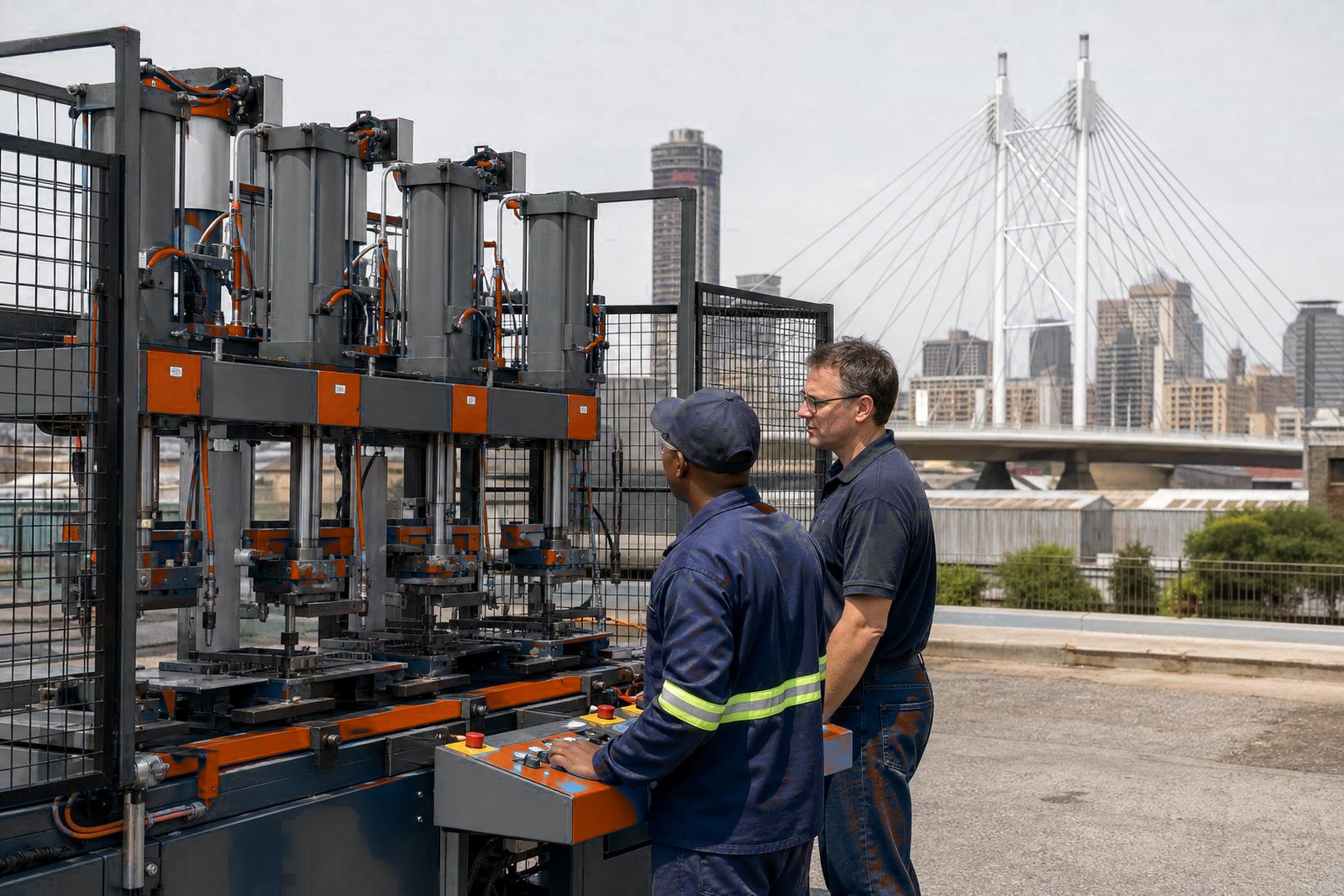
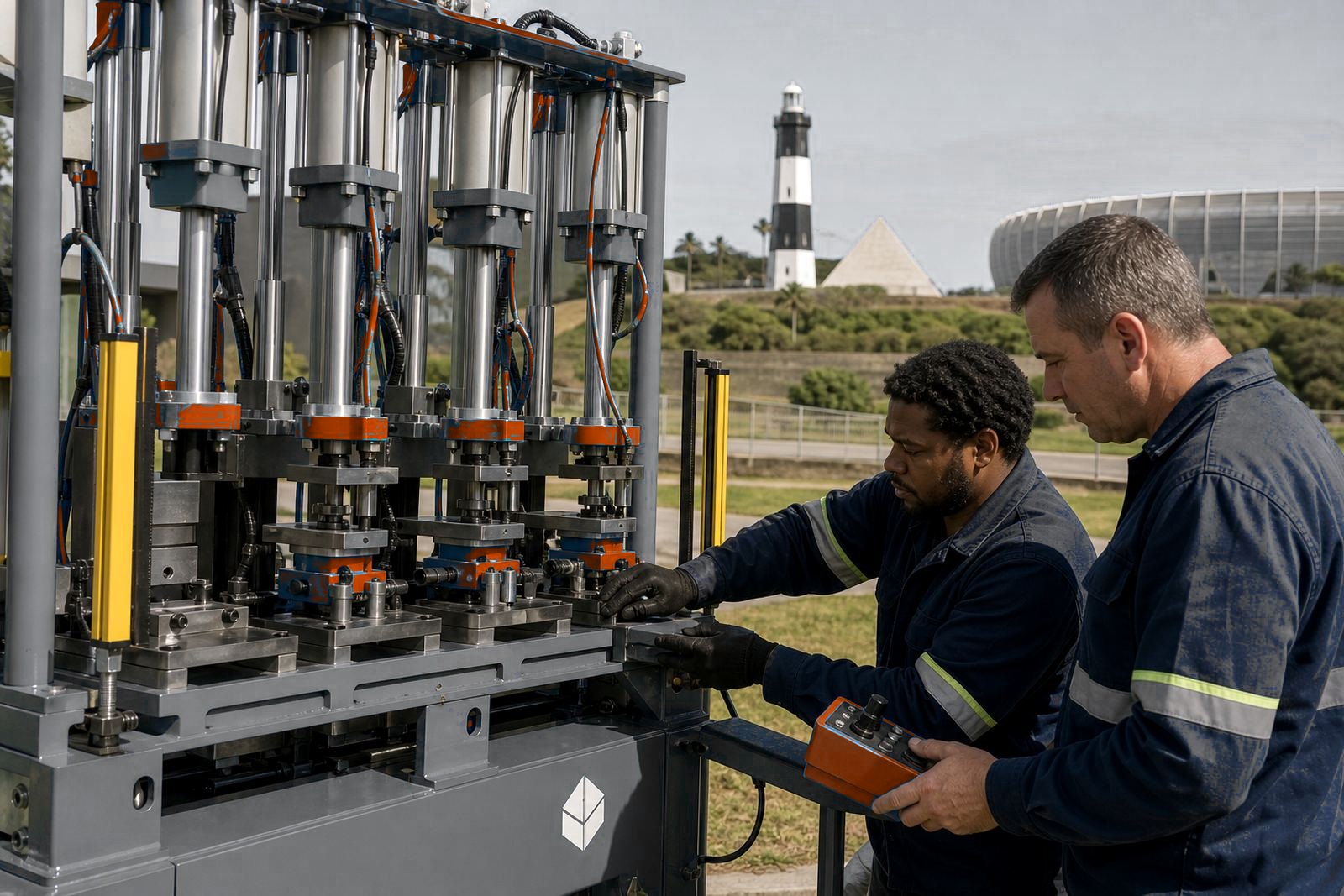
Pretoria factories work with a mix of light assembly, metal forming and pack sealing lines, so the commissioning step has to fit the real job on site. We set up multi-station pneumatic presses for crimping, riveting, staking and sealing work, with the tooling matched to the part, the stroke and the air pressure the line can actually hold.
That includes checking cylinder travel, setting the press stroke, confirming two-hand controls, and making sure the guarding suits the operator position and the feed path. In a busy plant, a press that is set too hard or too long can leave marks, short cycles or parts that shift out of place.
What we cover when the press lands on site
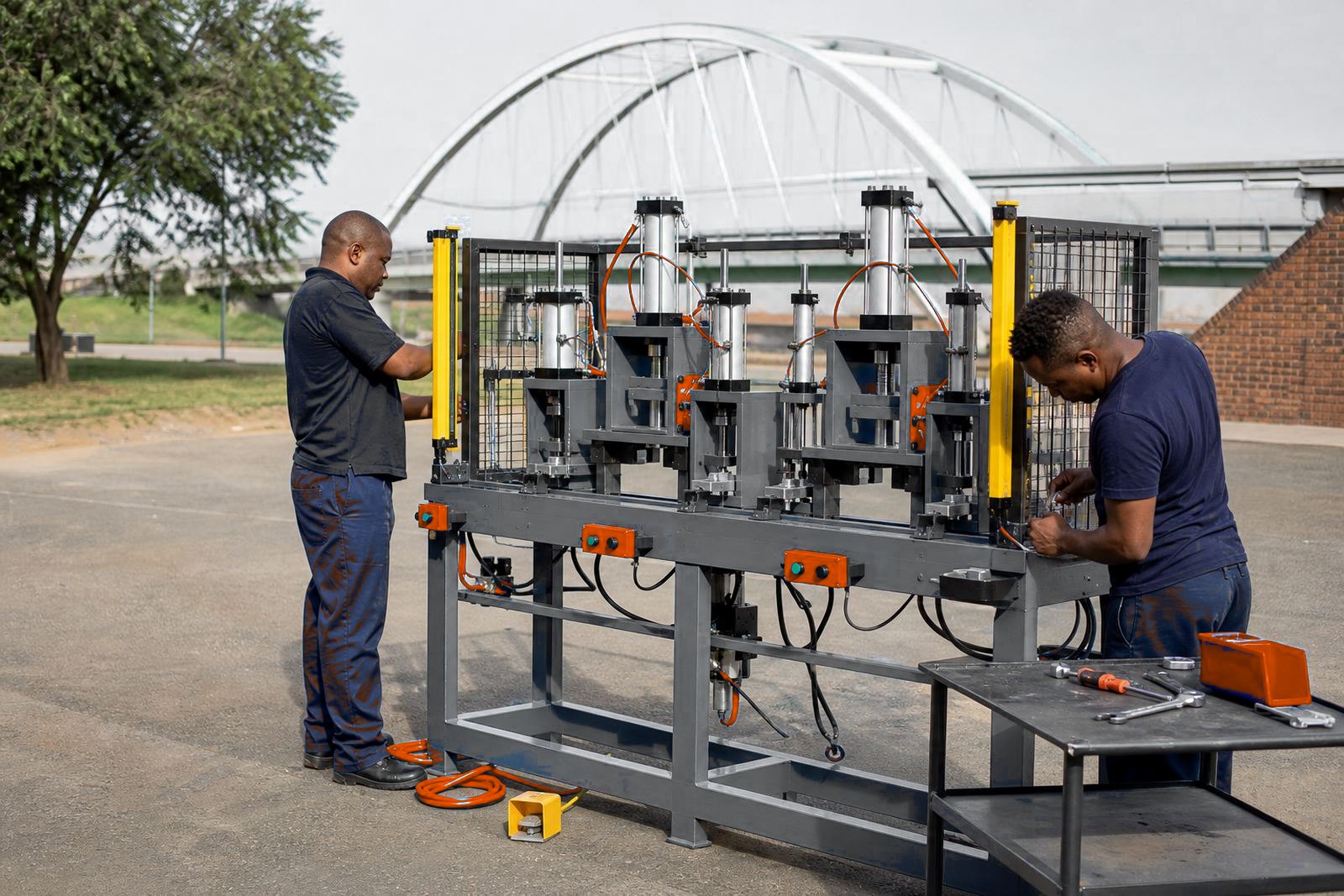
Commissioning is more than switching the unit on and leaving it there. We work through the mechanical setup, the air line connection, the tool fitment and the control sequence, then test the station under production conditions so the press behaves the same way during shift work.
- Stroke setting for the part height and tool depth
- Air pressure checks and line stability
- Two-hand control setup and operator position checks
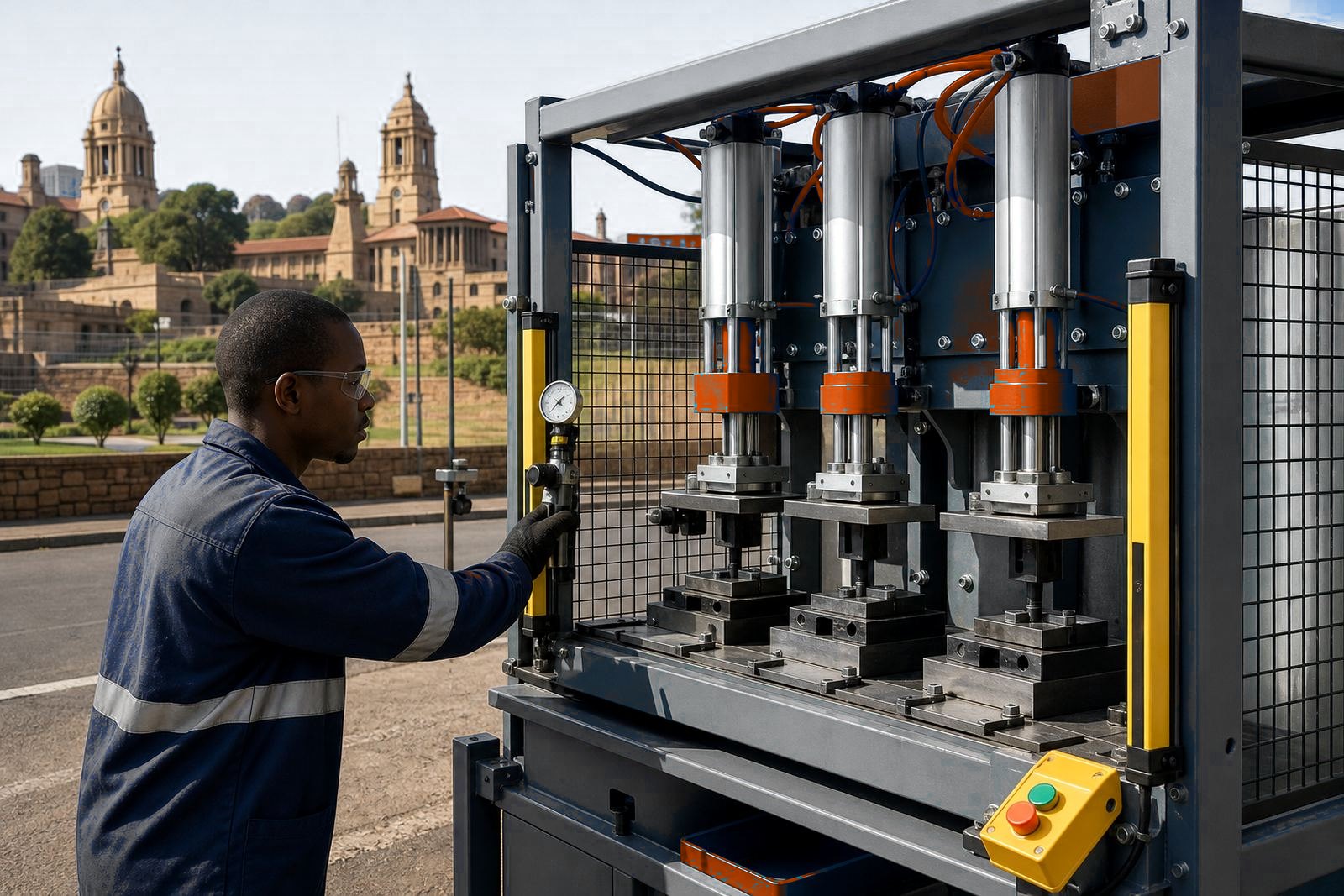
- Light curtain alignment where the guarding layout calls for it
- Tooling changes for alternate parts or pack sizes
- Production handover with the line team on site
Pretoria conditions that shape the install
Pretoria sites often run with broad floor spaces, mixed machine layouts and different levels of access around the line. Some plants sit close to warehouse areas with busy forklift traffic, others are set up in tighter production rooms where guarding and operator movement need careful planning.
Dust, temperature shifts and moisture in compressed air can all affect a pneumatic press if the setup is rushed. We look at hose routing, air preparation, tool access and the physical clearance around the station so the equipment stays practical for daily use.
Teams we usually meet in the Pretoria area
The Pretoria commissioning work usually lands with production managers, maintenance teams, toolroom staff and supervisors who need the press running to a set routine. We also work with assembly lines where one press feeds several hand operations, so the operator training has to match the pace of the line and the part mix.
- Assembly plants fitting clips, brackets and housings
- Metal shops needing repeatable rivet or stake operations
- Packaging lines with seal checks and pack closure work
- Toolrooms changing fixtures between product runs
- Factories upgrading from manual hand tools to guided press stations
Tooling, guarding and controls for the job at hand
Musa Hartnick designs the tooling around the part rather than forcing the part to suit the press. That matters when the station has to crimp a terminal, rivet a joint or seal a pack without damaging the edge, finish or alignment of the product.
Guarding and light curtain work are built into the station. Where the line needs two-hand controls, we position them so the operator can load, press and clear the part without awkward reaching or extra steps that slow the cycle.
Training that fits the people on the floor
Operator training covers the practical side of the press, not just the switch positions. Anele Engelbrecht takes the team through safe loading, the cycle sequence, tool change notes, fault spotting and the signs that a station is drifting out of setting.
That handover helps with shift changes and weekend production, where the same press may be used by different operators. A clear routine reduces misfeeds, tool knocks and unnecessary adjustment from one shift to the next.
Getting Pretoria work onto the calendar
Our Pretoria commissioning work is set up from Isando, with jobs planned for industrial areas across the metro and nearby manufacturing zones in Gauteng. We also support sites that need follow-up visits for tooling changes, stroke setting adjustments or a second look at a guarding detail after production starts.
Clients reach us through our contact form, and the details that help most are the part type, station count, press size, air supply notes and any guarding layout already on site. That gives the workshop and commissioning team enough to prepare the right tooling and controls before the visit.