Start with the job, not the cylinder bore
Before anyone talks bore size, look at the part and the action it needs. Assembly work, crimping, riveting, staking and pack sealing do not all ask for the same force curve, and a press that feels fine on one operation can be wasteful or too weak on another. The tool head, the number of stations, and the material thickness all shape the choice.
Write down the actual operation at each station, the target depth, the cycle count and whether the part needs a firm squeeze or a controlled finish. Thin sheet, soft aluminium, brass terminals and fibre packs behave differently under pressure. A larger cylinder may look safer, but it can give a harder hit than the tooling wants.
- List the station task in plain terms.
- Note the material, thickness and part tolerance.
- Record whether the stroke must be short, medium or long.
- Check if the tool needs gentle seating before full force.
Pressing force comes from air pressure and cylinder area
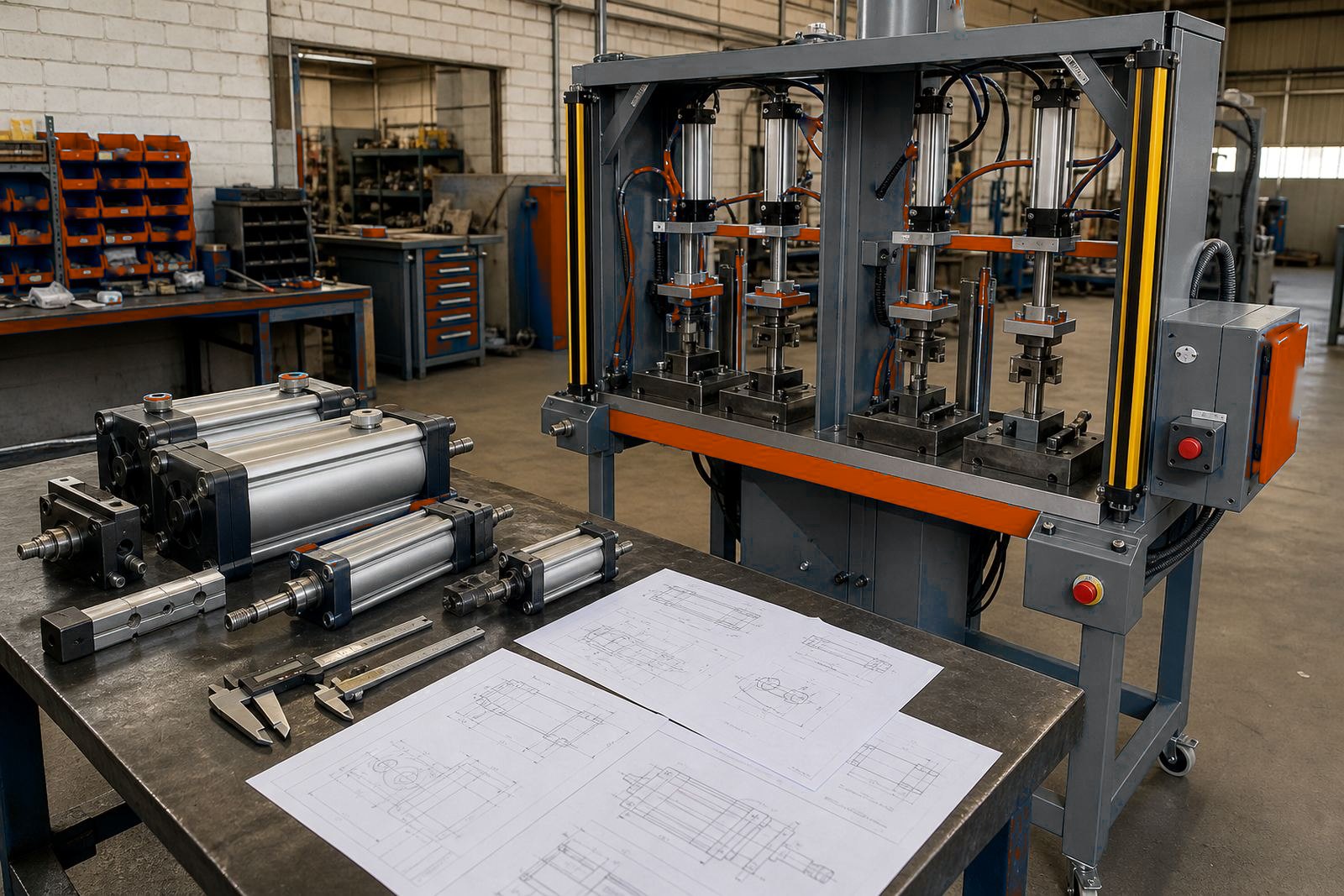
Pneumatic presses depend on two main figures: the working air pressure and the piston area inside the cylinder. Higher pressure gives more force, but only up to the limits of the machine, the fittings and the tooling. In many factory settings the air line is the real constraint, not the wish list on paper.
A wider bore increases force, yet it also changes air use and can make the press less forgiving if the tool is not set correctly. Stroke setting matters as much as bore size because extra travel can slow the cycle and invite drift if the tooling is not guided well. For multi-station work, keep the force needs balanced across all positions so one station does not dominate the system.
If a station needs a firm crimp, measure the peak force at full engagement. If the task is staking or sealing, the useful force may be lower but the finish quality matters more. That balance is often where the right cylinder size earns its keep.
Match the stroke to the motion the tool really needs
Stroke is often treated like a spare dimension, yet it decides how the tool meets the part. Too little stroke and the station never reaches full action. Too much stroke and the piston works through dead travel that adds wear and makes adjustment harder. On compact multi-station presses, this shows up fast when one tooling set is changed for another.
Use the shortest stroke that still gives clean tool engagement, safe release and enough room for guarding and part handling. If the process includes locating pins, nested fixtures or a stack-up of parts, add only what the tool needs. Stroke setting should support the product, not force the product to fit the machine.
- Confirm closed height and open height for each station.
- Allow space for part placement and removal.
- Check that the tool reaches full contact before peak force.
- Make sure the return stroke clears guards and fixtures.
Two-hand controls and light curtains affect the cylinder choice
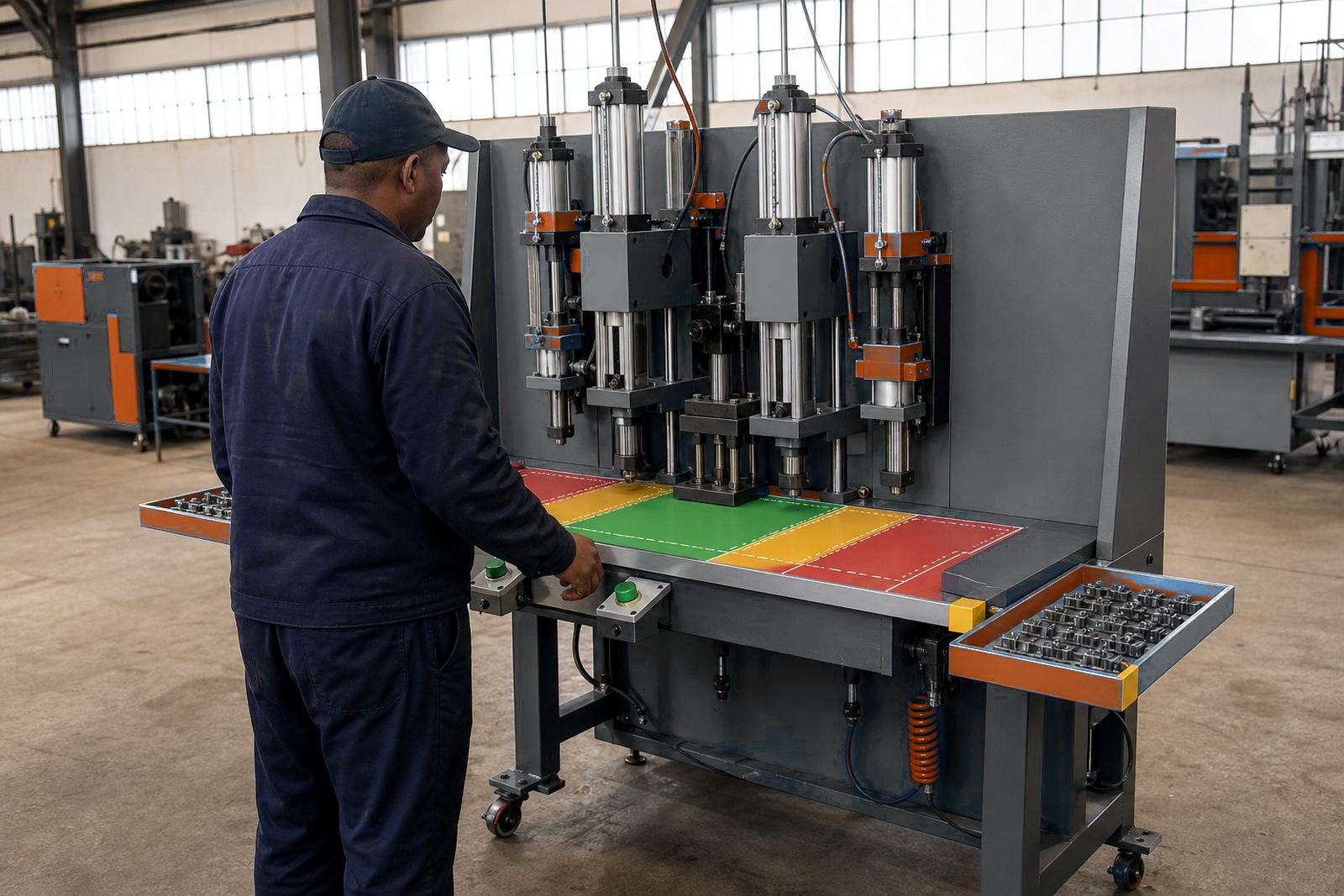
Guarding is not separate from cylinder selection. A press with two-hand controls, light curtains or fixed guarding needs a motion profile that suits safe operation and repeatable handling. If the cylinder is oversized for the task, the press may hit too hard or move too fast for the operator flow and the chosen safety layout.
The control method also affects how the station is set up during commissioning. A two-hand system needs clear timing and predictable movement. A light curtain needs the stroke and reset behaviour to be properly tuned so the machine stops and restarts in a controlled way. The cylinder size should support that behaviour, not fight it.
When a line uses more than one station, each station should be checked for its own guard clearances, hand position and part path. A good setup feels deliberate, with no loose movement and no surprises when the cycle starts.
Tooling design can reduce the force you need
Good tooling often saves more force than a larger cylinder can provide. A well-guided fixture, correct punch shape and a clean locating method can lower side load and improve repeatability. If the tooling binds, tilts or drags, the press may seem underpowered when the real issue is friction or poor alignment.
For riveting and staking, tool geometry controls how the metal flows. For crimping, the die profile must close the joint without crushing it. For pack sealing, the tool face and dwell matter, and the cylinder should give a steady press rather than a sudden shove. Custom tooling belongs in the same conversation as cylinder size, because one affects the other.
- Check tool alignment before increasing bore size.
- Look for side loads on guides and pins.
- Confirm the part seats squarely in the fixture.
- Review wear points on the tool face and die edges.
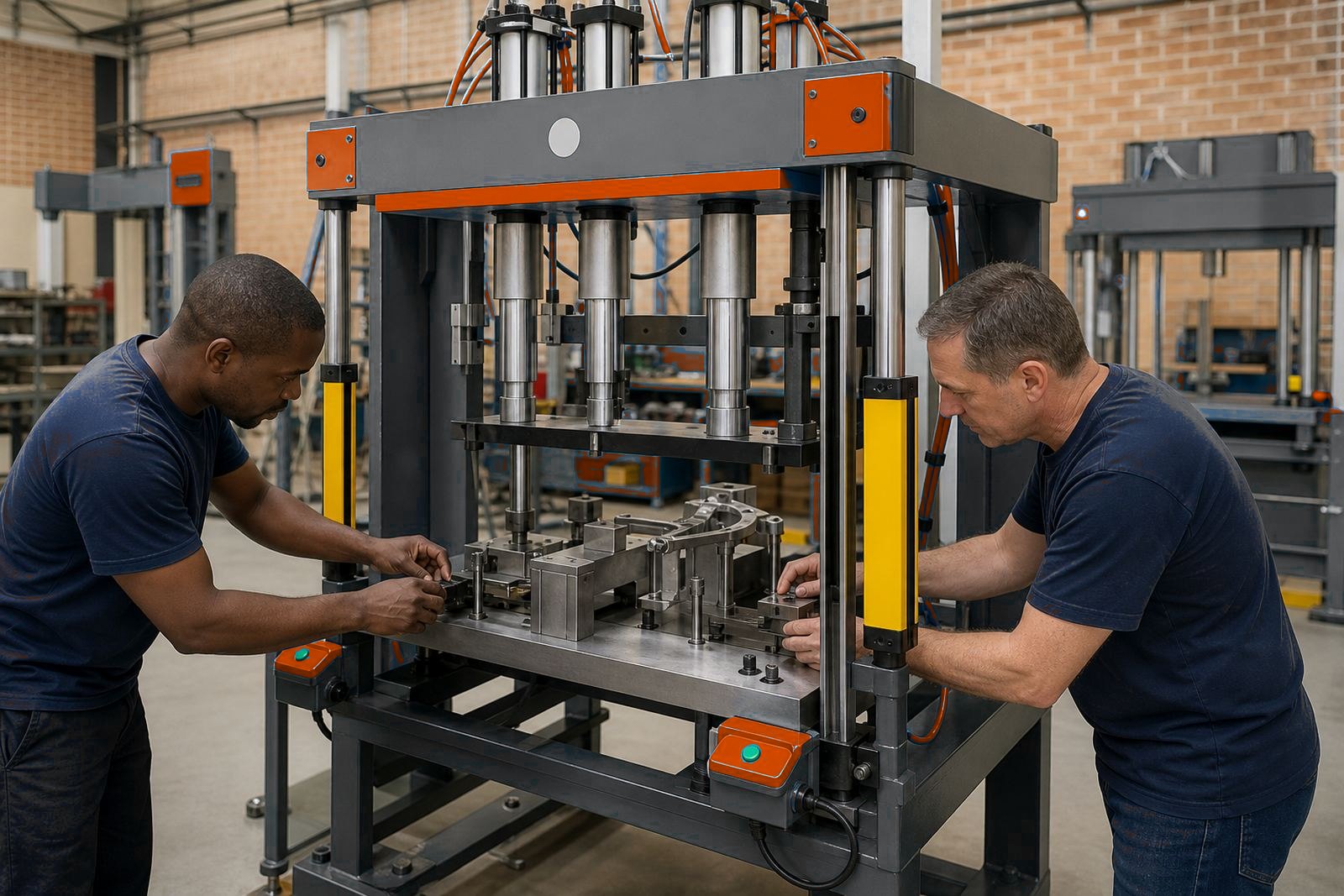
A workshop check before you sign off the size
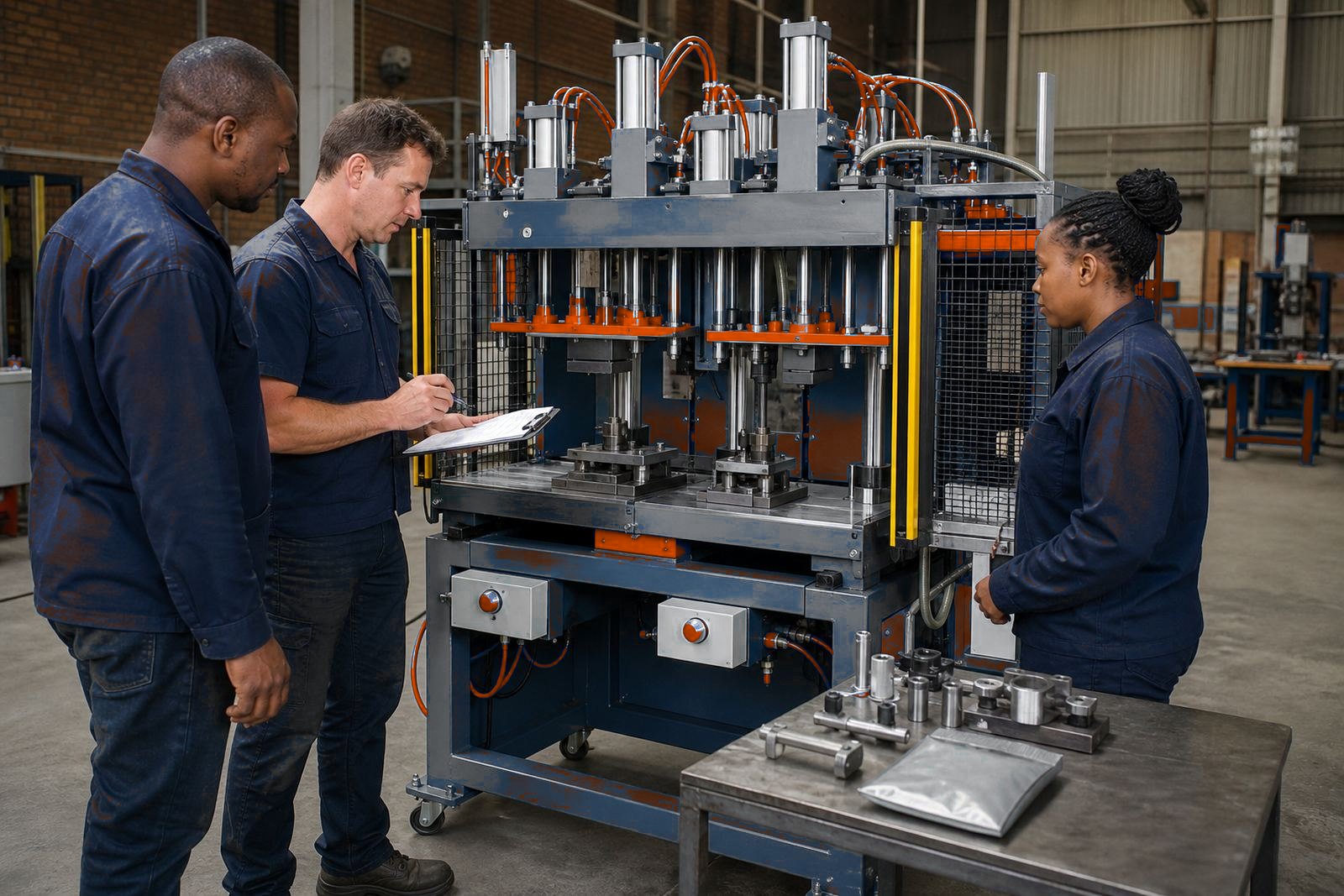
A practical check in the workshop can save a lot of adjustment later. Run the station with the intended part, air pressure and tooling setup. Watch the force feel, the stroke end, the reset and the part finish. If the press needs excessive pressure to make a modest joint, the cylinder may be too small or the tooling may need rework. If the part marks easily or rebounds, the cylinder may be too large for the job.
At this stage, look at the whole installation: air line setup, mounting, stroke setting, guarding, controls and operator hand position. The press should suit the line, not just the bench test. On a multi-station machine, every head should be checked as its own station, then as part of the full cycle.