Arrival, walk-through and machine position
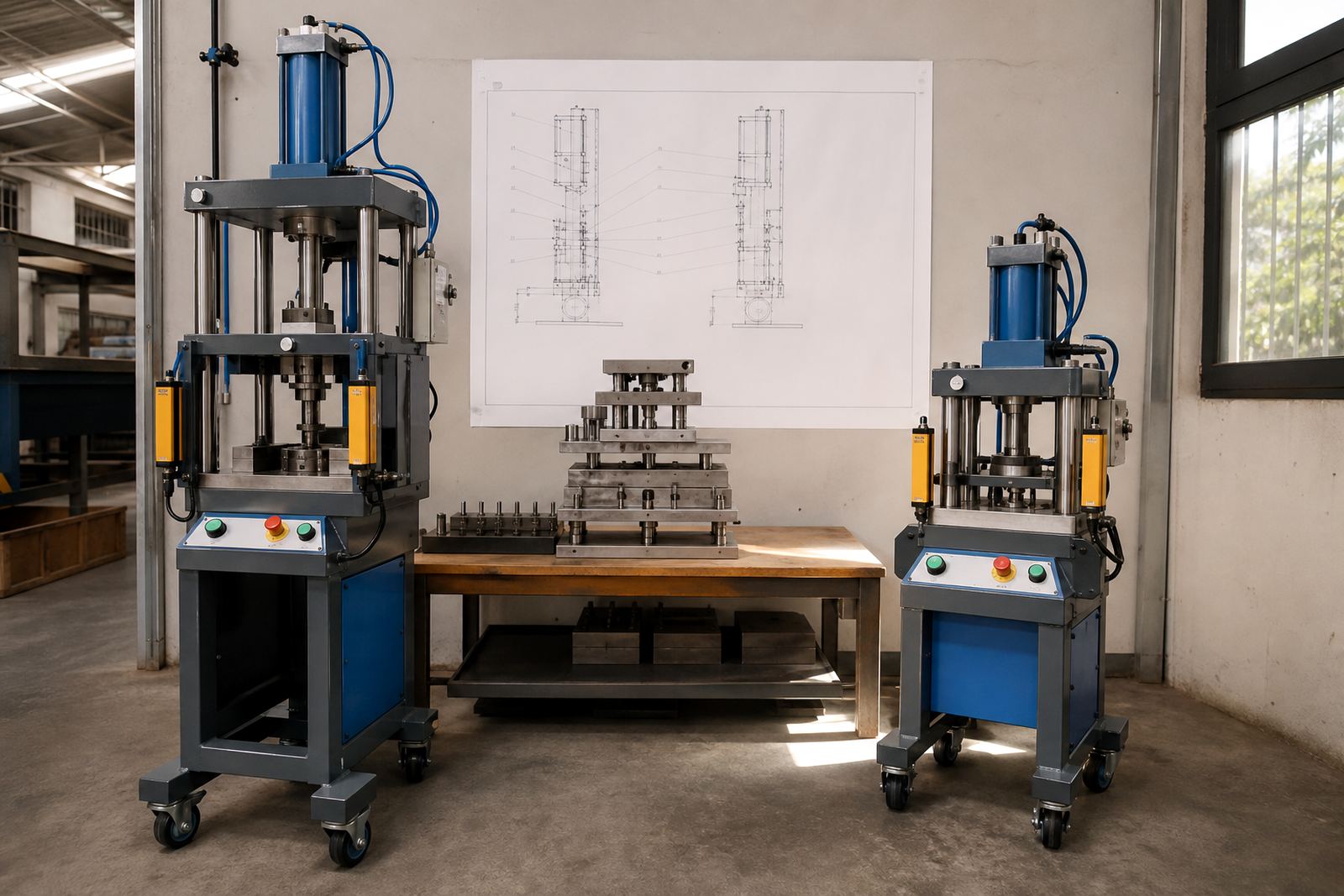
The day usually starts with a walk-through around the press line, the air supply and the finished part flow. The team checks that the machine sits level, the footprint is clear and the operator side, feed side and maintenance access all make sense for the workshop layout. On a multi-station press, small alignment issues can appear quickly, so the first step is to assess the full station set rather than one press point at a time.
Supervisors should expect questions on part orientation, press sequence, air pressure, stroke length and the safe path for loading and unloading. If a line includes crimping, riveting, staking or pack sealing, the tooling must match the job and the part must be presented the same way each cycle. Coastal humidity can also affect stored components and air lines, so seals, filters and fittings deserve a close look before the first cycle starts.
Air, stroke and station checks before the first cycle
Before any full run, the cylinders, stroke settings and air pressure need to be checked station by station. A pneumatic press depends on clean, steady air and the right stroke for the tooling in use. If the stroke is too short, the part may not seat fully. If it is too long, the tooling can overtravel and damage the fixture or the workpiece.
- Confirm the air line is connected correctly and free of leaks.
- Set the regulator to the agreed working pressure for the tooling.
- Check each cylinder for smooth movement and even return.
- Verify stroke stops, end positions and tool clearance.
- Inspect clamps, guides and fixtures for tight fixing.
Where the line has more than one station, each unit should cycle without drifting out of sequence. The goal is a controlled machine that repeats the same movement, not a press that only behaves when watched closely.
Guarding, two-hand controls and light curtain behaviour
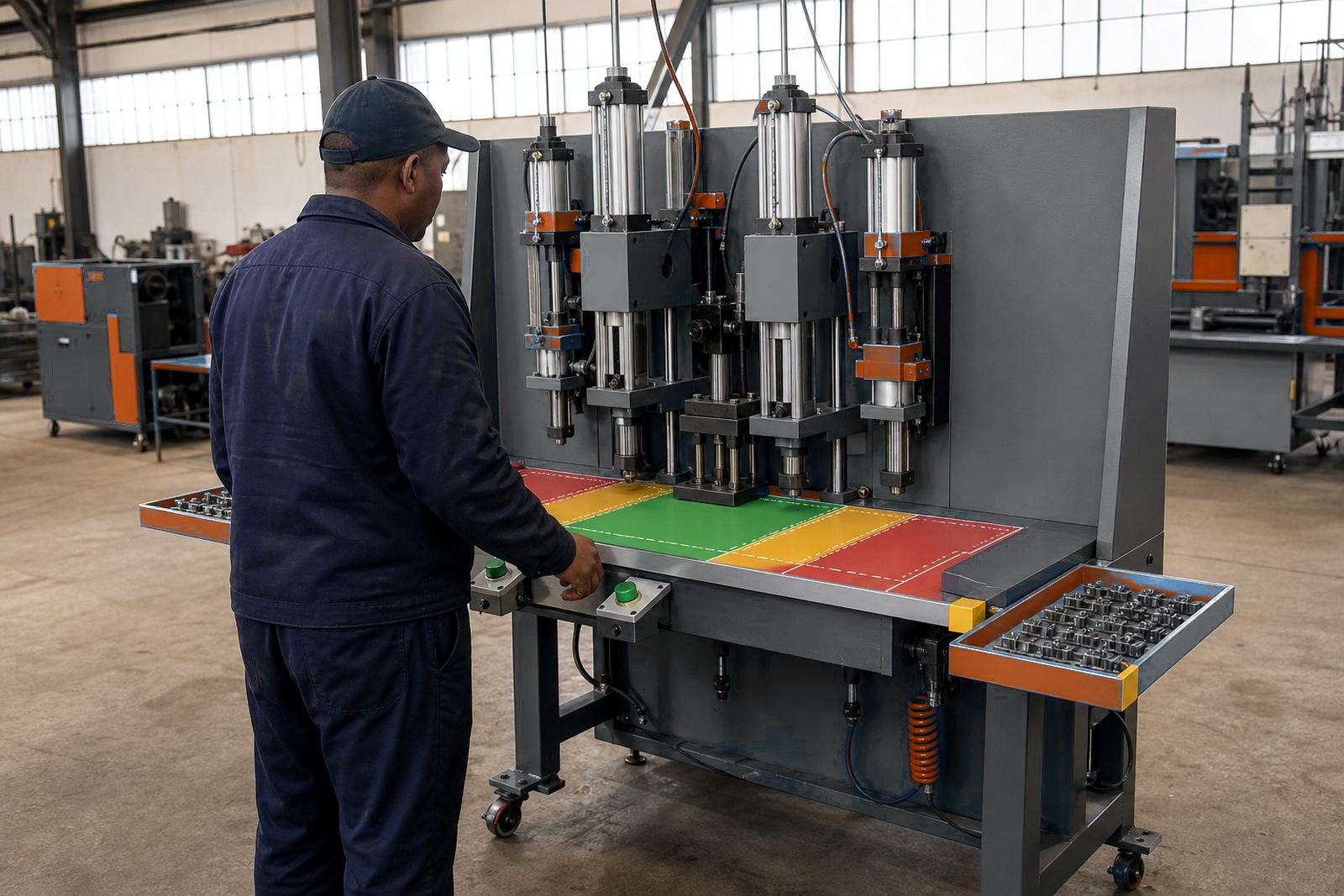
Safety devices are included in commissioning. Two-hand controls must be positioned so the operator cannot reach into the pressing area during the stroke. Light curtains need clean alignment, correct stop distance and proper reset behaviour after an interruption. Guards should close off pinch points without blocking normal loading or visual checks.
During the first test cycles, the team will usually stop and restart the press several times to prove the safety system works with the real tooling in place. That includes checking what happens when a beam is broken, when the guard is opened and when the operator releases both hands too early. A safe press is predictable, and everyone on the floor should understand the logic of the controls before production starts.
First test pieces and what the team watches
The first test pieces tell the story of the machine. The crew looks at fit, finish, repeatability and whether the force is transferring where it should. If the job is a crimp, the team checks depth, shape and retention. For riveting, the head form and setting depth matter. For staking, the formed feature must stay consistent across the batch. Pack sealing work needs even closure and no skewed edges.
- Check the finished part against the agreed sample or drawing.
- Look for burrs, crush marks, splits or uneven forming.
- Confirm the cycle time is steady and practical for the line.
- Watch for vibration, air loss or noise from loose fittings.
- Record any tool wear or material variation noticed during test cycles.
This stage is where small changes matter. A tiny tweak to stroke, pad height or guide position can solve a problem that would otherwise keep showing up in production.
Tooling changes and fixture adjustments on the floor
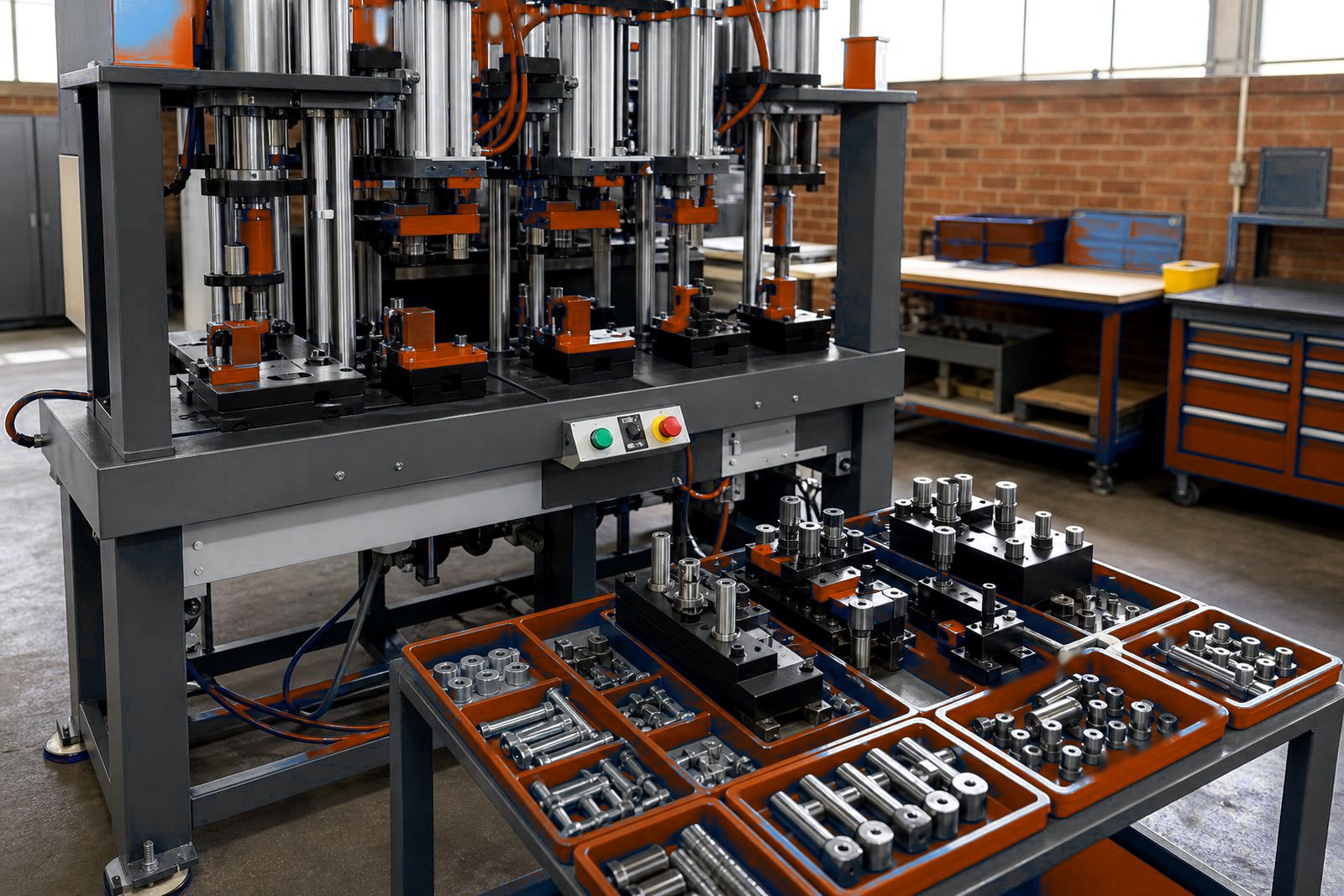
Commissioning often includes a few tooling changes before the line is signed off. A fixture may need better part support, a locating pin may need repositioning or a top tool may need a cleaner entry angle. These changes are normal on custom-built presses, especially where one station feeds the next and each movement depends on the last.
Musa Hartnick and the workshop team will normally look at tool access, wear points and how quickly the operator can change parts without losing control of the set-up. If the job includes frequent product changeovers, the press should make room for quick fixture swaps and clear marking of settings. The better the tooling is laid out, the less chance there is of mix-ups during a busy shift.
Training the operators before production handover
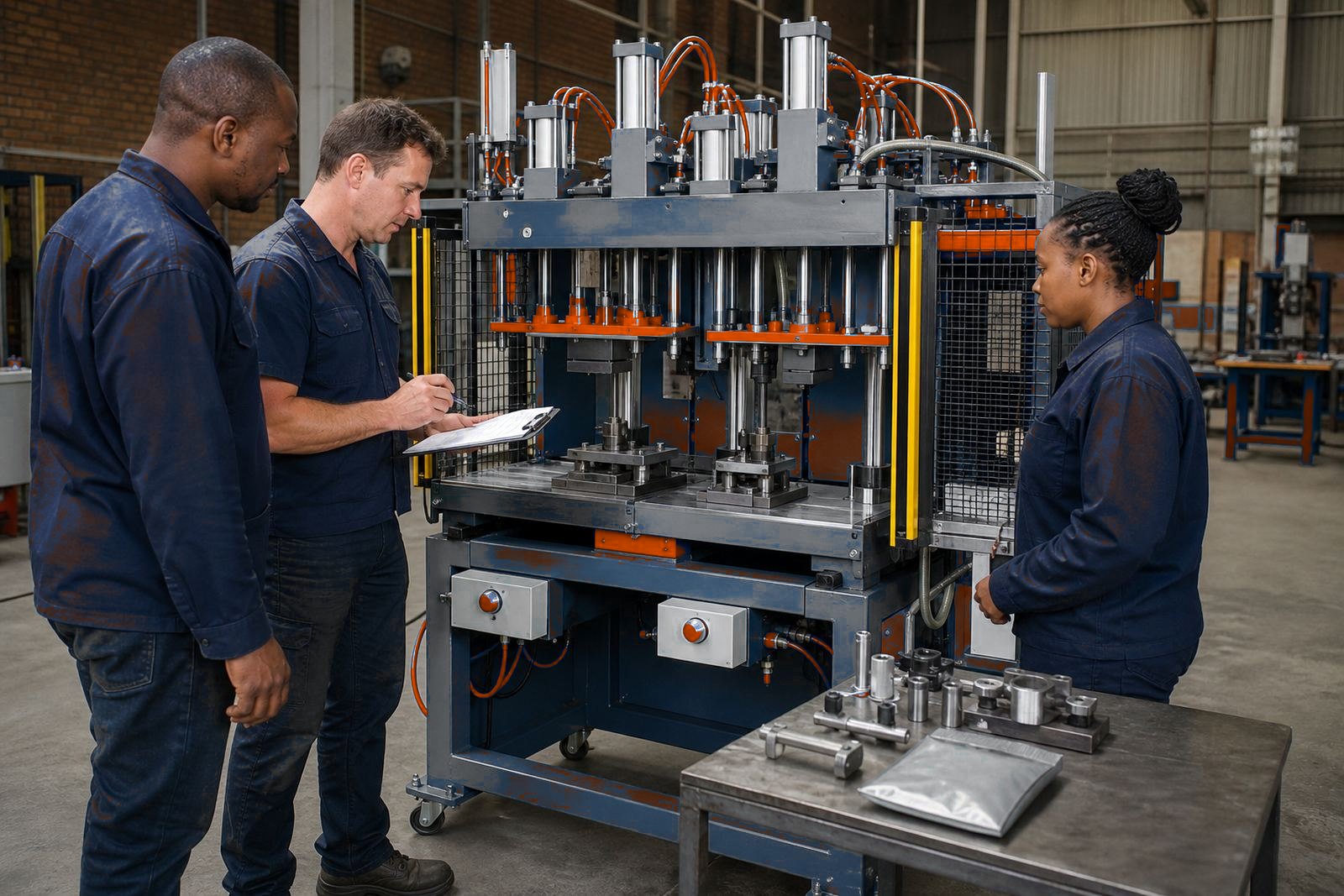
Operator training takes place on commissioning day. The team must know how to start the press, stop it safely, clear a minor jam and check the part without reaching into a live zone. Training should also cover air pressure checks, routine inspection points and what signs call for a supervisor before the line carries on.
Anele Engelbrecht usually focuses on the small habits that keep a press line steady, such as keeping the feed area clear, watching the indicator lights and confirming the correct part is loaded. Supervisors should leave the session knowing who is allowed to adjust stroke settings, who can touch the tooling and what gets logged before handover. Good handover notes save confusion when the line is moved into full shifts.
Handover notes for the first production run
By the end of commissioning, the press should be running to the agreed setting with the guards, controls and tooling working together. The handover should note the final air pressure, stroke position, tool orientation, safety checks and any parts that need close watching during the first run. If a line is headed for Johannesburg, Pretoria, Durban, Gqeberha or East London, the same basics still apply because the press must behave the same way wherever it runs.
Supervisors should keep a simple checklist near the machine for the first shifts. It helps the team pick up drift before it turns into scrap. A clean handover is not about paperwork for its own sake, it is about giving the workshop a machine they can trust with real output.
- Final pressure and stroke setting recorded
- Guarding and light curtain checks complete
- Tooling orientation confirmed
- Operator training finished on the live machine
- First production parts inspected and signed off