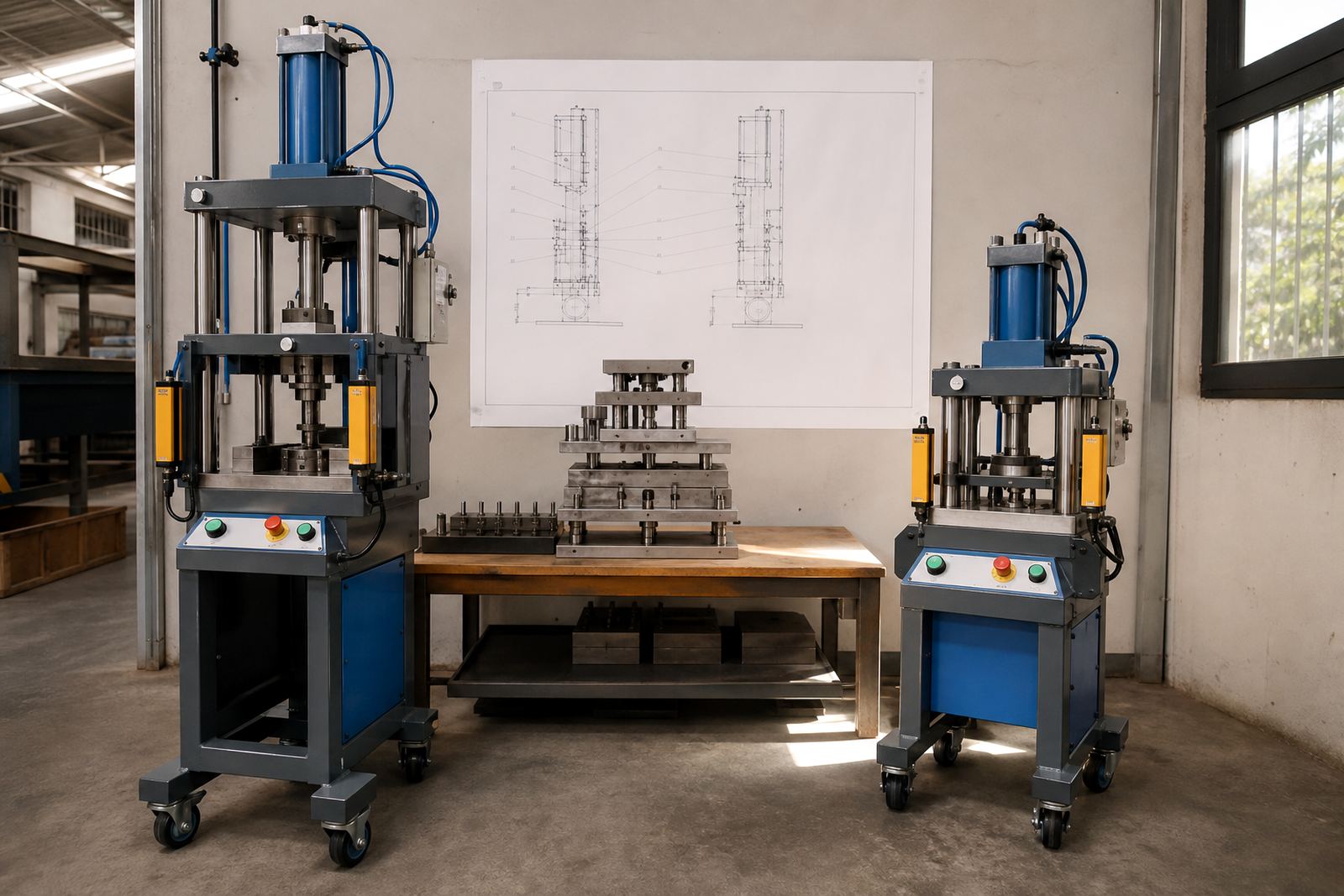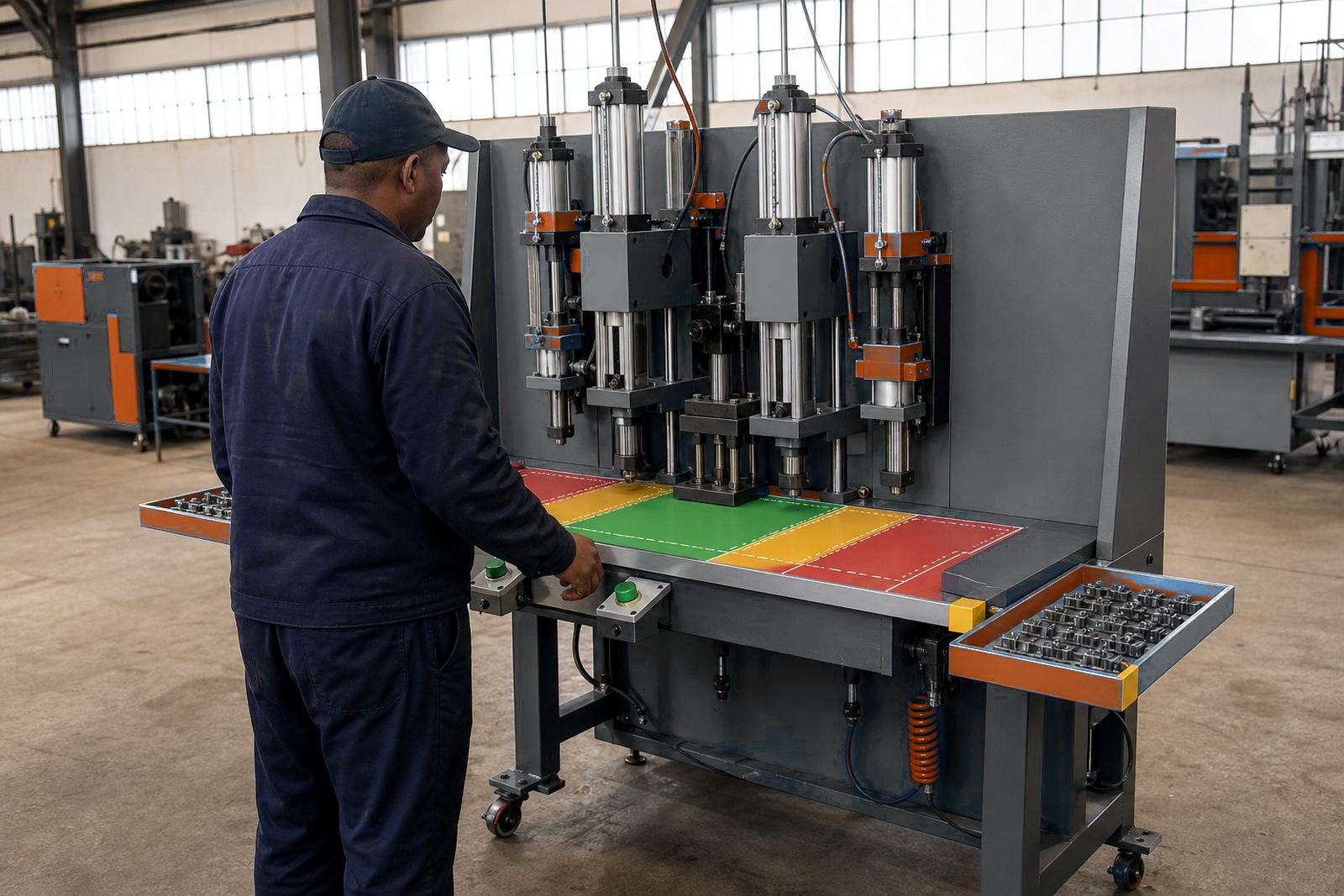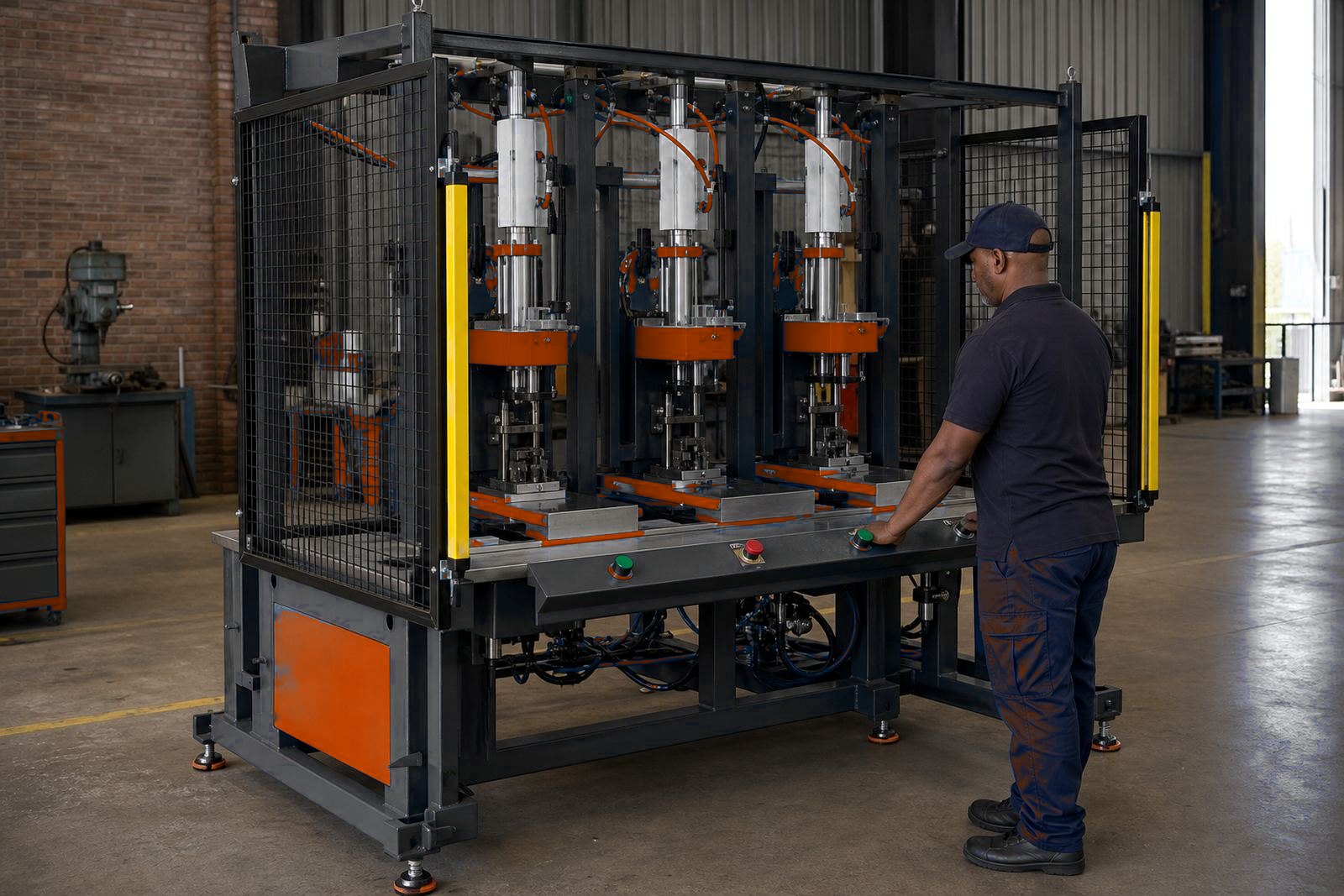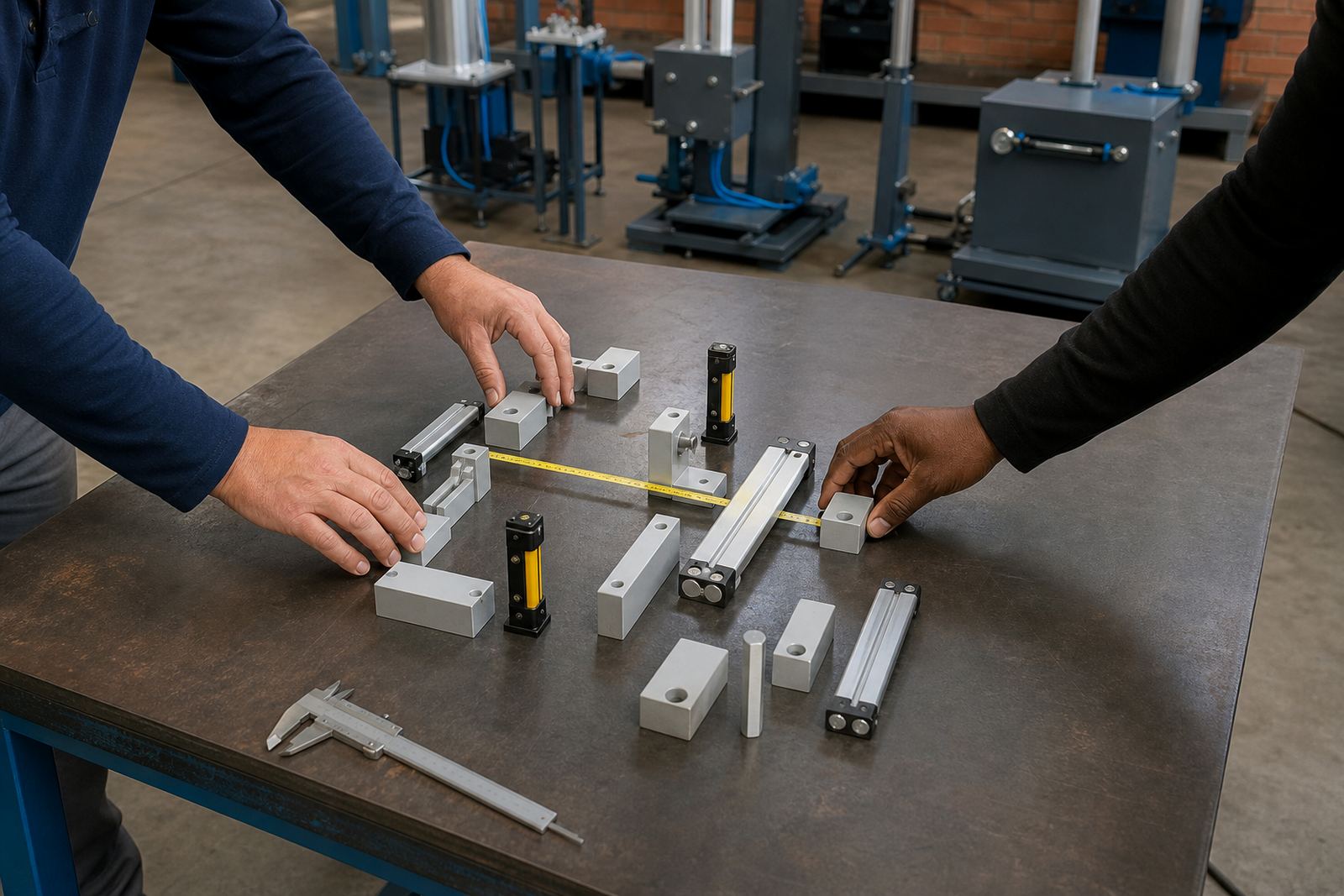
Start with the work sequence, not the frame size
Begin with the full process on the bench. If the part only needs one action, such as a single crimp or one pack seal, a single station may be enough. When the job needs part loading, forming and a second check or finish step, a second or third station can remove extra handling and keep the flow steady.
Think about whether the part must be held in one place while the cylinder descends, or whether it needs to move between stations for the next action. A simple sequence can run on a compact press, but a part with inserts, clips, tabs or seals often benefits from separate stations with fixed tooling at each point.
- Count every action from load to unload.
- Note which steps need a different tool or force.
- Check whether the part can stay square through each move.
- Allow for inspection, trimming or final release if needed.
When a single station fits, and when you need more
A single-station pneumatic press suits work where the operator can place the component, trigger the cycle and remove the finished part without another forming step. It works well for short runs, simple assemblies and tasks where tooling only needs one clamp point or one pressing head.
Once the part needs a second operation, such as a preload followed by a finish crimp, or a seal followed by a set check, the cycle can become awkward on one station. Extra handling raises the chance of skew, damage or inconsistency. That is usually the point where a second station earns its place.
- One station: one action, one tool, one output point.
- Two stations: load and form, or form and finish.
- Three stations: separate actions that must stay in order.
- More stations: repeated steps, inspection, or multi-part assemblies.
Match cylinder force and stroke to each station
Station count and cylinder size need to work together. A larger force does not fix a layout that is too cramped, and extra stations do not help if the stroke is too short for the tool to do proper work. For crimping, riveting or staking, each station may need a different stroke and pressure window to achieve a clean result without crushing the part.
Where a pack sealing line needs even compression, the stroke should reach full contact without driving past the seal height. For assembly work with inserts or bushes, the top station may need a gentler approach while the finishing station carries the full press load. Good tooling design keeps the action repeatable and protects the component surface.
- Check the stroke needed for tool entry and exit.
- Confirm the air pressure range for each action.
- Allow room for part height variation.
- Keep the cylinder travel aligned with the tooling face.
Safety parts that affect how many stations you can run
Two-hand controls, light curtains and guarding are not add-ons to think about later. They shape the station count from the start. A larger press with several stations may need better access control, clearer operator positions and more disciplined hand placement than a basic one-station unit.
When the operator must load one station while the next station is in cycle, the guarding layout has to protect the reach path and keep hands clear of the press area. Light curtains can suit some layouts, while two-hand controls are better where the operator stays at a fixed point. The best option depends on the motion, not on habit.
- Fix the operator stance before fixing the guarding.
- Keep the load area outside the danger zone.
- Make sure the control method suits the cycle speed.
- Leave enough space for safe part removal and inspection.
Tooling layout decides whether a station earns its place
Station count should follow tooling logic. If one tool must hold a component while another tool forms it, separate stations reduce fuss and improve consistency. If the part can be supported, pressed and released in one neat movement, a larger station count may only add cost and extra setup.
Tooling changes also matter. A plant that runs a family of parts may need a base layout that accepts quick tooling swaps, while keeping the same press body and guarding arrangement. That is often useful in South African factories where the same line may shift between pack sealing, riveting and small assembly work through the month.
- Ask which station needs the tightest location tolerance.
- Identify tools that must share a datum.
- Allow for quick changeover where part sizes vary.
- Check whether one station can carry more than one insert.
A clean way to size the job before commissioning
A practical way to decide is to map the job in three steps. First, list the actions in order. Second, mark the force, stroke and hold time for each action. Third, decide whether each action can happen in the same space without compromising safety or part quality. If the answer is no to any of those points, another station may be the better path.
Before commissioning, the workshop should also confirm the air line setup, the part presentation and the final handover routine. A press that fits the process on paper still needs a tidy operator sequence, steady tooling location and clear checks during production handover. That is where the real station count proves itself.
- Write down each action from load to finish.
- Mark the station where the part changes shape.
- Check whether the operator needs a second reach.
- Decide if the line needs one press or a station set.