Start with the footprint, not the machine
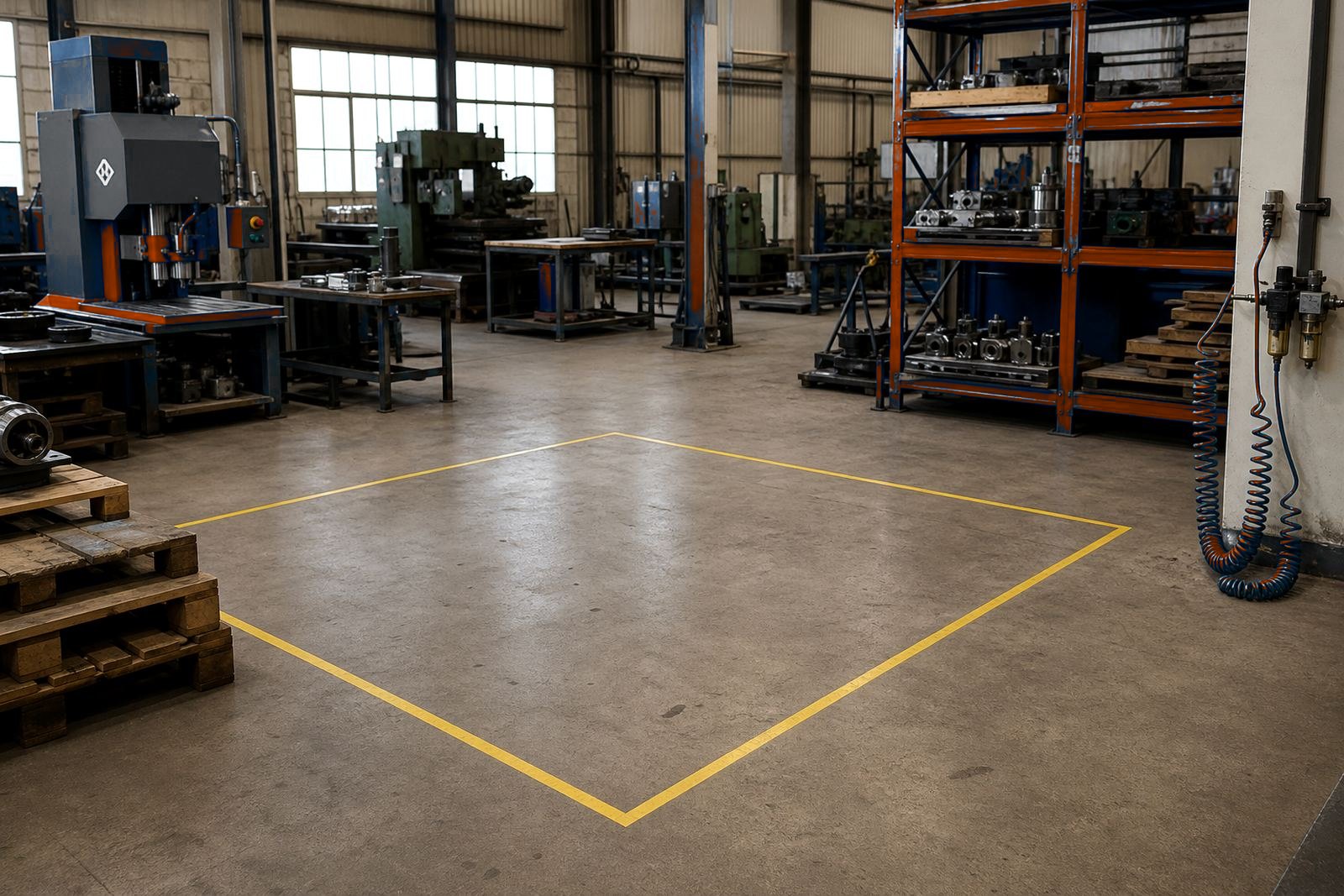
Measure the full press envelope, not only the bed size. Allow space for the frame, tooling access, guard openings and the way parts will move in and out of the station line. In a tight Isando workshop, a few extra metres of clear space can decide whether the press sits comfortably or forces awkward handling.
Allow clear space behind and beside the press for maintenance access. If tooling changes will happen often, leave room for carts, bins and the technician who has to get to the cylinders, controls and pressure lines without climbing over product.
- Use tape to map the press footprint on the factory floor.
- Keep walkways clear around all operator positions
- Leave space for tool trays and finished parts
- Check ceiling height if guards or lifts need upward clearance
Set the operator path before the press lands
Assembly lines work better when the operator flow is settled early. The person loading parts should not cross the path of the person taking parts away, and the inspection point should sit where lighting and reach are sensible. When a line includes crimping, riveting or staking, the hand movements are usually repetitive, so the route must stay short and obvious.
Think through where raw parts arrive, where rejects go and where packed units leave the station. If you are sealing packs, leave a clean side for film, cartons or trays so the operator is not turning around for every cycle.
- Keep incoming parts on the same side each shift
- Separate infeed, press zone and outfeed points
- Give supervisors a clear line of sight to the station
- Avoid stacking loose stock where the operator stands
Air supply needs more than a compressor nearby
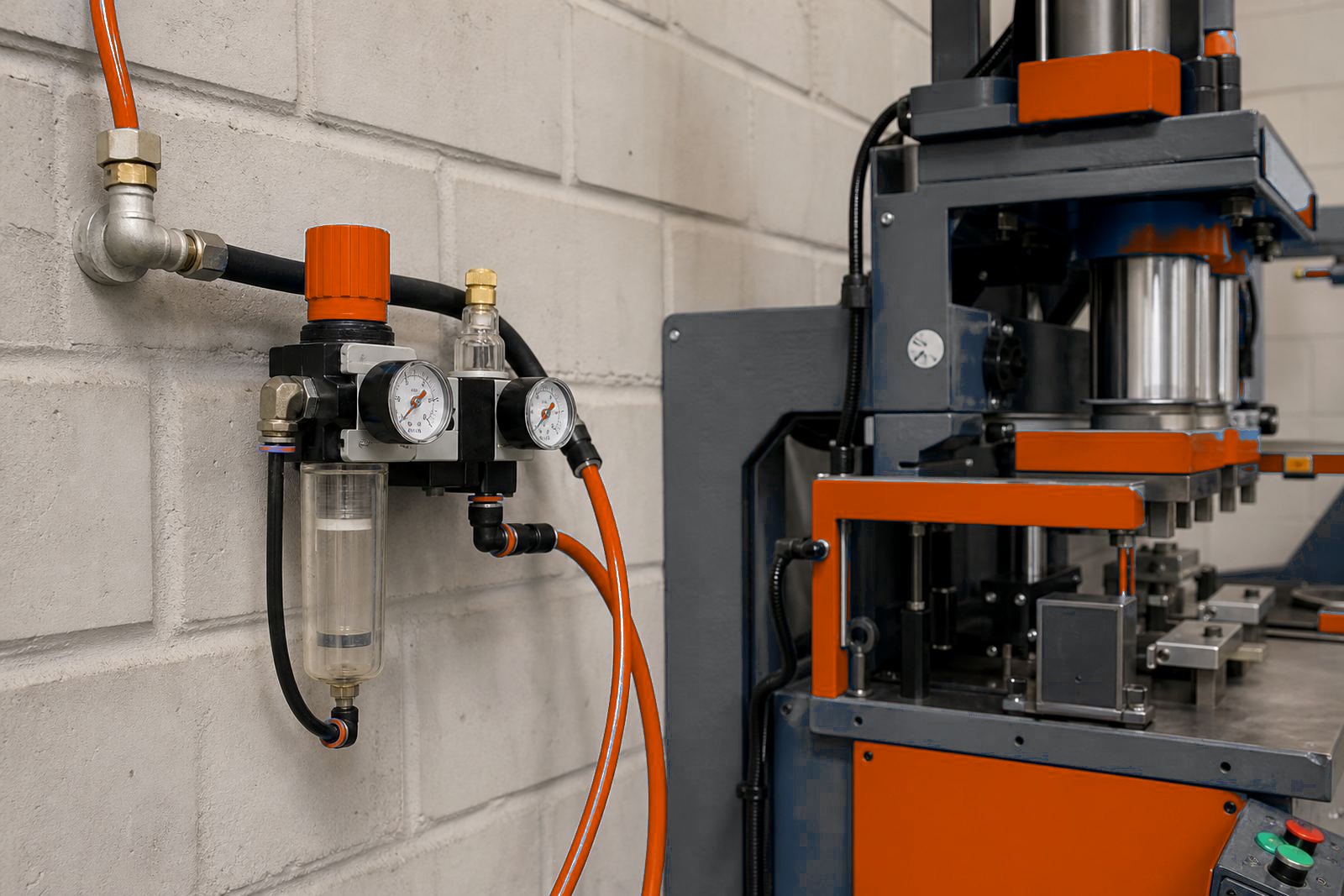
Pneumatic presses depend on stable air pressure and clean air. The compressor may be in the same building, but the line still needs the right pipe size, correct routing and proper moisture control. In humid coastal conditions, water in the airline can spoil stroke consistency and shorten the life of valves and cylinders.
Before installation day, check the available pressure at the point of use, the pipe run length and whether the drain points are working. A press that must cycle cleanly for assembly, crimping or riveting cannot be guessing about supply pressure.
- Confirm the air line reaches the press position without sharp losses
- Make space for filters, regulators and moisture drains
- Check that isolating valves are reachable
- Keep airline bends gentle, not tight or crushed
Make room for guarding and two-hand control
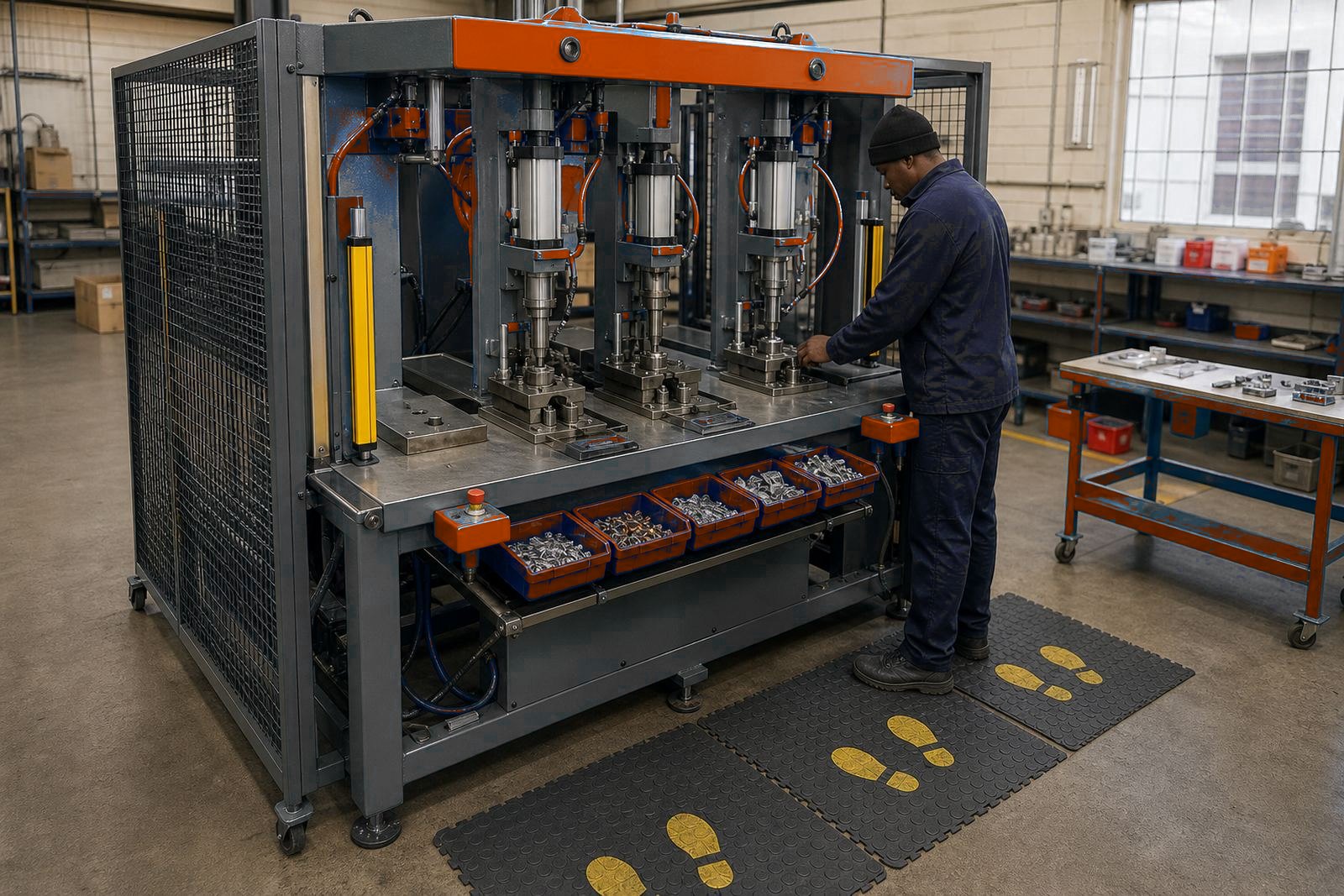
Guarding is not a late extra on our pneumatic presses. The layout has to suit the guard doors, light curtain position and two-hand controls from the start. If the operator must lean in too far, or if the control buttons sit in an awkward place, the station becomes tiring and unsafe to work.
For presses used in production lines, the safe zone around the die area matters as much as the stroke itself. The tooling designer and commissioning technician need enough freedom to set the stroke, check clearances and confirm that the hands stay outside the hazard area during cycling.
- Leave a fixed position for the control station
- Keep the light curtain path free of bins and scrap
- Do not place loose tools inside the guarded area
- Make sure the operator can load the press without stretching.
Tooling access saves time later
Custom tooling should be planned with the machine, the product and the changeover rhythm in mind. A press built for staking may need different die access than one used for pack sealing or multi-point assembly. If the fixture is hard to reach, changeovers will take longer and the operator will work around the problem instead of with the machine.
Give the tooling designer the part drawings, sample components and any special holding concerns before installation. That helps with fixture design, stroke setting and the way the tooling sits under pressure. It also helps the workshop plan where spares, inserts and adjustment points should live.
- Keep sample parts on hand for setup
- Label tooling, inserts and fixture plates clearly
- Leave bench space near the machine for adjustments
- Store change parts where they will not go missing
What the floor should be able to carry
A multi-station pneumatic press can be compact, but it still needs a stable base and a floor that does not flex under load. Uneven slabs can affect alignment, especially where the press is used for repeat crimping or riveting across several stations. If the floor slopes, pools of oil or condensation can also make the area messy and harder to keep tidy.
Check whether the final position sits near a door, roller shutter or traffic route. Forklifts, pallet jacks and trolleys should not clip the machine base or block the operator. In Ekurhuleni factories, the floor around the press often ends up carrying more traffic than expected, so the layout must be planned as a working zone, not just a spot for equipment.
The handover works better when records are ready
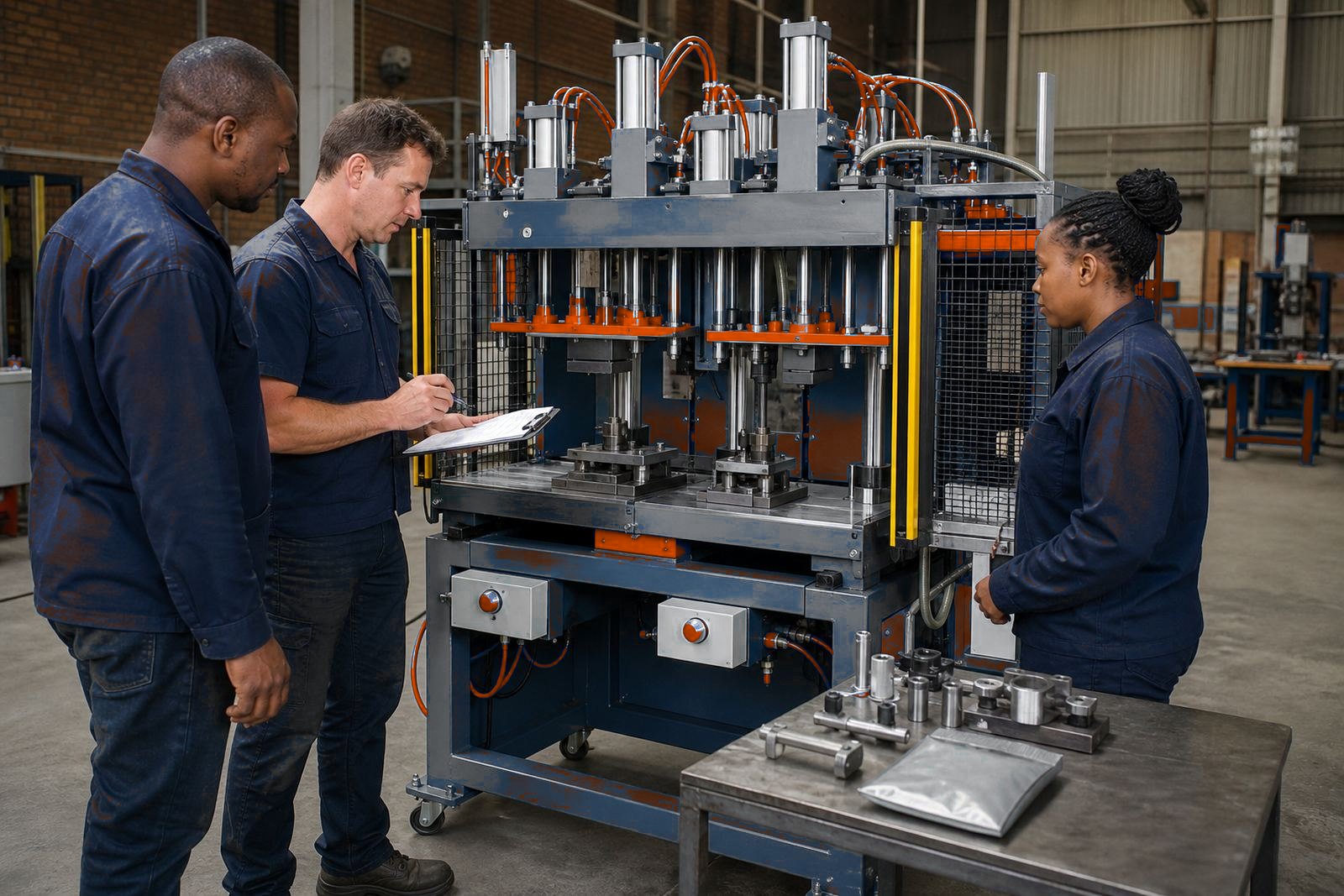
Commissioning goes more smoothly when the basics are already in one place. Keep the approved drawing set, part samples, air details and the production target close to the machine area. That gives the commissioning technician a clear path through setup, testing and production handover.
Operator training is easier when the team already knows where materials sit, where scrap goes and who handles tool changes. A clean handover is not only about the first cycle, it is about how the line behaves on a normal production day.
- Keep drawings and machine notes in one file
- List the people who will run each station
- Prepare a safe area for training and practice runs
- Have sample product ready for final checks