Air supply checks before the press lands
Before a new press goes into service, the air line should be checked as carefully as the tooling. A machine may be set up for a given working pressure, but the supply at the point of use can be lower once it passes through long pipe runs, bends, quick couplers and old plant valves.
We look at the main line, branch line and drop to the press, then compare that with the cylinder demand, stroke speed and the number of stations working at once. On a multi-station unit, one weak section can show up as a slow ram, uneven clamping or a press that feels different from one cycle to the next.
- Check pressure at the press itself, not only in the compressor room.
- Check pipe bore, hose length and the number of elbows in the run.
- Look for water, oil carryover and rust in the line.
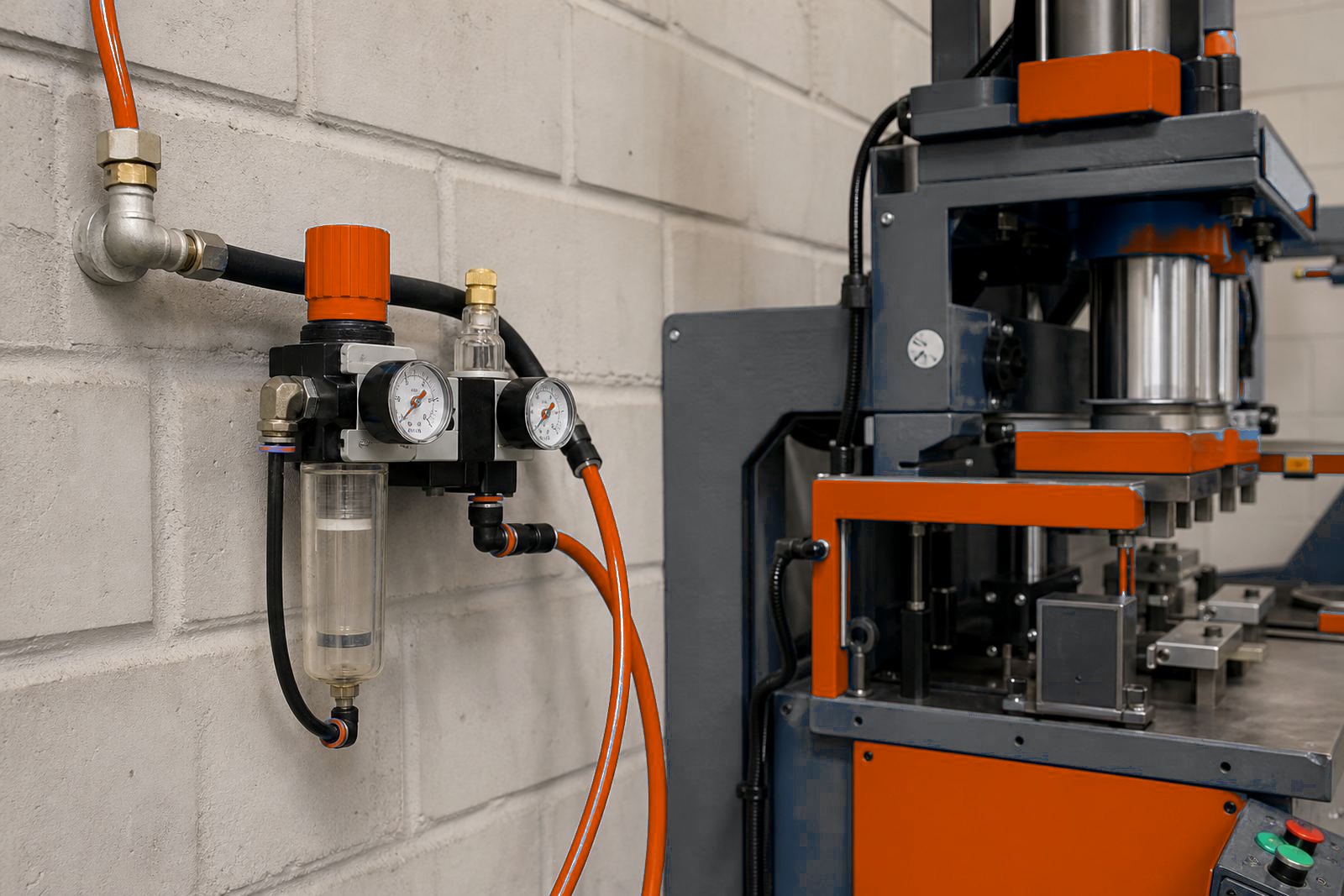
- Confirm the air service unit is sized for the duty cycle.
What the cylinders need from the line
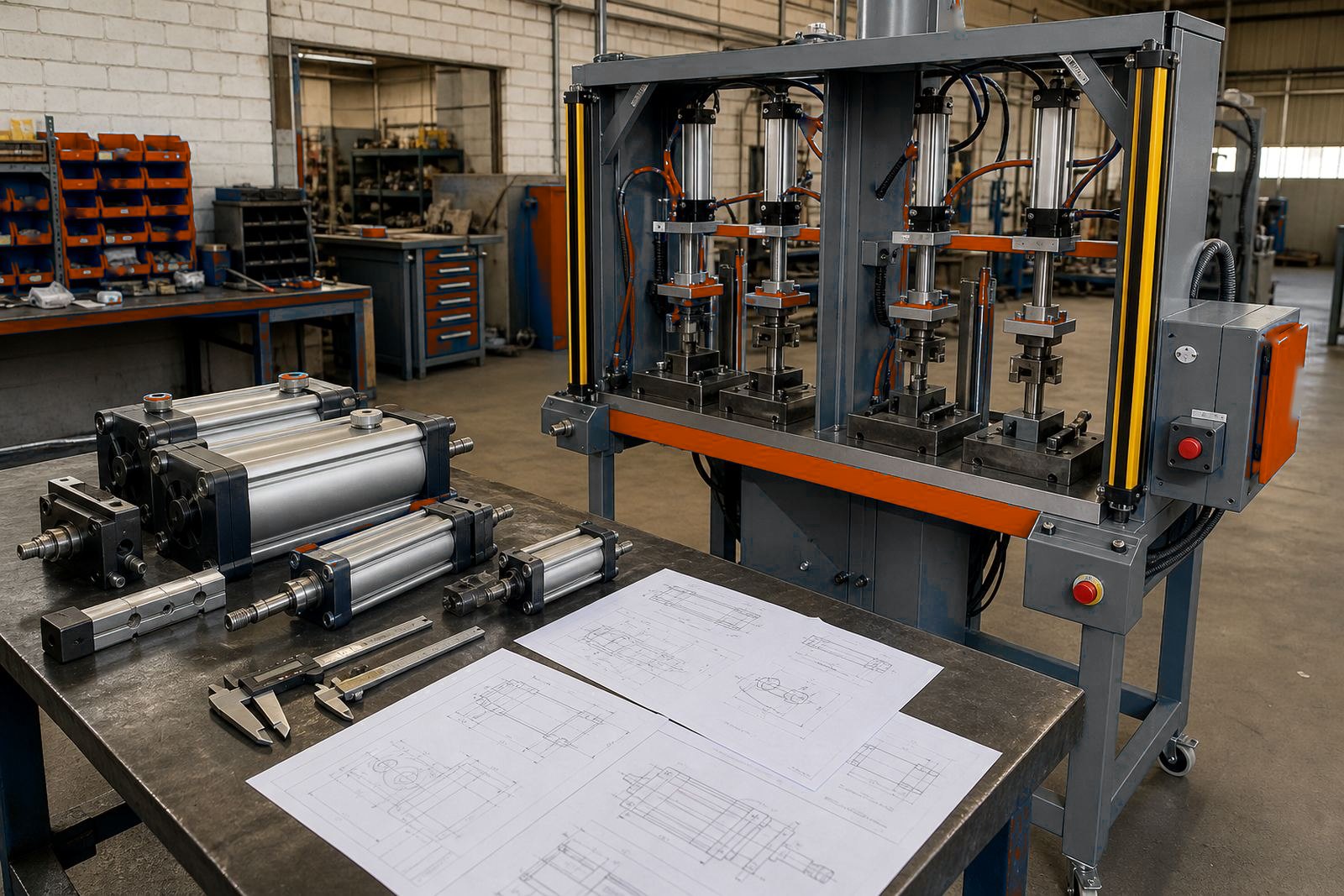
Each cylinder needs enough air pressure and flow to move cleanly through the full stroke, not just at idle. A press with several stations can call for more air than a single-cylinder machine because the tooling load changes from station to station, especially on crimping and riveting jobs where the force curve matters.
Air pressure alone is not the full story. If the line cannot deliver flow fast enough, the machine may still cycle, but the stroke can slow near the working end and the operator notices a different feel at the controls. That is where the setup should be matched to the actual production pace, not the paper rating on a compressor gauge.
For tighter work, such as staking or pack sealing, the stable delivery of air matters as much as peak pressure. The press should not hunt for air every time the operator starts a new cycle.
Moisture, oil and dirt do not stay harmless
Compressed air that looks clean at the compressor can still carry water and fine dirt into the press. In humid coastal work, moisture can collect quickly, and if it reaches the valve block or cylinder seals it can shorten service life and make the movement sticky.
Water in the line can also affect guarding sensors, two-hand controls and light curtain fittings around the press bay. Dirty air leaves deposits on tooling faces and in the small passages that keep the machine moving predictably. That is a problem on factory floors where the press is used through long shifts and the machine is expected to hold the same action from the first part to the last.
- Drain separators and filters regularly.
- Check auto drains for blockage or poor operation.
- Inspect hose ends for cracking, swelling or loose fittings.
- Keep water traps and filters where maintenance can reach them safely.
Line sizing and pressure drop at the point of use
A common issue is a line that was fine for older equipment but too small for a new multi-station press. Long pipe runs from a central compressor room can create pressure drop, and the press then starts with less air than expected. When the machine cycles repeatedly, that drop becomes more obvious.
For a new installation, the supply should be checked with the machine at working pace and not only during a light test. It helps to measure at the FRL unit or service point nearest the press. If the pressure falls too far while the ram is cycling, the line or reservoir arrangement needs attention before production starts.
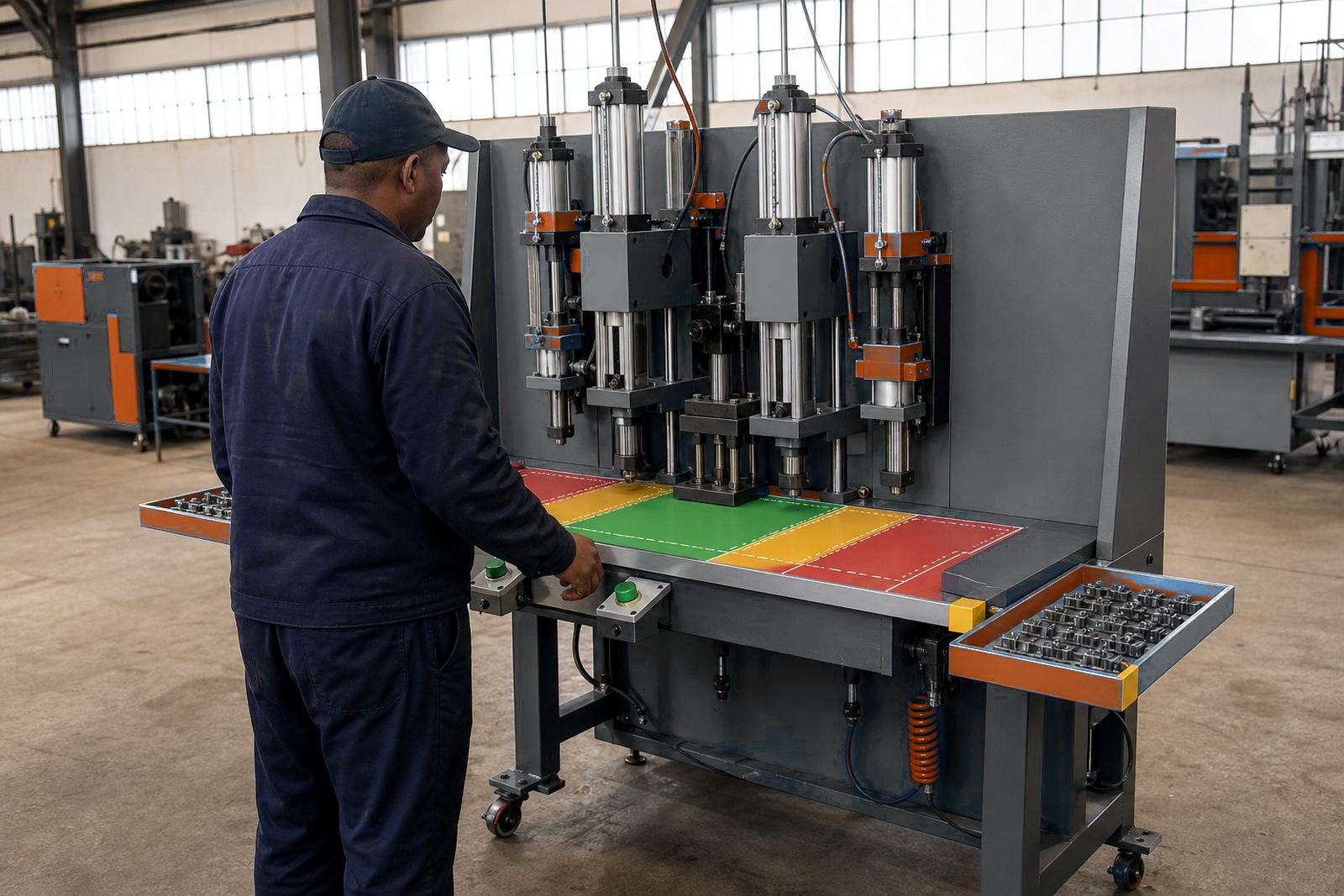
Good line sizing also helps the guarding and control package behave properly. Two-hand controls should not be affected by sluggish air movement, and the press should not need constant resetting because the supply is fighting the machine.
A practical commissioning checklist for the factory floor
Commissioning is the right time to catch supply problems, not after parts have already gone through a rough run. A clear check at the machine saves a lot of head scratching when cycle times shift or a station starts to mark the workpiece.
- Confirm inlet pressure under operating load.
- Check for leaks at couplers, valves and cylinder ports.
- Test the stroke at full speed and at setting speed.
- Verify the air treatment unit is clean and correctly plumbed.
- Make sure the emergency stop and safety devices behave as intended.
- Inspect the tooling load across all stations, one by one.
If the press is used for assembly or crimping, the tooling should be checked after the air supply test, not before it. That way the machine is tuned against a stable base, not a moving target.
How air checks fit into tooling and production handover
Once the supply is stable, the tooling can be set with more confidence. Stroke setting, fixture alignment and guarding all work better when the press is breathing properly. On a multi-station press, each station should be tested for repeatability so the operator is not forced to compensate for a weak line or a slow valve.
At handover, the team should know what pressure the machine needs, where the isolation valve sits, how to drain the line and what signs point to trouble. That makes day-to-day running far easier in Johannesburg, Pretoria, Durban, Gqeberha, East London and the surrounding industrial areas. A machine with a steady air supply is simpler to keep on spec, and the tooling lasts longer too.
Our work in Isando includes commissioning, line setup, tooling changes and operator training, so the air supply review sits in the same conversation as guarding, controls and production handover.
Signs the supply needs attention before production starts
If the press has already been delivered but the air system was never checked properly, the warning signs are usually plain. They show up in the feel of the machine, the condition of the air line and the look of the first parts through the stations.
- Pressure falls when more than one function is active.
- The ram moves unevenly or hesitates near the stroke end.
- Water appears in the filter bowl or at the drain point.
- Tool marks are inconsistent from station to station.
- The machine needs repeated adjustment during setup.
Those issues do not always mean the press is at fault. Very often the line, treatment unit or delivery path is the real problem. A proper review saves the workshop from chasing faults in the wrong place.