Select a frame height that suits the job, not the other way round.
An adjustable height press is a pneumatic press frame with a movable upper section, set-up spacers or a sliding bed arrangement so the working daylight can be matched to the tooling stack in front of it. That matters when one line handles shallow parts in the morning and taller assemblies later, because the stroke, shut height and tool location all need to land in the same place every time.
In practice, the frame must stay square through the full adjustment range. The cylinders need enough force for the press operation, while the guide system keeps the ram straight under load. On a pack sealing or crimping job, a small change in tooling height can affect seal quality or terminal grip, so the adjustment has to be repeatable and locked down properly.
Where the adjustable build earns its keep
This type of press suits assembly lines where product heights vary, or where one frame has to support several fixtures. It is used for light to medium-duty pressing work in plant areas that handle electrical parts, metal sub-assemblies, clip fits and packaging closure work. The same frame can be set up for a small component nest one shift, then a deeper fixture the next.
- Assembly lines with mixed component heights
- Crimping stations for terminals, sleeves and lugs
- Riveting and staking points with different stack thicknesses
- Pack sealing stations that need controlled closing height
- Trial work where tooling changes are still being settled
For Gauteng factories and coastal plants alike, the useful point is control. Once the tooling stack, part depth and press stroke are matched, operators are not fighting the frame every time the job changes.
Sizes, stroke ranges and control options
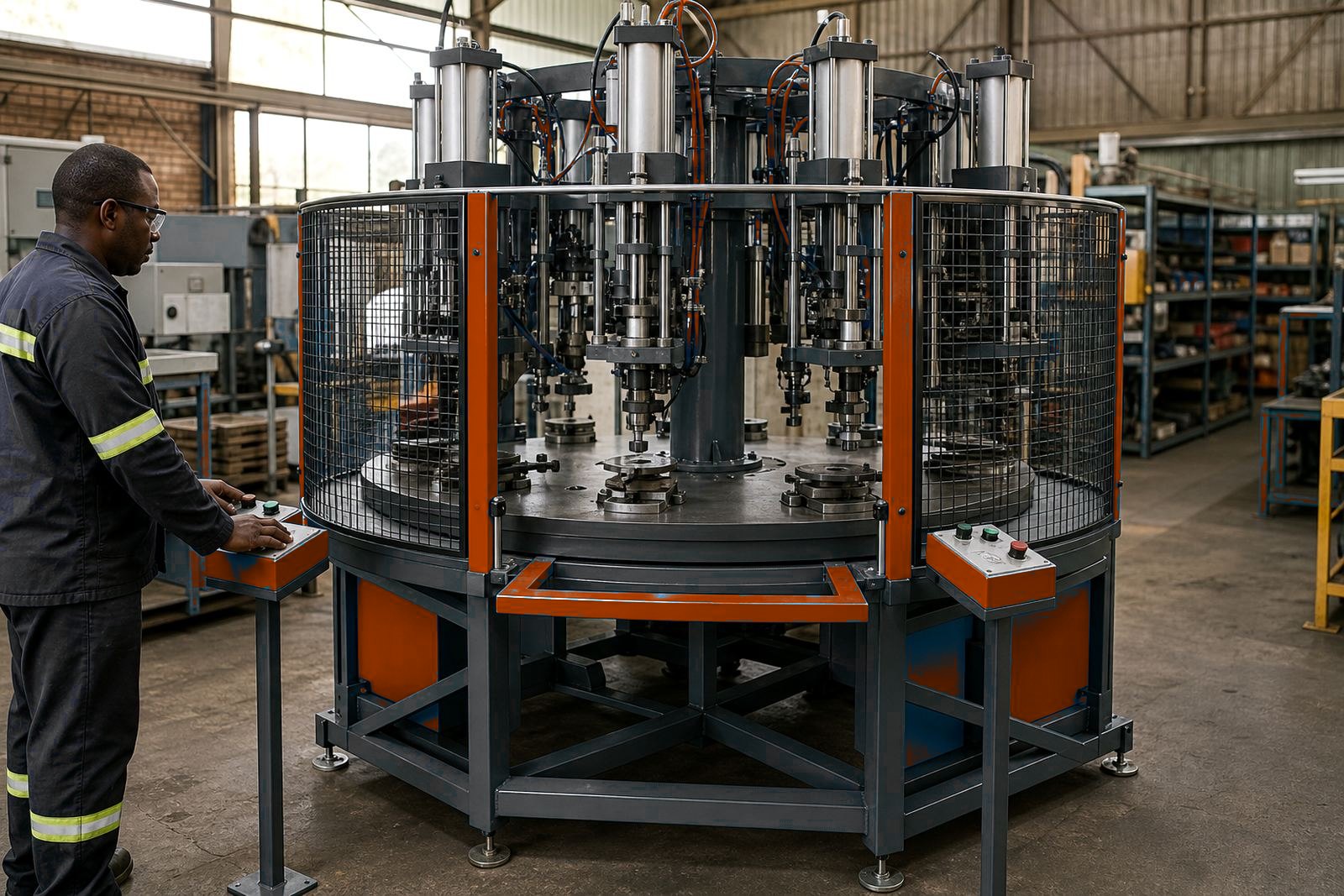
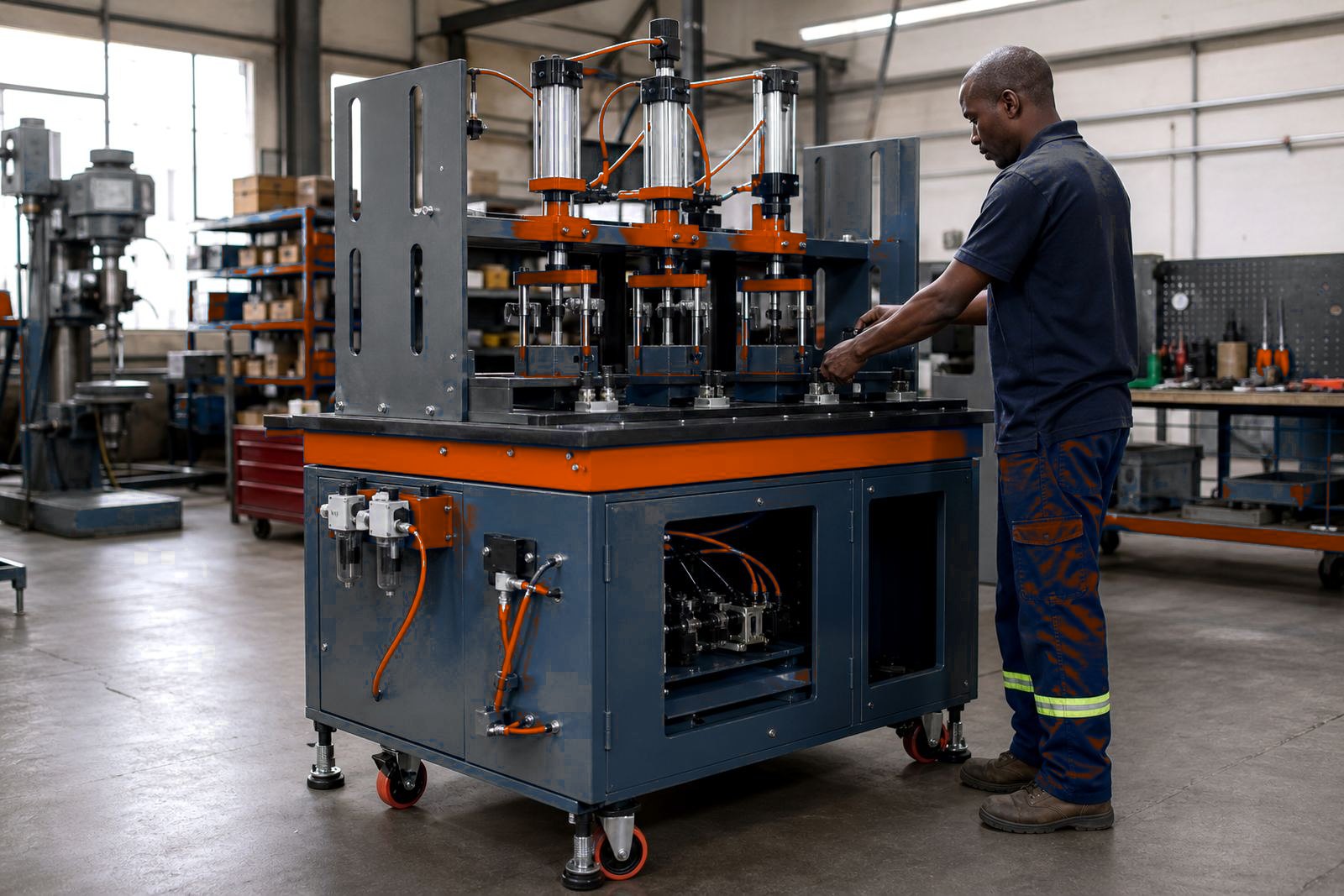
Adjustable height presses are usually specified by frame opening, usable stroke and cylinder count. Some workshops want a compact single-station unit for bench-mounted work, while others need a wider floor-standing frame with more daylight and a deeper tool pocket. The choice depends on part size, tool reach and the amount of adjustment needed between jobs.
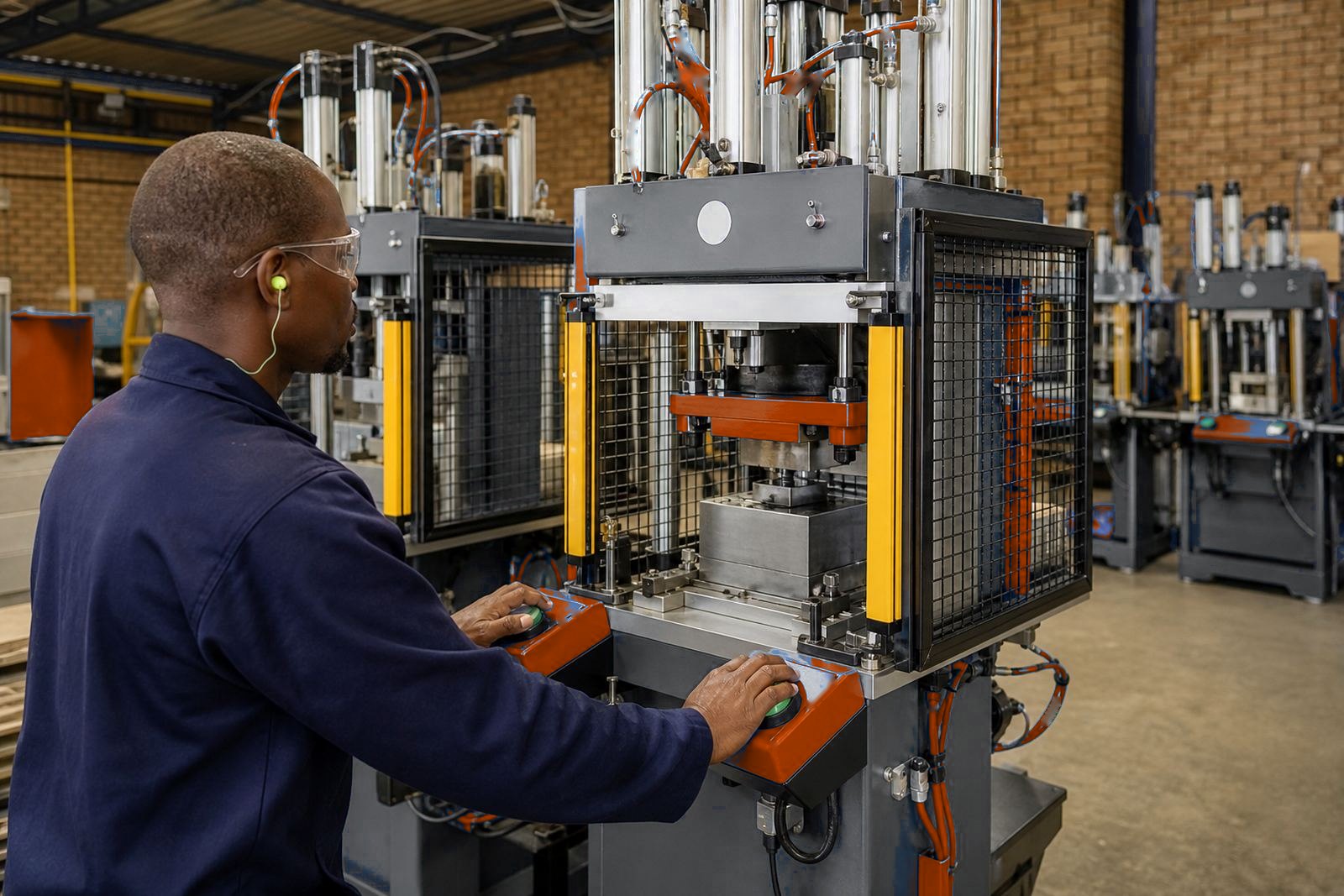
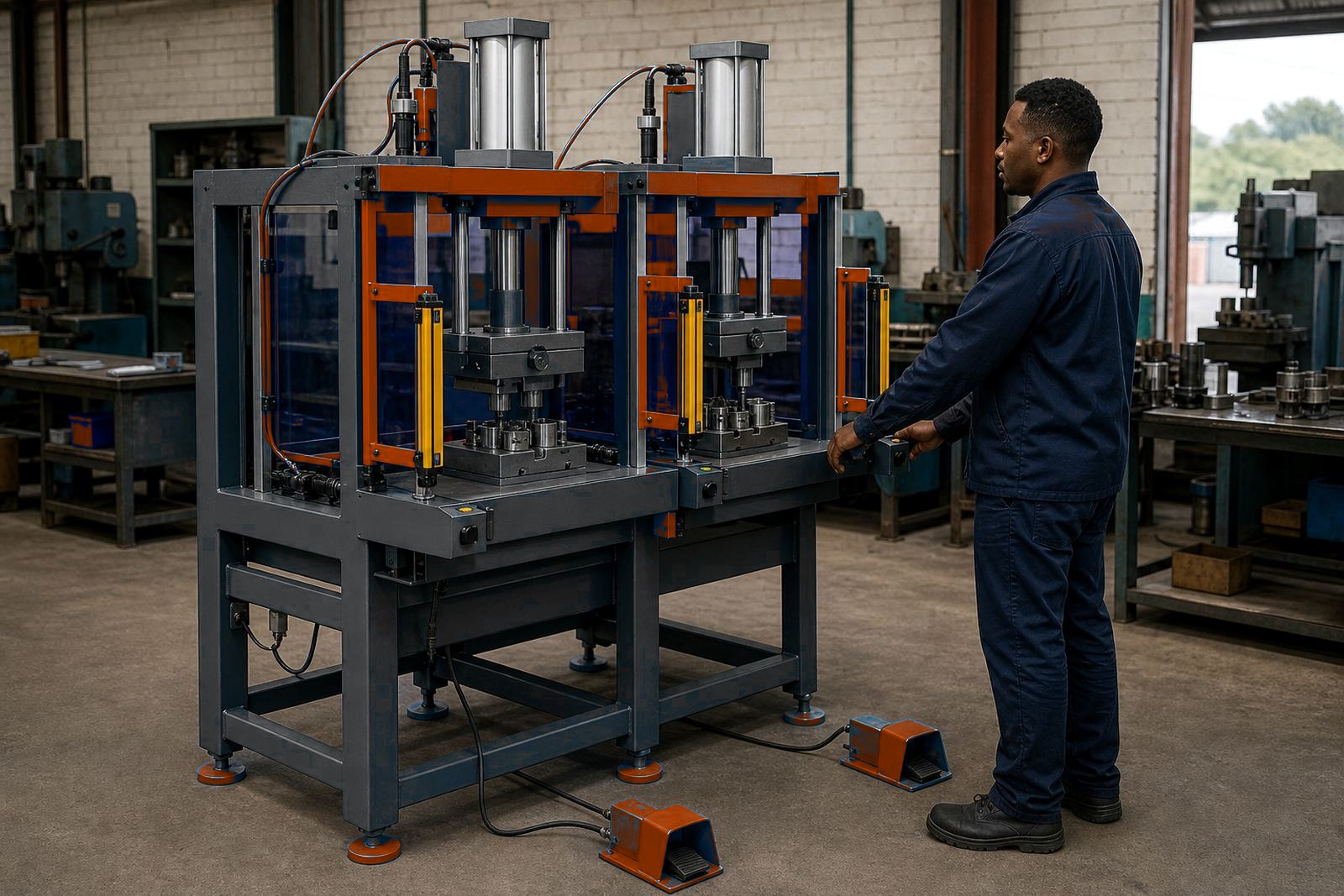
Common build options include two-hand controls for safe cycling, light curtains where access is frequent, and stroke setting for parts that need a fixed compression distance. Air pressure is matched to the force needed, and the press can be set with one cylinder for lighter work or multiple cylinders for larger, more even force distribution.
- Single-station or multi-station frame layouts
- Adjustable shut height for taller tooling stacks
- Fixed or adjustable stroke setting
- Two-hand controls for operator safety
- Light curtain protection where access is open
Tooling fit, guarding and line handover
The press is only as useful as the tooling sitting in it. Custom tooling, fixture design and guarding all need to be matched to the adjustment range, or the press will spend its time being re-set instead of producing parts. A taller stack may need altered locating pins, a deeper throat space or a revised guard opening so the operator can load parts without reaching into the danger area.
MultiPress handles site installation, air line setup, press commissioning and production handover for these units, with the same care given to a single station or a longer line. Where the job needs it, two hand controls can be paired with a light curtain, and the stroke setting can be checked against the actual part height before production starts.
Daily care in a South African factory
Pneumatic presses work cleanly, but they still need routine checks. Dust, oil mist and general workshop grit can build up around guides and valves, so the frame should be kept clean and the air supply drained where moisture collects. In coastal areas like Durban or East London, the air system and tooling face more humidity, so corrosion control and clean, dry air matter more than people sometimes think.
A sensible care routine keeps the press moving properly and protects the tooling from unnecessary wear.
- Check air pressure and regulator settings before the shift starts
- Keep the ram guides and tooling faces clean
- Inspect two-hand buttons, light curtains and interlocks
- Watch for air leaks at fittings, hoses and valves
- Confirm stroke stops and shut height after tooling changes
If a press begins to drift in height or closes unevenly, the issue often lies in the setup rather than the frame. That is why regular operator training matters, especially where several shifts share the same equipment.
What to confirm before ordering the frame
Before a press is built, the shop needs the part dimensions, tooling stack height and the force requirement for the job. It also helps to know whether the unit will run one part at a time or feed into a larger assembly or pack sealing line. A clear brief on access, guarding and operator position avoids later changes to the frame.
- Part size, tooling height and target shut height
- Required stroke and cycle style
- Air pressure available on site
- Need for two-hand controls or light curtains
- Number of stations and load direction
- Any fixture changes or tooling swaps between jobs
For factories in Johannesburg, Pretoria, Kempton Park, Boksburg, Durban, Gqeberha and East London, the useful detail is practical detail. Once the frame, tooling and controls are matched to the line, the adjustable height feature stops being a technical extra and becomes part of the daily production setup.
Key facts
| Product type | Adjustable height pneumatic press |
|---|---|
| Frame layout | Single station or multi-station |
| Control options | Two-hand controls, light curtain integration |
| Operating medium | Compressed air |
| Main use cases | Assembly, crimping, riveting, staking, pack sealing |
| Service support | Custom tooling, commissioning, operator training |