Circular motion where the work stays in step
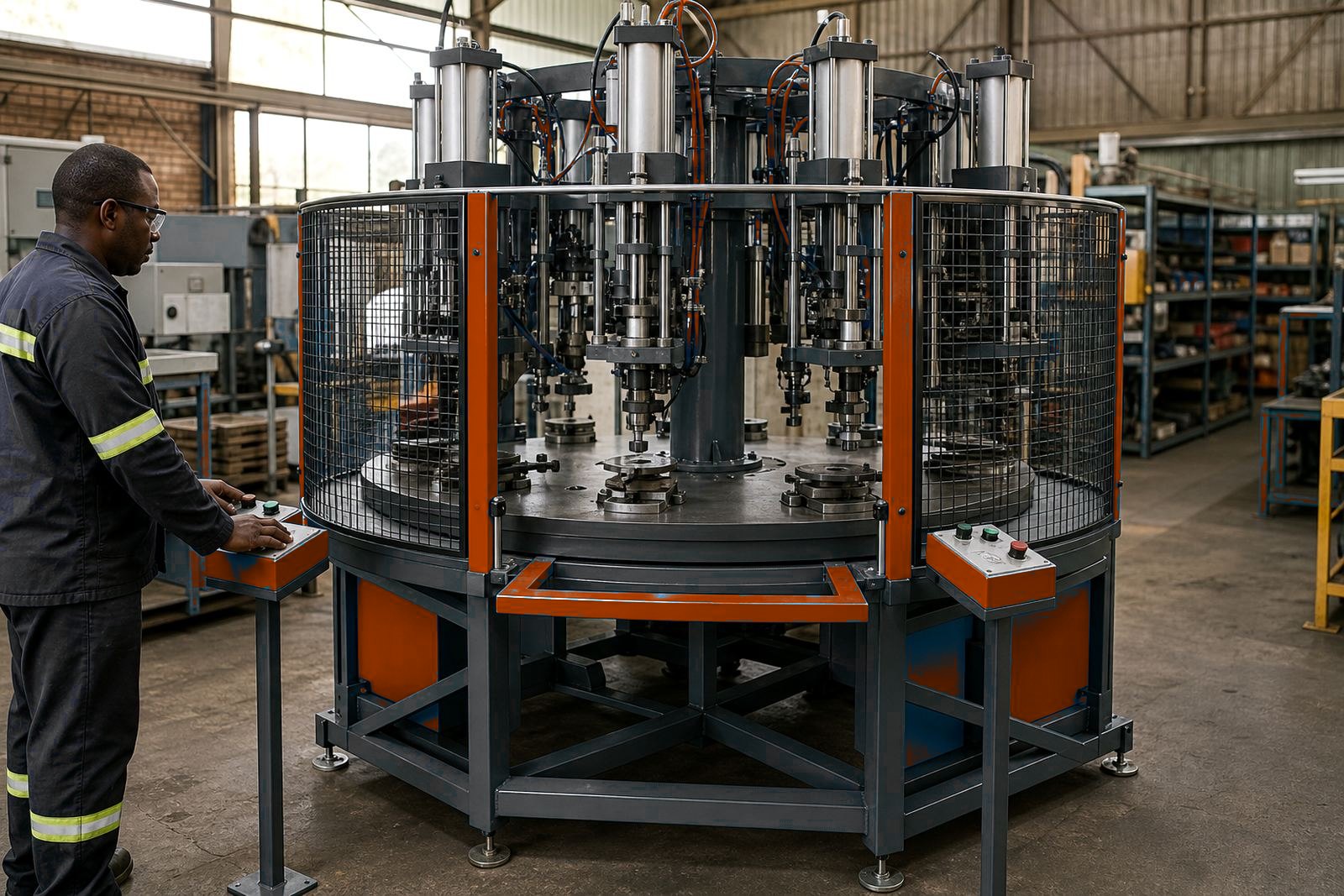
A rotary index press is built for parts that need to be presented at more than one point in the cycle. The table turns a measured step between stations, then stops solid for the pressing action. That suits parts that must be loaded, located, pressed, checked and lifted off in the same order every cycle.
At MultiPress we build the press around the part, the tooling and the line layout. The frame, cylinders, index table and guard set are matched to the job, whether the work is light assembly, a firm rivet set, or a pack sealing operation that needs repeatable pressure and clean part position.
- Index table with fixed stations for load and press positions
- Pneumatic cylinders sized to the forming force needed
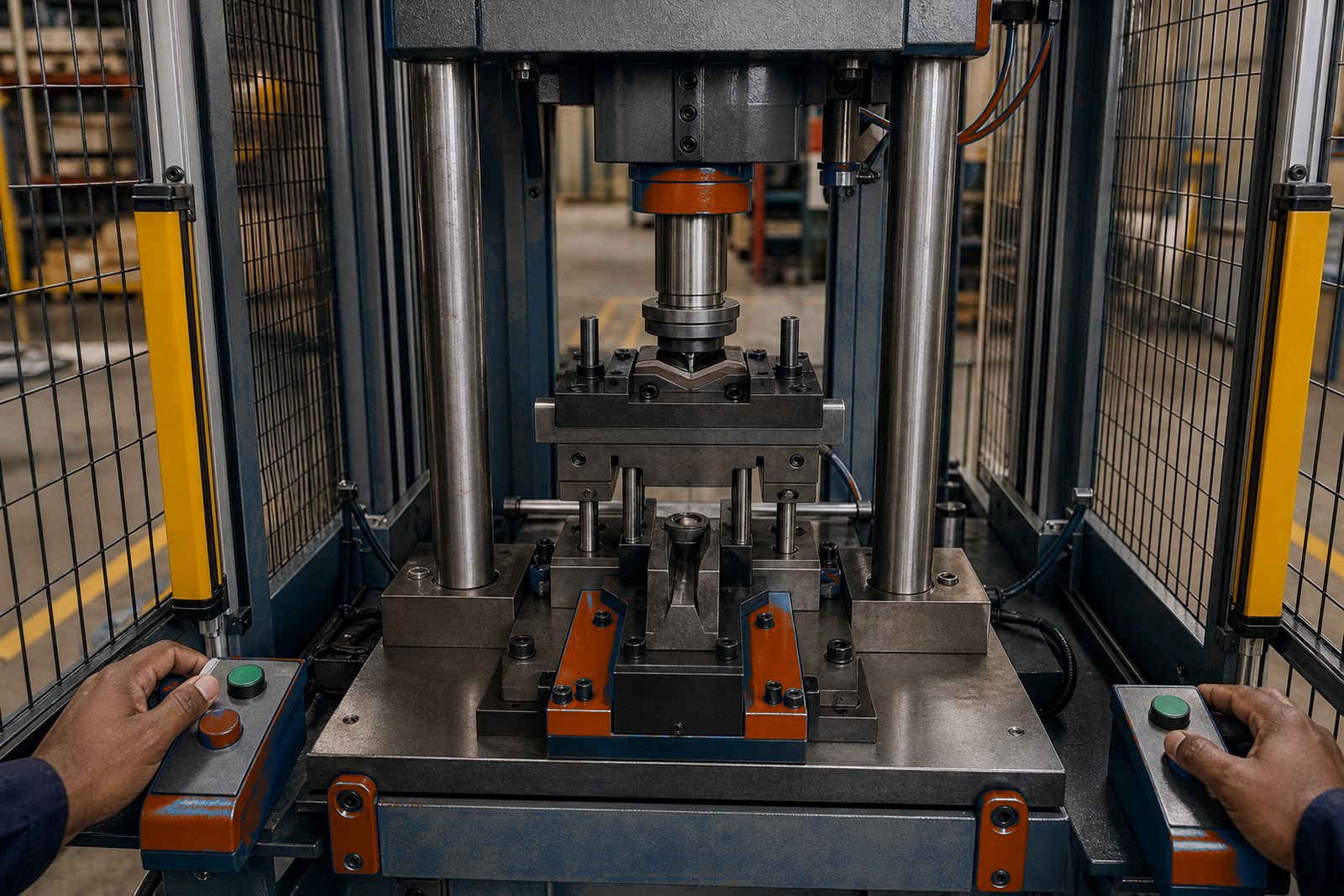
- Two-hand controls for operator safety on manual load points
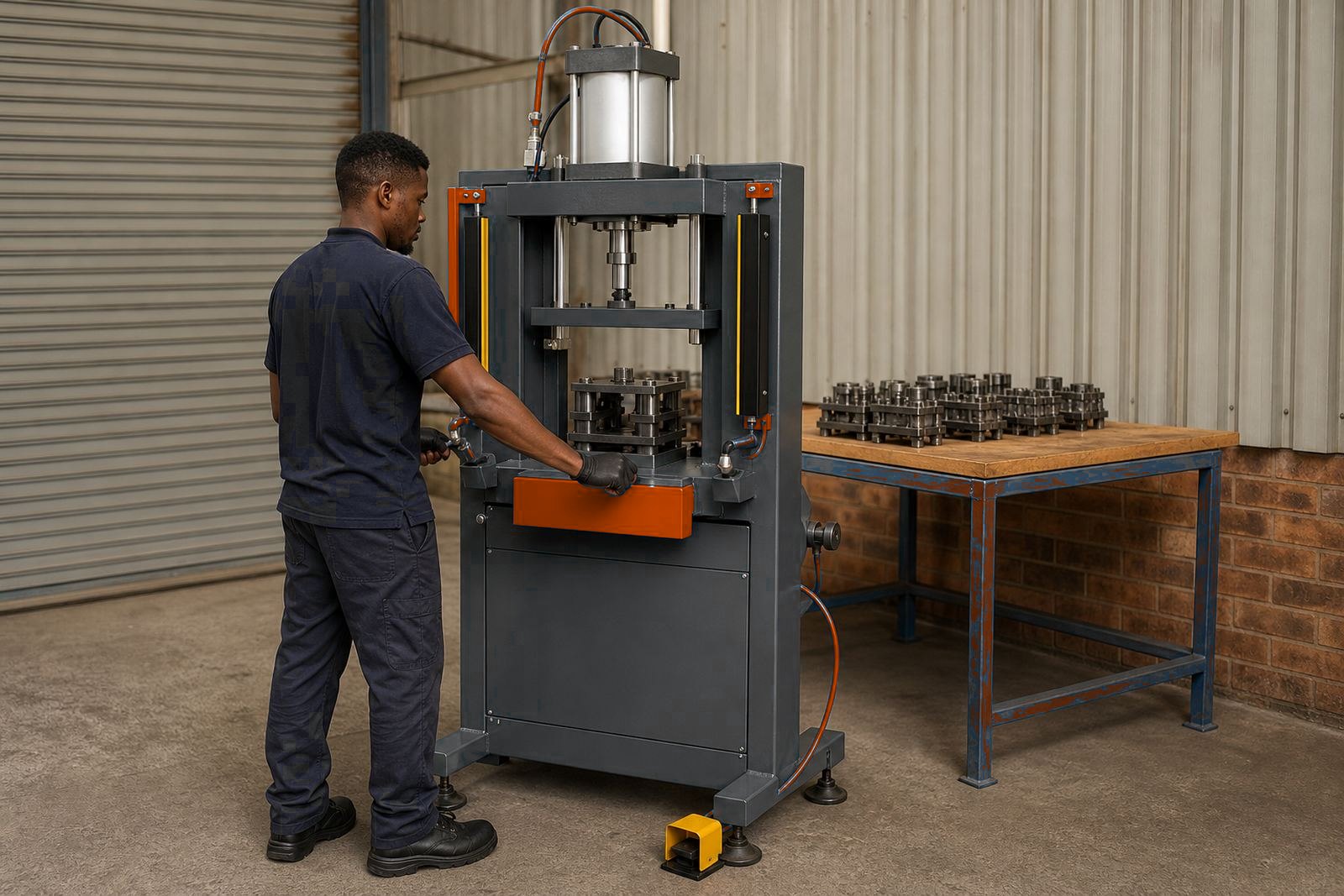
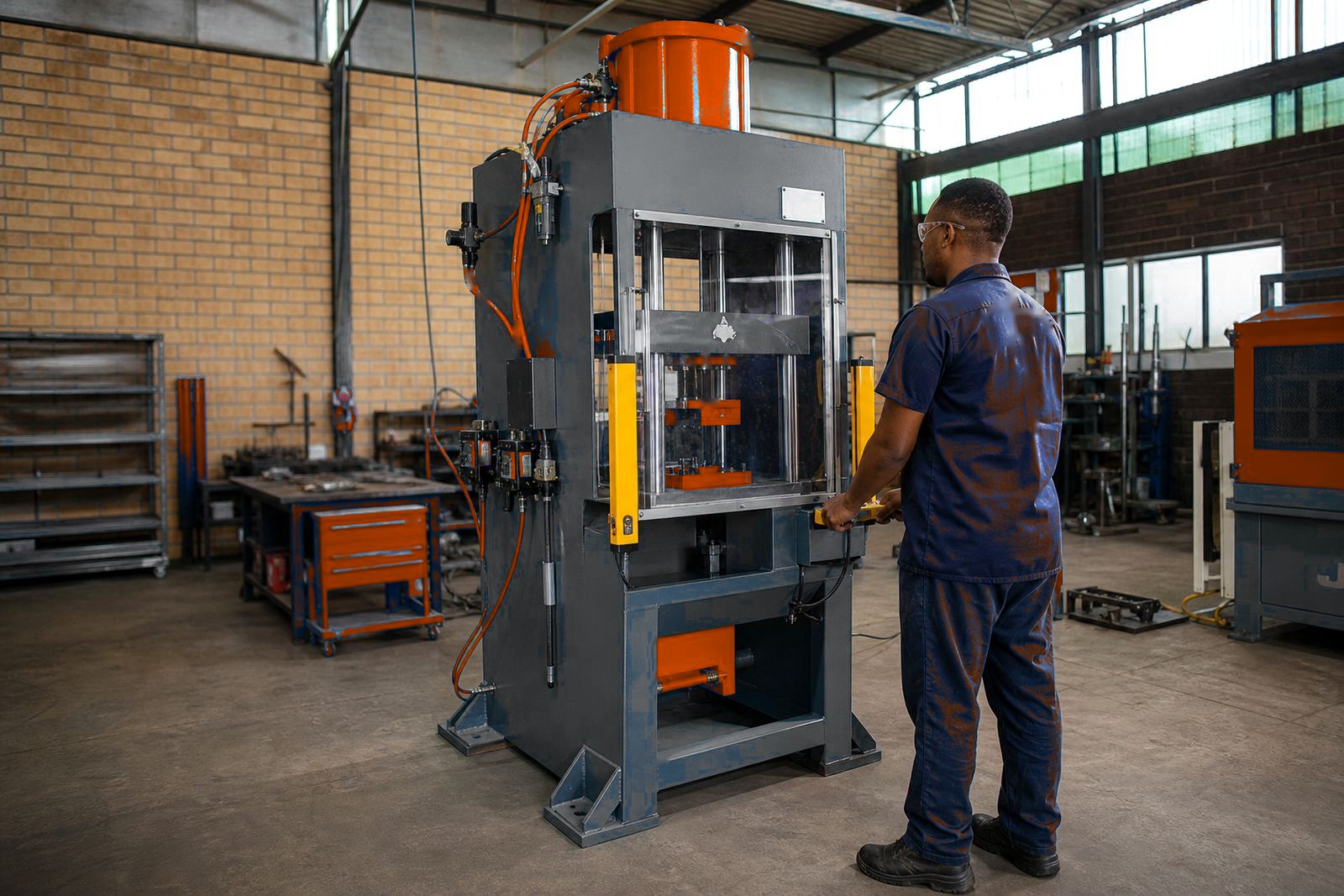
- Light curtains where an open loading face is preferred
Sizes, stroke ranges and station counts
This style of press suits lines where the same part must pass through several exact actions without loose handling between them. It is common on assembly benches, terminal crimping work, small rivet jobs, staking of inserts, and sealing operations on packs or closures. The rotary format helps where the operator needs a clear load point and the tooling needs a clean, repeatable press point.
Factories in Johannesburg, Pretoria, Durban, Gqeberha and East London often use these presses for medium-volume work where one station feeds the next. The circular layout can also suit tight floor space because the process turns in place instead of stretching into a long straight line.
- Assembly cells with repeated locating and press-fit steps
- Crimping where terminal position must stay consistent
- Riveting and staking on small metal or plastic parts
- Pack sealing where pressure, dwell and alignment matter
Guarding, controls and operator safety
Every press needs guarding that suits the way the operator loads the part. On rotary index presses that can mean fixed perimeter guards, interlocked access doors, front opening gates or light curtain protection at the load point. Two-hand controls are used where the cycle starts only after the hands leave the danger area, and the control circuit is set so a held button or slipped hand does not start the stroke.
We also check the stop positions, pinch zones and finger access around the index table. If the tooling reaches close to the part edge, the guard layout must leave room for loading without leaving the press exposed. Clear operator training helps with safe loading, tooling changeover and fault recovery, especially where more than one shift uses the same machine.
- Two-hand controls for manual start cycles
- Light curtain integration for open access stations
- Guard doors and fixed panels around the indexing table
- Training for safe loading, clearing and tool change routines
Fitting the press into an existing line
Installation starts with the floor, the compressed air supply and the part flow into and out of the machine. The press needs level footing, enough service space for tooling access, and an air line that can hold steady pressure at the machine. On a new line we map the load point, the discharge point and any conveyor, tray or manual pack-out position that sits alongside the press.
We handle site installation, air line setup, stroke setting and press commissioning, then work through production handover with the operators and maintenance team. For plants in Isando, Kempton Park and Boksburg the lift-in route and floor fixing are checked before the machine lands, so there is no confusion once the frame is on site.
- Floor level, anchor points and access for service doors
- Stable compressed air supply with correct line sizing
- Space for tooling removal and guard opening
- Commissioning notes for stroke, pressure and cycle set-up
Tooling, upkeep and the details to pin down
Rotary index tooling needs to be accurate in height, alignment and location. The nests must hold the part without marking it, and the press face must land squarely on the work. For crimping and staking jobs we look closely at tool geometry, while pack sealing work may need a smoother contact face and a controlled dwell. Tooling changes are easier when the change parts are clearly marked and the station order is fixed.
Care is usually straightforward: keep the air line dry, check for leaks, inspect fasteners, and watch wear on guide surfaces and nests. If the line runs through humid coastal areas like Durban or Gqeberha, moisture control in the air system matters more than people expect. When ordering, have the part drawing, material, required station count, stroke travel, force target and any guard preference ready. It keeps the build on the right footing.
- Part size, shape and any critical datum points
- Number of stations and the order of each operation
- Material type, thickness and desired forming force
- Guarding preference, operator access and floor space limits
Key facts
| Type | Rotary index style pneumatic press |
|---|---|
| Stations | 4 to 8 plus, depending on part flow |
| Actuation | Pneumatic cylinders with set stroke travel |
| Controls | Two-hand controls or light curtain guarded start |
| Operations | Assembly, crimping, riveting, staking, pack sealing |
| Service areas | Isando, Johannesburg, Pretoria, Durban, Gqeberha, East London |