Palm buttons, ram control and the working zone
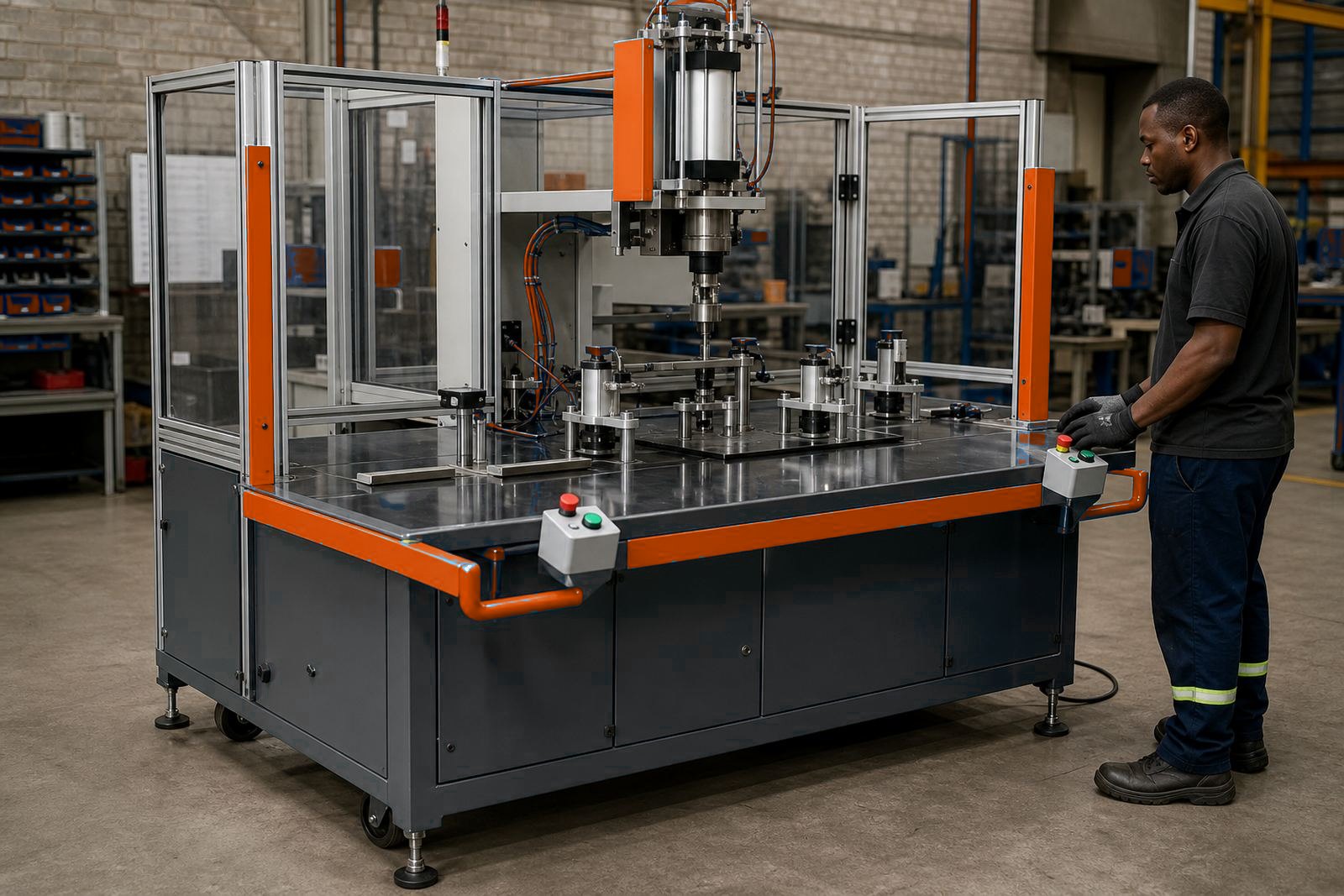
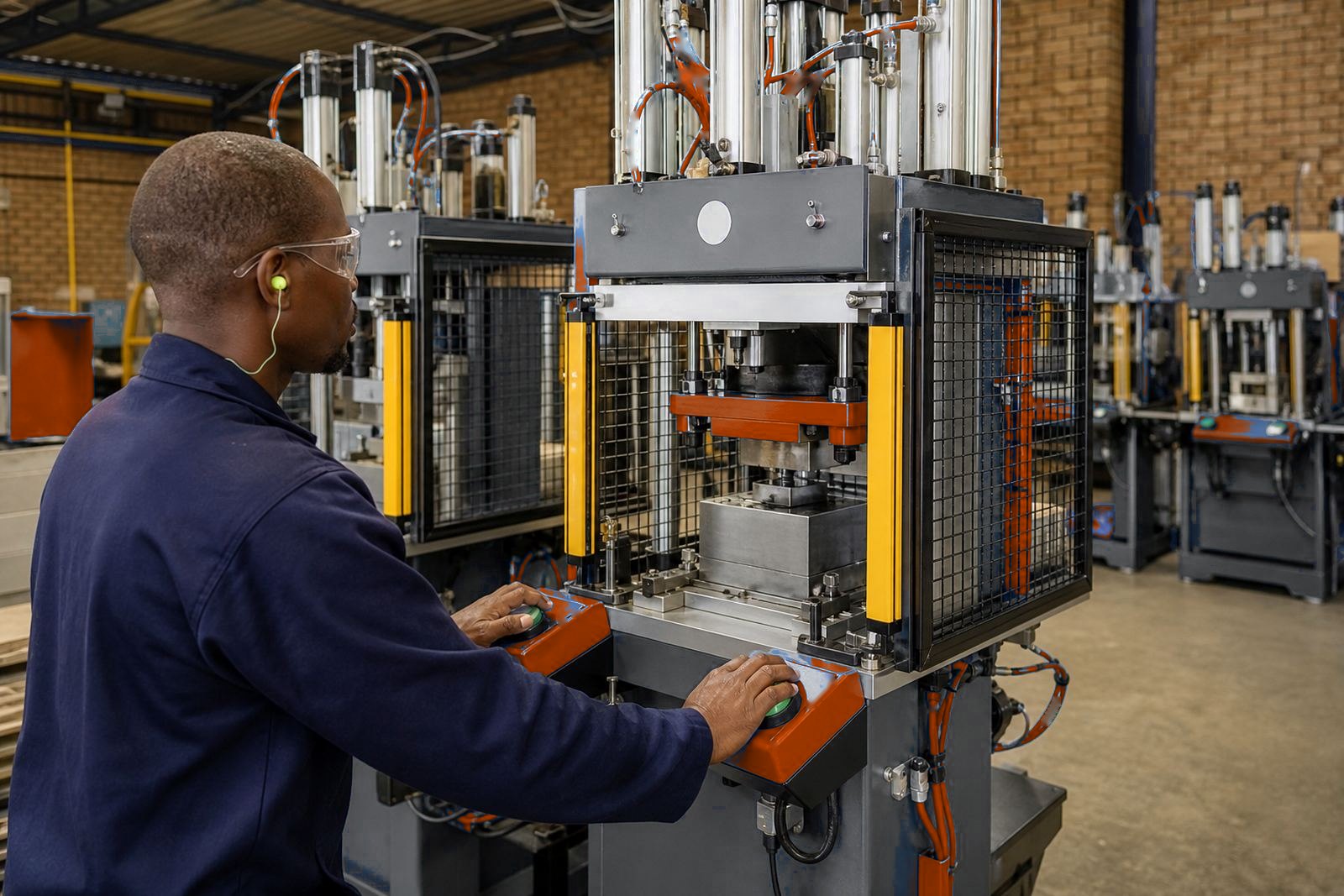
This type of press is built around a pneumatic cylinder, a guided ram and a control set that only allows the cycle to start when both hands are on the buttons. The layout reduces the chance of hands drifting into the tooling area during crimping, riveting, staking or pack sealing work, and it gives the operator a clear rhythm on repeat jobs.
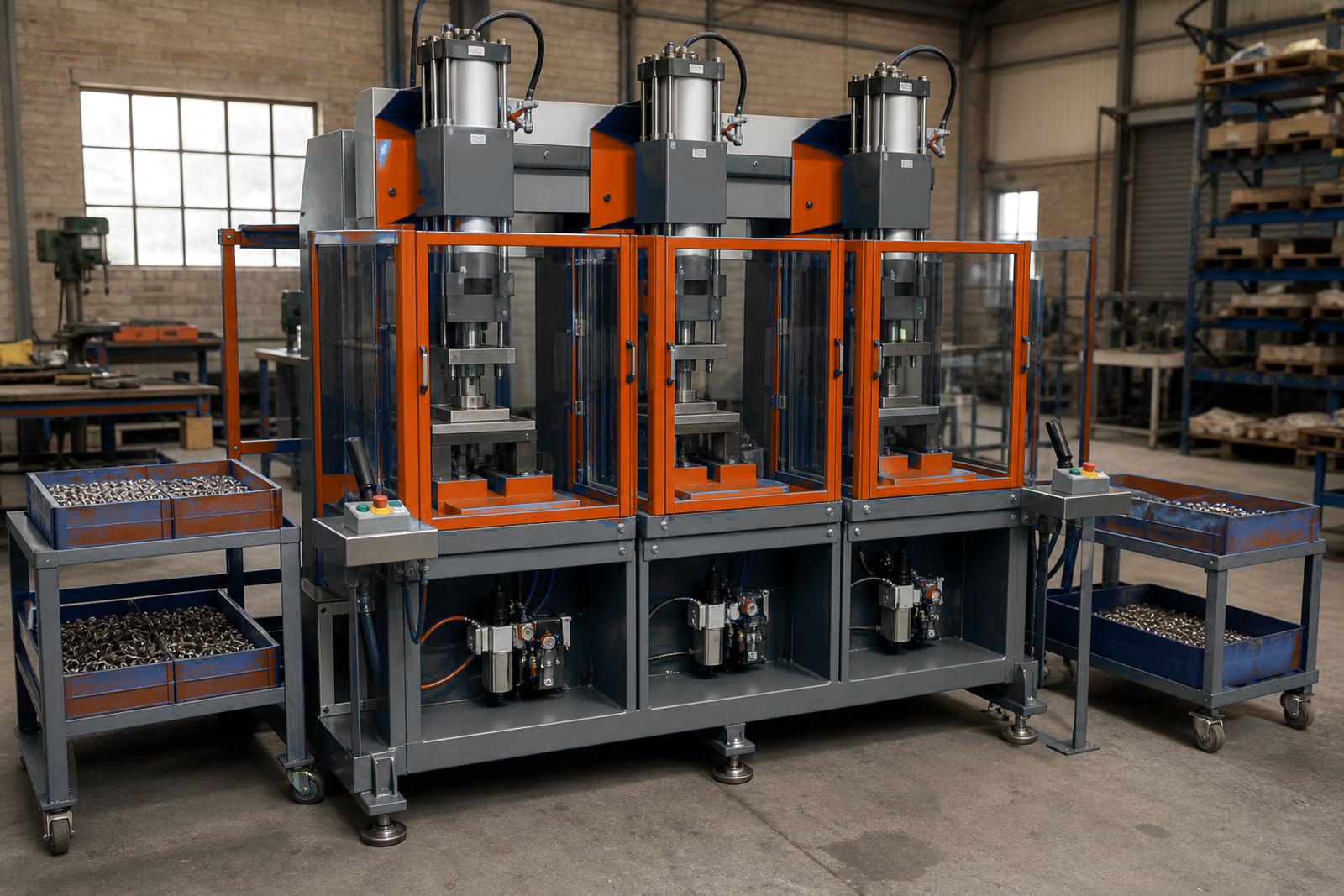
Most units are set up with a single station, though multi-station frames can be arranged where the work flow needs loading, pressing and unloading in a tighter sequence. Stroke length, daylight, bed height and closed height all need to match the part, the tool stack and the way the operator loads the job.
- Two hand palm control with anti-tie down logic
- Pneumatic cylinder sized to the force required
- Fixed or adjustable stroke settings
- Rigid frame for repeatable alignment
- Tool holders for dedicated inserts and nests
We offer sizes and options suited to South African production lines.
Presses can be built small for bench work or larger for floor standing production, depending on the part and the line speed. Air pressure, cylinder bore and stroke length affect the force available, so the machine needs to be matched to the job.
For light assembly work, a shorter stroke and compact table may be enough. For thicker stacks, terminals, lugs or formed parts, the frame may need deeper daylight, stronger tooling support and better guarding around the front opening. Where parts vary often, quick-change tooling and positive location pins save time and keep the set-up steady.
- Bench, pedestal or floor standing format
- Single station or multi-station arrangement
- Manual loading or guided fixture loading
- Custom tooling for shaped parts and inserts
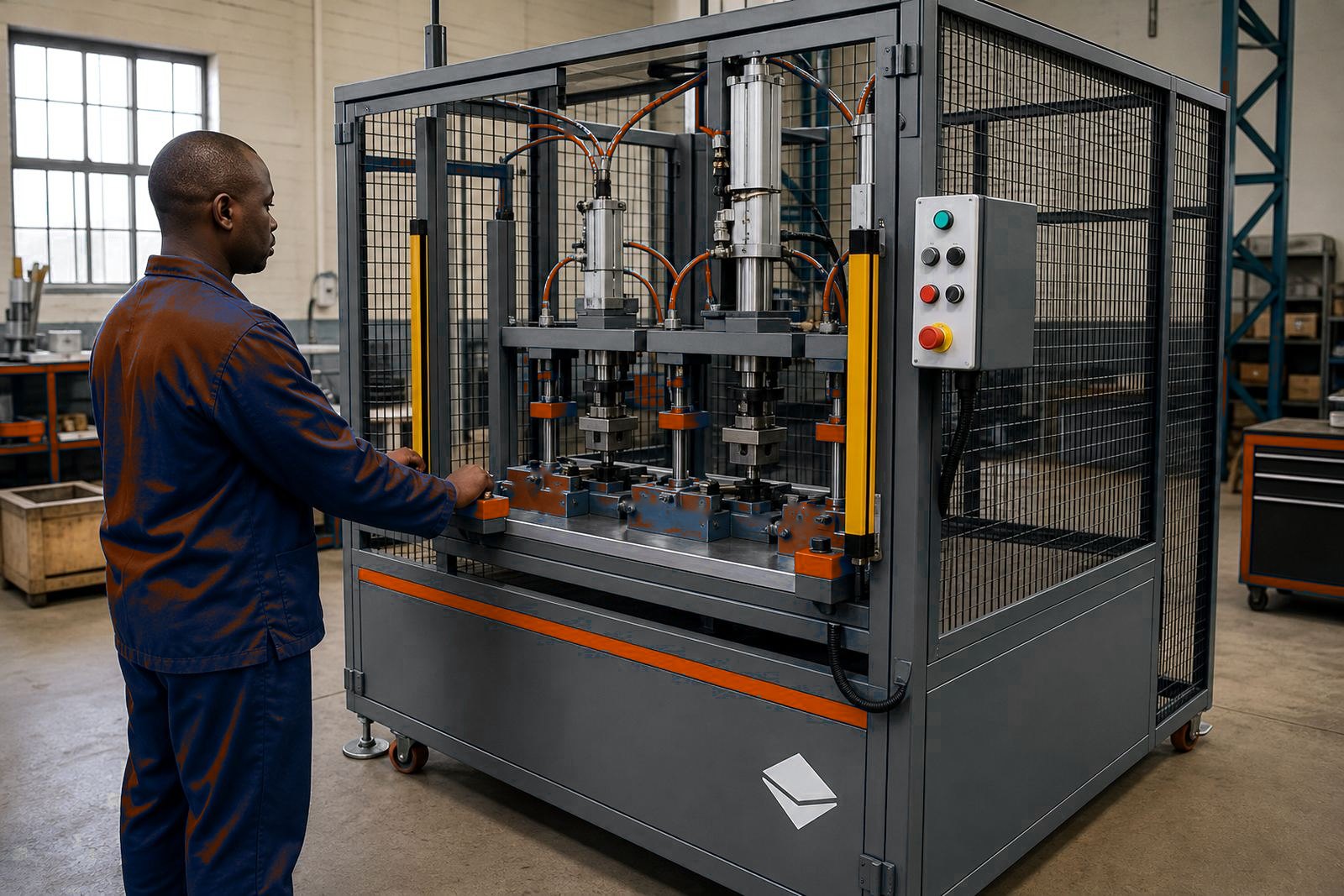
- Light curtain or fixed guard options where the job allows it
Where this press earns its place on the floor
These presses suit factories that need a controlled, repeatable action rather than a hand press or a loose fixture. Common uses include electrical assembly, small component insertion, cable termination, rivet setting, gasket sealing and carton or pack sealing where the closing force must stay consistent from shift to shift.
They also suit contract production where the same part runs in batches and the tooling has to support the job without constant adjustment. In coastal plants, sealed cylinders and clean air lines matter because moisture can show up in the airline and leave the valves and seals working harder than they should.
- Assembly stations for repetitive part fitting
- Crimping and terminal forming work
- Riveting and staking on metal or plastic parts
- Pack sealing and closure jobs
- Fixture based production where hand safety matters
Installation, air supply and guarding details
A two hand control press needs a proper air supply with the right pressure, clean filtration and sensible pipe runs from the compressor or plant airline. The machine has to sit on a firm base and be level, with the tooling aligned so the ram lands squarely on the workpiece and does not side-load the cylinder.
Installation often includes guarding, light curtains where suitable, two hand control wiring and stroke setting. If the job uses a foot switch on other lines, this press is usually kept separate so the dual palm controls remain the main safety action. Commissioning also covers proof of travel, emergency stops, air leaks, dwell settings and a full cycle check under real loading conditions.
- Air pressure checked against the force required
- FRL or similar air preparation fitted where needed
- Stroke stop, dwell and return settings adjusted
- Guarding checked for access points and reach
- Operator training on loading, cycling and safe clearing
Care that keeps the press steady through daily use
Routine care is practical and direct. Keep the airline dry, check fittings for leaks, wipe down tooling faces and make sure the palm buttons move freely. If the press starts landing off-centre or the cycle feels uneven, the guides, tool stack and air supply should be inspected before the machine is put back on a full run.
Tooling changes also need attention. A worn insert, loose fastener or damaged locator can change the press force at the part and leave poor crimps or weak seals. On busy lines in Johannesburg, Pretoria, Durban, Gqeberha and East London, a short planned check is worth more than waiting for the first bad batch.
- Drain moisture from the air system where fitted
- Inspect seals, hoses and fittings for wear
- Check tool alignment after any tooling change
- Keep guards, sensors and buttons clean
- Keep stroke and pressure settings on record for repeat jobs
Details to confirm before a build or order
Before a press is specified, the part drawing, cycle goal and loading method should be clear. The force required, open height, stroke length, part size, tooling style and guarding choice all shape the final machine. If the line needs operator training, fixture design or production handover, those items should be set out early so the shop can build around the real process rather than an assumption.
For Isando and across South Africa, the main details are usually the same: what the part is, how it is held, what force it needs, how the operator loads it and what safety measures the site already uses. Our contact form is used for enquiries, and the team can work from that information when defining the machine and the tooling package.
- Part material, thickness and finished size
- Required force or forming result
- Stroke length and closed height
- Tooling style, inserts and locator positions
- Guarding, two hand controls and light curtain needs
Key facts
| Product type | Pneumatic two hand control press |
|---|---|
| Actuation | Dual palm buttons with interlocked start |
| Typical uses | Assembly, crimping, riveting, staking, pack sealing |
| Control options | Stroke setting, dwell setting, emergency stop, guarding integration |
| Build formats | Bench, pedestal or floor standing |
| Service area | Isando, Johannesburg, Pretoria, Durban, Gqeberha, East London |