Two stations, one controlled press cycle
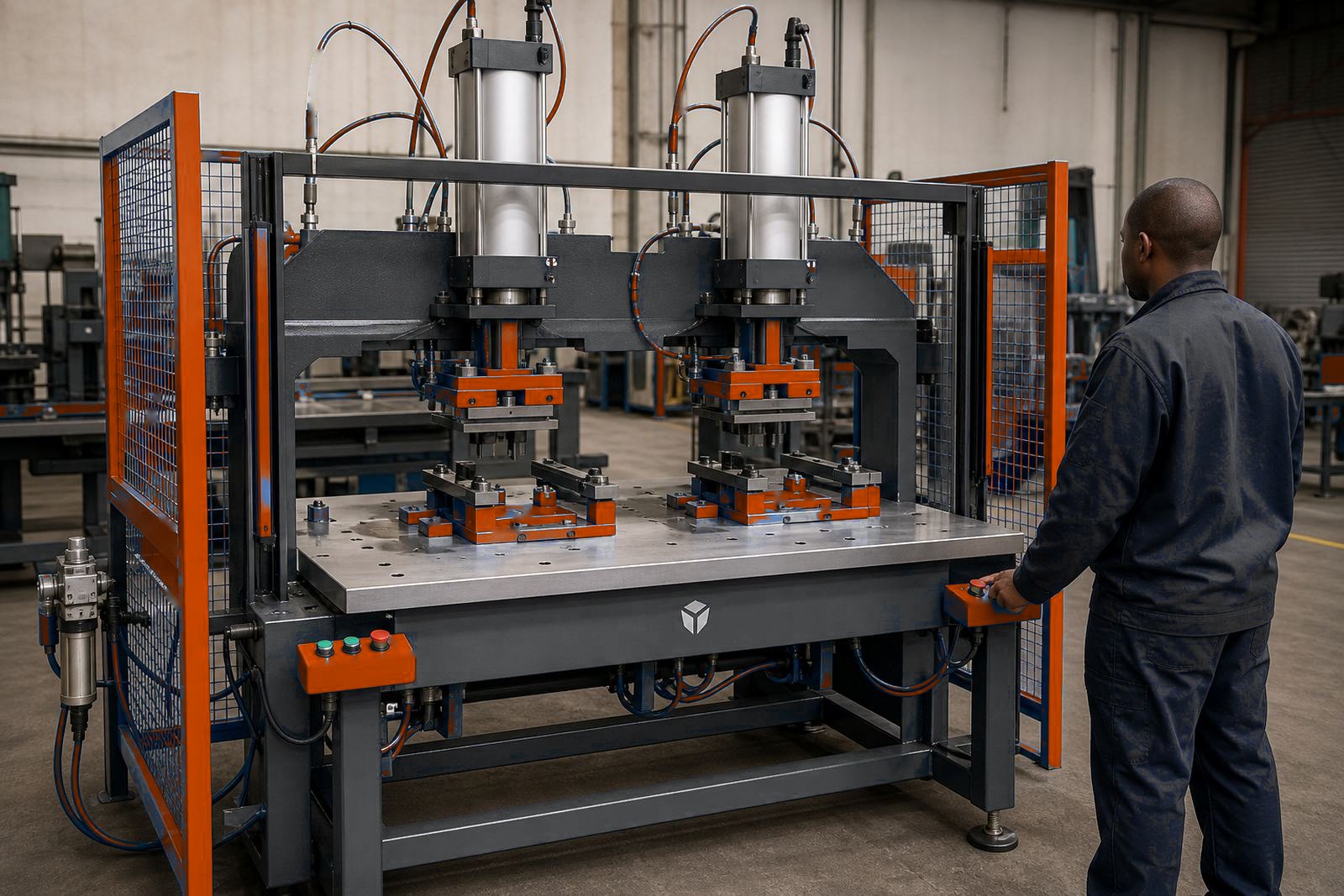
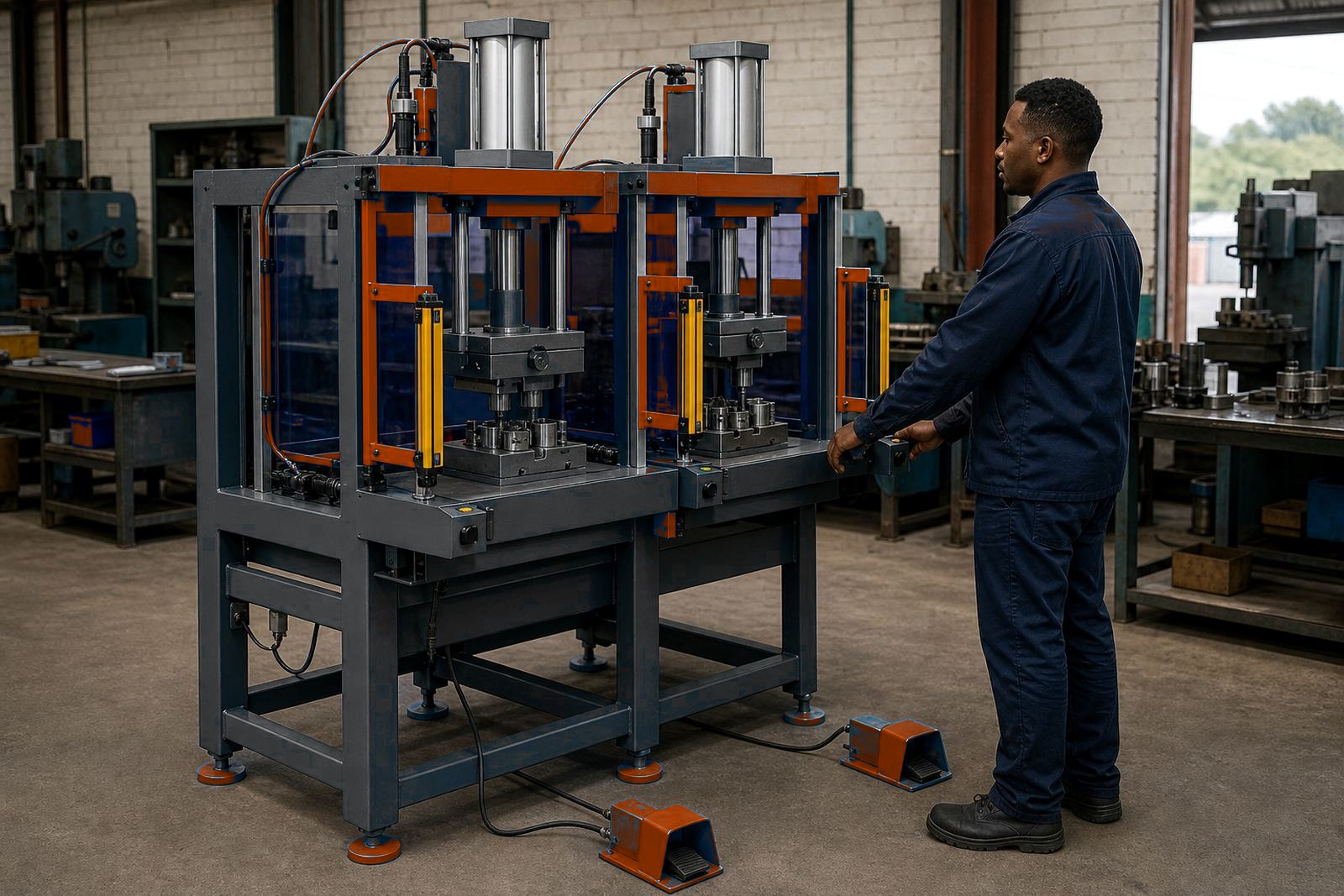
This press is arranged as a compact pneumatic unit with two working stations on one frame, so parts move through a clear sequence instead of being shifted between separate machines. On many jobs the first station holds or locates the component while the second station completes the forming, crimping or sealing action with a set stroke and repeatable air drive.
The cylinder size, bore and stroke are matched to the force needed for the job, with working air pressure usually set in the normal industrial range used on factory lines. That gives the operator a steady press action for tasks like light assembly, terminal crimping, small riveting work, staking pins, or closing packs with controlled pressure on the seal area.
Where this format fits on a plant floor
A two station layout suits work that is too repetitive for hand tools but does not need a large multi-position carousel. It is often used where parts are presented in trays, feed bowls or simple nests, and where the operator needs a short reach between the load point and the press point.
- Assembly lines with repeated push fit or press fit steps
- Crimping of terminals, lugs or small sub assemblies
- Riveting and staking on brackets, clips or housings
- Pack sealing work that needs even pressure and clean closure
- Small batch production where tooling changes happen often
In humid coastal conditions and on busy inland floors alike, a neat station layout helps keep the process easy to inspect and easier to teach. The frame can be built to suit a bench mounted cell or a free standing line position, depending on the work height and part size.
Tooling, guarding and control options
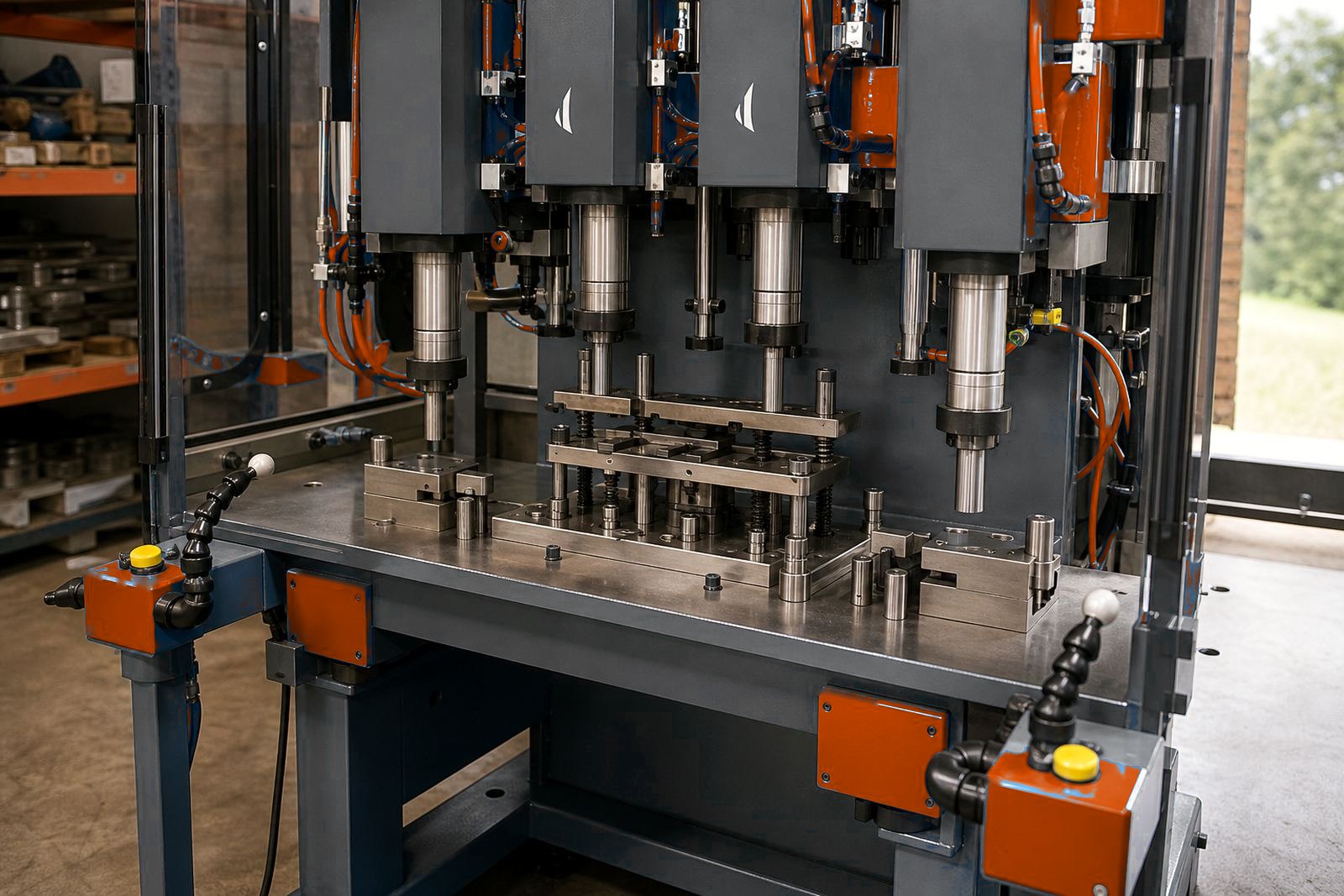
Every two station press depends on the tooling, not only the frame. The tooling can be built as locating nests, form tools, crimp heads, riveting dies or sealing fixtures, with guides that keep the part square through the stroke. If the job calls for changeovers, the tooling can be designed with quick removal points and hard stops for repeatable setting changes.
- Two hand controls for safer cycle start on manual load stations
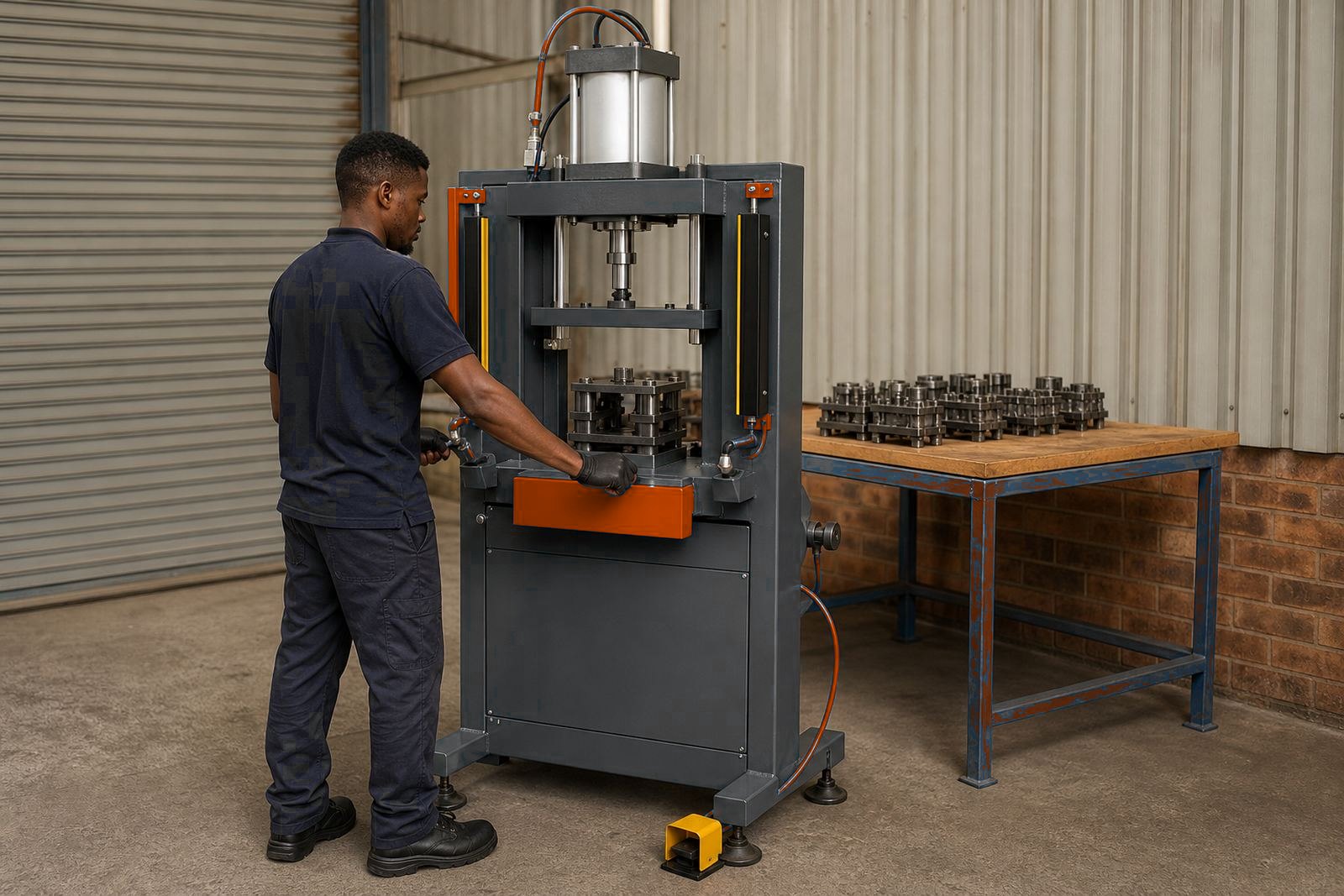
- Light curtain integration where access needs to stay open and monitored
- Guarding panels around pinch points and moving tooling areas
- Stroke setting for shallow or deeper press travel
- Air line setup with clean routing and suitable filtration points
Control details are matched to the work method. Some stations need a simple two hand start, while others work better with guarded access and a light curtain where the operator must load from the front and keep hands clear during the press cycle.
Installation and fitting on South African lines
Fitting a two station press means more than dropping the frame in place. The site needs enough floor space for the operator, the part infeed and any take-off tray or transfer point. The air supply must be stable, with the correct line size, regulators and isolation points so the cylinders move cleanly and the stroke does not wander under load.
During commissioning, the stroke, pressure and dwell are checked against the tooling and the actual part. That step matters on rivet and crimp work, because too much travel can mark the component, while too little travel leaves an incomplete press. In plants around Isando, Kempton Park, Boksburg and the wider Gauteng area, we also look at access for maintenance and safe movement around the station face.
Where the line runs in Johannesburg, Pretoria, Durban, Gqeberha or East London, commissioning and operator training are done around the real work area. The handover covers the station sequence, safe loading, basic checks and the signs that the tooling needs attention.
Care that keeps the press working cleanly
Pneumatic presses stay better behaved when the air is clean, the slides are kept free of grit and the tooling faces are checked for wear. On a busy production line, a small amount of dust or oil mist can change how a part seats, especially on fine crimping and staking work. Regular checks on seals, guides and hose routing help avoid drift in the cycle.
- Drain moisture from the air system where water builds up
- Check tooling alignment after any changeover or stoppage
- Inspect guards, interlocks and light curtain positions
- Watch for air leaks, slow return movement or uneven stroke
- Keep the work face and nests clear of swarf and loose parts
Operator training should cover what a normal cycle feels like, so a change in sound or movement is noticed early. That is especially useful on plants with mixed shifts, where the next operator must pick up the same settings without confusion.
Details to confirm before the frame is built
To size a two station press properly, the build needs the part drawing, the desired operation and the way the operator will load the work. A clear sample or finished part helps with tooling shape, nest depth and the amount of stroke needed. The line layout also matters, because a compact station can still fail if the hand path is awkward or the take-off area is too short.
- Part material, thickness and finish
- Required operation, such as assembly, crimping, riveting or sealing
- Working force target and expected air pressure
- Stroke length, closed height and tool opening distance
- Guarding preference, two hand controls or light curtain use
- Floor space, bench height and operator position
If the press is feeding into a larger line, the station spacing and part orientation should be set early. That keeps the operator flow straight and avoids extra handling between the first and second station.
Key facts
| Configuration | Two-station pneumatic press for sequential assembly or crimping |
|---|---|
| Drive | Air cylinder driven press action with regulated factory air supply |
| Typical operating pressure | Set to the application and tooling requirement, commonly within normal industrial air ranges |
| Stroke | Adjustable stroke setting for shallow, medium or deeper press travel |
| Controls | Two hand controls, guarded operation or light curtain integration |
| Tooling | Custom nests, crimp tooling, riveting dies, staking tools or sealing fixtures |