A bench press built around light parts and steady control
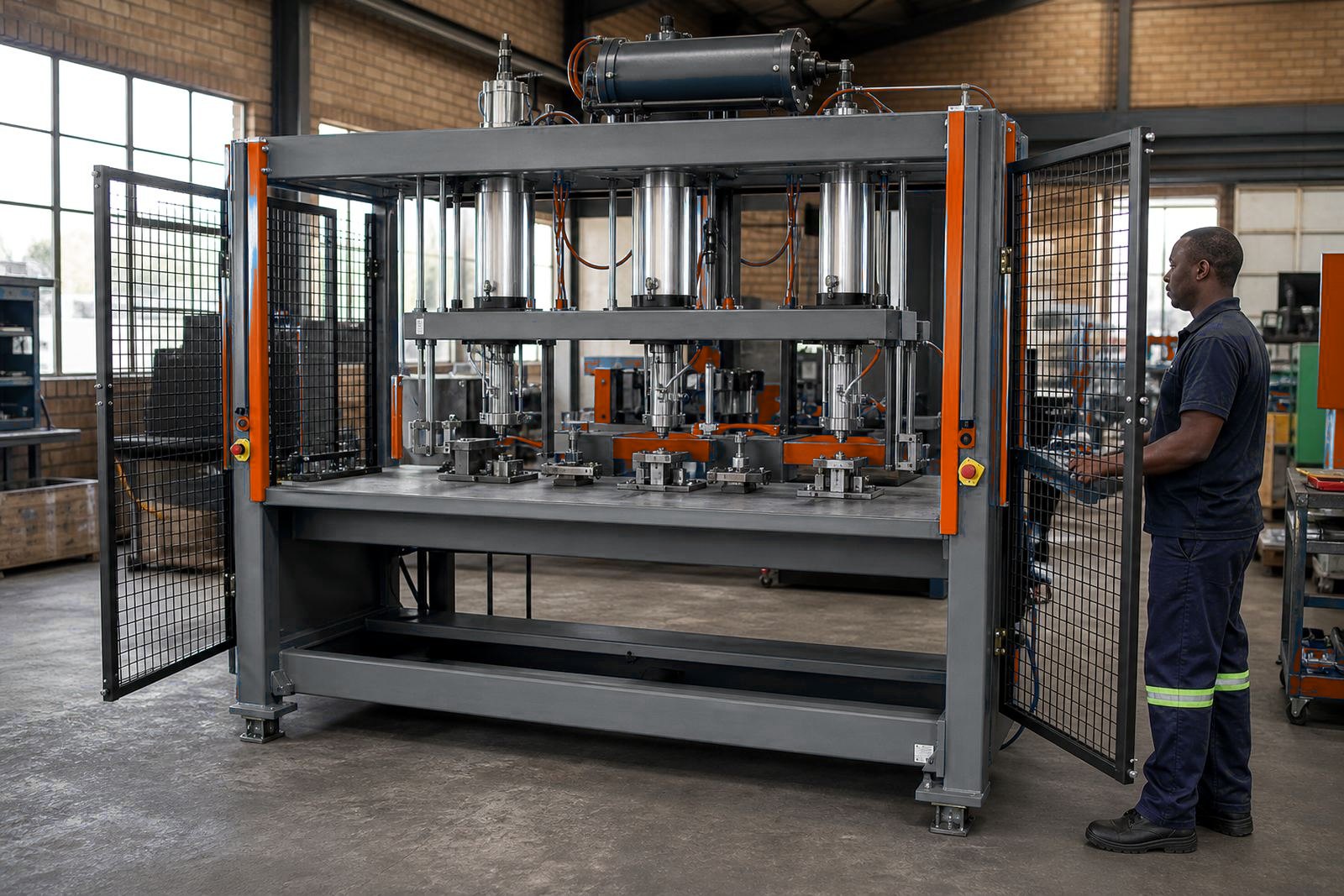
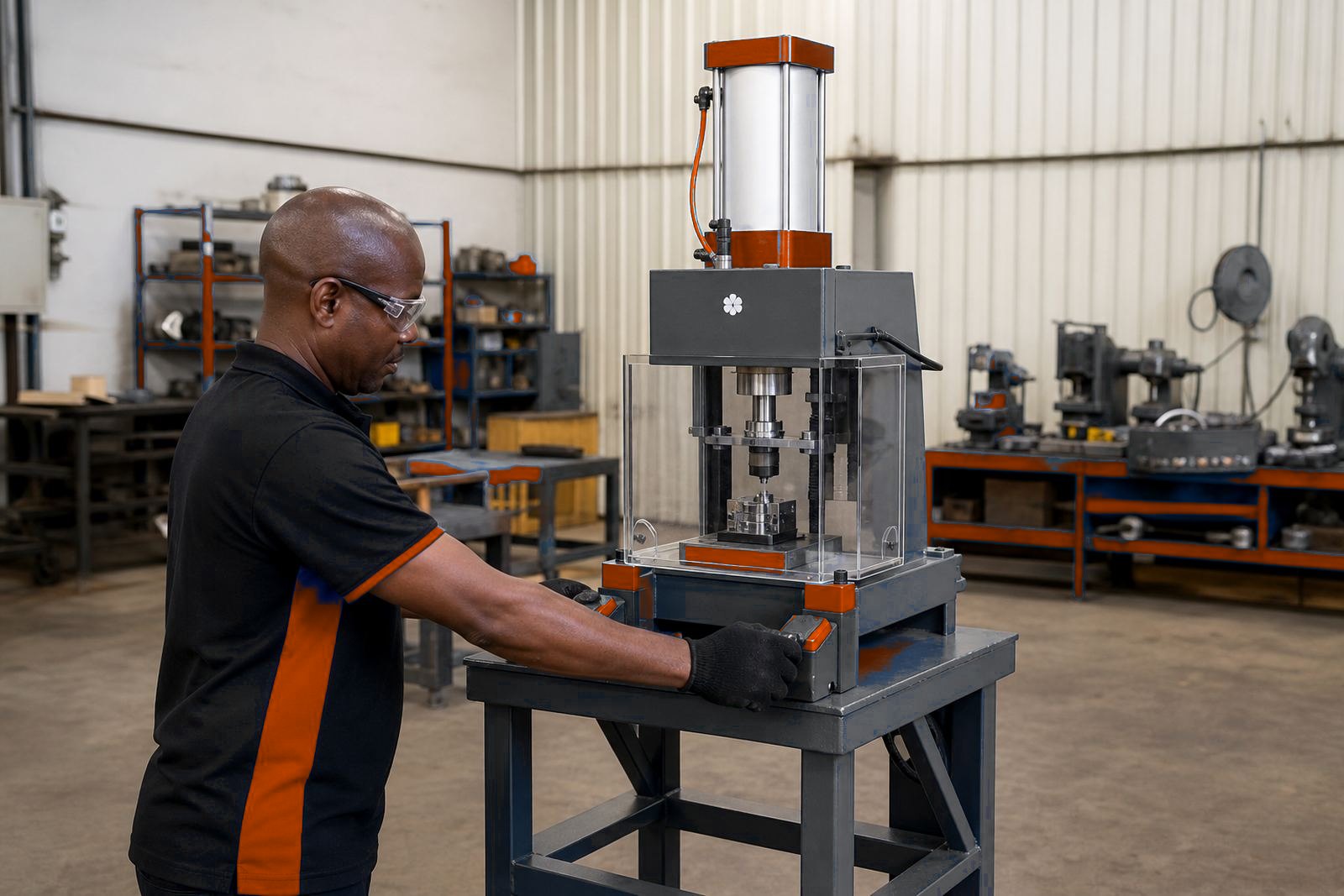
A bench top press is a compact pneumatic press fixed to a heavy bench, trolley base or rigid frame for repeated work on smaller components. The format suits assembly tasks where the operator needs a short reach, clear tool access and a controlled pressing action on pins, terminals, clips, ferrules or small pack closures.
We build the press around the actual part and the frame size needed. That means the cylinder bore, stroke length, shut height and tooling face are set to the load, the material and the finish required on the line. For light metal, plastic or mixed assemblies, a small press can still carry a proper production duty if the tooling is square and the guide travel is clean.
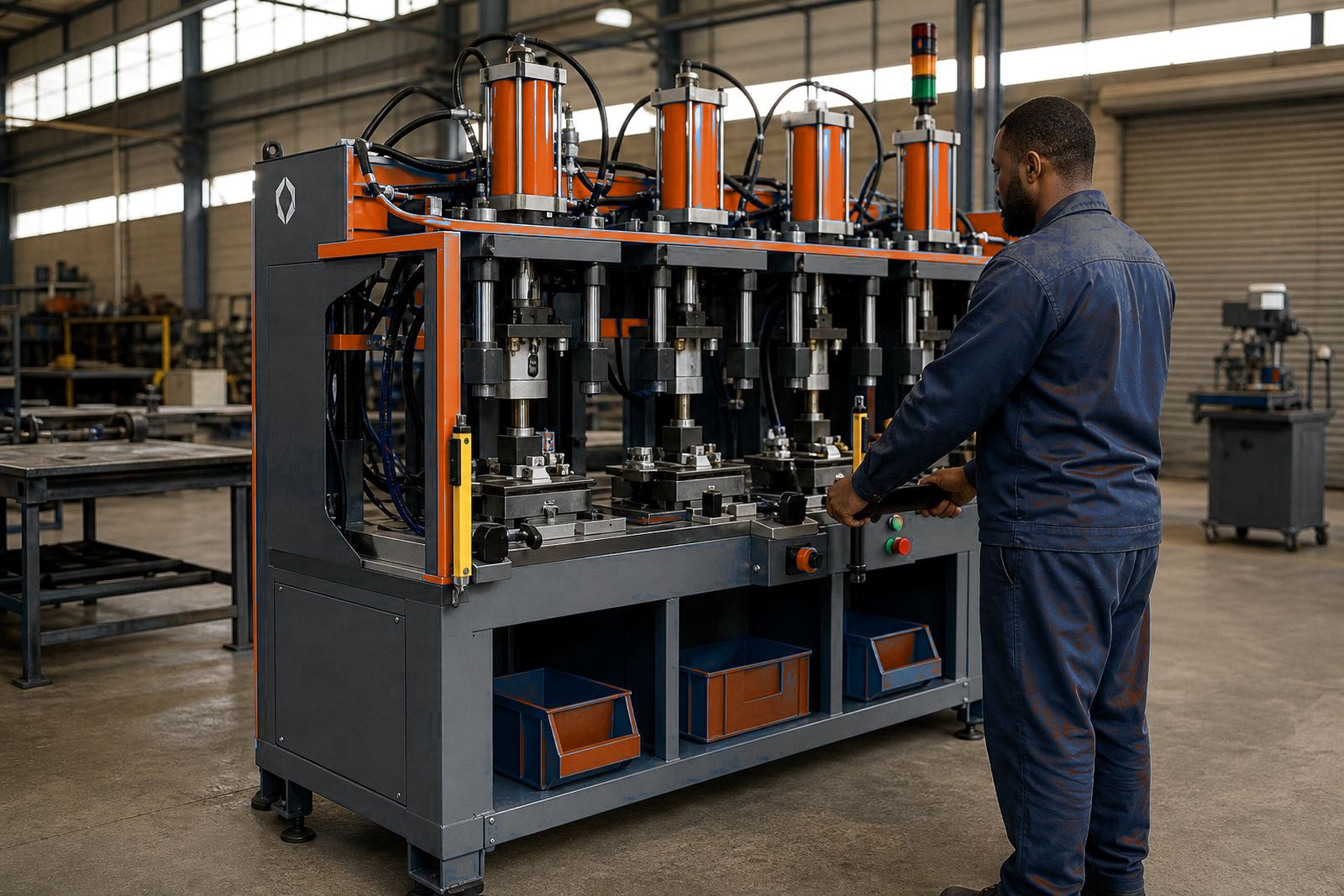
Typical bench units use a pneumatic cylinder with regulated air pressure, a foot pedal or two-hand control, and a simple stop setting for repeat work. Where operator access matters, a compact guard and light curtain can be added, along with fixed or quick-change tooling for different part families.
Sizes and options that change the press to suit the job
Bench top presses are usually chosen by force, stroke and working envelope. Some jobs need a short stroke for fast cycling, while others need more travel to seat a clip, form a terminal, or settle a rivet cleanly without marking the component. The frame height also matters, because a bench press should give the operator enough room under the tool while keeping the work area close to hand.
- Cylinder sizes matched to light, medium or higher force duties
- Stroke lengths set for shallow or deeper seating work
- Single station or twin station layouts for separate operations
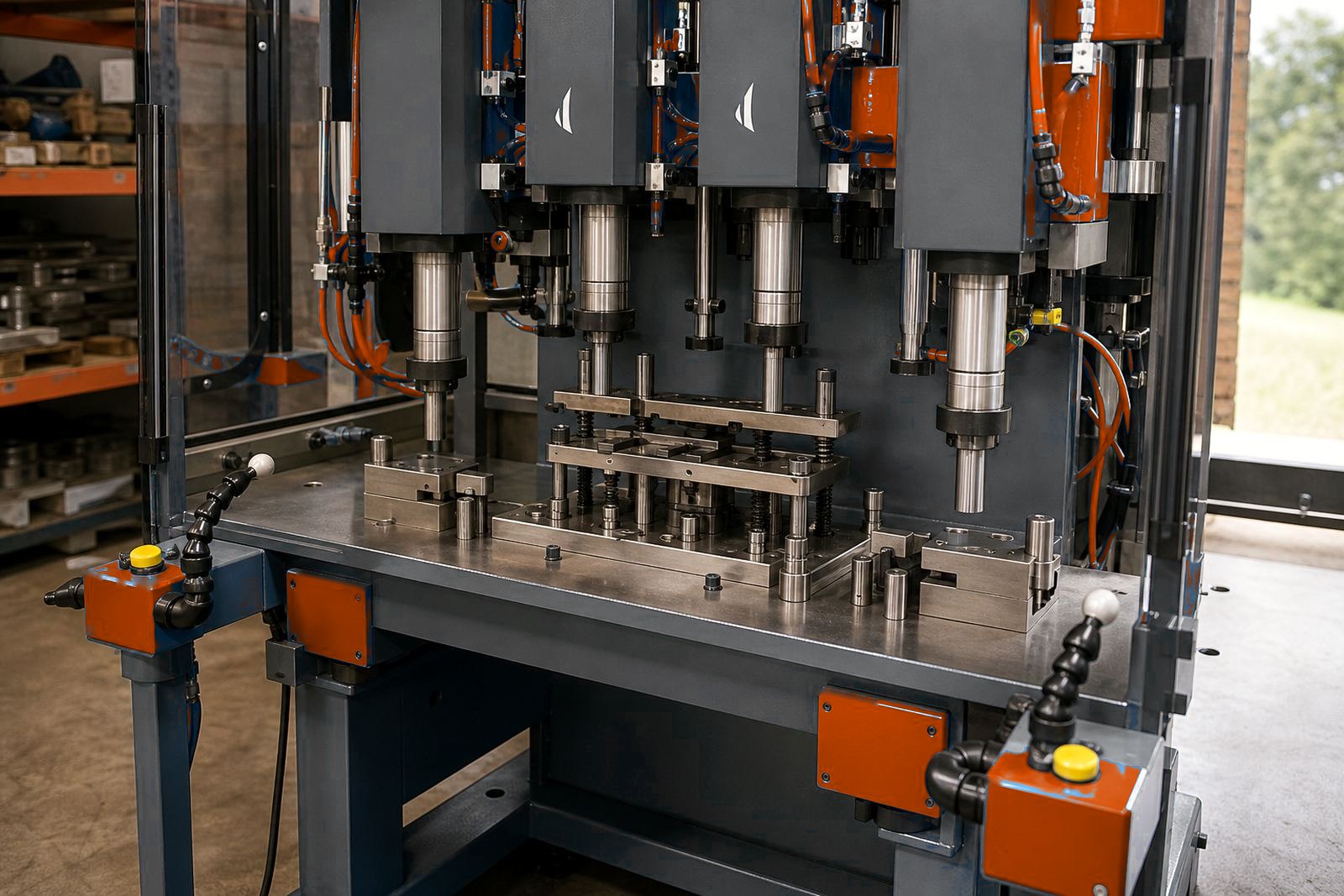
- Tool plates for custom punches, nests, formers and anvils
- Foot pedal or two-hand control depending on the guarding plan
- Adjustable shut height for repeat batches and tooling swaps
Some benches carry one operation only, while others are set up for a family of parts with interchangeable inserts. On pack sealing work, the press can be paired with a sealing die or crimping fixture that gives even pressure across the fold or closure line. For riveting and staking, the tool face needs proper alignment so the force goes straight through the joint and not into the side of the workpiece.
Where a bench top press fits into production
This type of press suits assembly tables, toolrooms, sample lines, repair bays and small production cells where the part is light and the movement between operations is short. It is often used where a larger floor press would take too much space, or where the task needs a closer, more manual feel from the operator. In Johannesburg, Pretoria, Durban, Gqeberha and East London, these units are often placed on assembly benches close to inspection and packing points.
Common uses include crimping terminals, staking plastic or metal pins, pressing bushes, fitting inserts, closing light housings, riveting small brackets and sealing pouches or packs where the closure is formed under control. Where parts vary during the shift, the tooling can be changed without rebuilding the whole station, which keeps the bench useful across more than one product range.
- Light assembly cells with frequent part changeovers
- Toolrooms and prototype lines that need repeatable pressing
- Small batch production for mixed component sizes
- Riveting and staking work on brackets, tabs and housings
- Pack sealing stations for neat, repeat closures
Installation, air setup and the checks that matter
A bench mounted pneumatic press still needs proper fitting. The bench must carry the weight, resist vibration and keep the tool face square to the operator. The air line should be sized for the cylinder demand, with a clean supply, correct regulator setting and fittings that do not leak under cycling. In a plant with long runs or multiple stations, poor air supply can show up as slow action, weak closing force or inconsistent stroke end position.
We handle site installation, air line setup, stroke setting and press commissioning so the press lands in the line properly. Where the job needs it, light curtains, fixed guards or two-hand controls are built into the station plan. A safe bench press is not just about the cylinder, it is about the full motion path, the part handling and the way the operator reaches in and out of the tool area.
- Bench or frame must be level and stiff enough for repeat loading
- Air pressure must match the required force and cycle pattern
- Tool alignment has to be checked at full and partial stroke
- Guarding must suit the hand position and the part feed method
- Stroke stops and shut height should be locked for the finished part
Tooling, guards and control gear built around the component
A bench top press works best when the tooling is designed for the actual component shape. That may mean a male and female set for crimping, a guided nest for riveting, or a form tool that settles a small metal feature without twisting it. Good tooling protects the part finish and keeps the force where it belongs, especially on thin sections, soft materials or coated surfaces.
We also design guarding builds and light curtain integration where the layout calls for open access and controlled entry. Two-hand controls are used where the operator has to clear the zone before the press cycles, while a foot pedal can suit some guided or guarded setups. For pack sealing and light assembly, the control method has to match the cycle speed and the way parts are loaded, otherwise the station becomes awkward to use and the output drops.
Care that keeps the press working cleanly
Bench presses need routine care, but the work is practical rather than complicated. Keep the air supply clean and dry, check that fittings stay tight, inspect the cylinder and seals for wear, and watch for play in the tool mount or guide columns. If the stroke begins to drift, or the closure point changes, the setting should be checked before the next batch goes through.
Tool faces and nests should be kept free of burrs, dust and old grease. On pack sealing or crimping work, even a small nick in the tooling can leave a mark on every part after that. Training matters too, because the operator needs to know the right loading position, when to clear the tool area and how to spot a poor cycle before it spreads through the run.
- Wipe down tooling and guide areas after each run
- Check air pressure, hose condition and regulator stability
- Look for uneven wear on punches, anvils and locating pins
- Keep the bench rigid and free from loose fasteners
- Record stroke settings for repeat jobs and tool changes
Details to confirm before the press is built
When a bench top press is being specified, the part drawing matters as much as the pressing force. We need the component size, the material, the target operation, the required stroke and the space available on the bench or frame. If the same station will handle more than one part, the tooling and the changeover method must be set out clearly so the station can be built for that reality.
Useful details include the approximate force needed, the part height at entry, the finished height after pressing, the cycle rate you want, and whether the station needs two-hand control, a foot pedal or a guarded open front. If the press will sit in a humid plant or near washdown areas, that matters too, because the guarding, fasteners and exposed metal need the right finish for the environment.
- Part drawing or sample with key dimensions
- Material type, thickness and finish condition
- Operation required, such as crimping, riveting or staking
- Stroke length, shut height and working opening
- Control method and guarding preference
- Installation site details, including bench size and air supply point
Key facts
| Type | Bench mounted pneumatic press |
|---|---|
| Typical use | Light assembly, crimping, riveting, staking and pack sealing |
| Control options | Two-hand control or foot pedal, depending on the guarding plan |
| Stroke | Short stroke to medium stroke, set to the part and tool |
| Air supply | Compressed air with regulated pressure and clean line delivery |
| Tooling | Custom nests, formers, punches, anvils and quick-change inserts |