A press that places the part before the force comes down
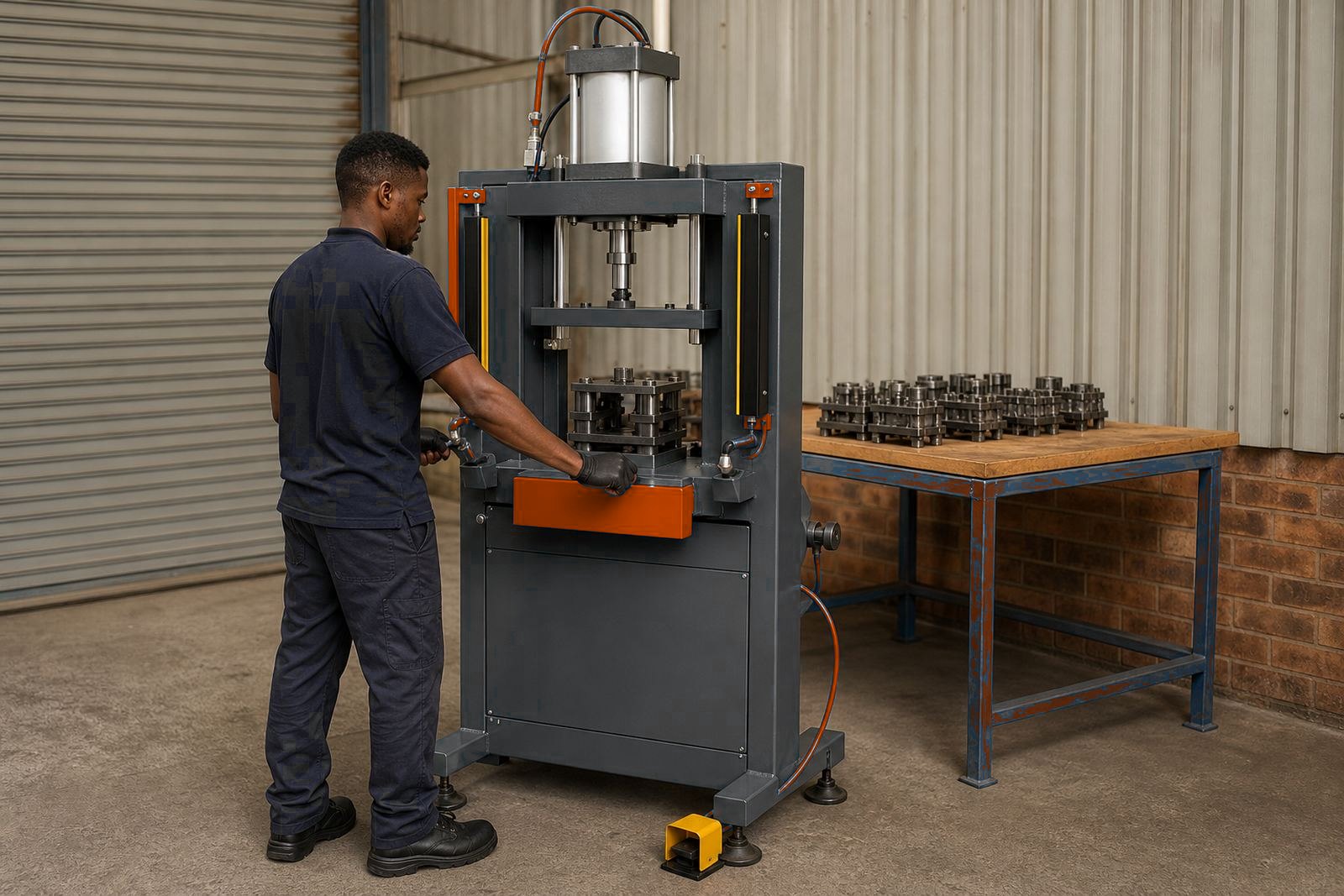
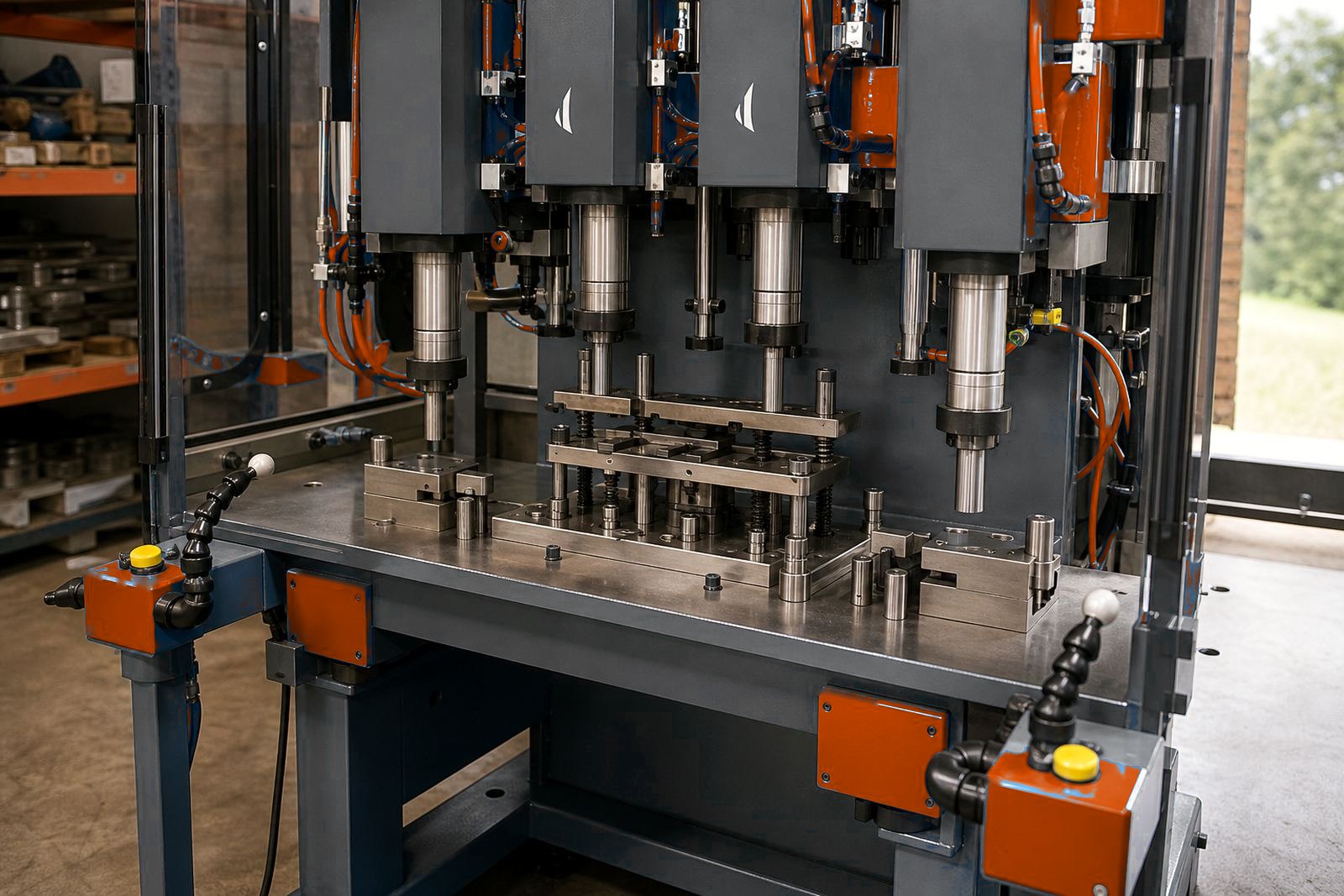
The nesting tool press is built around repeatable part location. A shaped nest, locator pins and a matched upper tool guide the component into a fixed position before the cylinder closes, which reduces skew and helps the press work on the same point every cycle. For pressing jobs where a collar, cap, insert, terminal, clip or folded pack has to sit correctly first, this is the difference between a clean cycle and a shifted part that needs sorting out at the bench.
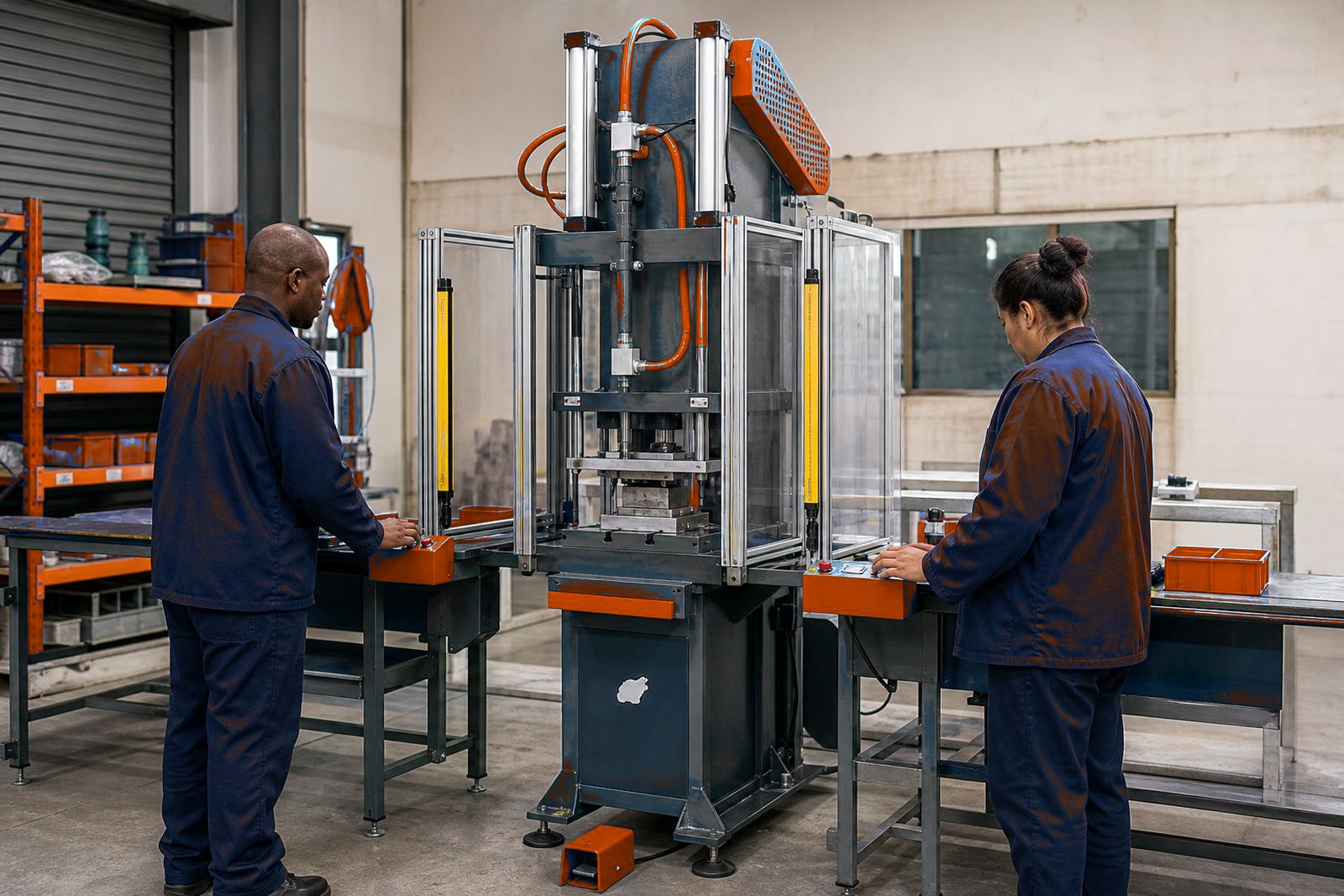
These units are usually specified with one or more stations, depending on how many parts move through the same line. A single station suits a focused cell, while multi station formats let a team nest, press, inspect and pass the work along without dragging parts between unrelated machines. Air operated presses are common in this trade because stroke control, press speed and repeatability can be set to match the tooling and the material being handled.
Station layouts, cylinders and stroke details that shape the job
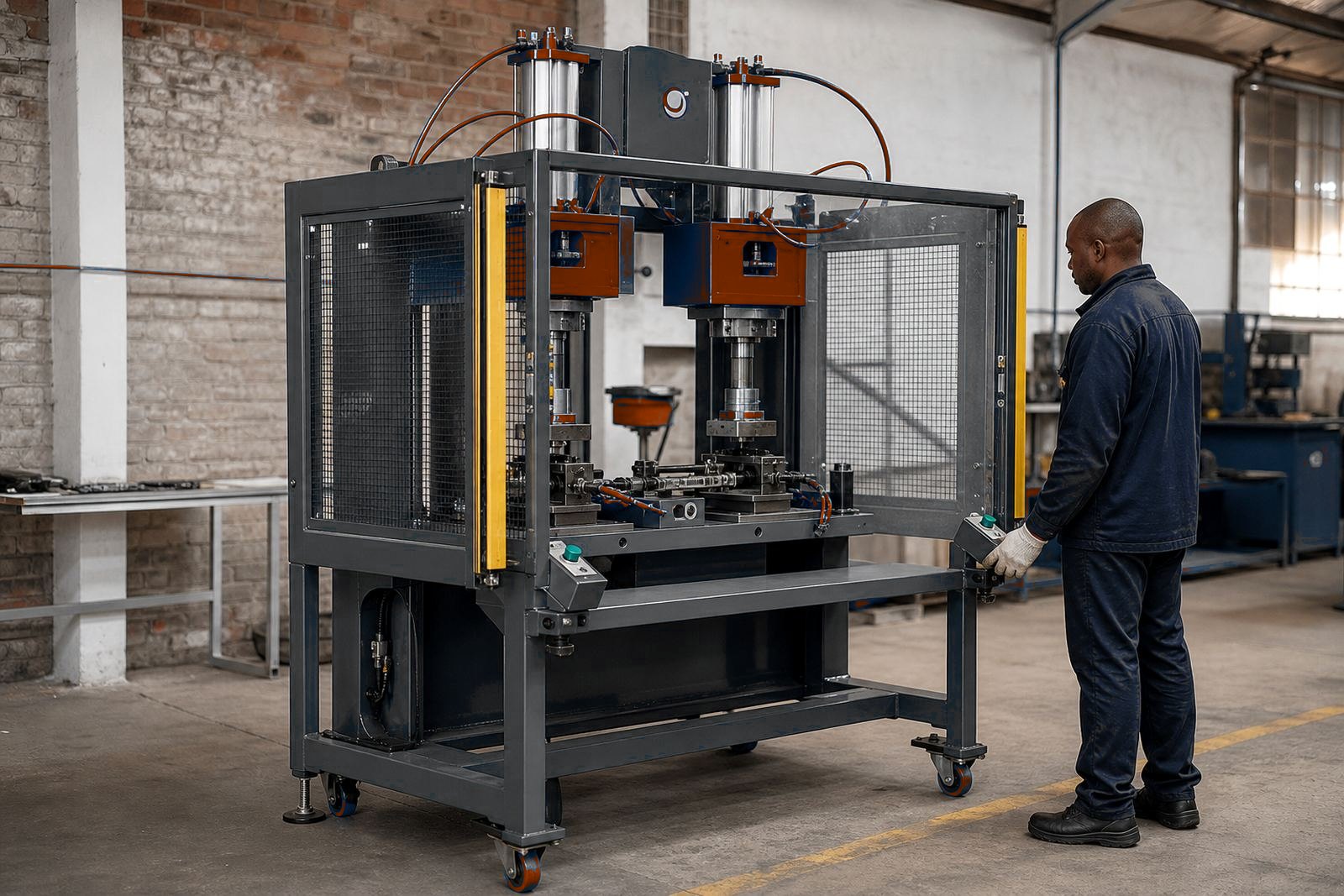
The right layout depends on the part envelope, the nesting method and the cycle you need to hold. Cylinder bore, stroke length and available air pressure all affect how the press behaves under load. A short stroke works well where the part only needs a light set or a controlled crimp, while a longer stroke may be needed for deeper forming, staking or pack sealing work. On tougher fixtures, a guided slide or twin cylinder arrangement can help keep the ram square through the working range.
- Single station nests for focused assembly or test cells
- Two station units for locate and press workflows
- Multi station frames for staged assembly and handoff lines
- Stroke setting to suit shallow, medium or deeper forming cycles
- Air pressure matched to tooling force and part material
- Fixed or adjustable nest pockets for repeat placement
For many South African factories, the useful range is less about a headline size and more about the real working window. The frame height, bed opening, tooling reach and operator clearance all need to sit together properly, otherwise the press is awkward to load and hard to keep consistent.
Where nesting presses earn their keep on the floor
These presses suit lines where a part must be held firmly before force is applied. That includes assembly work with bushings, inserts and small pressed components, as well as crimping jobs on terminals or sleeves, riveting of light hardware, staking of plastic to metal, and pack sealing where the product needs a neat, repeatable closure. When the nest is right, the operator spends less time correcting position and more time feeding the line.
They also work well in mixed production areas where changeovers happen during the shift. A good fixture can be swapped for another product family, then the same base press is used for a different nest, different stroke stop or different two hand control setting. In smaller plants, that flexibility can be more useful than a large dedicated machine that only suits one job.
- Assembly stations for inserts, clips and fitted parts
- Crimping lines where the part must sit square before closing
- Riveting and staking jobs that need exact placement
- Pack sealing areas with controlled closure pressure
- Workshop cells handling short run or batch work
Guarding, two hand control and light curtain options
Safety features are built into the press from the start. A nesting press normally needs a guarded working zone, with two hand controls where the operator is close to the tool face, or a light curtain where the line layout allows freer access while still protecting the pinch point. The choice depends on part size, feed method and whether the load is dropped in by hand or presented in a fixture.
Guarding can be fixed mesh, interlocked panels or a shaped enclosure around the work zone. On a press that sees varied operators, clear start controls and visible tooling points make the cell easier to manage. Where the job involves frequent tooling changes, the guards and controls should still leave enough access for maintenance, tool setting and cleaning without exposing the operator to the closing area.
Site fit, air line setup and commissioning in South African plants
Installation starts with the base frame, floor position and service layout. The press needs a stable setting, level support and a clean air supply with the right pressure, filtration and line routing. If the machine will sit in a busy production bay, the path for parts in and out matters as much as the press itself. The nest height, access side and operator stance all need to fit the existing work cell.
Commissioning covers stroke setting, pressure adjustment, tool alignment and a working test with the actual parts. If the machine is going into a line with several stations, the sequence between stations is checked so the part transfers cleanly and does not cock in the nest. Our team handles site installation, air line setup and production handover across Isando, Johannesburg, Pretoria, Durban, Gqeberha, East London, Kempton Park and Boksburg.
- Floor position and frame level set for the press bed
- Air supply pressure checked against cylinder demand
- Tool alignment checked on the first loaded cycles
- Stroke stops set to suit the part and nest depth
- Two hand control or light curtain verified on site
- Operator handover with the final work sequence
Care, wear points and the details to confirm before ordering
A nesting tool press stays accurate when the moving parts and locating surfaces are kept clean. Dust, slivers and oily residue build up around the nest and guide faces, so regular wiping and inspection matter. On pack sealing and light assembly work, small scraps can hide in the pocket and change the seat of the part, which then affects the press result. Hoses, fittings and cylinder seals should also be watched for leaks, because a slow air loss can change the feel of the stroke.
Before ordering, the most useful details are the part size, the nest shape, the working force needed, the stroke length, the station count and the floor space available. We also need to know whether the job is assembly, crimping, riveting, staking or pack sealing, because the tooling and safety setup change with the task. If the product runs in humid coastal conditions, or in a plant with fine dust and frequent wash down, the materials and finish need to be selected with that in mind.
- Part drawing or sample for nest design
- Material type and thickness of the job piece
- Required press force and stroke travel
- Station count and feed direction on the line
- Safety method, two hand control or light curtain
- Air pressure available at the machine position
For a nesting tool press that has to work steadily in a real production bay, those details make the difference between a machine that merely fits and one that suits the work day after day.
Key facts
| Type | Air operated nesting tool press for guided part placement before pressing |
|---|---|
| Stations | Single station to multi station layouts, depending on line flow |
| Cylinder | Sized to suit required force, stroke and tooling load |
| Stroke | Set for shallow set, medium form or deeper pressing travel |
| Controls | Two hand control or light curtain options with guarded working zone |
| Applications | Assembly, crimping, riveting, staking and pack sealing |
| Services | Custom tooling, guarding builds, site installation and commissioning |