A station built around the part, not around guesswork
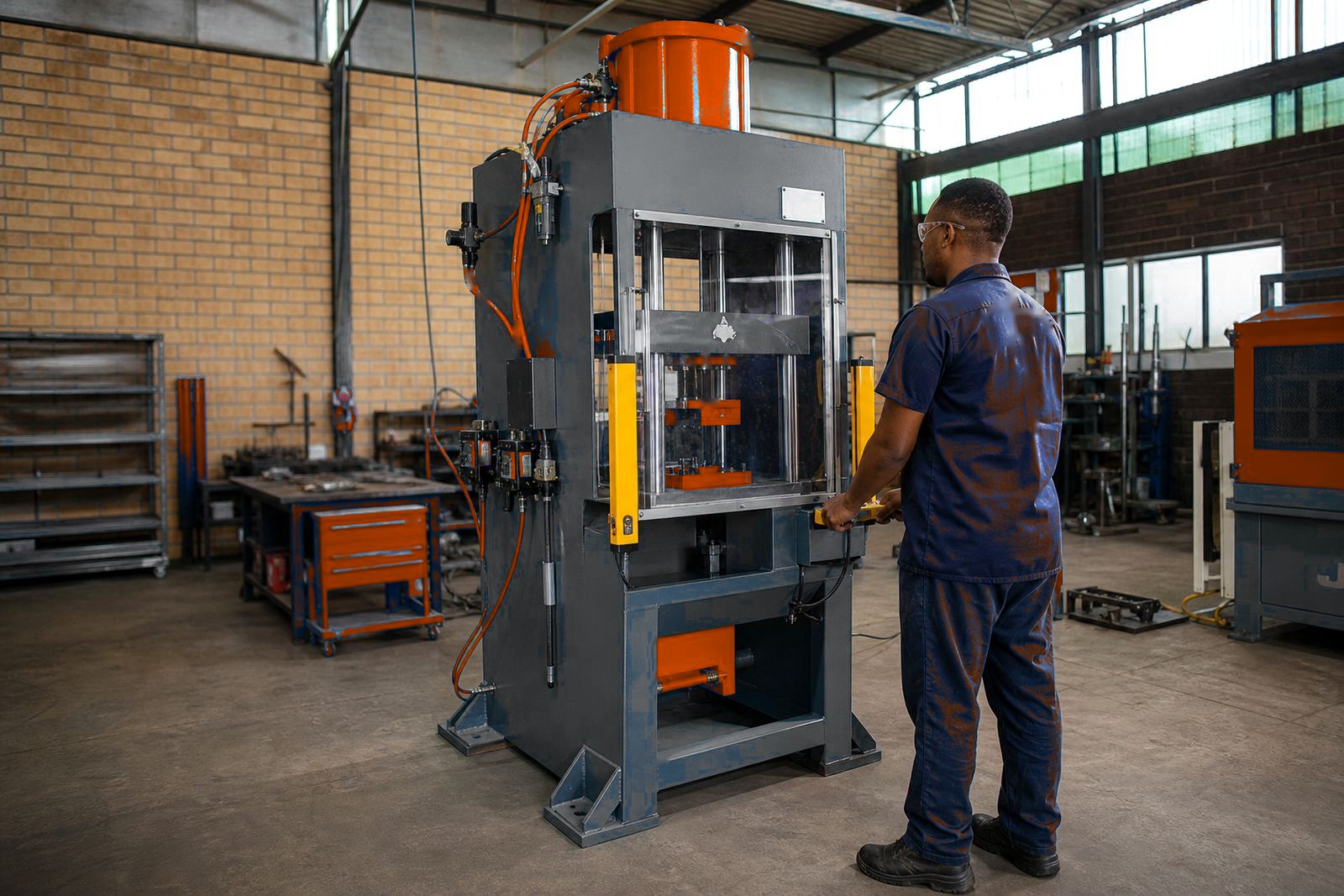
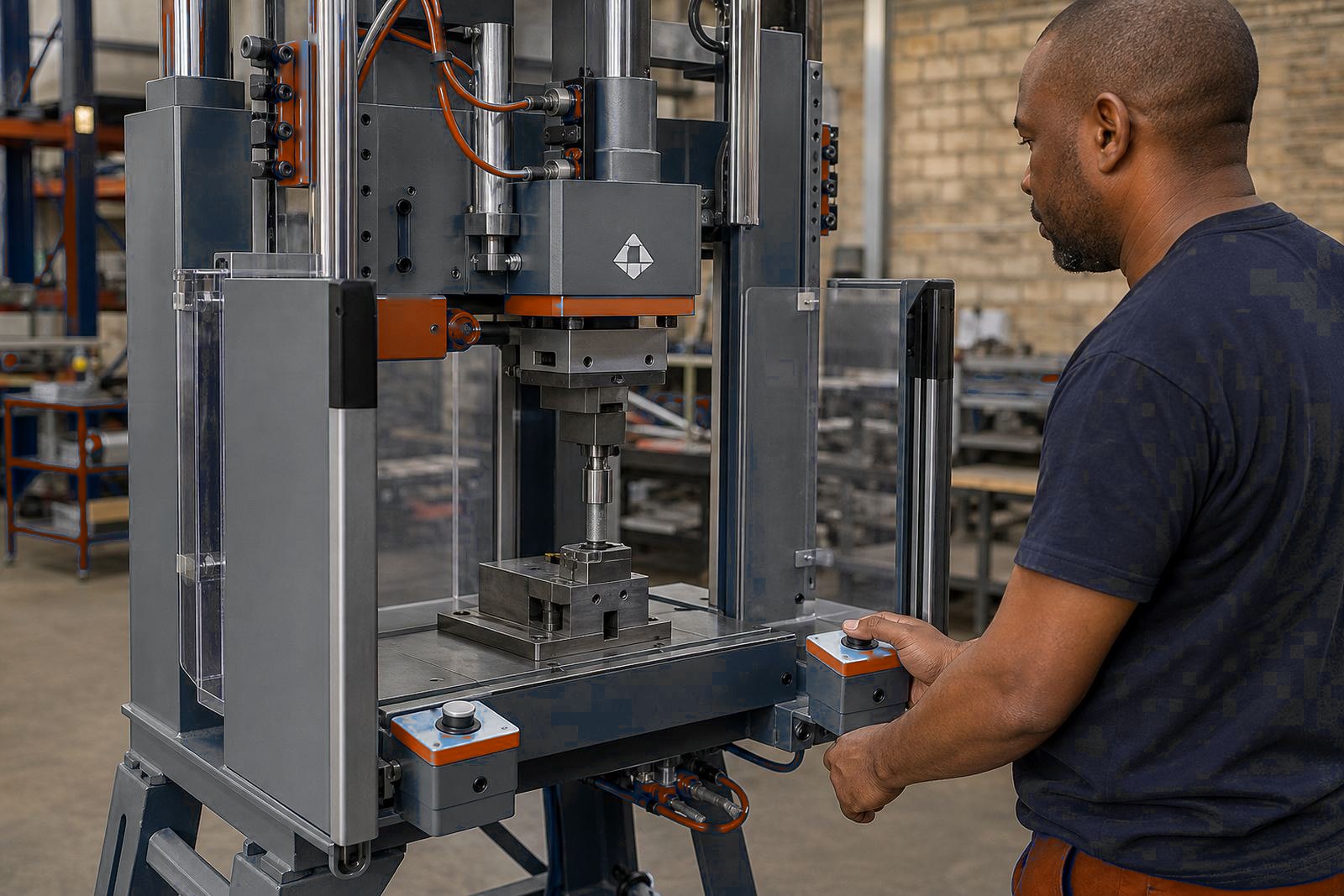
A manual load press is a single press station set up for hand loading, with the part held in a fixture or nest before the cylinder comes down. The operator presents the component, checks the location against stops or pins, then starts the cycle through the agreed control method.
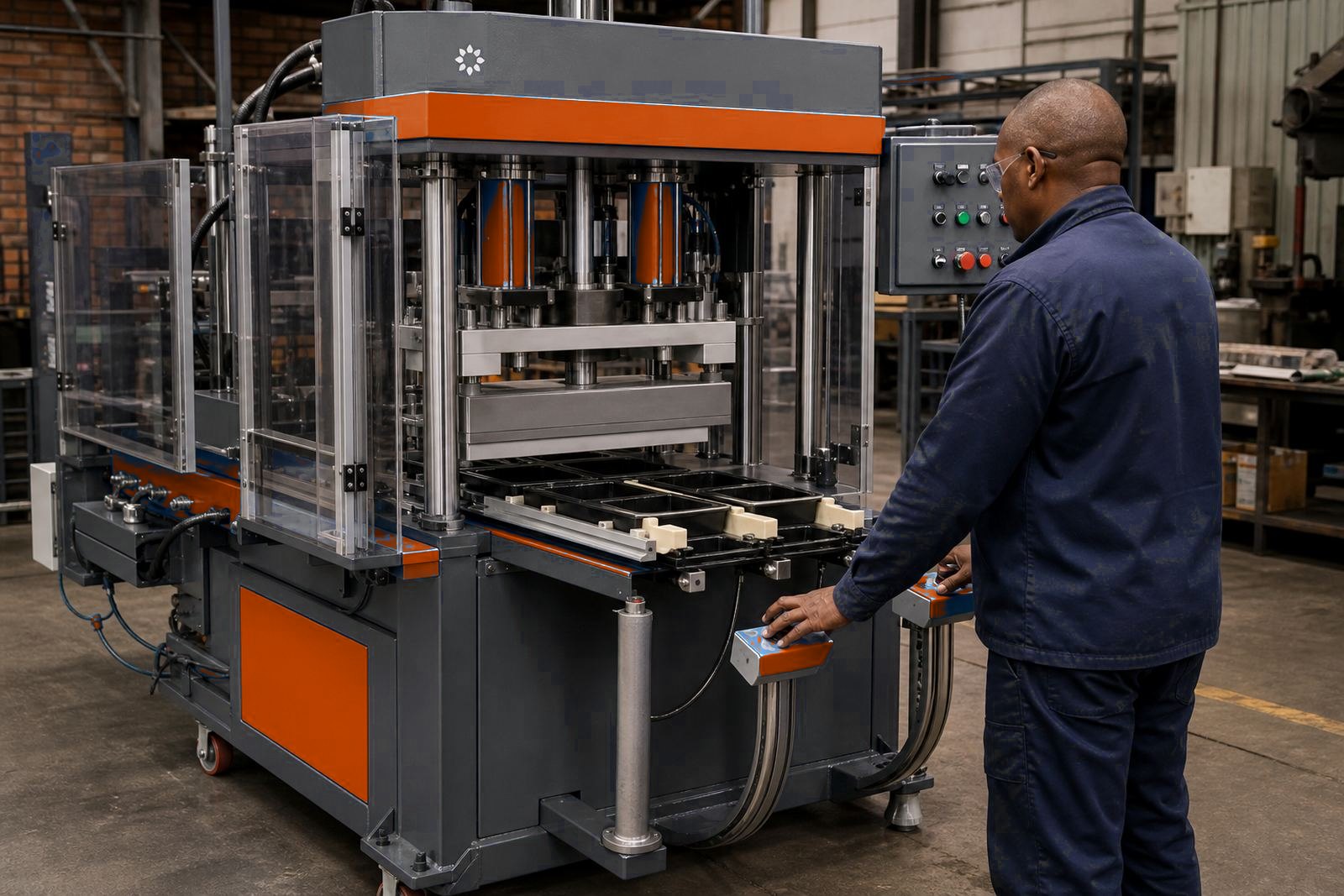
On South African assembly floors this layout is common where the product shape changes, the batch size shifts, or the join needs close visual checking before the stroke. The station can be built for crimping, riveting, staking or pack sealing, with the tooling matched to the contact face and the finish needed on the part.
- Manual placement with positive part location
- Short, controlled cycle for repetitive hand work
- Fixture faces sized to suit the component
- Suitable for bench or floor mounted use
Cylinder sizes, stroke ranges and working pressure
The press body is normally built around one or more pneumatic cylinders, with the force and stroke set to match the task. Smaller stations suit light assembly, wire terminations and pack seals, while larger units handle deeper forming, stronger crimps and heavier rivet loads.
Air pressure, cylinder bore and stroke all work together. A compact station may use a short stroke for shallow work, while a longer stroke gives room for taller tooling or a deeper stack of parts. Where the job needs a more exact finish, stroke stops and guide arrangement can be added so the tool meets the part cleanly and the return travel stays consistent.
- Cylinder bore matched to the force required
- Stroke set for part height and tooling travel
- Working pressure matched to the line supply
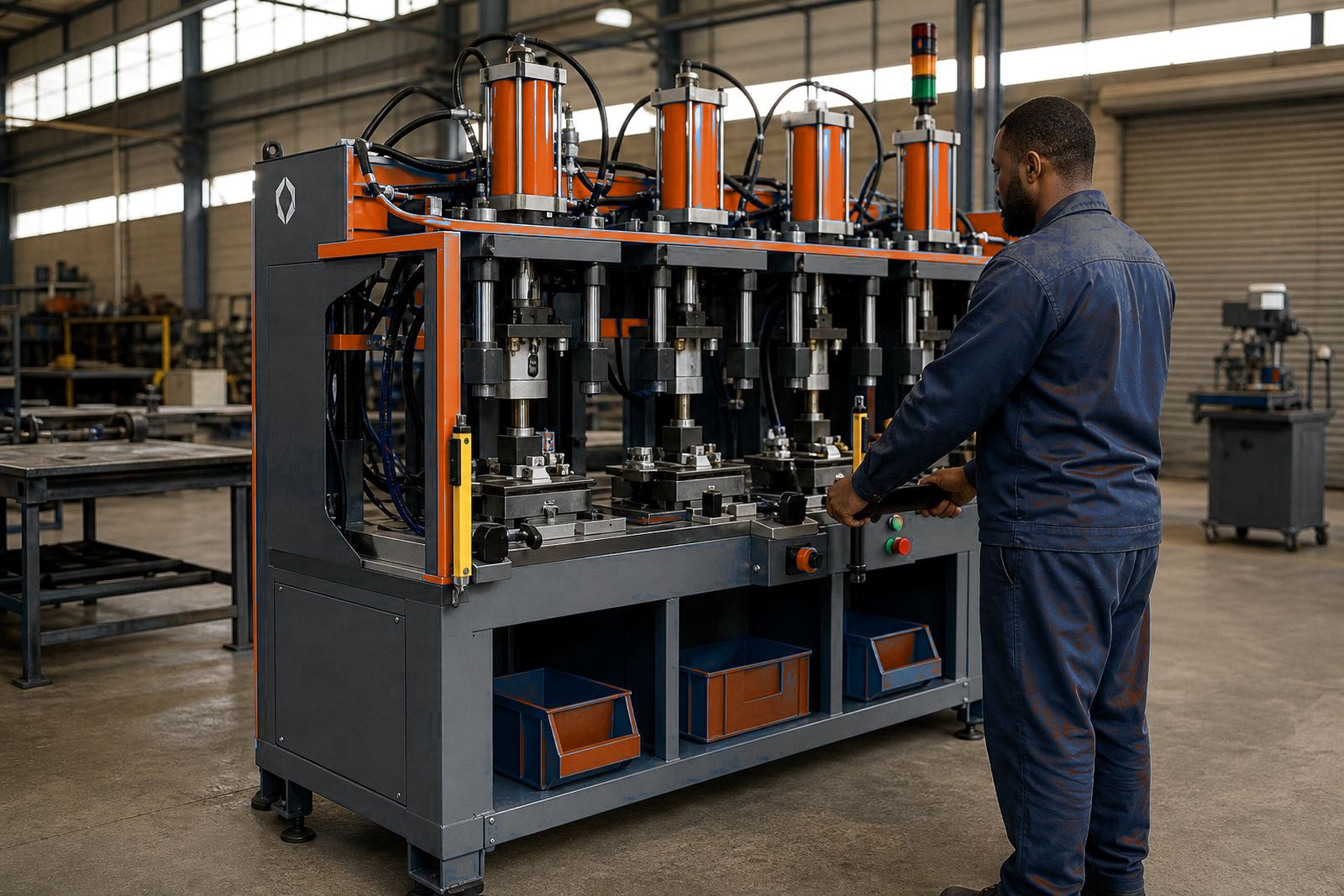
- Options for single or multiple stations
Where manual loading earns its keep
This type of press fits lines where operators handle each part one at a time and the job needs a clear, repeatable action. It works well in Johannesburg plants that run mixed assembly, in Pretoria workshops making small batches, and in Durban, Gqeberha and East London facilities where pack sealing or light forming needs a clean station layout.
It also suits parts that need visual confirmation before the stroke, such as clips, collars, sleeves, terminals or small housings. A well set station reduces wandering part position, keeps the tooling face clean and helps the operator hold a steady rhythm without forcing the part into the die by hand.
- Assembly lines with changing part types
- Crimping and riveting jobs with clear part location
- Staking work on housings, inserts or pins
- Pack sealing where the seal line must stay aligned
Guarding, two-hand control and safe loading flow
Even a manual loading station needs proper guarding and a sensible loading path. Where the hand enters the work area, the press can be arranged with physical guarding, light curtain protection or two-hand controls, depending on the way the part is fed and the way the fixture is set out.
The operator must see the part clearly, keep hands clear of the closing area, and have the press start only when the station is ready. On higher cycle jobs, clean part presentation matters just as much as the press force itself, because a tidy loading position cuts down on poor starts and loose placement.
- Two-hand controls for defined cycle start
- Light curtains where access needs electronic protection
- Guarding frames for fixed loading windows
- Clear sight lines to the tooling and part nest
Fitting the station into a real workshop line
A manual load press usually needs air supply, a solid mounting base, and a fixture that sits at the right working height for the operator. The air line should be sized for the cylinder demand, with clean dry air and a practical route to the station so the pressure stays stable during production.
Some stations are bolted to a bench, others stand on a frame with room for bins, part trays and finished stock. If the job forms part of a wider line, we can set the station into the loading flow, add stroke setting, fit the guarding and handle commissioning so the press is ready for real work on the floor.
- Air line connection with suitable filtration and regulation
- Bench, frame or floor mounted arrangement
- Fixture height set for operator comfort
- Commissioning and operator training for the final layout
Details to settle before the build starts
The best manual load press starts with the part in front of us, not just a name for the job. We need the part size, the material, the required force, the cycle length, and whether the action is crimping, riveting, staking or sealing. Tooling shape, part presentation and the available floor space all affect the final station design.
For busy plants in Gauteng and beyond, it also helps to confirm the air supply, the mounting method and the level of operator protection needed on that exact station. If the product changes often, the fixture can be designed for quick swaps, with tooling changes kept practical for the workshop team.
- Part drawing or sample dimensions
- Material type and thickness
- Required stroke, force and cycle action
- Loading direction, guarding and floor space
Key facts
| Type | Manually loaded pneumatic press station |
|---|---|
| Operation | Hand load with fixture located part presentation |
| Typical actions | Assembly, crimping, riveting, staking, pack sealing |
| Control options | Two-hand controls, light curtains, guarding |
| Air requirement | Plant air with regulator and clean dry supply |
| Typical build options | Single station or multi-station layout with custom tooling |