Broad-bed pressing for oversized workpieces
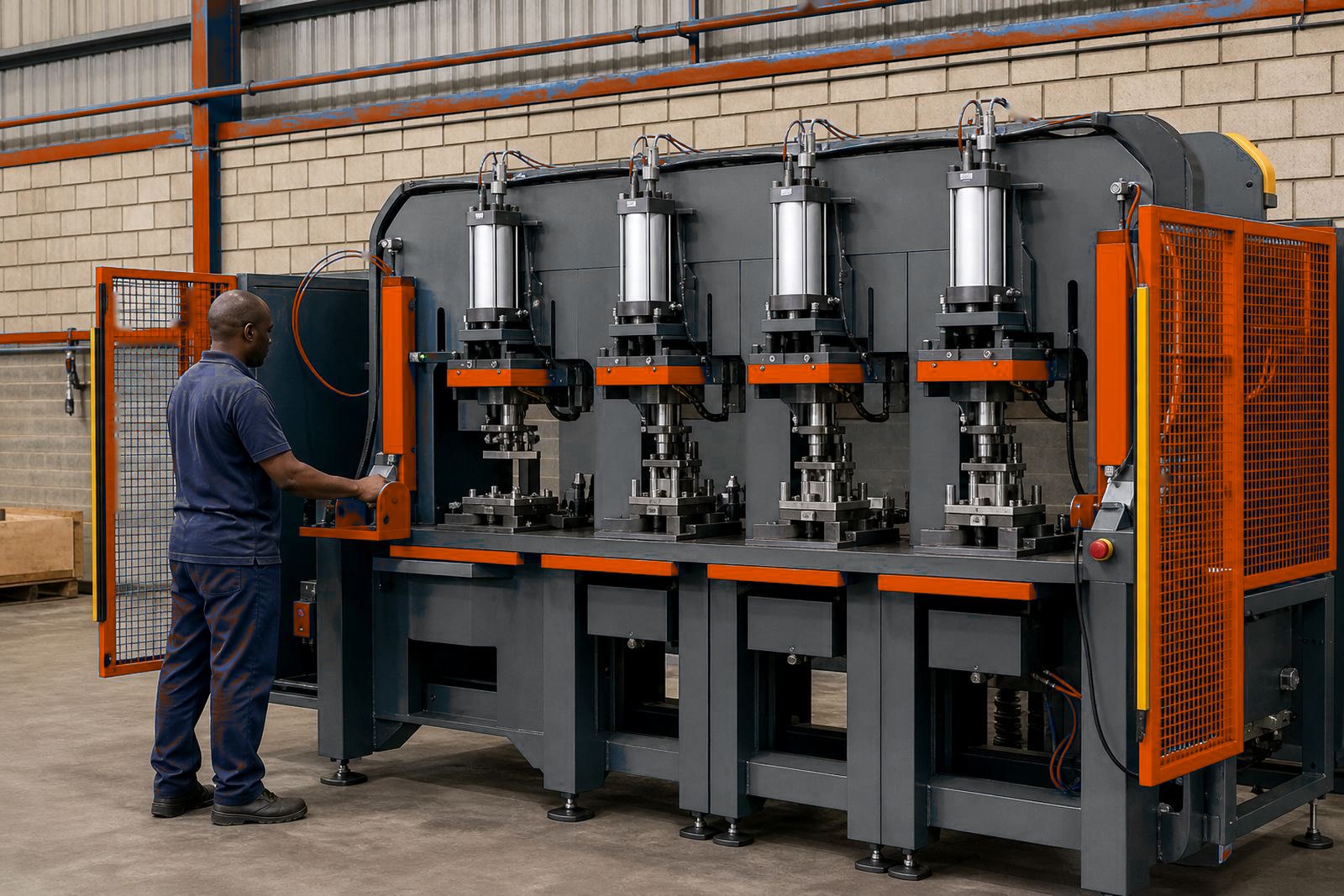
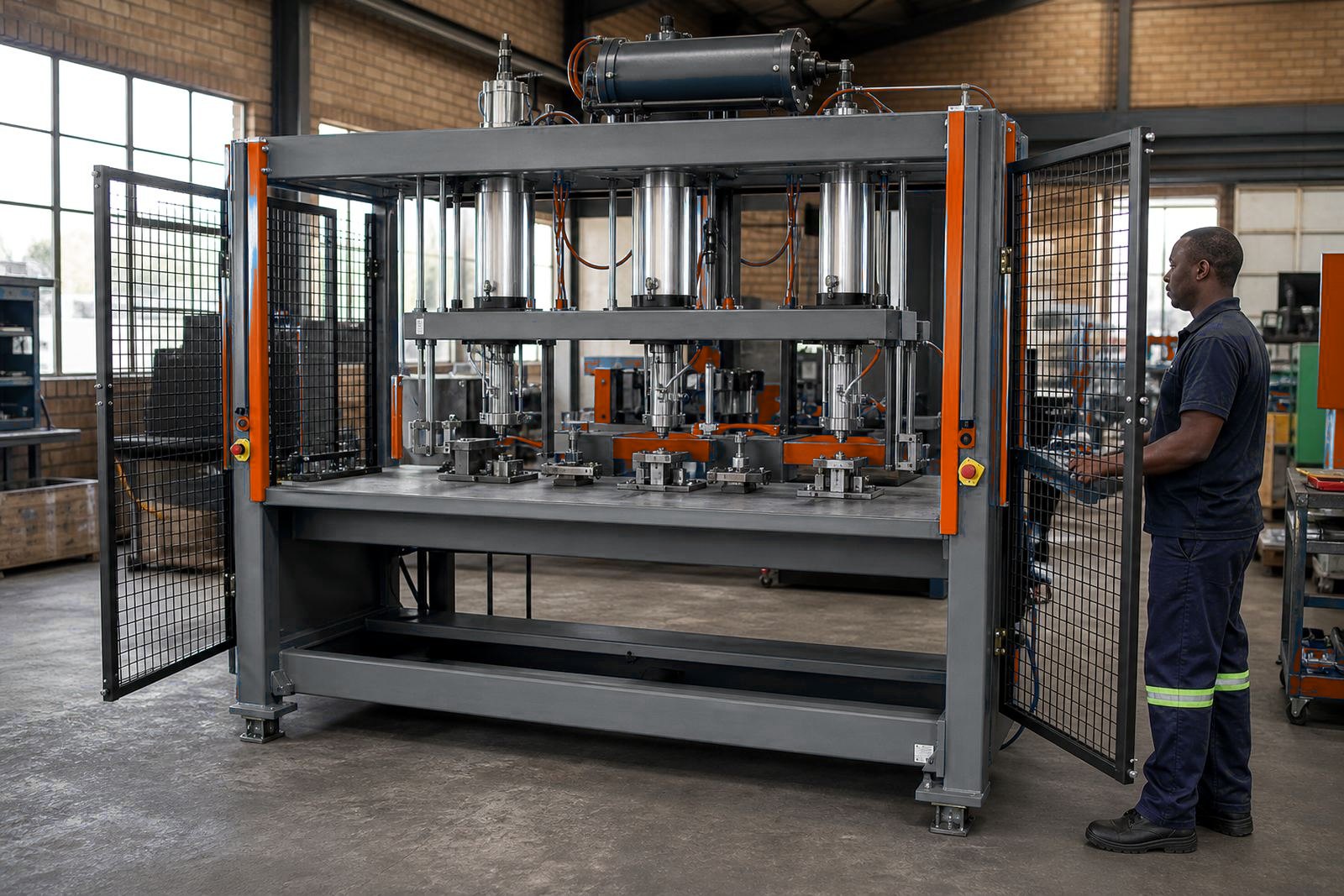
A large parts press is the sort of machine you bring in when a standard bench press feels too tight for the part, the fixture or the operator. The frame gives you a wider throat, a deeper bed and enough daylight to load long parts without fighting the tooling. In practice, that means better access for jigs, clearer part location and less risk of twisting a bulky assembly while it is being formed.
MultiPress designs these presses around the job first, then the station count, cylinder size and tooling layout. A single large platen can suit simple operations, while a multi-station frame lets a team move from loading to forming to inspection with less handling. For factories in Isando and the wider Gauteng belt, that matters when the part is awkward, heavy, or must stay flat through the cycle.
Typical uses include panel assembly, bracket forming, bushing insertion, terminal crimping, rivet setting, staking and pack sealing. The larger working envelope also helps when parts arrive in trays or need side access for clamps, guides and escape chutes.
Cylinder force, stroke and working envelope
Choosing the right press is seldom about size on its own. Cylinder bore, air pressure, stroke length and return speed all have to match the workpiece and the tooling. A larger frame often carries one or more pneumatic cylinders sized for controlled force rather than brute force, with stroke setting used to stop over-travel and protect the die faces.
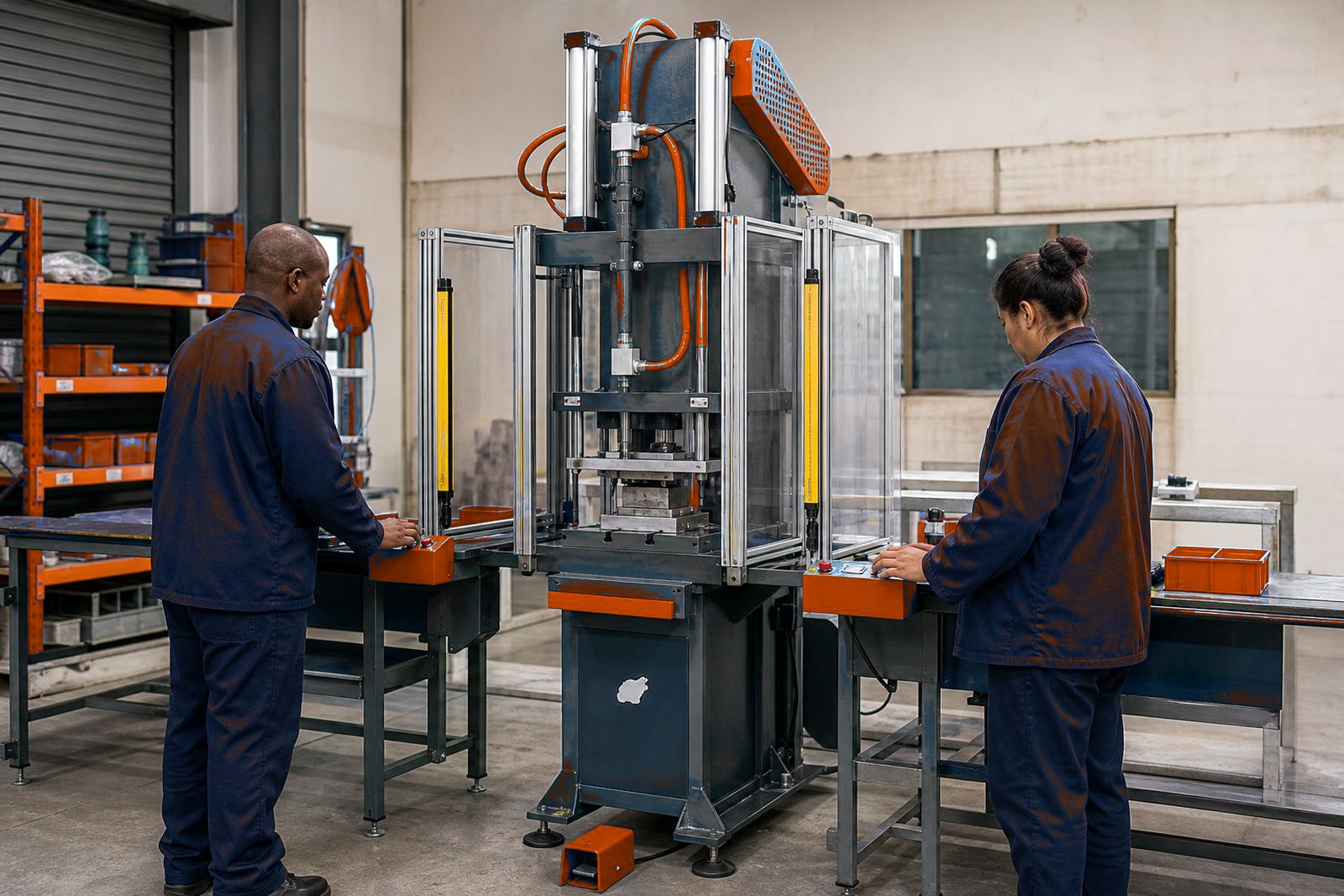
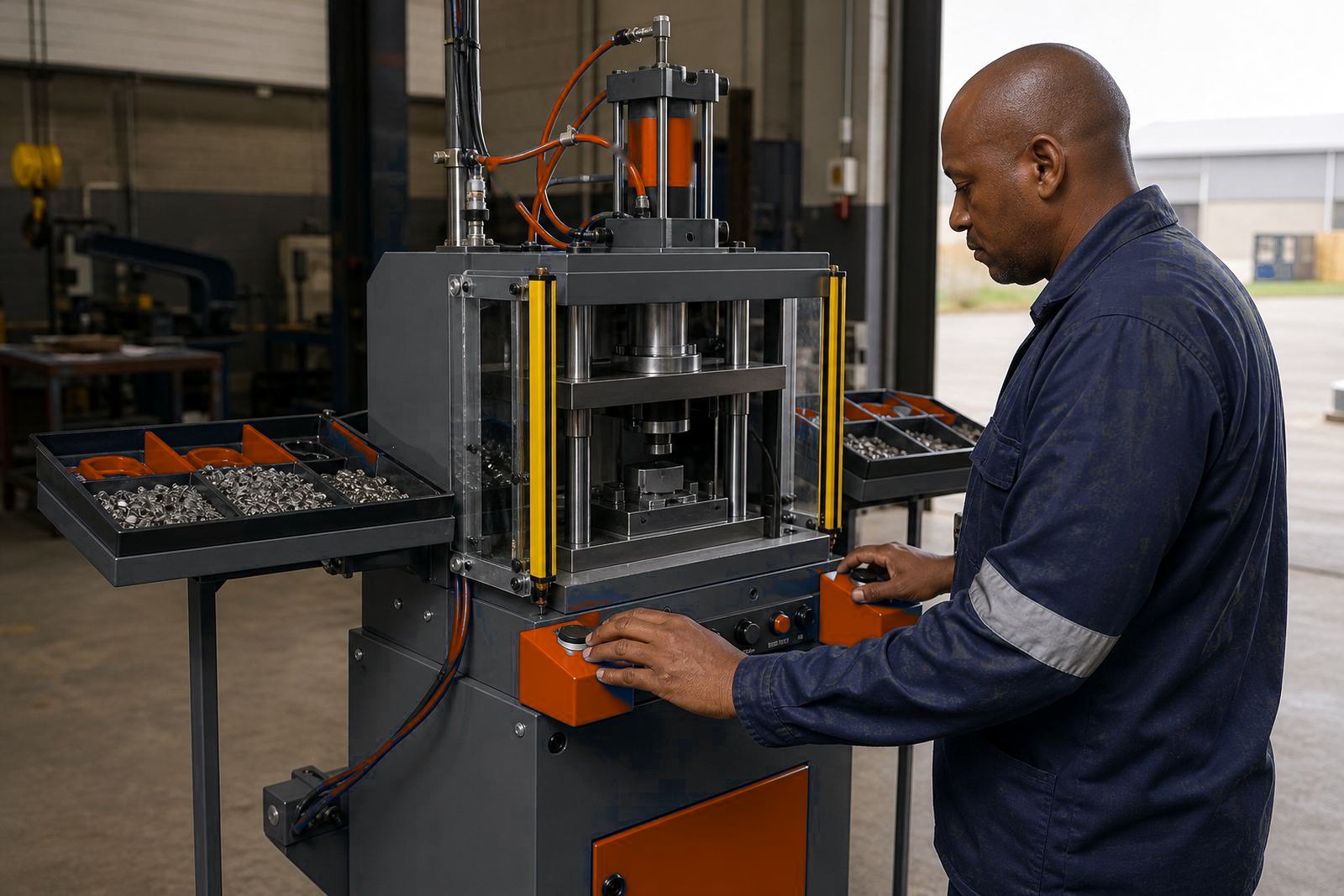
Options usually include one to several stations, depending on whether the process is a single operation or a sequence across the same frame. Two-hand controls are common where the operator loads from the front and reaches into the guarded zone only when the press is ready. Light curtains suit wider access openings, while fixed guarding is better where the loading route is more predictable.
- Frame sizes can be set for long or wide parts, with custom bed width and throat depth.
- Cylinder arrangement may be single-acting or arranged across multiple stations for even pressure.
- Stroke length is set to suit the operation, from short crimping moves to deeper forming strokes.
- Air pressure and regulator settings are matched to the required force and cycle consistency.
- Platen and tooling faces can be machined to suit nests, guides and locating pins.
Where this press fits into real production lines
Large parts presses are used where component size makes manual handling awkward and repeatability matters. They suit electrical enclosures, fabricated housings, automotive sub-assemblies, appliance panels, metal brackets and pack sealing work that needs broad support across the seal area. In Durban and the coastal belt, corrosion-resistant guarding and sensible tool storage matter more than people first think, especially where humidity hangs around the workshop.
For factories running several stations in one line, a larger press can become the central point where a part is loaded, formed, checked and sent onward. It is useful where one operator handles loading and a second person handles inspection or pack out. The access zone has to stay open enough for the job, but still controlled with the right interlocks and guarding layout.
Some jobs need a taller opening for clamped components, others need a wider bed for a broad seal or a long riveting pattern. That is why the frame and tooling are designed together instead of one being chosen in isolation.
Tooling, fixtures and guarding built around the part
The machine is only as useful as the tooling sitting inside it. For bulky parts, the fixture must hold the component square without marking it, while still letting the operator load and unload without awkward reaches. MultiPress builds custom tooling for crimping nests, rivet heads, staking anvils and pack sealing dies, with fixture design shaped around the real part geometry.
Guarding builds are matched to the way the line is used. That may mean fixed side guards, interlocked doors, front access windows or light curtain integration where operators need a wider load opening. Two hand controls are fitted when the risk profile calls for both hands clear during the cycle, and the logic is set so the press cannot cycle unless the correct safety conditions are in place.
- Custom nests for panels, housings and large brackets.
- Tool inserts for changeover between product sizes.
- Rivet and crimp tooling shaped to the fastener or terminal.
- Light curtain, door interlock and two hand control options.
- Catch trays, guides and part stops for cleaner loading.
Installation, air line setup and commissioning on site
A press of this size needs proper fitting in the factory, not just a wheeled-in placement and a quick test. The footprint has to allow loading space, maintenance access and clear operator movement around the front of the machine. Air line setup, regulator positioning and drainage points all matter because moisture and pressure swings can affect cycle consistency and seal quality.
Commissioning includes stroke setting, pressure adjustment, safety checks and proof runs with the intended tooling. Where the press sits in a production line, the handover also has to account for upstream and downstream flow, part presentation and operator movement. In Johannesburg, Pretoria, Gqeberha and East London, the site layout can vary widely, so the installation plan is shaped around the actual floor, not a standard drawing.
We also set up production handover with the operators who will run the press day to day, so the controls, stop positions and tool change steps are clear before the job starts in earnest.
Care, changeovers and the checks to confirm upfront
Large presses need straightforward care if they are going to stay accurate. Air preparation should be checked, moving seals kept in good condition and tooling faces inspected for wear, burrs or misalignment. If the job includes pack sealing or repetitive riveting, small changes in pressure or guide wear can show up quickly in the finished part, so routine checks are worth the time.
Before ordering, the important details are the part size, material thickness, required force, stroke length and the style of loading. It also helps to know whether the job needs one station or several, whether the operator must work from the front only, and whether the line needs light curtains, two-hand controls or fixed guarding. For larger seal areas, the sealing width and pressure distribution matter just as much as the frame size.
- Part drawing or sample, with the largest footprint and mass.
- Required operation: crimping, riveting, staking, assembly or pack sealing.
- Target stroke, cycle style and the air pressure available on site.
- Preferred loading direction and any limits on operator reach.
- Need for tooling changes, spare inserts or multiple product sizes.
Key facts
| Frame type | Large format multi-station pneumatic press |
|---|---|
| Typical operations | Assembly, crimping, riveting, staking, pack sealing |
| Stations | Single station or multi-station layout |
| Safety options | Two-hand controls, light curtains, interlocked guarding |
| Stroke | Set to job, with adjustable stroke setting |
| Installation work | Air line setup, commissioning, operator training |