Crimping stations built around the joint
A crimping press is set up to form a joint with a defined stroke, a fixed lower nest and a matched upper tool profile. On a MultiPress machine, the cylinder size, working air pressure and stroke setting are chosen around the part, the material thickness and the crimp depth needed on the line. That gives your operators a press that closes the same way across shifts, which matters on connectors, terminals, ferrules, sleeves and light fabricated parts.
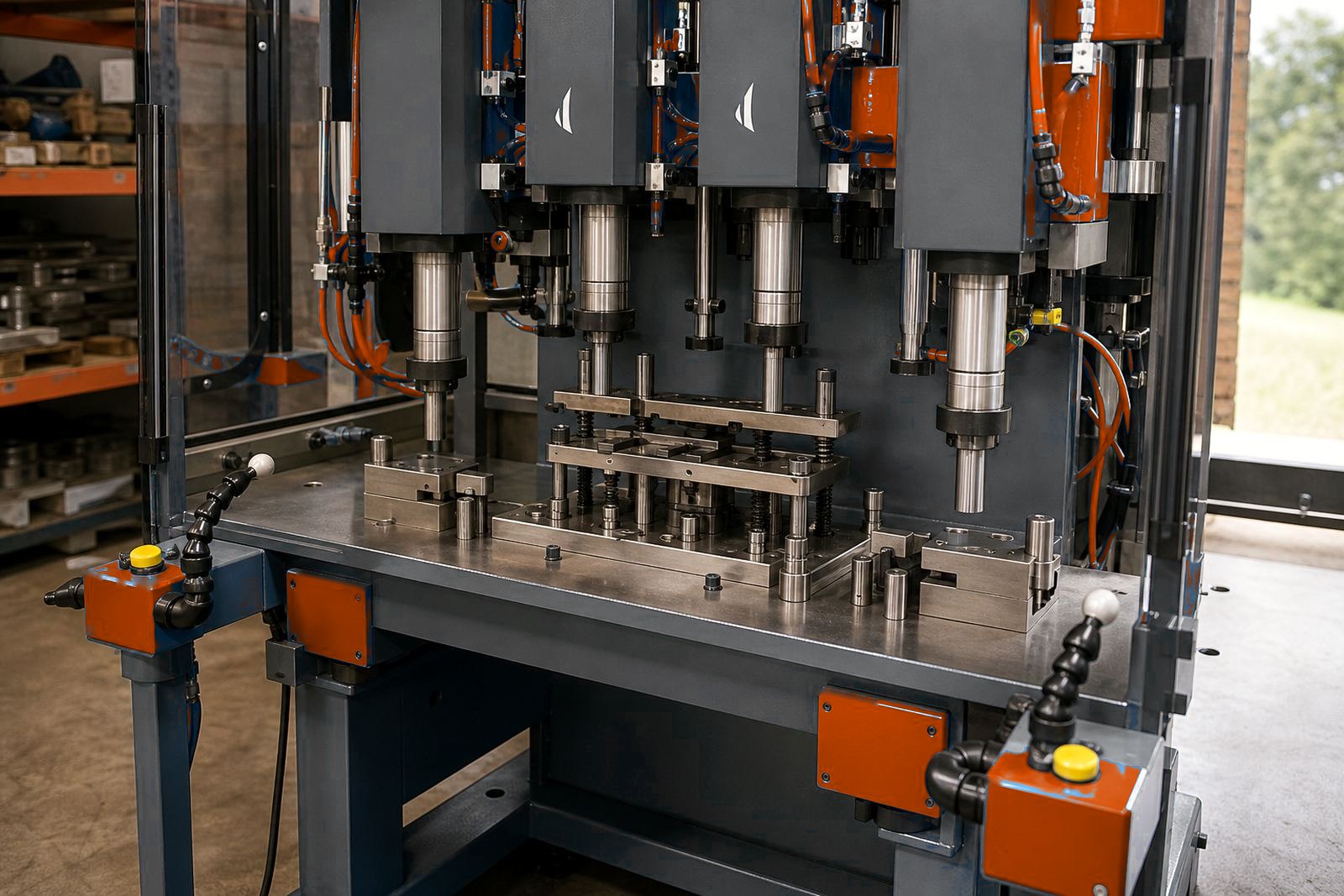
Most crimping work needs more than raw force. The tooling has to guide the part cleanly, hold it square and release without scuffing the component. We build the press around that movement, with station spacing, guarding and control positions arranged for the workpiece and the operator's reach.
- Single station and multi-station layouts for batch or flow work
- Pneumatic cylinders sized for light to medium forming duties
- Controlled stroke setting for repeatable closure depth
- Tool profiles made for the part shape and crimp line
Sizes, station counts and control options for the line
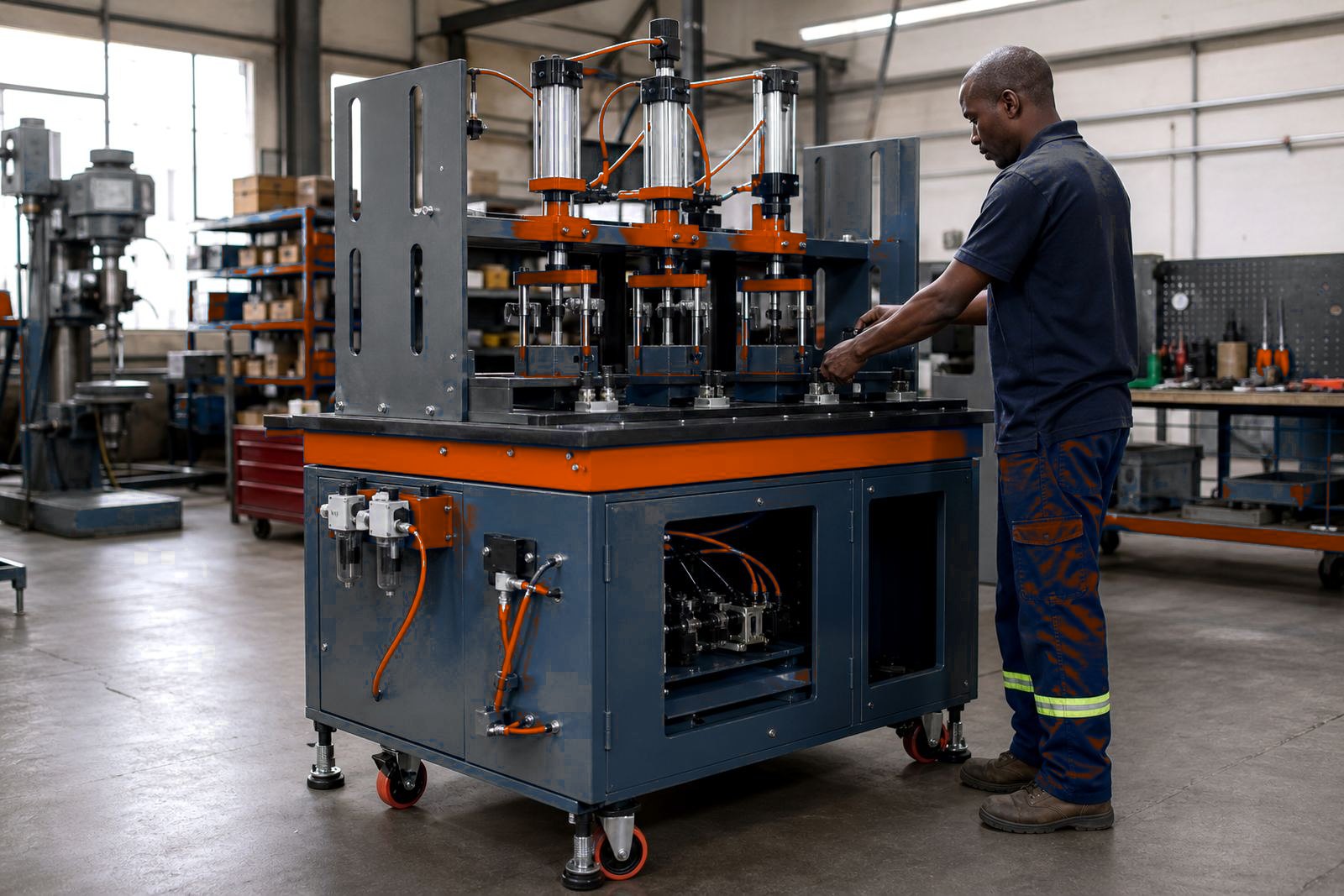
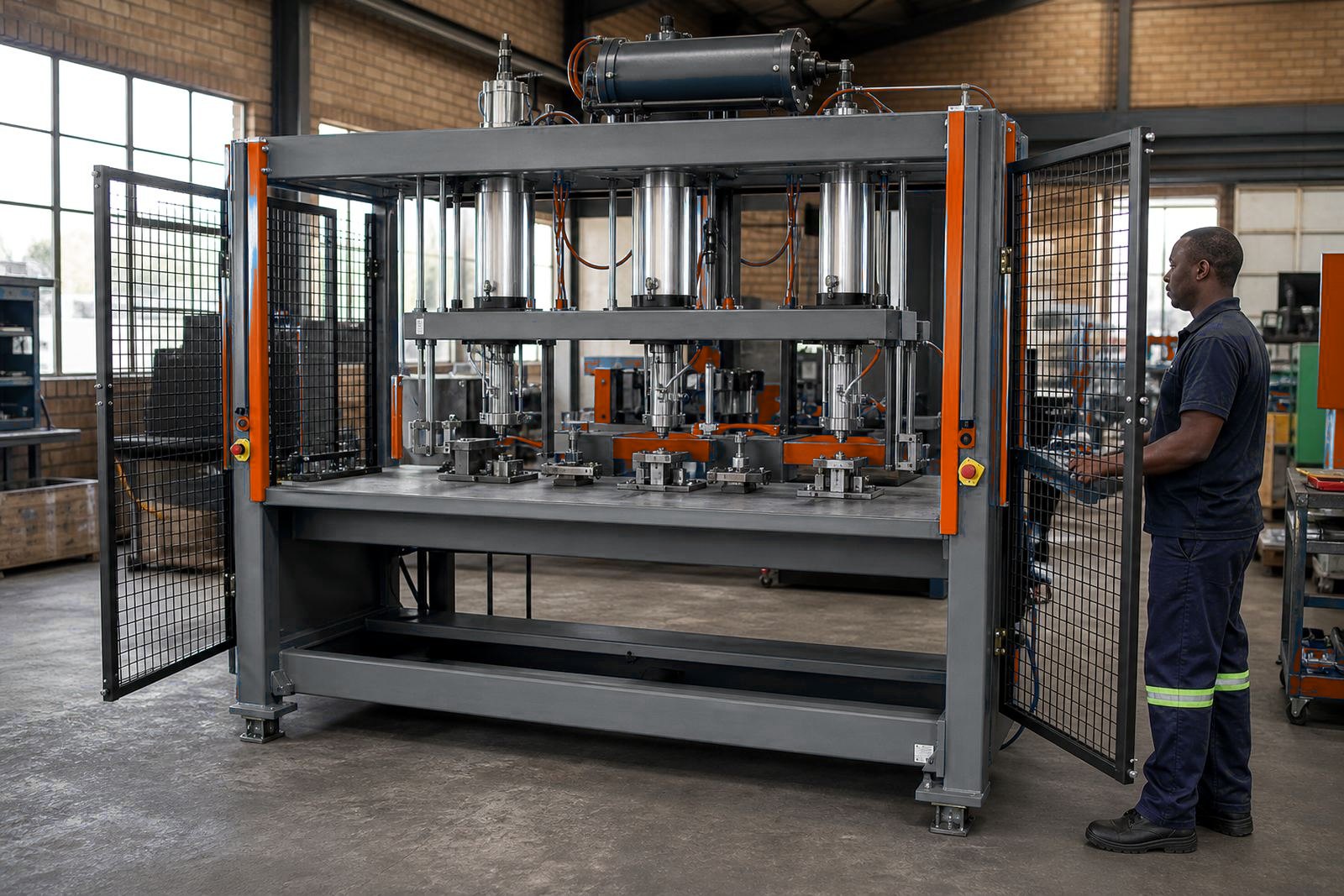
We build crimping presses in more than one size because no two jobs call for the same throat depth, table size or cylinder travel. A compact bench unit may suit a small assembly cell, while a larger floor standing press can handle multiple stations, longer fixtures and heavier tooling. The right layout depends on part length, feed direction and whether the crimp is done on a loose component or in a fixture.
- Bench mounted or floor standing frames
- One, two or more stations depending on the production path
- Manual loading or fixture guided loading
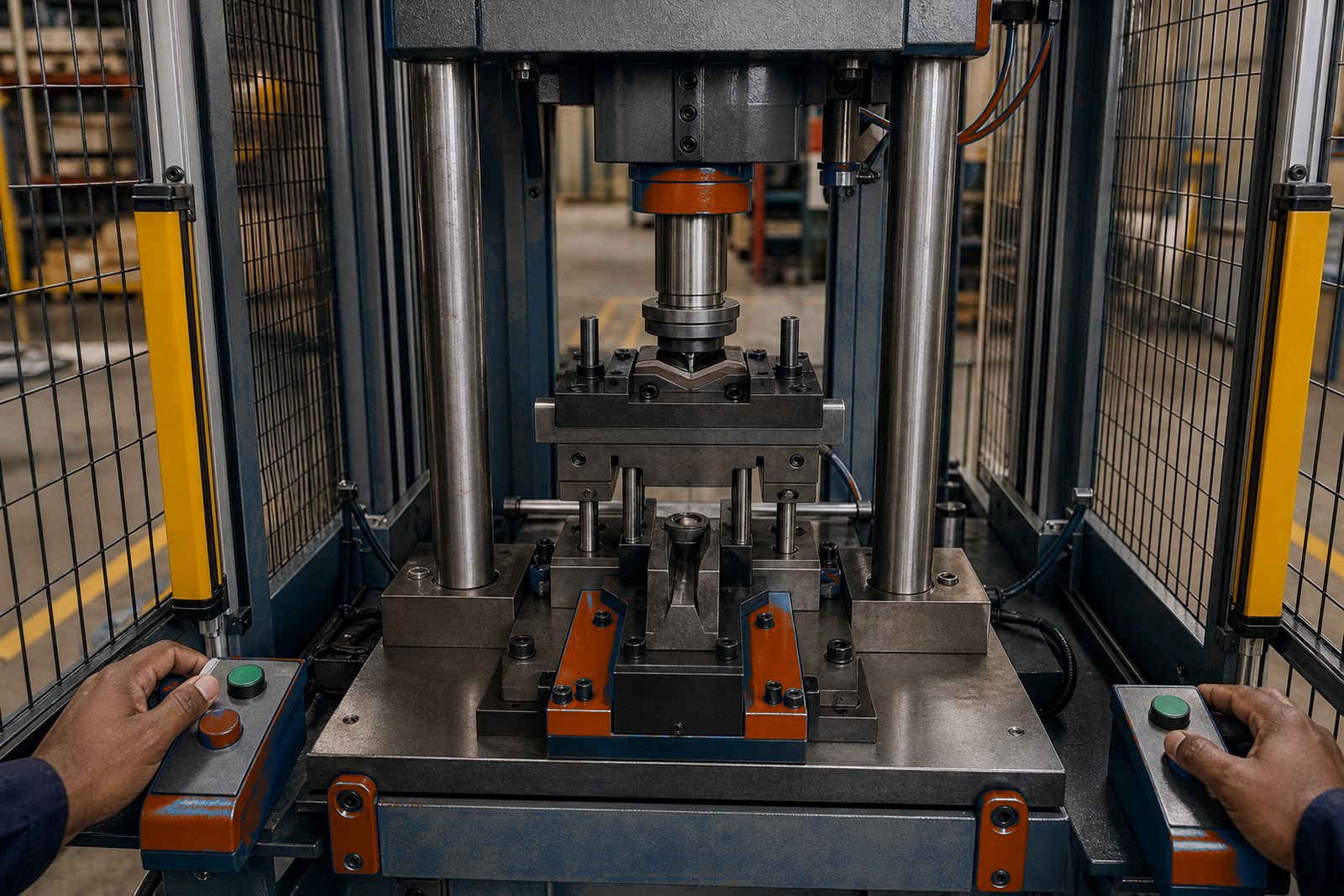
- Two-hand controls where the guarding layout allows it
- Light curtain integration for open-front access where suitable
Air pressure is set to match the tool work and the material. Too little pressure gives an incomplete crimp, too much can distort the part or mark the surface. Stroke setting is just as important because a crimp that closes too far may crush strands, crack a ferrule or bend a tab beyond tolerance. We set both with the actual tooling in place.
Where crimping presses earn their place in factory work
Crimping presses suit assembly lines that need a clean mechanical join without hammering, hand tools or uneven closing force. They are used on electrical assembly, wire terminations, terminal crimps, light metal assemblies, rivet style forming and pack sealing where the product has to close to a set depth. In a busy shop, that repeatability is often what keeps the line moving.
Factories in Johannesburg, Pretoria, Durban, Gqeberha and East London often want the press integrated into an existing work cell rather than treated as a stand-alone machine. That can mean one operator loading parts at a fixed height, or a team using the press as one step in a longer process with trimming, inspection and packing nearby. On coastal sites, enclosure choice and material finish also matter because humidity can affect tooling, fixings and air components over time.
- Assembly cells with repeatable closing depth
- Electrical and light metal crimping jobs
- Riveting and staking where forming control is needed
- Pack sealing where the seal line must stay even
Details to confirm before a crimping press is built
When a factory orders a crimping press, the useful details are the ones that shape the tooling and the motion. We need the part drawing if there is one, the material type, the target crimp depth, the required station count and the way the component will be loaded. If the job has a seal line, rivet point or staking feature as well, that changes the tool profile and the stroke stop.
It also helps to know the available air supply, the floor space, the preferred working height and whether the machine will be used in a guarded cell or an open station with light curtains. If the press is going into an existing line, we also look at the handover point, reject handling and whether the operator will need a fixture change between variants.
- Part size, material and target crimp depth
- Station count and cycle arrangement
- Available air pressure and hose routing
- Guarding method, loading side and working height
- Fixture needs, tool changes and line handover point
Key facts
| Press type | Pneumatic crimping press for assembly and light forming |
|---|---|
| Stations | Single station to multi-station layouts |
| Control | Two-hand controls or light curtain integration |
| Stroke | Set to suit the tool profile and crimp depth |
| Pressure | Adjusted to the part and cylinder size |
| Services | Custom tooling, commissioning, operator training and production handover |