Long travel before the press meets the part
A deep stroke press is built for jobs where the tooling must move farther than a standard setup before pressure lands on the component. That extra travel helps when a part sits low in a fixture, when a stack-up needs clearance, or when the tool must enter a cavity before the press forms, seals or stakes the job.
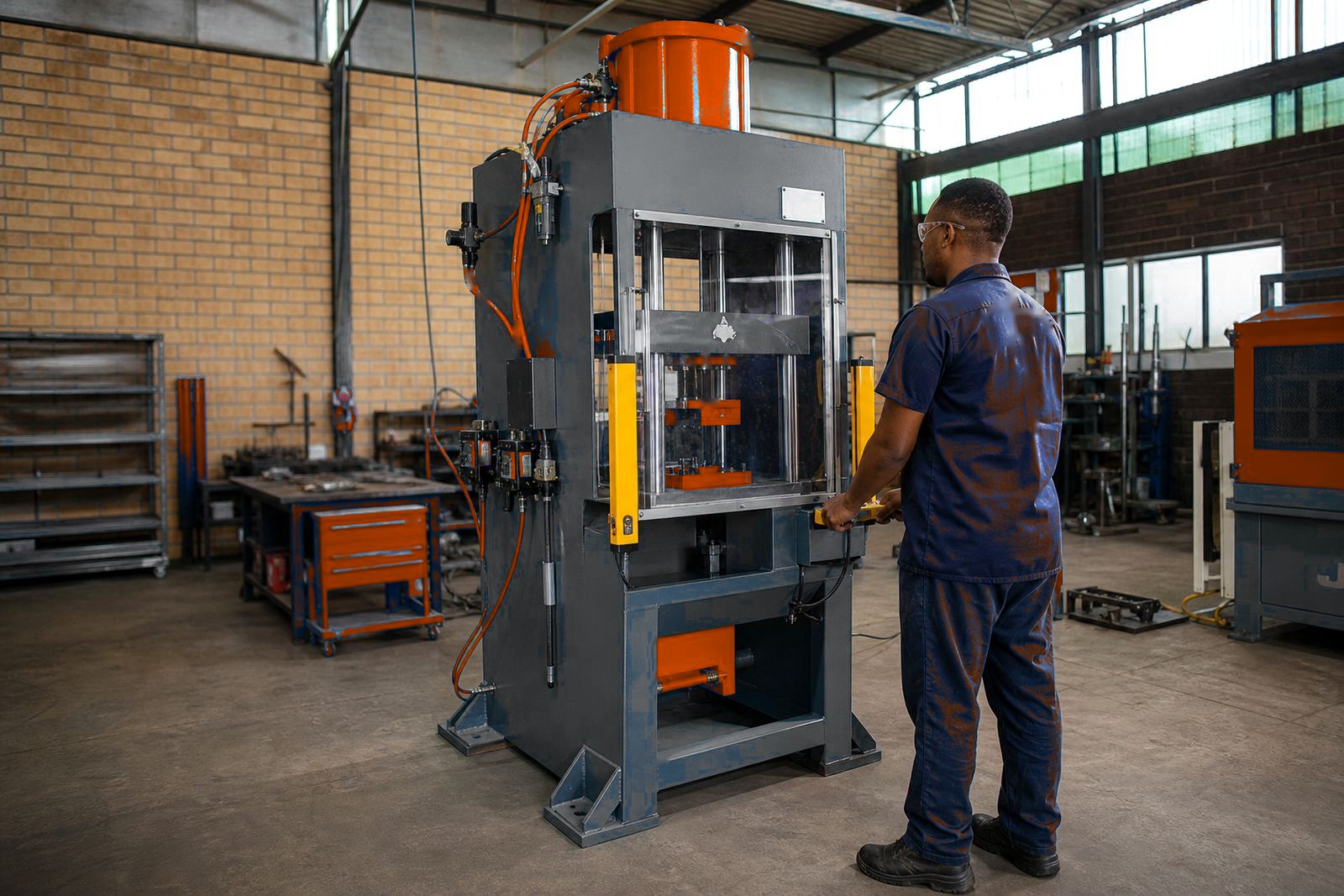
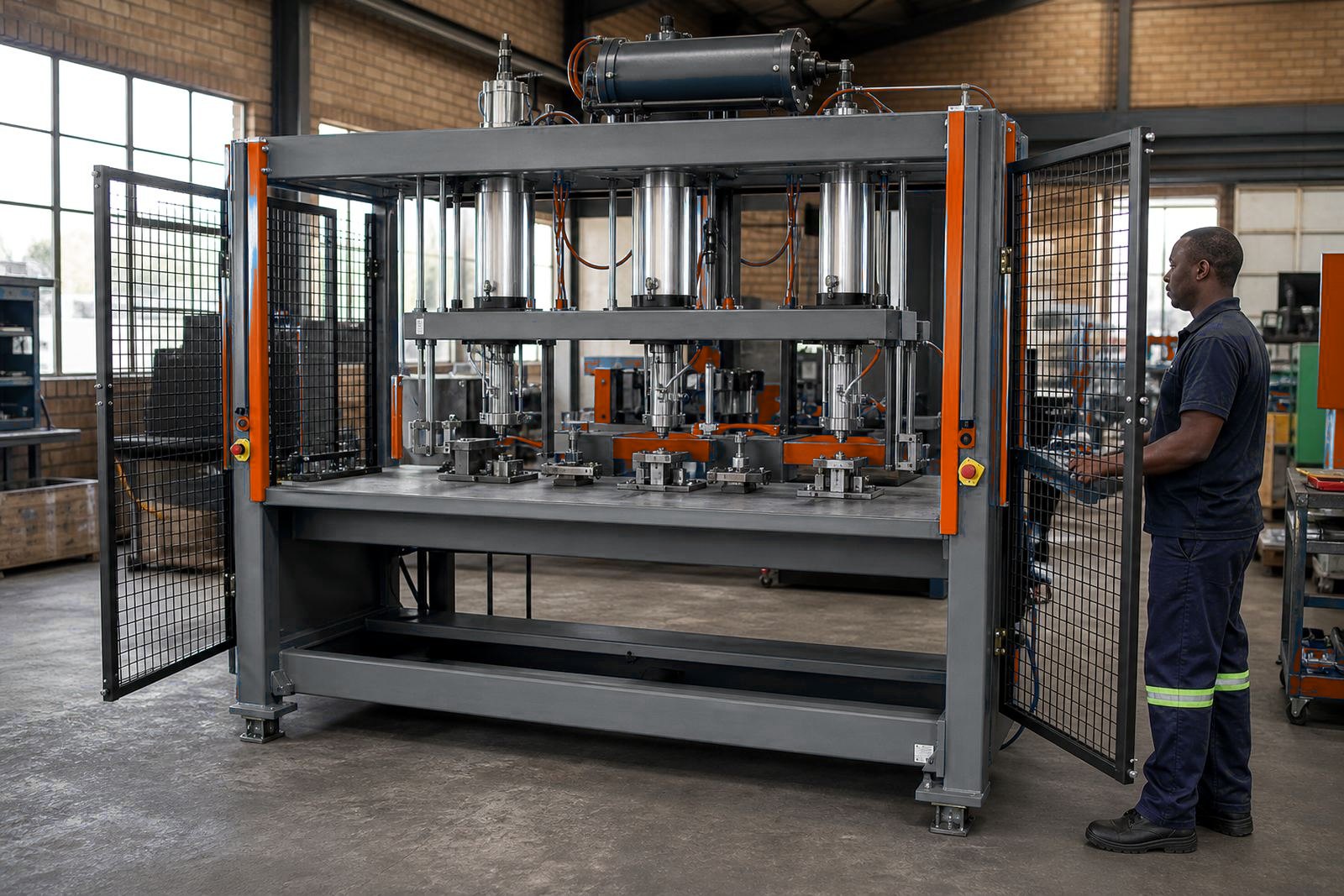
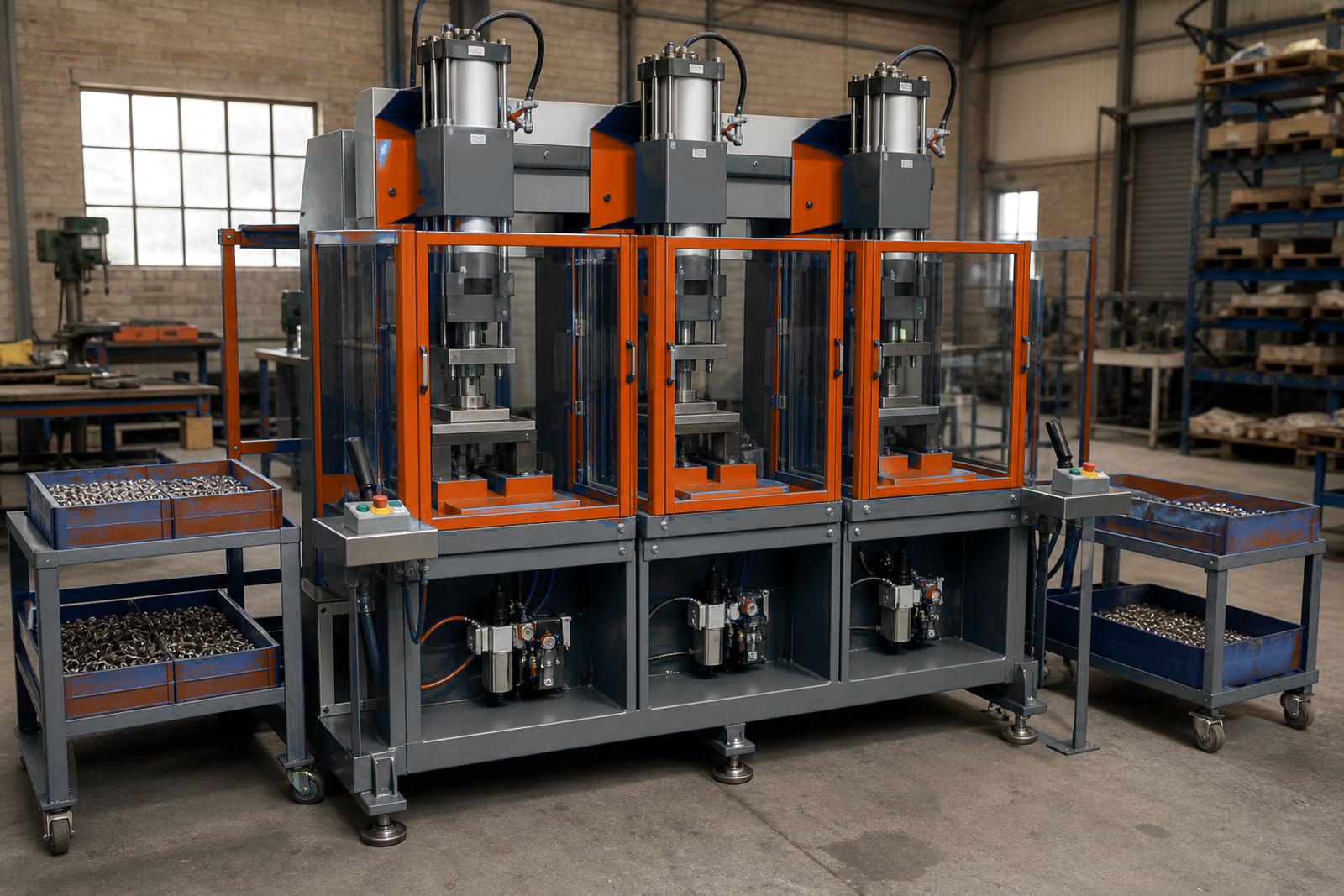
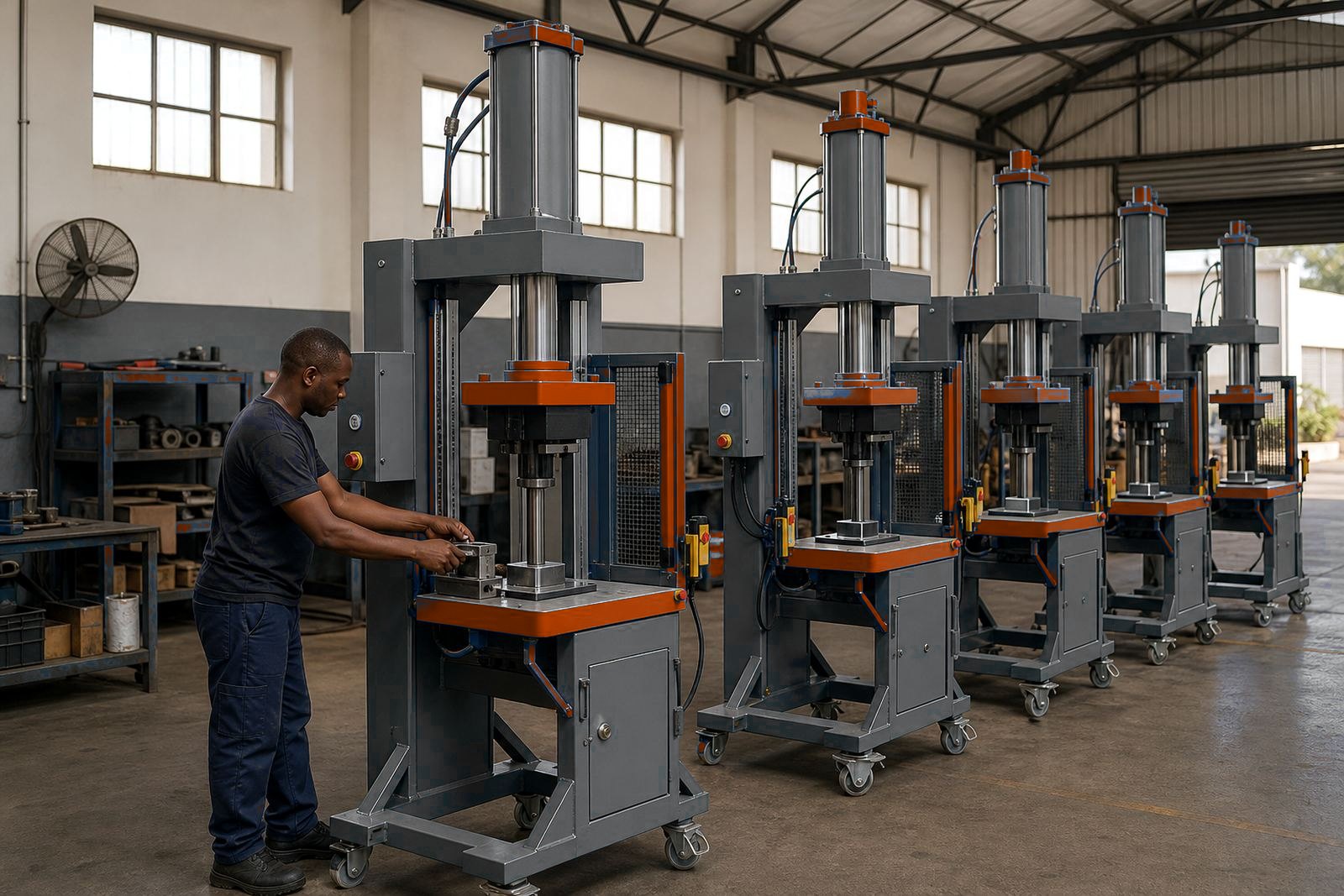
On our shop floor in Isando, these presses are set up as single stations or multi-station units, depending on the production route. Cylinder selection, table height, daylight, stroke length and tooling access all work together. A well matched deep stroke unit keeps the press travel clean and controlled, rather than forcing the operator to work around short travel and awkward tool entry.
The configuration is common on assembly lines where a guided tool needs a long approach, then a firmer pressing window once the part is seated. It is also useful where the product changes shape during the cycle, such as crimping, staking or seal closure on packs and housings.
Stroke ranges, station layouts and control options
Deep stroke builds are usually specified by cylinder bore, stroke length, working air pressure and the number of stations needed on the frame. MultiPress designs around the press action first, then the fixture, guarding and operator flow. On some lines the press only needs a single deep travel station, while others need a linked sequence for feed, locate, press and release.
- Stroke lengths are selected to suit the part depth and tool entry, often from 200 mm to 600 mm or more where the process calls for it.
- Working air pressure is set to match the cylinder and force requirement, commonly around 5 to 8 bar in factory air systems.
- Stations can be laid out for one-off pressing, paired tooling, or a rotating sequence across several operations.
- Two hand controls are used where the cycle must start with both hands clear of the tooling area.
- Light curtains can be added where open access is needed but the press zone still has to stay protected.
We also set stroke setting stops, lower die positions and return timing so the press comes down in a way that suits the job rather than fighting it.
Where deeper stroke earns its place on the line
This press type suits factory work where parts sit deeper in the tool path or where the pressing face must clear a tall, awkward shape before contact. It is a practical fit for plastic housings, small metal assemblies, terminal crimps, pressed inserts, rivets and pack sealing work where the contact point is not close to the surface.
In automotive, electrical, appliance and general fabrication work, deeper stroke units help the operator keep the part aligned while the tool travels into position. That matters when the component has a recess, a collar, a lug or a formed edge that would otherwise block a standard stroke. Coastal humidity in Durban or Gqeberha also pushes some teams toward better guarding and cleaner air preparation, because moisture in the air line can affect cylinder movement and tooling life.
For pack sealing, the longer travel can help bring the sealing head into a nest before pressure is applied. For riveting and staking, the deeper stroke gives the tooling room to locate before the forming force begins.
Tooling, guards and line integration for real factory use
A deep stroke press is only as useful as the tooling around it. The tooling must support the part, hold the location, and let the cylinder reach full working travel without side load. MultiPress builds custom tooling and fixture plates to match the part shape, the station height and the way the operator loads the work.
- Fixture design keeps the part seated during the full stroke.
- Guarding builds help control access around moving parts and pinch points.
- Light curtain integration suits lines that need safer access and automatic stop behaviour.
- Two hand controls reduce accidental cycling during setup and production.
- Air line setup includes filtration, regulation and clean routing to the press.
- Tooling changes are planned so wear parts can be swapped without disturbing the whole station.
Where the press is being dropped into an existing line, we look at operator flow, part feed height, safety spacing and the way the machine will sit beside conveyors, benches or packing stations. That is where the practical work happens, not just on the drawing.
Fitting, commissioning and operator handover
Installing a deep stroke press takes more than bolting it down. The frame has to sit level, the air supply needs the right pressure and flow, and the tooling must meet the part at the correct point in the stroke. When the press is commissioned, stroke setting, dwell, safety devices and cycle behaviour are checked against the actual job on the floor.
Our commissioning team works across Johannesburg, Pretoria, Durban, Gqeberha, East London, Kempton Park and Boksburg, with installations handled from Isando, Ekurhuleni. The handover includes operator training so the team knows the correct loading position, the control sequence, the safety checks and the basic care points that keep the press steady in daily use.
On busy production lines, a good handover matters because the press may be part of a bigger sequence with feeding, locating, pressing and clearing all tied together. If the stroke is too short or the tool sits too high, the line feels it immediately.
Care that keeps the stroke clean and consistent
Deep stroke units need straightforward care. The cylinder rods, guides and tooling faces should stay clean, and the air line should be drained and checked so moisture does not build up inside the system. If a line works in a damp coastal area, regular attention to filtration and lubrication is worth the effort.
Tooling wear shows up first in the feel of the stroke. A press that once moved neatly can begin to drag, tilt or land off centre if a locator wears or a fixture loosens. That is why stroke setting and tooling checks should form part of normal production routines and breakdown work. A clean press bed, well supported tooling and correct air pressure make a large difference to repeatability.
When the job changes, the deeper stroke setup should be reset for the new part rather than pushed through with the old settings. That keeps the press from taking unnecessary load and protects the tooling edges.
Details to confirm before a deep stroke press is built
To size the press properly, we need the part path, the required stroke, the working force, the station count and the tooling style. A sample part helps, but clear measurements can also get the job moving if the sample is not ready. The more exact the pressing requirement, the better the cylinder choice and the fixture layout.
- Part dimensions, especially the depth to the first contact point.
- Required stroke length and any stop positions within that stroke.
- Pressing force needed for assembly, crimping, riveting, staking or sealing.
- Single station or multi-station layout preference.
- Safety approach, including two hand controls or light curtains.
- Air supply detail, especially available pressure and line quality.
These points shape the press frame, the cylinder arrangement, the tooling and the guarding. If the job changes later, the machine can be adjusted, but the best result comes from sizing the deeper travel correctly at the start.
Key facts
| Type | Pneumatic deep stroke press |
|---|---|
| Stroke range | Typically 200 mm to 600 mm, with longer travel available for specific jobs |
| Working pressure | Commonly 5 to 8 bar, matched to cylinder and force requirement |
| Control options | Two hand controls, foot control where suitable, light curtain integration |
| Applications | Assembly, crimping, riveting, staking and pack sealing |
| Build options | Single station or multi-station frames with custom tooling and guarding |