Three working positions, one controlled cycle
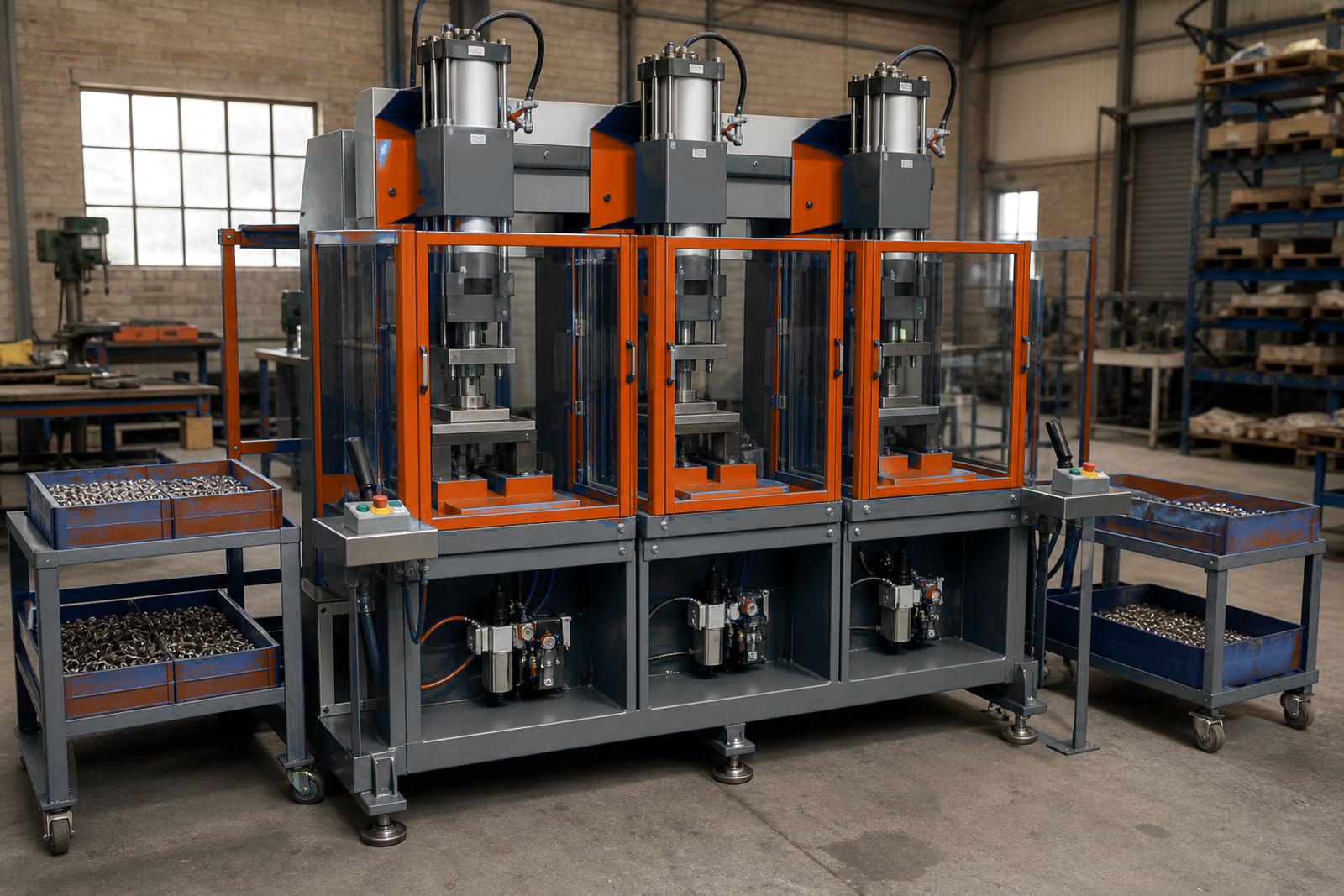
A three station press gives a factory three fixed positions on one frame, so a part can be loaded, formed and finished without shifting between separate machines. The layout is common on assembly lines where the job needs a clean first press, a second check or set, and a final closing or marking step before the part moves onward. On air driven equipment the press uses pneumatic cylinders, controlled stroke travel and regulated air pressure to keep movement steady through each station.
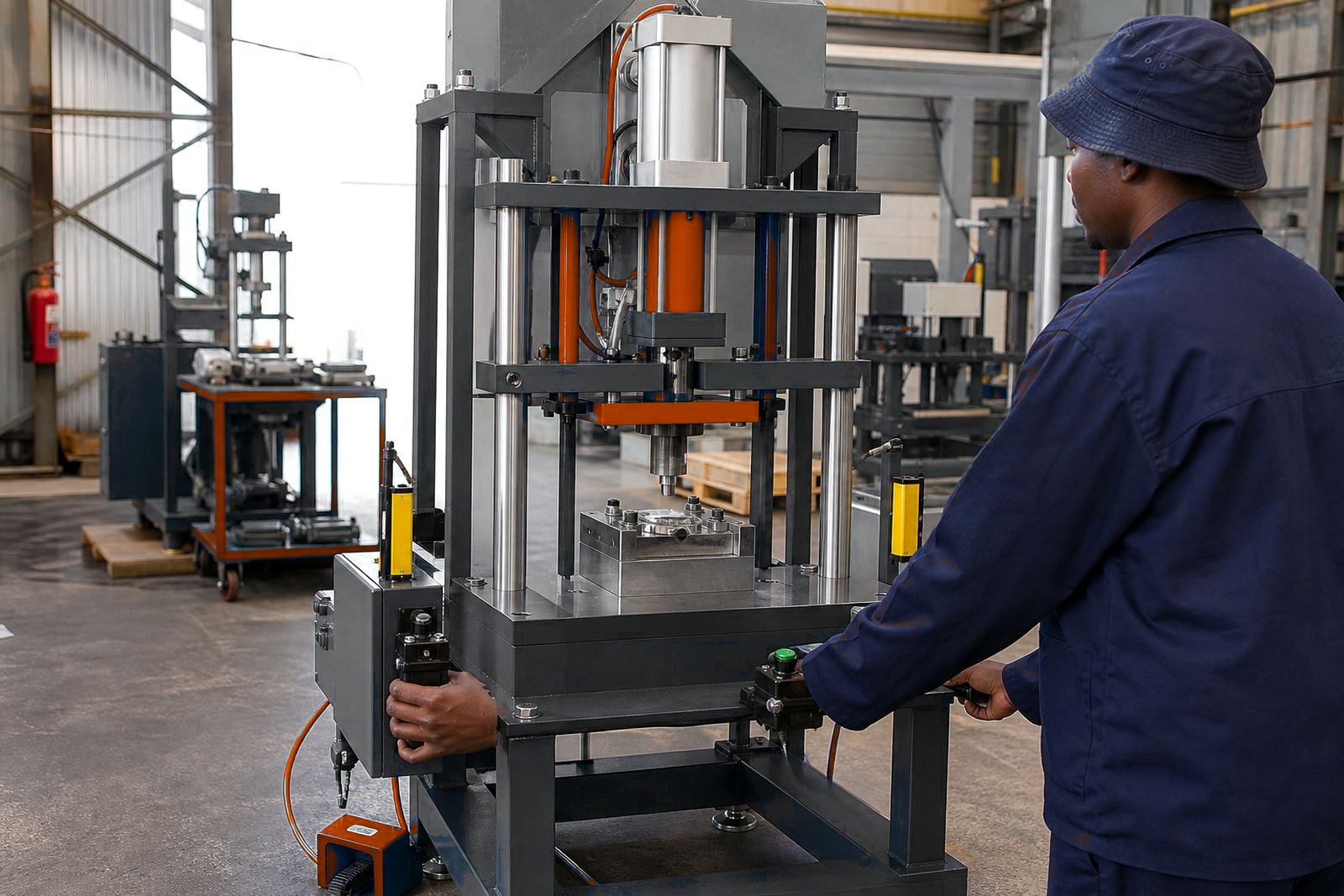
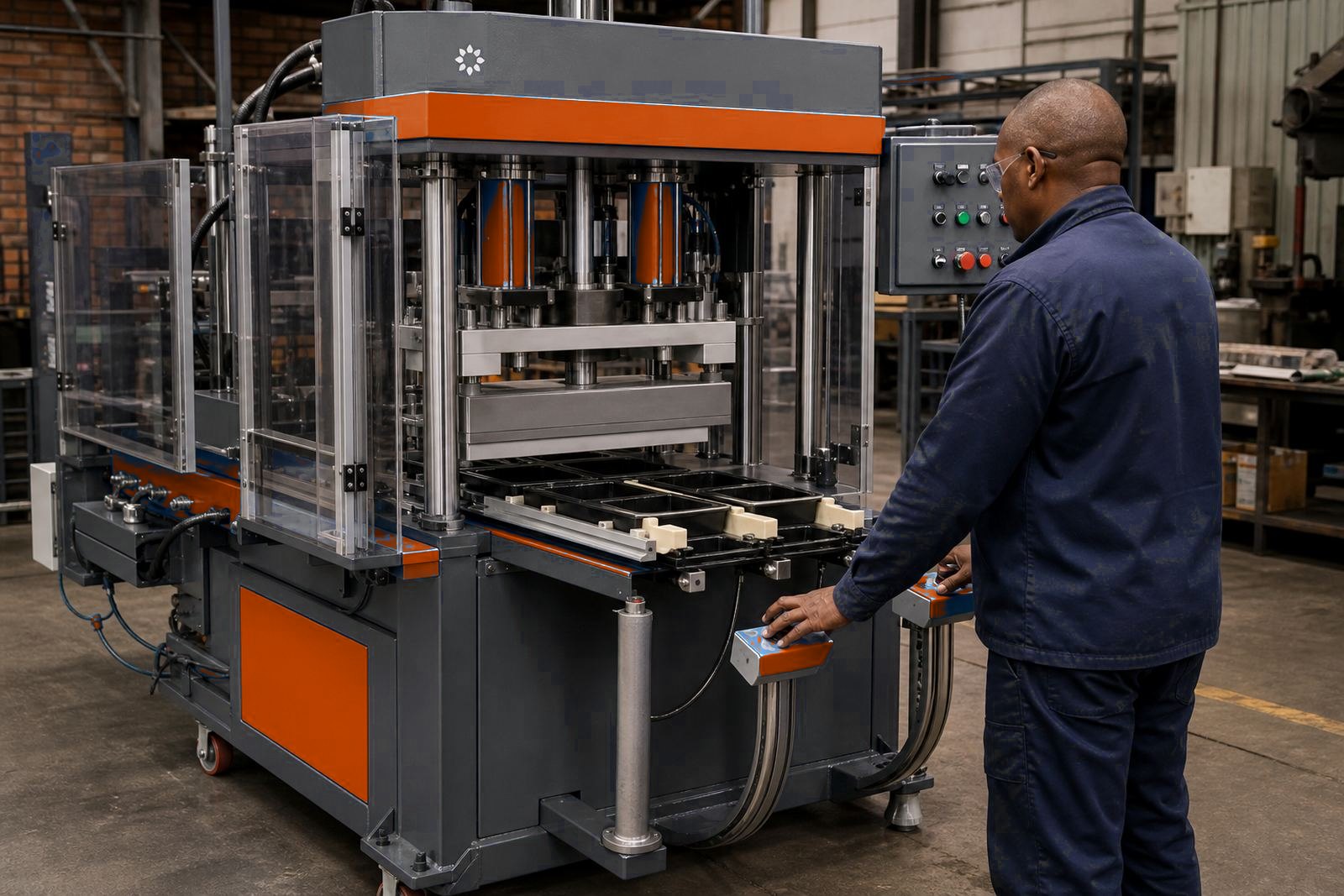
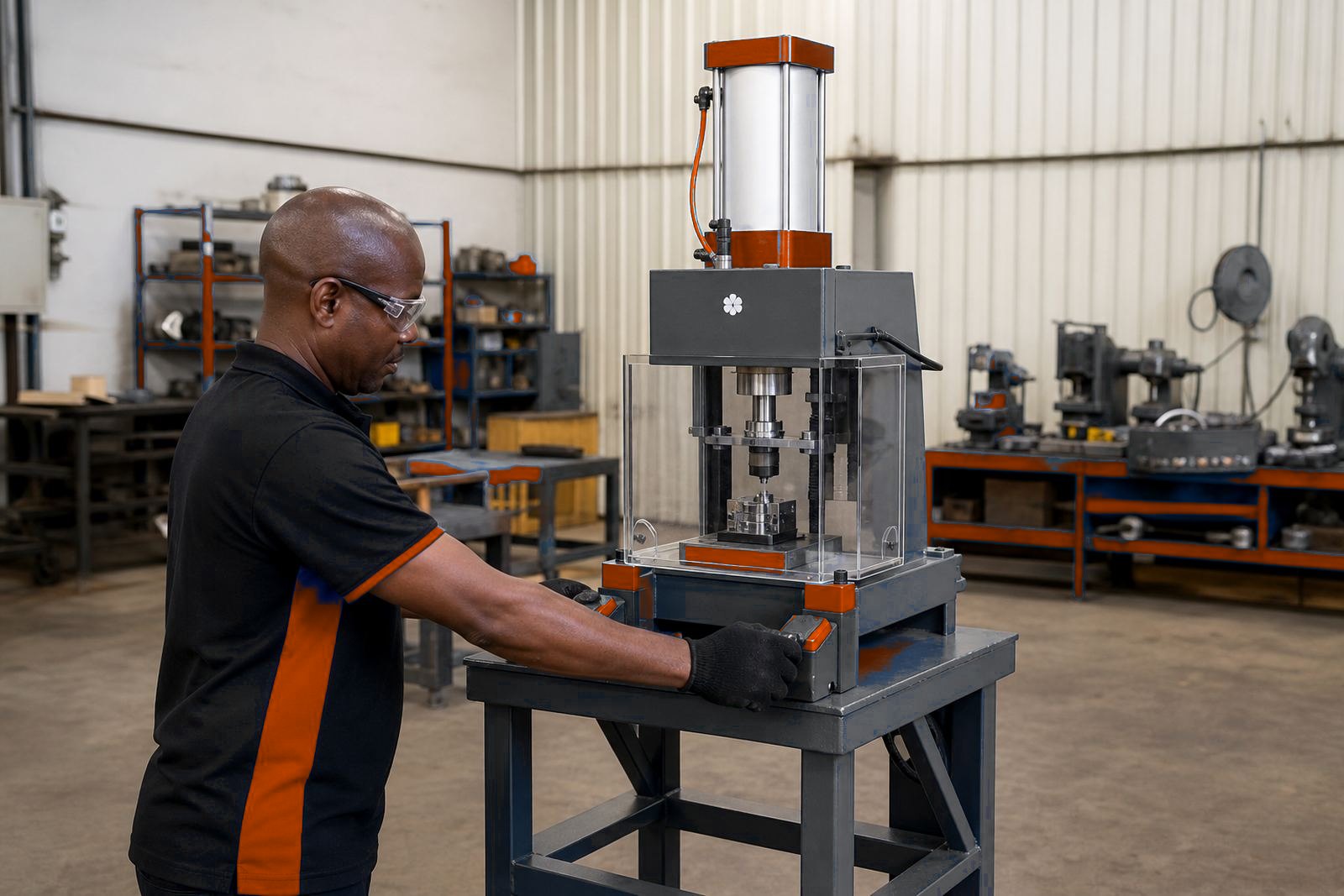
In practice, the stations can be set up for matched tooling or for different actions on the same part, depending on the process. One station may handle crimping, another riveting and another staking, or all three may work through a staged assembly sequence. Two hand controls are often fitted where the operator must keep both hands clear during the press stroke, and light curtains are used where access needs to be monitored at the front of the machine.
- Three fixed work positions on one press frame
- Pneumatic cylinders sized to the stroke and duty cycle
- Adjustable pressure setting for the job being run
- Two hand controls for manual loading stations
- Light curtain options for guarded access areas
Where the three station layout pays off
This format suits factories that run repeat work with a defined sequence, especially where the part benefits from being held in one place while the tool changes position from station to station. It is useful in Johannesburg and Pretoria plants doing automotive sub-assembly, electrical hardware, metal bracket work, small component closure and pack sealing. In Durban, Gqeberha and East London, the same setup is often used where humidity and airborne dust call for guarded tooling, tidy air lines and easy cleaning around the press bed.
The machine can be adapted for manual load and unload, or for a semi assisted line where fixtures guide the part into the correct position. If the process needs close control over insertion depth or clinch height, the tooling is designed around the real component and the target stroke. That matters when the part has tabs, sleeves, rolled edges or small formed features that must land in the same place each cycle.
- Stepped assembly with forming, checking and finishing positions
- Crimping and riveting work on small and medium parts
- Staking for inserts, pins and light fastening tasks
- Pack sealing where a repeatable closing force is needed
- Fixture based work on production lines with regular part changeovers
Sizes, stroke ranges and control choices
The right build starts with the part size, the tool depth and the amount of force needed at each station. A compact three station press may suit small fittings and light assemblies, while a wider frame is used where the operator needs more room for trays, jigs or larger tooling. Stroke length is set to the job, because an overlong stroke slows the cycle and an under-sized one limits reach into the tool set.
Air pressure, cylinder bore and return speed all shape the final performance. Some lines need a short, quick stroke with light pressure for delicate closures, while others need a firmer push for rivets, crimps or pack sealing tasks. Where the work is hand loaded, a guarded front opening with two hand controls keeps the cycle safe and consistent. Where the line needs more supervision, light curtains and fixed guarding can be combined around the front and side access points.
- Single or multi cylinder press builds
- Short, medium or longer stroke settings
- Manual, semi automated or guarded operation
- Custom tool pockets and part locating features
- Pressure and cycle settings matched to the material
We design the tooling to suit the part first, not the other way round.
Multi-station presses work best when the tooling is made for the exact product shape and assembly sequence. That may include locating pins, floating nests, guide bushes, stop blocks and hold down features that keep the component square as it moves from one station to the next. For crimping and riveting, the tooling must support the joint properly so the load does not distort the surrounding part. For staking, the anvil and punch geometry must suit the insert, boss or protruding feature being set.
Musa Hartnick handles tooling design around the actual job, while Johan Ramokgopa oversees workshop build quality and fit. The result is a press that feels calm in use, because the part is controlled properly and the operator is not fighting the fixture. On a busy line, that kind of tooling fit saves more trouble than a heavier frame ever will.
- Custom tooling for assembly, crimping and riveting
- Fixture design for stable part location
- Guarding builds around the work area
- Light curtain integration where access monitoring is needed
- Tool change support for different product variants
Installing it into a live factory line
A three station press is fitted into the line with air supply, safe guarding and proper operator access in mind. The site needs enough floor space for loading, maintenance and part transfer, plus clear routes for the workpieces or bins used around the station. Air line setup matters more than many teams expect, because pressure drop, poor filtering and water in the line can upset stroke consistency and shorten seal life. If the plant uses compressed air across several machines, the press should be tied into a stable supply with isolation points and sensible line routing.
MultiPress handles site installation, press commissioning and production handover from Isando, with work carried into Ekurhuleni, Johannesburg, Pretoria, Durban, Port Elizabeth and East London. Lerato Moagi carries out commissioning checks on the press behaviour, interlocks and control settings, while Anele Engelbrecht handles operator training so the team understands loading, cycling, tool change steps and safe use of the guarding. Thandiwe Matlala keeps the job moving across planning, parts and site co-ordination.
- Air line setup for a stable pneumatic supply
- Stroke setting matched to the tool and part
- Guarding and two hand control checks on site
- Production handover with the operating team present
- Tooling changes documented for repeat runs
Care, cleaning and the checks that keep it steady
These presses do not need dramatic attention, but they do need regular care. Clean the tooling faces, check the air line condition, drain moisture where required, and watch for loose fittings around the cylinders and valves. In coastal or humid areas, surface rust can start at the edges first, so wipedown routines and sensible storage of spare tooling are worth keeping in place. A press that is used for pack sealing or repeated assembly work also benefits from checking guide wear and stop positions before the shift settles into full output.
The operator should notice if the stroke sounds different, if the part sits out of position, or if the press mark changes from one station to the next. Small changes usually mean the fixture needs a set up check, not a major rebuild. Keep the tooling changes logged, because a three station press often carries more than one job in the same week and the setup notes save time and confusion later.
Clients contact MultiPress through our enquiry form on the contact page when they need the line assessed for a new part, or when an existing build needs a revised station layout. The team can look at the part path, the tool depth and the guarding arrangement before the press is made or adjusted.
Key facts
| Build type | Three station pneumatic press for sequential forming and finishing |
|---|---|
| Stations | 3 fixed work positions on one frame |
| Actuation | Air driven cylinders with adjustable stroke |
| Safety control | Two hand controls with light curtain options |
| Typical uses | Assembly, crimping, riveting, staking and pack sealing |
| Service area | Isando, Ekurhuleni and sites across South Africa |