Two cylinders, one controlled pressing face
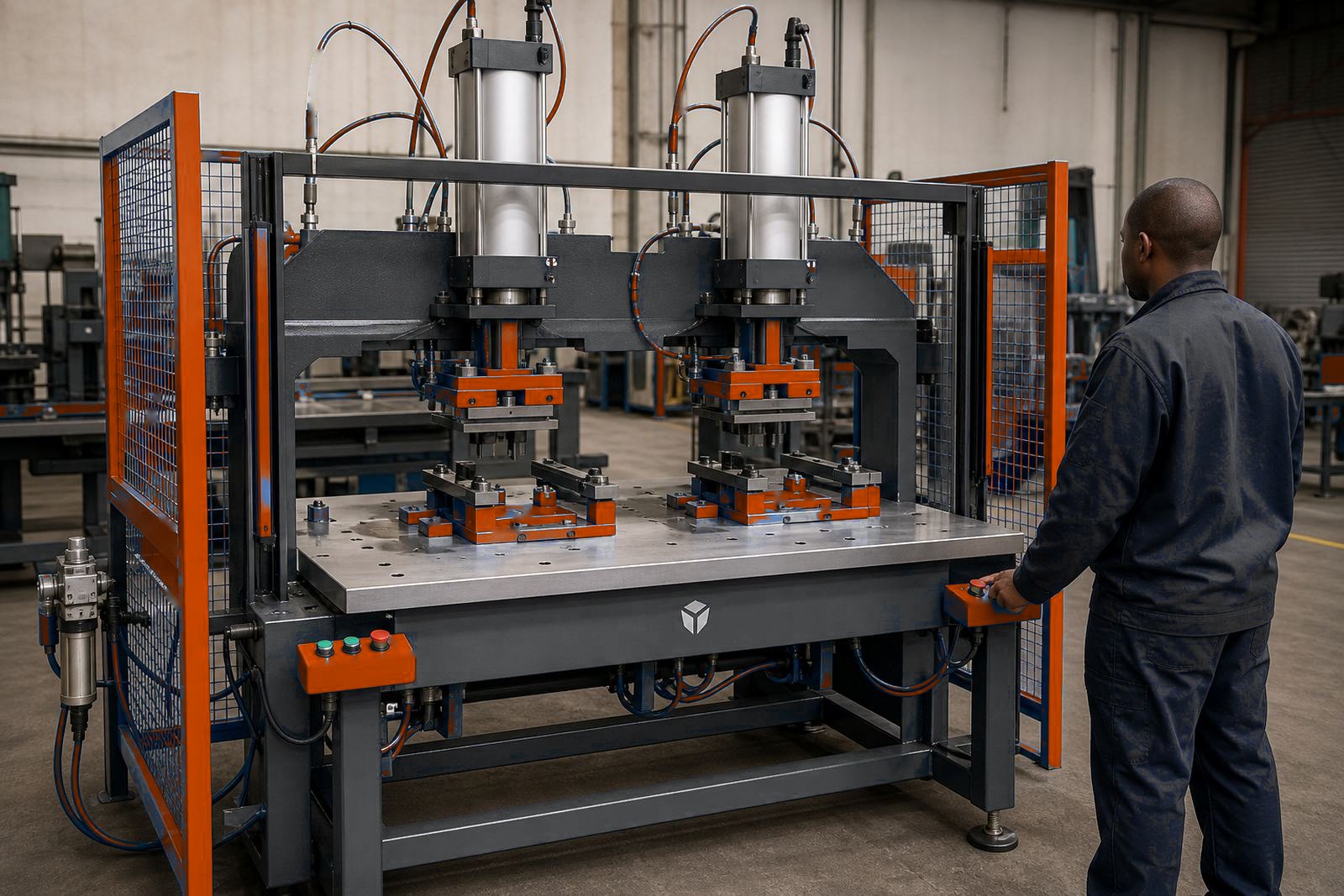
A dual cylinder press uses two pneumatic cylinders working on the same frame, so the load is shared across the tooling rather than pulled through one point. That layout suits wider components, twin rivet positions, paired crimps and pack sealing tasks where the pressing face needs steady contact from edge to edge.
For most factory jobs, the important detail is not only force, but how the force arrives. With matched cylinders, proper stroke setting and a stable guiding frame, the ram comes down cleanly and the tooling stays aligned over the workpiece. In assembly lines that handle repeated parts, that balance helps keep the operation predictable.
Our dual cylinder presses are built as production machines, not loose benches. Frames can be arranged as single station units or placed into a multi-station line, with operator access, guarding, and hand control set to suit the task. For safety critical work we add two-hand controls or light curtain protection, depending on the layout and the way the part is loaded.
Sizes, stroke ranges and pressure settings that suit the job
Every line calls for a different working envelope. Some jobs need a short, firm stroke for shallow crimping or staking, while others need a longer travel to reach into a fixture or close a taller pack. The cylinder bore, stroke length and air pressure are selected together, because changing one without the others can upset the press feel.
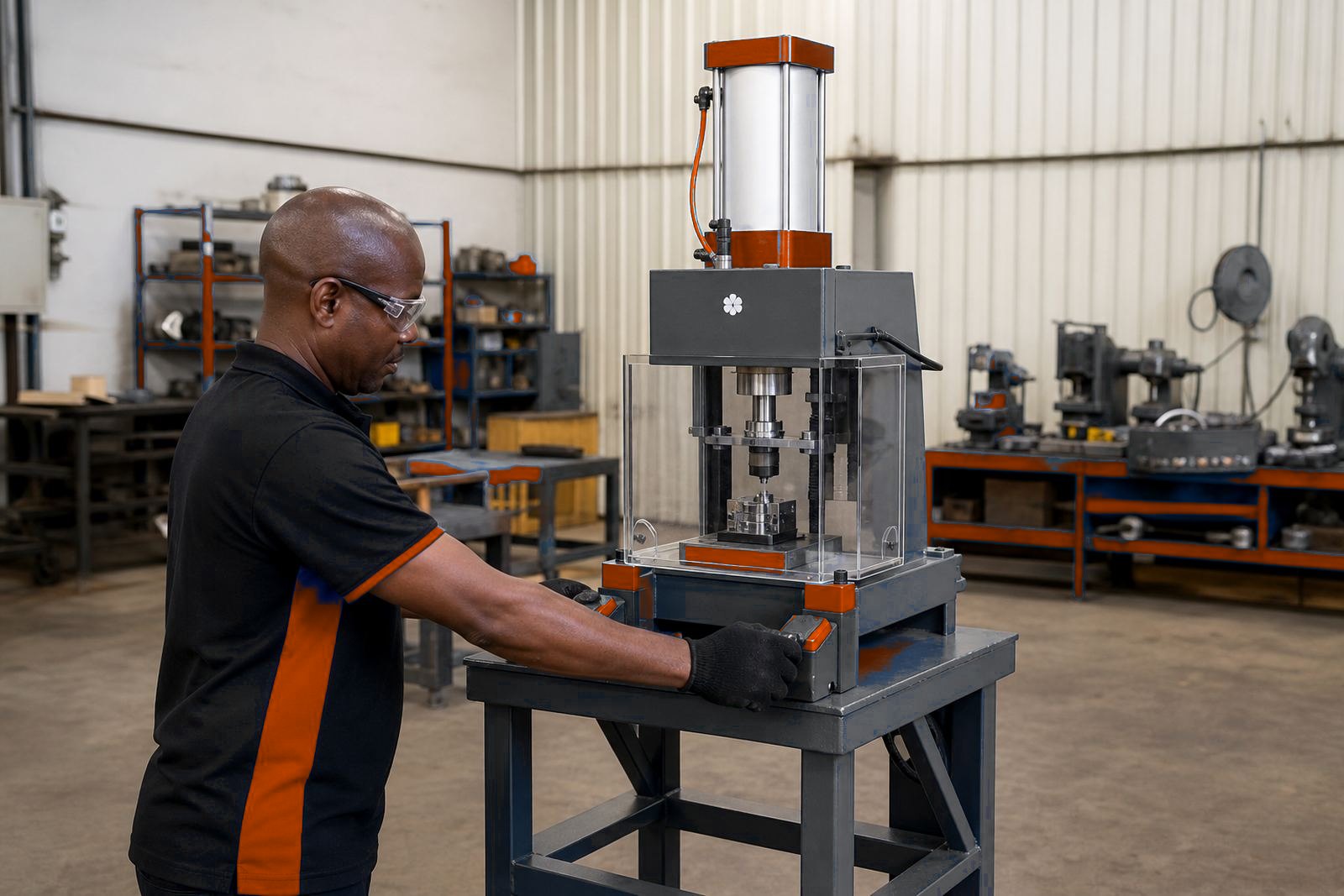
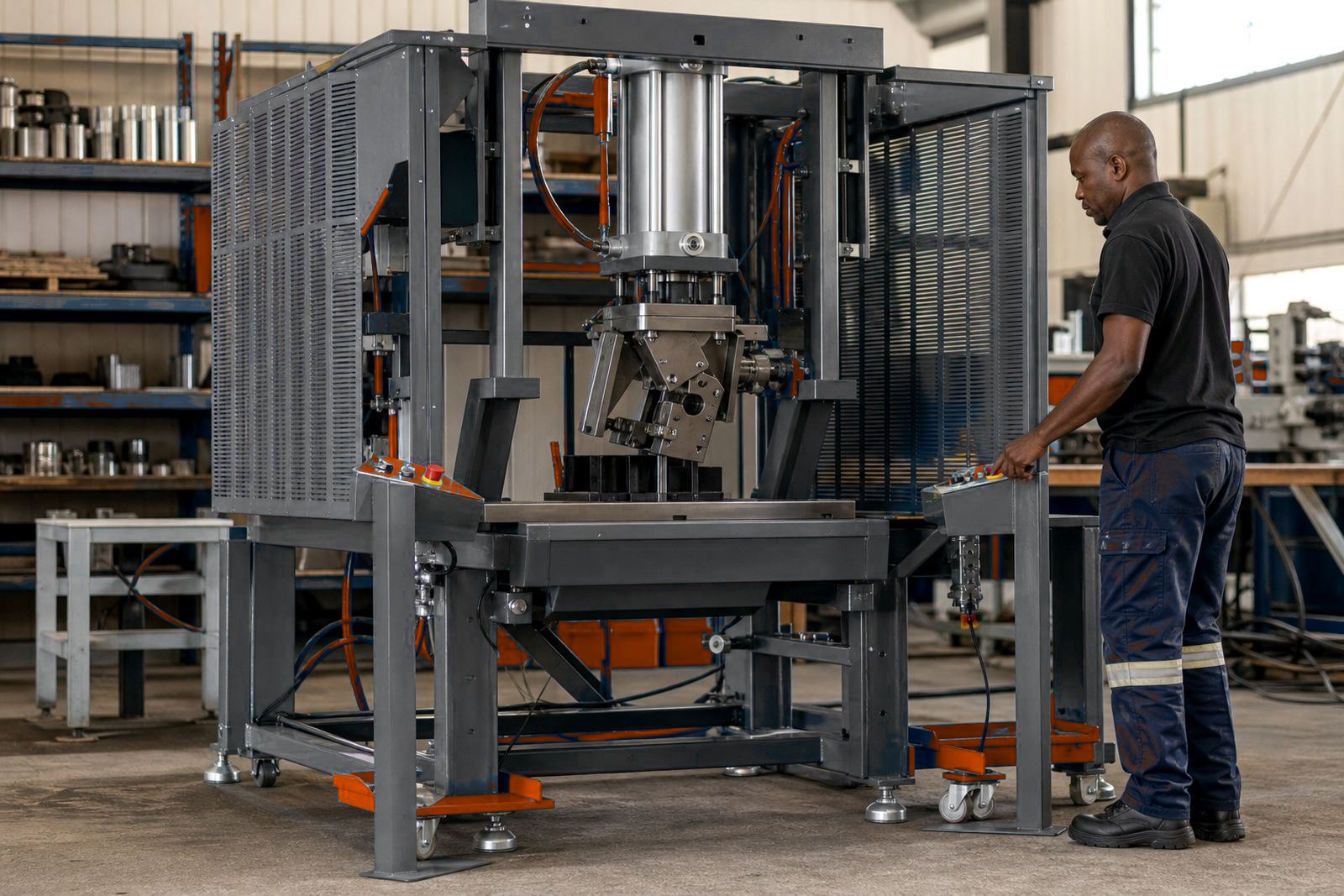
Typical options include compact bench units for small parts, floor-standing frames for heavier tooling, and wider tables where the tool has to carry two contact points. Stroke setting is important on these presses, as too much travel can mark the part, while too little leaves an incomplete crimp or seal. Air regulators and pressure controls are set for the material and the production rate, with fine adjustment during commissioning.
- Single or twin tooling positions on one press frame
- Short stroke setups for repetitive crimping and staking
- Longer stroke layouts for taller fixtures or sealed packs
- Controlled air pressure for repeatable pressing force
- Guided rams to help the tooling meet squarely
Where the dual cylinder layout earns its place
This configuration suits plants that need even pressure across a wider contact area, or two contacts that must be formed at the same time. You see it on assembly benches, cable end crimping stations, metal insert staking, light riveting work and pack sealing where the seal line must close evenly.
Factories in Johannesburg, Pretoria, Durban, Gqeberha and East London often use this type of press for batch handling, where the operator needs a repeatable motion instead of a hand driven process. It also works well where the part is awkward to hold and the tool must do the locating as well as the pressing.
For wider tools, the dual cylinder arrangement reduces the chance of one side landing ahead of the other. That matters when a clip, lug or seal area can twist under load. The machine can be built into a transfer line or fitted as a standalone station beside existing assembly equipment.
Fitting, guarding and air line work at the line edge
Installation starts with the frame position, the air supply and the way the operator will load the part. Pneumatic presses need a clean, dry air line, correct pressure delivery and enough space for the tooling, the guard package and the finished piece to clear safely. On site we check the mounting surface, the feed side, the discharge side and any nearby fixtures that may limit movement.
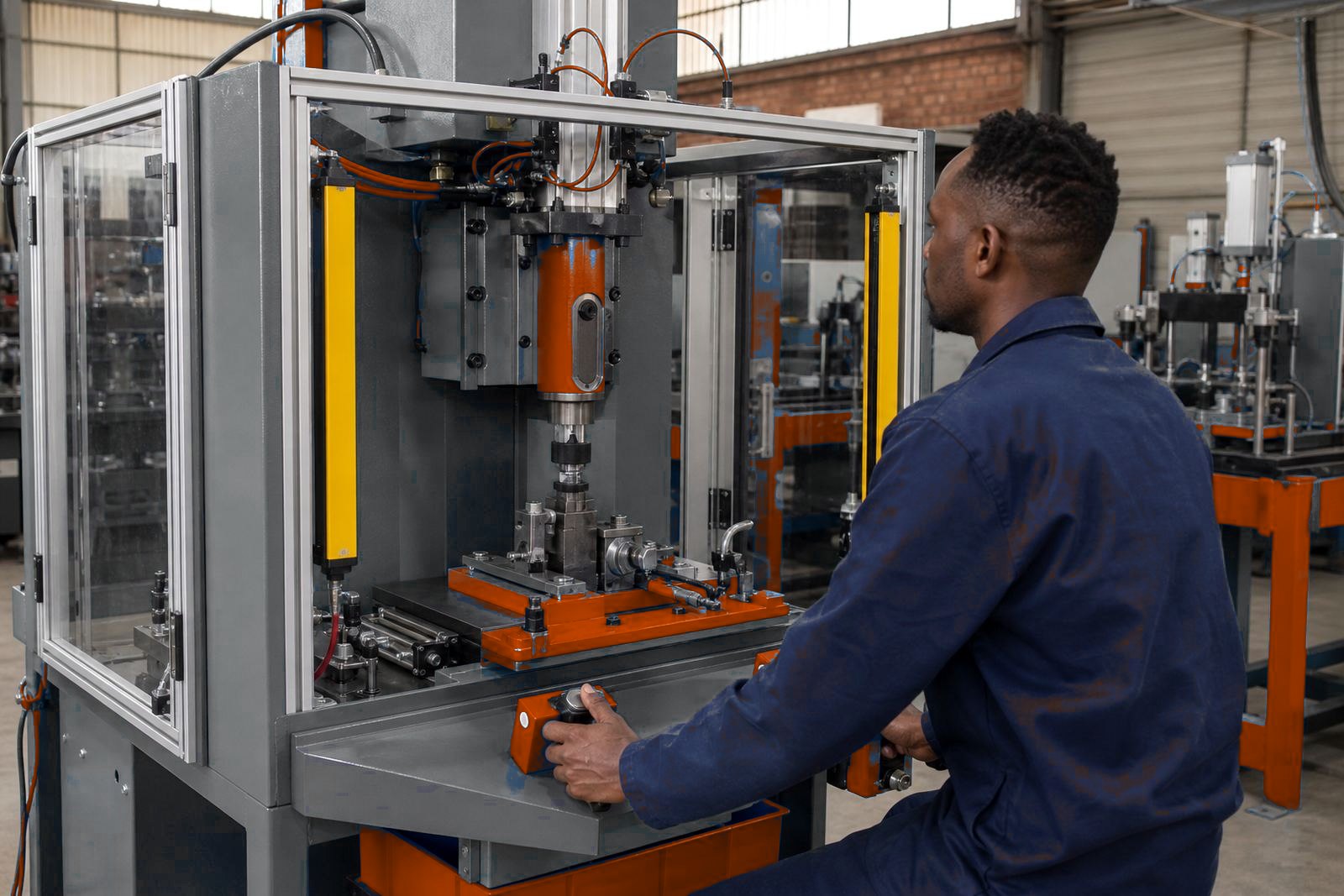
Guarding is matched to the press action. Some lines use fixed guarding with interlocked access, others use light curtains where parts are loaded from the front and the motion zone has to stay protected. Two-hand controls are added where the cycle needs positive operator action before the ram moves. Stroke setting is then checked with the actual tool fitted, not only during workshop testing.
- Air line setup with suitable filtration and pressure control
- Tool height and closing point set to the real component
- Guarding build to suit the access pattern
- Two-hand controls or light curtain integration where needed
- Commissioning with the production tool in place
Tooling for crimping, riveting, staking and pack sealing
The press is only as useful as the tooling at the nose of the ram. For crimping, the tool may need formed jaws or a shaped die to bite cleanly without crushing the conductor or terminal body. For riveting and staking, the die set must support the component below and control the final set height above it. For pack sealing, the tool face has to close evenly so the seal line finishes straight and consistent.
MultiPress designs tooling around the part and the line flow. That can include quick change setups for different jobs, fixture plates that hold the component steady, or custom locators that make the operator's placement more accurate. On wider parts, the twin cylinder arrangement helps keep pressure spread across the tool rather than forcing one side to do all the work.
Where a plant runs more than one product family, tooling changes need to be straightforward and safe. We plan access, mounting points and setting references so the changeover is practical on the shop floor and the next setup can use the same references.
Care, checks and production handover
A dual cylinder press needs regular checks if it is to stay steady in daily use. Air pressure should be held at the set working level, guide points kept clean, and the tooling checked for wear or loose fastening. If the press starts to mark a part, or one side closes before the other, that usually points to a setting issue, worn tooling or air imbalance.
Operator training covers the loading method, cycle control, safe hand position, tool change procedure and the signs that something in the press line is no longer right. We also show the maintenance team how to inspect seals, fittings and movement points, because a pneumatic machine depends on good air quality and correct adjustment. Coastal humidity can matter on exposed lines, so air preparation and routine cleaning should not be left out.
- Keep air supply dry and regulated
- Check fasteners on tooling and fixtures
- Watch for uneven closing or drifting stroke
- Clean guide faces and work surfaces regularly
- Record setting points for each tool change
Order details that help us set the press up properly
When ordering a dual cylinder press, the useful details are practical ones: part size, tool width, target stroke, required pressing force, cycle rhythm and the type of operation, whether that is assembly, riveting, staking, crimping or sealing. If the part must be held in a nest or brought in by hand, the fixture shape needs to be described clearly, because that affects the press frame and guarding.
Please also confirm the air supply available on site, the space around the press, the floor area for installation and any preference for two-hand controls or light curtain protection. If the machine is joining an existing line in Isando, Kempton Park, Boksburg or elsewhere, we also need the handover point and any nearby equipment that may influence access.
Our contact form can be used to send the job details for Custom Tooling, Fixture Design, Guarding Builds, Light Curtain Integration, Site Installation, Stroke Setting, Press Commissioning, Operator Training and Production Handover. Pieter Sauls, Thandiwe Matlala, Musa Hartnick, Johan Ramokgopa, Lerato Moagi and Anele Engelbrecht work across these stages with the workshop and commissioning team.
Key facts
| Press type | Dual cylinder pneumatic press |
|---|---|
| Cylinder arrangement | Two matched cylinders on one frame |
| Typical operations | Assembly, crimping, riveting, staking, pack sealing |
| Control options | Two-hand controls or light curtain integration |
| Tooling | Custom tooling and fixture plates |
| Services | Site installation, air line setup, stroke setting, commissioning, operator training |