Riveting press frames that keep the job square
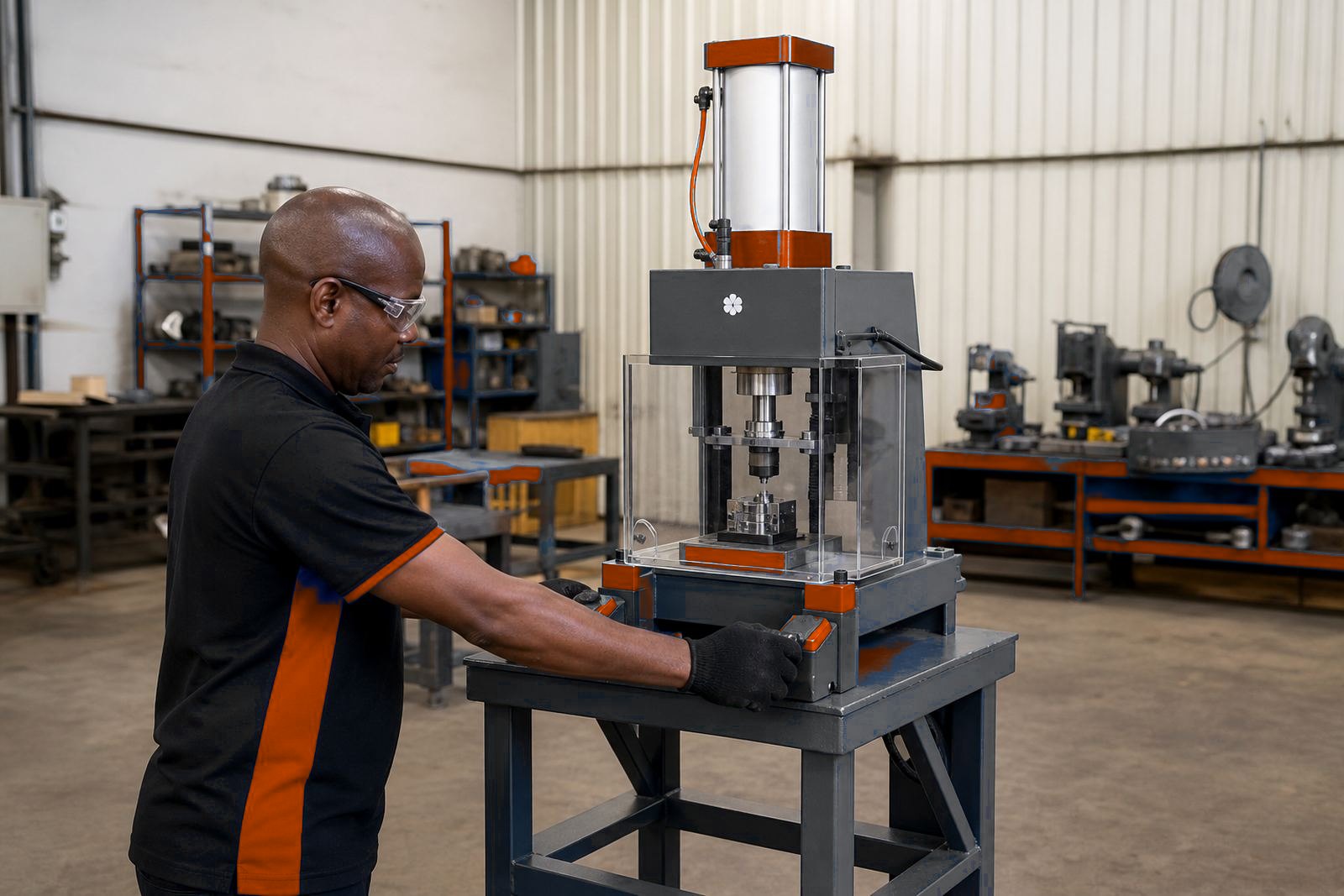
A riveting press brings a controlled downstroke to a fixed work area, so the rivet head forms in the right place with less drift from operator to operator. On a MultiPress build the frame, ram travel and lower tooling are matched to the rivet style, part thickness and fixture layout, which matters when the same part must run shift after shift.
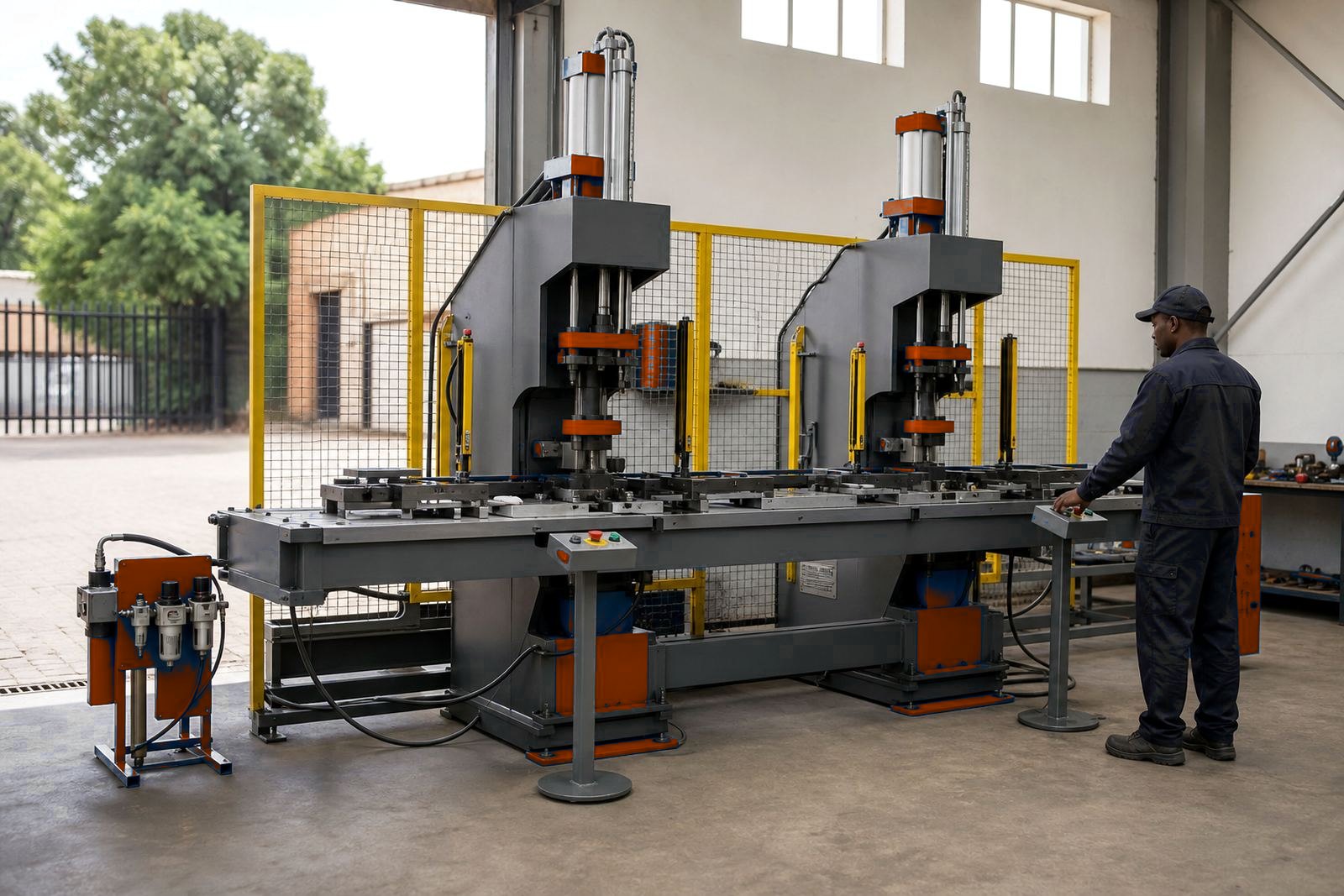
The press body can be built as a single-station unit or as part of a multi-station line where one station forms, another checks, and another passes the part on. Air cylinders provide the working force, with the stroke set to suit the depth of form needed. On short-cycle work the travel is kept tight, while taller assemblies may need a longer ram and more daylight between the platen and tooling.
- Station count set to the line layout
- Cylinder size matched to forming force
- Stroke set for repeat rivet depth
- Tool faces machined for stable alignment
Where a riveting press fits in local production
This type of press suits shops that need a steady forming action rather than hand riveting or loose bench work. It is used on metal assemblies, brackets, housings, clips, light fabrications and packed units where a rivet must sit cleanly and hold its shape. In Gauteng plants it often sits near assembly benches or transfer tables, while coastal plants usually ask for guarding and tooling that handles humidity, dust and daily cleaning without fuss.
The press can also be set up for staking, insertion work and small press-fit tasks when the tooling supports it. For pack sealing or carton work, the tooling and pressure setting are different, but the same controlled motion helps prevent crushed edges and uneven closure.
- Assembly cells with repeat fixings
- Riveting of brackets and light housings
- Staking and insert forming
- Pack sealing with matched tooling
Air settings, controls and guarding that belong on the bench
Because the press runs on compressed air, the air line setup has to be clean, dry and properly regulated. A stable supply keeps the cylinder movement consistent and helps with cycle repeatability. We normally allow for a filter regulator unit, isolation point and airline routing that does not get in the operator’s way. In damp or coastal conditions, the line layout and drainage need a bit more attention, otherwise moisture can build up and affect the seals.
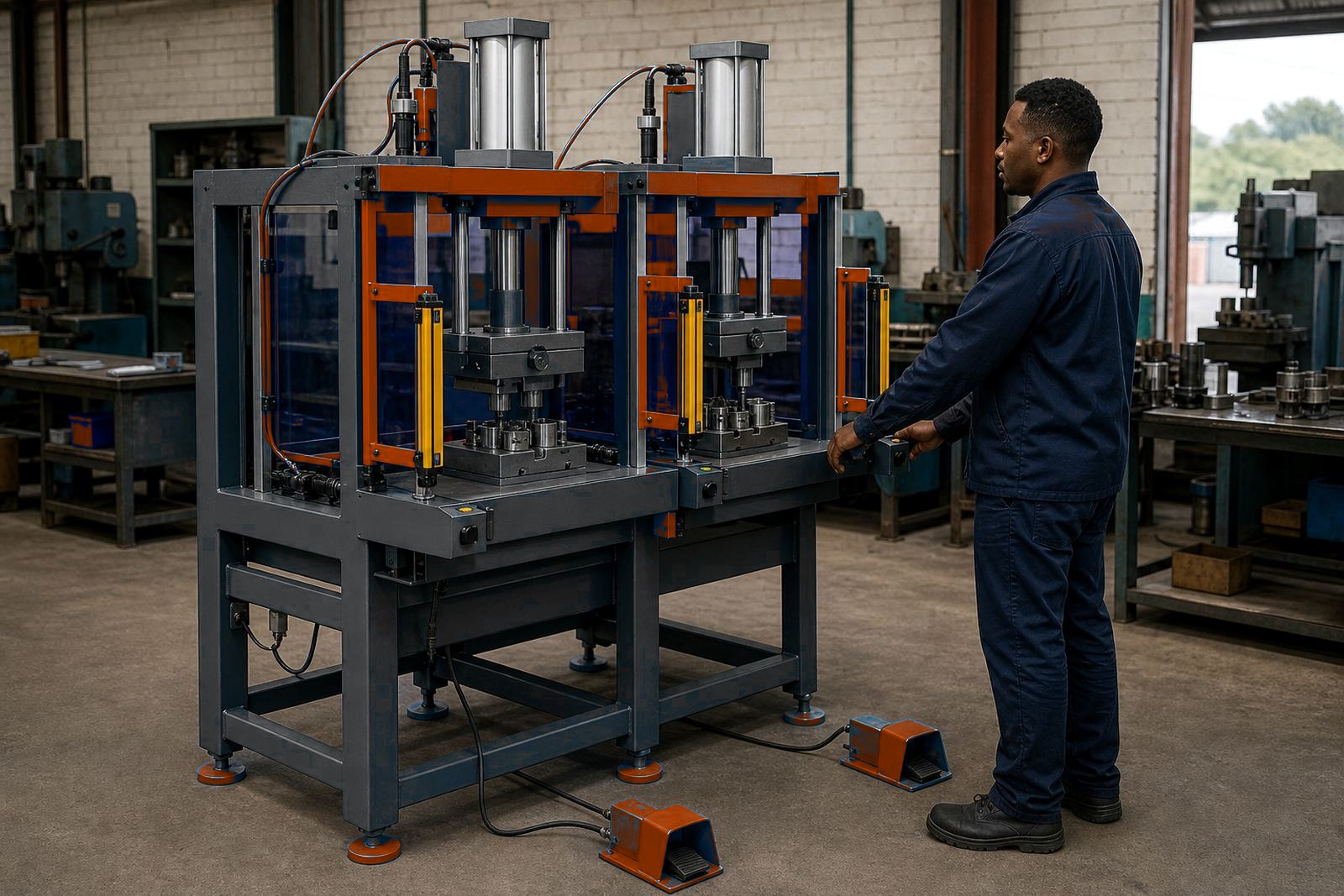
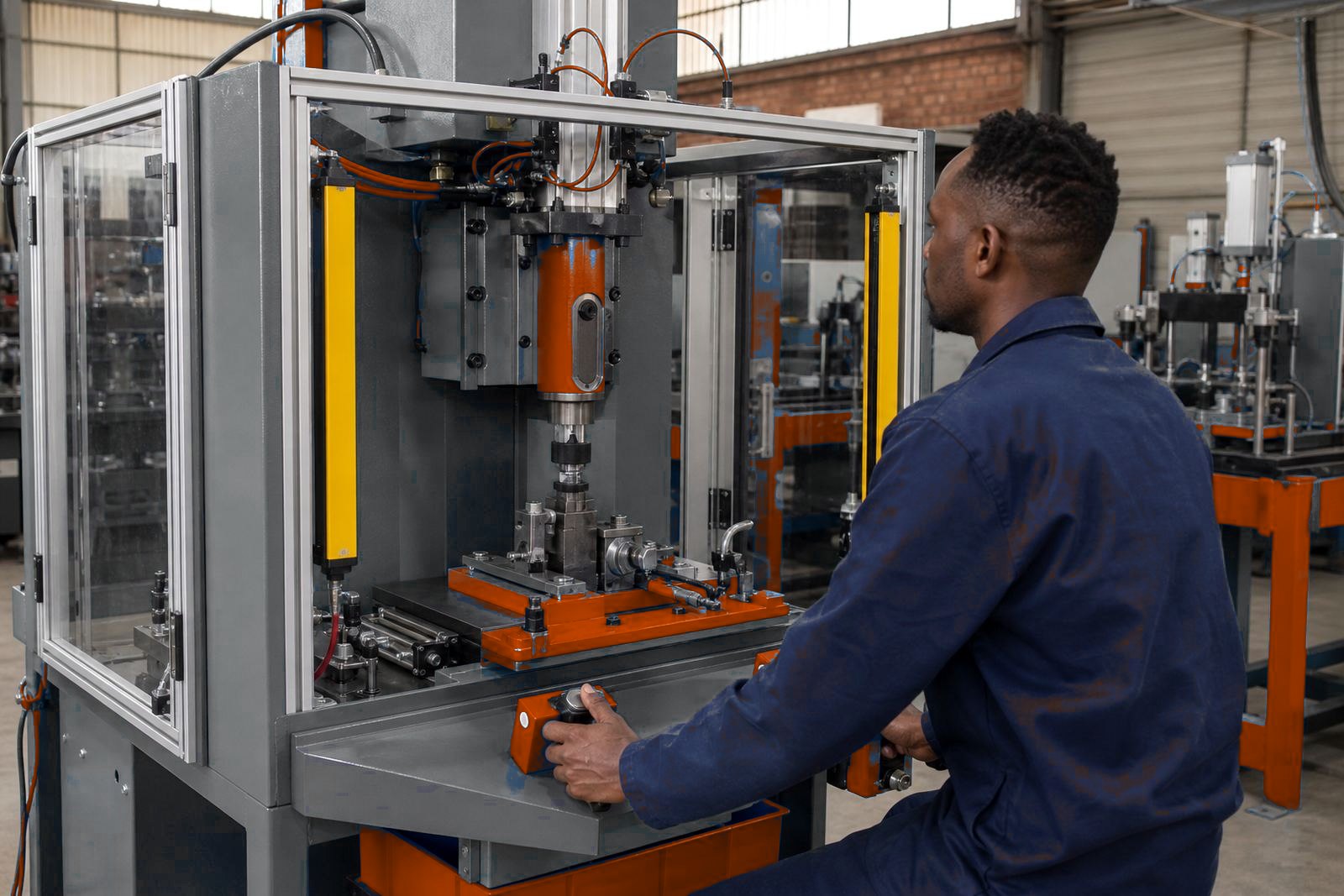
For operator safety, two-hand controls are often specified on open presses, especially where hands move close to the tooling zone. Light curtains can be fitted where the line layout allows it, and fixed guarding can be added around the sides and rear. The exact arrangement depends on the stroke, the part size and how often the job changes over.
- Two-hand controls for guarded operation
- Light curtain integration where suitable
- Air filtration and regulation on the supply line
- Guarding around pinch and forming points
Tooling that shapes the rivet cleanly
The tooling does the real work. A riveting press is only as good as the upper punch, lower nest and support surfaces that hold the part in place. MultiPress designs fixture plates and tooling blocks around the actual component so the rivet lands square and the part stays seated during the stroke. Where the job changes often, quick tooling changes may be worth the extra setup effort.
Tooling geometry must match the rivet head, shank length and material thickness. Too much travel and the part can move, too little and the form is incomplete. Support tooling can include locating pins, clamps, nests and anti-rotation stops to keep the component from twisting during the hit.
- Upper and lower tooling matched to the rivet profile
- Fixture design for repeat location
- Anti-rotation stops and part locators
- Tooling changes for mixed production runs
Fitting, commissioning and line handover
A riveting press needs proper fitting before it enters production. That includes setting the press level, connecting the air, checking the stroke, verifying the tool centre and proving the guard arrangement. For floor-mounted units, the base and anchor points need to suit the workshop surface and the load path of the press. If the press forms part of a larger cell, the feed height, table height and operator reach also need checking.
Commissioning includes pressure setting, stroke setting, cycle checks and a trial run with the actual component. We also look at part presentation, clamp timing and release position so the operator is not fighting the machine. When the press is handed over, the process should be clear enough for a line team to keep the same standard.
- Press levelling and anchor checks
- Air line connection and pressure set-up
- Stroke setting and tool centring
- Production handover with operator training
Details worth confirming before the build starts
To size the press properly, we need the rivet style, part material, thickness range and the number of stations in the line. It also helps to know whether the press is for hand loading, fixture loading or a transfer sequence, because that affects the frame height, throat access and control layout. If the part is long or awkward, the tooling and guarding need to be planned together from the start.
The same applies to cycle rate and tool life. A press that runs short, frequent cycles needs different cylinder behaviour from one that works slower with heavier forming pressure. If the job involves repeated changeovers, the tooling and operator access should be kept straightforward, otherwise the line loses time in small adjustments.
- Rivet type and shank size
- Material thickness and forming depth
- Station count and feed direction
- Required safety controls and guarding
Key facts
| Press type | Pneumatic riveting press for repeat forming operations |
|---|---|
| Working stations | Single-station or multi-station layouts |
| Force source | Compressed air cylinder drive |
| Controls | Two-hand controls, foot cycle option where suitable, light curtain integration |
| Tooling | Upper punch, lower nest, locating fixtures and change parts |
| Services | Custom tooling, guarding builds, commissioning, operator training, site installation |