A wider base for parts that do not sit neatly
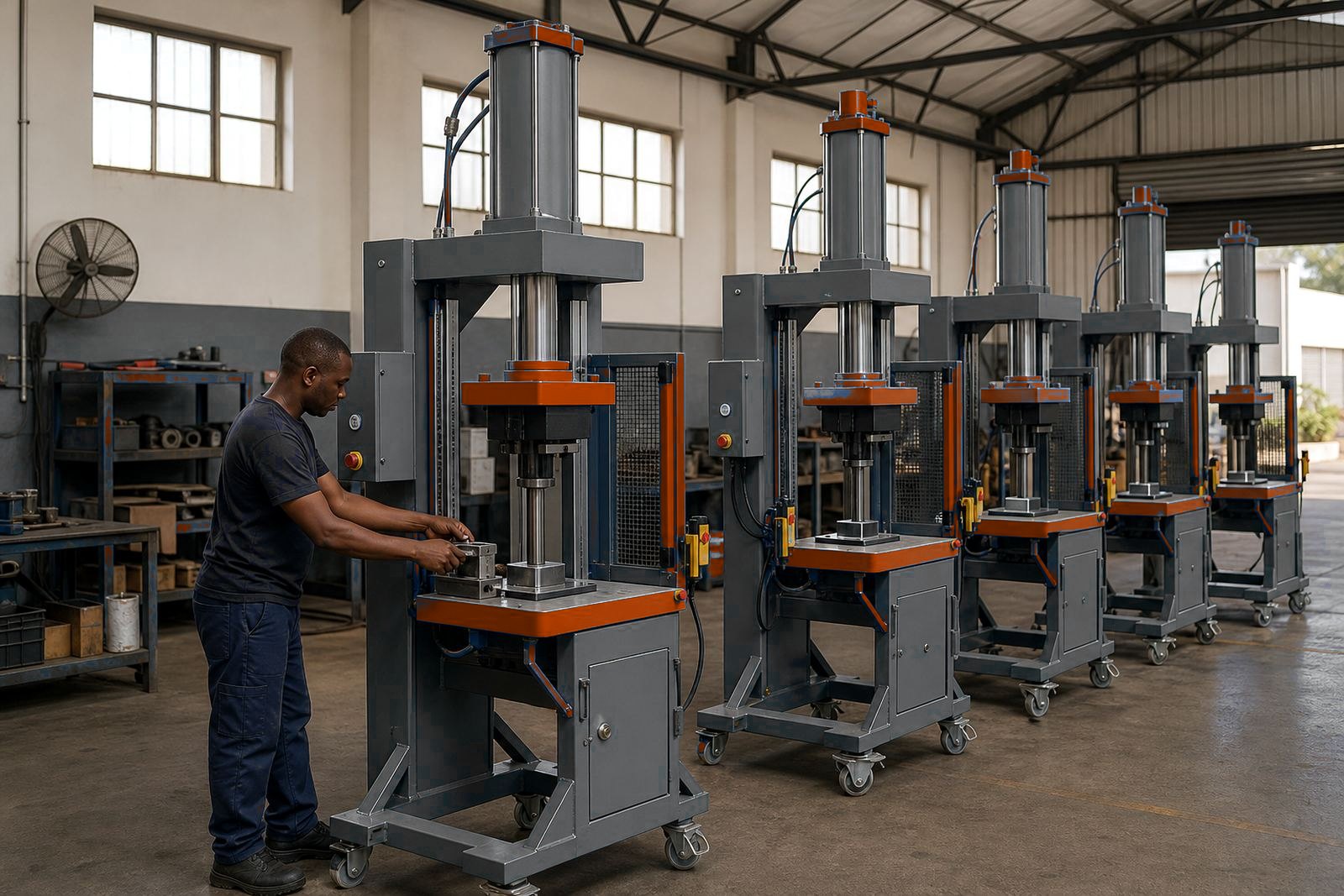
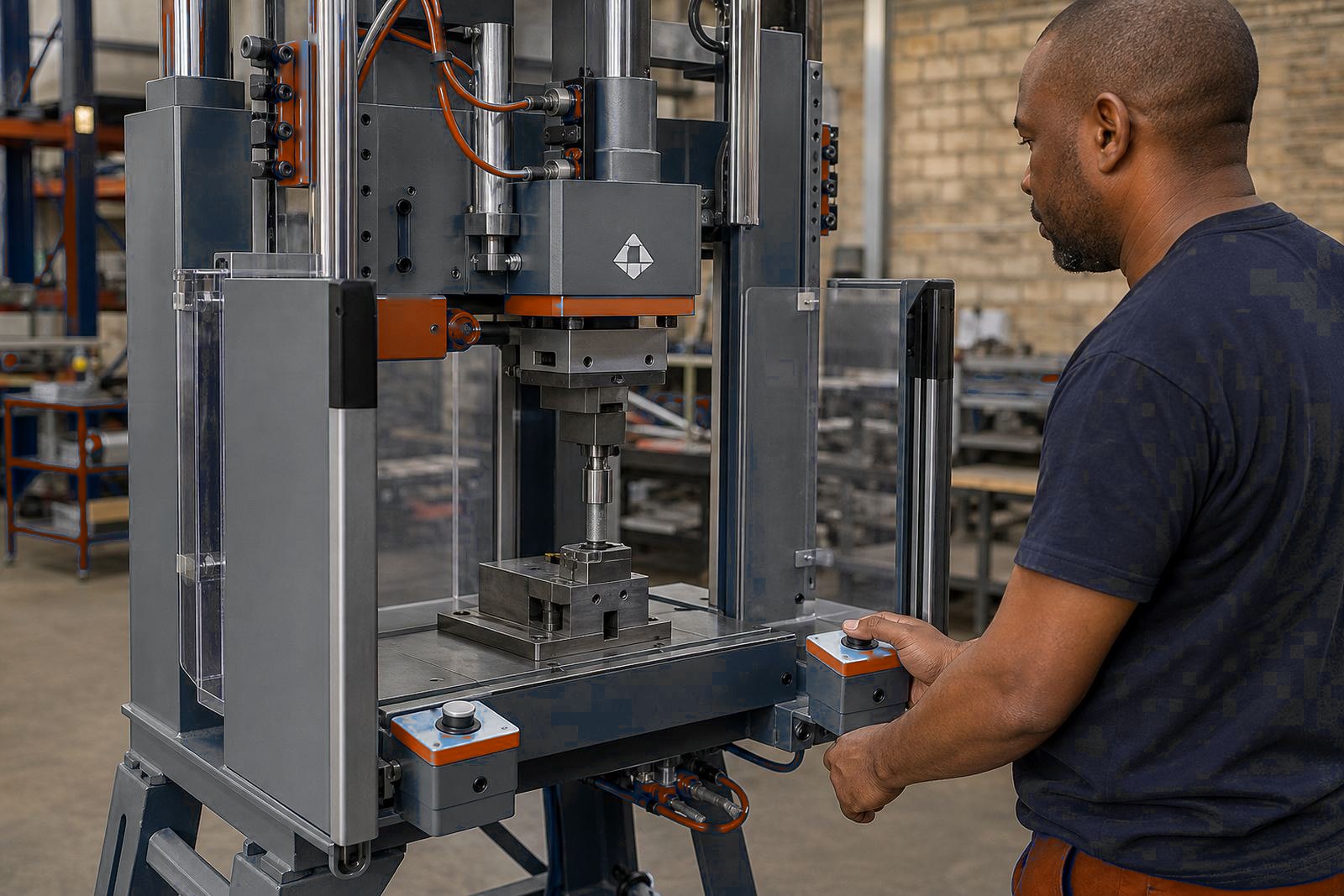
A Fixture Base Press is built for parts that shift, rock, or need more than a standard flat table can offer. The frame carries a larger fixture base plate, usually machined or drilled to take locators, stops, nests and tooling that hold the part in the same position for every stroke.
That extra base area helps on formed parts, brackets, covers, housings and pack sealing jobs where the product must be supported close to the working point. We build the press around the job, not the other way round, so the stroke, tooling height and access all line up with the part shape.
- Larger fixture base plate for stable location
- Prepared for custom nests, guide pins and stops
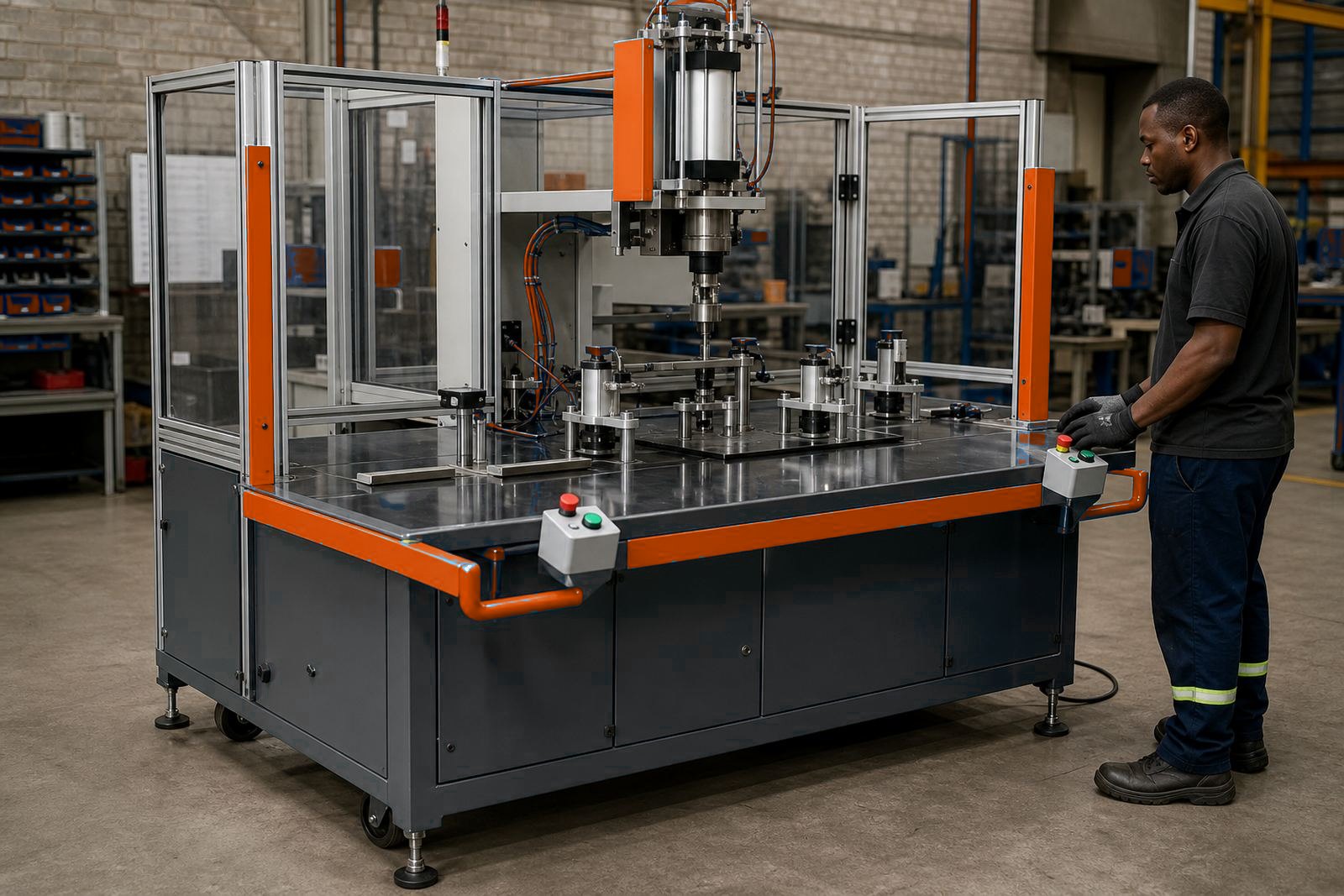
- Ideal for single-station or multi-station press setups
- Built for repeat positioning under pneumatic pressure
Press sizes, cylinders and stroke control
Fixture Base Presses are specified by tonnage, cylinder size, stroke length and the working envelope around the base. For lighter assembly and staking work, a smaller cylinder with shorter stroke may be enough. For riveting, heavier crimping or taller tooling stacks, the frame and cylinder package must suit the force and the daylight needed for loading.
Air pressure, stroke setting and return speed all matter. A controlled pneumatic system lets the operator set the stroke for the job, then repeat that travel without chasing the setting during a shift. On busy lines, we often build more than one station into the same press body so different parts can be loaded, pressed and removed without wasting floor space.
- Typical working air pressure: 6 to 8 bar
- Stroke options: short, medium or extended travel
- Single cylinder or twin cylinder arrangement where the job needs it
- Base plate drilled for dedicated tooling and location blocks
Where the fixture base helps most
This press suits factories that handle awkward, thin-walled or uneven parts. If the component must sit in a nest before the die or tooling closes, the larger base gives the setter room to fix that geometry properly. It is common in appliance parts, metal housings, small fabricated assemblies, terminal work and pack sealing lines where the pack or tray must stay square while the seal or crimp is formed.
It also works well when the same press must handle more than one product family. Swop out the fixture plate, change the locator set, then carry on with a different part without rebuilding the whole machine.
- Assembly stations with close location requirements
- Crimping and riveting on uneven or light-gauge parts
- Staking where the top load must land exactly on the boss
- Pack sealing where the pack body needs firm support
Guarding, two-hand control and light curtain options
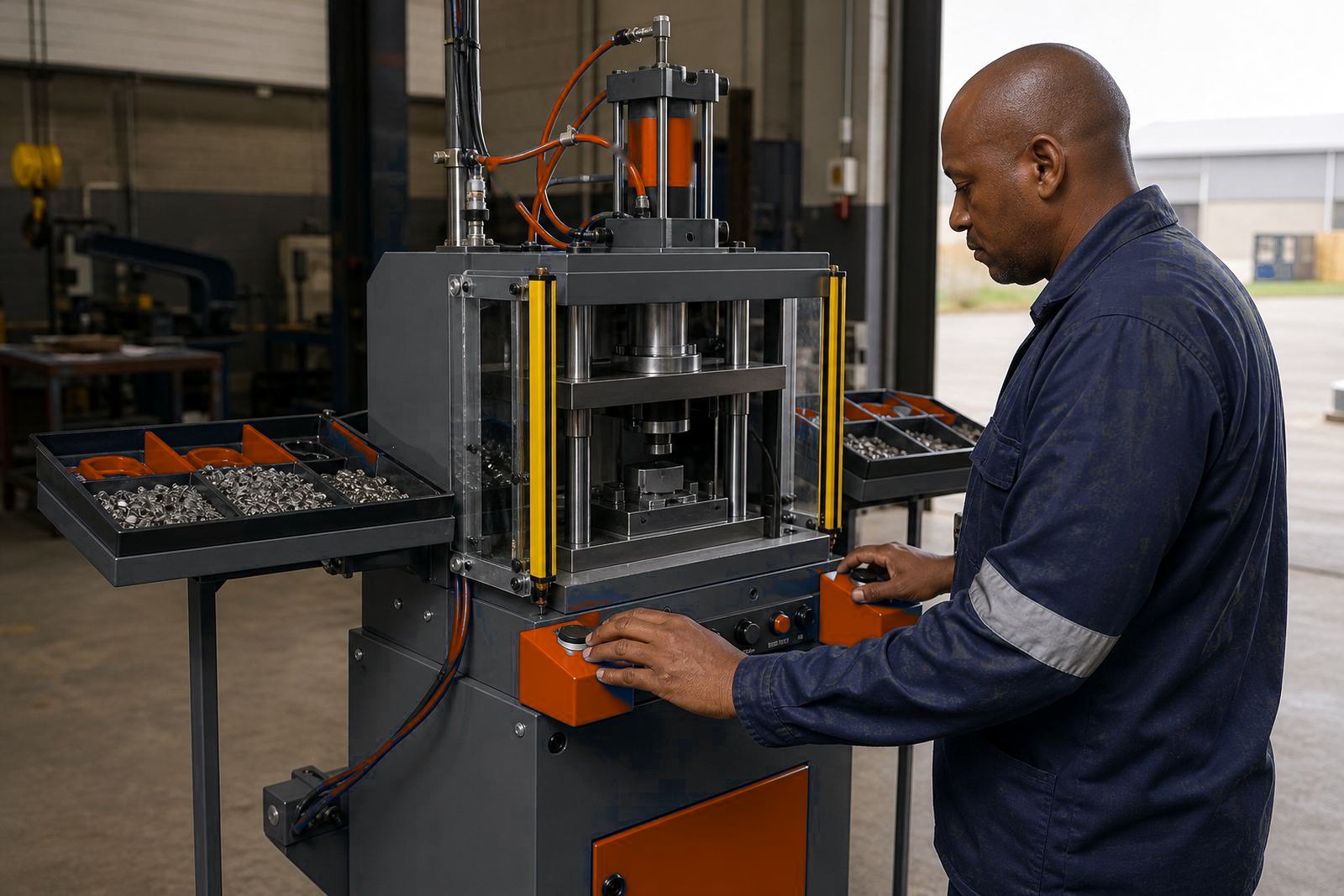
Every Fixture Base Press needs the right controls and guarding for the way the line runs. We commonly fit two-hand controls so both hands stay clear during the cycle, and light curtains where the process or layout needs a larger access opening. Fixed guarding, interlocked doors and emergency stops can be added to suit the factory rules and the way operators load the part.
Control positions must suit the base and the tooling height. If the loader reaches across the fixture or the stroke passes over a wide plate, the access opening and guard line need careful planning. The aim is plain enough, safe loading without making the operator fight the machine.
- Two-hand control for guarded press cycles
- Light curtain integration for wider access openings
- Interlocked guarding where the process calls for it
- Emergency stop placement matched to the operator position
Installation and commissioning on the shop floor
These presses are usually installed as a fixed machine in a production line, with air line setup, stroke setting and final tool alignment done on site. The base must sit level and the fixture plate must line up with the tooling set before production starts. Where the job needs it, we handle guarding builds, tooling changes and production handover as part of the installation.
Commissioning also covers operator training, because the best fixture base in the workshop still needs the right loading routine on the floor. The team must know the part orientation, the stroke setting, what to watch for in the first cycles and how to clear a part without disturbing the locators.
- Floor levelling and anchor arrangement as required
- Air line setup to the specified pressure range
- Stroke setting and trial runs with the actual part
- Operator training before handover to production
Care, upkeep and the details to send through
Fixture Base Presses stay accurate when the base, guides and tooling are kept clean and checked. Dust, swarf and adhesive residue can sit in the locator points, and a small burr on the fixture plate is enough to upset repeat location. Keep the air supply dry, watch the seals on the cylinder, and check the fasteners on the tooling changeover points.
When asking for a build, the important details are usually the part drawing, the material type, the press cycle needed and the space available around the machine. If you already know the force, stroke and loading side, send that too. If not, a sample part and the job sequence will help us size the fixture base properly.
- Part drawing or sample part for location study
- Required stroke, cycle and air pressure range
- Tooling height, loading side and guarding preference
- Factory location for delivery, installation and commissioning
Clients in Isando, Johannesburg, Pretoria, Durban, Gqeberha, East London, Kempton Park and Boksburg use our contact form when they need a fixture base press built around a specific part shape or line layout.
Key facts
| Frame style | Pneumatic press with enlarged fixture base and custom tooling plate |
|---|---|
| Working pressure | 6 to 8 bar typical, subject to job size and cylinder selection |
| Stroke | Short, medium or extended stroke set to suit the part and tooling |
| Controls | Two-hand control, with light curtain and interlock options |
| Applications | Assembly, crimping, riveting, staking and pack sealing |
| Services | Custom tooling, guarding builds, site installation, commissioning and operator training |