What a staking press does on your production line
A staking press uses a guided cylinder to drive a forming tool into a part while the underside support holds shape and position. In practical terms, the press creates a controlled upset on a boss, stud, rivet point, lug or small insert so the component stays located in the assembly.
For South African factories, that makes sense on plastic housings, trim parts, terminal retainers and light sheet assemblies where repeatability matters. The working face, stroke and air pressure are set to match the material, the feature height and the amount of deformation needed.
- Single station or multi-station frames for manual loading or indexed work
- Air cylinder sizes matched to the required force and stroke
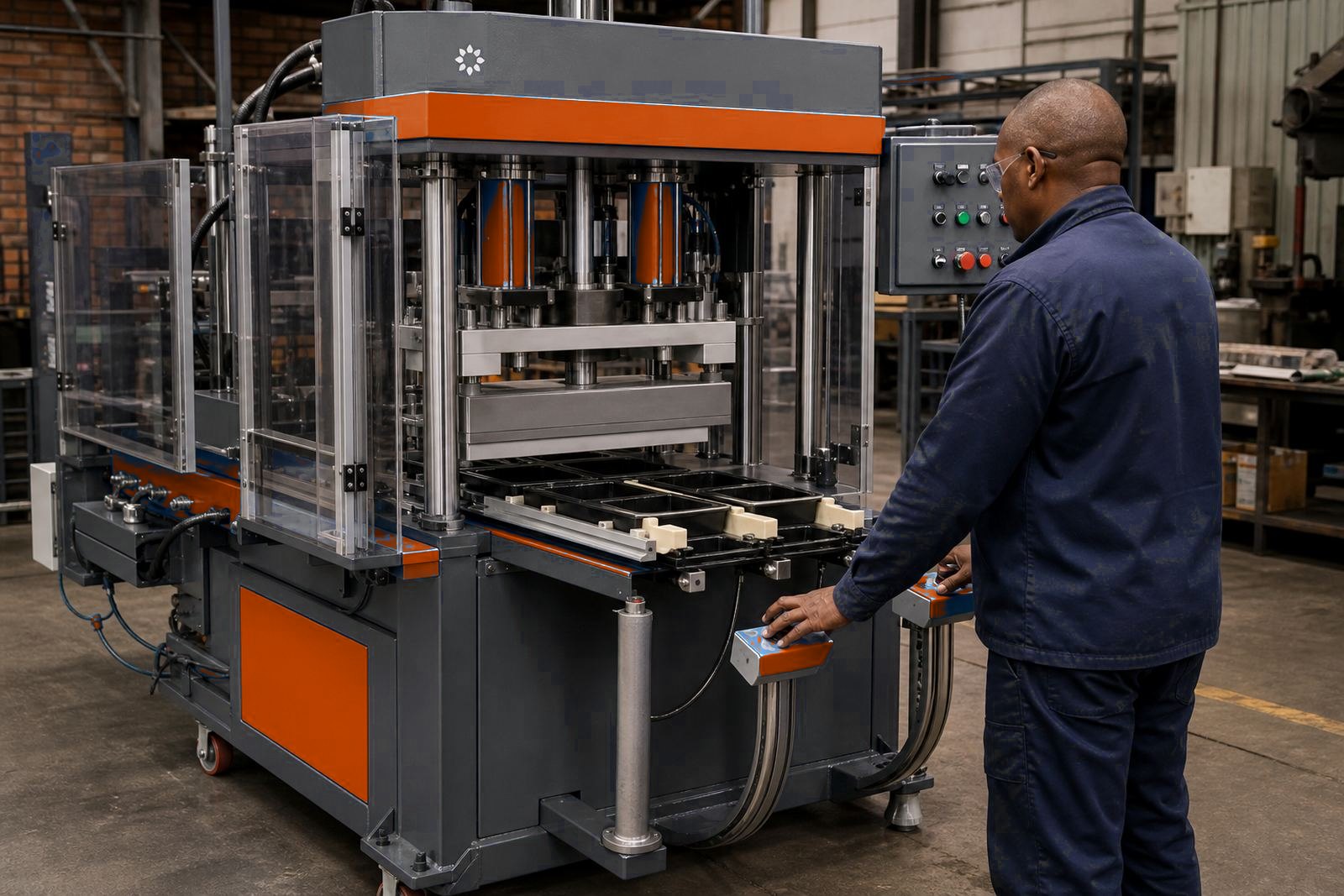
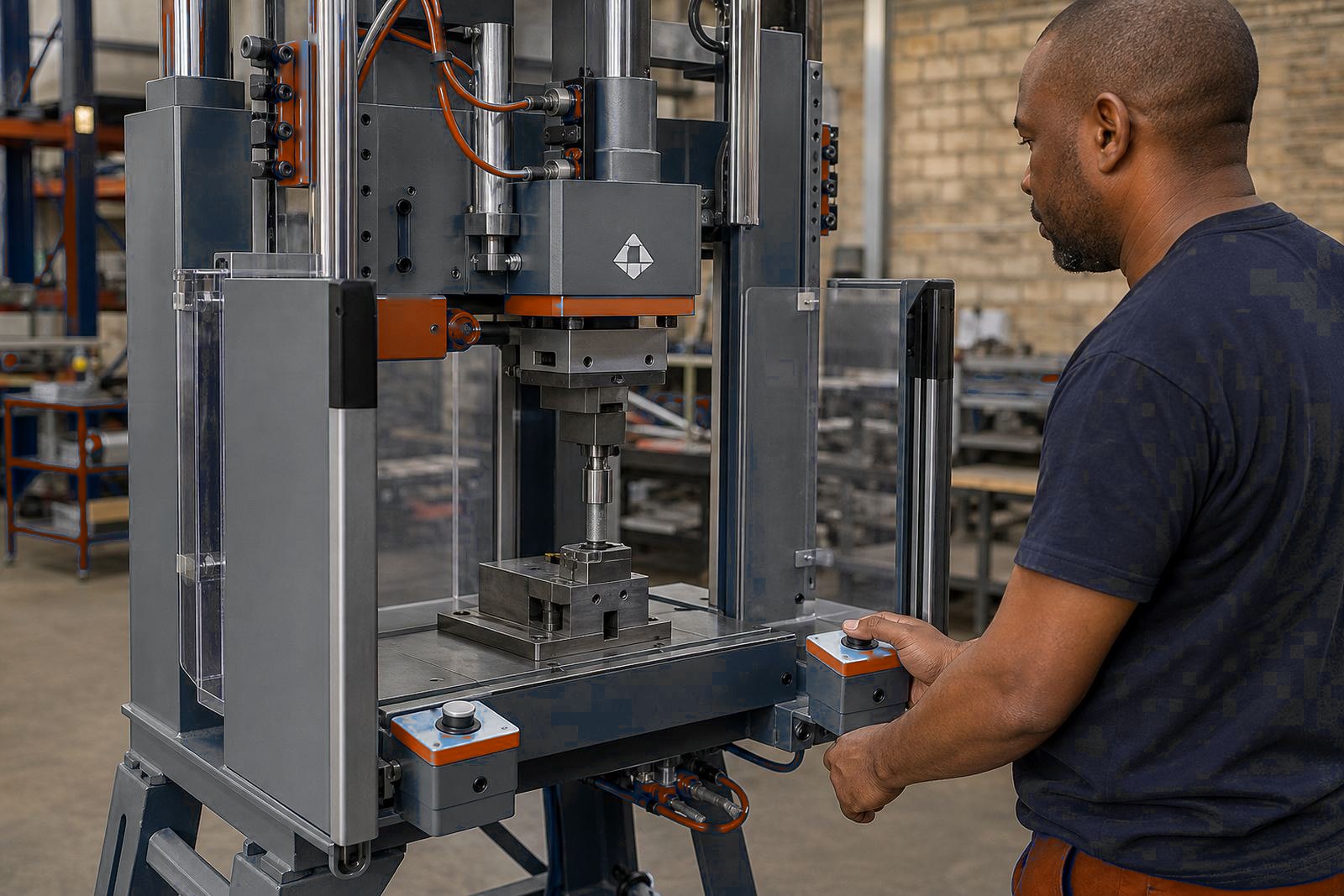
- Two hand controls for operator safety on repeat cycles
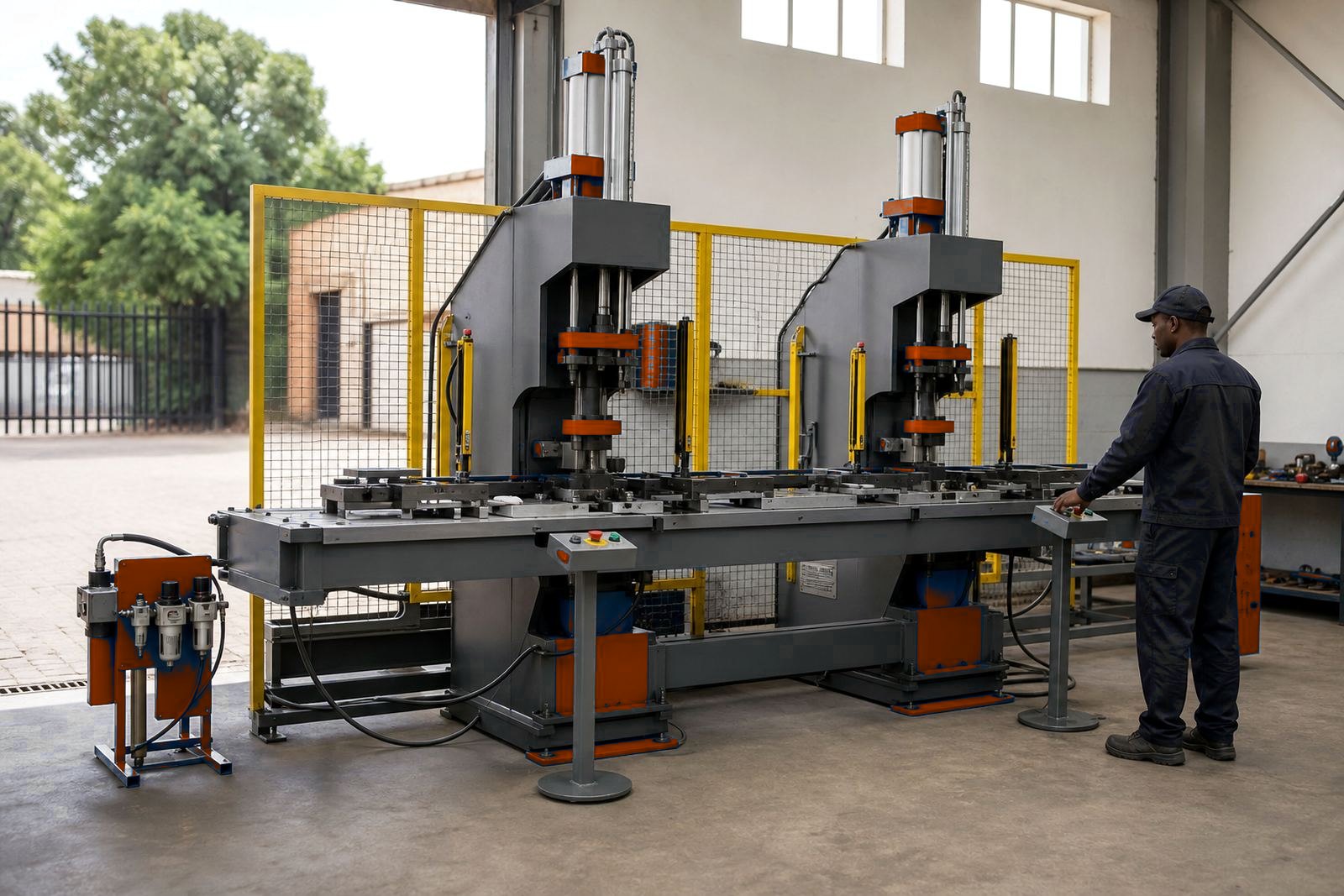
- Light curtain protection where access around the tooling is open
Tooling shapes that match the part, not the other way round
Staking only works properly when the top tool and lower nest suit the component. We build or fit support nests, punches, anvils and forming tips so the material flows where it should and does not crush, split or mark the visible face.
For plastic parts, the tooling usually carries the load over a larger footprint to stop stress whitening and heat build-up at the contact point. For light metal parts, the tooling can be tighter and more localised, especially where a small flange or tab needs to fold over cleanly.
- Matched support tools for flat, curved or irregular parts
- Replaceable forming tips for wear points and changeovers
- Fixture plates for faster loading and better part location
- Guarding builds where fingers need to stay outside the work zone
Typical sizes and operating choices
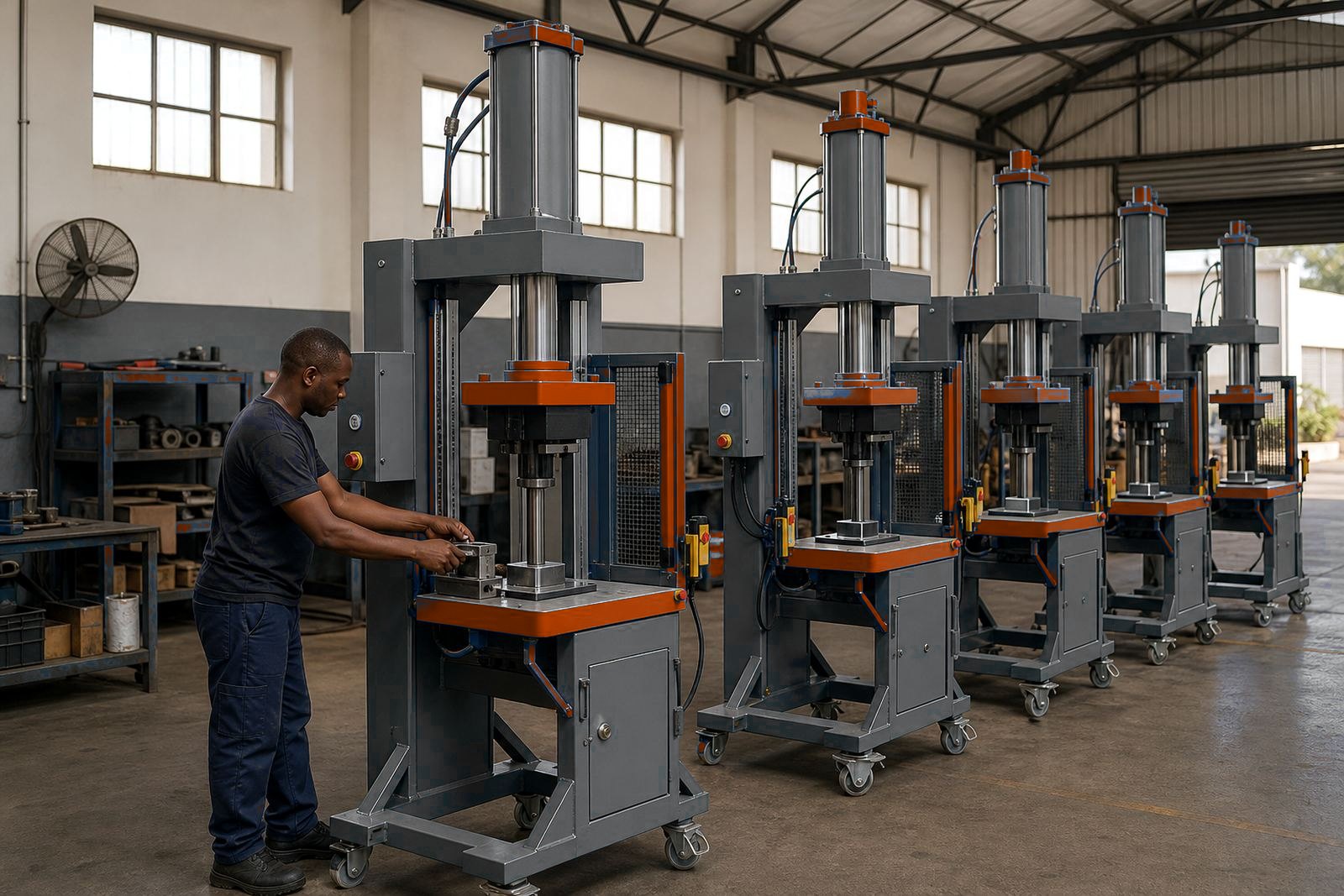
These presses are commonly built as bench units, floor-standing frames or multi-station lines with side-by-side tooling positions. The right size depends on the part footprint, the reach needed for loading and the force needed to finish the stake without overworking the material.
Stroke length, daylight and air pressure all play a part. A short stroke suits shallow features and fast cycles, while a longer stroke helps on taller parts or deeper nests. Air pressure is set to suit the cylinder and the tooling, with more force not always giving a better result if the part is brittle or thin.
- Bench and pedestal formats for compact cells
- Multi-station layouts for higher output and paired operations
- Adjustable stroke settings for different part heights
- Pressure regulation for repeatable forming force
Where staking presses fit best
This type of press suits assembly work where a small feature must be locked in place without screws, adhesives or extra heat. It is often used on automotive subassemblies, electrical housings, appliance parts, small plastic enclosures and light fabricated components.
It also works well where the plant needs a tidy visual finish. A proper stake leaves a formed head or rolled feature that looks deliberate, not crushed. In busy production areas around Isando, Johannesburg, Pretoria, Durban, Gqeberha and East London, that kind of consistency saves rework and keeps downstream fitting clean.
- Plastic retention features on housings and covers
- Light metal tabs, lugs and folded retainers
- Riveted or staked subassemblies with shallow forming depth
- Pack sealing where a controlled mechanical close is needed
Installation, air setup and guarding on site
Most staking presses run on compressed air and need a steady, clean supply sized to the cylinder demand. We set the air line, filter and regulator arrangement to suit the machine, then check the stroke stop, tool alignment and fixture clamping before production starts.
Commissioning covers guarding, two hand controls, light curtain alignment and practical cycle checks with the actual part. Where the line needs it, the press can be integrated into a larger assembly cell with shared fixtures, operator position checks and a defined handover for production staff.
- Air line setup with pressure control and isolation points
- Stroke setting for part height and final formed depth
- Two hand control verification on manual workstations
- Light curtain integration where access is more open
Care, wear points and everyday upkeep
Staking tools work hard in the same small area, so a steady maintenance routine matters. Keep the tooling faces clean, check for burrs or plastic build-up and watch for drifting stroke settings that can change the formed result.
Cylinders, seals and guide parts should be inspected for air leaks, stick-slip movement or uneven travel. If the formed part starts to look crushed on one side or loose on the other, the issue is often in alignment, pressure setting or a worn tool face rather than the main frame itself.
- Clean tooling faces and nests at shift change
- Check air pressure, seals and hoses for leaks
- Inspect guards, controls and light curtain paths
- Replace worn tips before the stake loses shape
Details to confirm before we build or fit the press
To size a staking press properly, we need the part drawing, the material type, the feature to be formed and the output target for the station. We also look at the height of the part, the access needed for loading and whether the job is a standalone press or part of a larger line.
Where production already has compressed air on site, the available pressure and line quality matter. It also helps to know whether the job needs a simple manual cycle, two-hand operation or a guarded cell with light curtain protection. That gives us enough to plan the tooling, the frame size and the fit-out around the workshop floor.
- Part drawing or sample piece with critical dimensions
- Material type and thickness, plastic or light metal
- Required stake height, force and stroke range
- Station count, guarding needs and operator layout
Key facts
| Type | Pneumatic staking press for plastic and light metal assemblies |
|---|---|
| Drive | Compressed air cylinder with regulated force |
| Frame options | Bench, pedestal or multi-station build |
| Control options | Two hand controls, stroke stop, manual or guided cycle |
| Tooling | Matched upper and lower tooling, fixtures and nests |
| Services | Custom tooling, guarding, commissioning, operator training, production handover |