A press for tight parts and clear sight lines
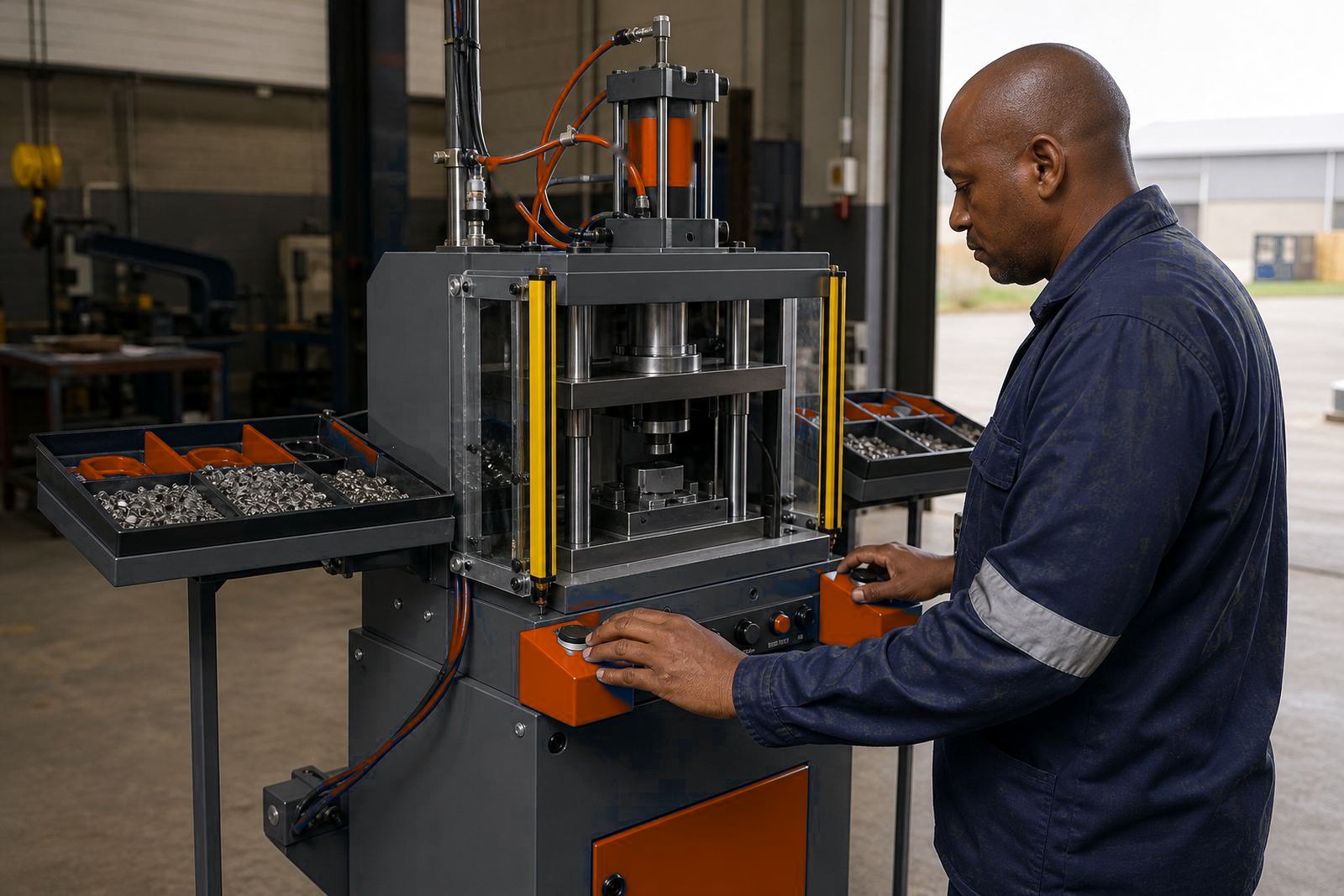
The Small Parts Press is built for jobs where the working area stays compact and the fixture needs to sit close to the operator. That matters on parts such as terminals, clips, sleeves, caps, light fittings, closures and other small assemblies that must be aligned before the cylinder comes down. The frame is arranged so the tool zone remains visible, with enough open access for fine placement and inspection before each cycle.
On this type of press, the cylinder force, stroke length and ram travel are set around the part, not the other way round. The result is a cleaner handover between loading, pressing and removal. For smaller jobs the press can be specified with a short stroke, fine stop control and a neat tooling pocket that keeps the part seated without shifting under pressure.
Working sizes, control options and station layouts
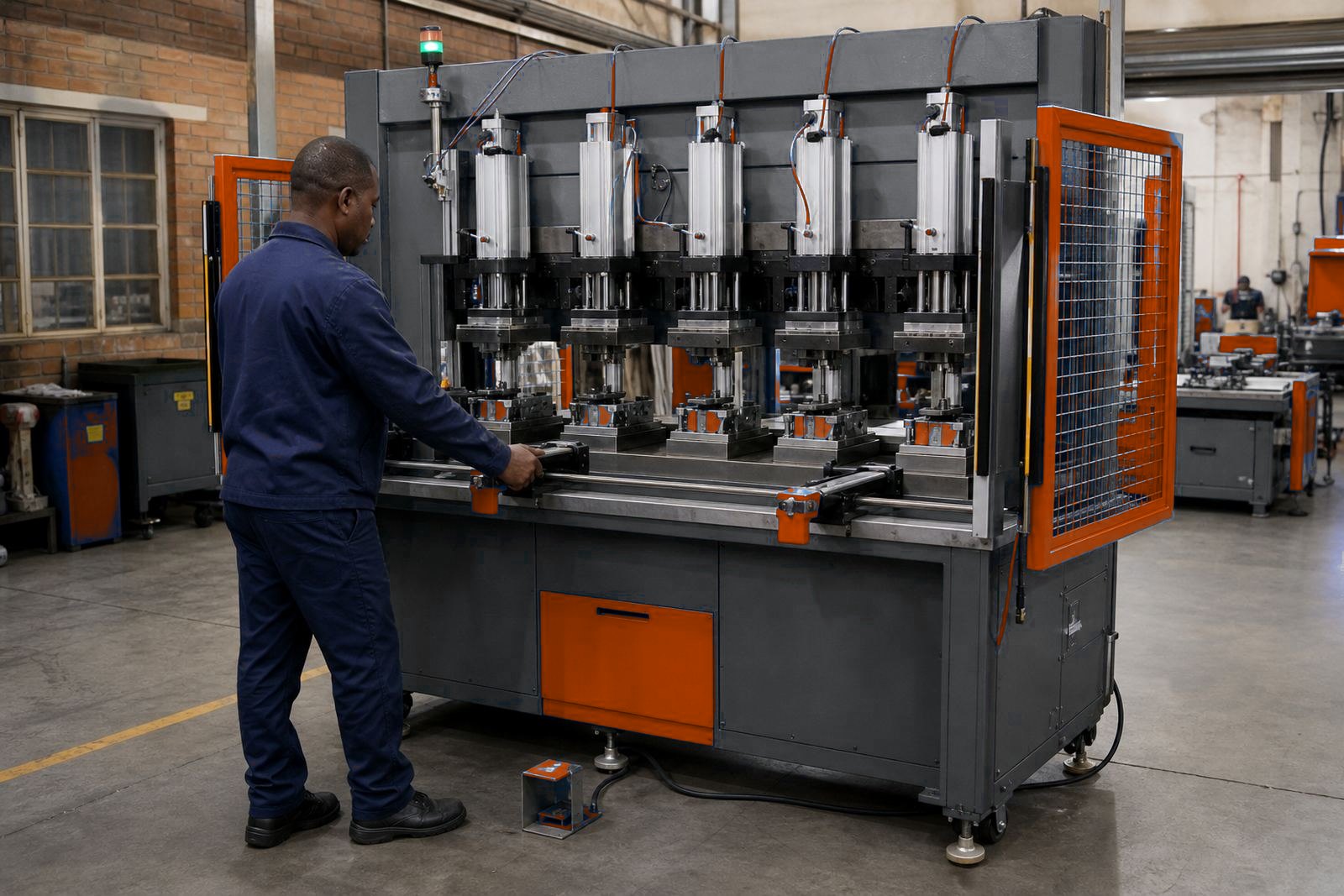
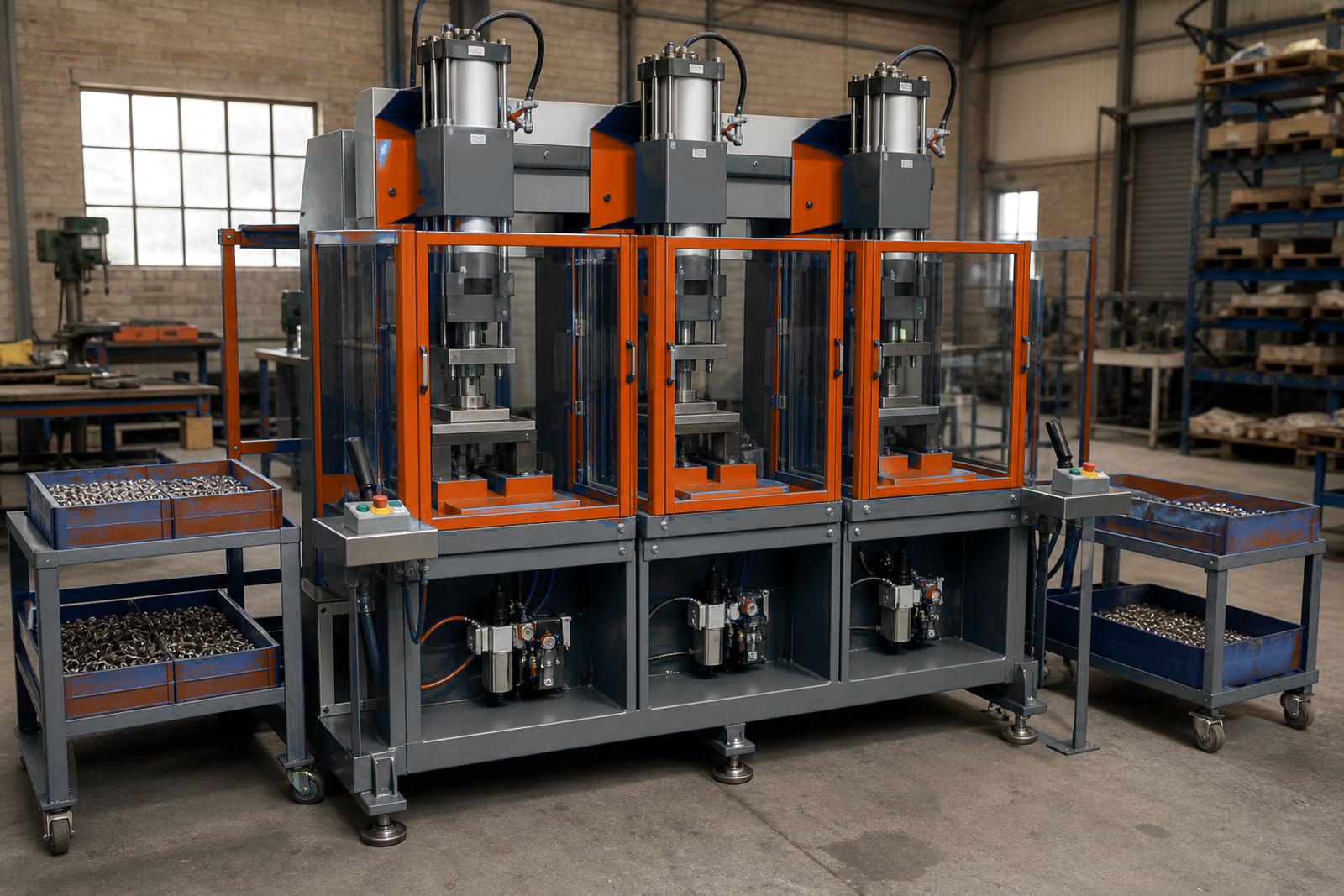
Small Parts Press units are often supplied as single station machines, though a multi-station layout can be arranged when one line needs separate operations in sequence. The station count, daylight opening and bolster size are matched to the job flow. A taller part may need a deeper throat or a raised tool face, while a flatter part benefits from a shorter reach and tighter guarding around the opening.
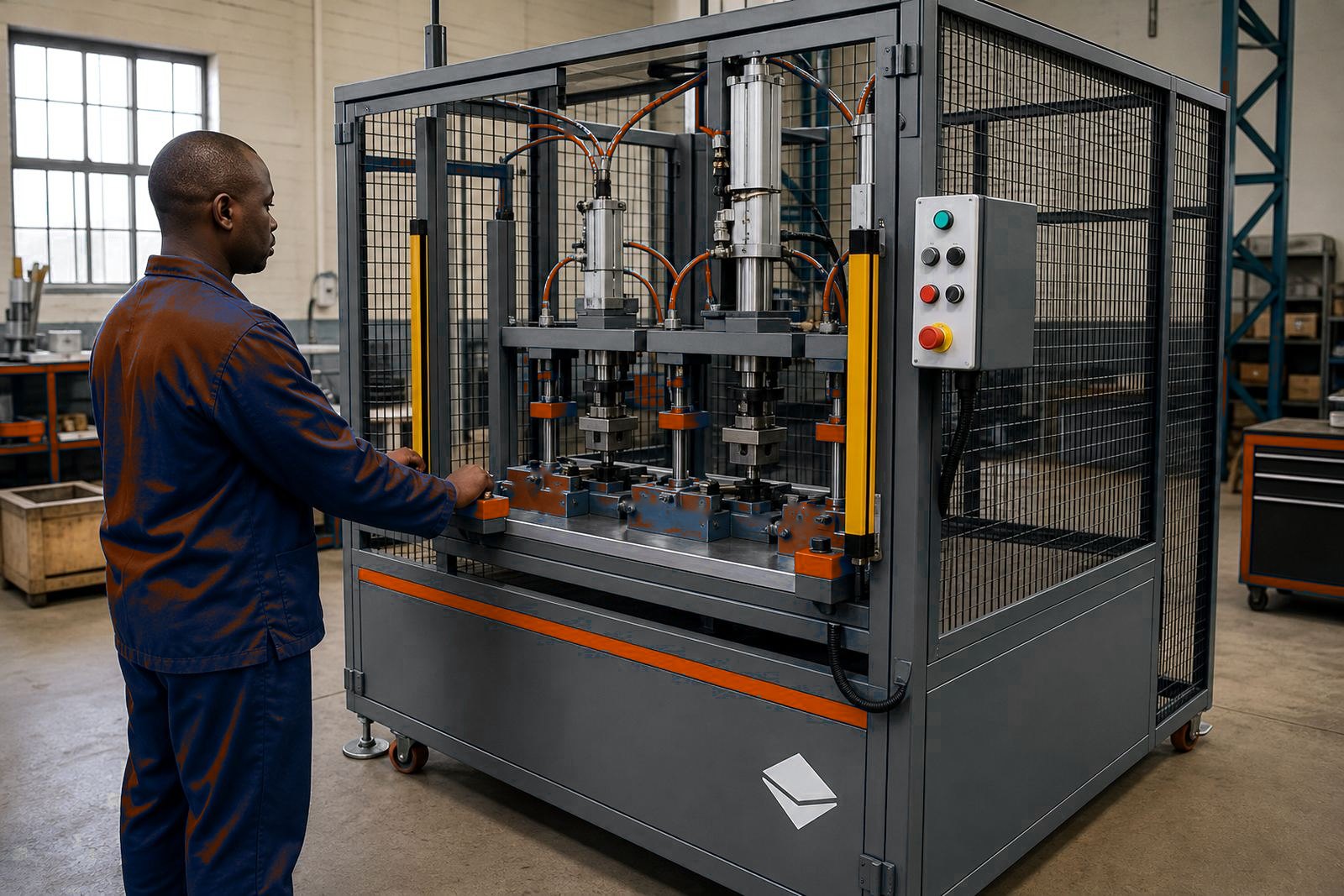
Control gear is usually set up for safe two-hand operation, with a guarded work area and a cycle that only starts when both controls are engaged. Light curtains can be fitted where the process needs easier access, and the tooling can be arranged for top-down crimping, end loading, insert placement or repeat pressing. Air pressure is selected to suit the part load, the tool form and the finish required on the component.
- Common frame sizes depend on the part footprint and operator reach
- Stroke can be set short for delicate work or longer for deeper assemblies
- Two-hand controls help keep the operator clear of the closing point
- Light curtains suit access-heavy stations with frequent loading changes
- Tooling can be built for crimping, riveting, staking or sealing tasks
Where this press suits production floors
Small Parts Press machines are used in factories that handle repeat work on small components with close tolerances. They suit electrical assembly, light metalwork, plastics inserts, hardware sub-assemblies and pack sealing lines where the operator must guide a part into position and confirm the fit before the cycle starts. In Durban and other coastal plants, the tooling and guard surfaces also need practical material choices where humidity and salt air form part of everyday conditions.
In Johannesburg, Pretoria, Kempton Park, Boksburg, Gqeberha and East London, these presses are often placed near a bench line or inside a small cell where parts move by hand between stations. The machine can be fitted into an existing process or built into a fresh line, depending on the feed method, output rate and space around the workstation.
For pack sealing, the press can hold a heat or compression head in a fixed position, while the fixture keeps the pack aligned under the ram. For crimping and riveting, the tooling face is shaped to guide the part into the right position before force is applied. That gives the operator a direct view of the work and keeps the cycle controlled from start to finish.
Tooling, fixtures and guarding built around the job
The right tooling makes the difference on small work. A good fixture holds the part firmly without crushing it, guides the entry point and keeps repeat placement steady through the shift. Musa Hartnick designs tooling around the component itself, then the workshop team builds the fixture and checks fit against the press frame and stroke path. That includes nests, locators, press faces, eject points and simple change parts where one press must run more than one small job.
Guarding is built around access and visibility. Depending on the layout, that can mean fixed guards, interlocked doors, light curtain protection or a guarded front opening with clear operator sight. Where the job needs quick changeover, the tooling is designed to lift out or slide clear without disturbing the rest of the machine. Air line setup is kept neat and practical, with fittings placed for servicing and for tidy routing across the cell.
- Fixture plates can be drilled for one part or a family of related parts
- Tool faces may be hardened or dressed for cleaner contact on repeated cycles
- Guarding can be matched to the access pattern and the duty cycle
- Air lines are routed to reduce snag points and keep the bench area clear
Commissioning, fitment and operator training
When the press reaches site, the fitting stage covers levelling, anchoring if required, air connection, stroke setting and control checks. Lerato Moagi handles commissioning so the machine arrives set for the actual component. That includes pressure adjustment, ram position, safety checks and testing with the proper tool fitted.
Anele Engelbrecht takes the operator through the machine from loading to part removal, with attention to the practical points that matter on the floor: how the piece sits in the fixture, what must be seen before cycle start, how the two-hand controls feel in use and when tooling changes are needed. Production handover is done around the real job, so the team on site understands the part flow, the guarding, and the cleaning routine.
Commissioning is available from Isando into Johannesburg, Pretoria, Durban, Gqeberha and East London, with site work arranged for factories that need a local setup or a broader rollout across more than one line.
Details we need before the press is built
A small press still needs clear job details before it is built. The part size, material, cycle rate and the kind of force needed all affect the frame, cylinder and tooling. If the job is a crimp, rivet, stake or seal, the press form changes with the contact point and the finish required on the component. A simple sketch is helpful, but so is a sample part because the fixture often follows the shape more closely than the drawing.
These are the details that help define the machine:
- Part dimensions, weight and material
- Station count and whether the job is manual load or staged work
- Required stroke, daylight opening and working height
- Air pressure available at the line and the expected cycle pattern
- Tooling type, including crimping, riveting, staking or sealing
- Guarding preference, two-hand controls or light curtain protection
- Site location for installation, from Isando to other South African plants
Our contact form is the place to send those details when you want a proper quote path for the job. Thandiwe Matlala coordinates the brief with the workshop, the tooling counter and the commissioning side so the build can be matched to the component and the way your line actually works.
Care that keeps the cycle steady
Small parts work rewards a tidy machine. Keep the tool faces clean, check the fasteners on the fixture plate, watch for wear on guides and make sure the air supply stays dry and properly regulated. On press lines that run daily, small changes in stroke feel or part seating usually show up before a real fault appears, so routine checks matter. In coastal areas, a light inspection of exposed steel, fittings and guards helps reduce the effects of moisture and salt in the air.
Johan Ramokgopa leads workshop support on tool condition, worn components and fixture changes, while Pieter Sauls oversees the broader build and production flow across the team. When a press is set correctly and cared for properly, the job stays predictable and the part quality is easier to hold across the shift.
Key facts
| Machine type | Pneumatic small parts press |
|---|---|
| Typical use | Assembly, crimping, riveting, staking, pack sealing |
| Stations | Single station or multi-station layouts |
| Controls | Two-hand controls with guarding options |
| Stroke | Short stroke and adjusted ram travel by job |
| Options | Custom tooling, light curtains, commissioning, operator training |