Four working points, one controlled frame
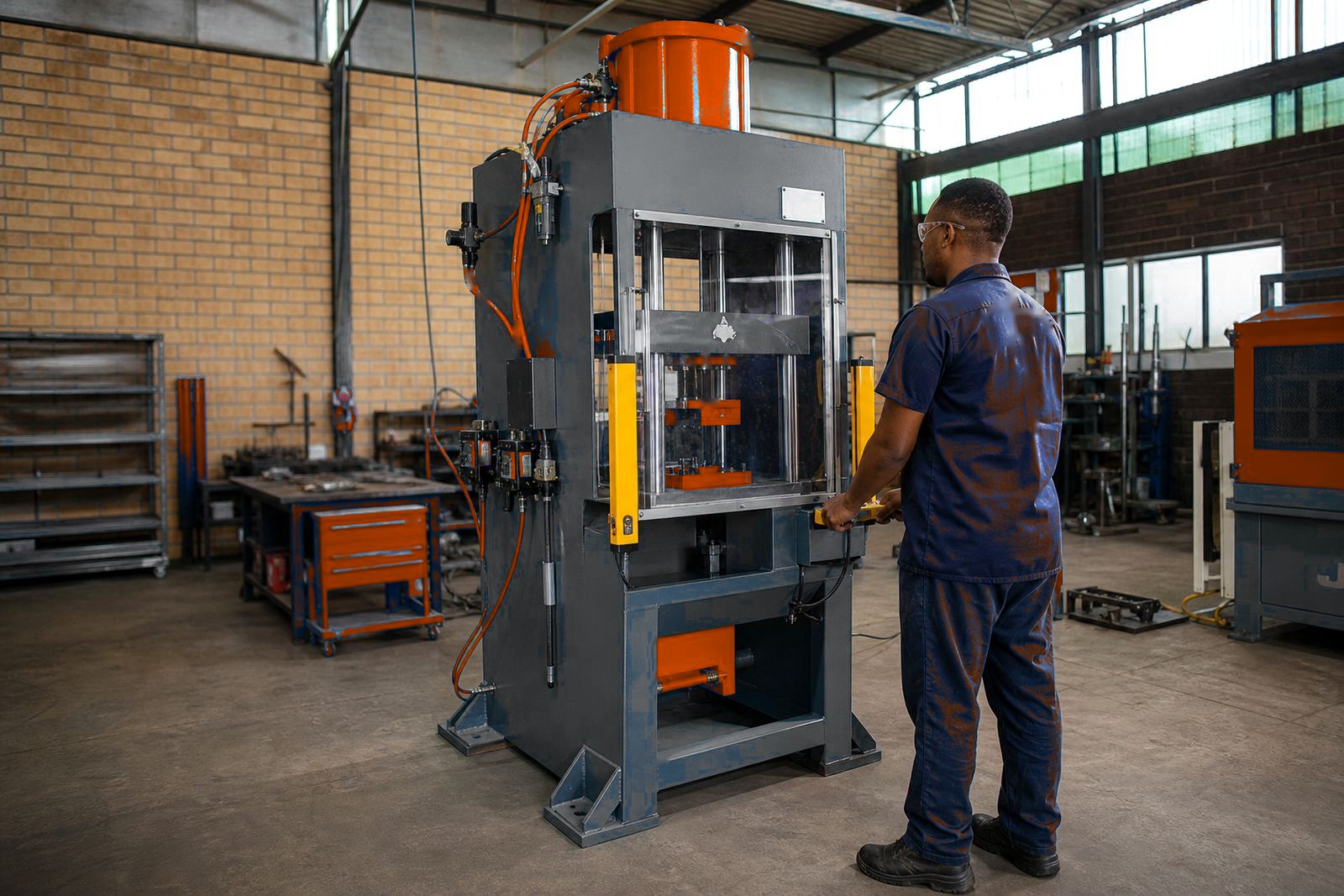
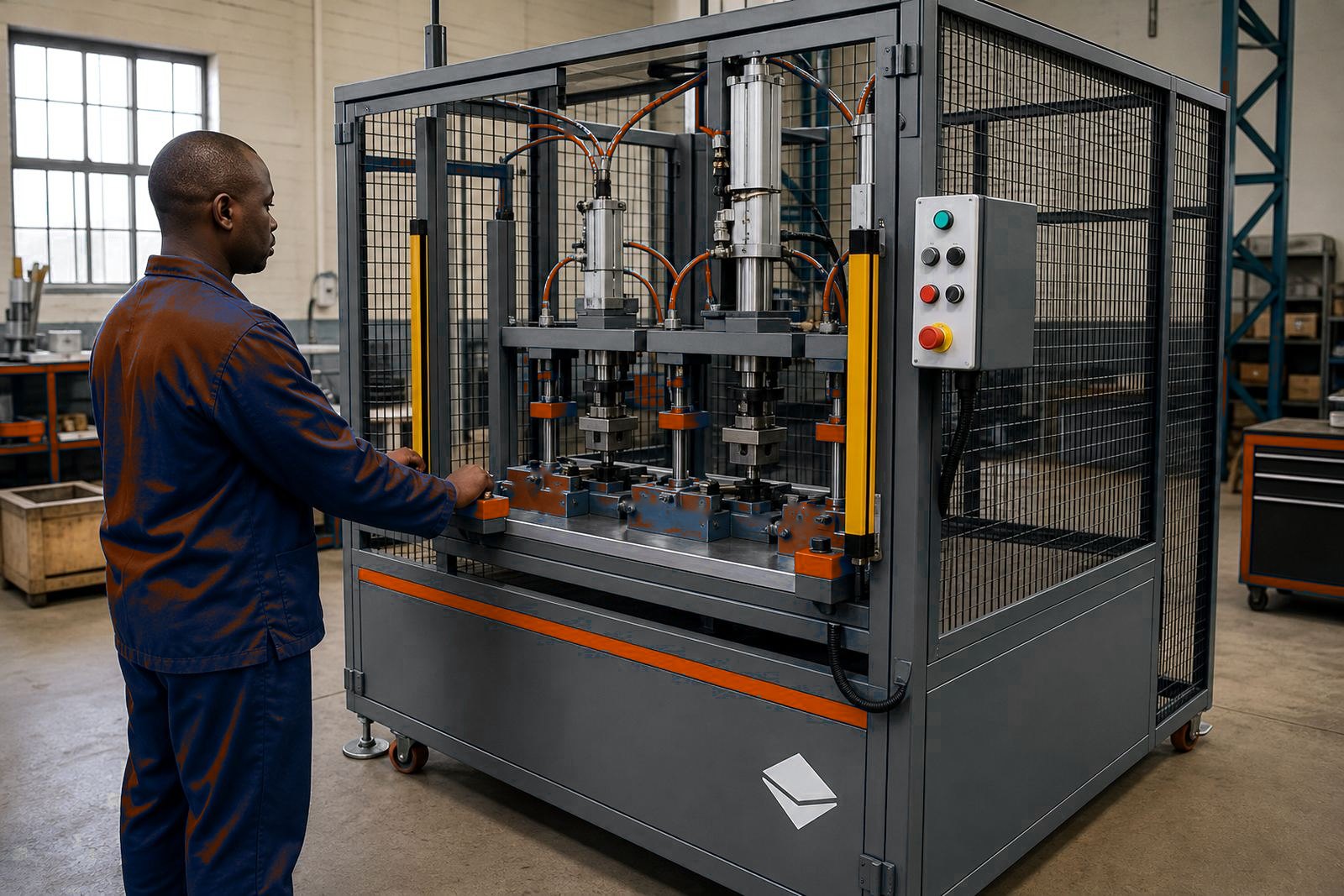
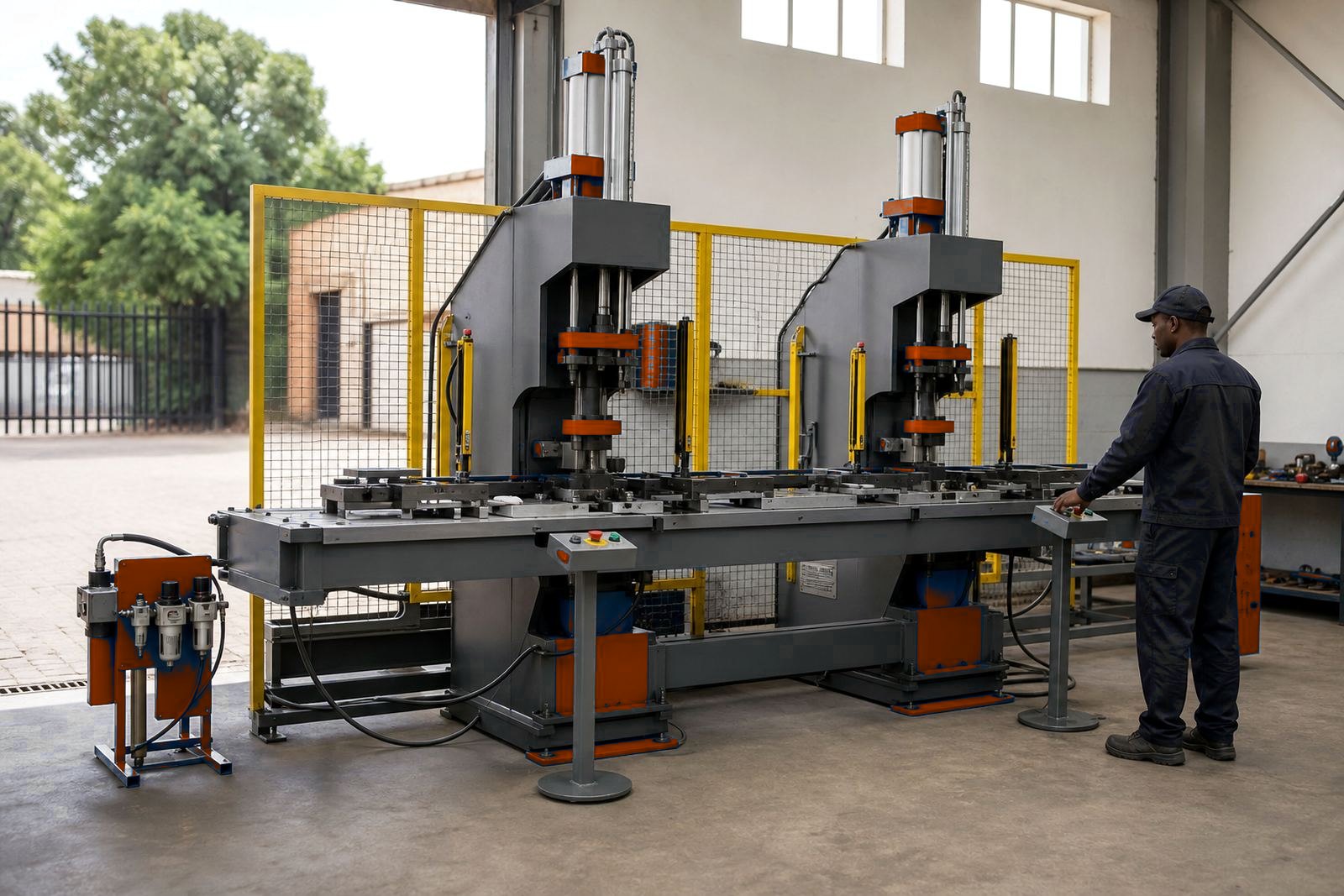
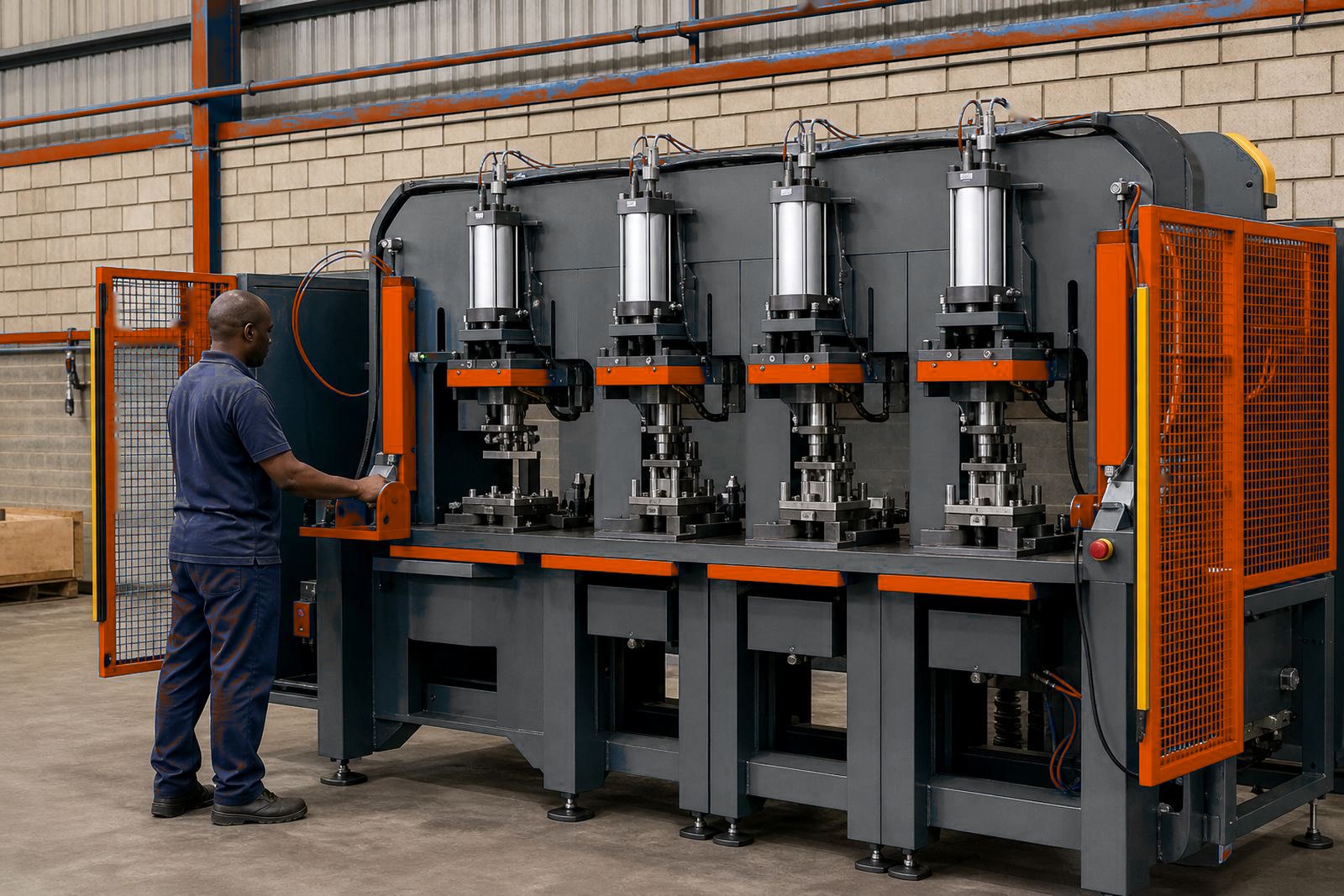
The four station press is built around a rigid frame with four working positions arranged for a planned sequence of tasks. Each station can carry its own tooling, so one operator can move through a set order without shifting parts to another machine. In South African factories that run mixed assembly work, that layout helps keep part handling clean and the stroke length consistent.
Air cylinders drive the pressing action, with the stroke, dwell and return setting matched to the job. Depending on the tool set, the press can be arranged for crimping lugs, forming rivets, staking plastic or metal bosses, or closing packs with a controlled seal pressure. The four points may be set up as matching stations, or as a line of different operations in one frame.
Sizes, stroke ranges and station layout
Station spacing, working height and table size are set around the part envelope and the tooling footprint. A compact unit can suit smaller assemblies with shallow stroke needs, while a larger frame gives more room for jigs, guards and a wider load area. The actual cylinder bore, press force and stroke travel are selected against the part material and the force needed at each station.
- Four independent working positions for repeatable multi-step work
- Pneumatic cylinder sizing matched to force, part depth and cycle style
- Stroke length set for short crimping moves or longer forming travel
- Fixed or adjustable tooling plates for different part families
- Guarding, light curtain protection and two-hand control options
For pack sealing and light assembly, a shorter stroke with controlled dwell can be enough. For riveting or staking, the tooling often needs a firmer bottoming point and better support under the workpiece. Our workshop checks the actual job sample before the final station layout is locked in.
Where this press earns its place on the floor
Four station presses suit production lines where one operation feeds the next without much lost movement. They are common in electrical assembly, hardware assembly, automotive component work, appliance sub-assemblies and packaging jobs that need a clean finish. In Durban, East London, Gqeberha and inland plants around Johannesburg and Pretoria, the format is useful where space is tight but throughput still matters.
The press also works well where one operator must keep both hands at the controls and still maintain a steady rhythm. When parts vary slightly in thickness or position, the tooling can be designed to guide the component into the same place each time. That reduces scrap from crooked rivets, uneven crimps or seals that close off-centre.
- Assembly benches with repeated press movements
- Crimping stations for terminals, ferrules and formed ends
- Riveting work where clamp force must stay even
- Staking tasks on plastic, brass or mild steel parts
- Pack sealing lines needing a neat, consistent closure
Guarding, controls and compressed air connections
We build safety hardware in from the start, not leave it until last. Two-hand controls are often used where the operator must keep both hands clear during the press cycle. Light curtains can be added where the line needs open access for loading but still must stop on entry into the guarded zone. Fixed guards, interlocked guards and tool guarding are all set around the actual motion and pinch points.
The air system needs a stable supply, dry enough for the cylinders and valves to work cleanly. Line pressure, regulator setting and air line routing are checked during installation, and the stroke setting is verified against the finished part. If the plant has long air runs or pressure drops from heavy usage, the setup needs to account for that before production starts.
Tooling, fixtures and changeovers that fit the job
Custom tooling is what makes a four station press useful on real production work. Each station may need a nest, forming punch, locator pins or a hold-down fixture, and those parts must suit the component geometry. For some jobs the tooling needs quick change plates, while others need a fixed setup with very little variation.
Tooling changes should be planned around the way the factory runs the line. If the same press must handle more than one part, the tooling should be clearly marked and set out so the operator cannot mix station order. Our team designs the fixture path, checks access for maintenance and makes sure the tooling can be removed without damage to the frame or cylinder mountings.
Fitting, commissioning and care over time
These presses are installed with attention to floor space, anchor points, air supply and the operator position at the line. Commissioning includes stroke setting, control checks, guarding checks and a full trial with real parts. Where a plant needs site installation, the machine is set in place, aligned to the bench or line and tested with the tooling fitted as it will run in production.
Ongoing care is practical: keep the air dry, check for worn seals, inspect hoses and fittings, and look at the tooling surfaces for burrs or rounding. A press that is used for crimping or staking should be checked for drift in force or alignment, especially after tooling changes. If the machine runs in coastal humidity, dust or oily shop conditions, regular inspection matters even more.
- Air pressure and cylinder bore sized for the intended force
- Stroke length and shut height matched to the part
- Tooling style, including nests, punches and hold-downs
- Safety package with two-hand control or light curtain protection
- Line layout, floor space and access for loading or changeovers
- Job type, whether assembly, riveting, staking or pack sealing
Key facts
| Type | Four station pneumatic press |
|---|---|
| Working action | Air cylinder driven, repeatable downstroke |
| Typical uses | Assembly, crimping, riveting, staking, pack sealing |
| Safety options | Two-hand controls, light curtains, guarding |
| Setup items | Tooling, fixture design, stroke setting, air line setup |
| Service areas | Isando, Johannesburg, Pretoria, Durban, Gqeberha, East London |