A wider platen for long parts and side by side nests
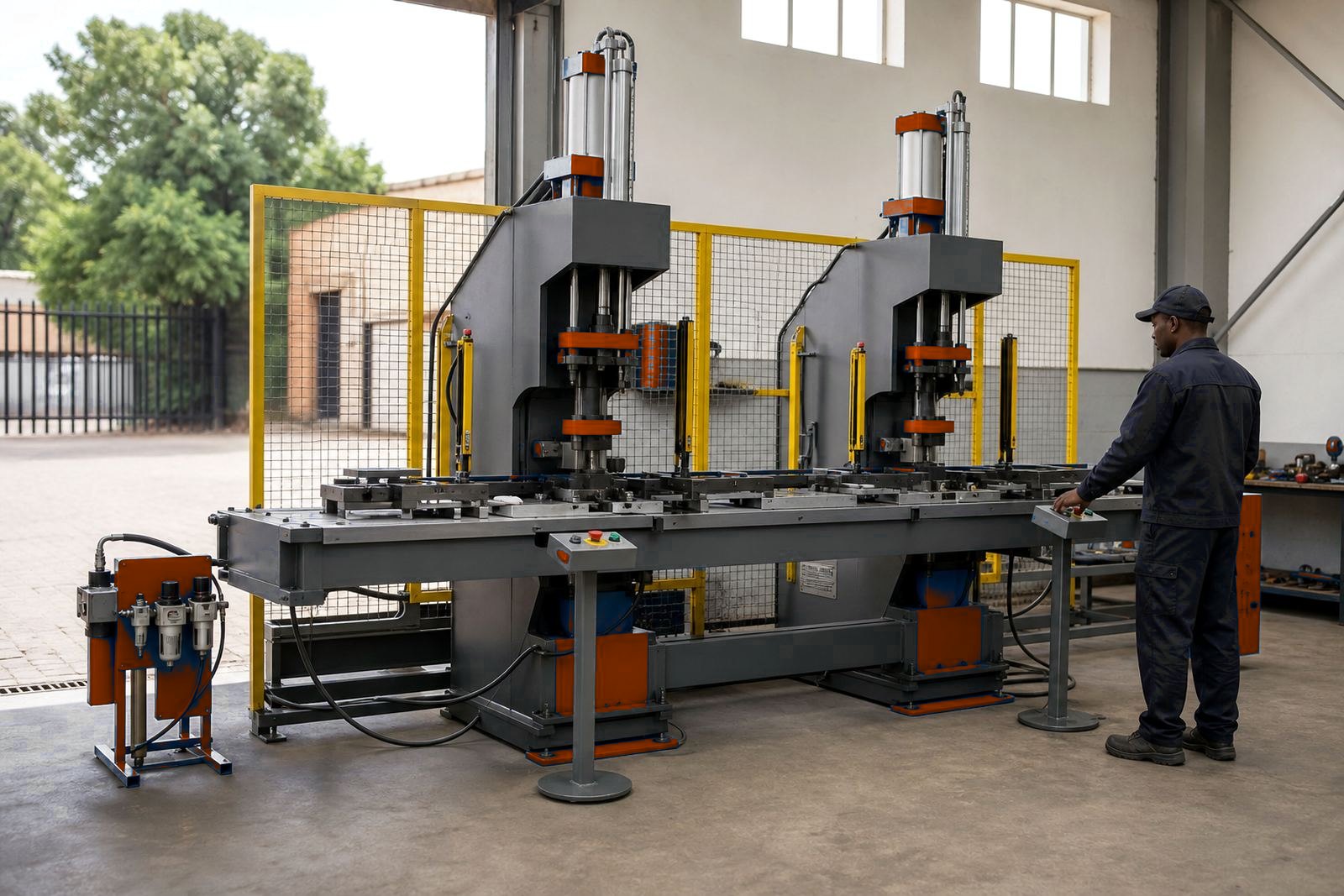
A wide bed press is built for jobs that do not sit neatly on a narrow tool face. The extra width lets one long component sit square, or allows two and sometimes three nests to sit beside each other under the same press structure. That matters where the operator needs a clean reach, fixed location points and enough room for tooling, guides and safety devices without crowding the work zone.
On this type of machine, the press frame, bed plate and moving head are sized as a set. The stroke, daylight and working height need to match the job, not just the part size on paper. For repeated assembly work, the bed width helps keep the tooling layout tidy and gives the pressroom a better setup for jigs, location pins and part stops.
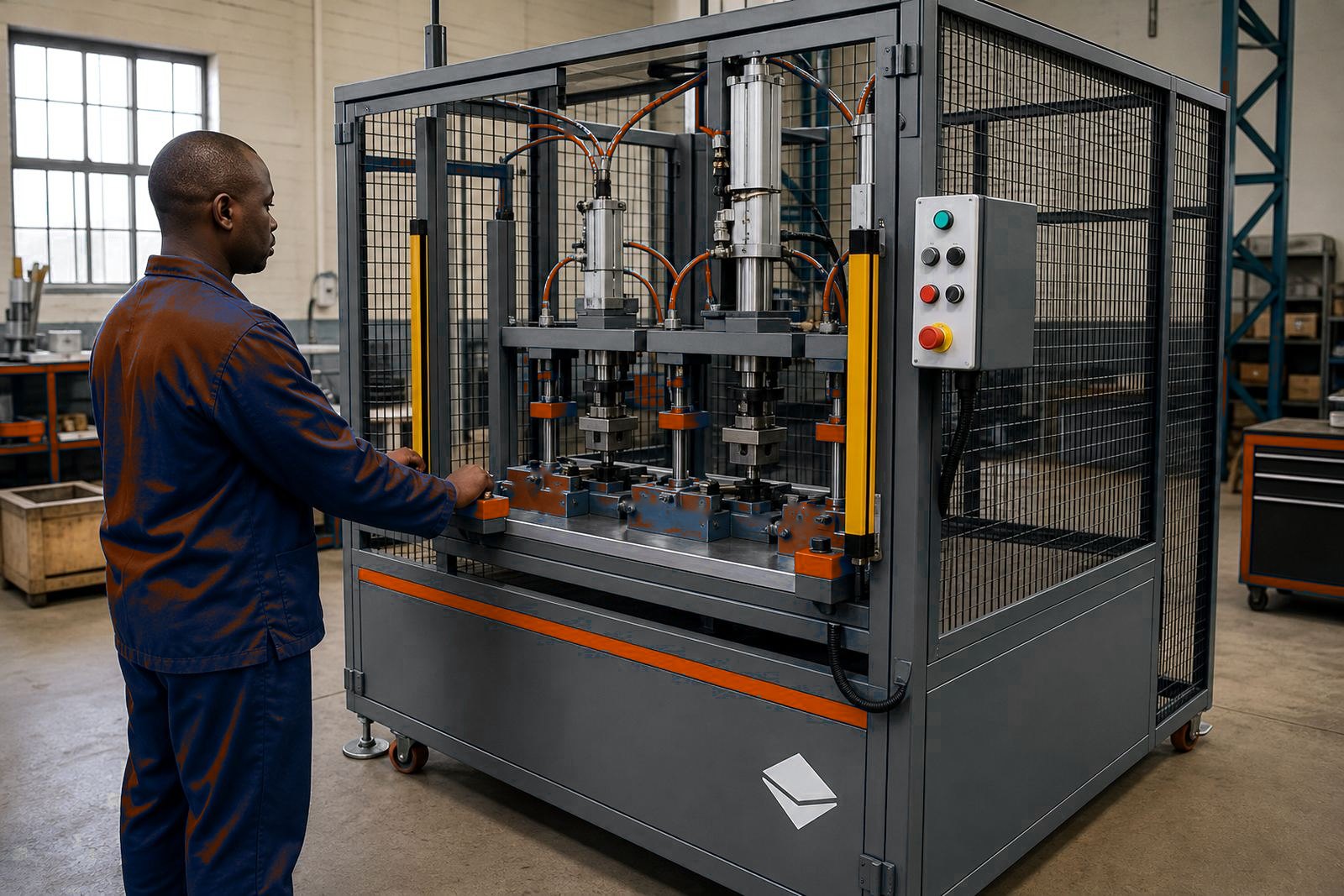
In practice, these presses are commonly used where one cycle needs to act on a wide face, or where two identical parts must be processed together to balance output. The machine can be configured for single action tasks or multi-station work, with each nest set to its own tooling detail.
Press sizes, stroke settings and air use that suit the job
Where this press sits best on a factory floor
This format suits assembly lines that handle long sub-assemblies, wider cartridge packs, laminated pieces, brackets, wire forms and folded parts that need even pressure across a broad area. It also suits plants where one press has to serve a few related jobs, with tooling changed between shifts or product runs.
Factories in Johannesburg, Pretoria, Durban, Gqeberha and East London often ask for a wide bed layout when the job spacing is awkward for a standard frame. It also helps where the press must work alongside conveyors, benches or transfer tables and still leave enough room for the operator to place parts without twisting or overreaching.
- Long components that need a full-width support face
- Two or more nests under one frame for matched output
- Crimping, riveting and staking work with fixed location points
- Pack sealing lines that need even pressure over a wider area
- Parts that need guard space and clear hand access around the tooling
In coastal towns, enclosed tooling and cleaner air lines are worth planning for, especially where humidity can affect small fittings, guide parts and stored tooling. That helps keep the press stable through regular use and reduces nuisance wear on fittings that move often.
Guarding, controls and fitted tooling around the wide bed
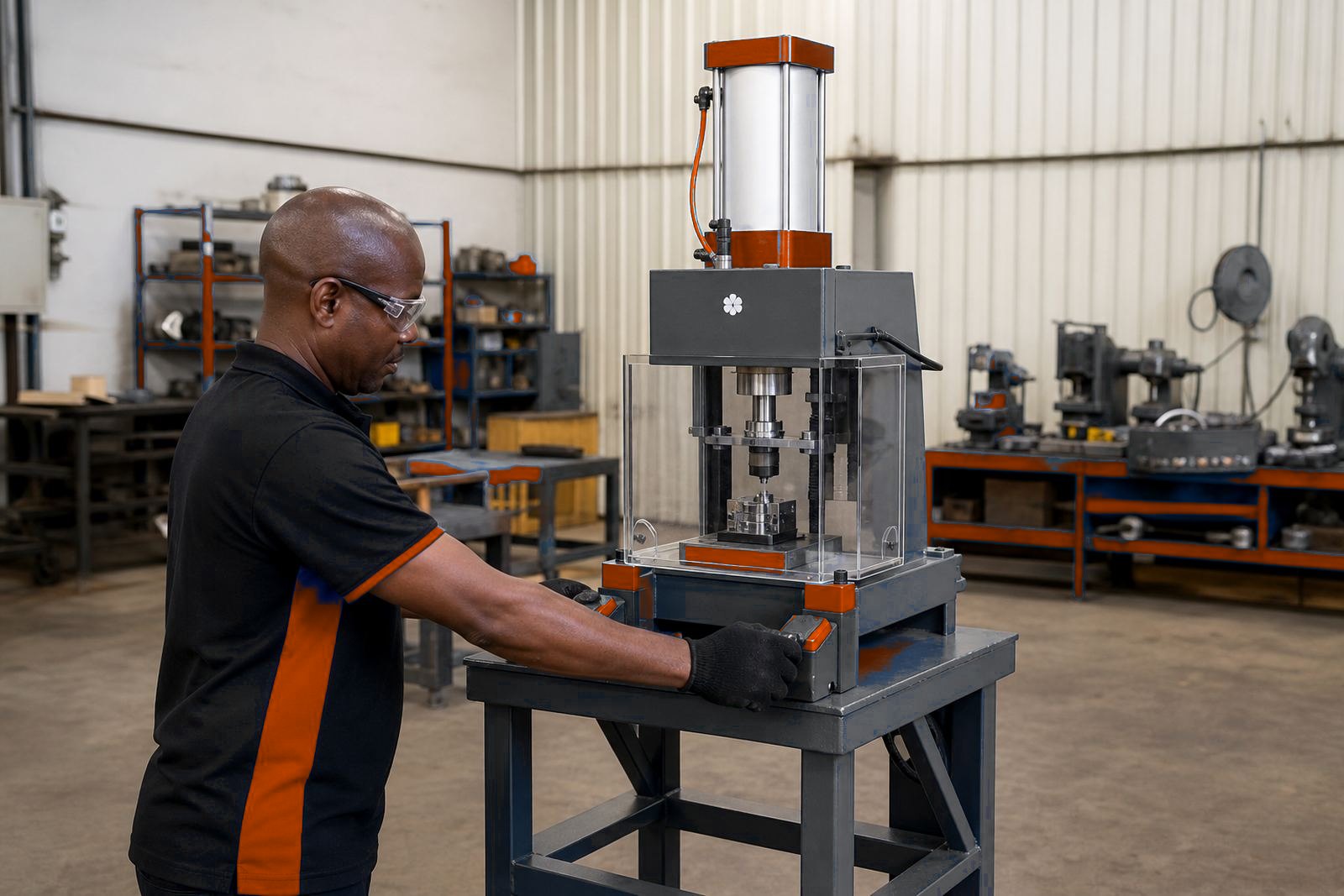
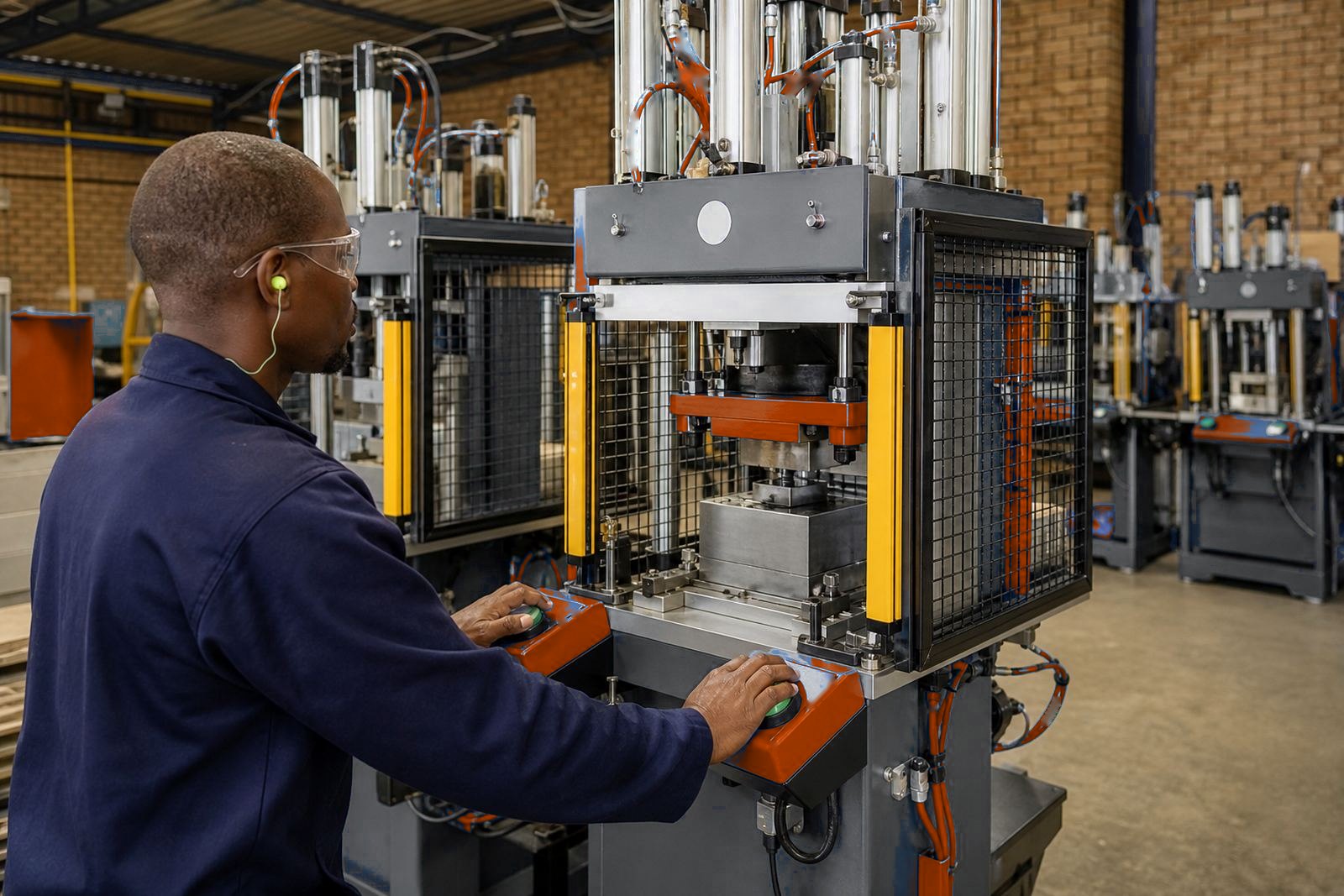
Because the working face is wider, guarding needs to cover the full dangerous area and not only the centre point. Two-hand controls are often fitted where the operator loads by hand, so both hands must leave the danger zone before the cycle starts. Light curtains can also be used on suitable layouts, especially where the bed is open across a broad span and the operator needs fast access between cycles.
Tooling is the part that makes the press useful for a specific job. On a wide bed machine, the tooling may include locator pins, nest plates, hold-downs, form dies, crimp sets, punch elements or sealing jaws. The fixture design must keep the part flat and repeatable, because a wide layout can drift if the clamps are not placed well.
- Two-hand control systems for hand-loaded work
- Light curtain integration where the layout allows it
- Custom tooling for crimping, riveting, staking or pack sealing
- Guarding that covers the full width of the working area
- Fixture design to hold long parts true under load
When the press is fitted properly, the operator has a clear load point, the stroke stays consistent and the tooling does not fight the frame. That is the difference between a machine that only fits and one that handles a real production job.
Installation, air line setup and commissioning on site
Care, wear points and what to confirm before ordering
A wide bed press holds up better when the slide guides, air fittings and tooling faces are checked on a routine basis. Keep the bed clean, watch for loose fixture bolts and check that the stroke stops where it should. If the press is running in a busy production area, dirt and offcuts can creep under the tooling and affect location before the operator notices it.
Tooling changes should be handled carefully so the new setup sits true across the whole bed. On wide jobs, even a small offset can show up as uneven crimp depth or an off-centre rivet. For pack sealing work, worn sealing faces or poor alignment can leave marks that should not be there.
- Overall bed width and usable working area
- Stroke length, daylight and target cycle force
- Number of nests or stations under the frame
- Part length, part width and location method
- Guarding choice, two-hand controls or light curtain use
- Air pressure available on site and line connection size
It also helps to confirm whether the job needs a single operator, a feed from the side, or a simple transfer between stations. Those details shape the frame, the tooling and the final control layout, so they should be settled before manufacture starts.
Key facts
| Working width | Built to suit one wide nest or multiple nests side by side |
|---|---|
| Cylinder arrangement | Single cylinder or multi-cylinder layout depending on force need |
| Air pressure | Typically 5 to 8 bar on factory air systems |
| Stroke | Short, medium or long stroke set to the job and tooling |
| Controls | Two-hand controls, with light curtain options where suitable |
| Applications | Assembly, crimping, riveting, staking and pack sealing |