Press cell layout built around the job
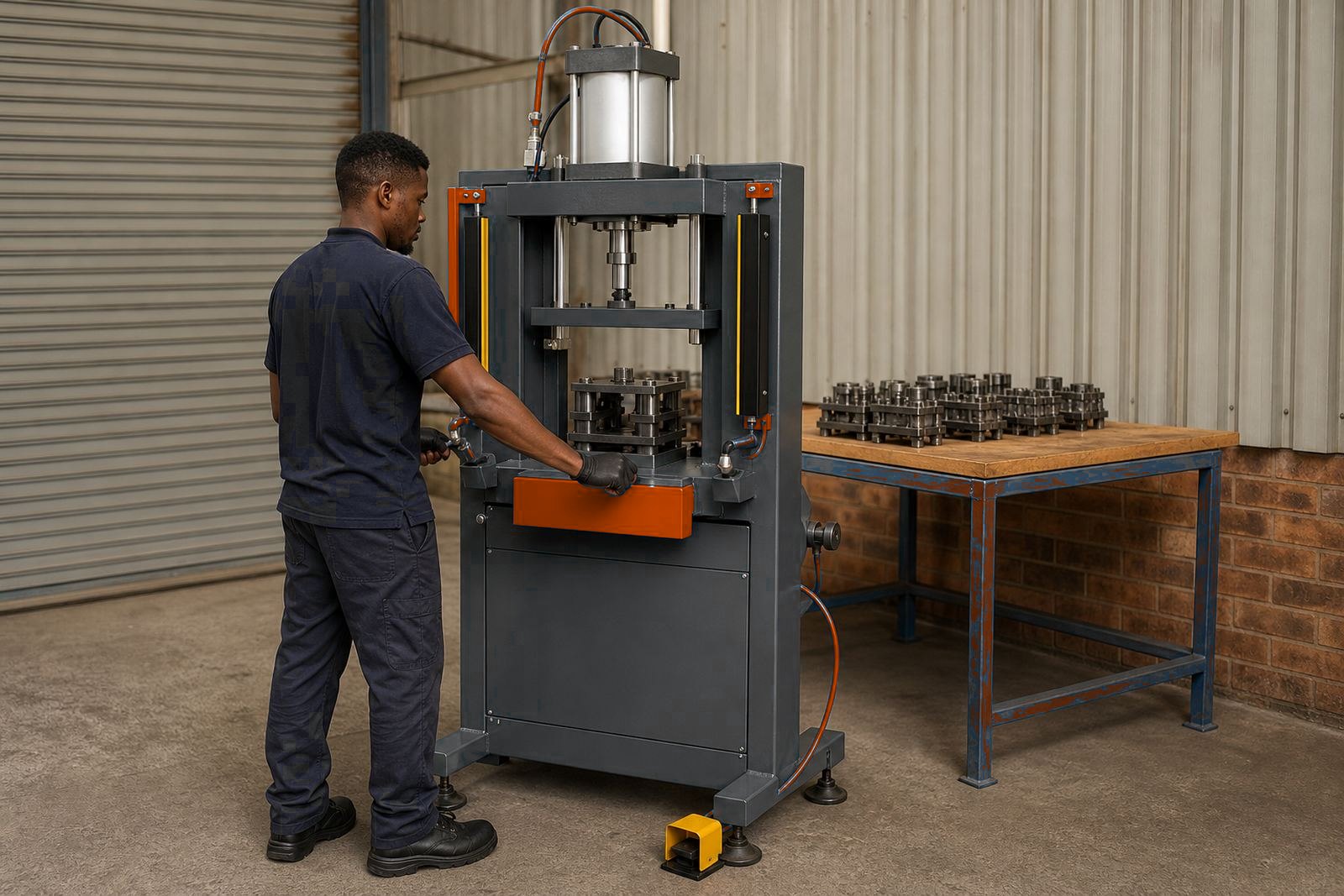
A guarded cell press is more than a stand-alone frame with a ram. It is a working station or small line where the press, tooling, guarding and operator position are arranged together so the cycle stays predictable. On these builds we set the press height, stroke, die access and hand position around the parts being processed, whether that is a terminal, bracket, rivet set, clip or pack seal. The goal is steady repeat work with clear entry points and no loose movement around the tooling face.
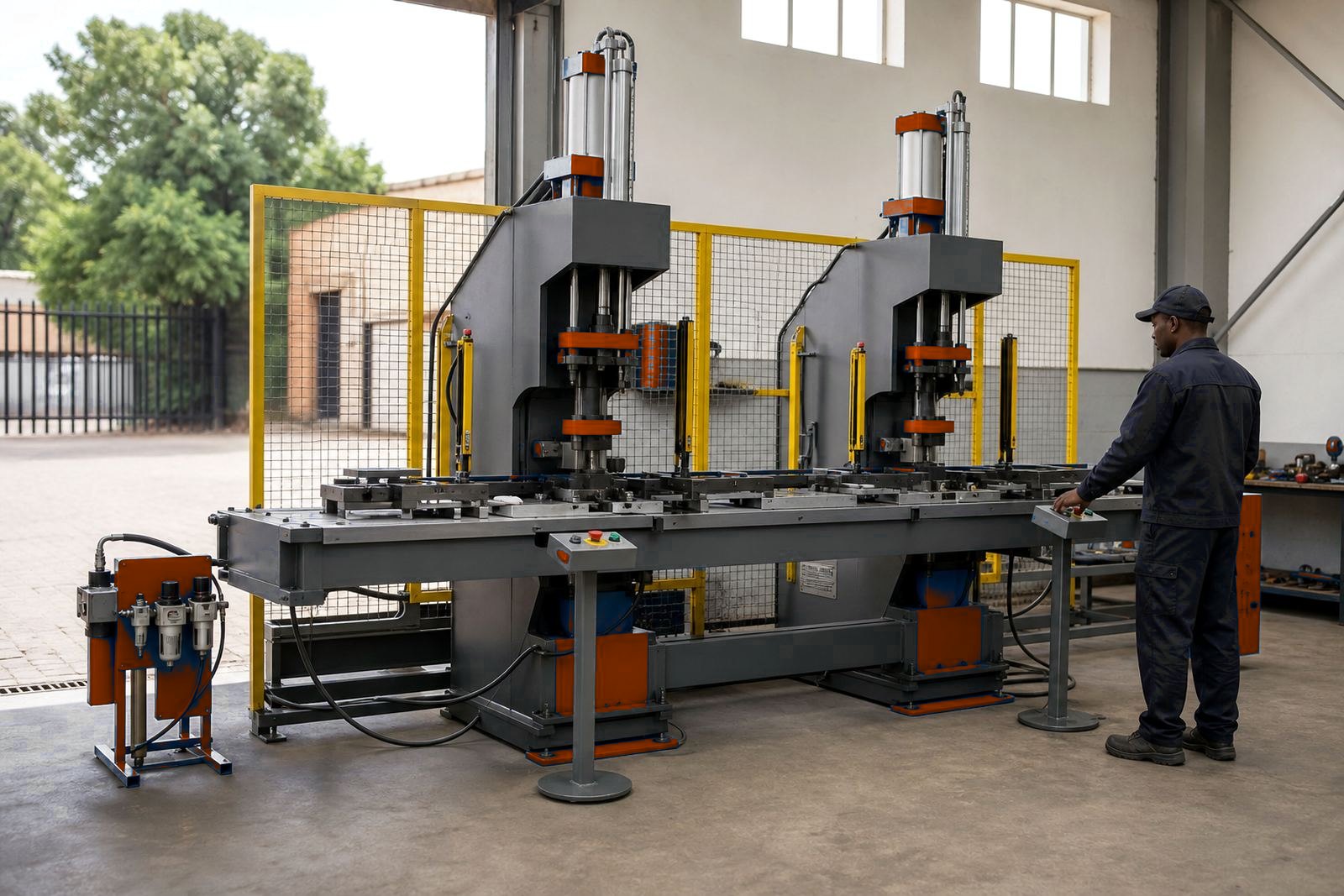
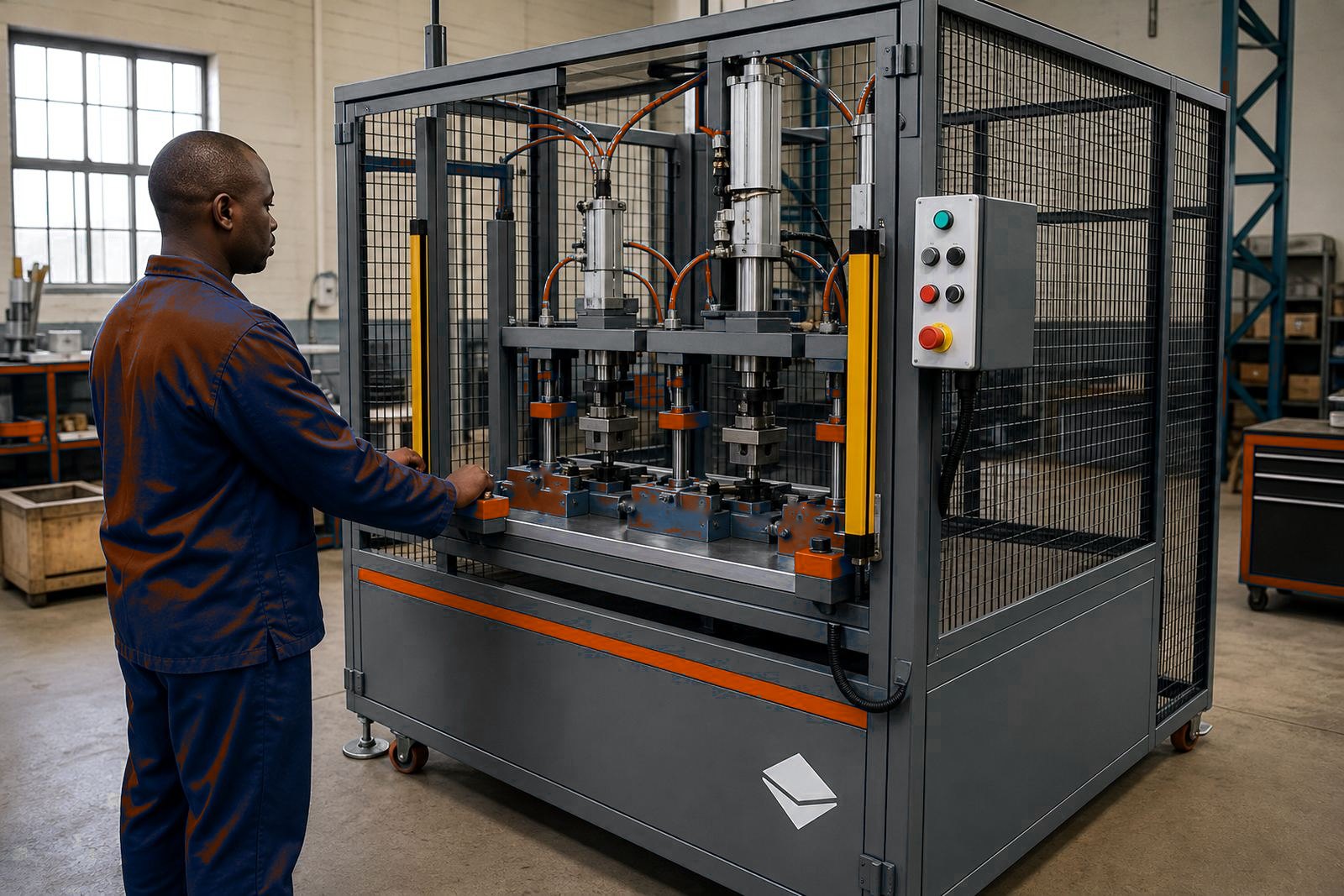
For South African factories, these cells are usually built for manual loading with controlled access. That can mean fixed guarding panels, a gated opening for part changeovers, two-hand controls at the operator side and a guarded discharge point for finished parts. Where the process calls for it, we also include light curtain protection around the entry side so the press cycle stops if a hand or part breaks the beam in the wrong place.
- Single-station or multi-station frame layout
- Custom tooling plates and locator pins
- Guard panels, access gates and sensor points
- Two-hand controls for repeat cycles
- Light curtain integration where the process needs it
Typical build sizes and working ranges
Our cells are set up around the part, not forced to fit it. A compact station may carry one cylinder and one tooling set, while a larger cell can carry several stations with separate tooling zones for assembly, staking or sealing steps. Stroke length is chosen to match the part stack height and the tool closure needed for the operation. Air pressure needs are set to suit the cylinders fitted, the force required and the duty cycle on the line.
Common build choices include short-stroke presses for fine assembly work, longer stroke units for deeper tooling reach, and multi-station frames where one part enters, another is clamped and a third is discharged. In many cases the cell will run with regulated air supply, stroke stops, flow control and a repeatable return cycle so the operator gets the same press action each time.
- Press force matched to the product and tooling load
- Single or multiple pneumatic cylinders
- Short, medium or extended stroke settings
- Fixed bed height or adjustable working level
- Air regulation and flow control for cycle consistency
Where a guarded cell suits the line
This type of press suits repeat work where the same part is handled through the shift and the operator needs a defined working zone. It is common on assembly benches, small component lines and finishing areas where crimping, riveting, staking or pack sealing happens close to the press face. The guarded cell also works well where production wants clear separation between the loading side and the moving tooling side.
Factories in Johannesburg, Pretoria, Durban, Gqeberha and East London often use these cells when the job has a fixed cycle and the part must be placed in the same position every time. The layout helps reduce stray hand movement, keeps the part aligned and gives maintenance teams a proper frame to work around during tool changes or checks.
- Assembly and sub-assembly stations
- Crimping and terminal forming work
- Riveting and staking operations
- Pack sealing and closure tasks
- Repeat parts with a fixed loading position
Guarding, controls and access points
The guarding on a cell has to match the way people load parts and clear finished pieces. For some lines that means full perimeter panels with one or two access doors. For others it means a guarded front opening, a light curtain across the load face and a safe discharge side for the completed part. We set the access points around the part path, the tool travel and the operator reach, so the cell stays practical while still controlled.
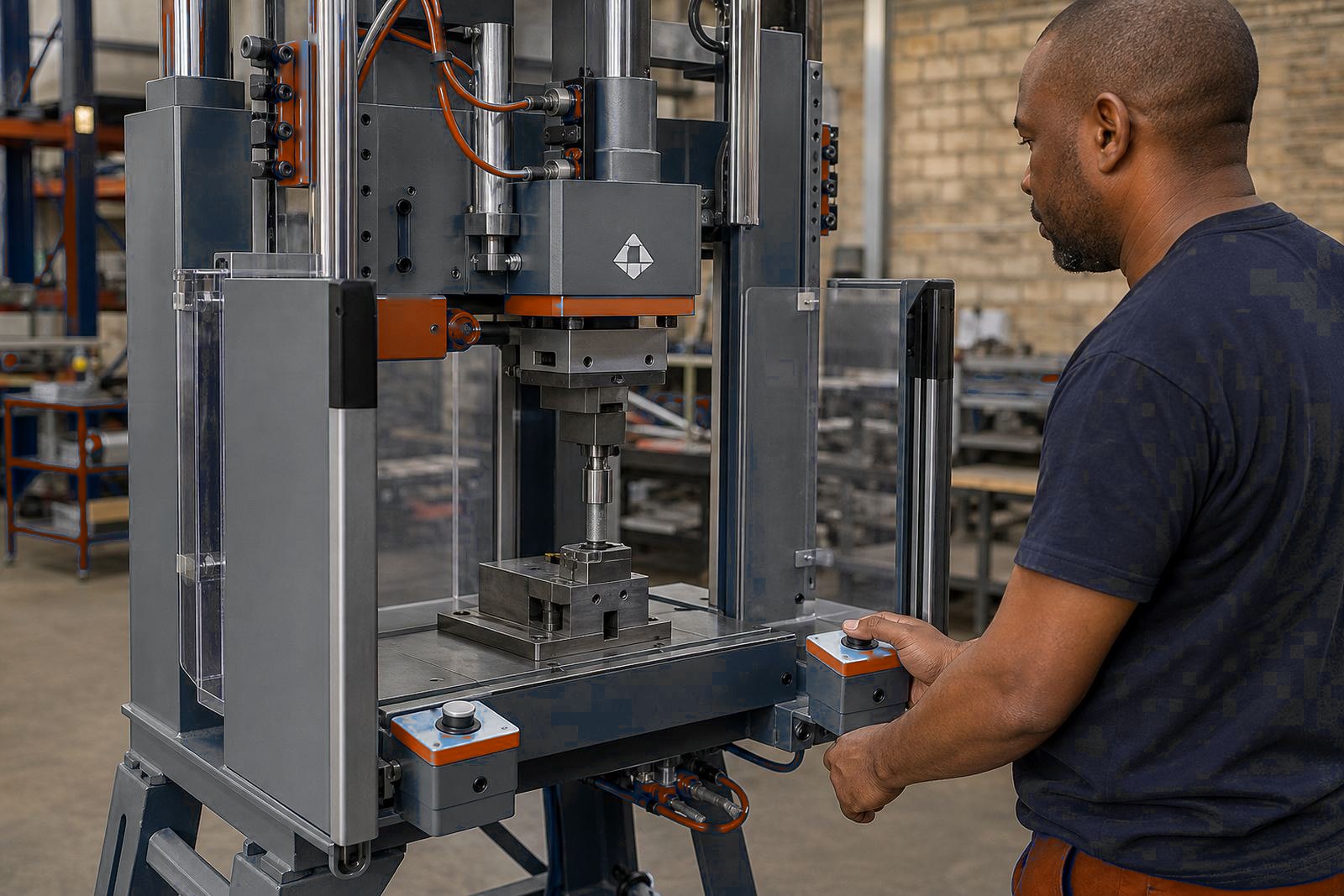
Two-hand controls are used where both hands must be away from the die area before the cycle starts. The control station is normally placed so the operator can load the part, clear the tooling area and trigger the stroke without stretching across the press. Where a line needs more control, we add emergency stops, limit switches, stroke set points and interlocks on gates or covers. That gives the workshop a clearer routine around the cell and helps the press behave the same way from shift to shift.
- Gate interlocks and fixed guarding panels
- Light curtains for controlled entry zones
- Two-hand start controls on repeat cycles
- Emergency stop positions at the operator side
- Interlocked covers for tooling access
Tooling, fixtures and air setup
A guarded cell only works properly when the tooling is set for the actual part geometry. The tool stack may include locating pins, nests, die plates, hold-downs, ejectors or guide elements that keep the part seated through the stroke. For crimping and riveting, the tooling must close cleanly and keep the joint centred. For pack sealing, the contact face and pressure path need to suit the pack material and seal width.
Air line setup carries the same weight as the frame itself. We check line pressure, regulator placement, cylinder sizing and hose routing so the press gets stable air delivery. Where needed, we also set stroke stops, speed controls and part clamps to keep the motion calm and repeatable. A busy line in Isando or Kempton Park often needs that extra attention because the cell has to fit into an existing production bay with clear service access and enough room for the guarding panels to open.
- Custom tooling for part location and closure
- Fixture design for repeat loading
- Air line routing and regulator positioning
- Stroke setting to match part height
- Tool change access for maintenance staff
Fitting, commissioning and operator handover
Installation starts with the floor position, anchor points and the air supply route. The cell needs enough space for panel opening, tool access and safe operator movement, plus room for maintenance access around the rear and sides. During commissioning we set the stroke, test the guarding, check the interlocks and verify that the controls work in the correct sequence. If the process includes more than one station, each station is checked on its own before the line is handed over.
Operator training covers loading position, safe hand placement, gate use, cleaning points and routine checks before a shift starts. That training matters on cells with two-hand controls and light curtains because the team must understand how the machine is meant to run, not only how to press the start buttons. We also show the team how to spot drift in stroke setting, loose tooling, air pressure changes and guard faults before they affect output.
- Site installation and anchoring
- Air line connection and pressure checks
- Guard and sensor testing during commissioning
- Tooling change guidance for supervisors
- Production handover with operator instruction
Details to confirm before the build starts
To set up a guarded cell press correctly, we need the part sample or drawing, the station count, the required cycle style and the space available on the floor. It helps to know the press force range, stroke length, load height, access side and whether the cell is for assembly, riveting, crimping, staking or pack sealing. The guarding arrangement also depends on how the operator loads the part and where the finished piece leaves the station.
It is also worth confirming the air supply at the point of use, the available service side and any site rules that affect guarding, walkways or machine placement. If the cell sits close to a production line or conveyor, we need that layout early so the doors, gates and discharge side line up with the rest of the bay. That gives the workshop a cleaner build and avoids changes later in the fit-out.
- Part drawing, sample or tooling sketch
- Station count and cycle method
- Required stroke and press force
- Floor space and access sides
- Air supply location and line pressure
Key facts
| Product type | Guarded cell pneumatic press |
|---|---|
| Press action | Single or multi-station pneumatic operation |
| Typical uses | Assembly, crimping, riveting, staking, pack sealing |
| Controls | Two-hand start, interlocks, emergency stop points |
| Protection options | Fixed guarding, light curtains, gated access |
| Fitment | Site installation, air line setup, commissioning and training |