A single press station built around one controlled stroke
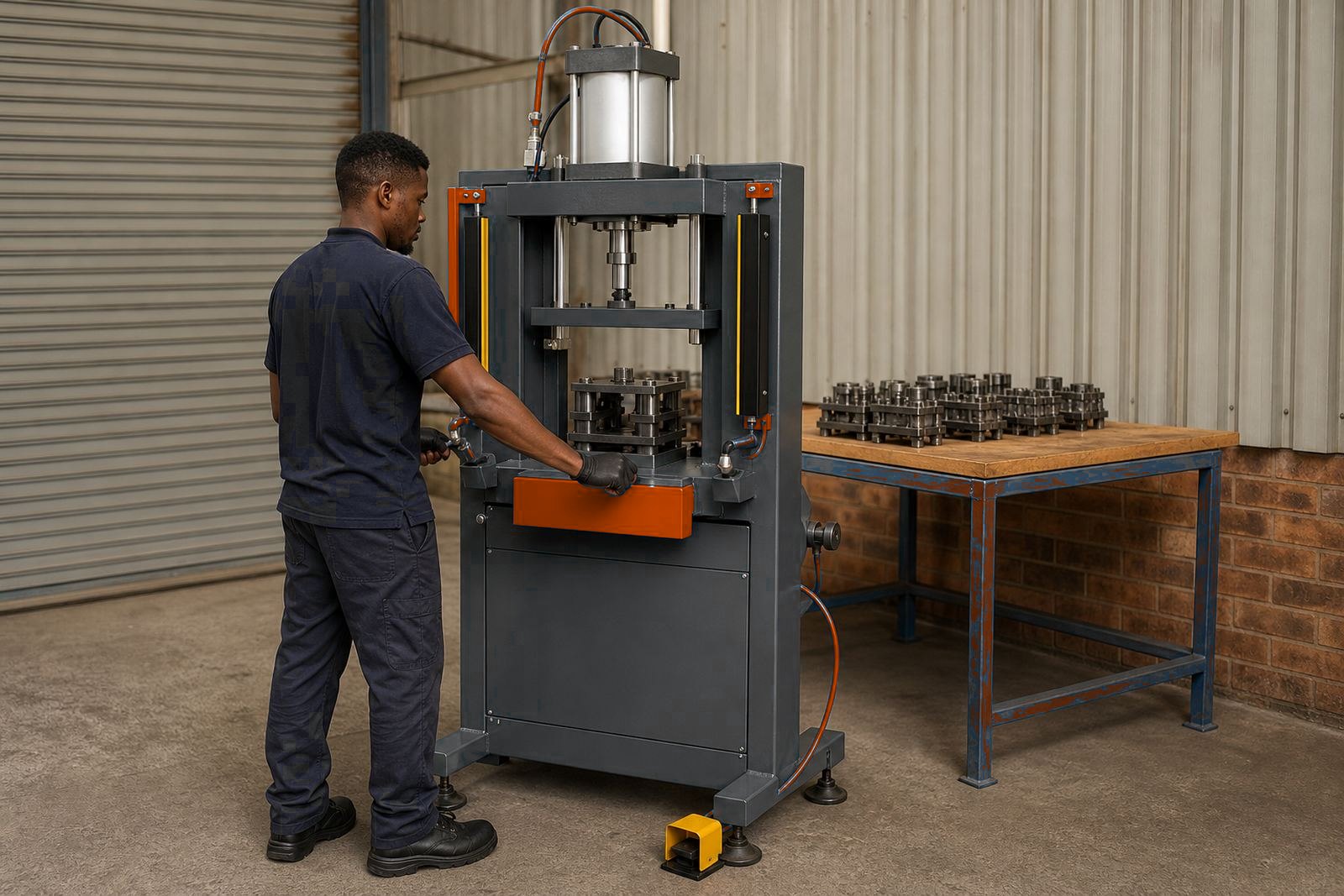
A single cylinder press uses one pneumatic cylinder to drive a vertical pressing action through a set stroke. It is a practical fit for straightforward jobs where one punch, die or forming tool must meet the part squarely, with the force coming down the centreline instead of across a multi-point head. In factory terms that makes setup easier, keeps tooling simple and gives the operator one clear working area.
These presses are used for tasks such as light assembly, terminal crimping, small riveting jobs, staking plastic or metal features, and pack sealing on prepared fixtures. The working force is set by air pressure and cylinder bore, while stroke length, cushion settings and tooling height shape how the press behaves on the job. For many lines, that balance is more useful than extra complexity.
- Single central cylinder for direct pressing action
- Typical air supply: 5 to 8 bar, depending on the job
- Stroke options commonly range from short formation travel to longer work travel
- Tooling can be fixed, quick-change or die-guided
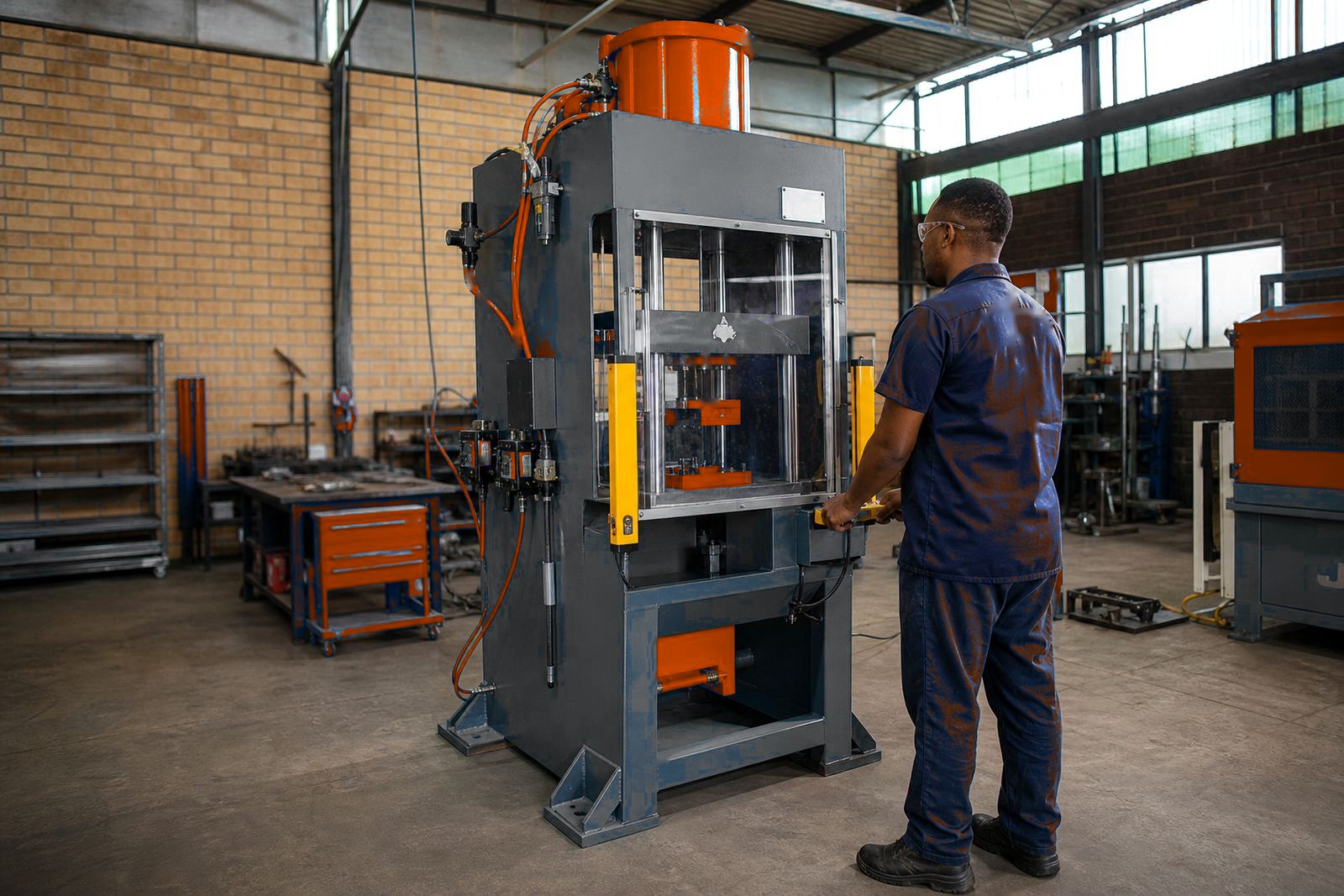
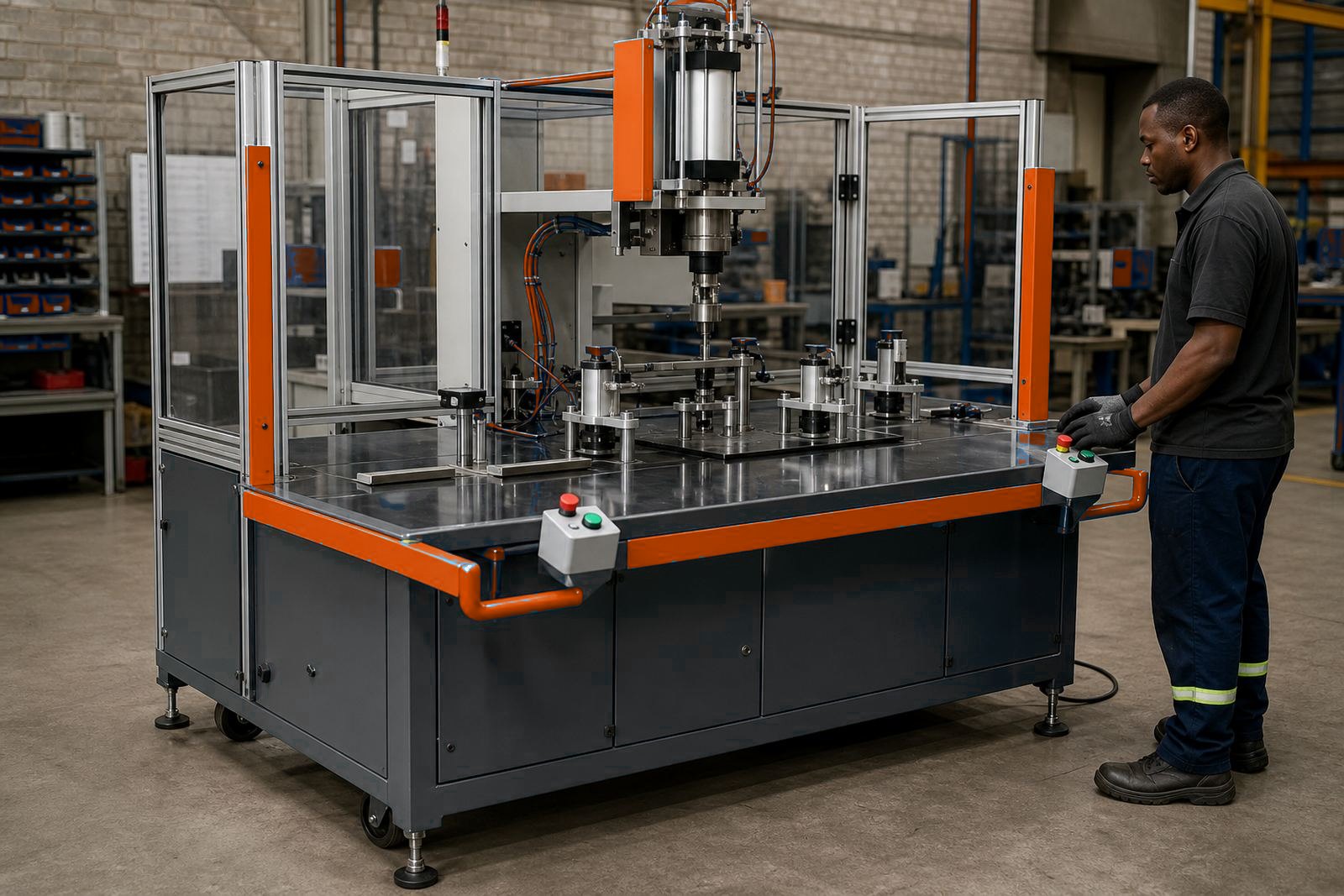
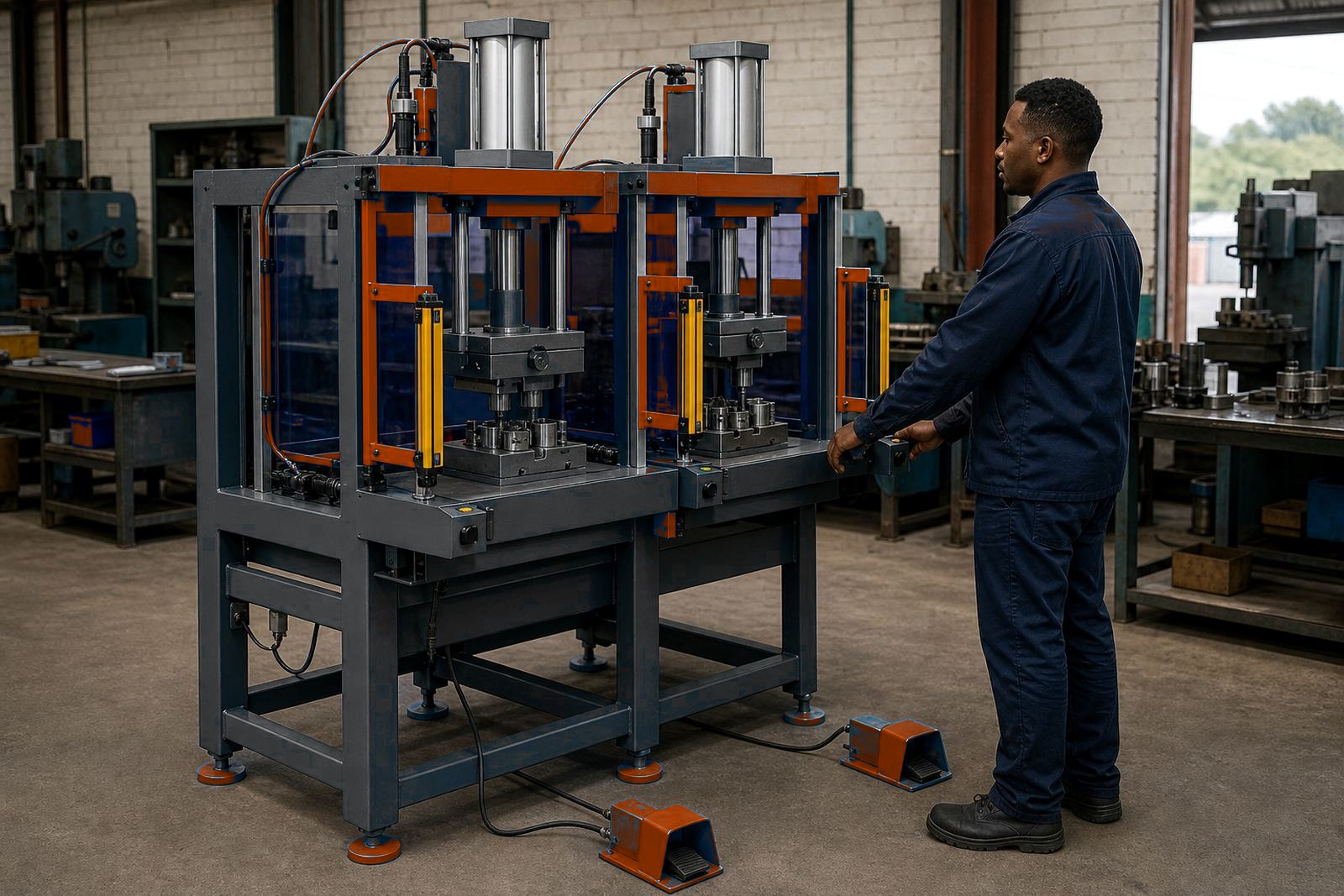
- Two-hand controls and light curtains can be added where the risk assessment calls for them
Where this press suits the job on the floor
A single cylinder press suits stations where the same action is repeated all shift and the part presentation stays consistent. It works well in assembly areas where one part must be pressed into another, where a terminal needs a neat crimp, or where a small bracket, bush or insert must be seated under controlled force. For pack sealing, the press can be matched to a heated or cold sealing tool where the process calls for firm, even closure.
Because the layout is simple, it is easier to place into an existing line. The frame footprint can be kept compact, which helps in tight production areas in Isando, Kempton Park and Boksburg where floor space is often shared between presses, benches and test stations. If the line shifts from manual loading to guarded operation, the same basic press can be fitted with enclosures, sensing and hand control logic that suit the task.
- Assembly cells with one pressing point
- Crimping stations for terminals, lugs or ferrules
- Riveting work where the fastener is centred and supported
- Staking of plastic bosses, pins or small metal features
- Pack sealing and closure work on prepared fixtures
Sizes, force ranges and build choices
Single cylinder presses are not one fixed size. The cylinder bore, rod size, frame depth and table opening all change how the press behaves. A smaller unit may suit delicate work with light force and short stroke, while a larger cylinder can handle heavier crimping, firmer staking or broader tooling loads. We also look at day-to-day use, because a press that feels fine in a test can be awkward when a shift runs with gloves, trays and constant part handling.
Build choices usually start with the frame style, then move to the press table, guide arrangement and tooling mount. Some customers want a compact benchtop format. Others need a floor frame with a deeper throat, adjustable table height and enough room for a safety guard and part feed path. Stroke setting matters too, because a small change in travel can affect crimp depth, seal closure or finished height.
- Benchtop or floor-standing frame options
- Adjustable stroke setting for different part heights
- Tooling plates drilled to suit the die or fixture pattern
- Guide posts or alignment features where accuracy matters
- Manual, semi-automatic or guarded operation layouts
Controls, guarding and safe loading points
Most single cylinder presses need more than a cylinder and a frame. The control package shapes how safely and consistently the machine runs. Two-hand controls are common where both hands must leave the work zone before the stroke begins. Light curtains suit stations with open access and regular part loading, provided the line design supports that arrangement. Guarding can also include fixed covers, interlocked doors or formed side screens, depending on the station layout and the risk profile.
We plan the controls around the real loading movement, not around a neat drawing. If the operator places a part from the front, the guarding must leave enough space to load without leaning into the die area. If the feed comes from the side, the hand path and ejection path need clear separation. On press lines in Johannesburg, Pretoria and Durban, that usually means the final layout has to fit both safety and production rhythm, not only one of them.
- Two-hand control for cycle start protection
- Light curtain integration where open access is needed
- Guarding builds matched to the tool and loading method
- Emergency stop placement near the operator position
- Air line setup with clean, stable supply to the valve set
Tooling, installation and commissioning details
The press only performs properly when the tooling matches the job. A crimp tool needs controlled closing and clear part location, while a riveting tool needs enough support to form the fastener without wandering. Staking tools usually need accurate depth control and a clean top surface, and pack sealing fixtures need repeatable alignment so every cycle closes to the same point. That is why tooling design, fixture design and stroke setting are part of the same conversation.
Installation also matters. The base must sit level, the air supply must be clean and dry, and the cylinder movement must be checked under load before production starts. During commissioning we set stroke, adjust pressure, confirm guard functions and check that the part lands in the same position every time. If the station sits inside a larger line, we also look at handover points, operator sequence and any related tooling changes that affect the cycle.
- Site installation for new or relocated presses
- Air line setup and valve connection
- Stroke setting and pressure adjustment at the machine
- Press commissioning with tooling trial runs
- Production handover after operator checks are complete
Care, wear points and what to specify when ordering
A single cylinder press stays consistent when the air system is clean, the guides are checked and the tooling face is kept free of burrs, swarf and oil build-up. In humid coastal conditions, especially toward Durban and the Eastern Cape, moisture in the air line can affect valves and tooling surfaces, so water traps and routine drain checks are worth keeping in place. A loose fixture, worn seal or drifting pressure setting can show up first as uneven crimp depth or a change in finished height.
When ordering, it helps to confirm the part size, the action needed and the space available on the line. The more precise the brief, the better the tooling and control package can match the work. If the job involves repeat sealing, metal forming or mixed parts on one station, the press should be specified around the hardest case, not the easiest sample.
- Part drawing or sample dimensions
- Required force range and target stroke
- Tooling style, fixture method and part orientation
- Guarding preference, including two-hand control or light curtain use
- Available air supply pressure and line connection point
- Floor space, working height and loading direction
Key facts
| Press type | Single-cylinder pneumatic press for one central pressing action |
|---|---|
| Air supply | 5 to 8 bar typical working range, subject to application |
| Stroke | Set to suit the part height, tooling depth and cycle travel |
| Control options | Two-hand controls, light curtains, guarded enclosures |
| Tooling | Custom fixture and die interface for crimping, riveting, staking or sealing |
| Installation | Workshop or site commissioning with air line setup and production handover |