One line, several forming steps
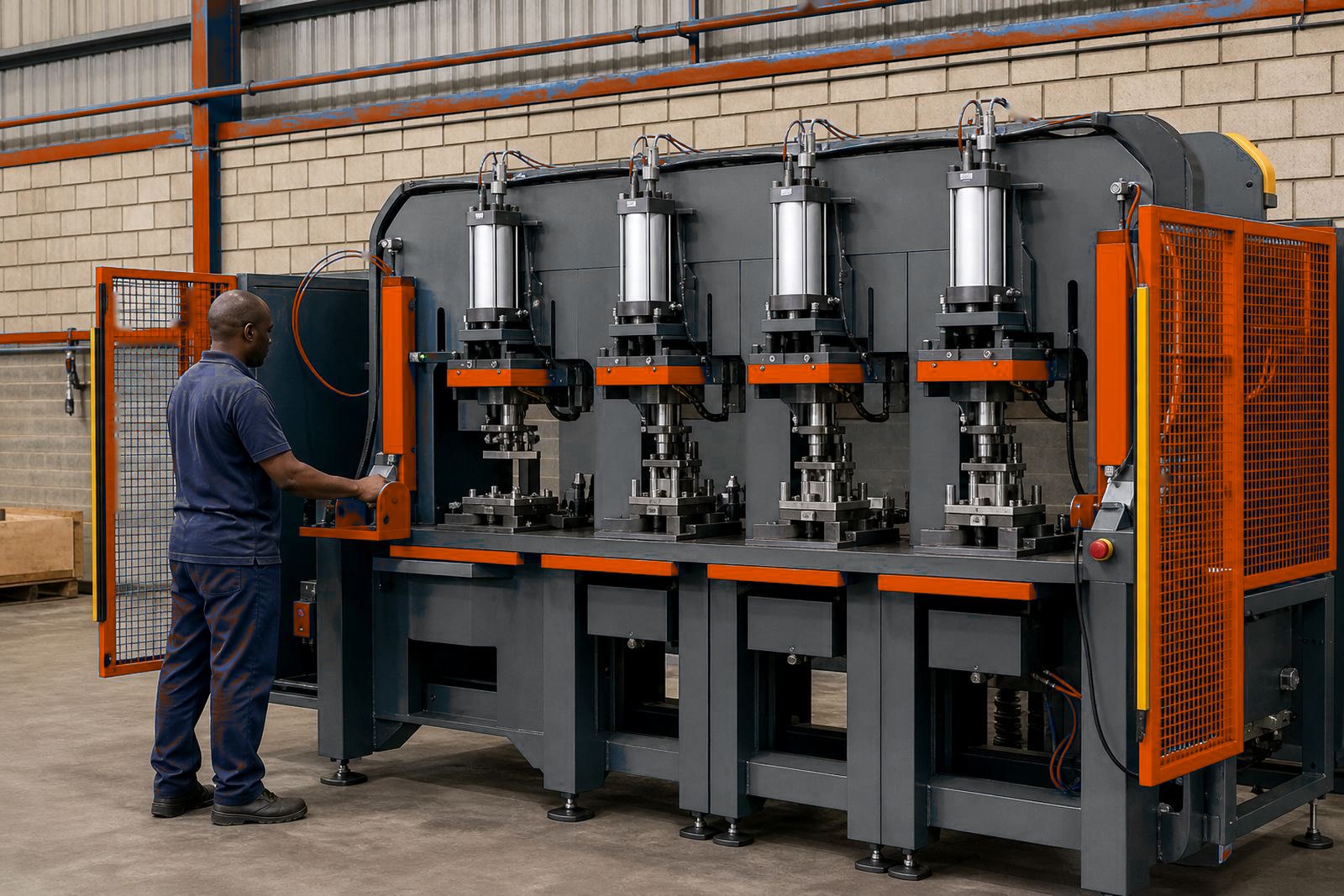
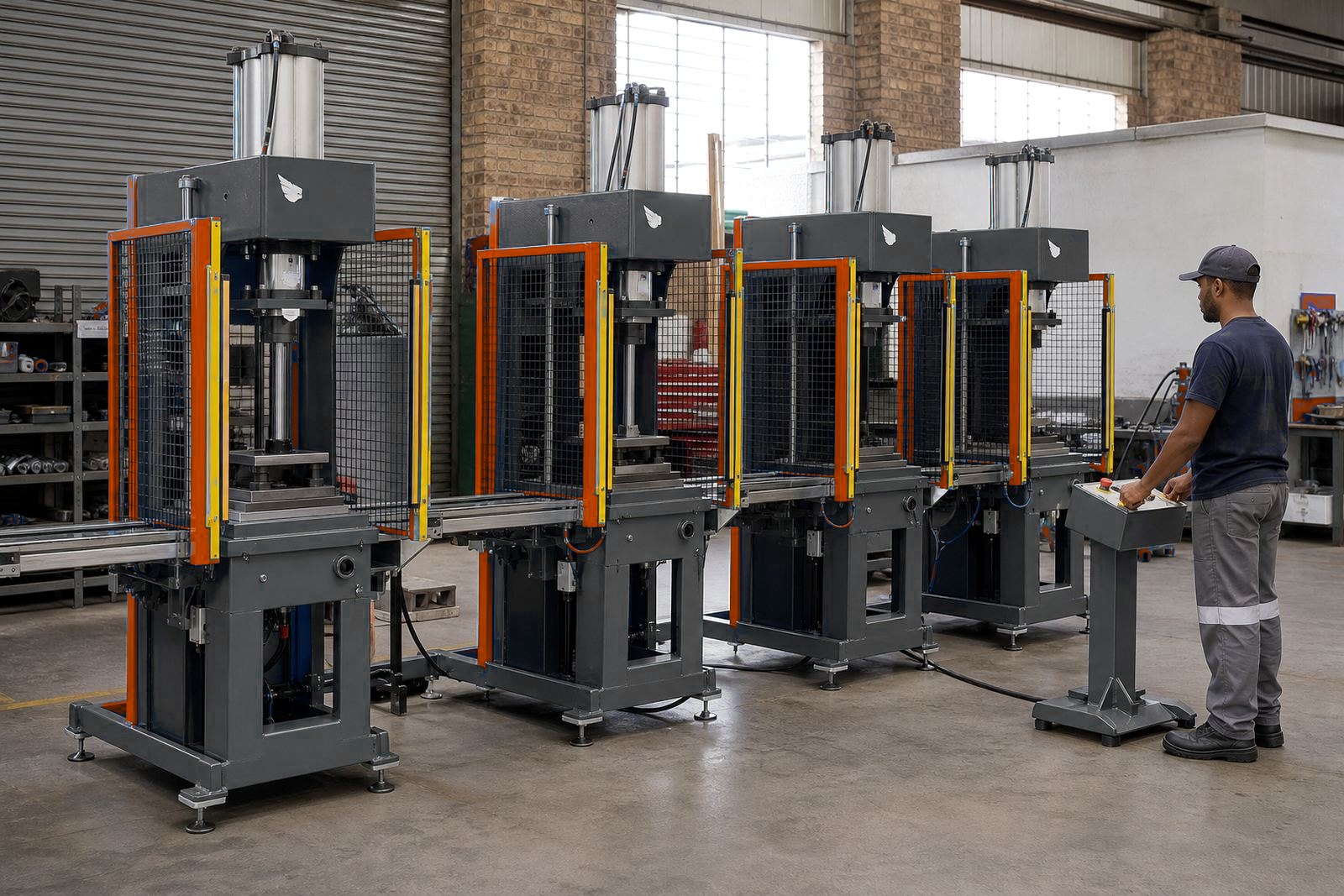
An inline assembly press uses a row of stations rather than a single fixed position. A part enters the line, stops at each station in order, then moves forward after the press action is complete. That layout suits production where crimping, riveting, staking or pack sealing must happen in a set sequence with the same part orientation each time.
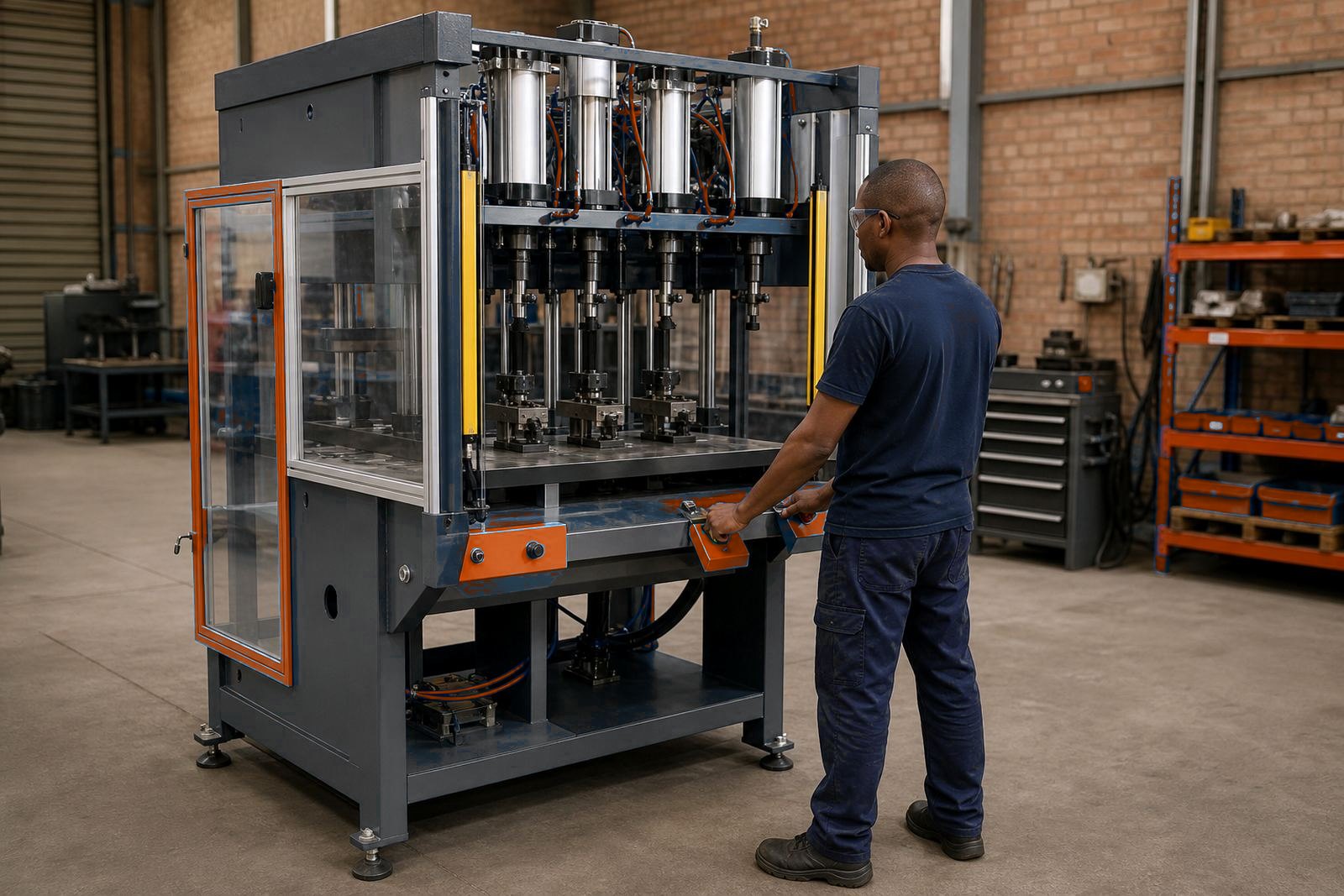
The press frame is built around pneumatic cylinders, guided tooling and a controlled stroke. Air pressure drives the motion, while the tooling sets the actual work face and final form. In many lines the operator loads at one end, the finished component exits at the other end, and the in between steps are handled by the line layout. That arrangement helps keep handling consistent where parts are delicate, slightly curved or need repeated alignment.
Multi-station work is useful where a single part needs more than one action, such as locating, pressing, joining and checking in a fixed order. For pack sealing lines, the same arrangement can hold the pack, close the seal area and complete the forming stroke without the pack shifting between steps.
Station layouts and working sizes
There is no single standard size for an inline assembly press. Some lines need two stations for a simple locate-and-press task, while others need three, four or more stations when the job includes pre-forming, final crimping and discharge. Table length, press height and transfer space all depend on the part shape and the operator position at each point.
Stroke length, cylinder bore and air pressure are set to suit the material and the force required. A light-duty assembly line may use a shorter stroke and lower force for small fittings, while a heavier line needs more travel and a firmer press face. Tool access also matters, because the die or nest must allow clean entry and release without marking the component.
Options can include adjustable stops, interchangeable tool blocks, sensing for position confirmation and a fixed or mobile base. Where the work is repetitive, the station pitch can be set to match the operator rhythm and the conveyor or transfer method used on site.
- Typical configurations range from 2 to 6 stations.
- Stroke is set to the job, not by guesswork.
- Tooling can be changed for different part families.
- Station spacing can be matched to the line layout.
Where this press fits on the factory floor
Inline assembly presses suit factories where parts already move through a defined process route. They are common in assembly cells, light fabrication areas, packaging rooms and component lines where a fixed order matters more than a single heavy hit. If the product must be guided through crimping, riveting or sealing in the same direction every time, the inline format keeps that path clear.
In Johannesburg, Pretoria, Durban, Gqeberha and East London, these presses are often used where space is tight and handling needs to stay controlled. The line can be positioned to work beside a bench, next to a transfer conveyor or in a fenced area with defined loading points. Coastal humidity can matter on tool finish and air line upkeep, especially where a line runs on a daily shift pattern near the coast.
The format also suits factories that want to reduce mix-ups between parts. One station can locate the component, the next can form it and the last can complete the seal or joint. That sequence makes the flow easier to read for operators and supervisors alike.
Safety, guarding and control details
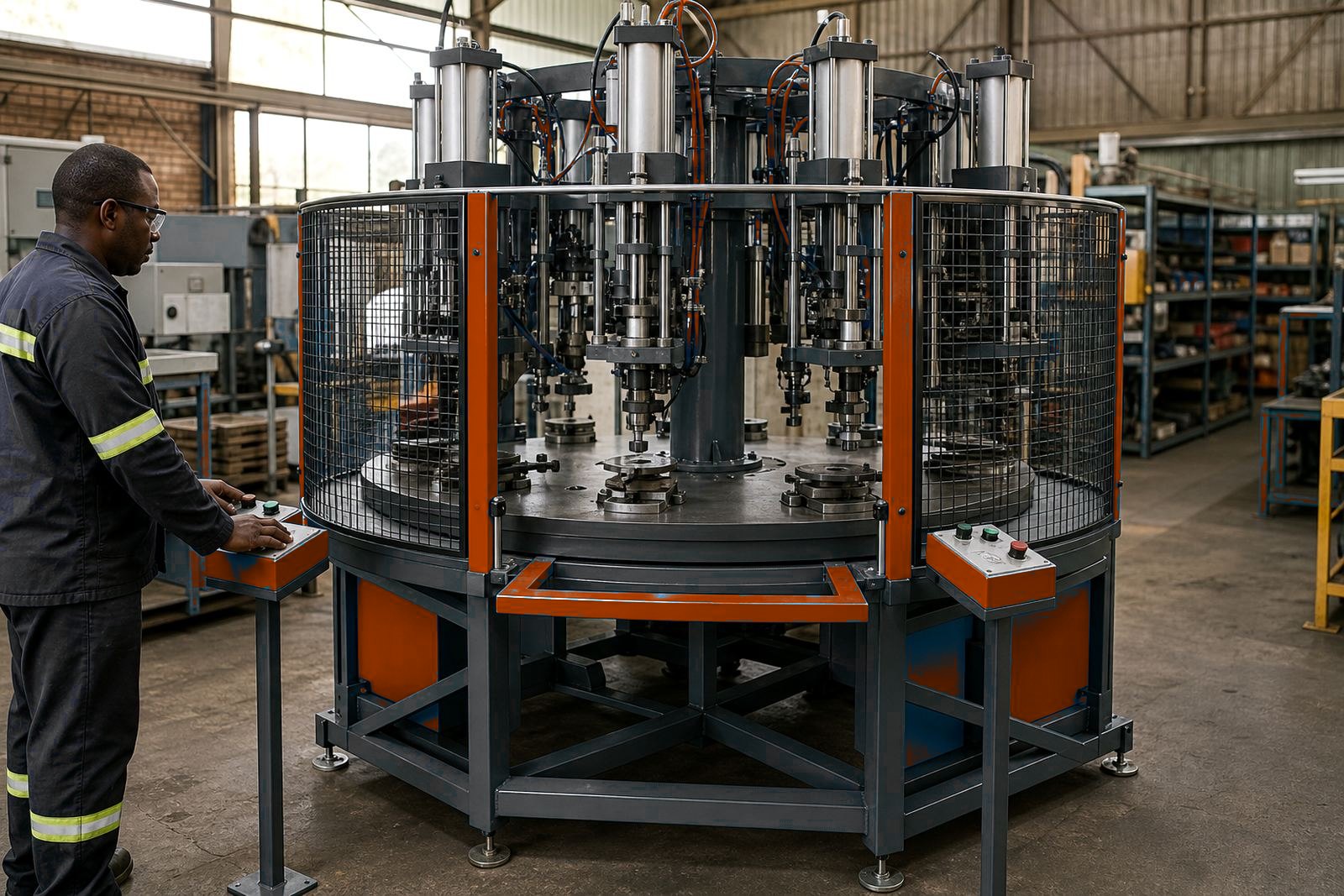
Safety devices are built into the press from the start. A two-hand control keeps the operator clear of the tool zone during the press stroke, while light curtains can protect open access points where the line is loaded or cleared by hand. Guards, side covers and fixed barriers are used where the cycle and the part geometry allow it.
Control layout should fit the way the team works. Some installations need a simple manual cycle, others need interlocks, stop buttons and position sensing so the station only fires when the part is seated correctly. Where a job uses several stations, the controls need to be easy to read without crowding the operator area.
- Two-hand controls for protected cycle initiation.
- Light curtains where open access is required.
- Fixed guarding around pinch and crush points.
- Clear stop points and visible operating indicators.
Guarding and control choices must also match the rules of the factory floor and the line layout. If a station is changed later for a different tool or a wider part, the guarding should still protect the operator while leaving enough room for safe loading and removal.
Installation, air supply and commissioning
An inline assembly press needs proper air supply, level mounting and enough space for tool change and maintenance access. The air line should be sized for the cylinder demand and the cycle rate, with clean dry air and sound fittings throughout the run. If the line is built for a busy production area, the supply should stay steady across repeated cycles and not drop off when other equipment starts up nearby.
Fitting the press on site includes setting the frame, aligning the stations, checking the stroke and confirming the tooling position. After that comes commissioning, where the cycle is tested with actual parts, the pressure is adjusted and the controls are checked under working conditions. If the job uses pack sealing or a part that is sensitive to marking, the final setting needs to be checked carefully against the material and the seal line.
MultiPress handles commissioning, operator training and production handover for sites in Isando, Kempton Park, Boksburg, Johannesburg, Pretoria, Durban, Gqeberha and East London. That work can include site installation, air line setup, stroke setting and tooling changes when the line is moved into service.
Care, wear points and ordering checks
Routine care keeps the press predictable. Cylinders, seals, guide bushes and hose fittings should be checked for wear, air leaks or drift in the stroke. Tool faces need cleaning so crimping and riveting stay neat, while sealing tools should be kept free of dust and scraps that can spoil the finish. In humid coastal conditions, exposed metal parts and tooling surfaces need regular attention to prevent surface wear from building up unnoticed.
When ordering, the useful details are the part drawing, the material type, the cycle sequence, the required force and the available floor space. It also helps to know the loading method, whether the line is manual or transfer-fed, and whether the press must include light curtains, two-hand controls or a guarded enclosure. If the job involves several stations, each station’s task should be written clearly so the tooling can be set in the right order.
- Part size, weight and material type.
- Station count and task sequence.
- Required stroke and approximate force.
- Loading direction, floor space and operator position.
Key facts
| Type | Inline multi-station pneumatic press |
|---|---|
| Stations | 2 to 6 stations, depending on the sequence |
| Actuation | Pneumatic cylinders with set stroke control |
| Safety | Two-hand controls, light curtains and guarding options |
| Applications | Assembly, crimping, riveting, staking and pack sealing |
| Service area | Isando, Gauteng and sites across South Africa |