Guarded entry where the work actually happens
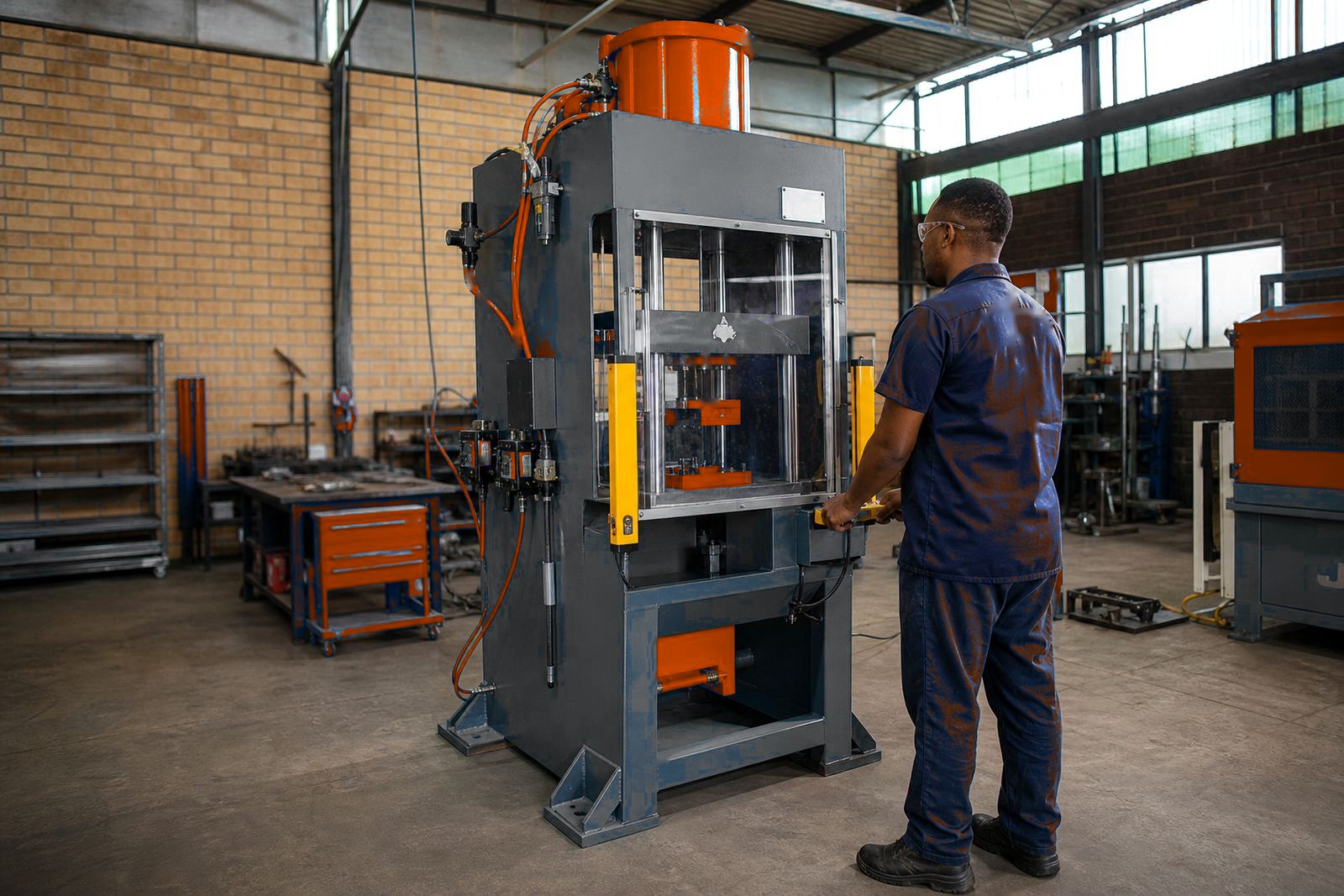
A light curtain press is built around a pneumatic press station with protected entry to the tooling area. The operator presents the part, the curtains monitor the opening, and the cycle only runs when the guard field is clear and the control sequence is correct. That suits jobs where hands need to enter close to the die or fixture, but the station still has to stay controlled.
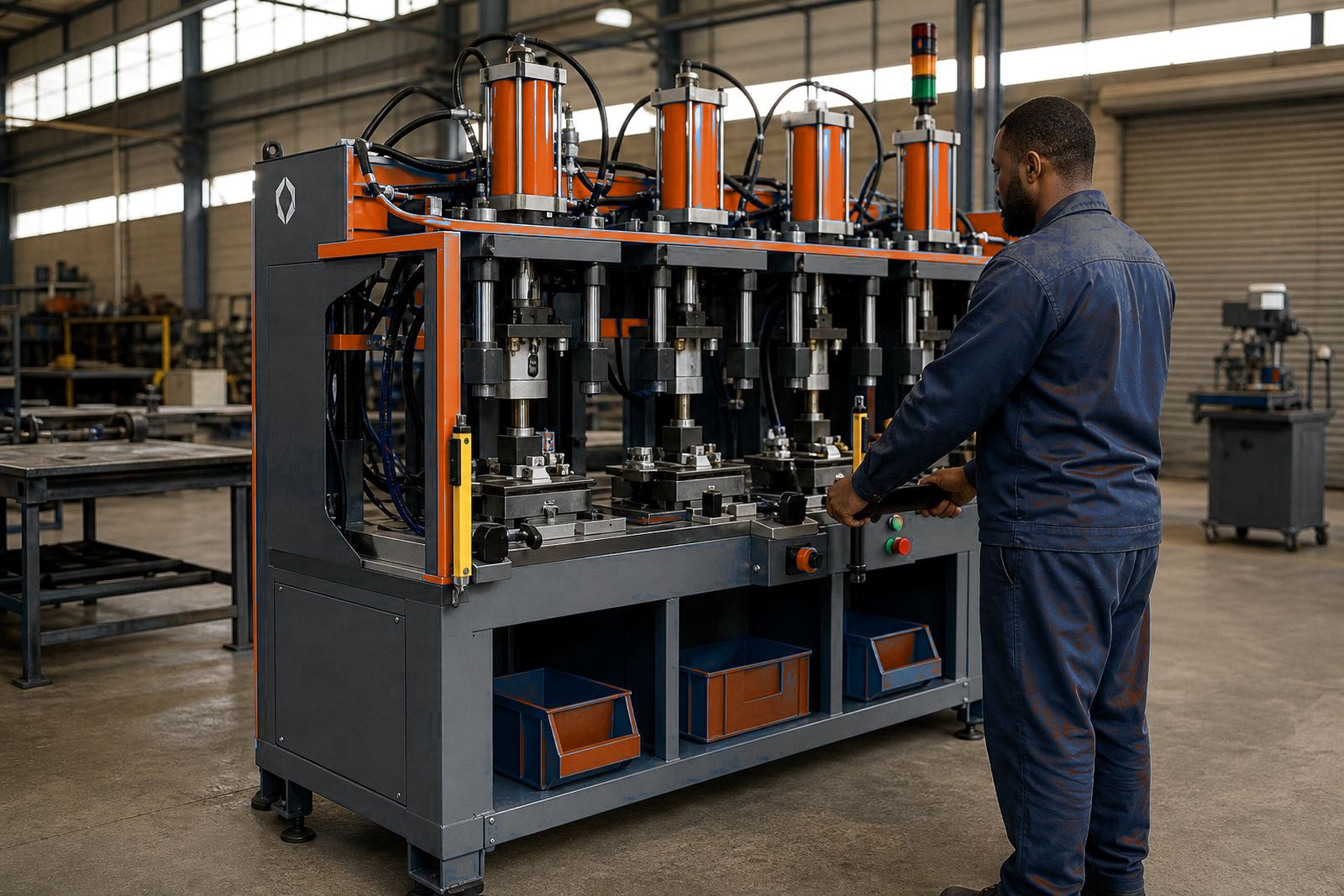
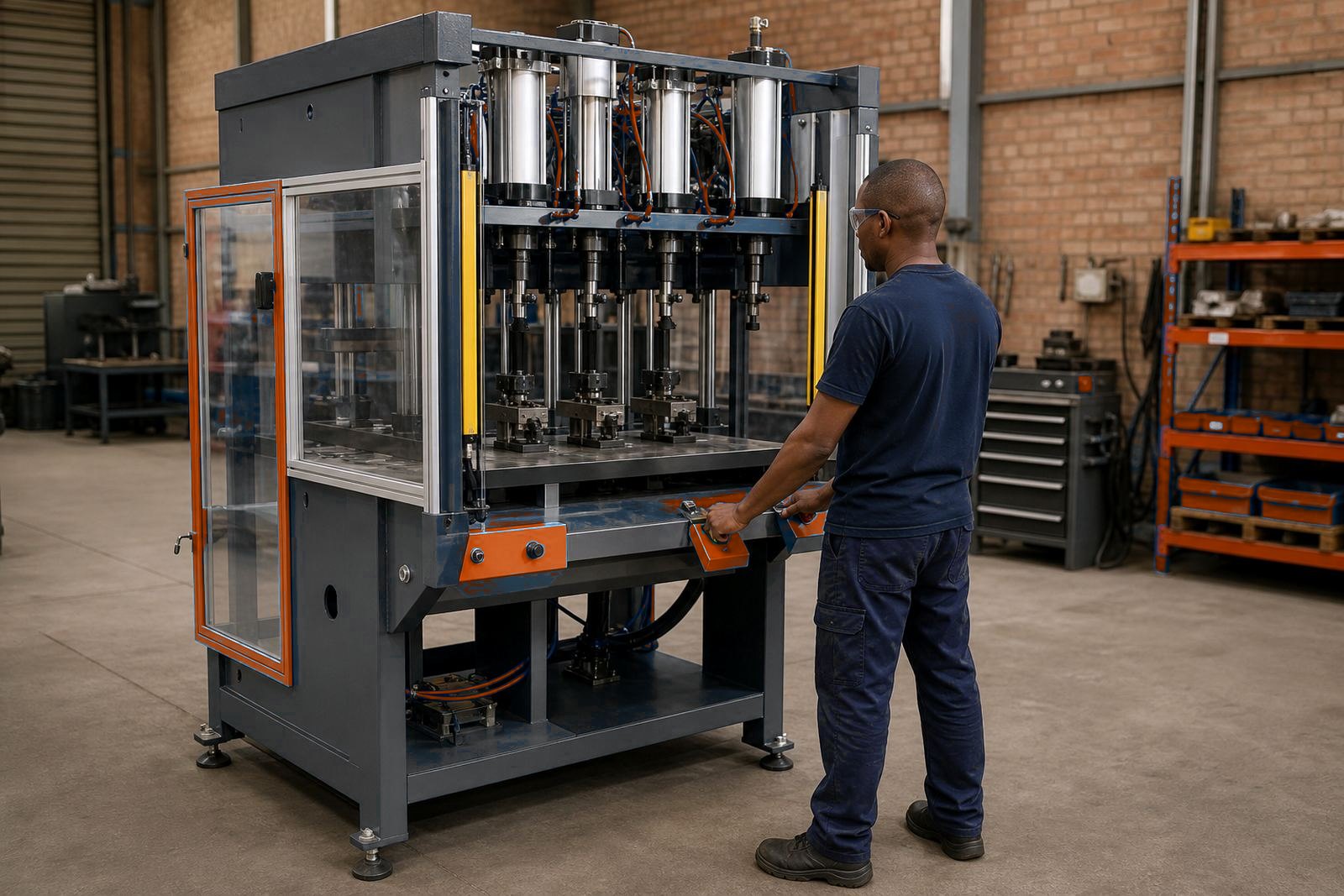
MultiPress layouts usually combine a steel frame, pneumatic cylinders, stroke setting, tooling plates and an operator control station. Air pressure is matched to the pressing force required, then the stroke is set to suit the part depth and the tool travel. On short cycle work, that setup keeps the press repeatable without overtravel or wasted motion.
Station sizes, cylinder choice and tool travel
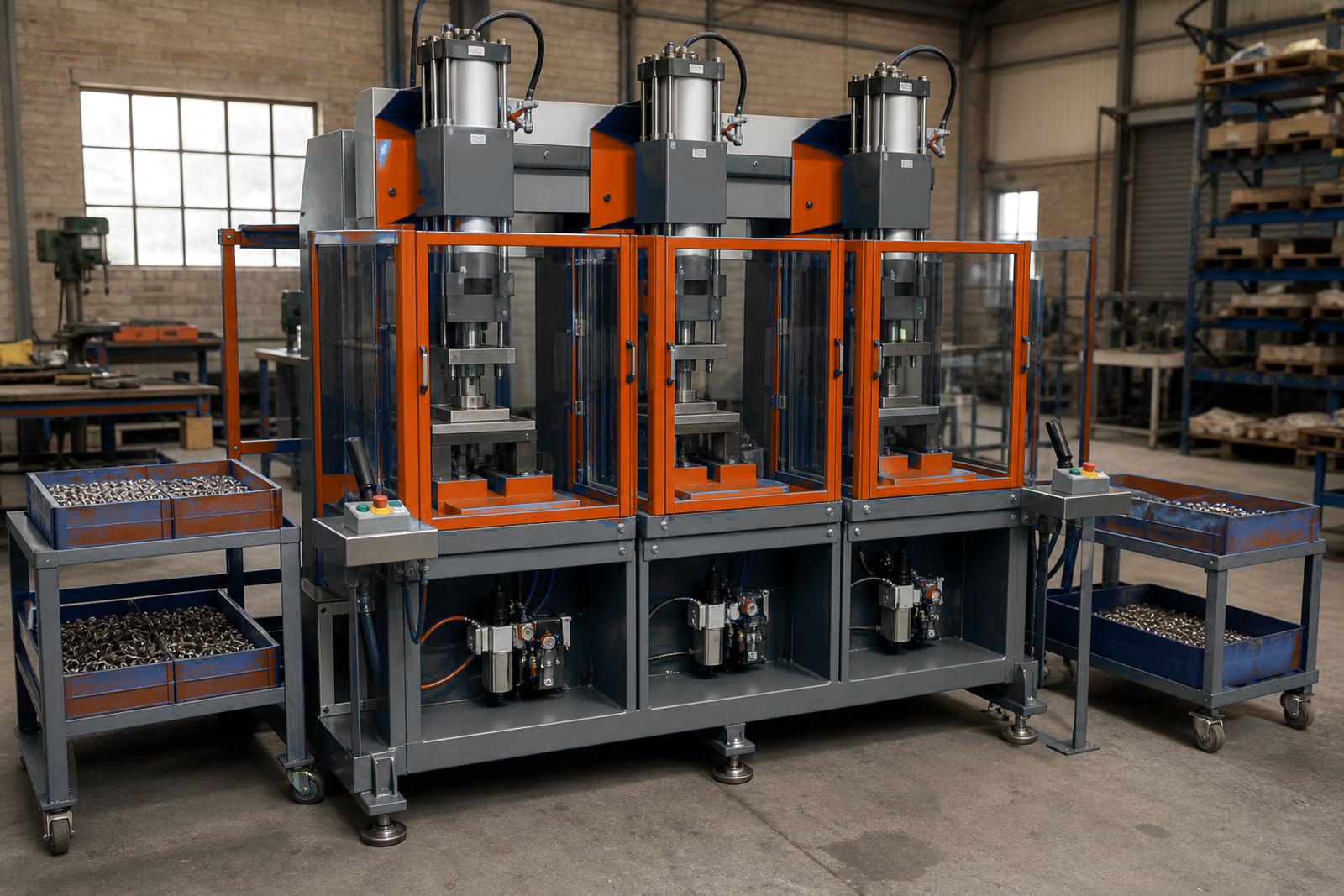
These presses can be built as a single station unit or as a multi-station line for one operator, one part flow, or a small cell with linked functions. A compact press may suit light assembly or pack sealing checks, while heavier stations suit crimping, riveting and staking where the tool needs a firmer closing force.
- Single or multi-station frames for one-step or staged work
- One or more pneumatic cylinders, depending on force and balance needed
- Stroke ranges set to match part height, tool depth and clearance
- Two-hand controls for cycle start, with light curtains at the access zone
- Custom nest, locator and fixture design for repeatable part position
Tooling height matters as much as cylinder size. If the punch, crimp die or rivet set sits too high, the press loses useful travel. If it sits too low, the operator ends up chasing alignment instead of running parts. That is why the frame, tooling and stroke setting have to be matched as one job.
Where this press fits into a plant
Light curtain protection is a good fit where the operator must load a small component, position a sub-assembly or remove a finished part close to the press face. It works well on assembly lines, terminal crimping, rivet insertion, staking of plastic or metal parts, and seal setting on packs that need a firm, controlled press cycle.
In factories around Johannesburg, Pretoria, Durban, Gqeberha and East London, these stations often sit near conveyors, benches or small transfer lines. The press can be used as a stand-alone unit or tied into a larger production flow, with guarding built to suit the available floor space and the movement around the cell.
- Assembly of small metal or plastic components
- Crimping of terminals, lugs and formed ends
- Riveting on brackets, hinges and light assemblies
- Staking and forming where a neat set-down is required
- Pack sealing and closure work with controlled press travel
Fitting the press into an existing line
Installation starts with the footprint, the air supply, the guarding arrangement and the route for the operator to feed parts safely. Pneumatic presses need a clean air line with the right pressure and enough volume for the cylinder size and cycle rate. Where the line already has compressed air, the connection still has to be checked for pressure drop, moisture and steady flow.
Our team handles site installation, air line setup, stroke setting and press commissioning, then tests the cycle with the real tooling and part geometry. Light curtain placement has to suit the hand entry point and the working height. If the sensor field sits too far back or too low, operators end up fighting the station instead of using it naturally.
For plants in Isando, Kempton Park and Boksburg, space around the machine matters too. There has to be room for loading, maintenance access and safe part removal, plus a proper path for the finished work to move onwards.
Care, checks and daily use
A light curtain press stays reliable when the tooling face, guide surfaces and safety devices are kept clean and aligned. Dust, oil mist and metal fines can interfere with the sensors or build up on the die area. In humid coastal towns, light surface corrosion can also show up on exposed steel if the station is left unattended for too long.
- Wipe down the curtain faces and guard posts regularly
- Check air pressure and filter condition before long runs
- Inspect the tooling for wear, burrs and loose fixings
- Test the two-hand control sequence and safety interlock checks
- Look at stroke setting after tooling changes or part adjustments
If the press is used for crimping or riveting, tool wear shows up first in the finished part. If the set-down is uneven, the closure line shifts or the rivet head forms badly, the tooling needs attention before the line builds up rejects.
Ordering details that save a second round of setup
When you ask for a light curtain press, the useful details are the part size, material, target press force, stroke length and the sequence of operations. It also helps to note whether the station is for assembly, crimping, riveting, staking or pack sealing, because each job puts different demands on the frame and tooling.
Give the opening size of the work area, the height of the tool, the air supply available on site and whether the press will be free standing or placed into a line. If there are guarding limits, local floor constraints or a fixed operator position, those matter too. Our contact form can carry the job details, drawings and photos needed for a proper setup brief.
- Part dimensions and product weight
- Required force or closing pressure
- Stroke length and shut height
- Tooling type and fixture position
- Guarding space, air supply and operator access
For plants with mixed production, a press can be set up with tooling changes so one frame handles more than one part family. The key is matching the frame, controls and safety layout to the job rather than forcing a fixed setup onto the line.
Key facts
| Product type | Multi-station pneumatic press with light curtain access control |
|---|---|
| Typical functions | Assembly, crimping, riveting, staking and pack sealing |
| Control options | Two-hand controls, light curtains and guarded operator entry |
| Press variables | Air pressure, stroke length, shut height and cylinder size |
| Installation scope | Site installation, air line setup, stroke setting and commissioning |
| Service areas | Isando, Johannesburg, Pretoria, Durban, Gqeberha and East London |