A press frame that fits tight line layouts
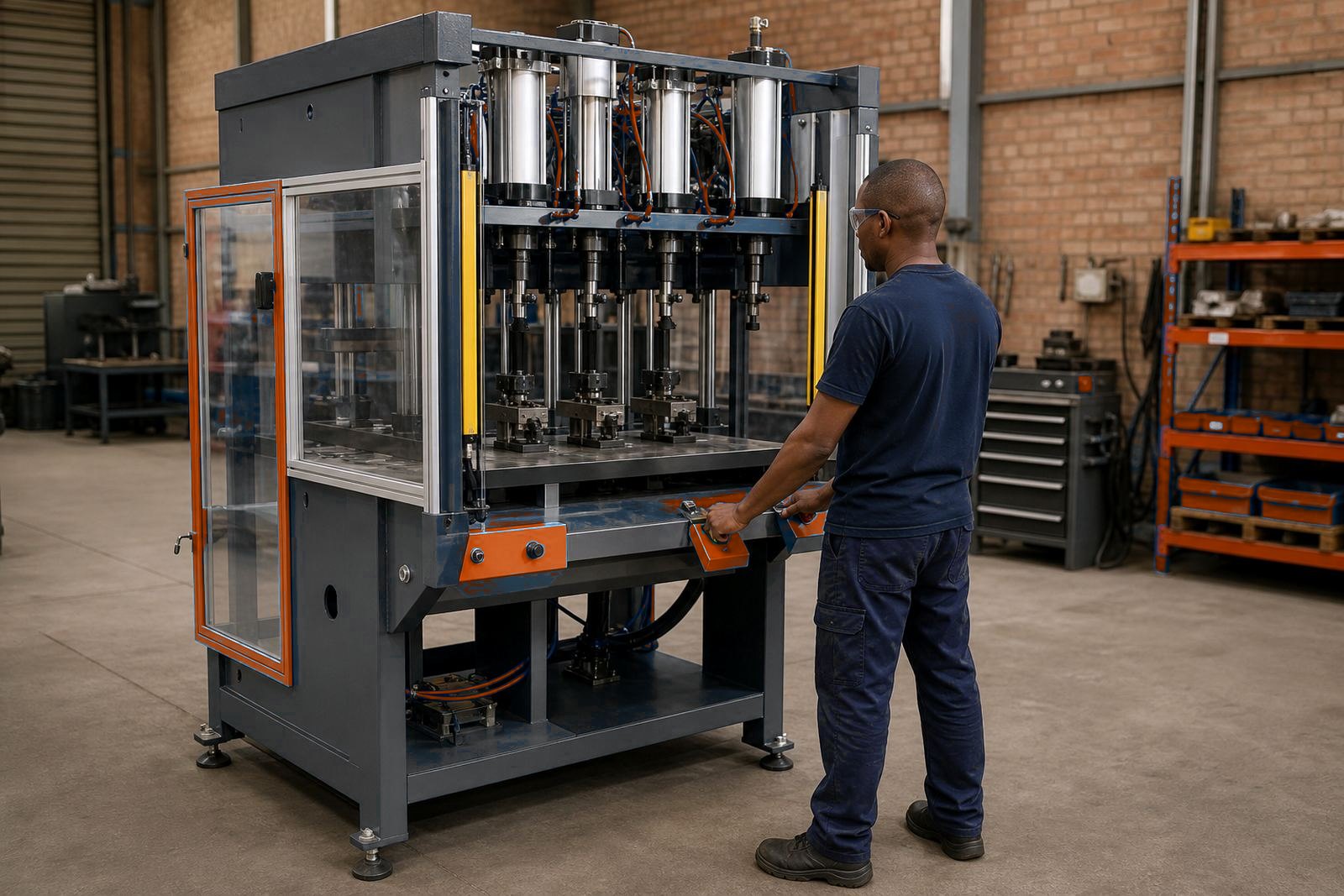
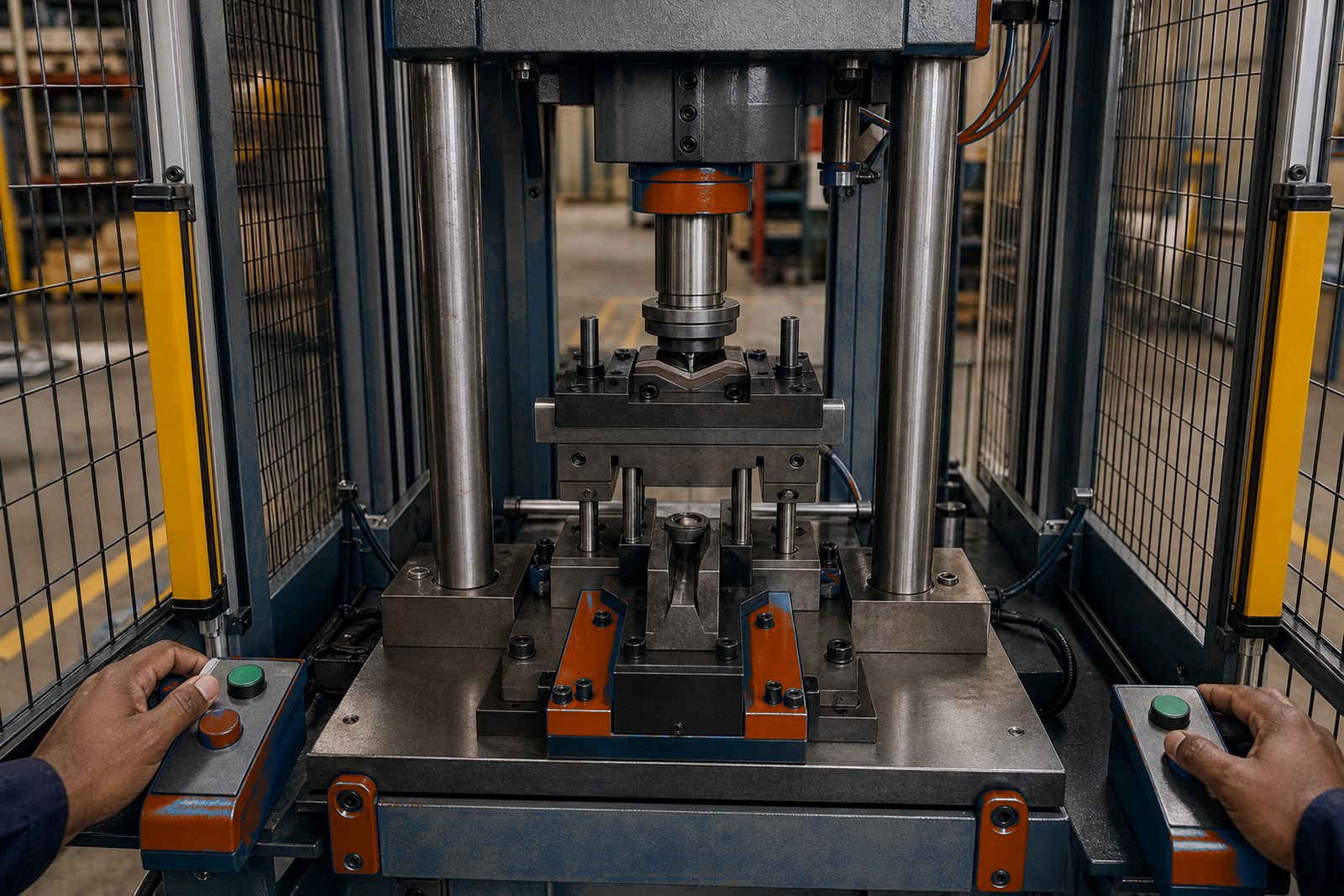
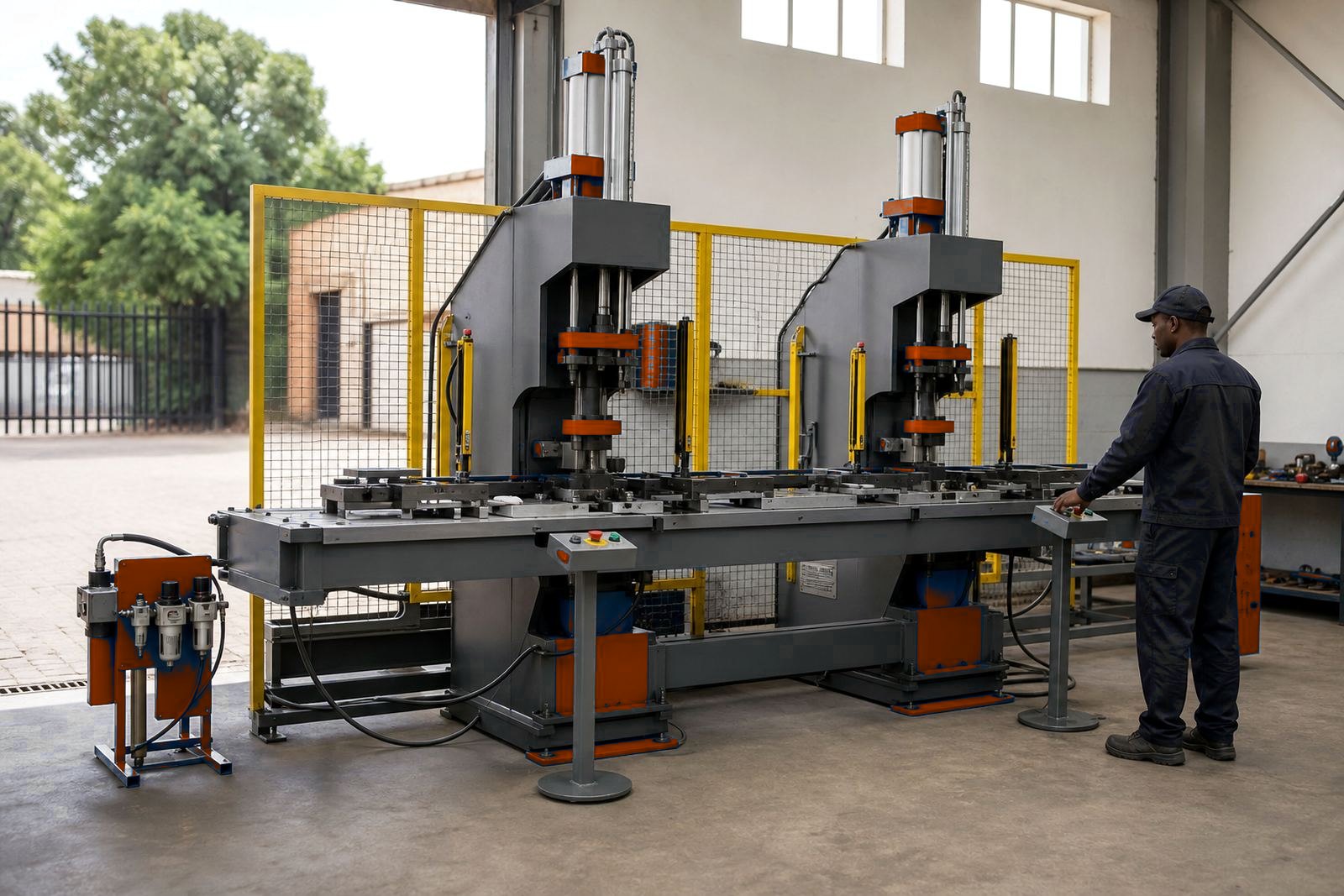
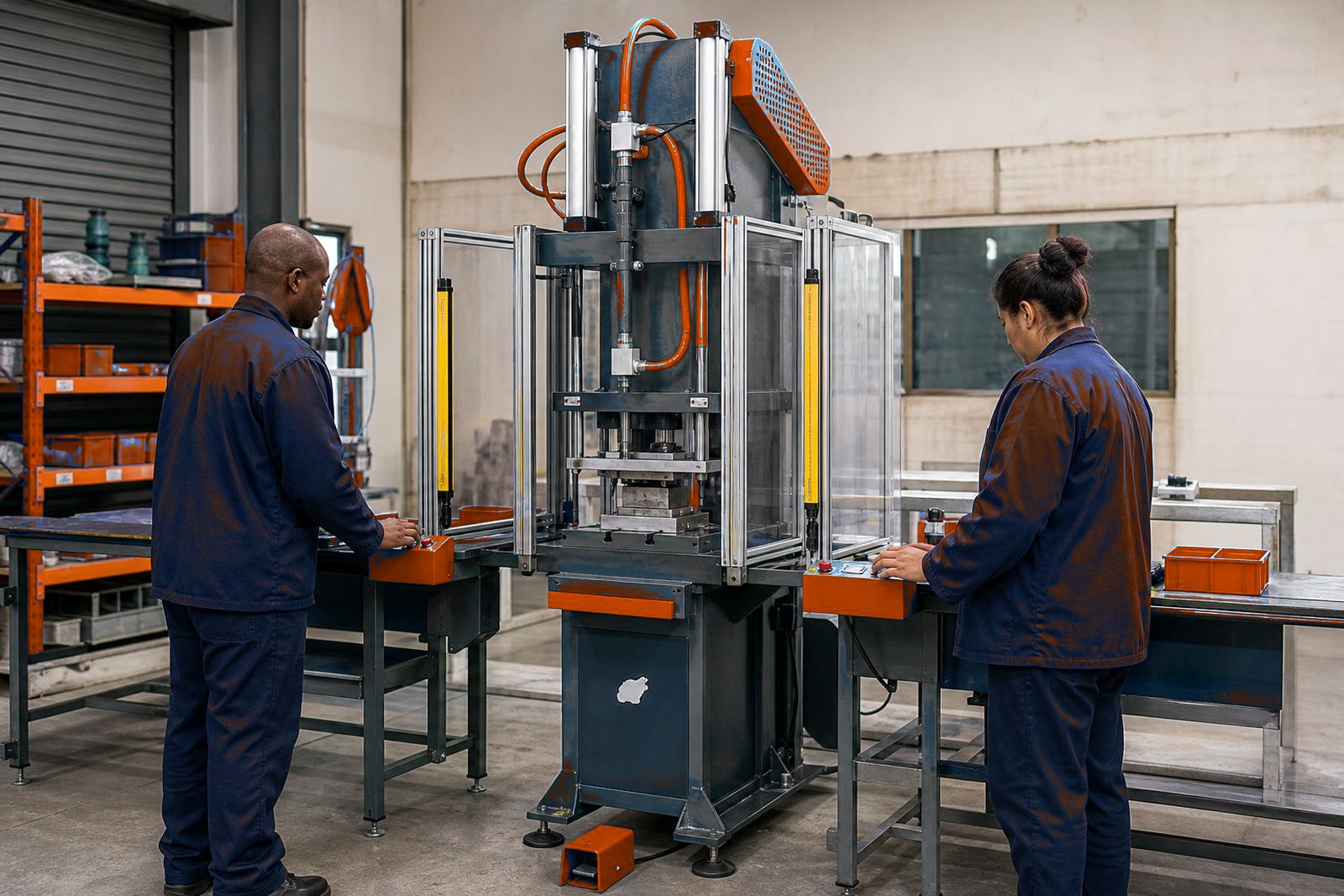
This unit is arranged with a slimmer cabinet or column set so the working face can sit into a narrow bay, between fixtures, conveyors or wrapping stations. The press still carries the usual pneumatic press elements, with a cylinder, guided ram, stroke setting and two-hand controls where required for the task and guarding layout.
It is used where a wider press would choke the aisle or force awkward product handling. In many factories the better answer is not a smaller job, but a smarter footprint with the working head, controls and tooling placed for direct loading from the front or side.
- Single-station or compact multi-station build, depending on the line plan
- Air-operated cylinder with set stroke and pressure range matched to the job
- Tooling can be arranged for crimping, staking, riveting or seal forming
- Guarding and light curtain options can be set around the access points
Sizes, strokes and working pressure
Narrow footprint presses are usually specified by daylight, throat depth, stroke length and the force needed at the tool face. For light assembly work, a shorter stroke and smaller cylinder may be enough. For deeper tooling or formed parts, a taller frame and longer stroke help keep the ram travel clean and repeatable.
Working pressure on a pneumatic press is set from the plant air supply and the ram force is matched to the tooling. Typical lines ask for consistent air pressure, stable stroke adjustment and clean dwell at the bottom of travel where the part is seated or sealed.
- Stroke lengths are commonly set to the part height and tooling reach
- Guided or plain cylinder layouts can be used, depending on alignment needs
- Frame opening and throat depth must suit the component and operator access
- Air preparation should include clean, dry air and a proper lubricated line where specified
Where a narrow footprint press earns its place
These presses suit assembly benches, packing lines, metal sub-assembly stations and plant rooms where floor space has been carved into short, practical runs. They are also useful in Gauteng factories where a line may need to work around existing conveyors, bins, inspection tables or a shift from one part size to the next.
In Durban and Gqeberha, salt in the air can make exposed steel finishes and fittings matter more than people expect. On inland sites the bigger issue is often line density, with too many operations squeezed into one bay and not enough space for a full-size press frame.
- Assembly of small brackets, clips, terminals and housings
- Crimping and riveting on repeat parts with fixed tooling
- Staking plastic or metal features with controlled press travel
- Pack sealing work where heat or seal bars are part of the toolset
Tooling, guarding and control layout
The narrow frame only works well when the tooling is matched to the part. That may mean nest plates, locating pins, quick-change dies, punch sets or a custom fixture to hold the item square under pressure. When the line needs more protection, light curtains, two-hand controls and fixed guards can be built into the station so the operator load path stays clear.
For some jobs the key detail is not the press itself but the way the part enters and leaves the tooling. A narrow footprint station may need side loading, a front fence, or a slide tray so the operator does not reach through the press area. Those choices are set around the part and the guarding, not around a general pattern.
- Custom tooling for crimping, riveting, staking and pack sealing
- Two-hand controls where the job calls for controlled cycle start
- Light curtain integration for safer access around the working face
- Guard doors, fixed screens and part nests can be added to suit the station
Fitting into an existing line
Installation starts with the line width, air supply position and the path for product flow. A narrow footprint press may still need anchor points, levelling, compressed air drops, electrical connections for controls and a clear route for tooling access. If the station sits beside a conveyor or transfer table, the working face height must match the rest of the process.
Commissioning covers stroke setting, pressure checks, tool alignment and the first production runs. Where the plant runs a heavier schedule, the handover usually includes operator training, tool change steps and the settings that keep the press consistent through a shift. For assembly and packaging, that work carries the same weight as the frame itself.
- Site installation with air line setup and station levelling
- Stroke setting to suit part height, seal depth or deformation target
- Press commissioning with tool alignment and cycle checks
- We train operators on loading, guarding and basic fault checks for our presses.
Care, wear points and daily checks
A narrow press can run for years if the moving parts are kept clean and the tooling faces are checked for wear. The air system should stay dry and free of dirt, because moisture can affect valve action and cylinder movement. On pack sealing lines, heat and residue can build up around the tool area, so the station needs regular cleaning and inspection.
Operators should watch for noisy air leaks, drifting stroke settings, loose tooling, damaged guard parts and inconsistent part location. If the press is on a busy line, small changes show up early in cycle feel and part finish. Those checks belong in normal production discipline.
- Keep guide surfaces and tooling faces clean and lightly maintained
- Check air preparation units, seals and hoses for leaks or contamination
- Inspect guarding, light curtains and controls for correct function
- Record pressure and stroke settings when tooling changes are made
Details to settle before the build starts
To size a narrow footprint press correctly, the part data has to be clear. We need the component drawing, the material, the press force target, available floor width, working height and whether the station will run as a single press or part of a linked line. If the press is doing pack sealing, the sealing method and dwell time also matter.
It helps to know whether the station needs two-hand controls, a light curtain or a fixed guard arrangement, and whether the tooling must change often during the shift. If the site is in Johannesburg, Pretoria, Durban, Gqeberha or East London, the same basic questions still apply, but the installation path and line layout can differ a lot from one plant to the next.
- Part drawing, sample or photo with key dimensions
- Available bay width, line height and operator access side
- Required stroke, pressure range and cycle style
- Guarding preference, tooling change method and commissioning scope
Key facts
| Frame type | Narrow footprint pneumatic press |
|---|---|
| Working mode | Single station or compact multi-station build |
| Drive | Compressed air cylinder with controlled stroke |
| Typical controls | Two-hand controls, light curtain integration, guarded cycle start |
| Common uses | Assembly, crimping, riveting, staking, pack sealing |
| Support | Custom tooling, site installation, commissioning and operator training |